
Classification of Eumycota True fungi are grouped into

- Slides: 10
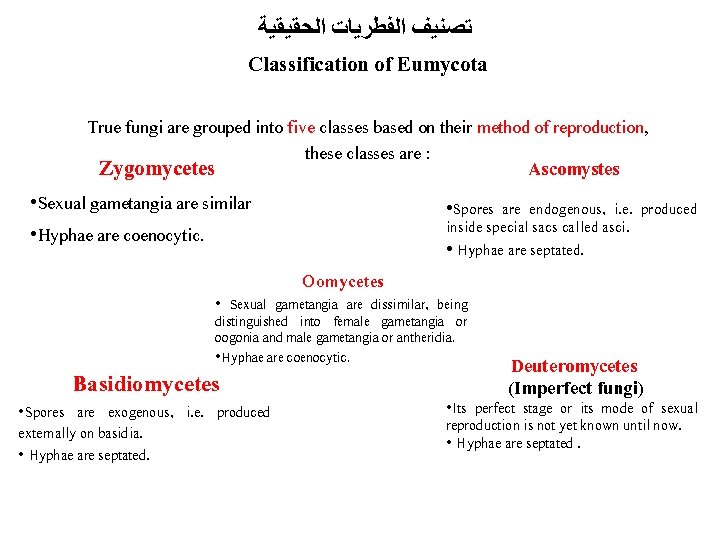
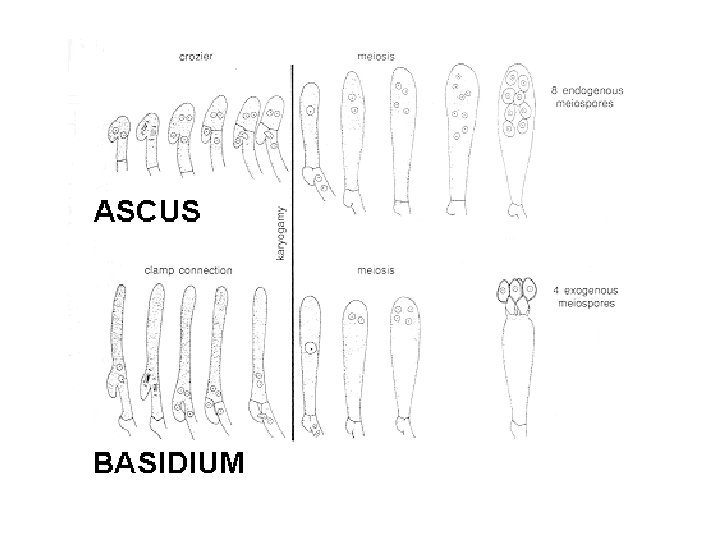
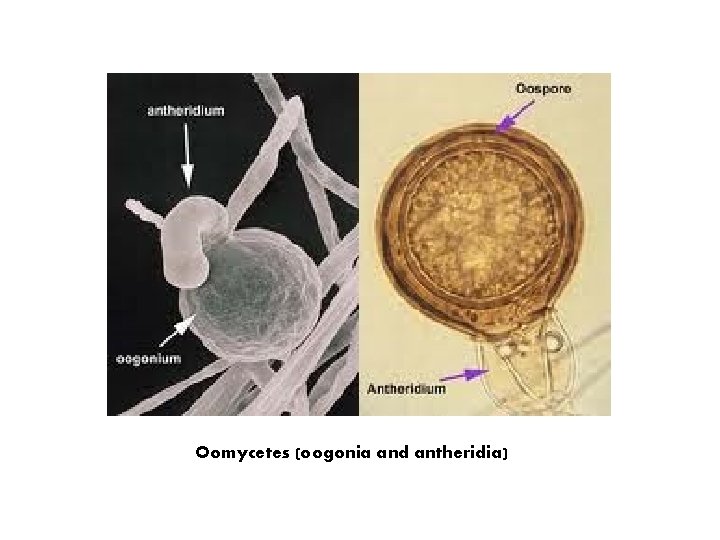
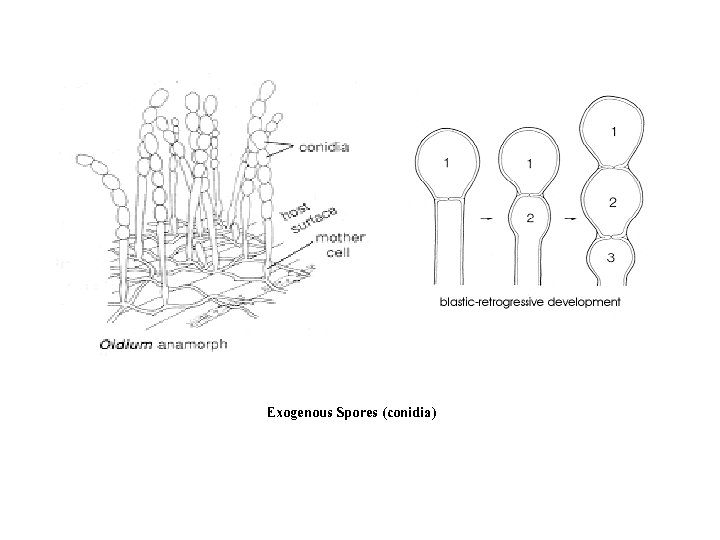
ﺗﺼﻨﻴﻒ ﺍﻟﻔﻄﺮﻳﺎﺕ ﺍﻟﺤﻘﻴﻘﻴﺔ Classification of Eumycota True fungi are grouped into five classes based on their method of reproduction, these classes are : Ascomystes Zygomycetes • Sexual gametangia are similar • Hyphae are coenocytic. • Spores are endogenous, i. e. produced inside special sacs called asci. • Hyphae are septated. Oomycetes • Sexual gametangia are dissimilar, being distinguished into female gametangia or oogonia and male gametangia or antheridia. • Hyphae are coenocytic. Basidiomycetes • Spores are exogenous, i. e. produced externally on basidia. • Hyphae are septated. Deuteromycetes (Imperfect fungi) • Its perfect stage or its mode of sexual reproduction is not yet known until now. • Hyphae are septated.
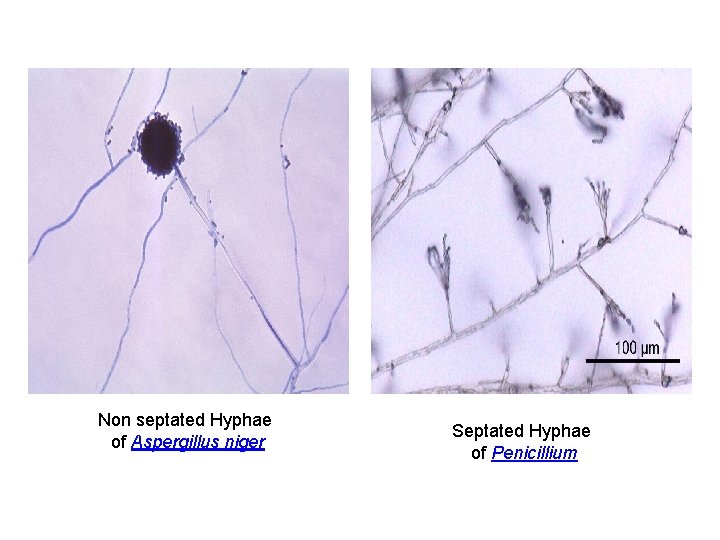
Non septated Hyphae of Aspergillus niger Septated Hyphae of Penicillium
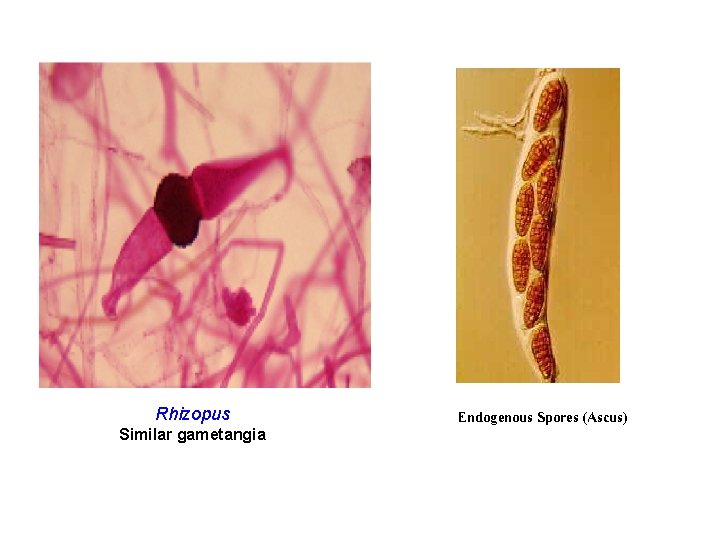
Rhizopus Similar gametangia Endogenous Spores (Ascus)
Oomycetes (oogonia and antheridia)
Exogenous Spores (conidia)
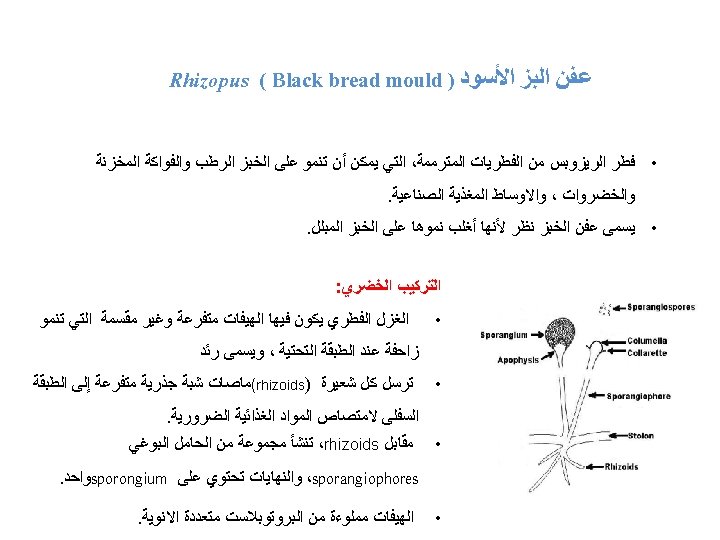
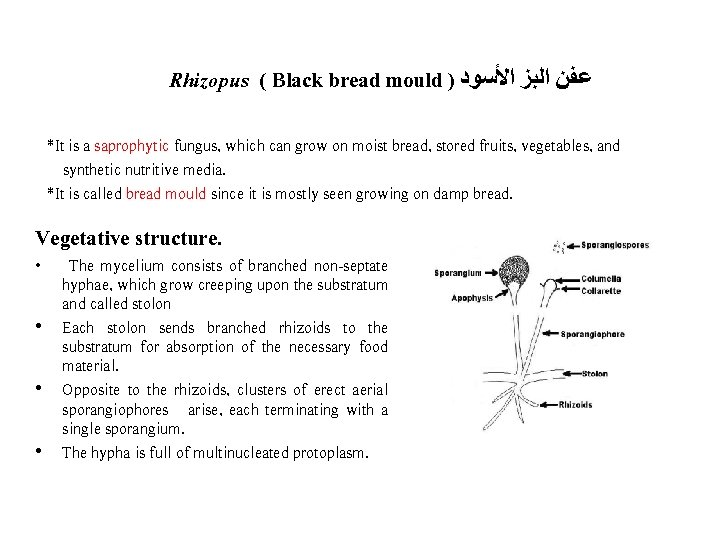
Rhizopus ( Black bread mould ) ﻋﻔﻦ ﺍﻟﺑﺰ ﺍﻷﺴﻮﺩ *It is a saprophytic fungus, which can grow on moist bread, stored fruits, vegetables, and synthetic nutritive media. *It is called bread mould since it is mostly seen growing on damp bread. Vegetative structure. • The mycelium consists of branched non-septate hyphae, which grow creeping upon the substratum and called stolon • Each stolon sends branched rhizoids to the substratum for absorption of the necessary food material. • Opposite to the rhizoids, clusters of erect aerial sporangiophores arise, each terminating with a single sporangium. • The hypha is full of multinucleated protoplasm.