
Classification of Cells Section 1 3 Organisms can

- Slides: 11
Classification of Cells Section 1. 3
Organisms can be classified by their cell type Domain – broad category of living things based on characteristics of their cells – Archaea – live in extreme conditions – Bacteria – bacteria – Eukarya – have eukaryotic cells
Organisms can be classified by their cell type Archaea • Unicellular organisms that live in extreme conditions (extreme heat, low oxygen, high pressure) • First referred to as archaebacteria (ancient bacteria) • Genetically different than bacteria
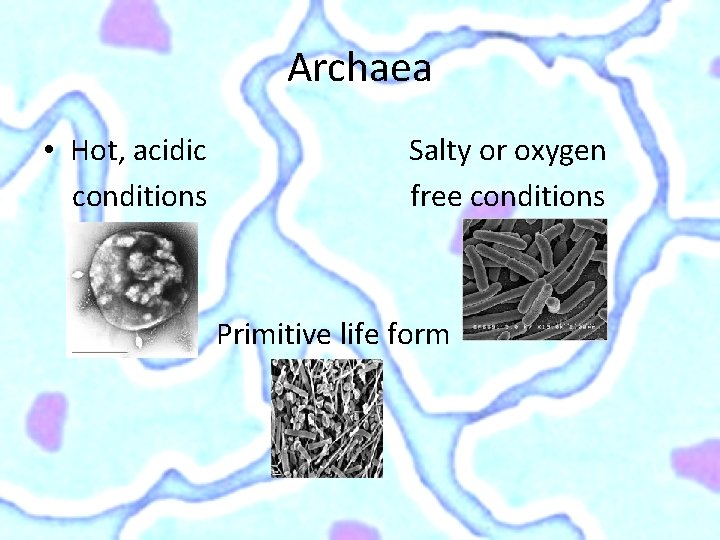
Archaea • Hot, acidic conditions Salty or oxygen free conditions Primitive life form
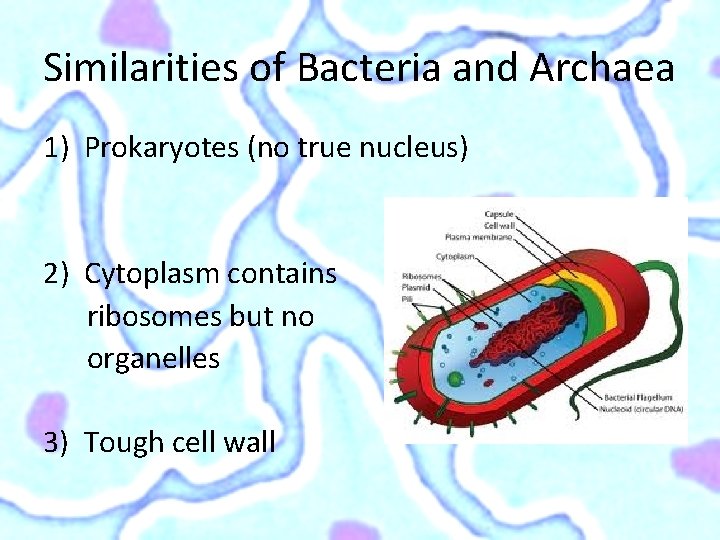
Similarities of Bacteria and Archaea 1) Prokaryotes (no true nucleus) 2) Cytoplasm contains ribosomes but no organelles 3) Tough cell wall
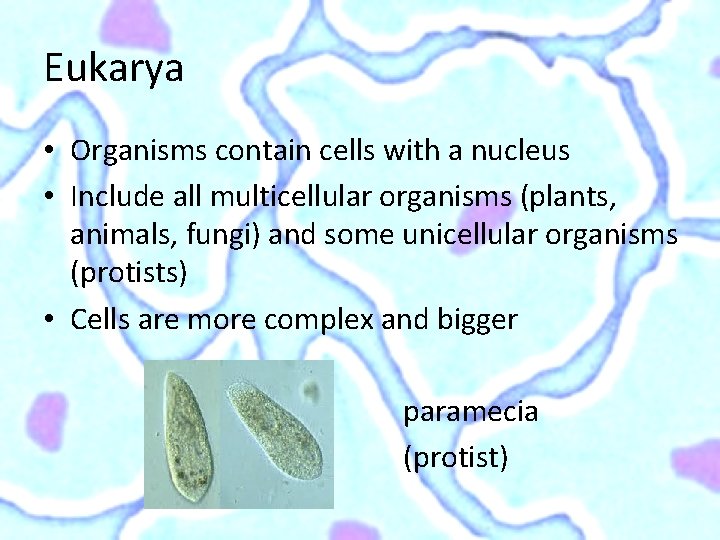
Eukarya • Organisms contain cells with a nucleus • Include all multicellular organisms (plants, animals, fungi) and some unicellular organisms (protists) • Cells are more complex and bigger paramecia (protist)
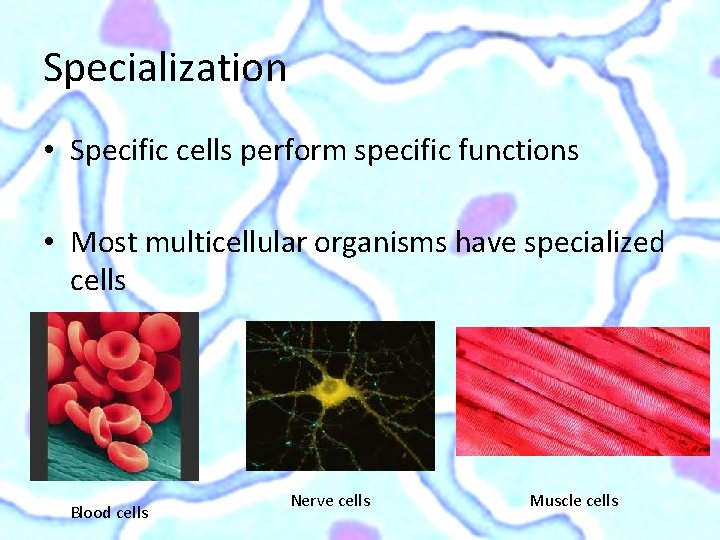
Specialization • Specific cells perform specific functions • Most multicellular organisms have specialized cells Blood cells Nerve cells Muscle cells
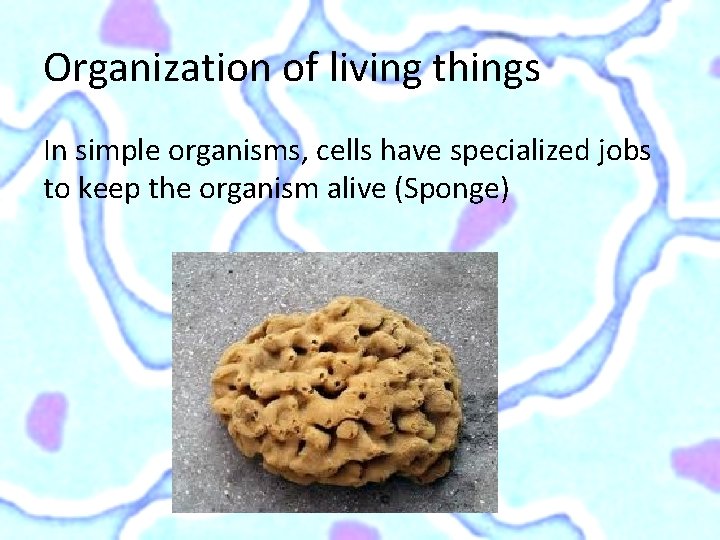
Organization of living things In simple organisms, cells have specialized jobs to keep the organism alive (Sponge)
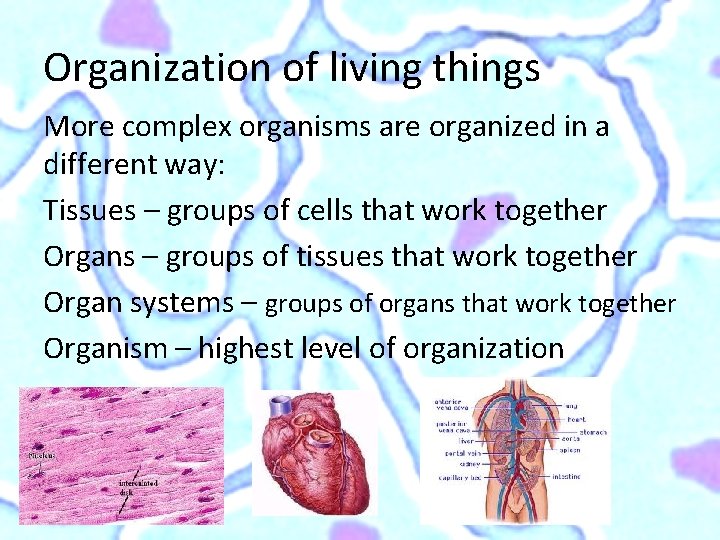
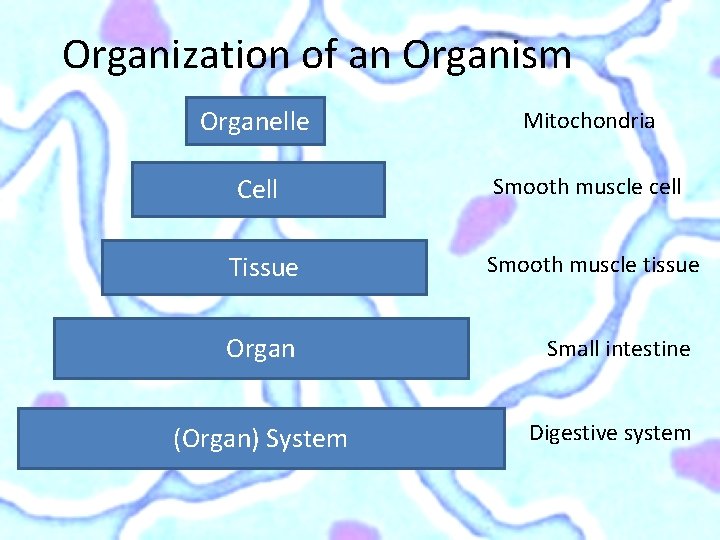
Organization of living things More complex organisms are organized in a different way: Tissues – groups of cells that work together Organs – groups of tissues that work together Organ systems – groups of organs that work together Organism – highest level of organization
Organization of an Organism Organelle Mitochondria Cell Smooth muscle cell Tissue Smooth muscle tissue Organ (Organ) System Small intestine Digestive system
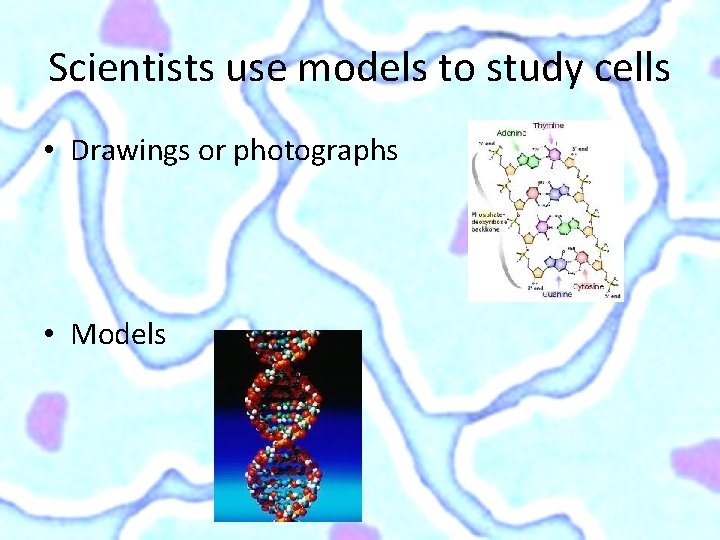
Scientists use models to study cells • Drawings or photographs • Models