
CLASSIFICATION OF CARBOHYDRATES A Methods of Classification Several
CLASSIFICATION OF CARBOHYDRATES
• A - Methods of Classification: • Several methods are used to classify carbohydrates. • 1 -One method of classification is based on whether the carbohydrate can be broken down into smaller units. • • Monosaccharides cannot be broken down into smaller units by hydrolysis. Sometimes called simple sugars. • • Disaccharides can be broken down (hydrolyzed) into two monosaccharide units.
• • Oligosaccharides can be broken into three to six monosaccharide units. • • Polysaccharides composed of 7 or more monosaccharide units
• 2 -Another method is based on the number of carbons found in a simple sugar. • • If it has carbons it is called 3 a triose. • • If it has carbons it is called 4 a tetrose • • If it has carbons it is called 5 a pentose • • If it has carbons it is called 6 a hexose
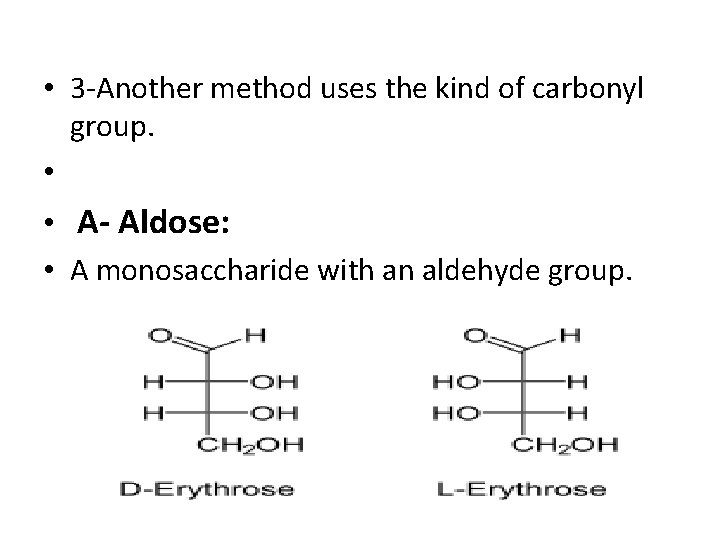
• 3 -Another method uses the kind of carbonyl group. • • A- Aldose: • A monosaccharide with an aldehyde group.
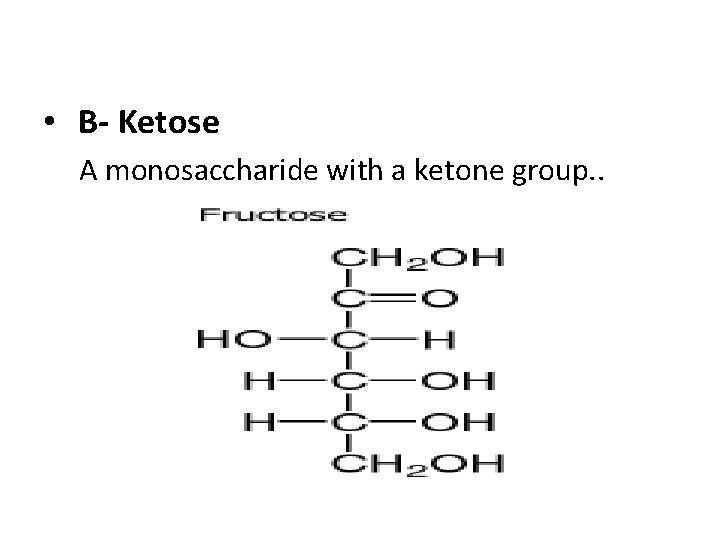
• B- Ketose A monosaccharide with a ketone group. .
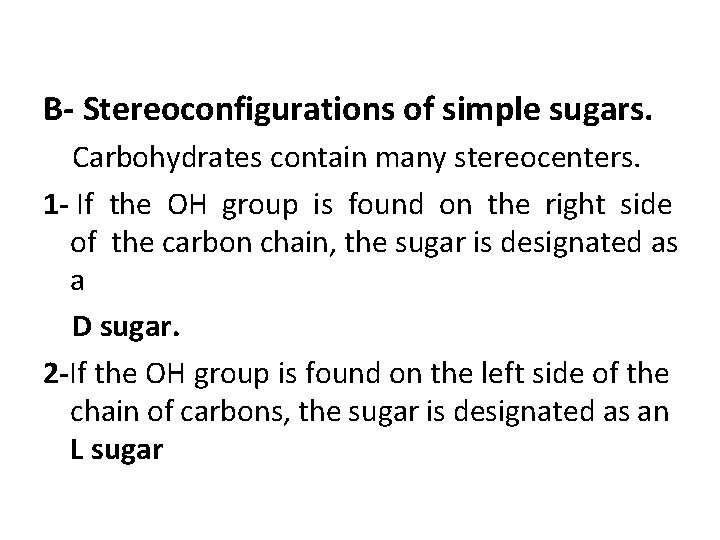
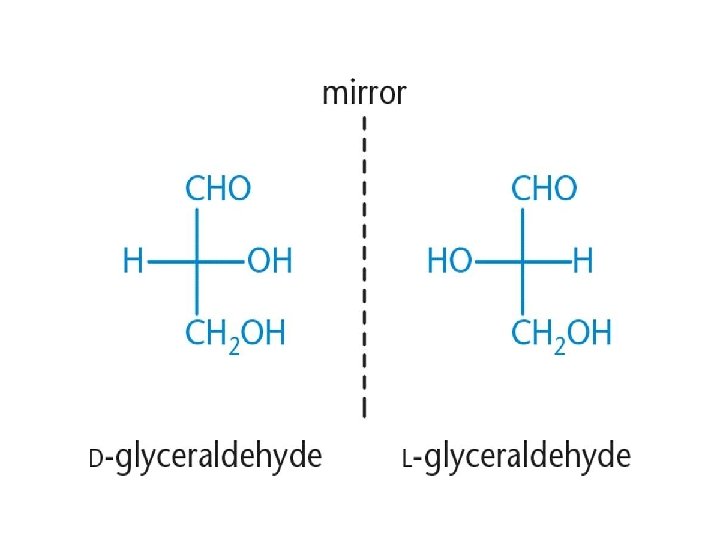
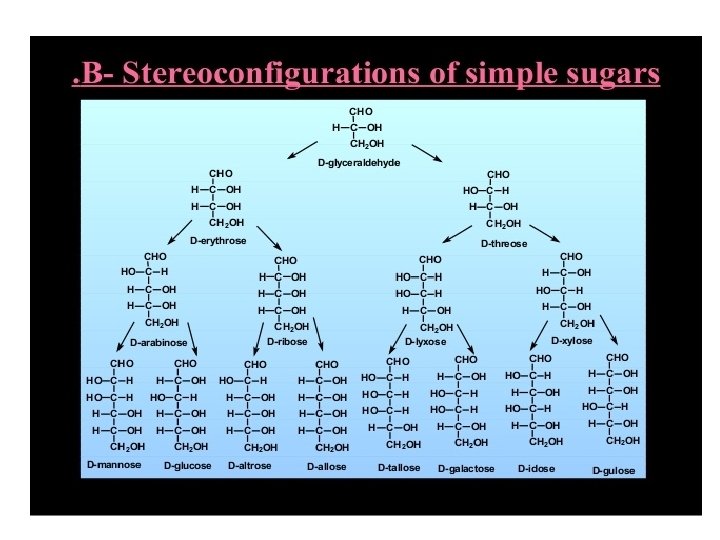
B- Stereoconfigurations of simple sugars. Carbohydrates contain many stereocenters. 1 - If the OH group is found on the right side of the carbon chain, the sugar is designated as a D sugar. 2 -If the OH group is found on the left side of the chain of carbons, the sugar is designated as an L sugar

• Cyclic Structures: • • Six membered sugar rings are known as Pyranose rings.
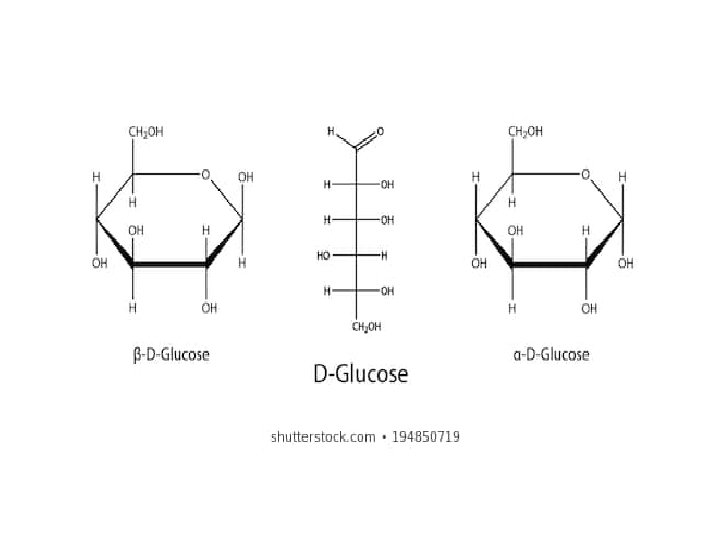
• Carbohydrate Anomers: • • Formation of either of the cyclic form has created a new • stereocenter. • • These stereoisomeric ring forms of carbohydrates are called Anomers • . Anomers: • are carbohydrates that differ by the stereo-configuration of the carbon involved in ring formation. • • The greek letters a and ß are used to describe the configuration about the ring forming carbon. • • The a anomer always has the OH group oriented in a • downward fashion on the anomeric carbon of a D-sugar. • • The ß anomer always has the OH group oriented in an upward • fashion on the anomeric carbon of a D-sugar.
• Important Carbohydrates • Monosaccharides • composed of three to seven carbon atoms. • • 1 - Glucose • • The most abundant hexose in our diet. • • The building block of complex carbohydrates. • • Component of the disaccharides: sucrose, maltose and lactose. • • Found in the polysaccharides: starch, cellulose and glycogen.
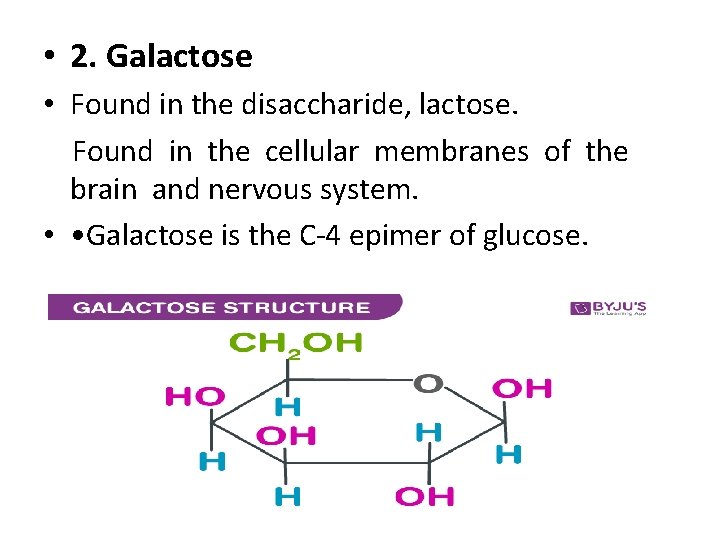
• 2. Galactose • Found in the disaccharide, lactose. Found in the cellular membranes of the brain and nervous system. • • Galactose is the C-4 epimer of glucose.
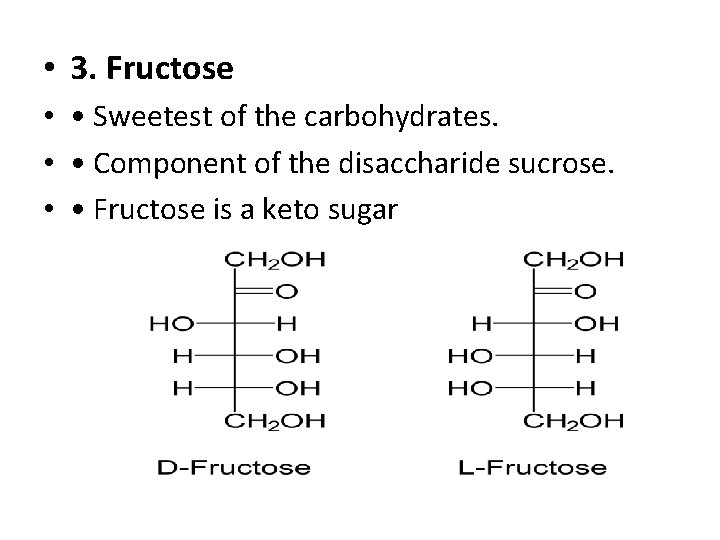
• 3. Fructose • • Sweetest of the carbohydrates. • • Component of the disaccharide sucrose. • • Fructose is a keto sugar
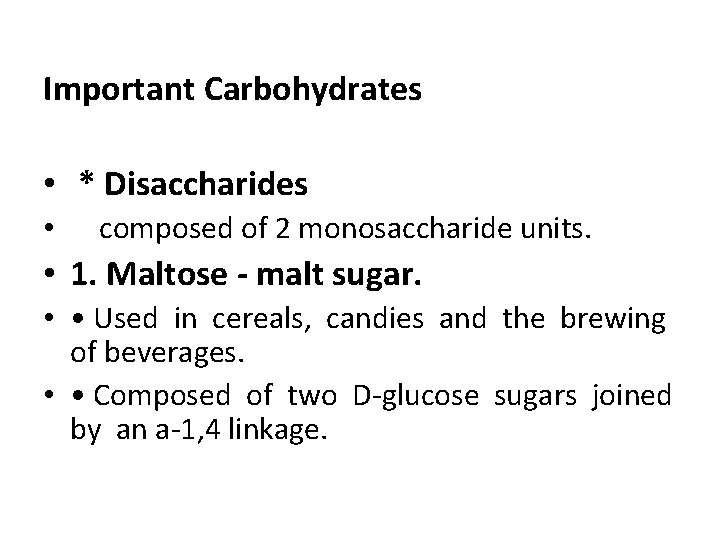
Important Carbohydrates • * Disaccharides • composed of 2 monosaccharide units. • 1. Maltose - malt sugar. • • Used in cereals, candies and the brewing of beverages. • • Composed of two D-glucose sugars joined by an a-1, 4 linkage.

2. Lactose - milk sugar. • Found in milk and milk products. Composed of one galactose and one glucose unit • joined by a ß-1, 4 linkage.
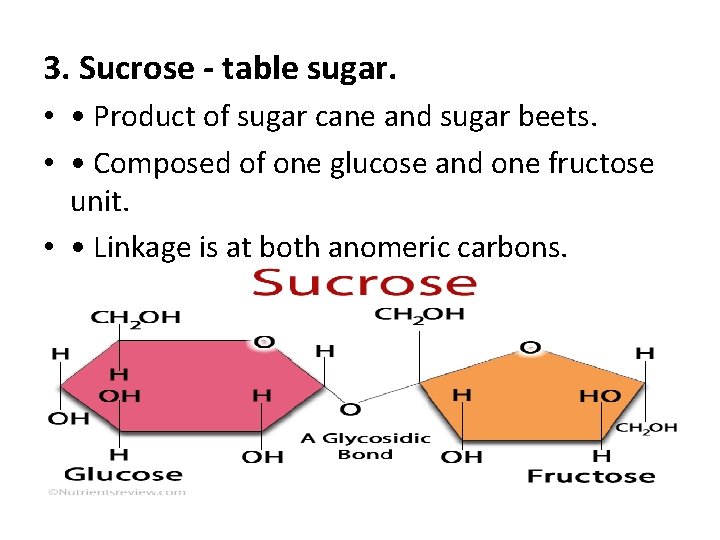
3. Sucrose - table sugar. • • Product of sugar cane and sugar beets. • • Composed of one glucose and one fructose unit. • • Linkage is at both anomeric carbons.
• Important Carbohydrates • Polysaccharides • composed of many (more than 10) monosaccharide units. • 1 - Cellulose: • • Major structural material of plant cells. • • Consists of many glucose units joined by ß 1, 4 • linkages.
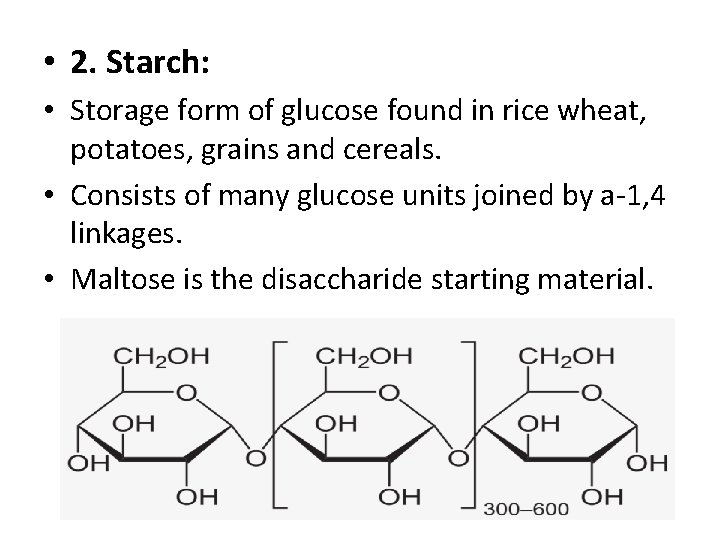
• 2. Starch: • Storage form of glucose found in rice wheat, potatoes, grains and cereals. • Consists of many glucose units joined by a-1, 4 linkages. • Maltose is the disaccharide starting material.
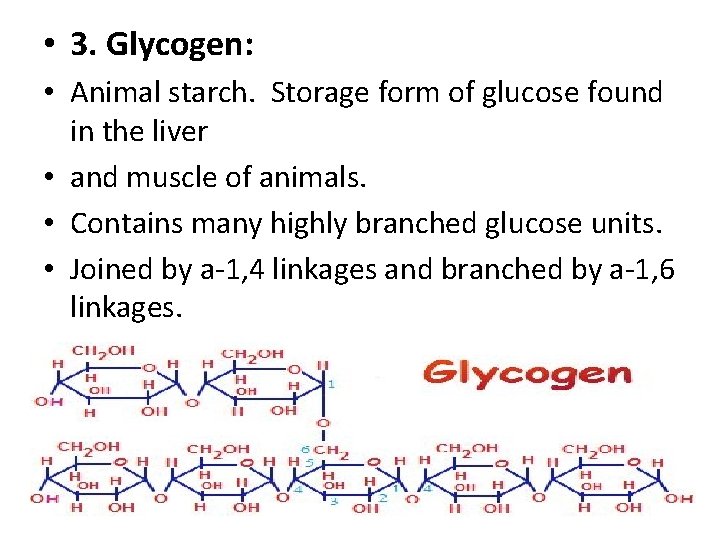
• 3. Glycogen: • Animal starch. Storage form of glucose found in the liver • and muscle of animals. • Contains many highly branched glucose units. • Joined by a-1, 4 linkages and branched by a-1, 6 linkages.
• 4. Dextrin: • • Mixture of branched and un-branched soluble polysaccharides produced by partial hydrolysis of starch by acids or amylases. Reducing sugars • Any sugar that contains either: 1 - a free aldehyde group. 2 -An a-hydroxy ketone group. 3 -A hemiacetal linkage • The presence of any of these groups allows the carbohydrate to undergo easy oxidation. • If the sugar gets oxidized it causes reduction. Thus the name “reducing sugar”.
- Slides: 23