
Classification of bacteria DR THAMINA SAYYED REGISTRAR MICROBIOLOGY

Classification of bacteria DR. THAMINA SAYYED REGISTRAR MICROBIOLOGY KKUH
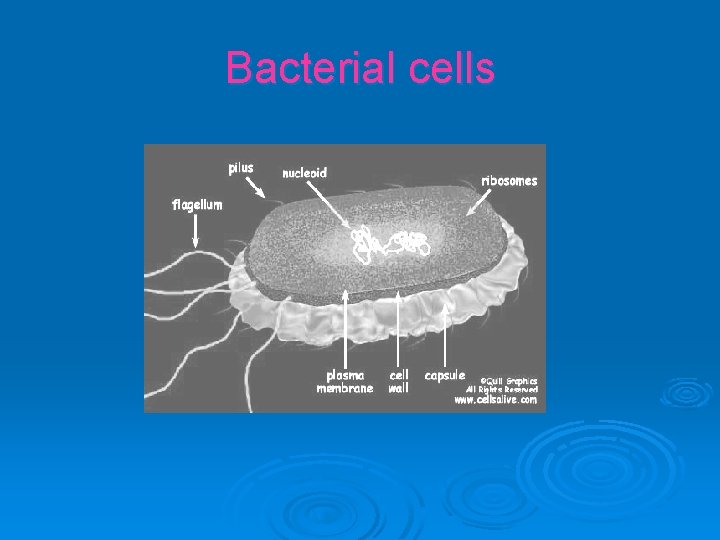
Bacterial cells
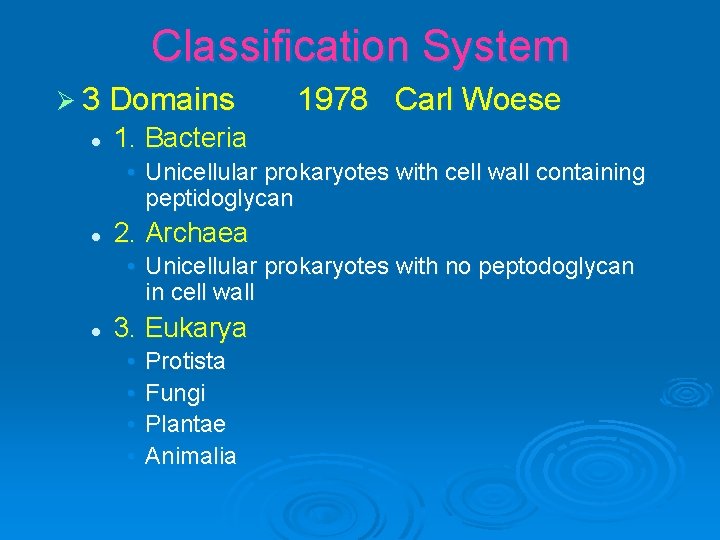
Classification System Ø 3 Domains l 1978 Carl Woese 1. Bacteria • Unicellular prokaryotes with cell wall containing peptidoglycan l 2. Archaea • Unicellular prokaryotes with no peptodoglycan in cell wall l 3. Eukarya • • Protista Fungi Plantae Animalia
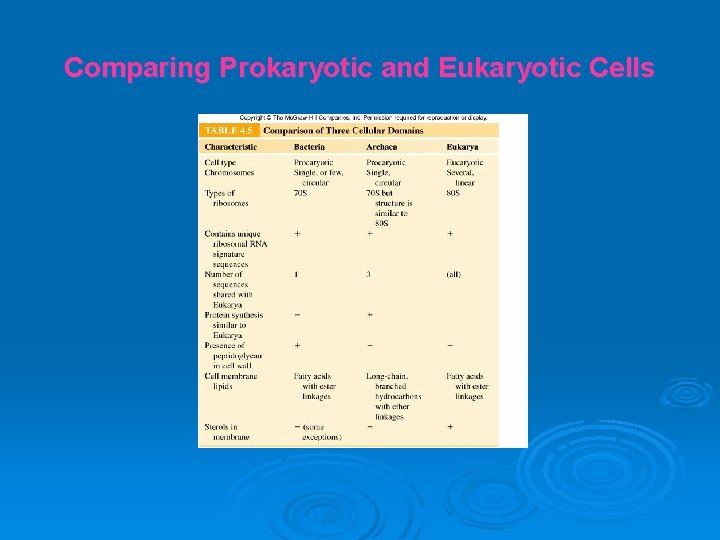
Comparing Prokaryotic and Eukaryotic Cells
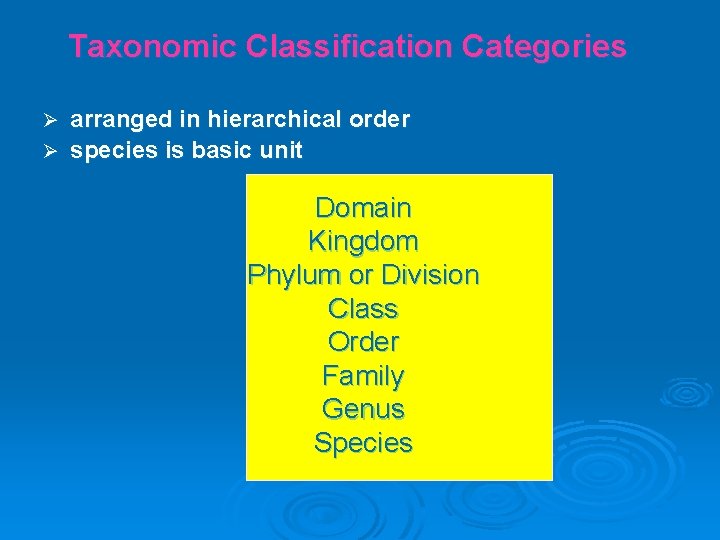
Taxonomic Classification Categories arranged in hierarchical order Ø species is basic unit Ø Domain Kingdom Phylum or Division Class Order Family Genus Species
Prokaryote Classification Ø Technologies used to characterize and ID prokaryotes l microscopic examination l culture characteristics l biochemical testing l nucleic acid analysis l combination of the above is most accurate

Phenotypic & Genotypic classification
Phenotypic Characteristics for Identifying Prokaryotes Ø often does not require sophisticated equipment Ø can easily be done anywhere
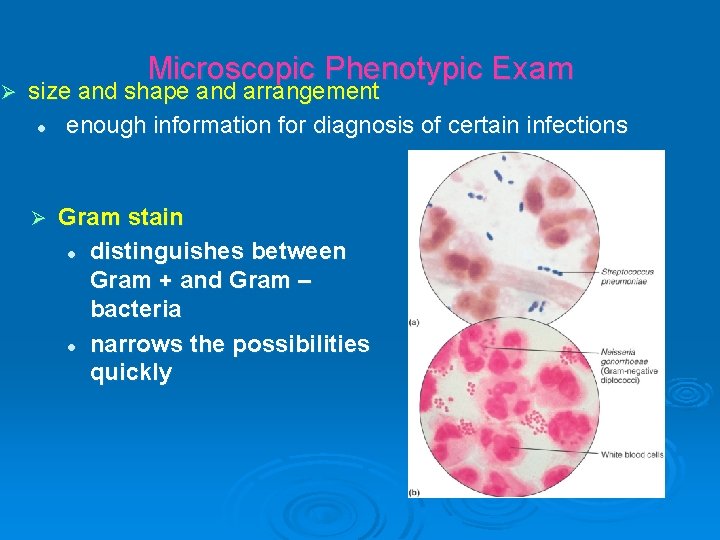
Ø Microscopic Phenotypic Exam size and shape and arrangement l enough information for diagnosis of certain infections Ø Gram stain l distinguishes between Gram + and Gram – bacteria l narrows the possibilities quickly
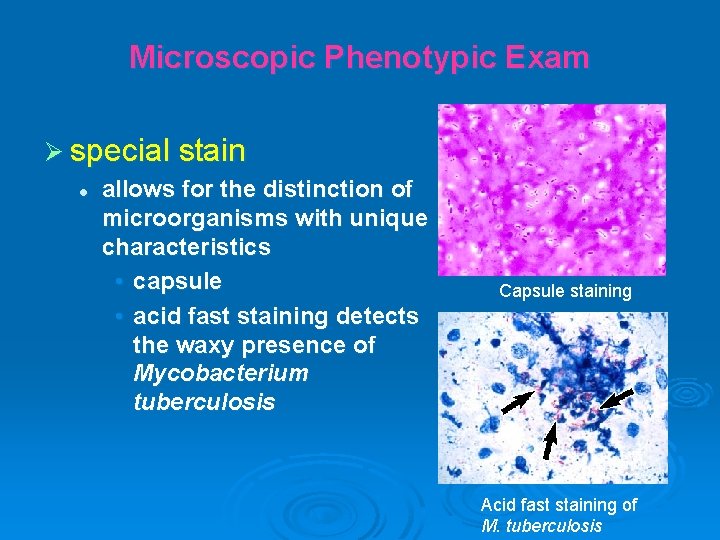
Microscopic Phenotypic Exam Ø special stain l allows for the distinction of microorganisms with unique characteristics • capsule • acid fast staining detects the waxy presence of Mycobacterium tuberculosis Capsule staining Acid fast staining of M. tuberculosis
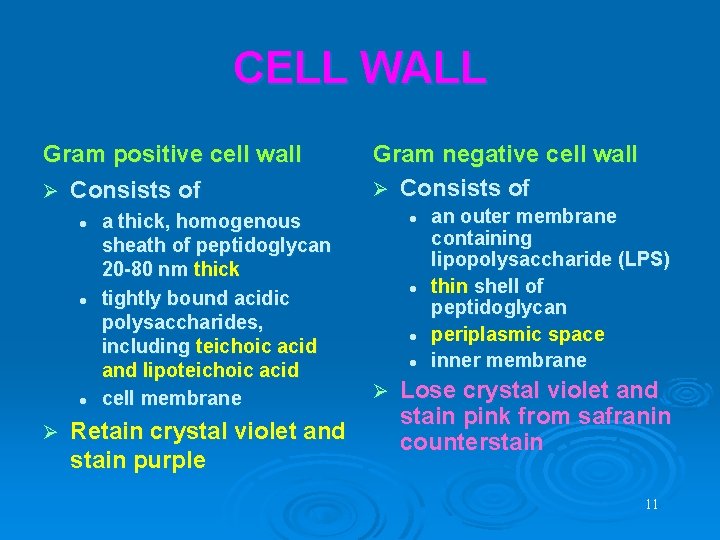
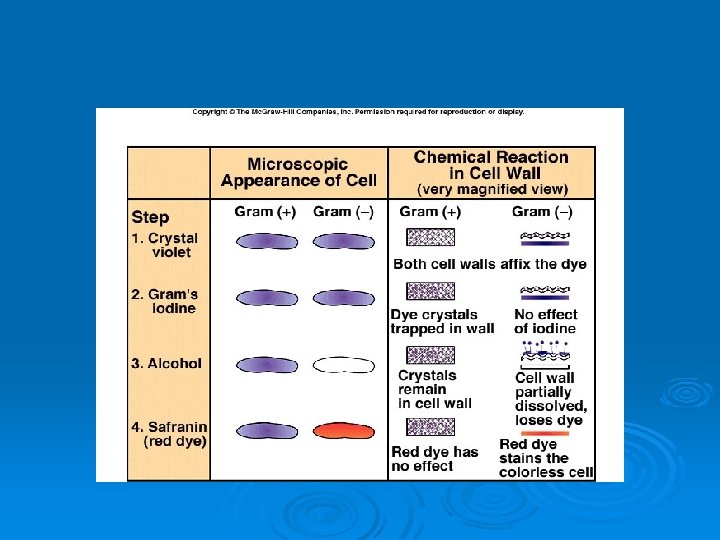
CELL WALL Gram positive cell wall Ø Consists of l l l Ø a thick, homogenous sheath of peptidoglycan 20 -80 nm thick tightly bound acidic polysaccharides, including teichoic acid and lipoteichoic acid cell membrane Retain crystal violet and stain purple Gram negative cell wall Ø Consists of l l Ø an outer membrane containing lipopolysaccharide (LPS) thin shell of peptidoglycan periplasmic space inner membrane Lose crystal violet and stain pink from safranin counterstain 11
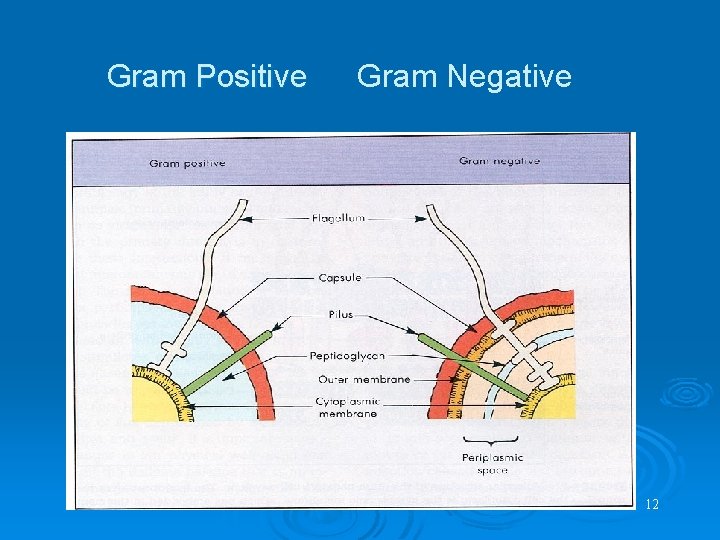
Gram Positive Gram Negative 12
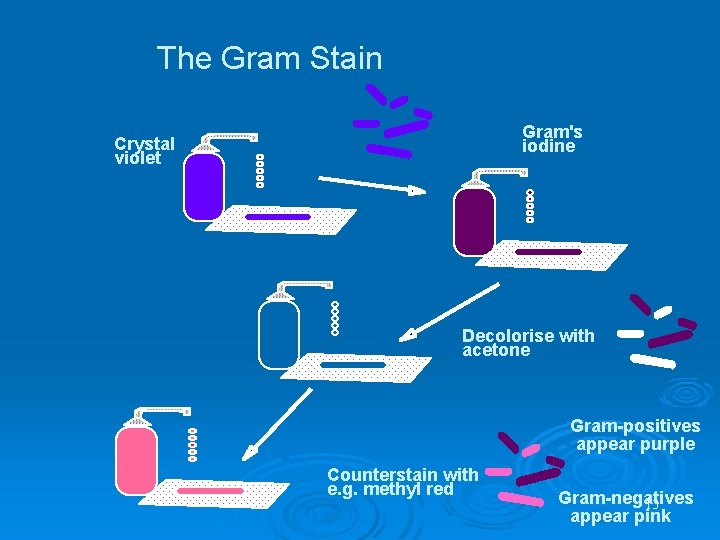
The Gram Stain Gram's iodine Crystal violet Decolorise with acetone Gram-positives appear purple Counterstain with e. g. methyl red Gram-negatives 13 appear pink
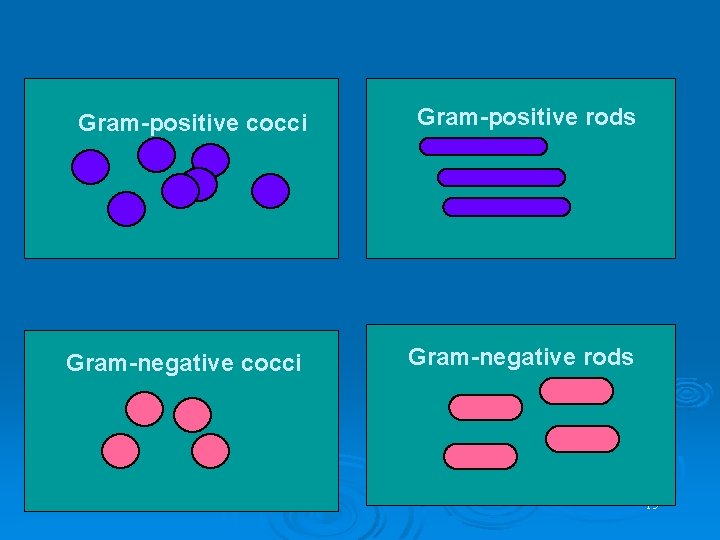
Gram-positive cocci Gram-positive rods Gram-negative cocci Gram-negative rods 15
Metabolic Phenotypic Exam Ø cultural approaches l required for positive diagnosis of infection l isolation and ID of pathogen l accuracy, reliability, and speed Ø methods used include l culture characteristics l biochemical reactions process

Serological Testing Phenotypic Exam Ø serological testing uses ELISA testing l fast and easy to use

Classification of bacteria
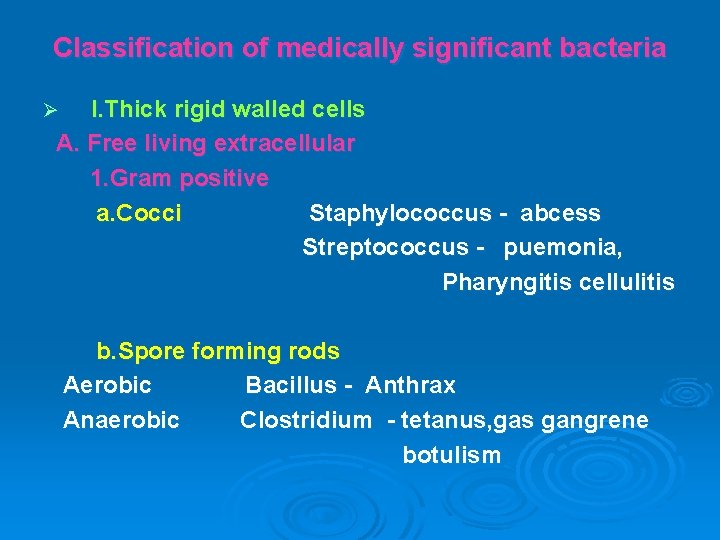
Classification of medically significant bacteria I. Thick rigid walled cells A. Free living extracellular 1. Gram positive a. Cocci Staphylococcus - abcess Streptococcus - puemonia, Pharyngitis cellulitis Ø b. Spore forming rods Aerobic Bacillus - Anthrax Anaerobic Clostridium - tetanus, gas gangrene botulism
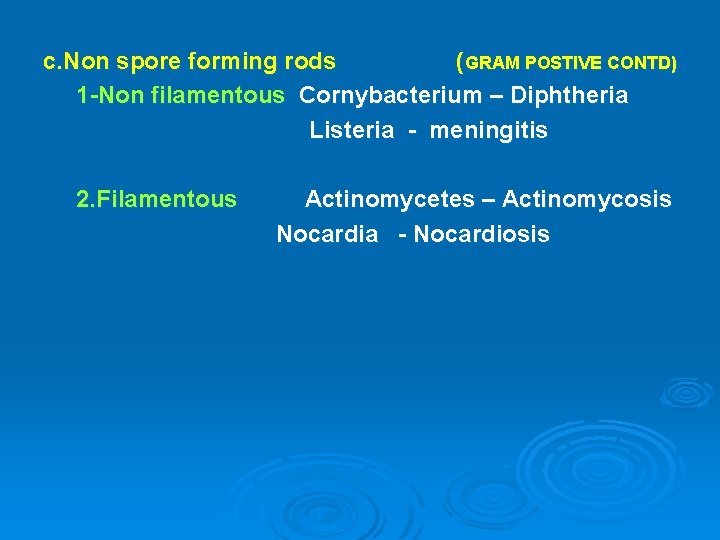
c. Non spore forming rods (GRAM POSTIVE CONTD) 1 -Non filamentous Cornybacterium – Diphtheria Listeria - meningitis 2. Filamentous Actinomycetes – Actinomycosis Nocardia - Nocardiosis
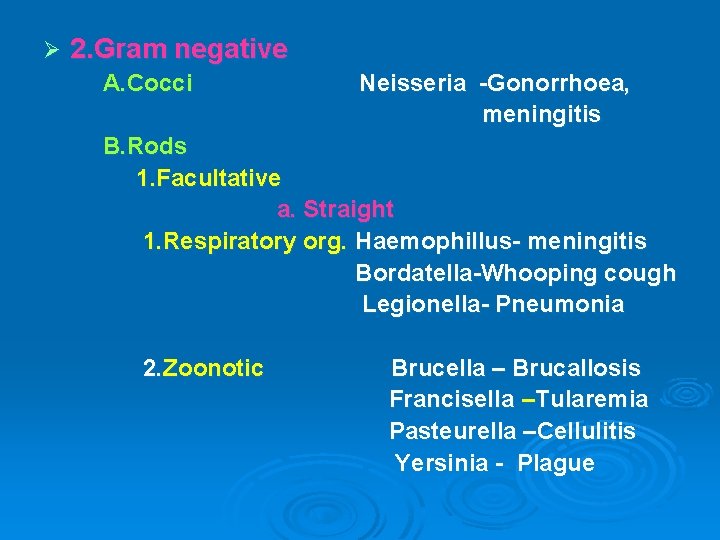
Ø 2. Gram negative A. Cocci Neisseria -Gonorrhoea, meningitis B. Rods 1. Facultative a. Straight 1. Respiratory org. Haemophillus- meningitis Bordatella-Whooping cough Legionella- Pneumonia 2. Zoonotic Brucella – Brucallosis Francisella –Tularemia Pasteurella –Cellulitis Yersinia - Plague
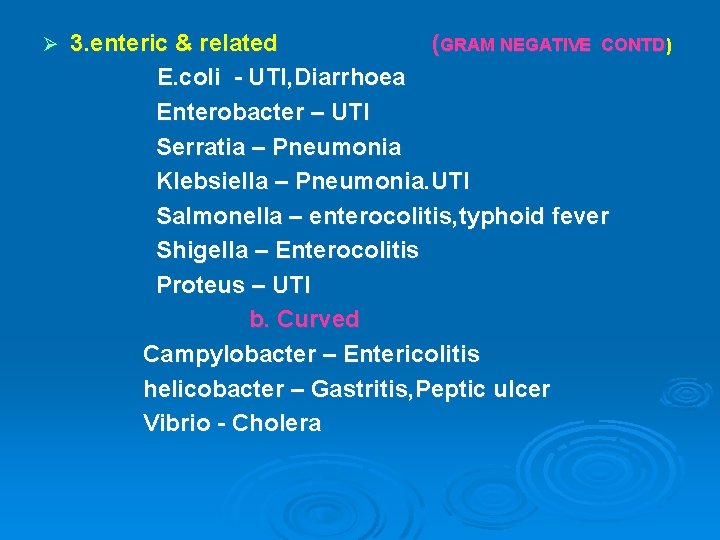
Ø 3. enteric & related (GRAM NEGATIVE CONTD) E. coli - UTI, Diarrhoea Enterobacter – UTI Serratia – Pneumonia Klebsiella – Pneumonia. UTI Salmonella – enterocolitis, typhoid fever Shigella – Enterocolitis Proteus – UTI b. Curved Campylobacter – Entericolitis helicobacter – Gastritis, Peptic ulcer Vibrio - Cholera
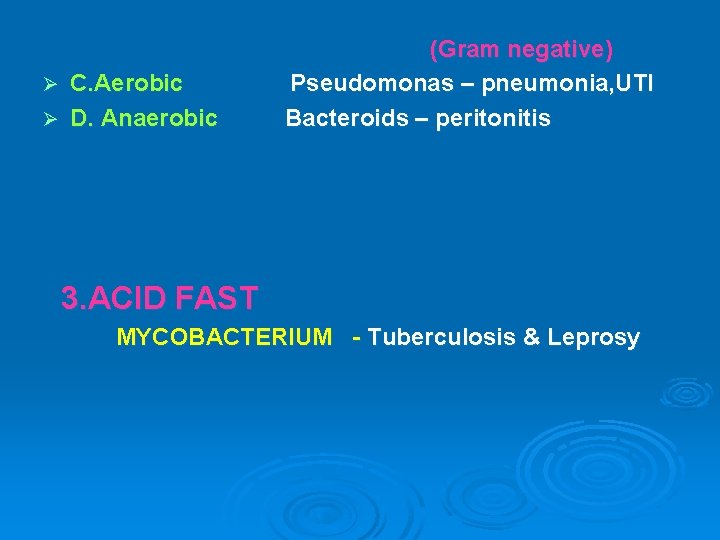
C. Aerobic Ø D. Anaerobic Ø (Gram negative) Pseudomonas – pneumonia, UTI Bacteroids – peritonitis 3. ACID FAST MYCOBACTERIUM - Tuberculosis & Leprosy
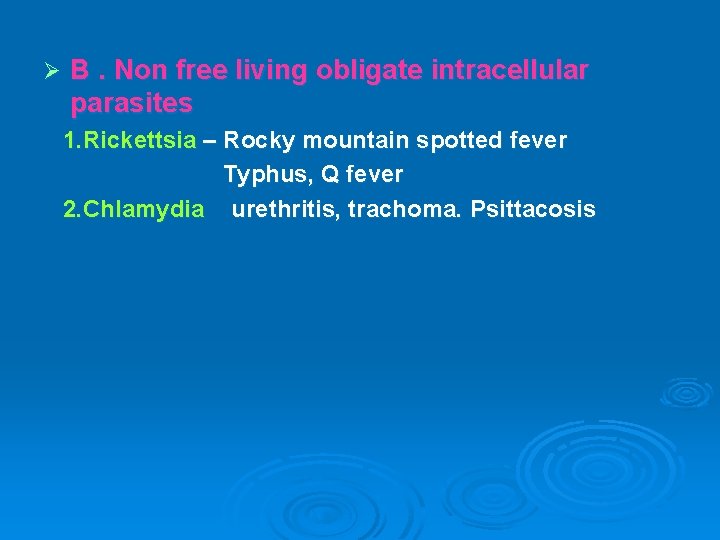
Ø B. Non free living obligate intracellular parasites 1. Rickettsia – Rocky mountain spotted fever Typhus, Q fever 2. Chlamydia urethritis, trachoma. Psittacosis
Flexible thin walled Spirochaetes - Treponema – Syphilis Borrelia – Lyme disease Leptospira - leptospirosis Wall- less cells Mycoplasma - pneumonia

Subtyping & Its applications Ø To distinguish between strains of different species Ø Biotyping Ø Ø Serotyping Antimicrobial susceptibility system Bacteriophage typing Bacteriocin typing
Genotypic Characteristics for Identifying Prokaryotes Ø the use of genotypic testing has increased with the availability of technology Ø genotypic testing is particularly useful in the case of organisms that are difficult to identify Ø several techniques include l gene probes l PCR l sequencing r. RNA
Ø gene probes l l single stranded DNA that has been labeled with a identifiable tag, such as a fluorescent dye are complementary to target nucleotide sequences • unique in DNA of pathogen
Genotypic Characteristics used in Classifying Prokaryotes( non culture methods) PCR: polymerase chain reaction l used to detect small amounts of DNA present in a sample (blood, food, soil) l the PCR chain reaction is used to amplify the amount of DNA present Ø sequencing ribosomal RNA l of particular use for identifying prokaryotes impossible to grow in a culture l focus is place on the 16 S molecules of the RNA because of it’s size • approximately 1500 nucleotides l once the 16 S molecule is sequenced, it can then be compared to the sequences of known organisms Ø
Genotypic Characteristics used in Classifying Prokaryotes Ø Ø comparison of nucleotide sequences l differences in DNA sequence can assist in determination of divergence of evolutionary path for organisms DNA hybridization l single strands of DNA anneal 16 S ribonucleic acid l comparing sequence of ribosomal RNA relatedness to other organisms can be determined using numerical taxonomy l determined by the percentage of characteristics two organisms have in common
- Slides: 30