
Classification of Auroral Images and Uncertainty A Bayesian
Classification of Auroral Images and Uncertainty: A Bayesian Machine Learning Approach Talha Siddique*, Md Shaad Mahmud*, Amy Keesee** *Remote Sensing Lab (RSL), Department of Electrical and Computer Engineering **Department of Physics and Space Science Center © 2016 University of New Hampshire. All rights reserved.
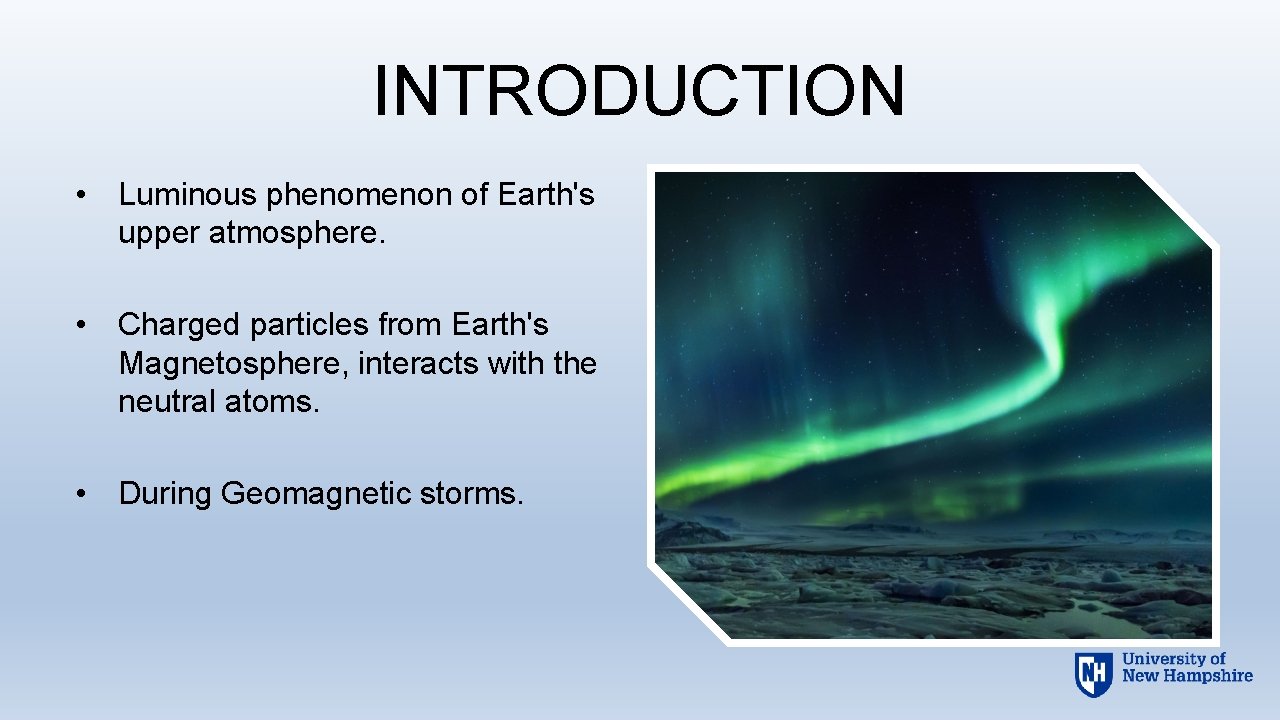
INTRODUCTION • Luminous phenomenon of Earth's upper atmosphere. • Charged particles from Earth's Magnetosphere, interacts with the neutral atoms. • During Geomagnetic storms.
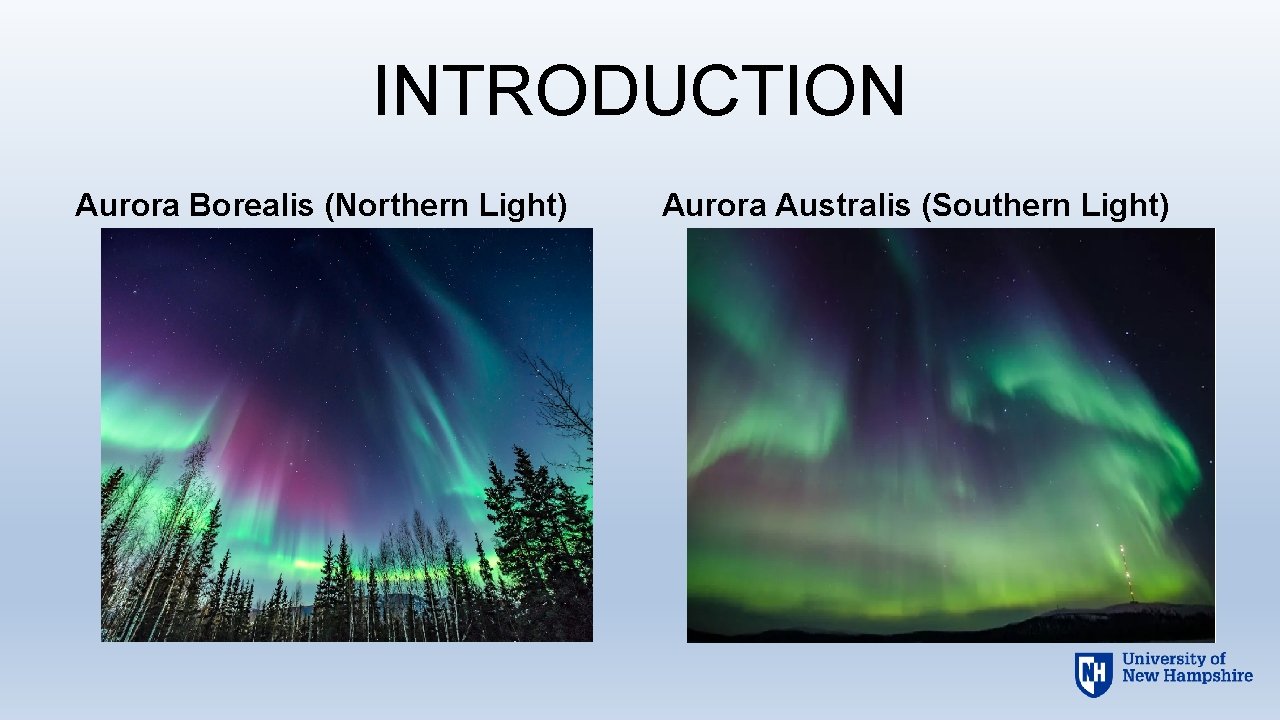
INTRODUCTION Aurora Borealis (Northern Light) Aurora Australis (Southern Light)
INTRODUCTION • Aurora, accompanied by Geomagnetically Induced Currents (GICs). • GICs can lead to voltage dips, elevated reactive power demand, transformer overheating, or malfunction of the electric power devices or power grids. • Machine Learning (ML) techniques used to classify prelabelled auroral images. • Studying the role that classified auroral images can play in predicting GICs.
KNOWLEDGE GAP • ML, branch of artificial intelligence (AI). • Based on the idea that computer systems can learn from data. • Models’ results could be unreliable due to uncertainty. • Uncertainty refers to situations involving imperfect knowledge. • Inherent in a stochastic and partially observable environment. E. g: – no consensus about auroral image labels; – captured images subject to noise and future environmental variability. • Uncertainty relevant for real-time ML.
OUR WORK • Bayesian ML model has been developed to classify prelabeled auroral images. • Model leverages Bayesian statistics to: – quantify data and parameter uncertainty; – classify the images with 95% confidence level. • Propose how the implemented ML model can be trained using realtime data.
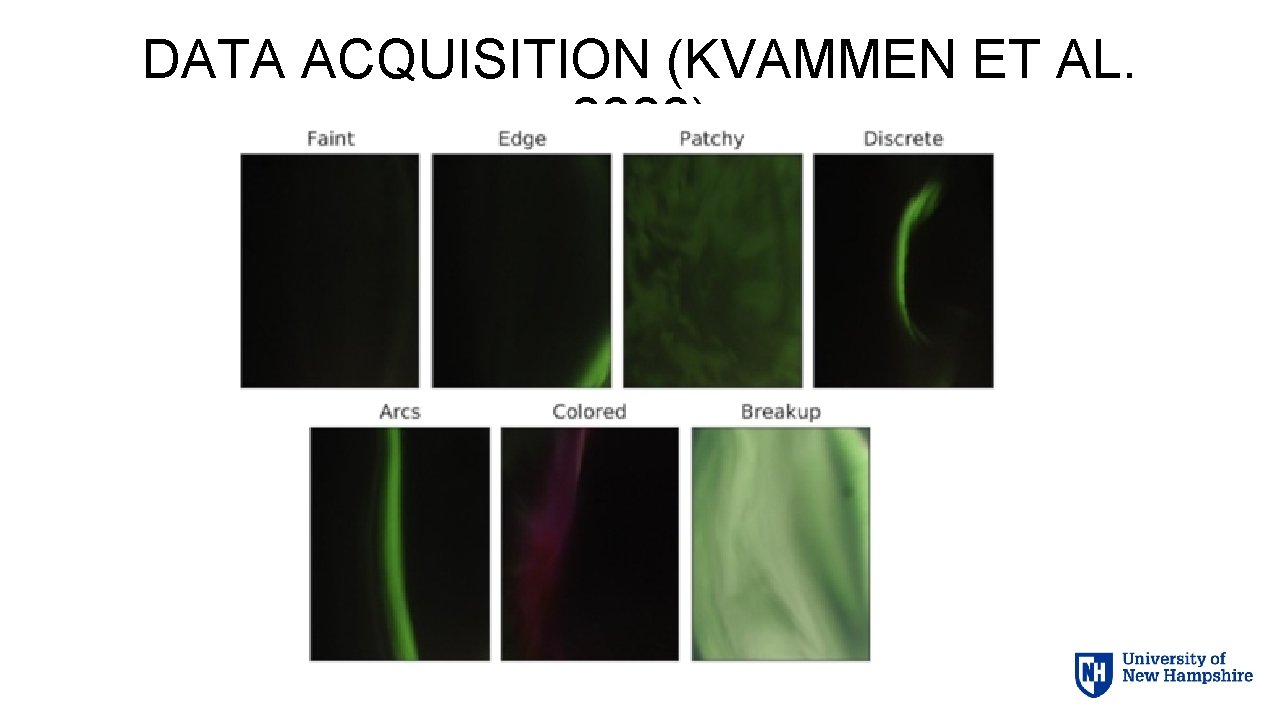
DATA ACQUISITION (KVAMMEN ET AL. 2020)
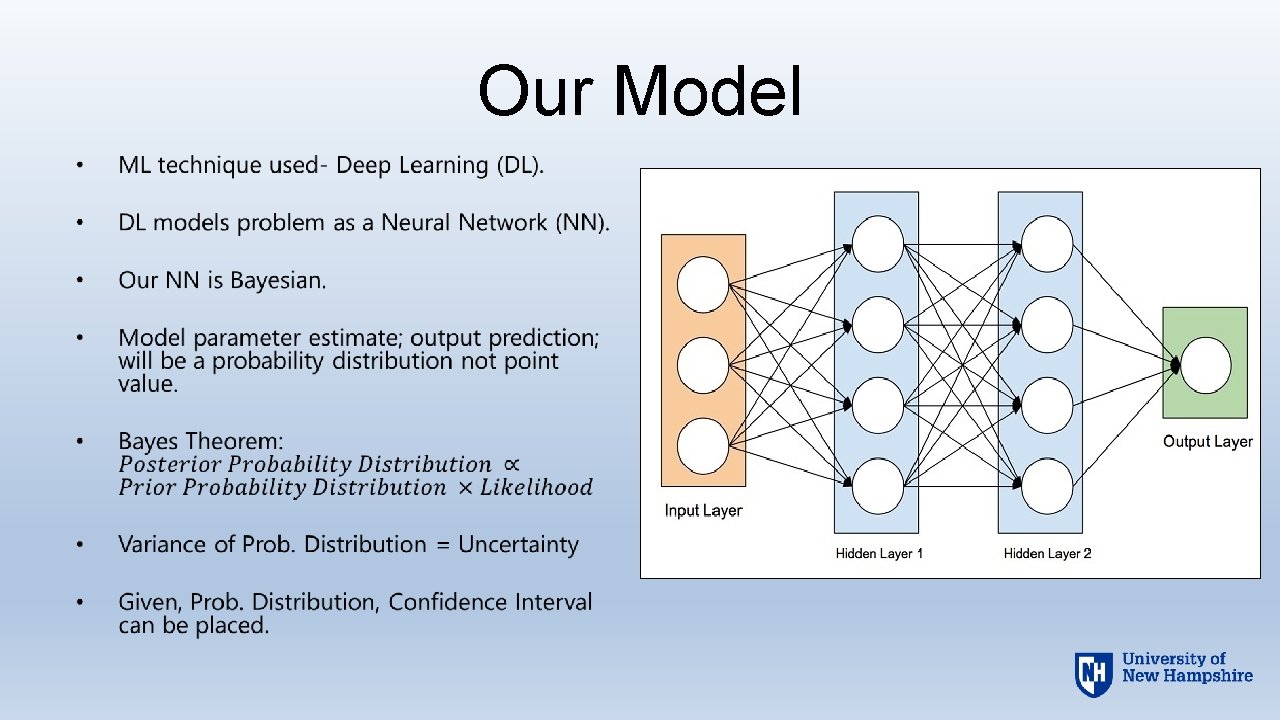
Our Model •
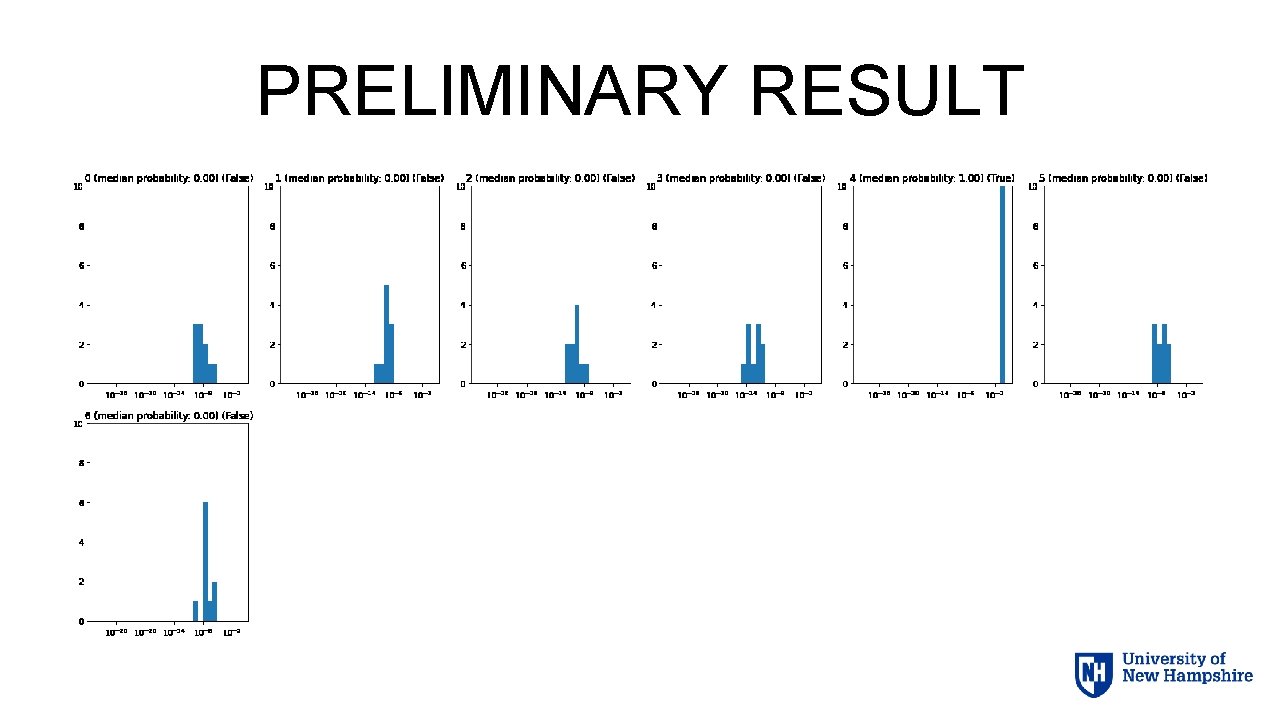
PRELIMINARY RESULT
FUTURE WORK • • Uncertainty in ML, more relevant, when model trained online, using real-time data. The standard approach to ML usually depends on offline or batch learning. Given, the stochastic nature of space weather data, online approach to learning- more data efficient and adaptable. This is because distribution of space weather data tends to drift over time. With the advancement in edge computing, DL models are trained in real-time using online learning. However, given the real-time nature of data during online learning, the level of uncertainty will be high during prediction. Therefore, going forward, will explore Auroral image classification using online DL. by leveraging edge computing. Quantify uncertainty in real time, in order to ensure reliability in the model predictions.

ACKNOWLEDGEMENT THANKS TO: MD SHAAD MAHMUD, Ph. D AMY KEESEE, Ph. D. HYUNJU CONNOR, Ph. D.

THANK YOU
- Slides: 12