
CLASSIFICATION NOTES Classification grouping of objects based on
CLASSIFICATION NOTES
• Classification- grouping of objects based on similarities • Taxonomy- branch of biology that groups and names organisms • Taxonomists- biologists who study taxonomy
Aristotle (384 -322 BC) • 1 st to classify things into 2 groups: plants and animals • Subdivided plants into herbs, shrubs, trees • Subdivided animals into land, air, water • Problems with groups some do not fit into only 1 group
Carolus Linnaeus (Swedish Botanist, 18 th Century) • System was based on physical and structural similarities • Developed the two-word naming system called binomial nomenclature
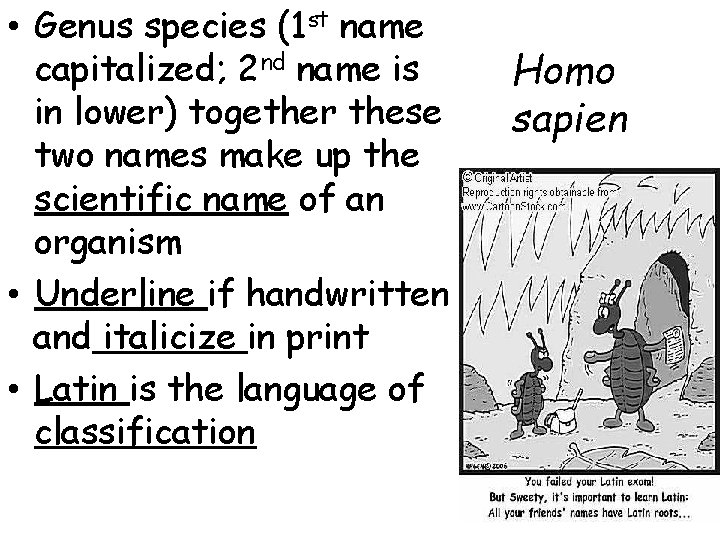
• Genus species (1 st name capitalized; 2 nd name is in lower) together these two names make up the scientific name of an organism • Underline if handwritten and italicize in print • Latin is the language of classification Homo sapien
Modern Biological Classification • Now compares natural relationship of organisms, external & internal structures, geographic distribution & chemical make-up
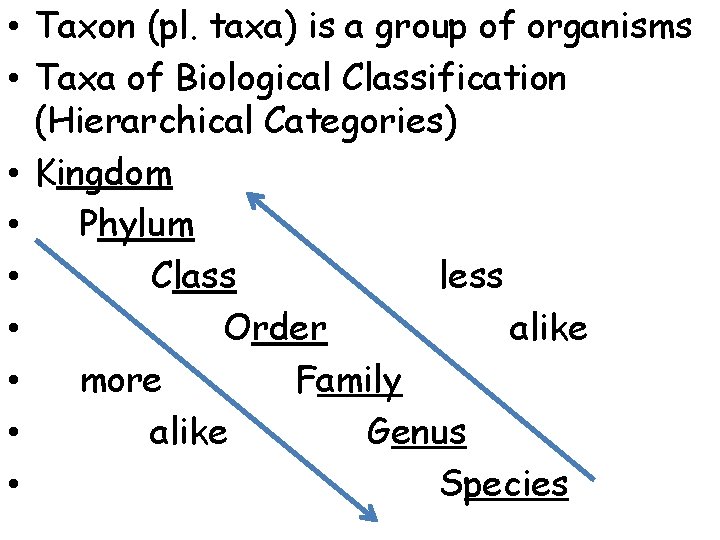
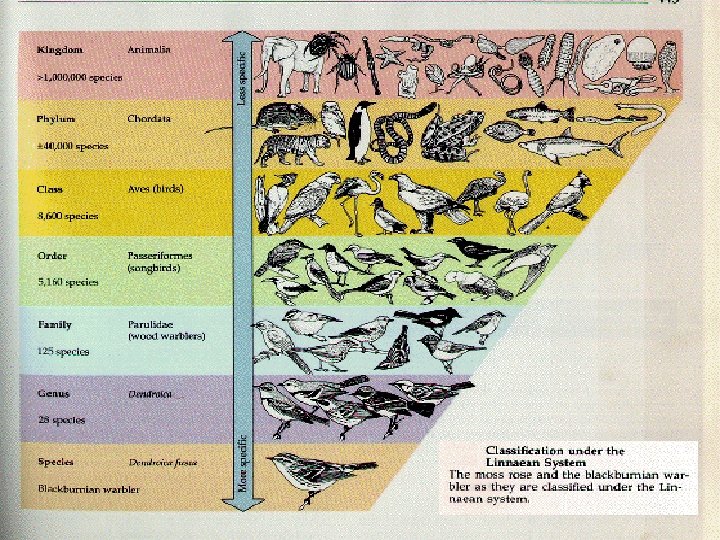
• Taxon (pl. taxa) is a group of organisms • Taxa of Biological Classification (Hierarchical Categories) • Kingdom • Phylum • Class less • Order alike • more Family • alike Genus • Species
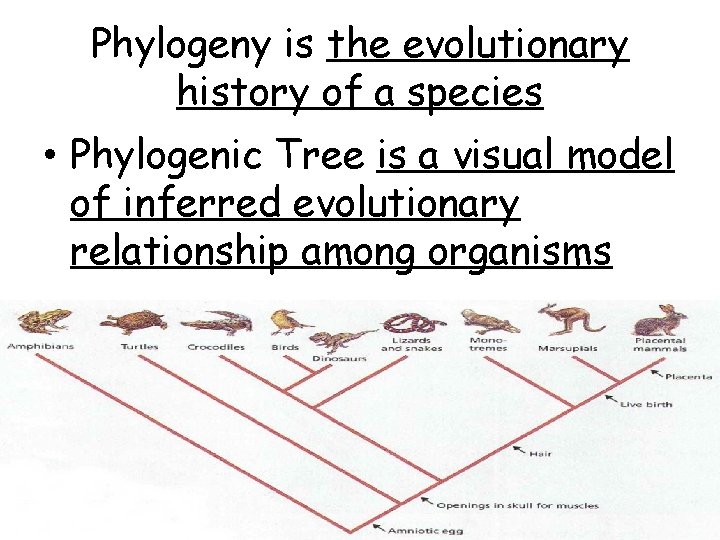
Phylogeny is the evolutionary history of a species • Phylogenic Tree is a visual model of inferred evolutionary relationship among organisms
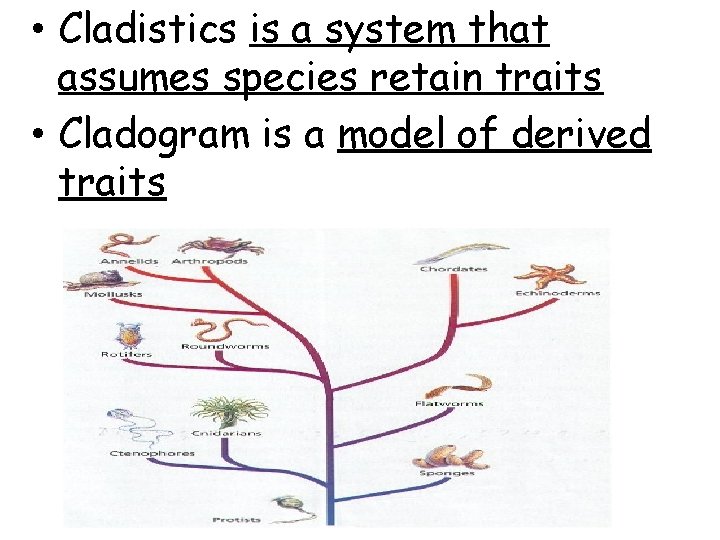
• Cladistics is a system that assumes species retain traits • Cladogram is a model of derived traits
• Dichotomous Key is a written set of choices that leads to the identification or name of the organism
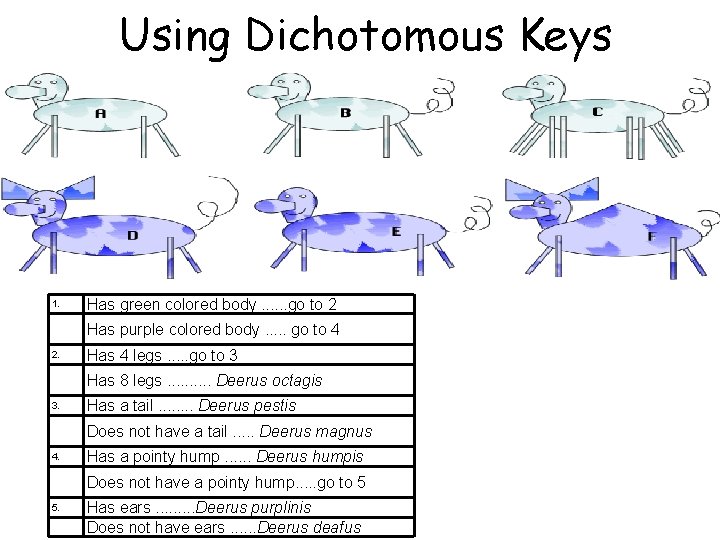
Using Dichotomous Keys 1. Has green colored body. . . go to 2 Has purple colored body. . . go to 4 2. Has 4 legs. . . go to 3 Has 8 legs. . Deerus octagis 3. Has a tail. . . . Deerus pestis Does not have a tail. . . Deerus magnus 4. Has a pointy hump. . . Deerus humpis Does not have a pointy hump. . . go to 5 5. Has ears. . Deerus purplinis Does not have ears. . . Deerus deafus
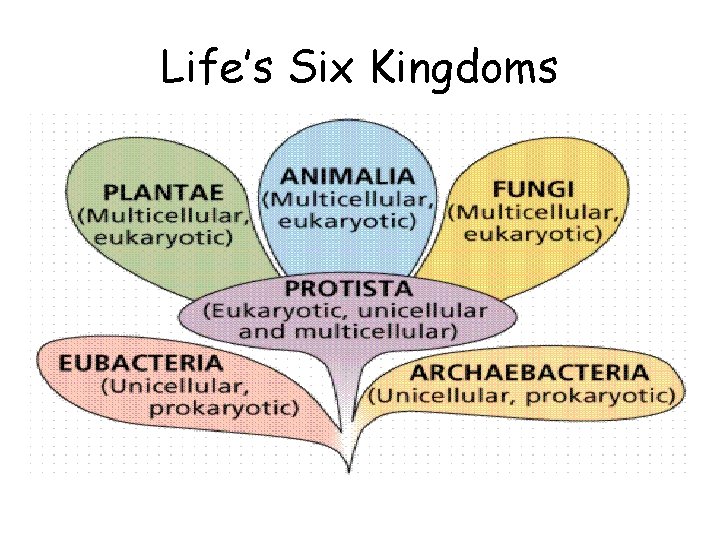
Life’s Six Kingdoms
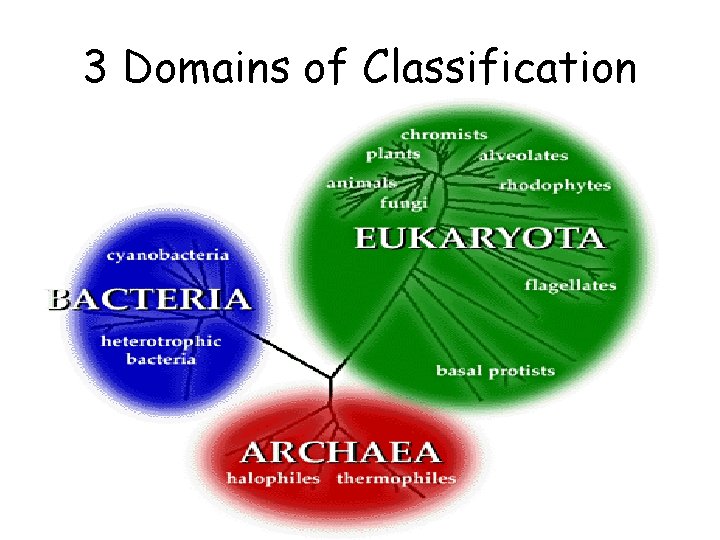
3 Domains of Classification
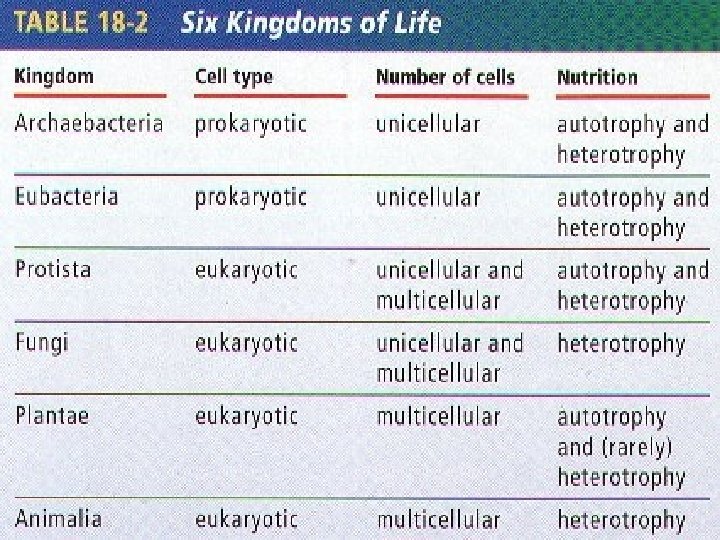
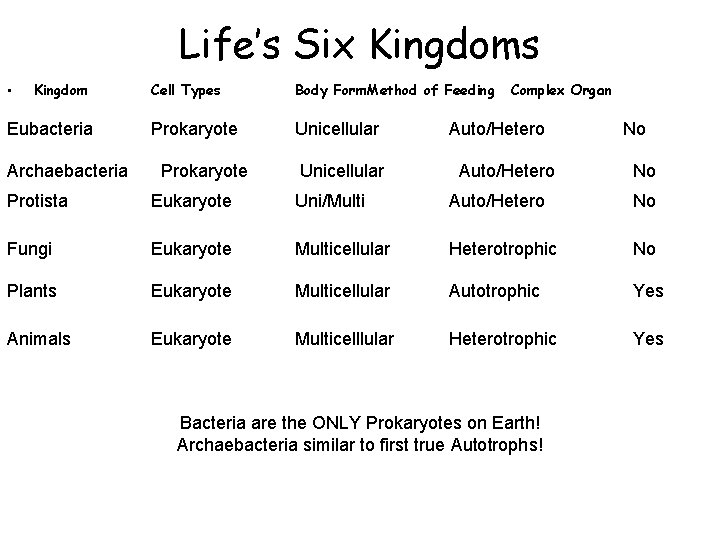
Life’s Six Kingdoms • Kingdom Eubacteria Archaebacteria Cell Types Body Form. Method of Feeding Prokaryote Unicellular Complex Organ Auto/Hetero No No Protista Eukaryote Uni/Multi Auto/Hetero No Fungi Eukaryote Multicellular Heterotrophic No Plants Eukaryote Multicellular Autotrophic Yes Animals Eukaryote Multicelllular Heterotrophic Yes Bacteria are the ONLY Prokaryotes on Earth! Archaebacteria similar to first true Autotrophs!
VIRUS notes
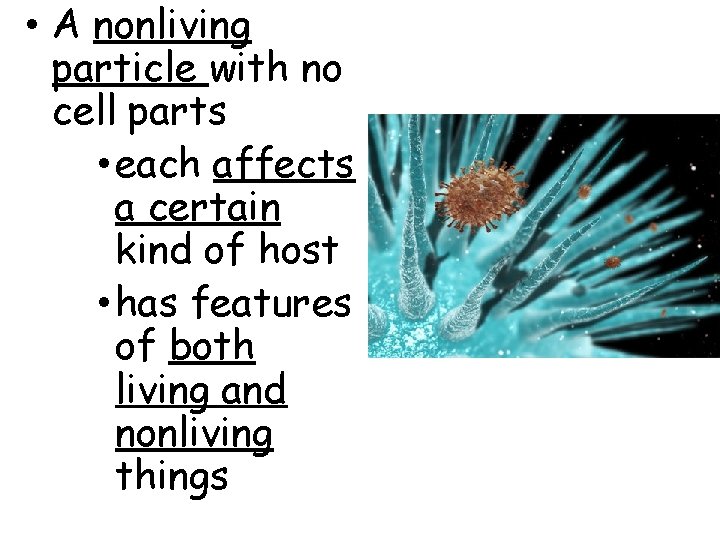
• A nonliving particle with no cell parts • each affects a certain kind of host • has features of both living and nonliving things
• Size: microscopic (electron); smaller than cells; • 1/100 the size of a bacteria
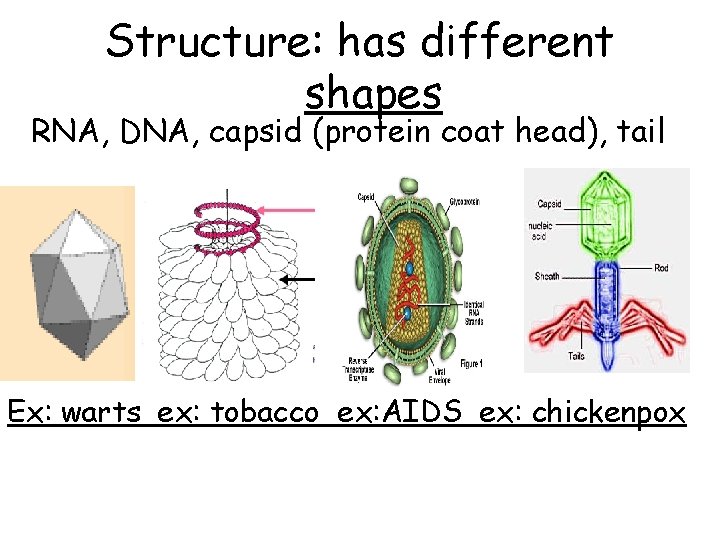
Structure: has different shapes RNA, DNA, capsid (protein coat head), tail Ex: warts ex: tobacco ex: AIDS ex: chickenpox
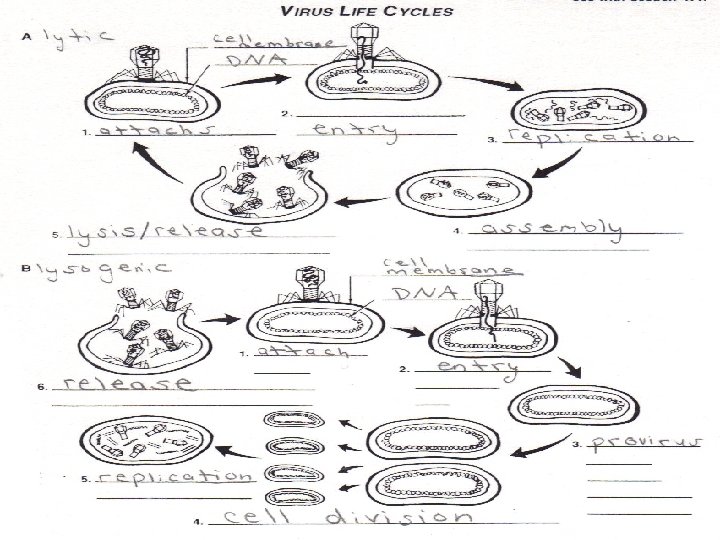
Reproduce: inside a host cell; 2 different cycles • Lytic Cycle (Attach, Entry, Replication, Assembly, Lysis/release) • Lysogenic Cycle (Attach, Entry, Provirus, Cell division, Replication, lysis/release)
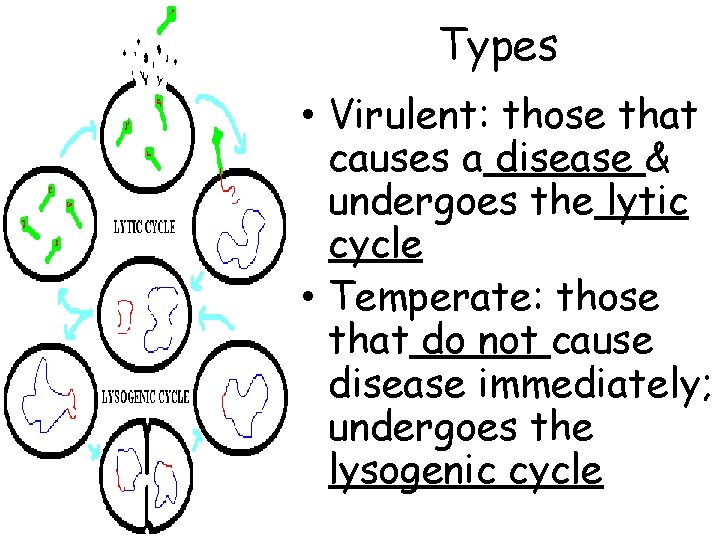
Types • Virulent: those that causes a disease & undergoes the lytic cycle • Temperate: those that do not cause disease immediately; undergoes the lysogenic cycle
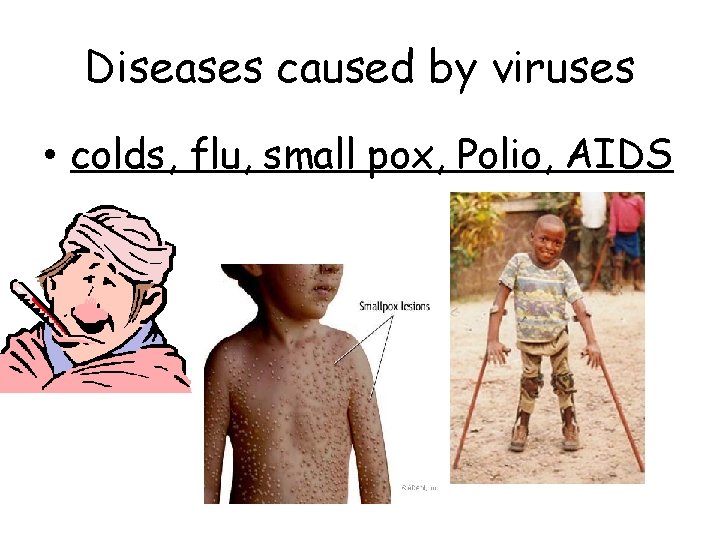
Diseases caused by viruses • colds, flu, small pox, Polio, AIDS
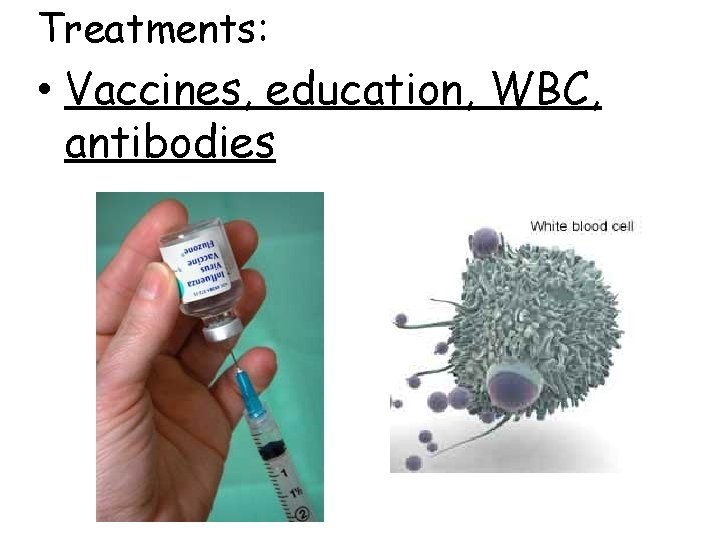
Treatments: • Vaccines, education, WBC, antibodies
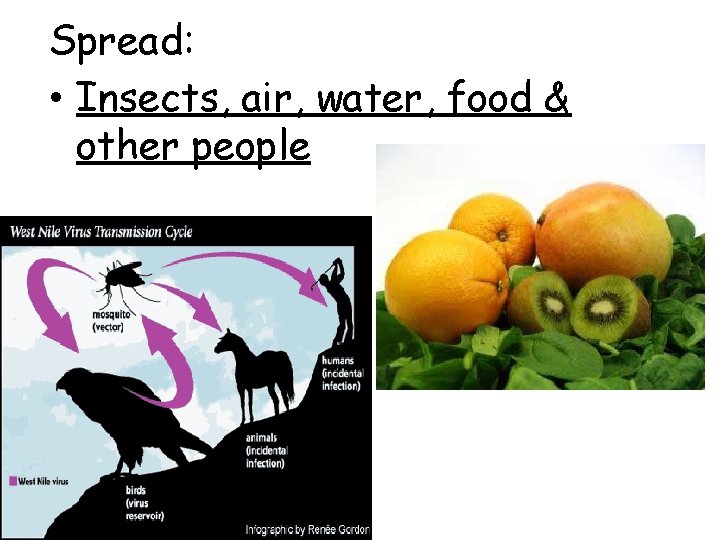
Spread: • Insects, air, water, food & other people
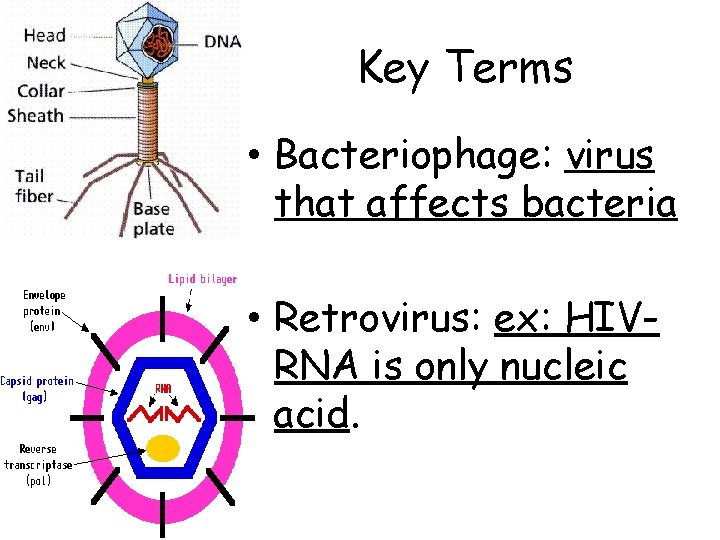
Key Terms • Bacteriophage: virus that affects bacteria • Retrovirus: ex: HIVRNA is only nucleic acid.
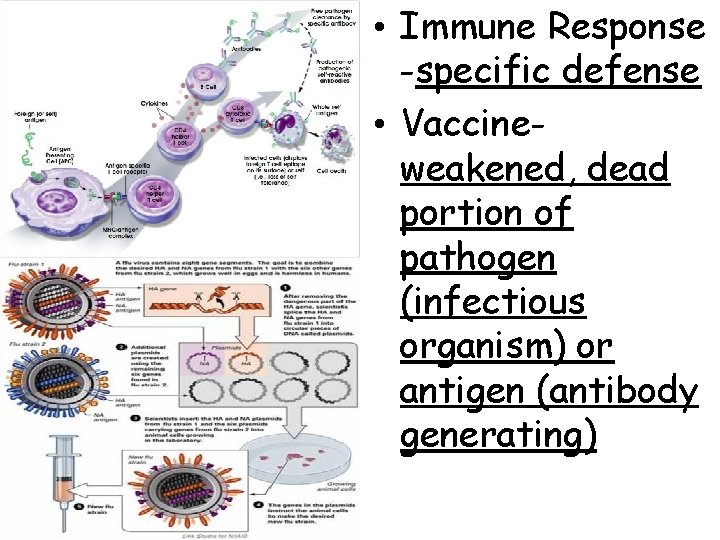
• Immune Response -specific defense • Vaccineweakened, dead portion of pathogen (infectious organism) or antigen (antibody generating)
- Slides: 28