
Classification Monitoring assessing and classifying the environment Why
- Slides: 17
Classification Monitoring, assessing and classifying the environment
Why we need to classify · Provides information on the environment’s quality to the Scottish public · Classification allows us to define targeted objectives for the RBMPs · We have to report results to the EU RBMP
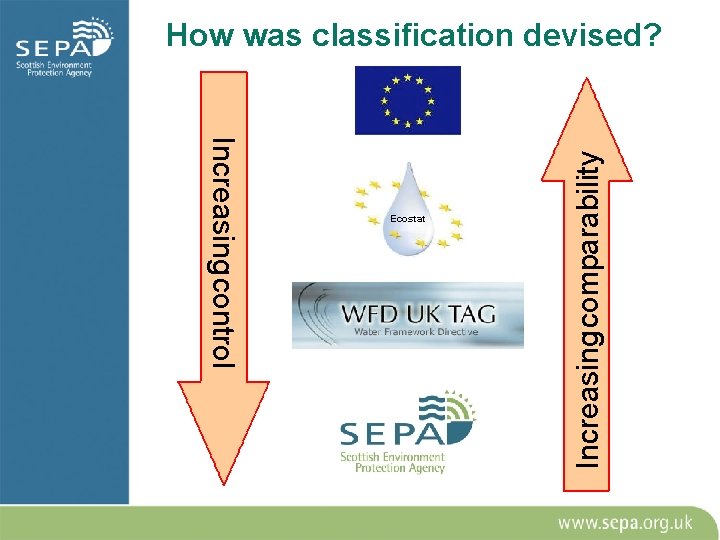
Increasing control Ecostat Increasing comparability How was classification devised?
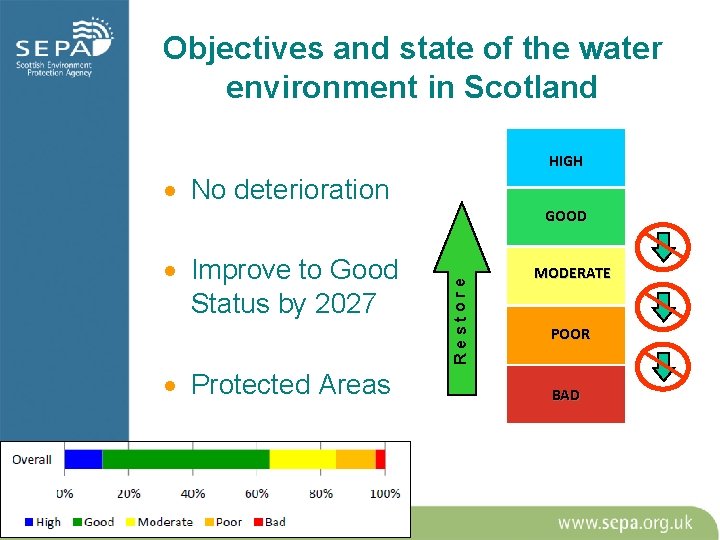
Objectives and state of the water environment in Scotland HIGH · No deterioration · Improve to Good Status by 2027 · Protected Areas Restore GOOD MODERATE POOR BAD
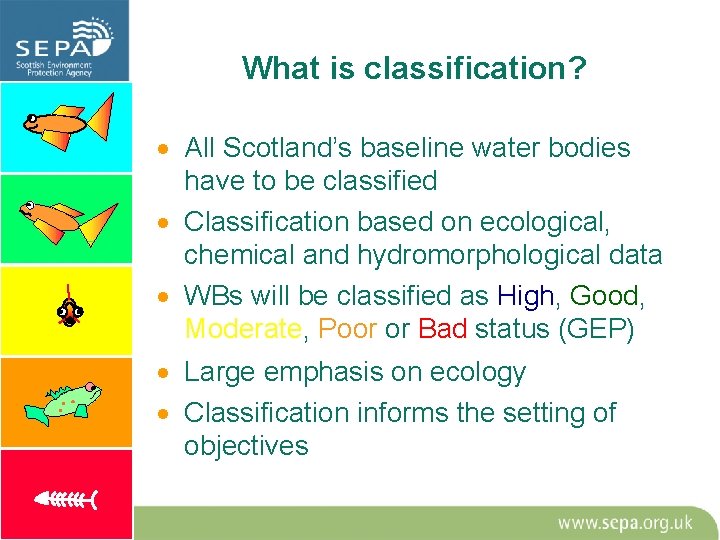
What is classification? · All Scotland’s baseline water bodies have to be classified · Classification based on ecological, chemical and hydromorphological data · WBs will be classified as High, Good, Moderate, Poor or Bad status (GEP) · Large emphasis on ecology · Classification informs the setting of objectives
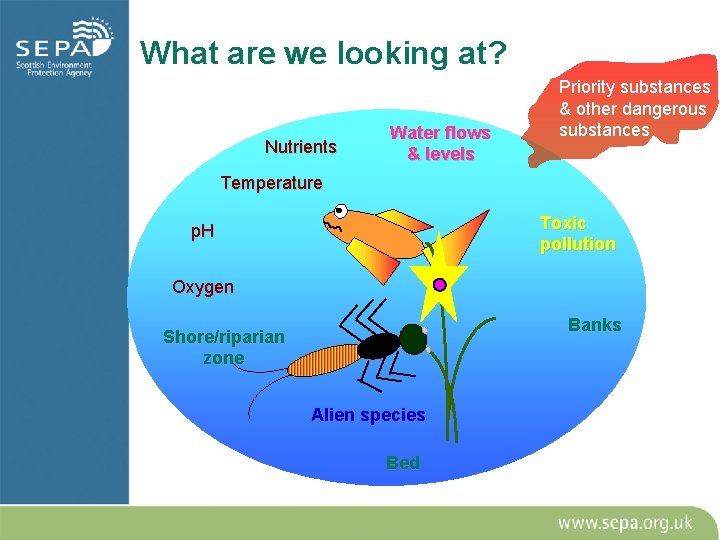
What are we looking at? Nutrients Water flows & levels Priority substances & other dangerous substances Temperature Toxic pollution p. H Oxygen Banks Shore/riparian zone Alien species Bed
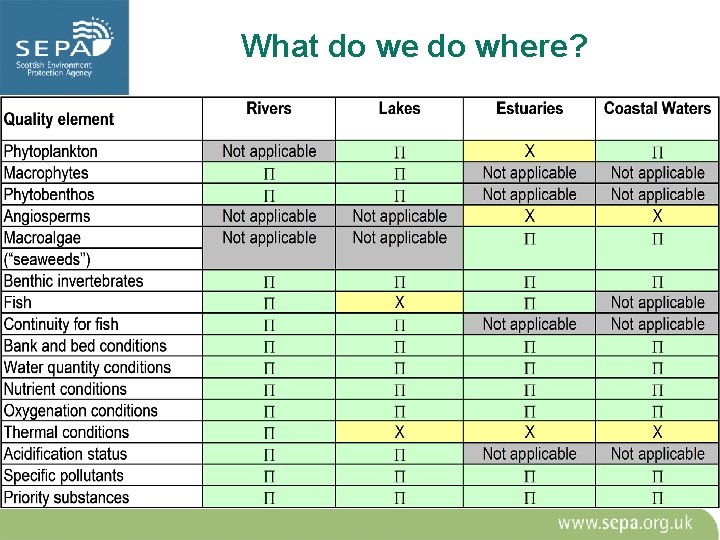
What do we do where?
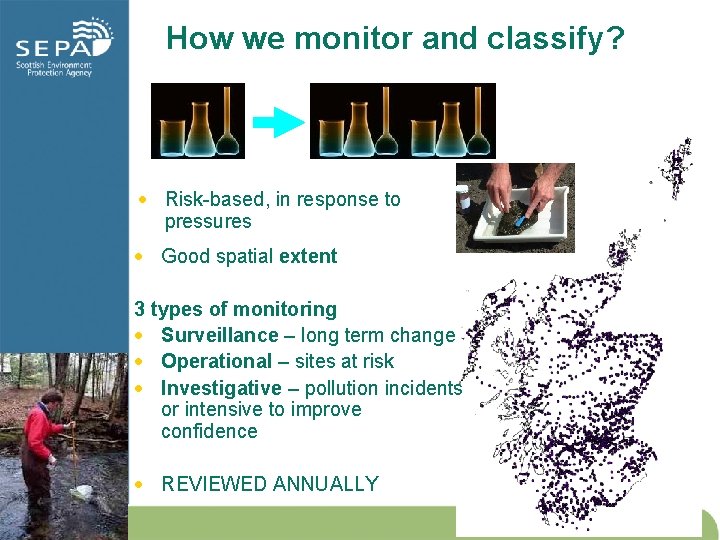
How we monitor and classify? · Risk-based, in response to pressures · Good spatial extent 3 types of monitoring · Surveillance – long term change · Operational – sites at risk · Investigative – pollution incidents or intensive to improve confidence · REVIEWED ANNUALLY
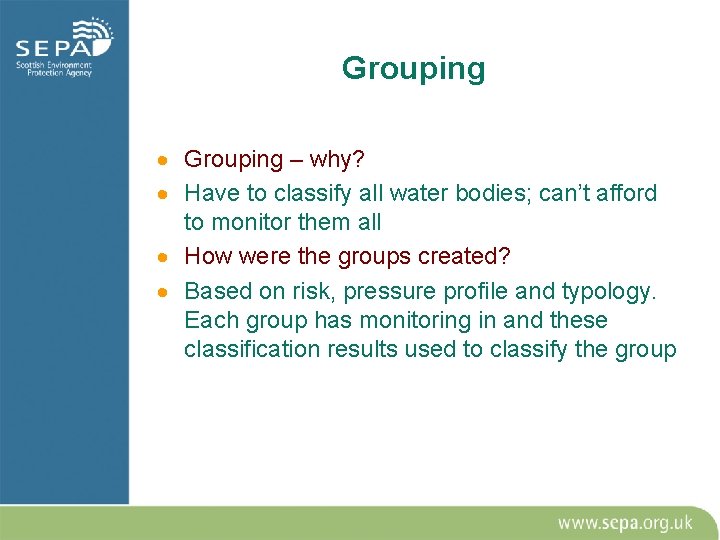
Grouping · Grouping – why? · Have to classify all water bodies; can’t afford to monitor them all · How were the groups created? · Based on risk, pressure profile and typology. Each group has monitoring in and these classification results used to classify the group
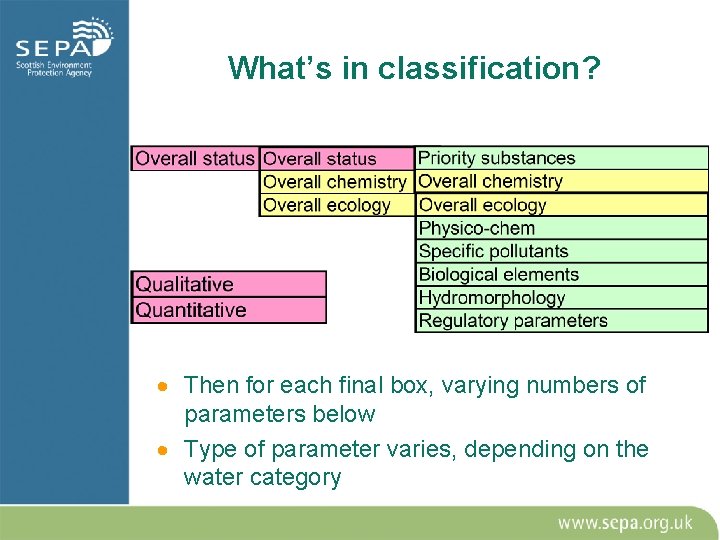
What’s in classification? · Then for each final box, varying numbers of parameters below · Type of parameter varies, depending on the water category
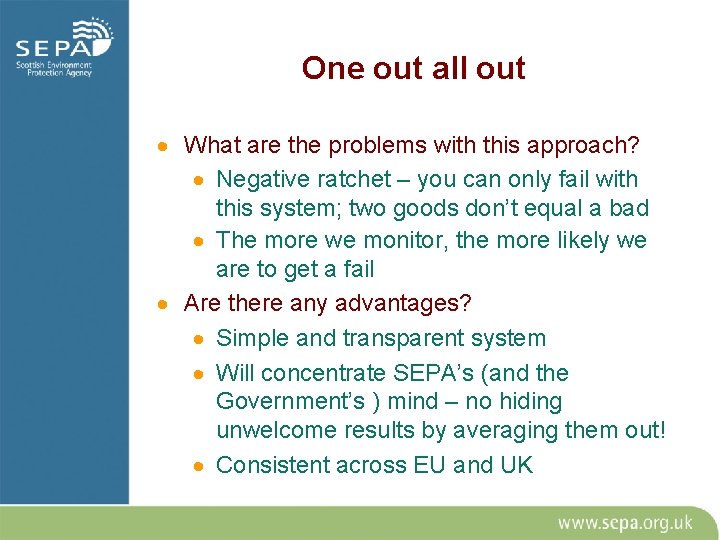
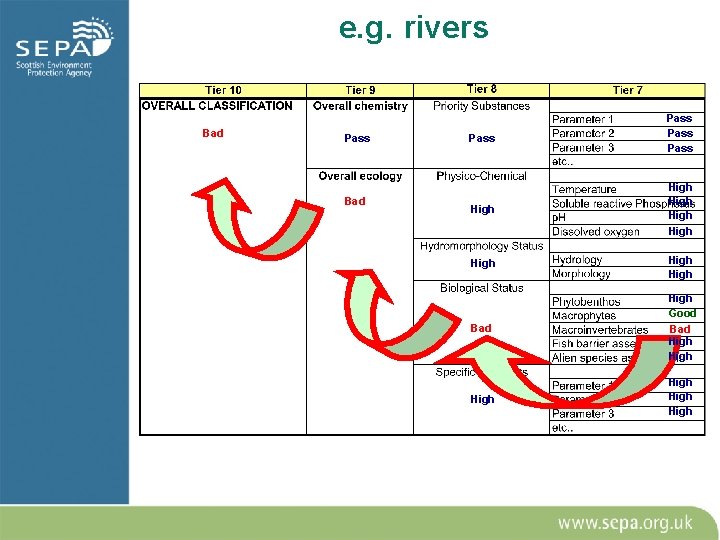
One out all out · What are the problems with this approach? · Negative ratchet – you can only fail with this system; two goods don’t equal a bad · The more we monitor, the more likely we are to get a fail · Are there any advantages? · Simple and transparent system · Will concentrate SEPA’s (and the Government’s ) mind – no hiding unwelcome results by averaging them out! · Consistent across EU and UK
e. g. rivers Bad Pass Pass High High Bad High Good Bad High High
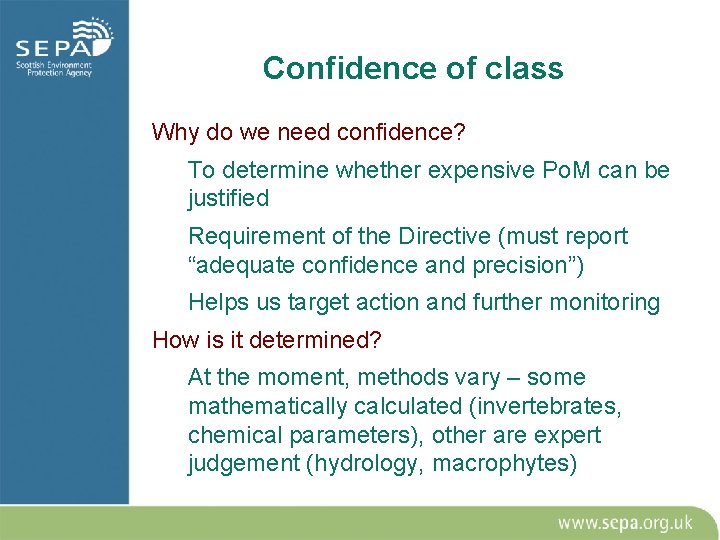
Confidence of class Why do we need confidence? To determine whether expensive Po. M can be justified Requirement of the Directive (must report “adequate confidence and precision”) Helps us target action and further monitoring How is it determined? At the moment, methods vary – some mathematically calculated (invertebrates, chemical parameters), other are expert judgement (hydrology, macrophytes)
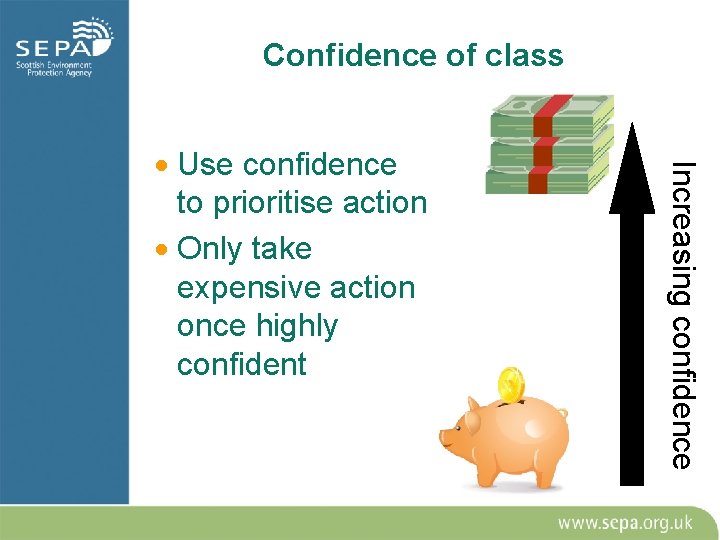
Confidence of class Increasing confidence · Use confidence to prioritise action · Only take expensive action once highly confident
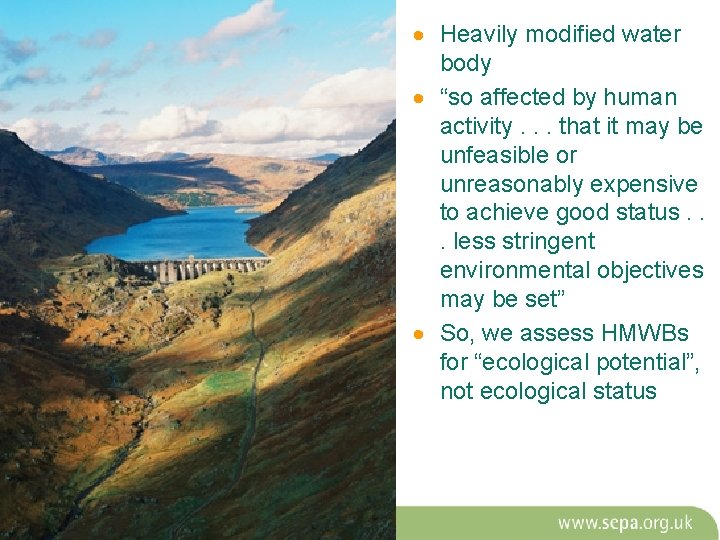
· Heavily modified water body · “so affected by human activity. . . that it may be unfeasible or unreasonably expensive to achieve good status. . . less stringent environmental objectives may be set” · So, we assess HMWBs for “ecological potential”, not ecological status
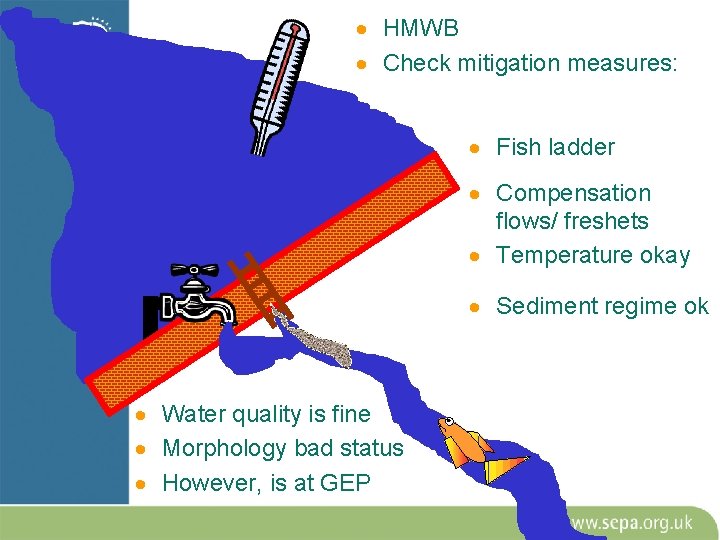
· HMWB · Check mitigation measures: · Fish ladder · Compensation flows/ freshets · Temperature okay · Sediment regime ok · Water quality is fine · Morphology bad status · However, is at GEP
Information for you · All of this information is published and available for you to use at your convenience. · We welcome people questioning it – especially people like yourselves with expert local knowledge about the local ecology. · Only by questioning it can we refine our monitoring and improve our confidence.