
Classification Lesson Objective To understand how organisms are
Classification
Lesson Objective To understand how organisms are classified. Learning Outcomes (We will be able to. . . ) 1. All: Recall that organisms can be classified based on appearance. 2. Most: Explain the differences between vertebrates and invertebrates and describe the features of the 5 vertebrate groups. 3. Some: analyze and evaluate problems with the classification system.

Kid Classification o Without talking sort yourselves into 3 groups based on height. • Short people: Right hand side of the room • Medium sized people: Left hand side of the room • Tall people: Back of the room
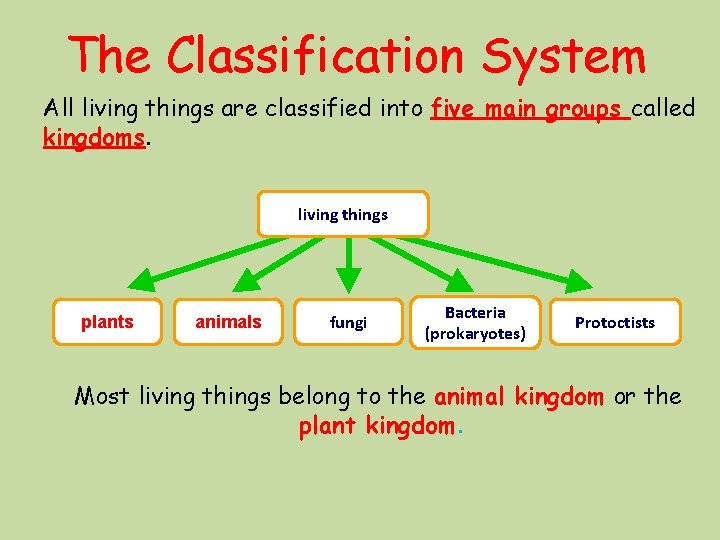
The Classification System All living things are classified into five main groups called kingdoms. living things plants animals fungi Bacteria (prokaryotes) Protoctists Most living things belong to the animal kingdom or the plant kingdom.
Classifying Animals 3 Mins In the front of your book make a list of as many different animals as you can think of. . . you only have 1 minute! Now, circle the vertebrates and underline the invertebrates. Vertebrates – Animals with a backbone. Invertebrates – Animals without a backbone.
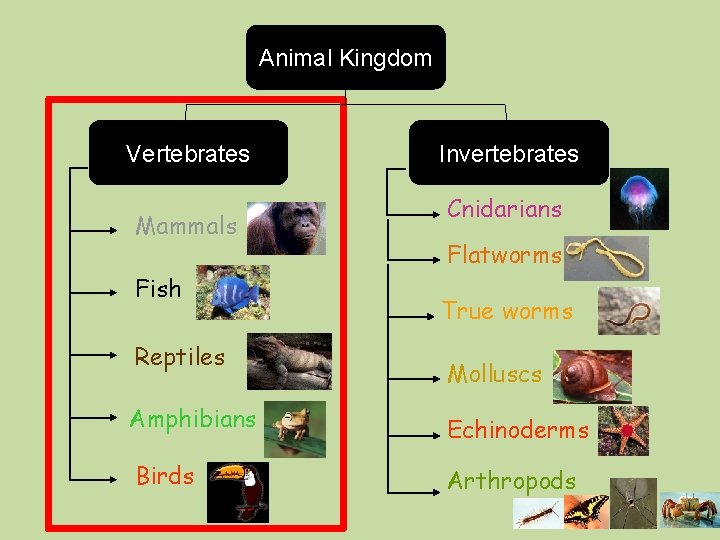
Animal Kingdom Vertebrates Mammals Fish Reptiles Invertebrates Cnidarians Flatworms True worms Molluscs Amphibians Echinoderms Birds Arthropods
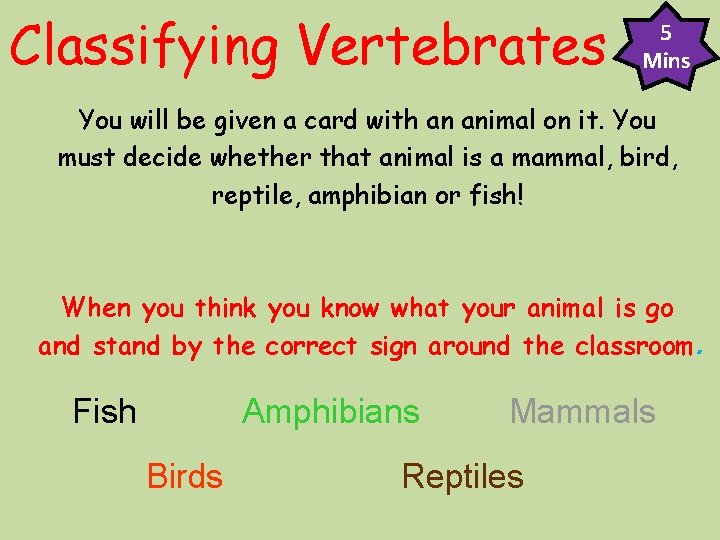
Classifying Vertebrates 5 Mins You will be given a card with an animal on it. You must decide whether that animal is a mammal, bird, reptile, amphibian or fish! When you think you know what your animal is go and stand by the correct sign around the classroom. Fish Amphibians Birds Mammals Reptiles
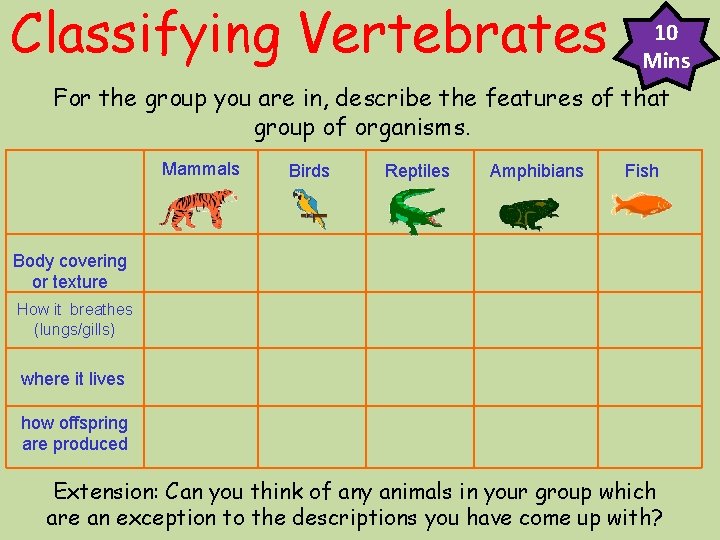
Classifying Vertebrates 10 Mins For the group you are in, describe the features of that group of organisms. Mammals Birds Reptiles Amphibians Fish Body covering or texture How it breathes (lungs/gills) where it lives how offspring are produced Extension: Can you think of any animals in your group which are an exception to the descriptions you have come up with?
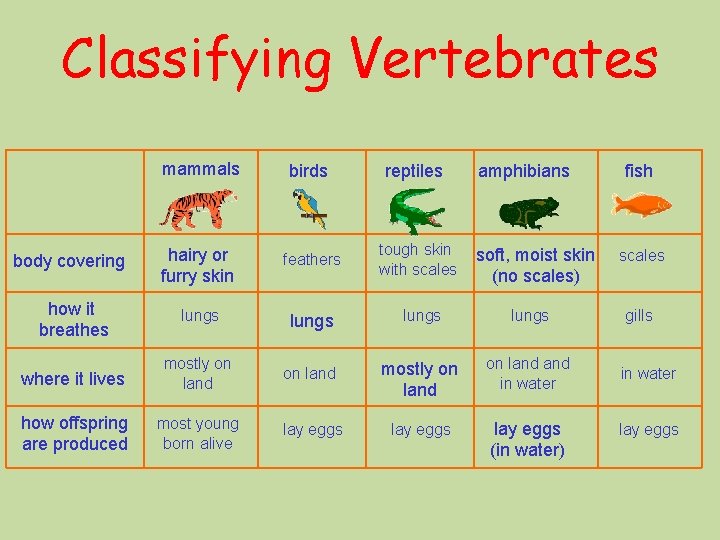
Classifying Vertebrates mammals birds reptiles body covering hairy or furry skin feathers tough skin with scales how it breathes lungs where it lives mostly on land and in water how offspring are produced most young born alive lay eggs (in water) amphibians soft, moist skin (no scales) fish scales gills in water lay eggs
Lesson Objective To understand how organisms are classified. Learning Outcomes (We will be able to. . . ) 1. All: Recall that organisms can be classified based on appearance. 2. Most: Explain the differences between vertebrates and invertebrates and describe the features of the 5 vertebrate groups. 3. Some: analyze and evaluate problems with the classification system.
Reviewing Progress
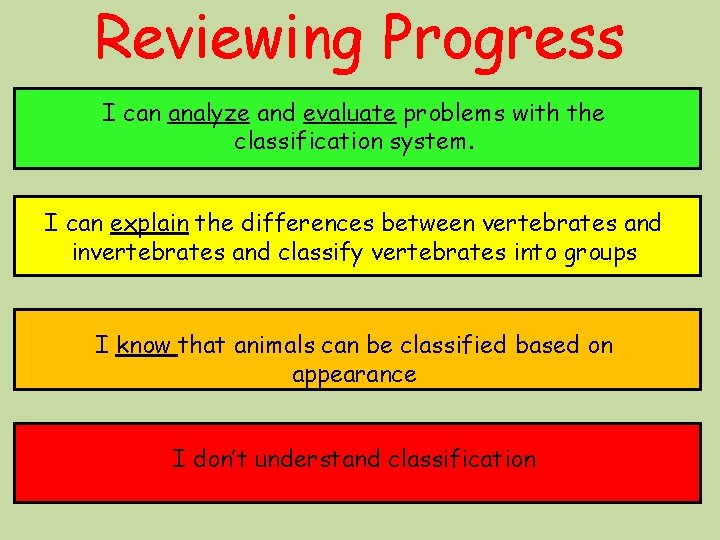
Reviewing Progress I can analyze and evaluate problems with the classification system. I can explain the differences between vertebrates and invertebrates and classify vertebrates into groups I know that animals can be classified based on appearance I don’t understand classification
- Slides: 12