
Classification Learning Objectives 1 Describe what classification is
Classification Learning Objectives: 1. Describe what classification is. 2. Describe the difference between invertebrates and their subdivisions using examples. 3. Describe the differences between plants with vascular tissues and waterproof cuticles and plants without.

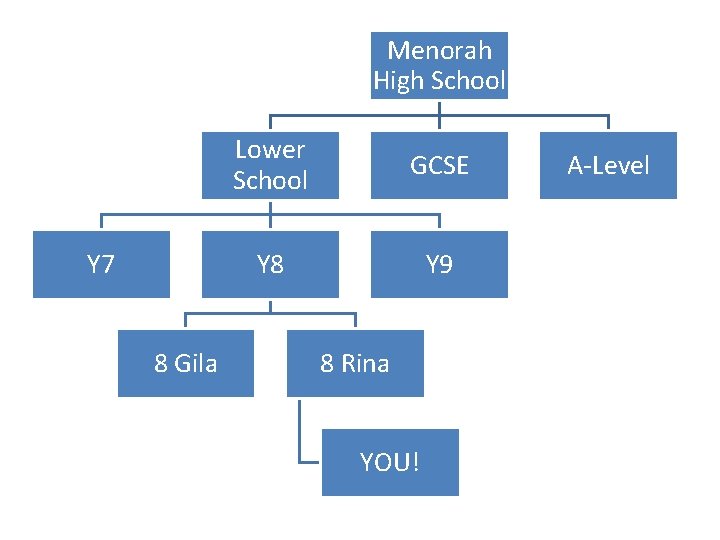
Classification • Classification = sorting into groups • What groups can you think of that you belong to in the school?
Menorah High School Y 7 8 Gila Lower School GCSE Y 8 Y 9 8 Rina YOU! A-Level
How do we classify organisms? Kingdom Phylum Class Order Family Genus Species
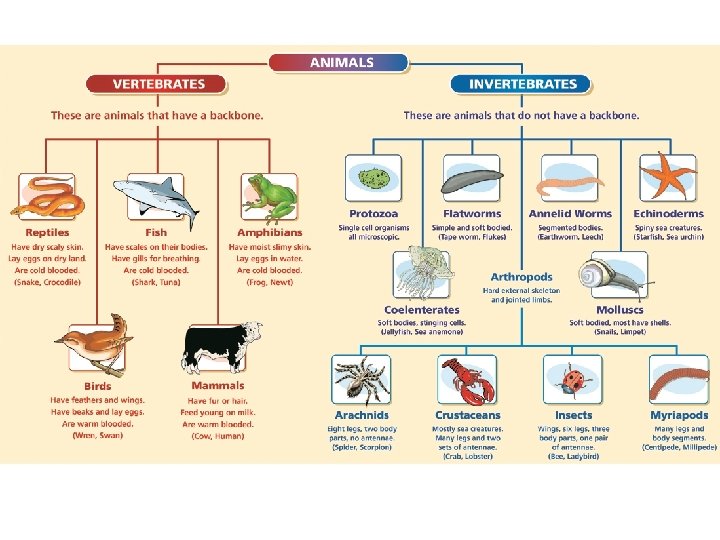
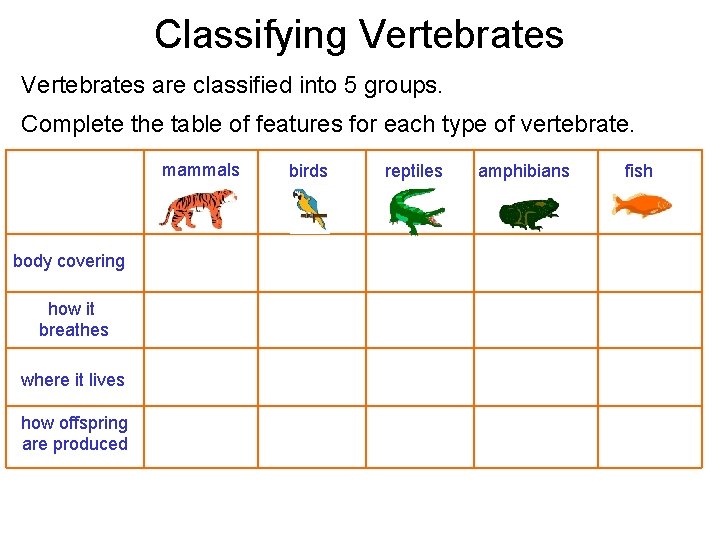
7 D Classification - Vertebrates Classifying Vertebrates are classified into 5 groups. Complete the table of features for each type of vertebrate. mammals body covering how it breathes where it lives how offspring are produced birds reptiles amphibians fish
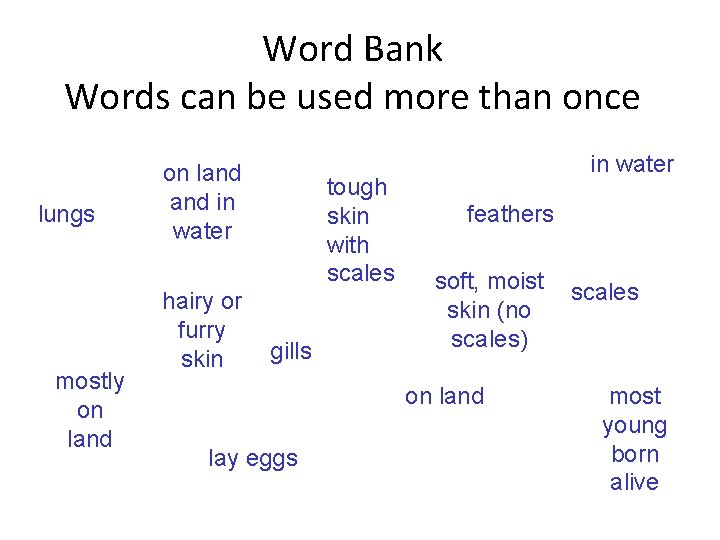
7 D Classification - Vertebrates Word Bank Words can be used more than once lungs mostly on land and in water hairy or furry skin tough skin with scales gills in water feathers soft, moist skin (no scales) on land lay eggs scales most young born alive
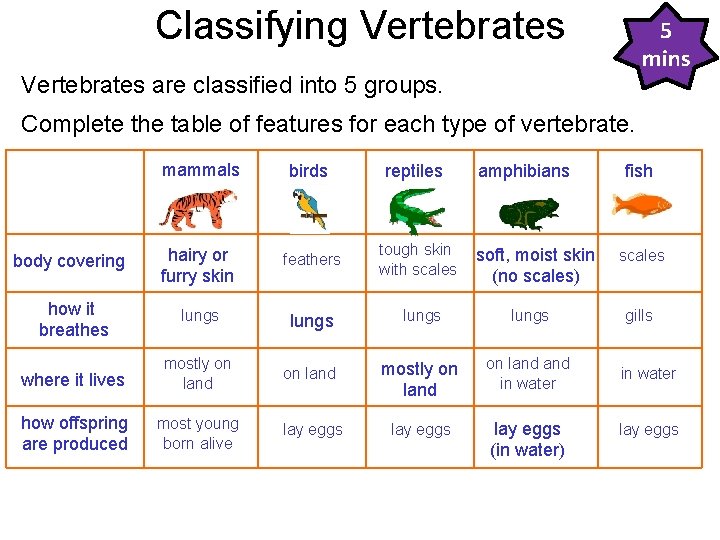
7 D Classification - Vertebrates Classifying Vertebrates 5 mins Vertebrates are classified into 5 groups. Complete the table of features for each type of vertebrate. mammals birds reptiles body covering hairy or furry skin feathers tough skin with scales how it breathes lungs where it lives mostly on land and in water how offspring are produced most young born alive lay eggs (in water) amphibians soft, moist skin (no scales) fish scales gills in water lay eggs
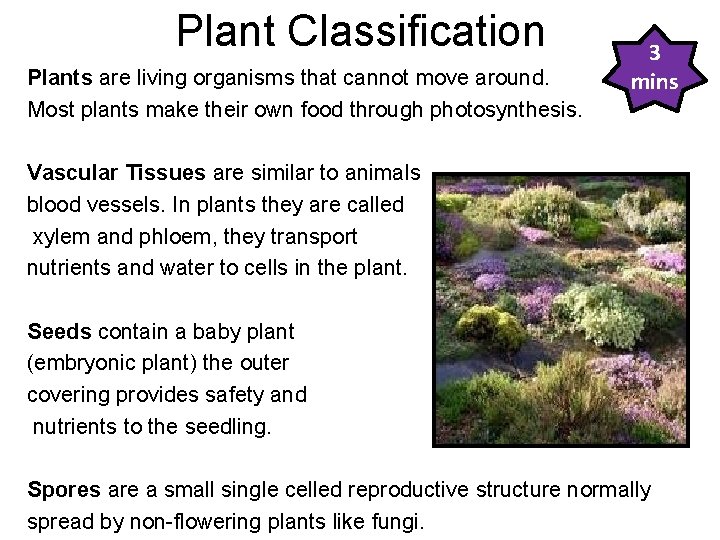
Plant Classification Plants are living organisms that cannot move around. Most plants make their own food through photosynthesis. 3 mins Vascular Tissues are similar to animals blood vessels. In plants they are called xylem and phloem, they transport nutrients and water to cells in the plant. Seeds contain a baby plant (embryonic plant) the outer covering provides safety and nutrients to the seedling. Spores are a small single celled reproductive structure normally spread by non-flowering plants like fungi.
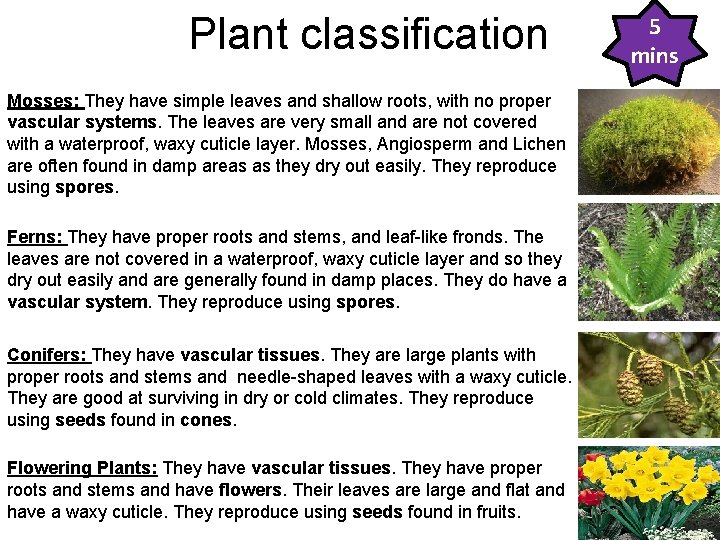
Plant classification Mosses: They have simple leaves and shallow roots, with no proper vascular systems. The leaves are very small and are not covered with a waterproof, waxy cuticle layer. Mosses, Angiosperm and Lichen are often found in damp areas as they dry out easily. They reproduce using spores. Ferns: They have proper roots and stems, and leaf-like fronds. The leaves are not covered in a waterproof, waxy cuticle layer and so they dry out easily and are generally found in damp places. They do have a vascular system. They reproduce using spores. Conifers: They have vascular tissues. They are large plants with proper roots and stems and needle-shaped leaves with a waxy cuticle. They are good at surviving in dry or cold climates. They reproduce using seeds found in cones. Flowering Plants: They have vascular tissues. They have proper roots and stems and have flowers. Their leaves are large and flat and have a waxy cuticle. They reproduce using seeds found in fruits. 5 mins
Plant classification
- Slides: 11