
Classification Introduction to Taxonomy Classification The grouping of

- Slides: 25
Classification & Introduction to Taxonomy
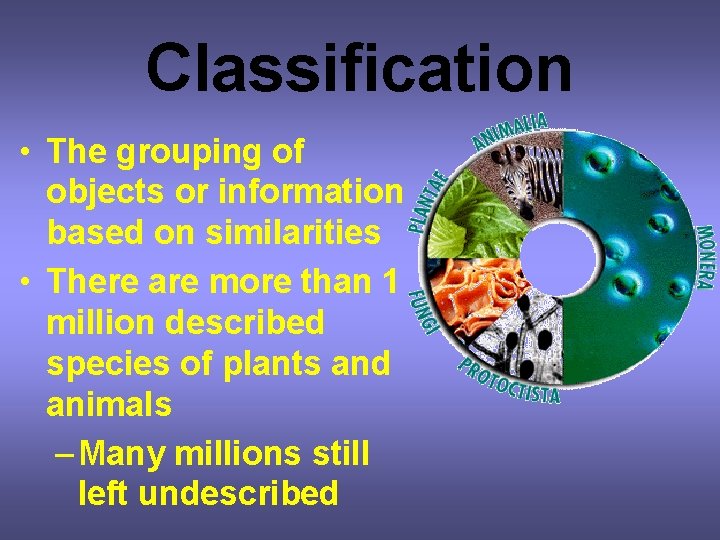
Classification • The grouping of objects or information based on similarities • There are more than 1 million described species of plants and animals – Many millions still left undescribed
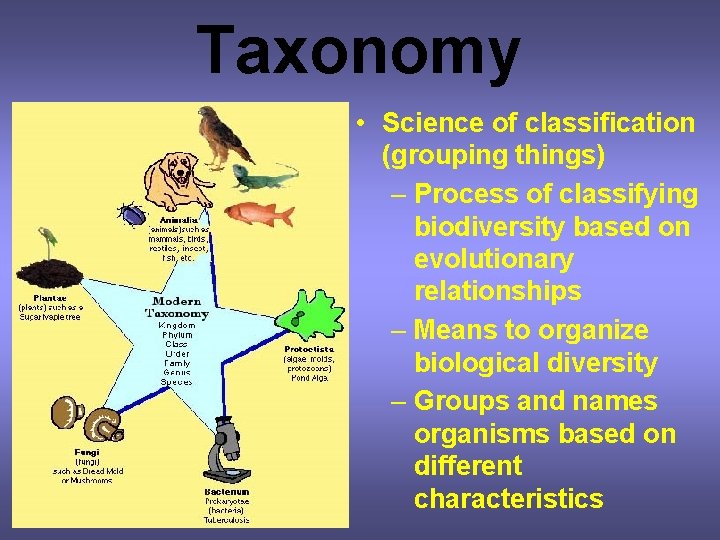
Taxonomy • Science of classification (grouping things) – Process of classifying biodiversity based on evolutionary relationships – Means to organize biological diversity – Groups and names organisms based on different characteristics
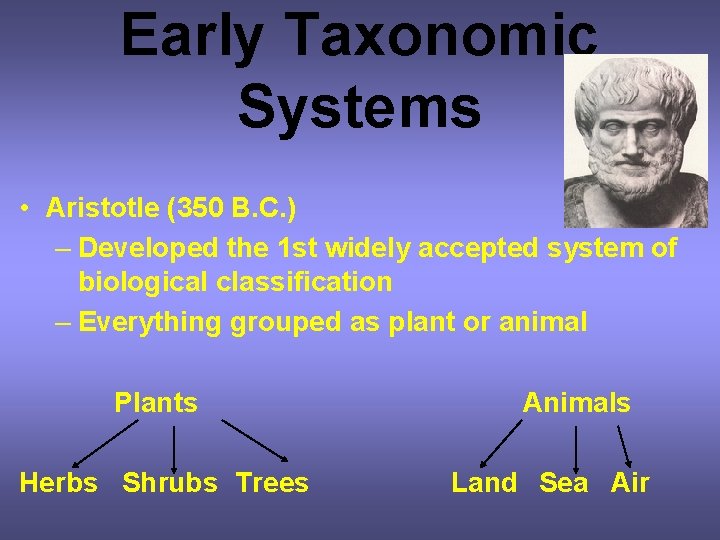
Early Taxonomic Systems • Aristotle (350 B. C. ) – Developed the 1 st widely accepted system of biological classification – Everything grouped as plant or animal Plants Herbs Shrubs Trees Animals Land Sea Air
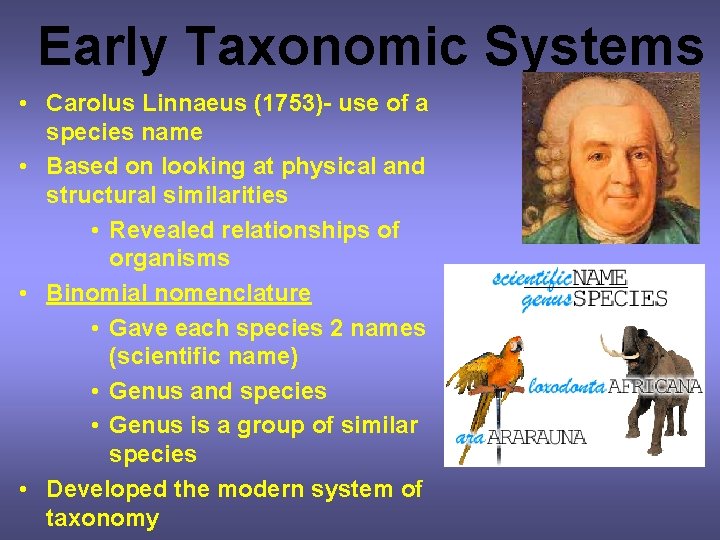
Early Taxonomic Systems • Carolus Linnaeus (1753)- use of a species name • Based on looking at physical and structural similarities • Revealed relationships of organisms • Binomial nomenclature • Gave each species 2 names (scientific name) • Genus and species • Genus is a group of similar species • Developed the modern system of taxonomy
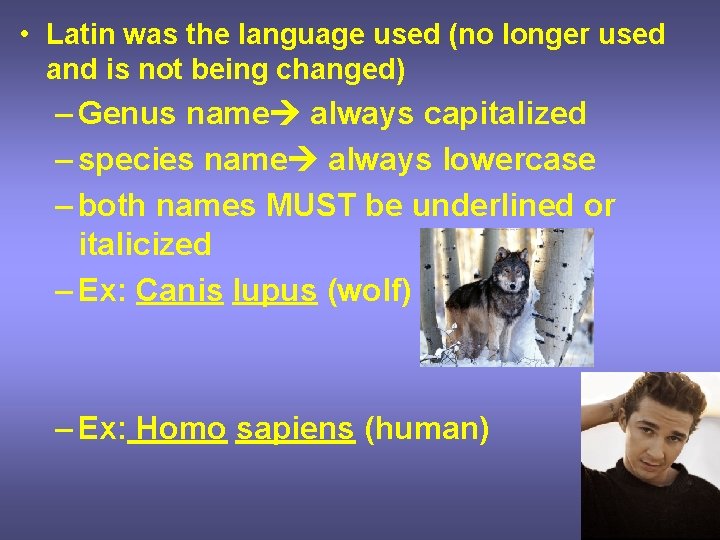
• Latin was the language used (no longer used and is not being changed) – Genus name always capitalized – species name always lowercase – both names MUST be underlined or italicized – Ex: Canis lupus (wolf) – Ex: Homo sapiens (human)
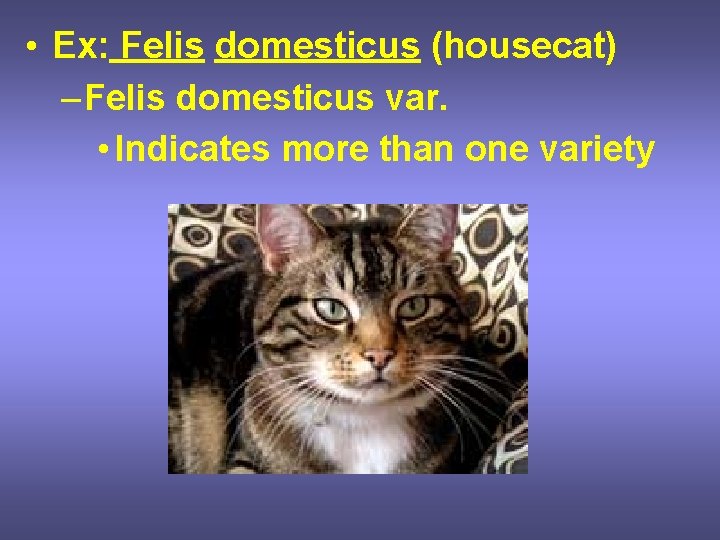
• Ex: Felis domesticus (housecat) – Felis domesticus var. • Indicates more than one variety
• Scientific names are often: – Descriptive (Acer rubrum red maple) – Named after someone (genus Linnea) – Descriptive of where an organism lives (D. californica) – Named after person who first described the organism (D. californica Torr) • Many organisms have common names – Can be misleading – Can have more than 1 common name, depending on the area it is found in
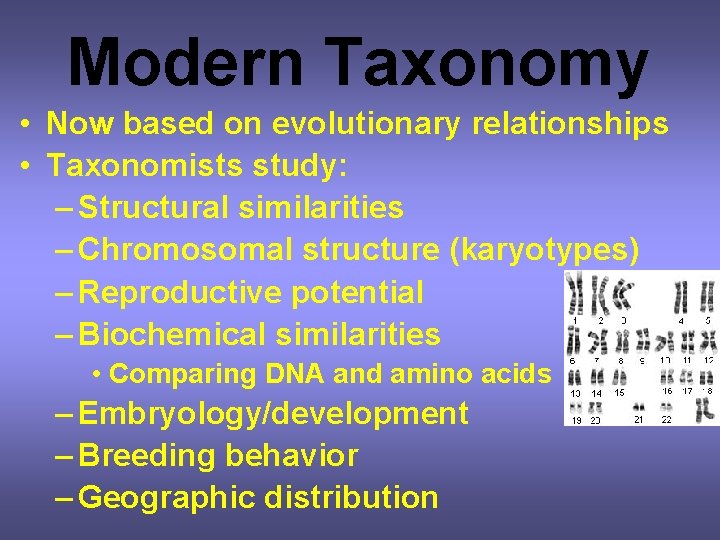
Modern Taxonomy • Now based on evolutionary relationships • Taxonomists study: – Structural similarities – Chromosomal structure (karyotypes) – Reproductive potential – Biochemical similarities • Comparing DNA and amino acids – Embryology/development – Breeding behavior – Geographic distribution
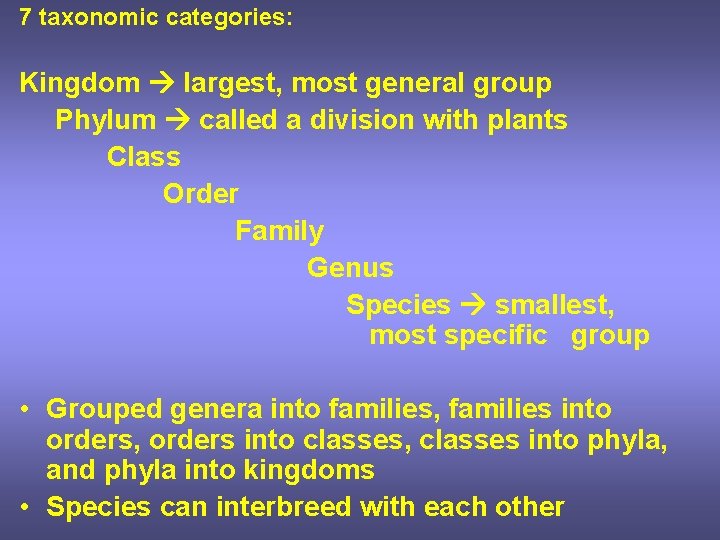
7 taxonomic categories: Kingdom largest, most general group Phylum called a division with plants Class Order Family Genus Species smallest, most specific group • Grouped genera into families, families into orders, orders into classes, classes into phyla, and phyla into kingdoms • Species can interbreed with each other
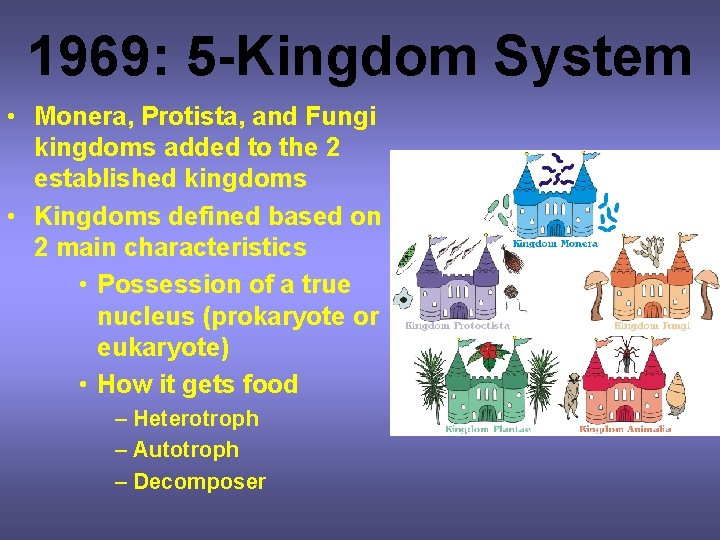
1969: 5 -Kingdom System • Monera, Protista, and Fungi kingdoms added to the 2 established kingdoms • Kingdoms defined based on 2 main characteristics • Possession of a true nucleus (prokaryote or eukaryote) • How it gets food – Heterotroph – Autotroph – Decomposer
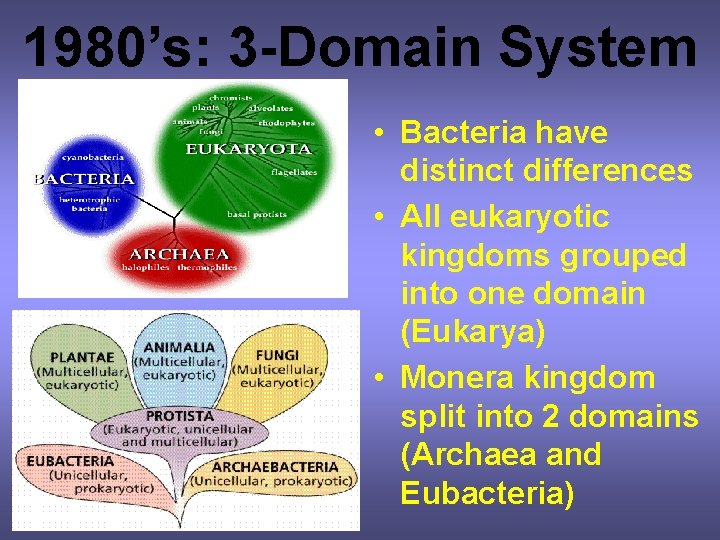
1980’s: 3 -Domain System • Bacteria have distinct differences • All eukaryotic kingdoms grouped into one domain (Eukarya) • Monera kingdom split into 2 domains (Archaea and Eubacteria)
How Living Things are Classified • Groups of organisms called taxa or taxons • Organisms arranged in groups ranging from very broad to very specific characteristics – Broader taxons have more general characteristics and more species within it – Smallest taxon Species – Largest taxon Kingdom
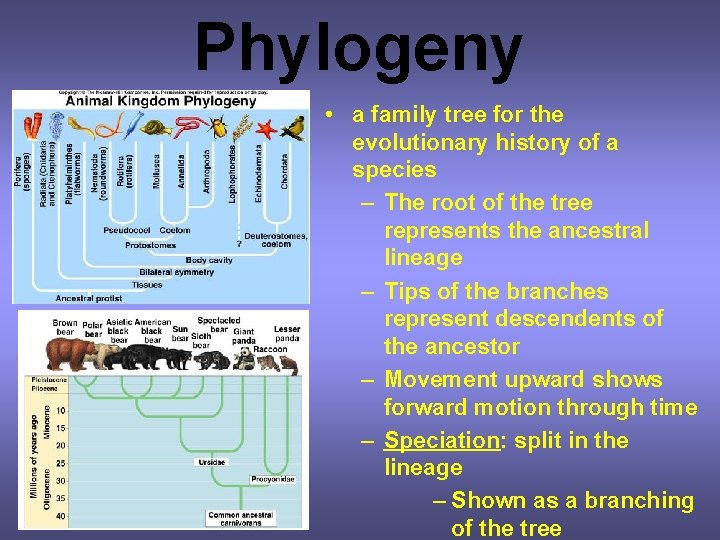
Phylogeny • a family tree for the evolutionary history of a species – The root of the tree represents the ancestral lineage – Tips of the branches represent descendents of the ancestor – Movement upward shows forward motion through time – Speciation: split in the lineage – Shown as a branching of the tree
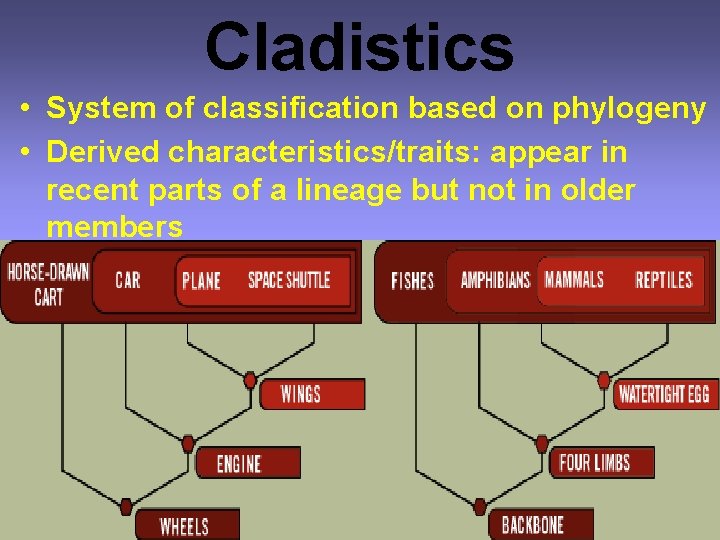
Cladistics • System of classification based on phylogeny • Derived characteristics/traits: appear in recent parts of a lineage but not in older members
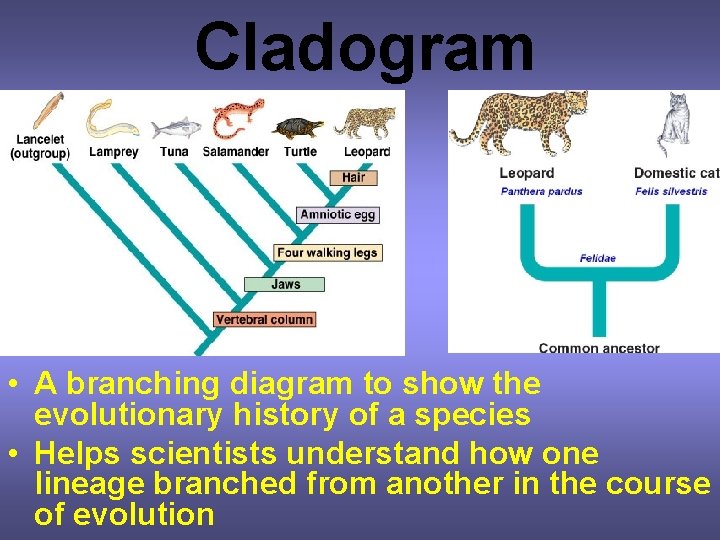
Cladogram • A branching diagram to show the evolutionary history of a species • Helps scientists understand how one lineage branched from another in the course of evolution
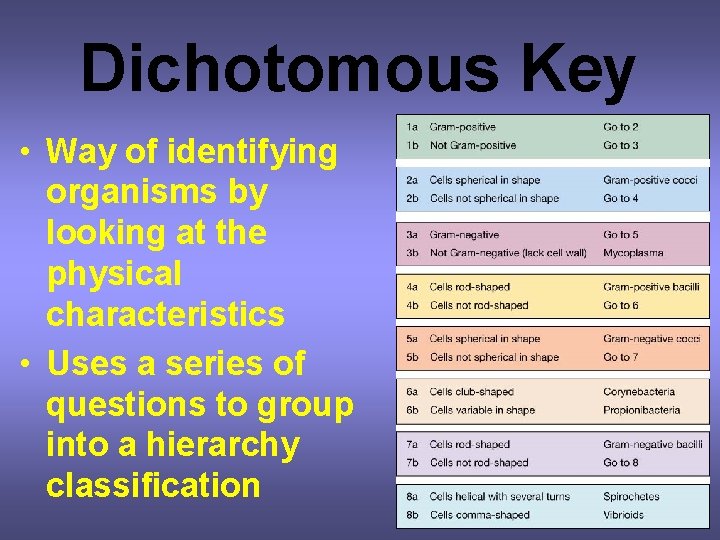
Dichotomous Key • Way of identifying organisms by looking at the physical characteristics • Uses a series of questions to group into a hierarchy classification
Chapter 18 Review #1: 1. On what language are scientific names based? 2. How should the scientific name of a species be written? 3. Which part of the name Homo erectus identifies the genus? 4. List in order from smallest to largest the 7 categories in Linnaeus’s system of classification.
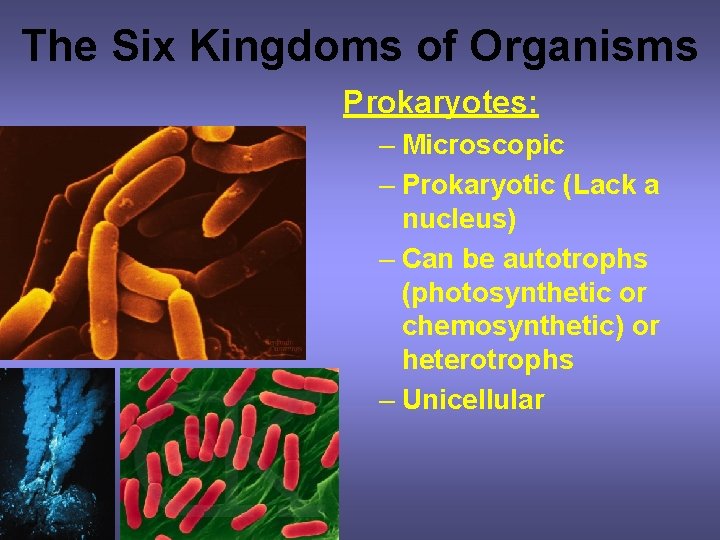
The Six Kingdoms of Organisms Prokaryotes: – Microscopic – Prokaryotic (Lack a nucleus) – Can be autotrophs (photosynthetic or chemosynthetic) or heterotrophs – Unicellular
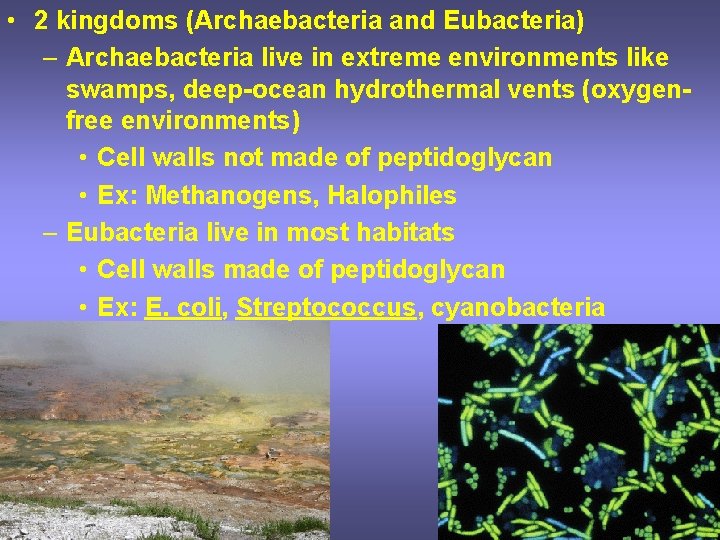
• 2 kingdoms (Archaebacteria and Eubacteria) – Archaebacteria live in extreme environments like swamps, deep-ocean hydrothermal vents (oxygenfree environments) • Cell walls not made of peptidoglycan • Ex: Methanogens, Halophiles – Eubacteria live in most habitats • Cell walls made of peptidoglycan • Ex: E. coli, Streptococcus, cyanobacteria
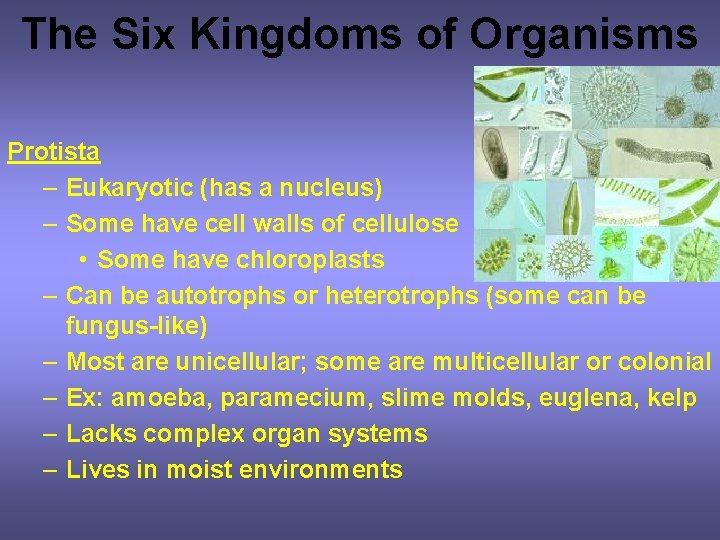
The Six Kingdoms of Organisms Protista – Eukaryotic (has a nucleus) – Some have cell walls of cellulose • Some have chloroplasts – Can be autotrophs or heterotrophs (some can be fungus-like) – Most are unicellular; some are multicellular or colonial – Ex: amoeba, paramecium, slime molds, euglena, kelp – Lacks complex organ systems – Lives in moist environments
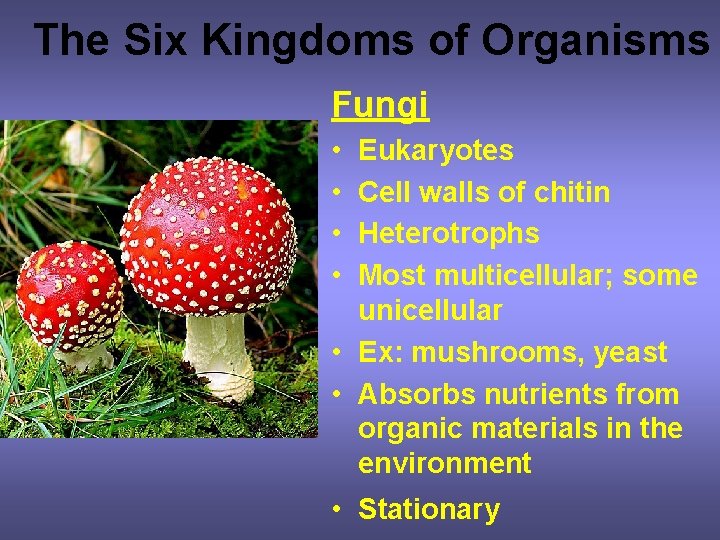
The Six Kingdoms of Organisms Fungi • • Eukaryotes Cell walls of chitin Heterotrophs Most multicellular; some unicellular • Ex: mushrooms, yeast • Absorbs nutrients from organic materials in the environment • Stationary
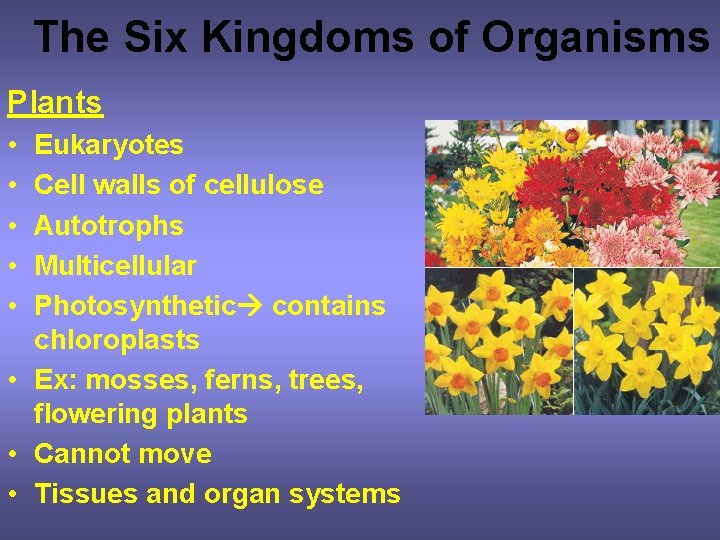
The Six Kingdoms of Organisms Plants • • • Eukaryotes Cell walls of cellulose Autotrophs Multicellular Photosynthetic contains chloroplasts • Ex: mosses, ferns, trees, flowering plants • Cannot move • Tissues and organ systems
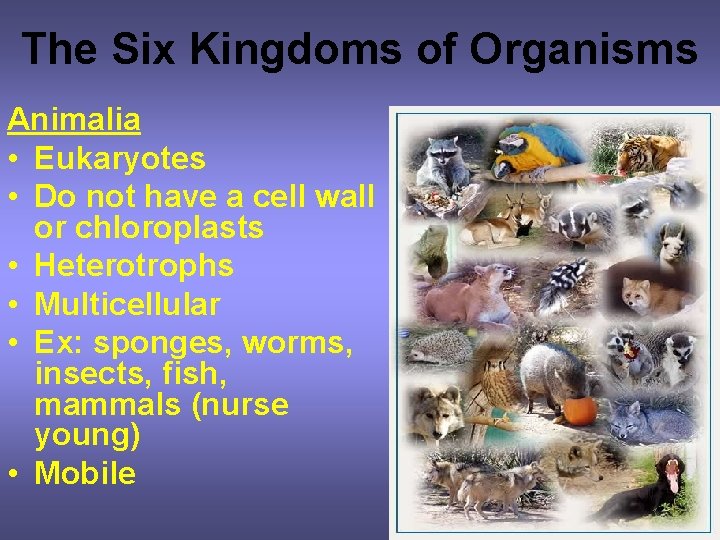
The Six Kingdoms of Organisms Animalia • Eukaryotes • Do not have a cell wall or chloroplasts • Heterotrophs • Multicellular • Ex: sponges, worms, insects, fish, mammals (nurse young) • Mobile
Chapter 18 Review #2: 1. In taxonomy, each level of classification is referred to as a (an) ______. 2. Characteristics that appear in recent parts of a lineage but not in its older members are called ___. a. Taxons b. Derived characters c. Cladograms d. Genes 3. The group of organisms that can be larger than a kingdom is called a ___. a. domain b. species c. phylum d. class