
Classification Grouping things based on their similarities Taxonomy
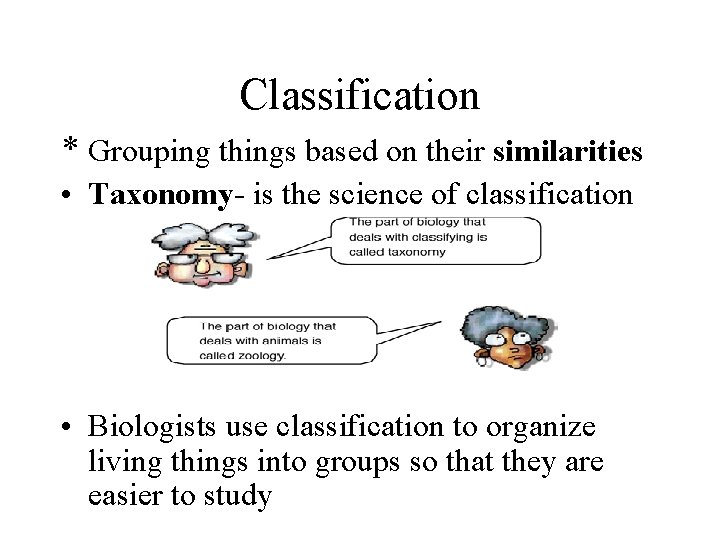
Classification * Grouping things based on their similarities • Taxonomy- is the science of classification • Biologists use classification to organize living things into groups so that they are easier to study
Aristotle • was the first scientist to record a classification system for animals. Zoology • It was based on whether animals could: – fly – swim – walk, crawl, or run
Carolus Linnaeus • In the 1750’s, Linnaeus expanded the classification system • He devised a two word naming system. Binomial Nomenclature • Genus- first word • Species- both words (second word gives a more specific characteristic)
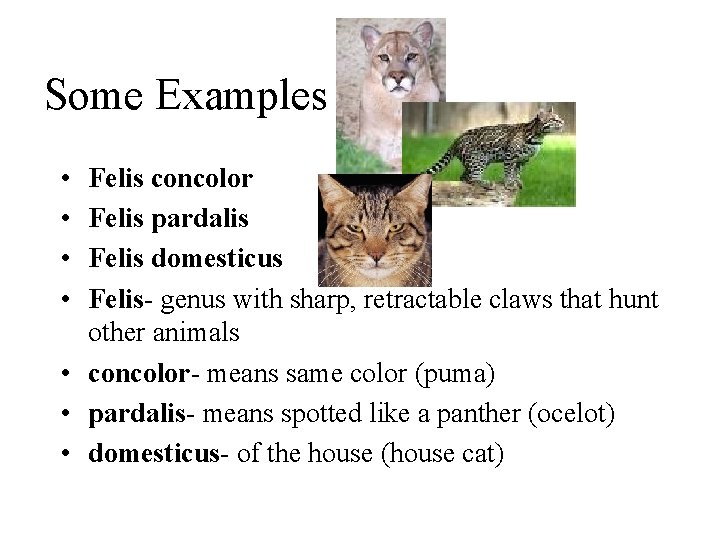
Some Examples • • Felis concolor Felis pardalis Felis domesticus Felis- genus with sharp, retractable claws that hunt other animals • concolor- means same color (puma) • pardalis- means spotted like a panther (ocelot) • domesticus- of the house (house cat)
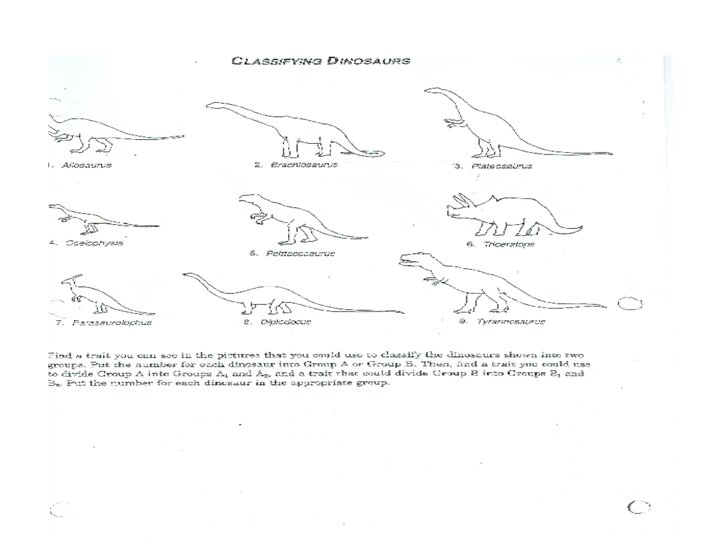
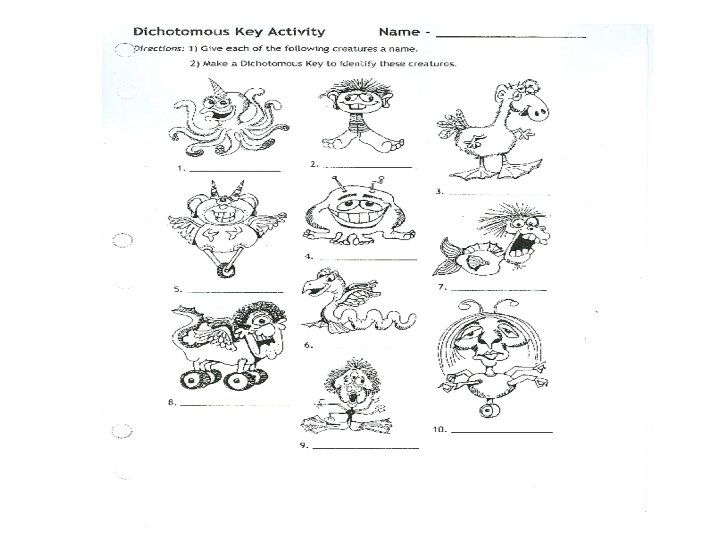
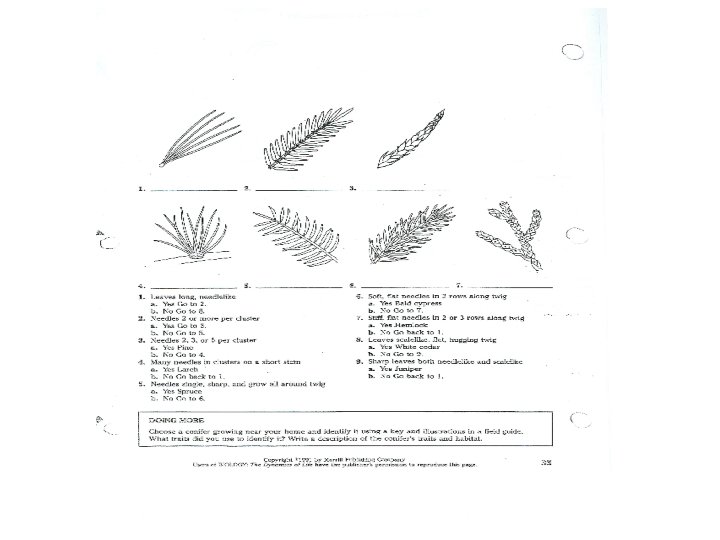
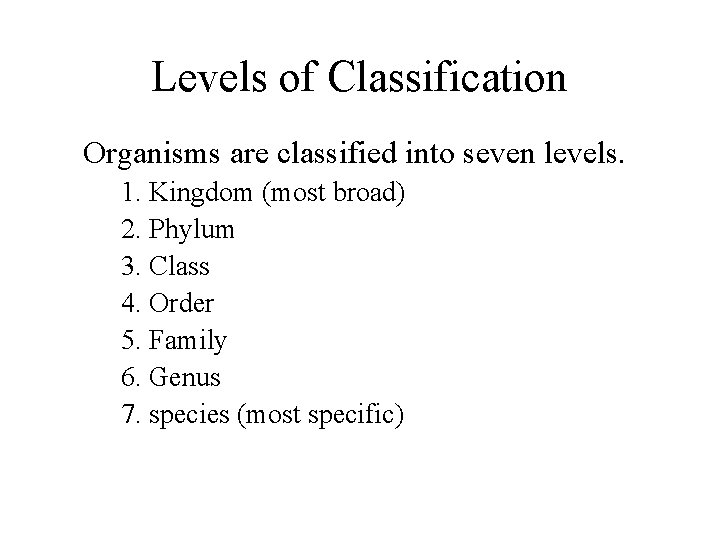
Levels of Classification Organisms are classified into seven levels. 1. Kingdom (most broad) 2. Phylum 3. Class 4. Order 5. Family 6. Genus 7. species (most specific)
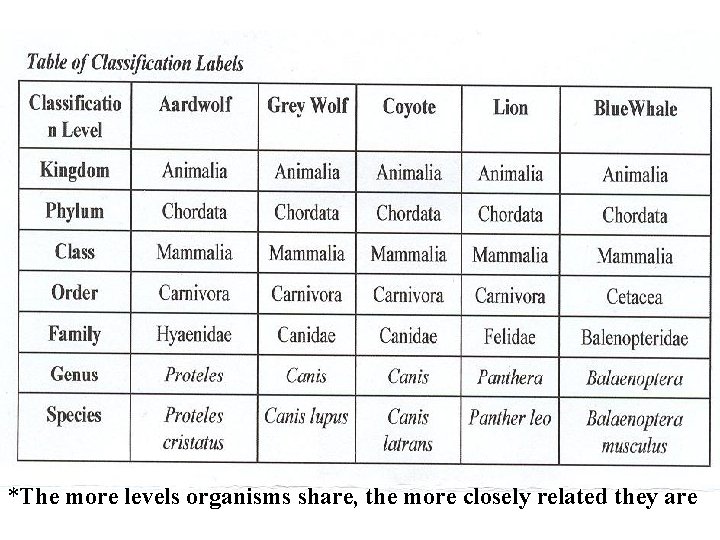
*The more levels organisms share, the more closely related they are
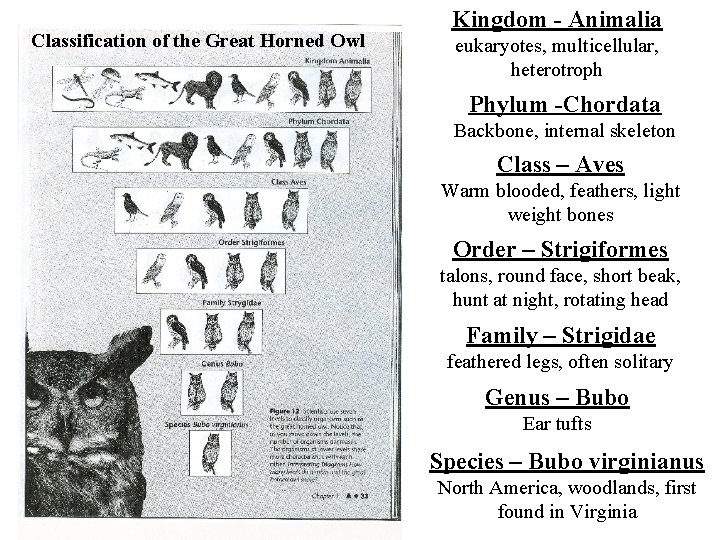
Classification of the Great Horned Owl Kingdom - Animalia eukaryotes, multicellular, heterotroph Phylum -Chordata Backbone, internal skeleton Class – Aves Warm blooded, feathers, light weight bones Order – Strigiformes talons, round face, short beak, hunt at night, rotating head Family – Strigidae feathered legs, often solitary Genus – Bubo Ear tufts Species – Bubo virginianus North America, woodlands, first found in Virginia
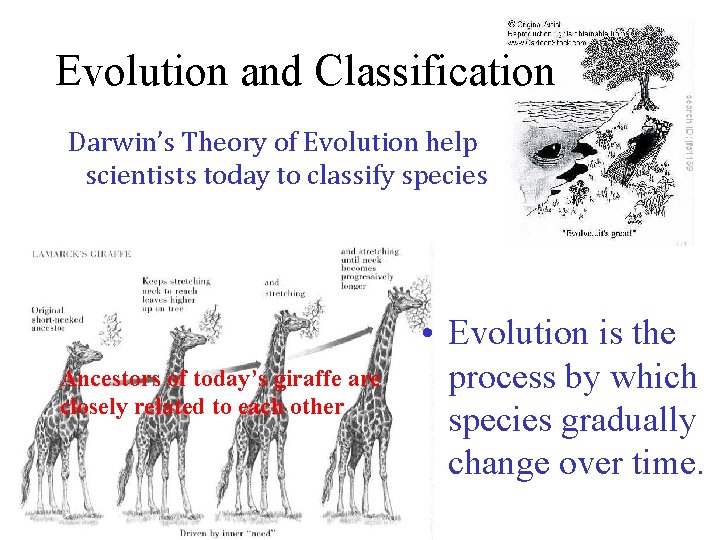
Evolution and Classification Darwin’s Theory of Evolution help scientists today to classify species Ancestors of today’s giraffe are closely related to each other • Evolution is the process by which species gradually change over time.
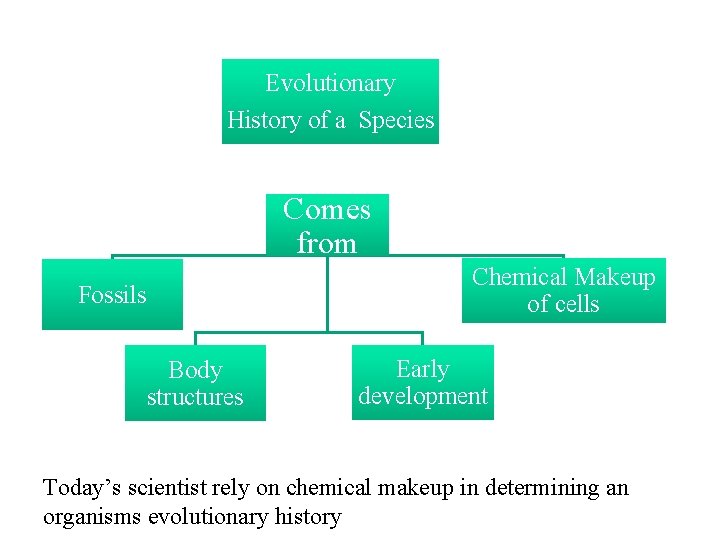
Evolutionary History of a Species Comes from Fossils Body structures Chemical Makeup of cells Early development Today’s scientist rely on chemical makeup in determining an organisms evolutionary history
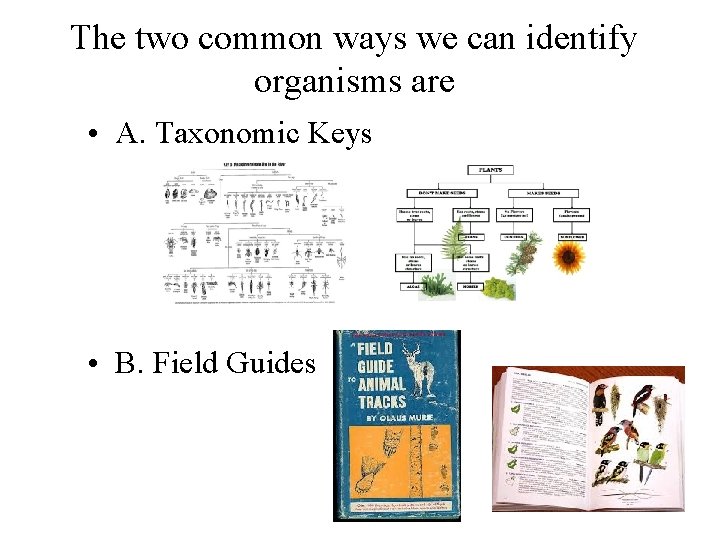
The two common ways we can identify organisms are • A. Taxonomic Keys • B. Field Guides
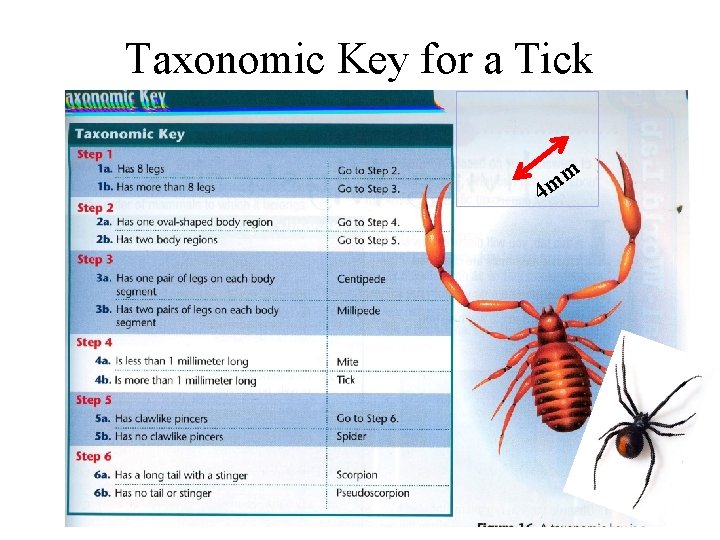
Taxonomic Key for a Tick 4 m m
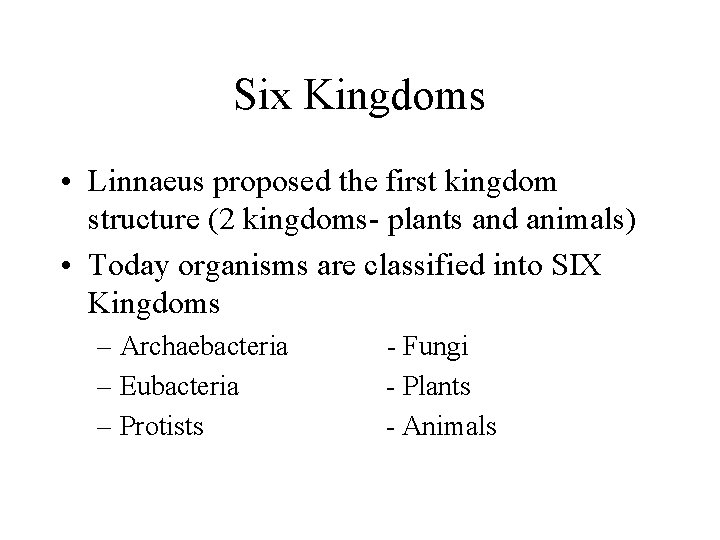
Six Kingdoms • Linnaeus proposed the first kingdom structure (2 kingdoms- plants and animals) • Today organisms are classified into SIX Kingdoms – Archaebacteria – Eubacteria – Protists - Fungi - Plants - Animals
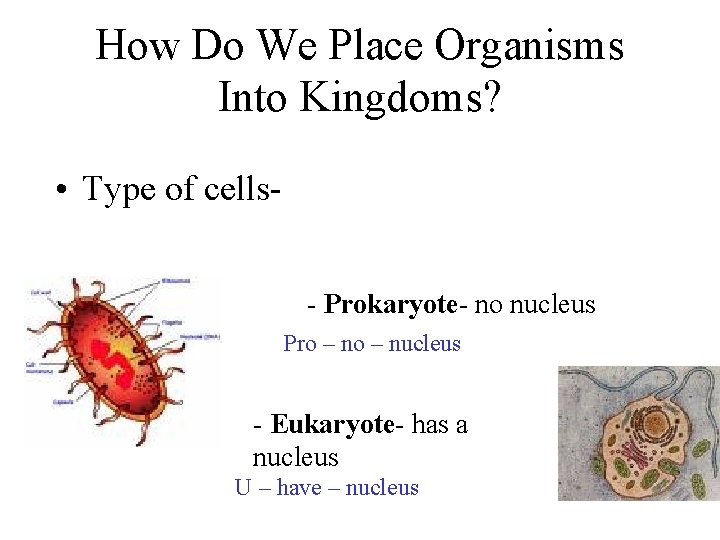
How Do We Place Organisms Into Kingdoms? • Type of cells- Prokaryote- no nucleus Pro – nucleus - Eukaryote- has a nucleus U – have – nucleus
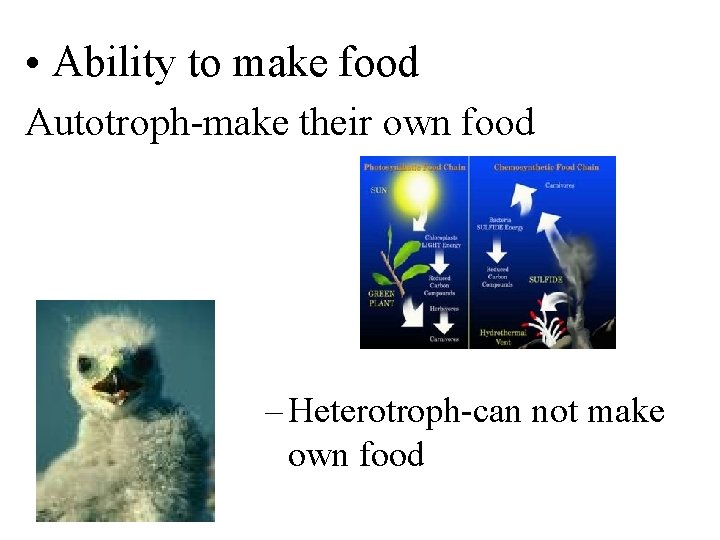
• Ability to make food Autotroph-make their own food – Heterotroph-can not make own food
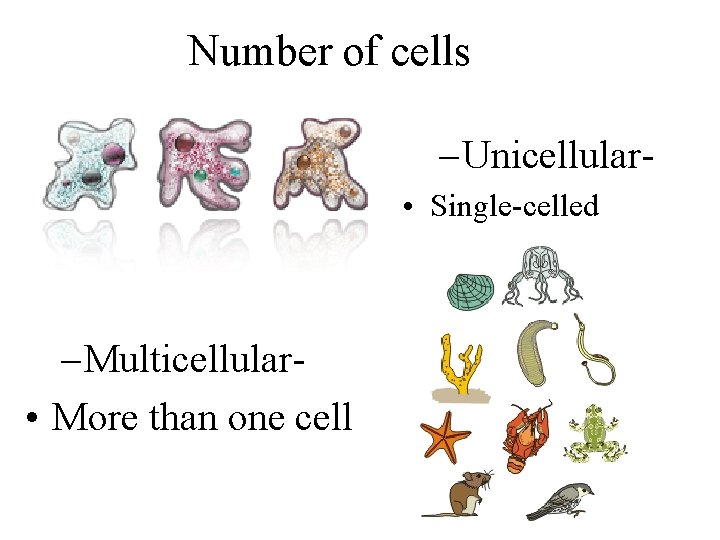
Number of cells – Unicellular • Single-celled – Multicellular • More than one cell
Archaebacteria vs. Eubacteria Similarities • Both are unicellular • Both are prokaryotes • Both can be autotrophs or heterotrophs Differences • Archaebacteria are found in extreme, harsh environments • Their chemical makeup is different from each other
Eubacteria can be helpful by: • Making vitamins in our bodies • Producing foods like sour dough bread, yogurt and sauerkraut • Recycle chemicals such as nitrogen to the soil as a decomposer
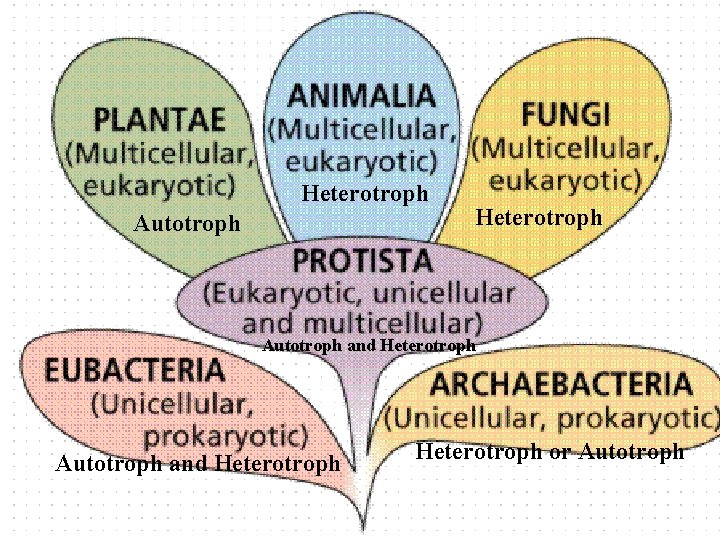
Heterotroph Autotroph and Heterotroph or Autotroph
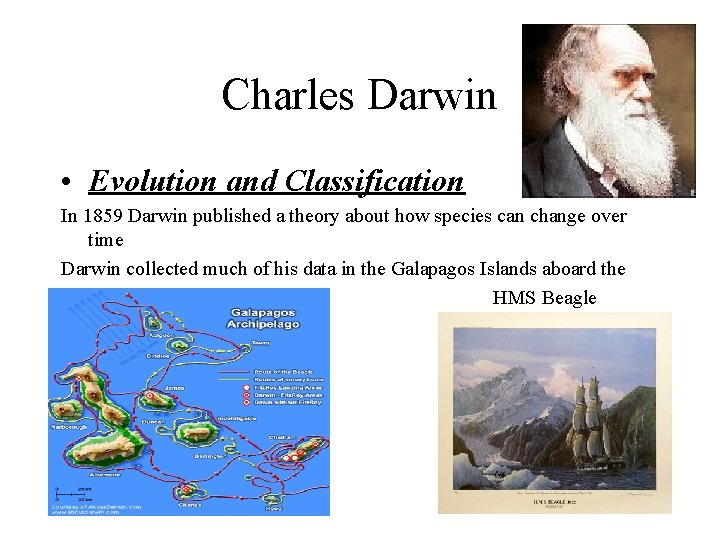
Charles Darwin • Evolution and Classification In 1859 Darwin published a theory about how species can change over time Darwin collected much of his data in the Galapagos Islands aboard the HMS Beagle
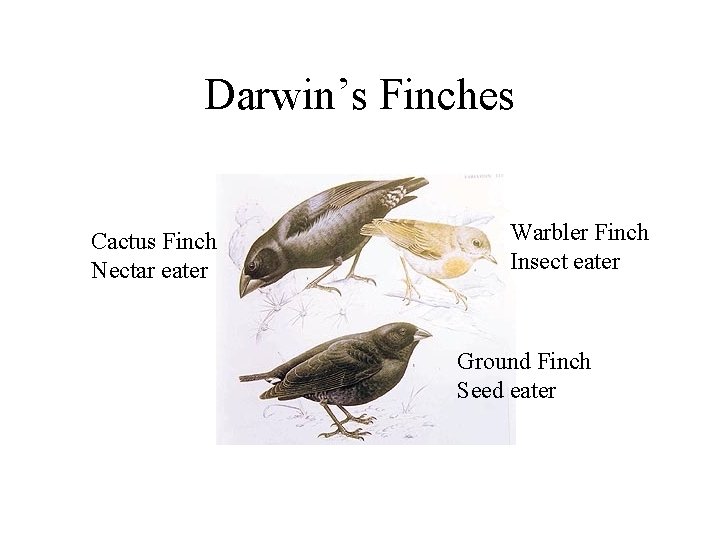
Darwin’s Finches Cactus Finch Nectar eater Warbler Finch Insect eater Ground Finch Seed eater
Darwin’s Galapagos Islands (10 min)
Natural Selection • Darwin explained his Theory of Evolution by using the idea of what he called Natural Selection – as an organism changes over time, if the changes help them to survive the changes will be passed on to their offspring
Darwin and Natural Selection (4 min)
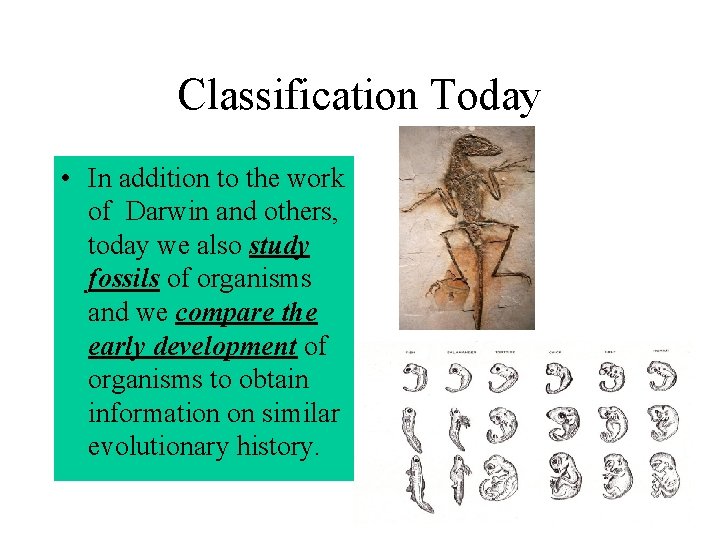
Classification Today • In addition to the work of Darwin and others, today we also study fossils of organisms and we compare the early development of organisms to obtain information on similar evolutionary history.
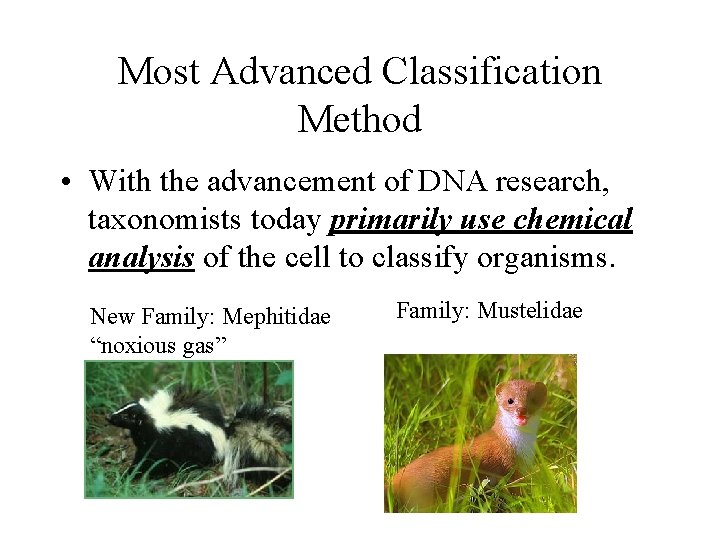
Most Advanced Classification Method • With the advancement of DNA research, taxonomists today primarily use chemical analysis of the cell to classify organisms. New Family: Mephitidae “noxious gas” Family: Mustelidae
Chemical Classification (4 min)
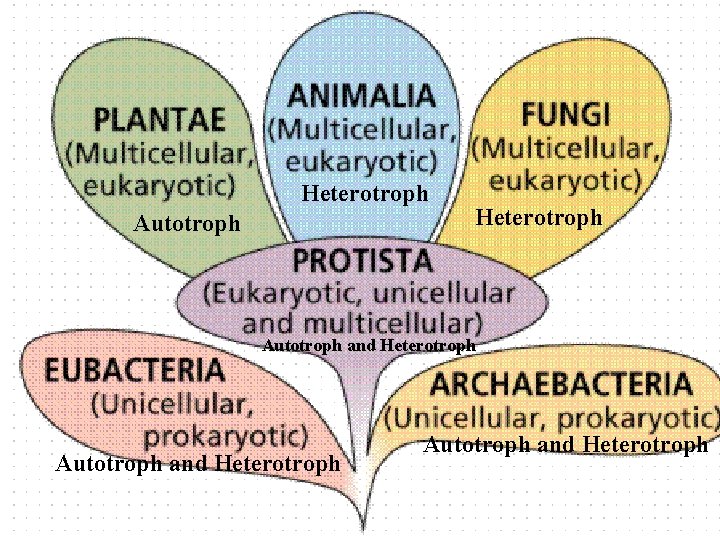
Heterotroph Autotroph and Heterotroph
- Slides: 30