
Classification Go to Section Slide 2 Important Vocabulary
Classification Go to Section:

Slide # 2 Important Vocabulary 1. Taxonomy: science of classification 2. Binomial nomenclature: two name naming system 3. Prokaryotic: cells without nucleus 4. Eukaryotic: cells with a nucleus 5. Autotroph: organism capable capturing energy from sunlight or chemicals & produces its own food 6. Heterotroph: organism that obtains its energy from food it consumes
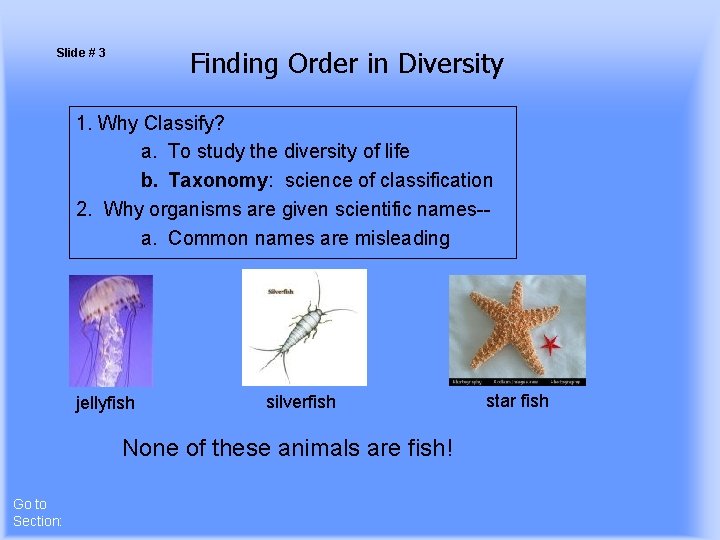
Finding Order in Diversity Slide # 3 1. Why Classify? a. To study the diversity of life b. Taxonomy: science of classification 2. Why organisms are given scientific names-a. Common names are misleading jellyfish silverfish None of these animals are fish! Go to Section: star fish
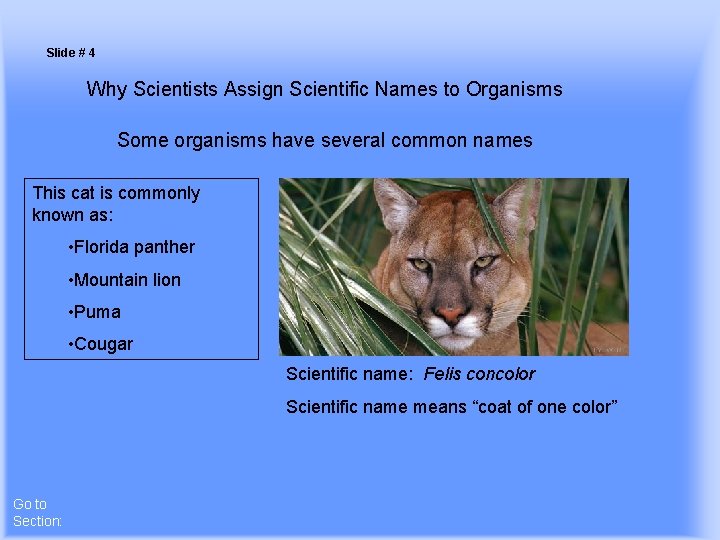
Slide # 4 Why Scientists Assign Scientific Names to Organisms Some organisms have several common names This cat is commonly known as: • Florida panther • Mountain lion • Puma • Cougar Scientific name: Felis concolor Scientific name means “coat of one color” Go to Section:
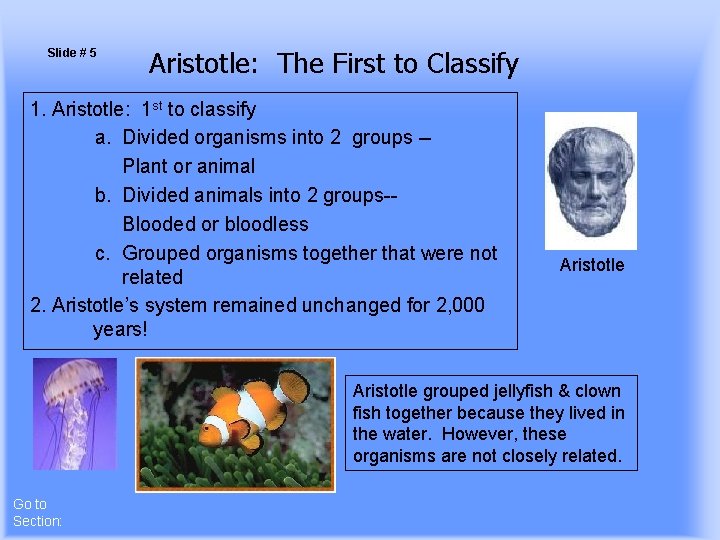
Slide # 5 Aristotle: The First to Classify 1. Aristotle: 1 st to classify a. Divided organisms into 2 groups -Plant or animal b. Divided animals into 2 groups-Blooded or bloodless c. Grouped organisms together that were not related 2. Aristotle’s system remained unchanged for 2, 000 years! Aristotle grouped jellyfish & clown fish together because they lived in the water. However, these organisms are not closely related. Go to Section:
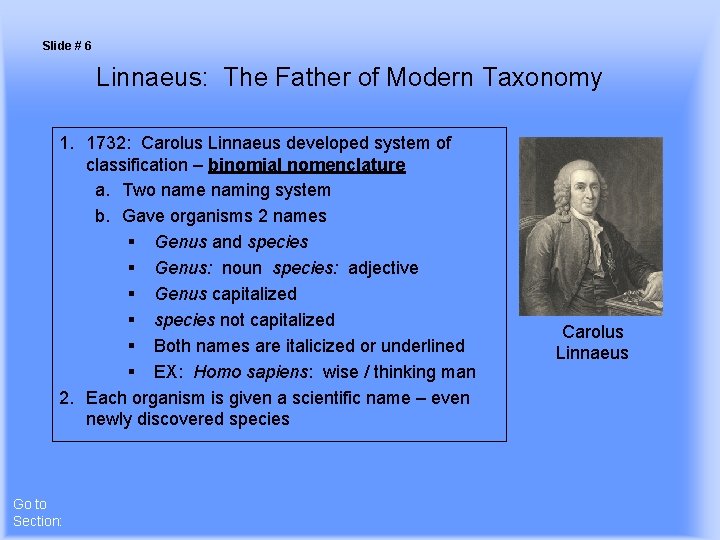
Slide # 6 Linnaeus: The Father of Modern Taxonomy 1. 1732: Carolus Linnaeus developed system of classification – binomial nomenclature a. Two name naming system b. Gave organisms 2 names § Genus and species § Genus: noun species: adjective § Genus capitalized § species not capitalized § Both names are italicized or underlined § EX: Homo sapiens: wise / thinking man 2. Each organism is given a scientific name – even newly discovered species Go to Section: Carolus Linnaeus
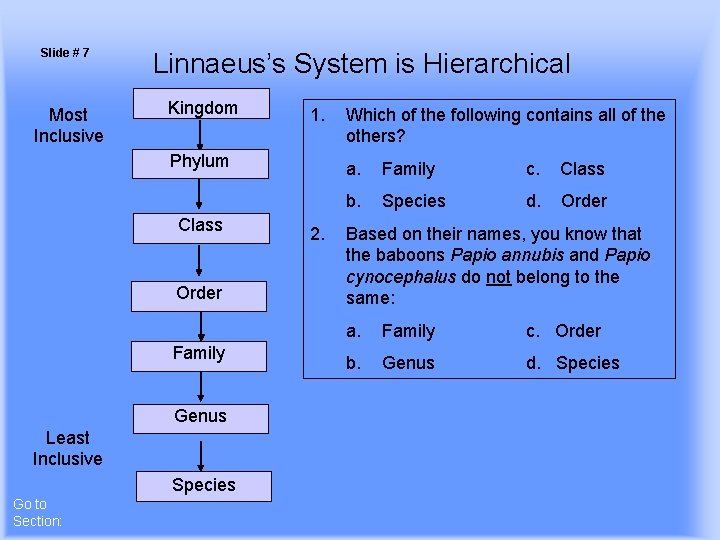
Slide # 7 Most Inclusive Linnaeus’s System is Hierarchical Kingdom 1. Phylum Class Order Family Genus Least Inclusive Species Go to Section: 2. Which of the following contains all of the others? a. Family c. Class b. Species d. Order Based on their names, you know that the baboons Papio annubis and Papio cynocephalus do not belong to the same: a. Family c. Order b. Genus d. Species

Slide # 8 Hierarchical Ordering of Classification Grizzly bear Black bear Giant panda Red fox Coral Sea star Abert squirrel snake KINGDOM Animalia PHYLUM Chordata As we move from the kingdom level to the species level, more and more members are excluded – species is least inclusive! CLASS Mammalia ORDER Carnivora FAMILY Ursidae GENUS Ursus SPECIES Ursus arctos Go to Section:
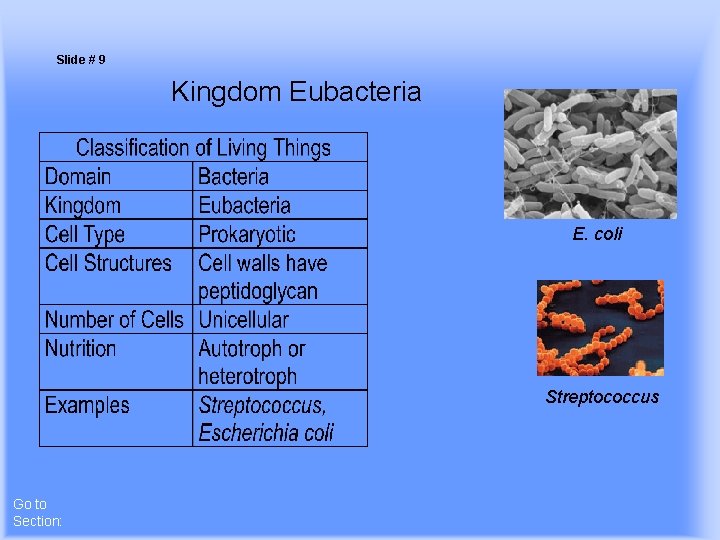
Slide # 9 Kingdom Eubacteria E. coli Streptococcus Go to Section:
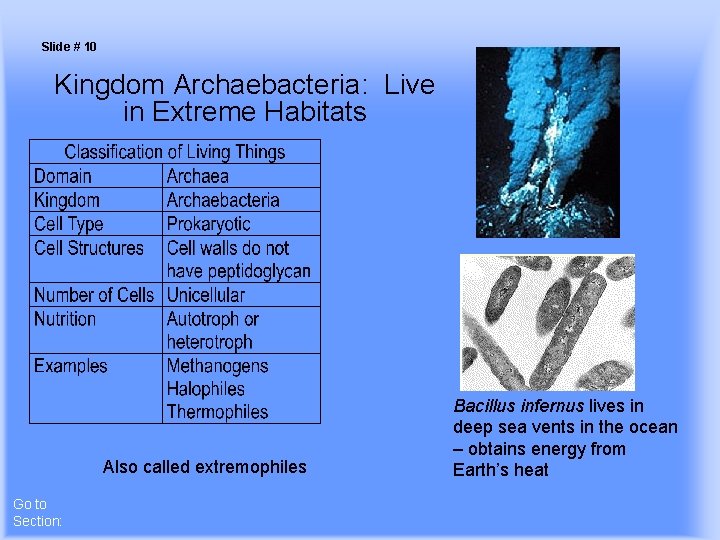
Slide # 10 Kingdom Archaebacteria: Live in Extreme Habitats Also called extremophiles Go to Section: Bacillus infernus lives in deep sea vents in the ocean – obtains energy from Earth’s heat
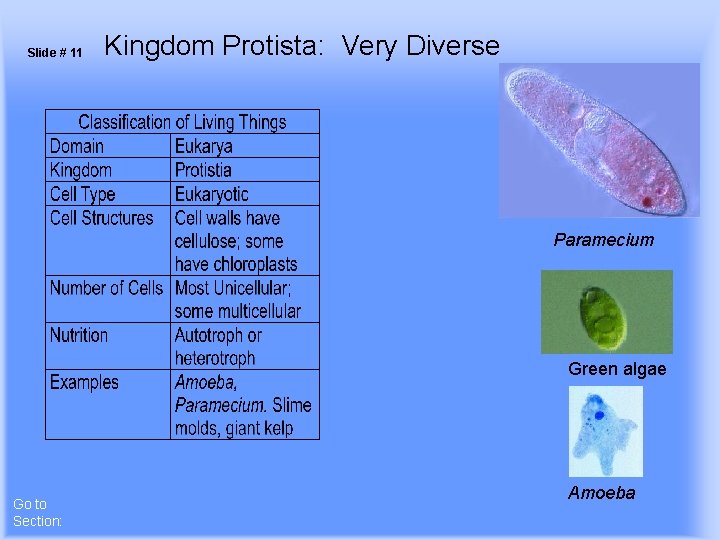
Slide # 11 Kingdom Protista: Very Diverse Paramecium Green algae Go to Section: Amoeba
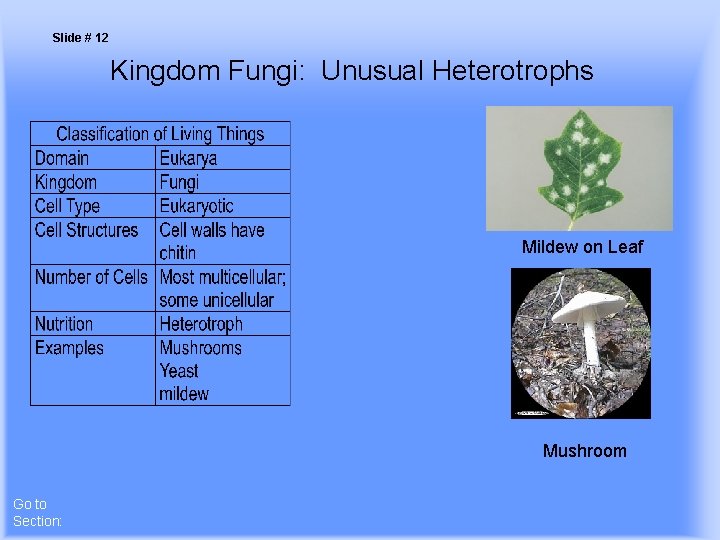
Slide # 12 Kingdom Fungi: Unusual Heterotrophs Mildew on Leaf Mushroom Go to Section:
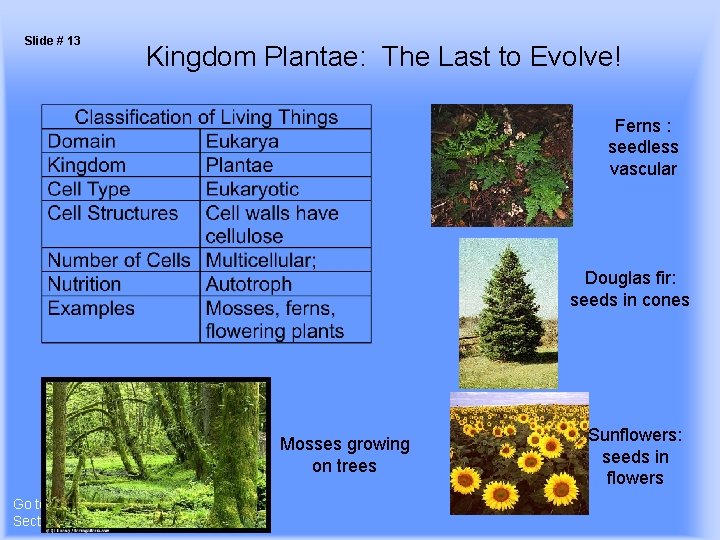
Slide # 13 Kingdom Plantae: The Last to Evolve! Ferns : seedless vascular Douglas fir: seeds in cones Mosses growing on trees Go to Section: Sunflowers: seeds in flowers
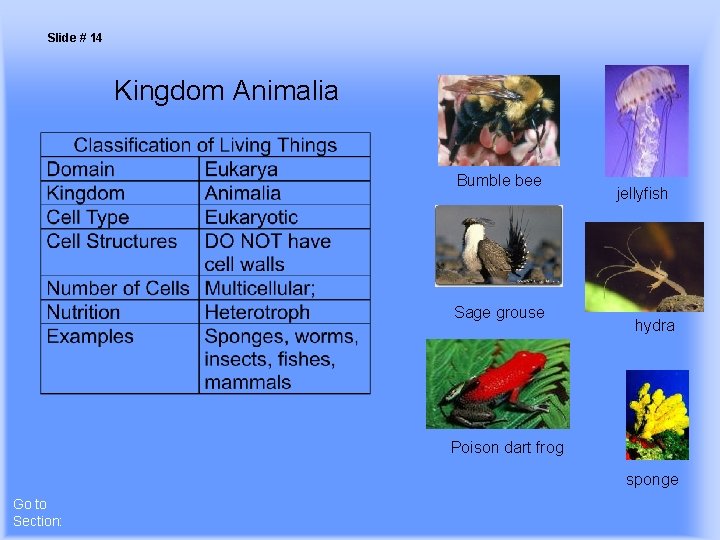
Slide # 14 Kingdom Animalia Bumble bee Sage grouse jellyfish hydra Poison dart frog sponge Go to Section:
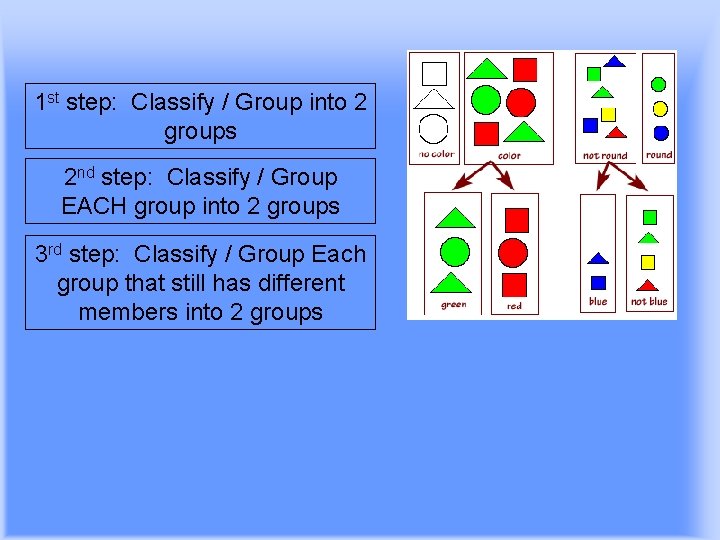
1 st step: Classify / Group into 2 groups 2 nd step: Classify / Group EACH group into 2 groups 3 rd step: Classify / Group Each group that still has different members into 2 groups
- Slides: 15