
Classification Evolution Classification Developed the 1 st system



- Slides: 35
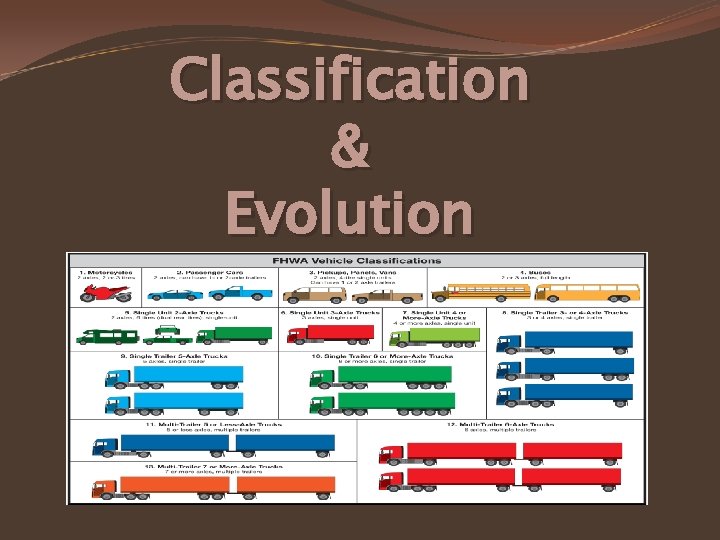
Classification & Evolution
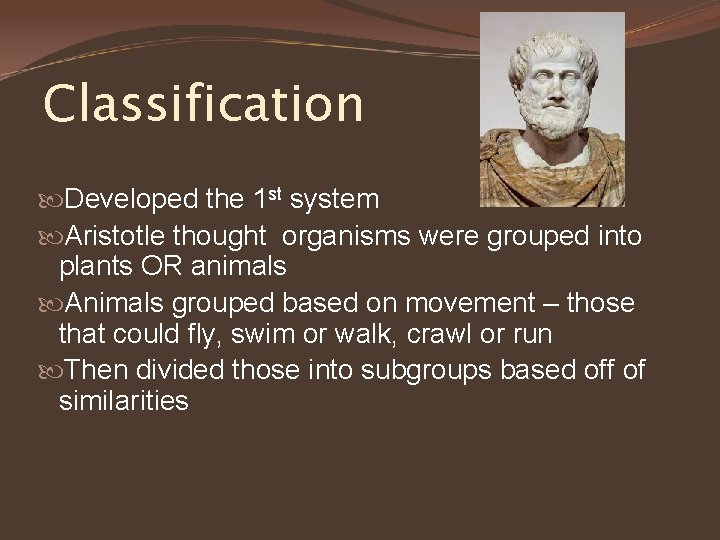
Classification Developed the 1 st system Aristotle thought organisms were grouped into plants OR animals Animals grouped based on movement – those that could fly, swim or walk, crawl or run Then divided those into subgroups based off of similarities
Current Classification Organisms grouped by characteristics that they share Domains are the broadest groups – they are divided into smaller specific groups The more classification levels two organisms share, the more characteristics they share and the more closely related they are.
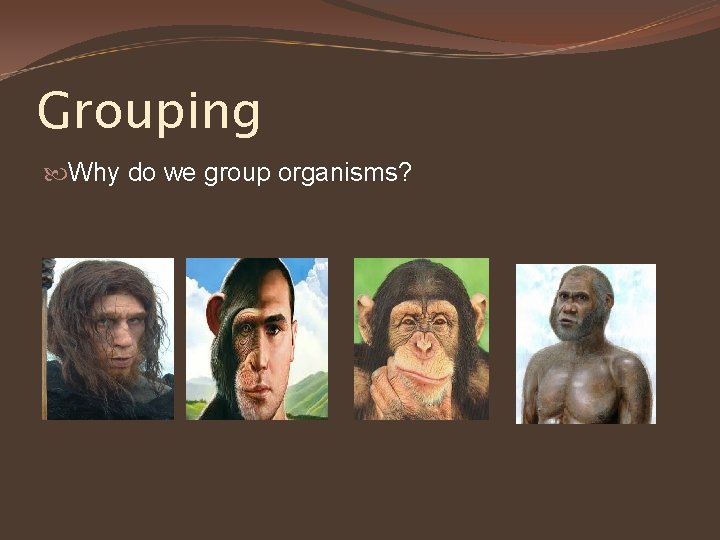
Grouping Why do we group organisms?
Why do we have universal scientific names? NO USE for COMMON Names “football” “ratchet”
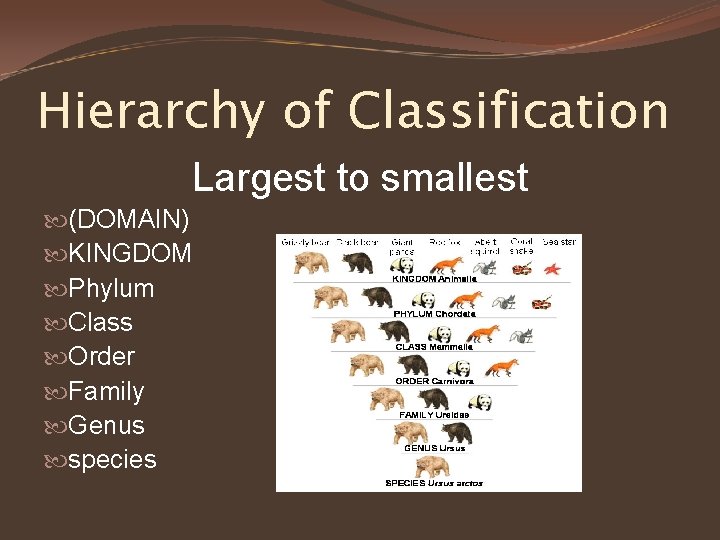
Hierarchy of Classification Largest to smallest (DOMAIN) KINGDOM Phylum Class Order Family Genus species
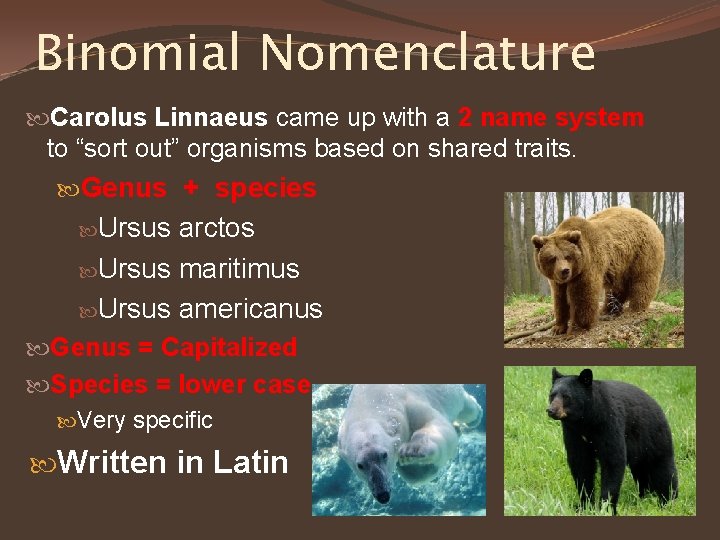
Binomial Nomenclature Carolus Linnaeus came up with a 2 name system to “sort out” organisms based on shared traits. Genus + species Ursus arctos Ursus maritimus Ursus americanus Genus = Capitalized Species = lower case Very specific Written in Latin
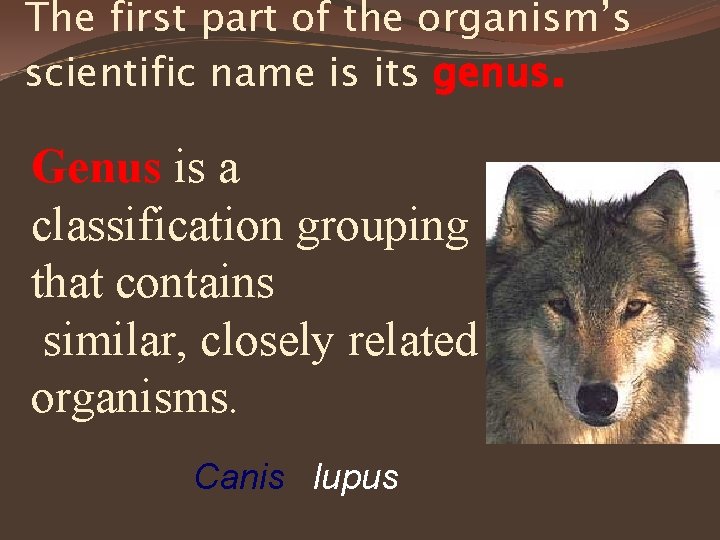
The first part of the organism’s scientific name is its genus. Genus is a classification grouping that contains similar, closely related organisms. Canis lupus
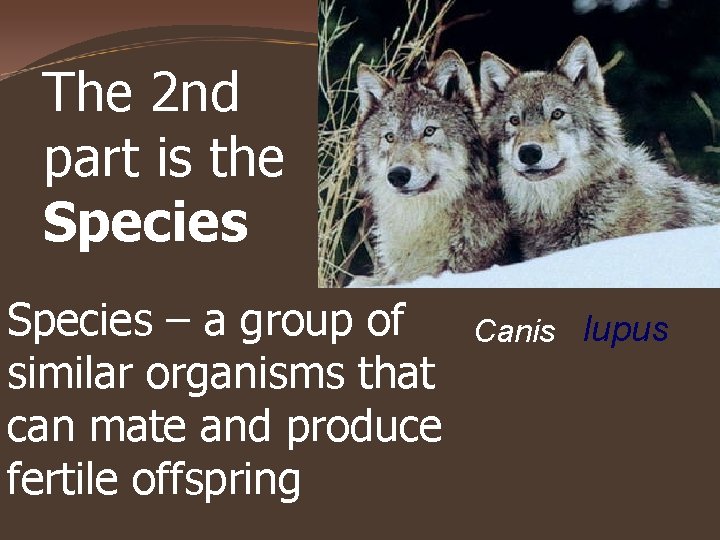
The 2 nd part is the Species – a group of similar organisms that can mate and produce fertile offspring Canis lupus
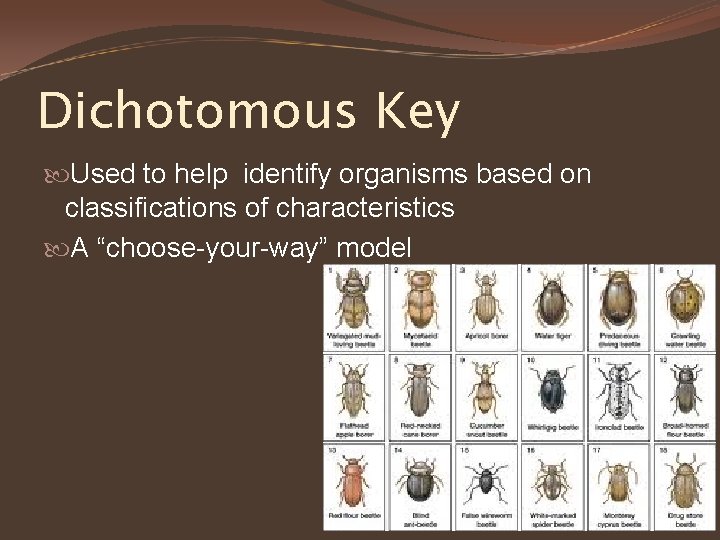
Dichotomous Key Used to help identify organisms based on classifications of characteristics A “choose-your-way” model
CLASSWORK Checking for Understanding…
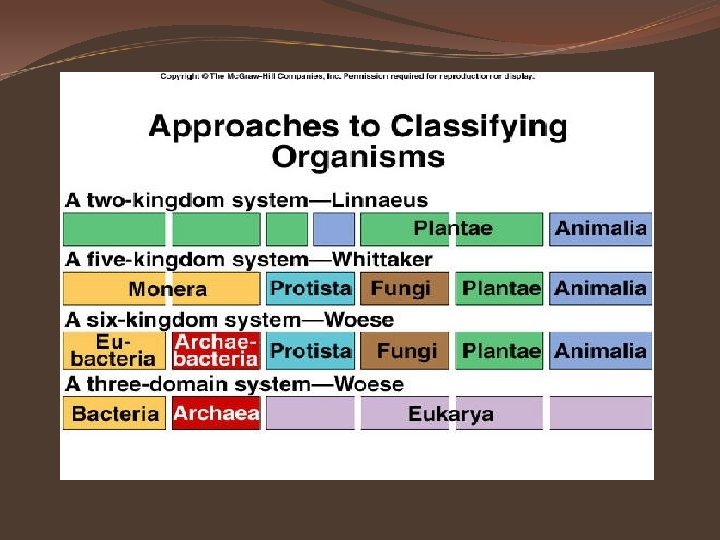
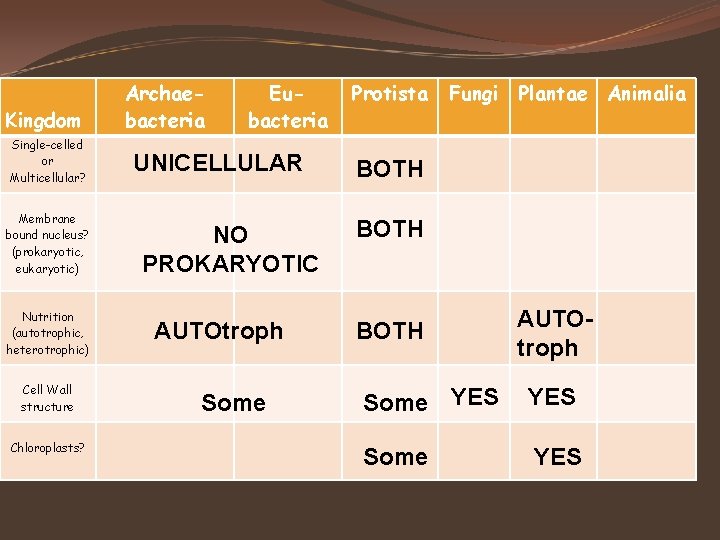
Kingdom Single-celled or Multicellular? Membrane bound nucleus? (prokaryotic, eukaryotic) Nutrition (autotrophic, heterotrophic) Cell Wall structure Chloroplasts? Archaebacteria Eubacteria UNICELLULAR NO PROKARYOTIC AUTOtroph Some Protista Fungi Plantae Animalia BOTH AUTOtroph Some YES
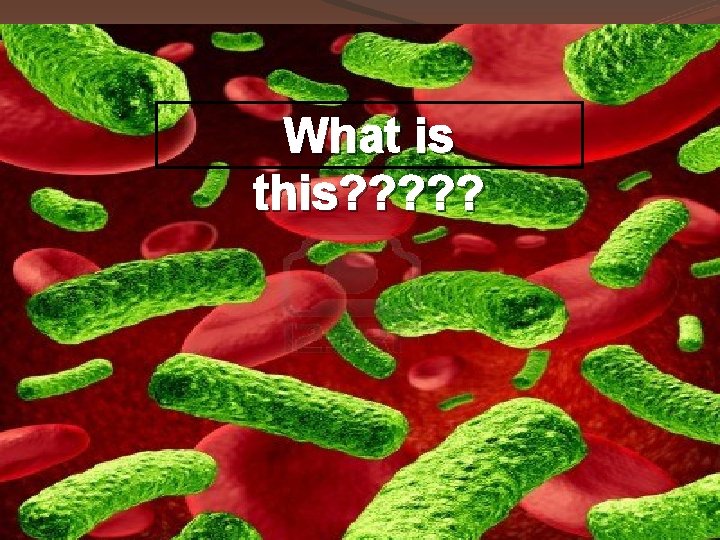
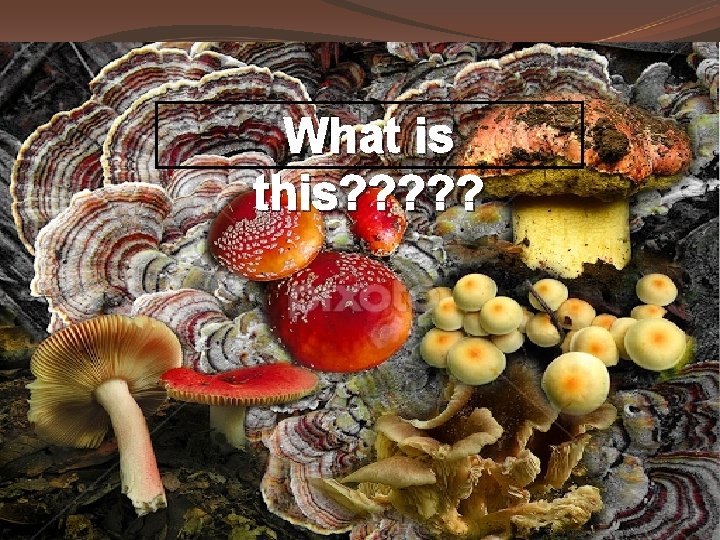
What is this? ? ?
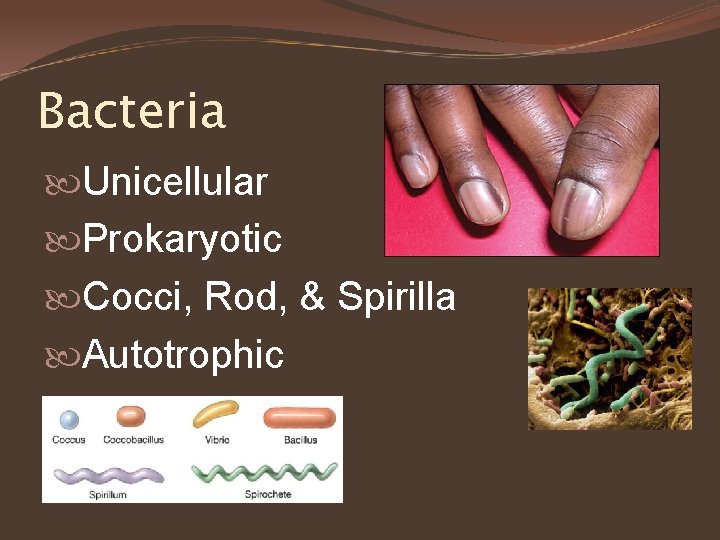
Bacteria Unicellular Prokaryotic Cocci, Rod, & Spirilla Autotrophic
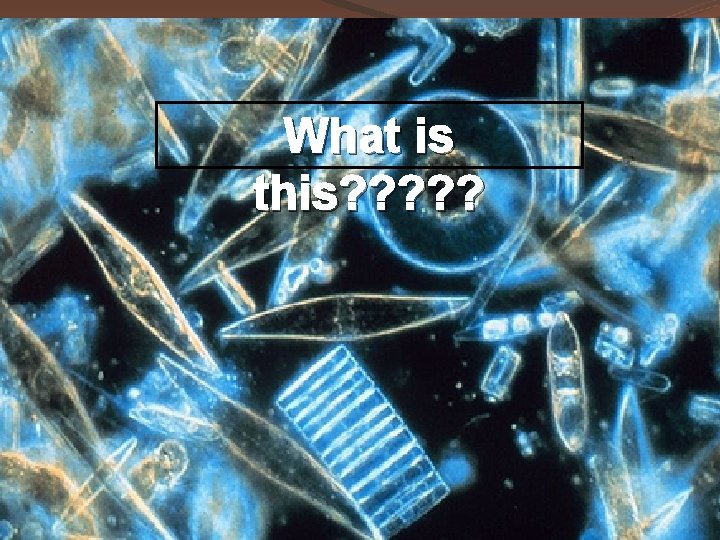
What is this? ? ?
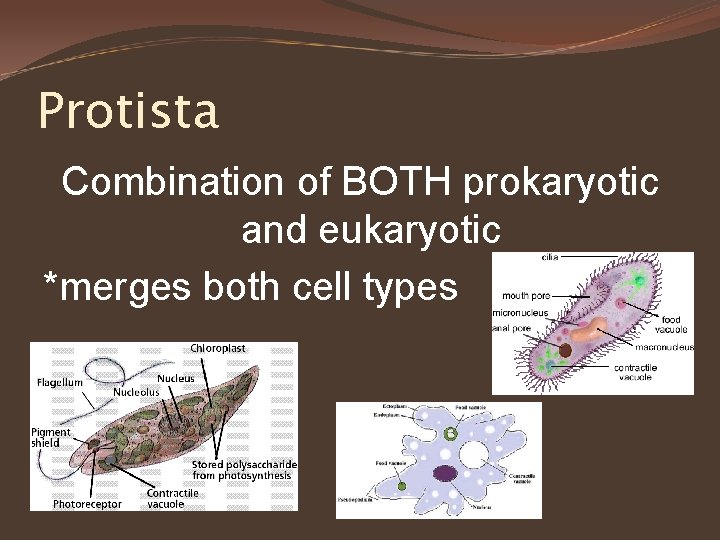
Protista Combination of BOTH prokaryotic and eukaryotic *merges both cell types
What is this? ? ?
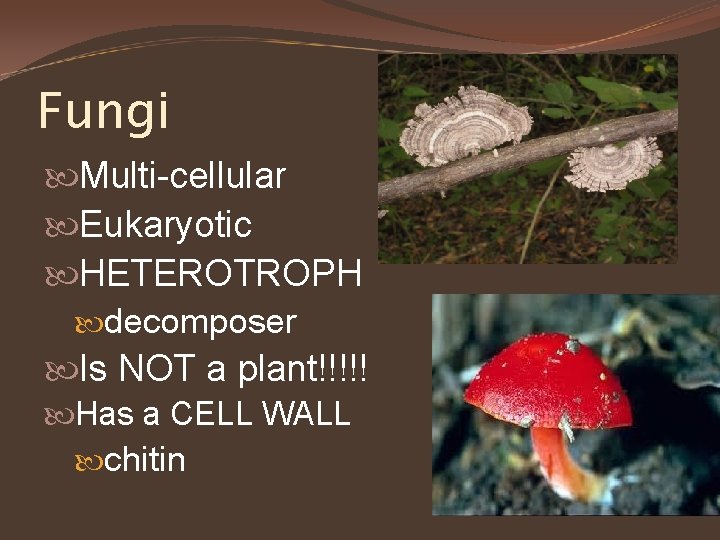
Fungi Multi-cellular Eukaryotic HETEROTROPH decomposer Is NOT a plant!!!!! Has a CELL WALL chitin
Closure…. .
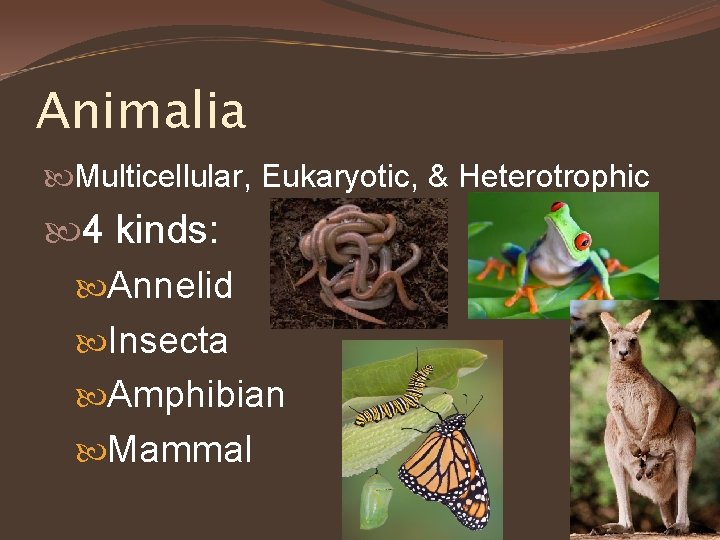
Animalia Multicellular, Eukaryotic, & Heterotrophic 4 kinds: Annelid Insecta Amphibian Mammal
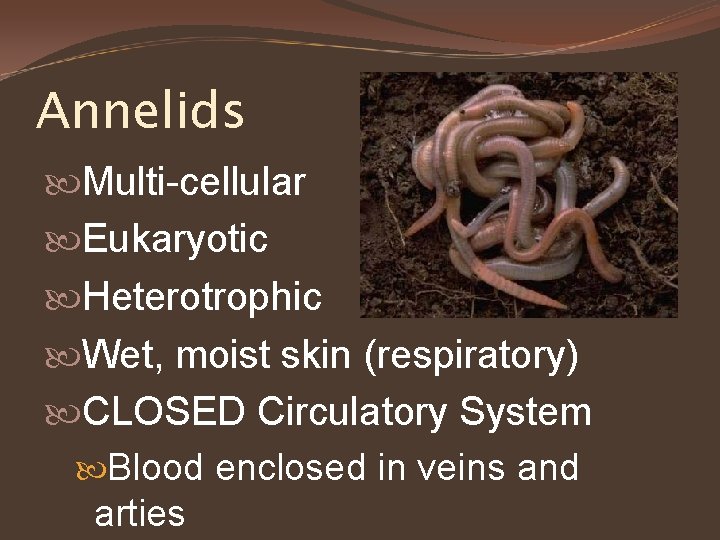
Annelids Multi-cellular Eukaryotic Heterotrophic Wet, moist skin (respiratory) CLOSED Circulatory System Blood enclosed in veins and arties
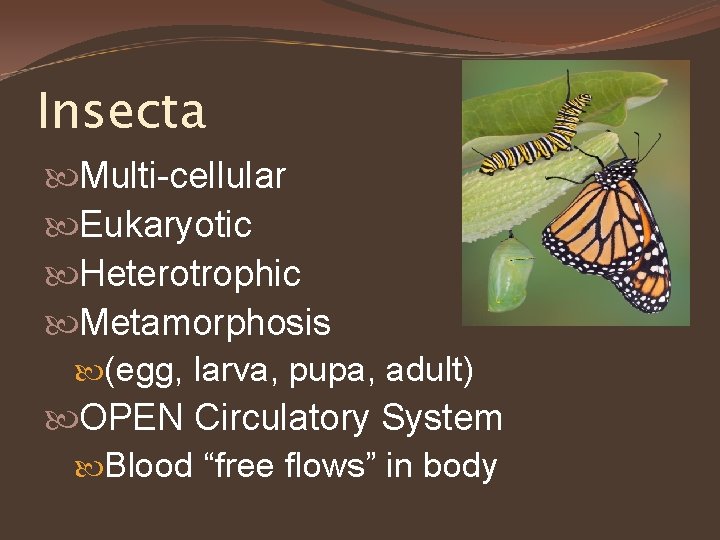
Insecta Multi-cellular Eukaryotic Heterotrophic Metamorphosis (egg, larva, pupa, adult) OPEN Circulatory System Blood “free flows” in body
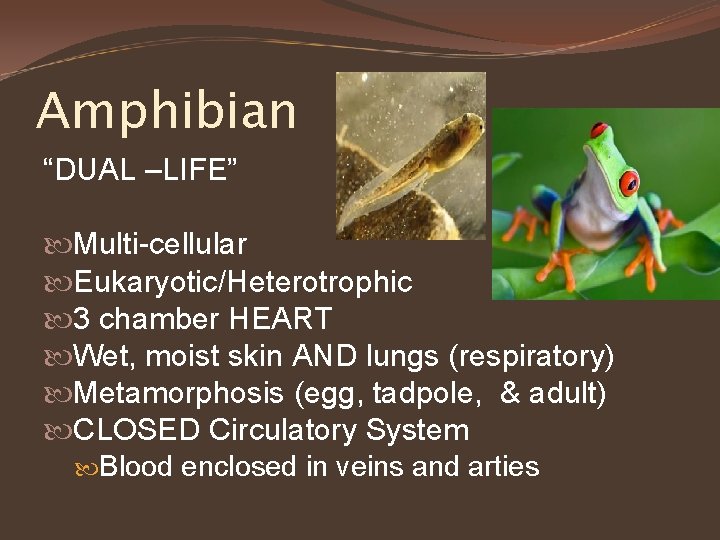
Amphibian “DUAL –LIFE” Multi-cellular Eukaryotic/Heterotrophic 3 chamber HEART Wet, moist skin AND lungs (respiratory) Metamorphosis (egg, tadpole, & adult) CLOSED Circulatory System Blood enclosed in veins and arties
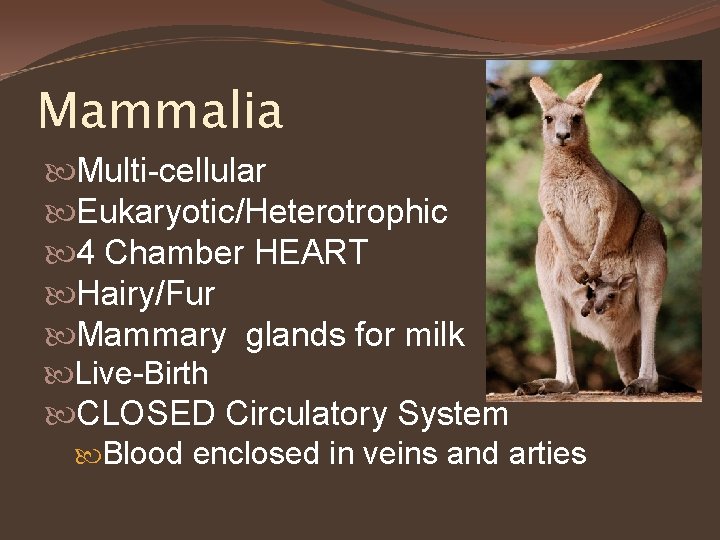
Mammalia Multi-cellular Eukaryotic/Heterotrophic 4 Chamber HEART Hairy/Fur Mammary glands for milk Live-Birth CLOSED Circulatory System Blood enclosed in veins and arties
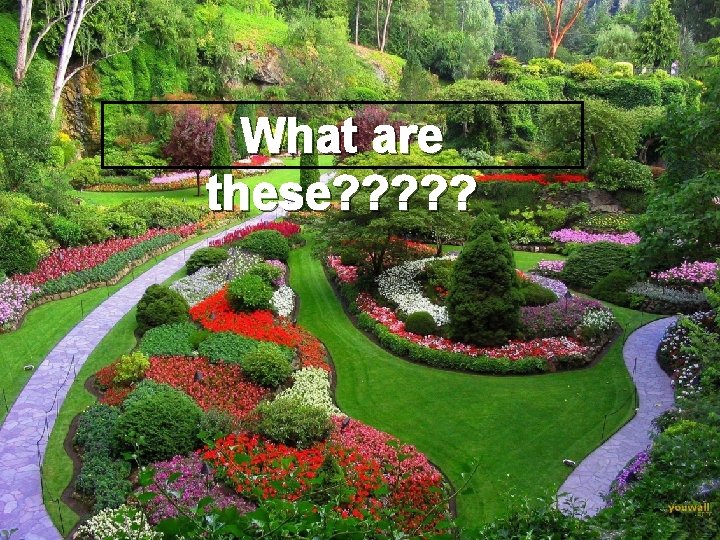
What are these? ? ?
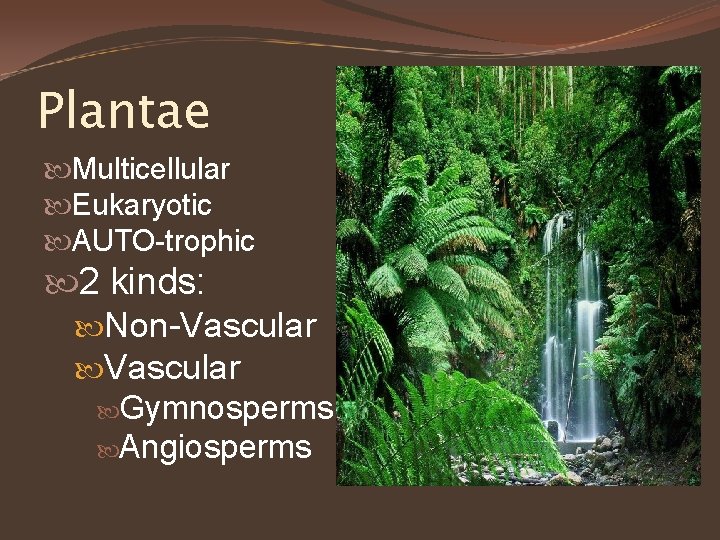
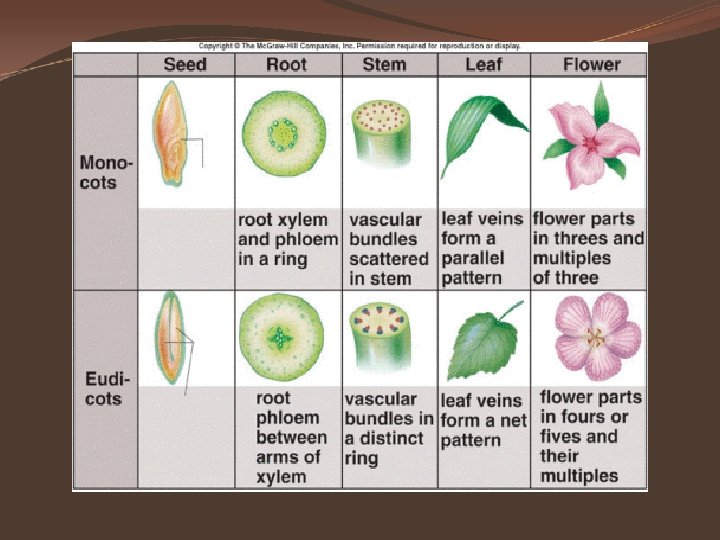
Plantae Multicellular Eukaryotic AUTO-trophic 2 kinds: Non-Vascular Gymnosperms Angiosperms
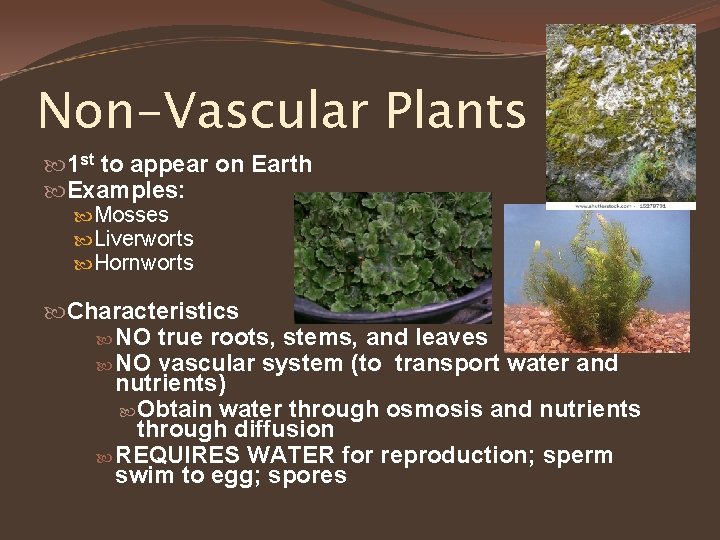
Non-Vascular Plants 1 st to appear on Earth Examples: Mosses Liverworts Hornworts Characteristics NO true roots, stems, and leaves NO vascular system (to transport water and nutrients) Obtain water through osmosis and nutrients through diffusion REQUIRES WATER for reproduction; sperm swim to egg; spores
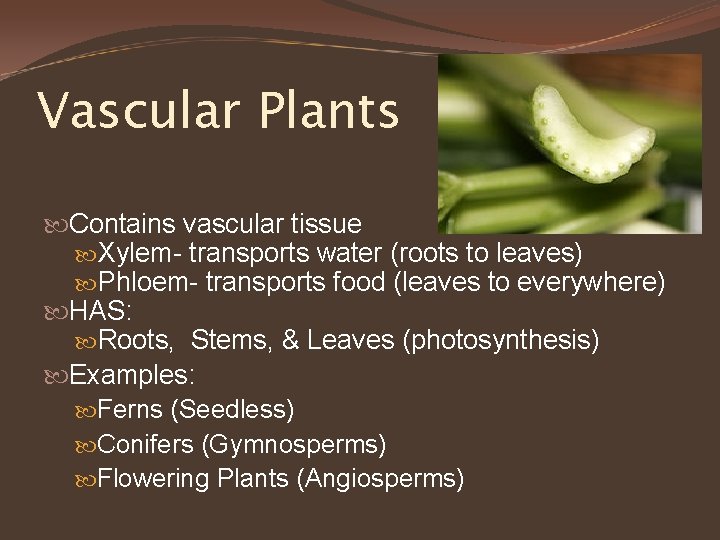
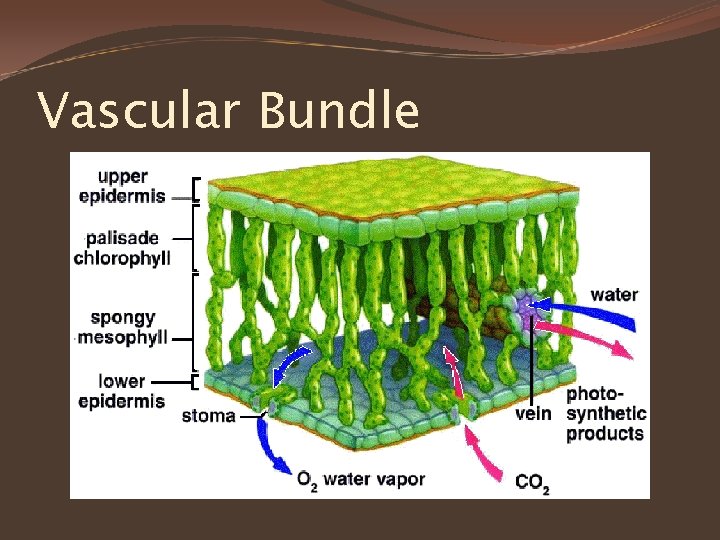
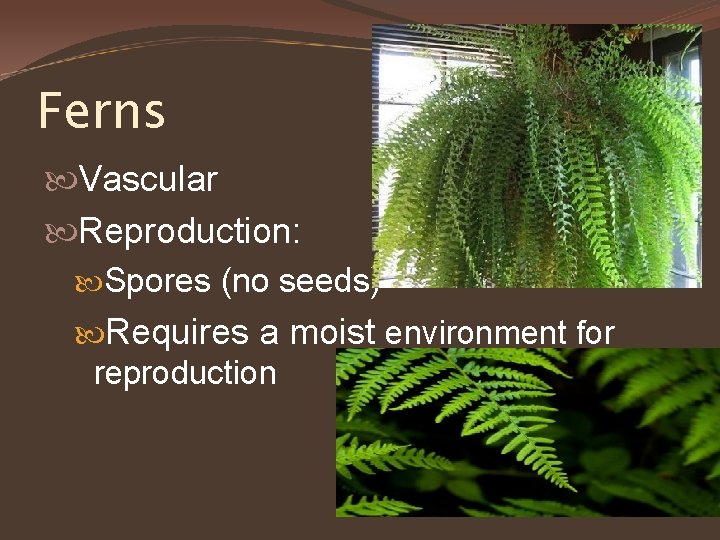
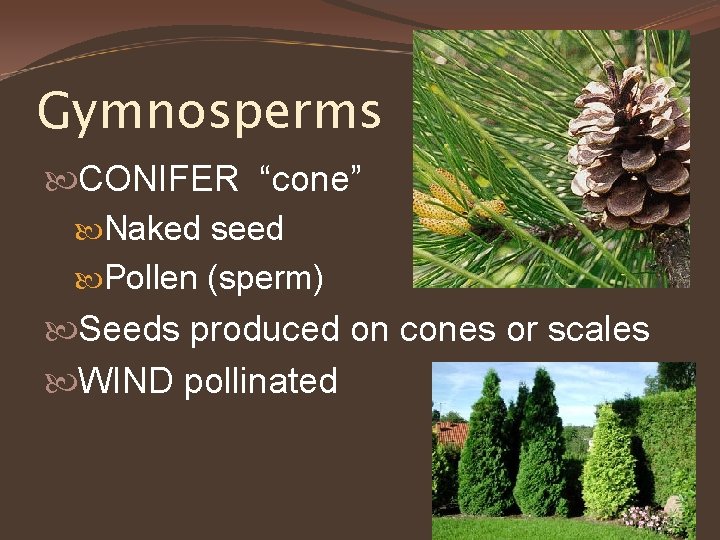
Vascular Plants Contains vascular tissue Xylem- transports water (roots to leaves) Phloem- transports food (leaves to everywhere) HAS: Roots, Stems, & Leaves (photosynthesis) Examples: Ferns (Seedless) Conifers (Gymnosperms) Flowering Plants (Angiosperms)
Vascular Bundle
Ferns Vascular Reproduction: Spores (no seeds) Requires a moist environment for reproduction
Gymnosperms CONIFER “cone” Naked seed Pollen (sperm) Seeds produced on cones or scales WIND pollinated
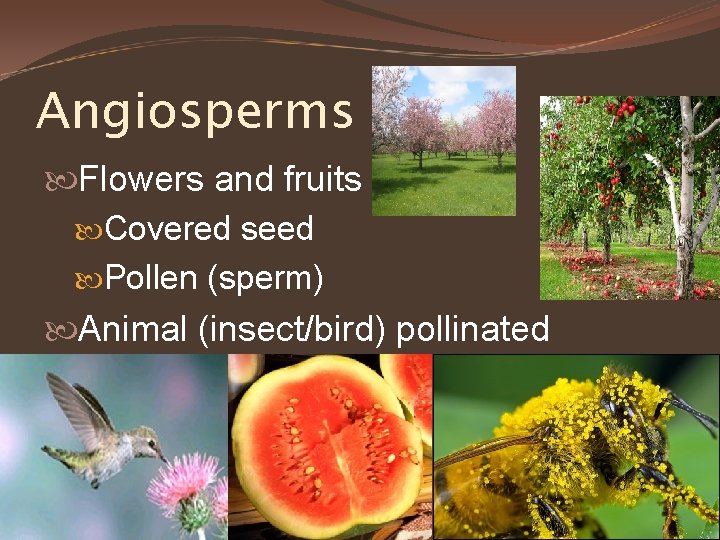
Angiosperms Flowers and fruits Covered seed Pollen (sperm) Animal (insect/bird) pollinated
Closure…