
Classification copyright cmassengale 1 What is Classification What

- Slides: 39
Classification copyright cmassengale 1
What is Classification? �What classification systems are you familiar with and use? copyright cmassengale 2
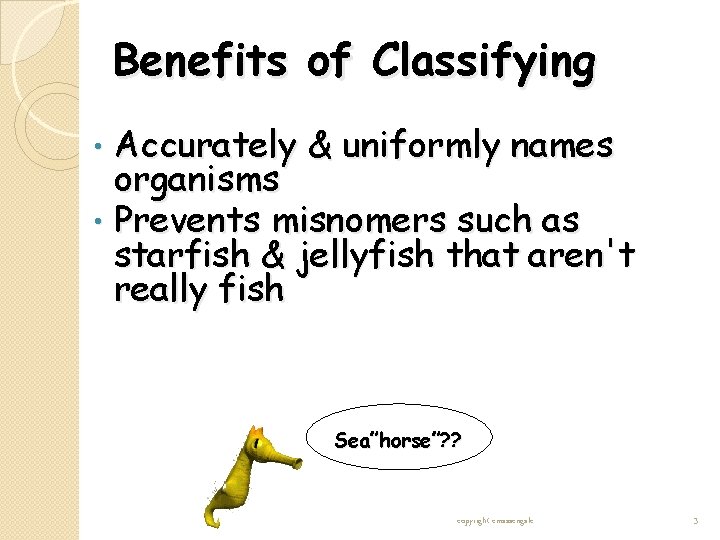
Benefits of Classifying Accurately & uniformly names organisms • Prevents misnomers such as starfish & jellyfish that aren't really fish • Sea”horse”? ? copyright cmassengale 3
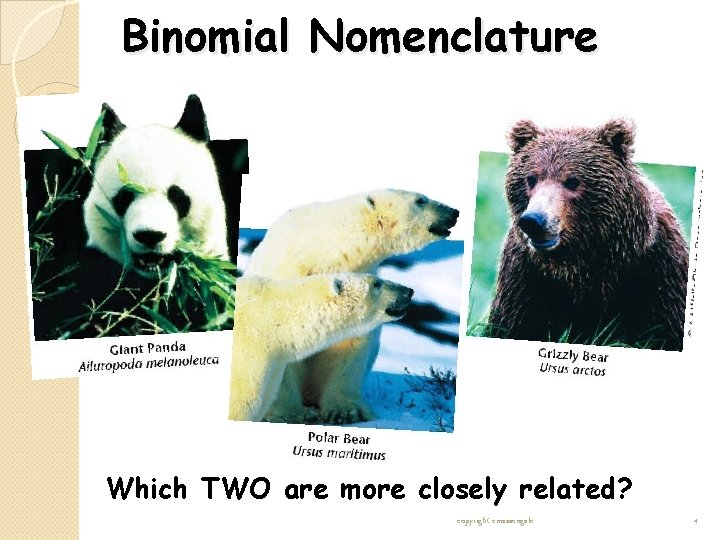
Binomial Nomenclature Which TWO are more closely related? copyright cmassengale 4
Species of Organisms �There are 13 billion known species of organisms �This is only 5% of all organisms that ever lived!!!!! �New organisms are still being found and identified copyright cmassengale 5
What is Classification? �Classification is the arrangement of organisms into orderly groups based on their similarities �Classification is also known as taxonomy �Taxonomists are scientists that identify & name organisms copyright cmassengale 6
Early Taxonomists � 2000 years ago, Aristotle was the first taxonomist �Aristotle divided organisms into plants & animals �He subdivided them by their habitat --land, sea, or air dwellers copyright cmassengale 7
Early Taxonomists Continued �John Ray, a botanist, was the first to use Latin for naming �His names were very long descriptions telling everything about the plant copyright cmassengale 8
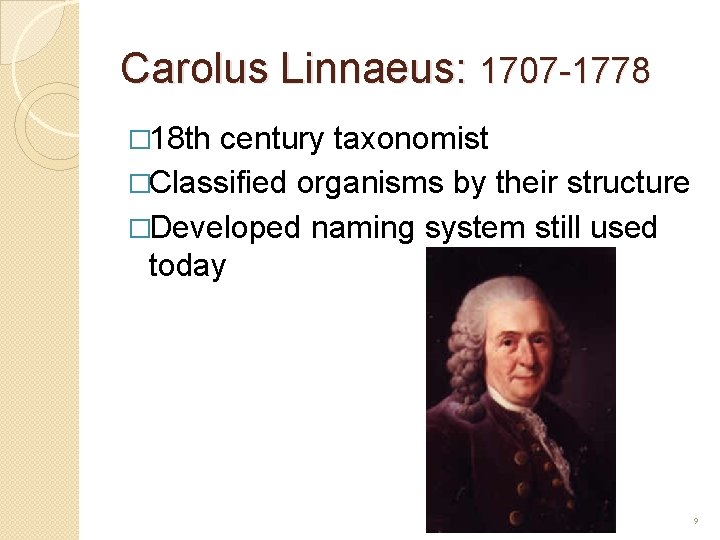
Carolus Linnaeus: 1707 -1778 � 18 th century taxonomist �Classified organisms by their structure �Developed naming system still used today copyright cmassengale 9
Carols Linnaeus-continued �Called the “Father of Taxonomy” �Developed the modern system of naming known as binomial nomenclature �Two-word name (Genus & species) copyright cmassengale 10
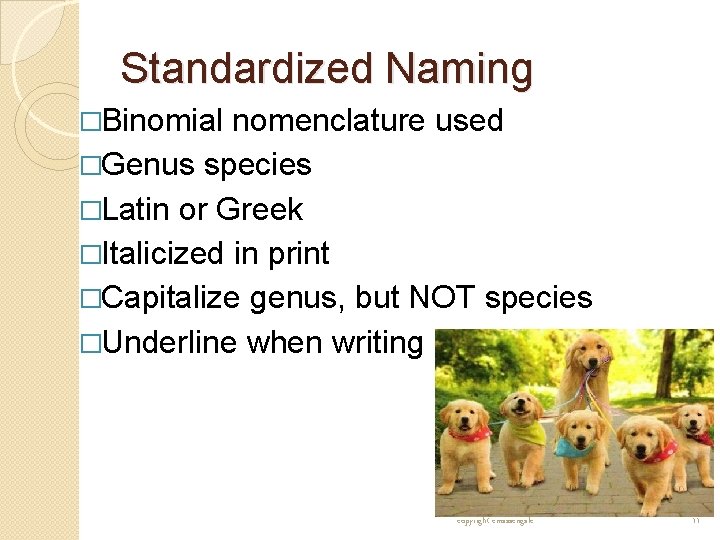
Standardized Naming �Binomial nomenclature used �Genus species �Latin or Greek �Italicized in print �Capitalize genus, but NOT species �Underline when writing copyright cmassengale 11
Rules for Naming Organisms �The International Code for Binomial Nomenclature contains the rules for naming organisms �All names must be approved by International Naming Congresses (International Zoological Congress) �This prevents duplicated names copyright cmassengale 12
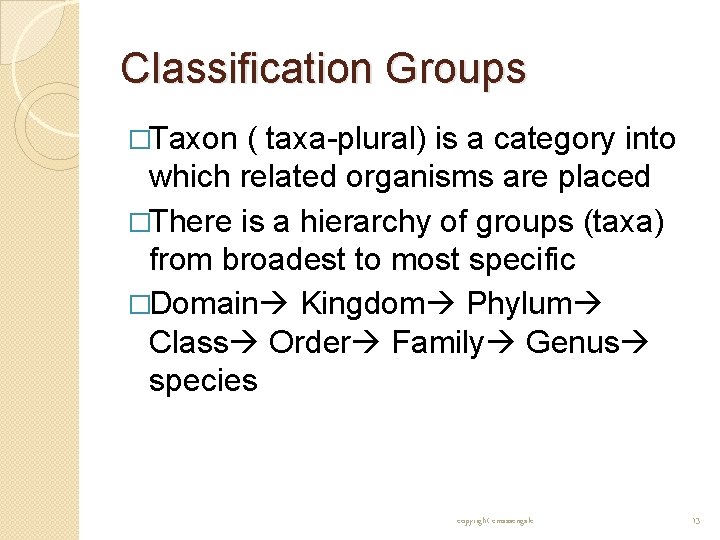
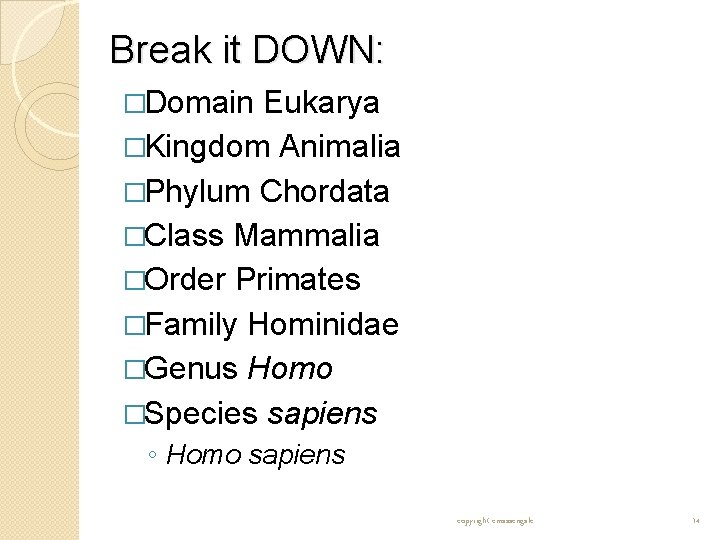
Classification Groups �Taxon ( taxa-plural) is a category into which related organisms are placed �There is a hierarchy of groups (taxa) from broadest to most specific �Domain Kingdom Phylum Class Order Family Genus species copyright cmassengale 13
Break it DOWN: �Domain Eukarya �Kingdom Animalia �Phylum Chordata �Class Mammalia �Order Primates �Family Hominidae �Genus Homo �Species sapiens ◦ Homo sapiens copyright cmassengale 14
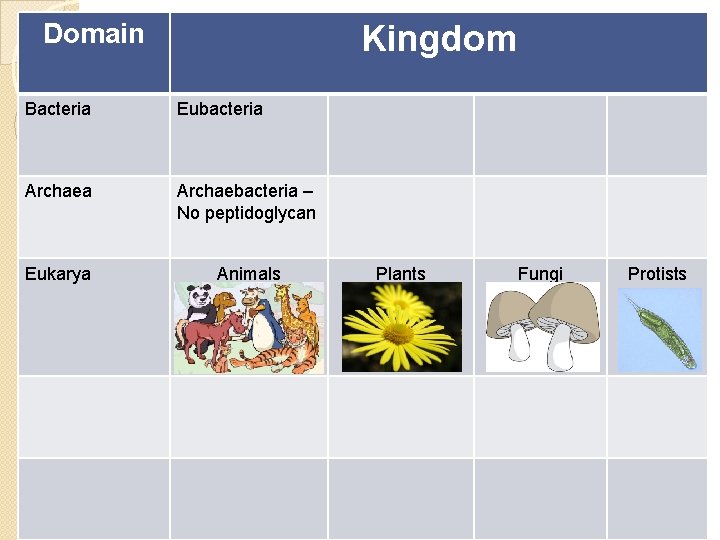
Domains Three domains: • Archaea and Eubacteria are unicellular prokaryotes (no nucleus or membrane-bound organelles) • Eukarya are more complex and have a nucleus and membranebound organelles • copyright cmassengale 15
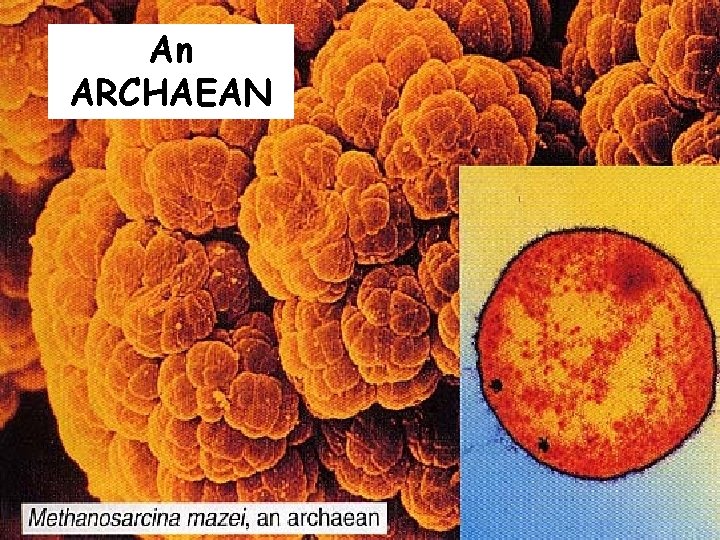
ARCHAEA Probably the 1 st cells to evolve • Live in HARSH environments • Found in: • – Thermal or Volcanic Vents – Hot Springs or Geysers that are acid copyright cmassengale 16
An ARCHAEAN copyright cmassengale 17
EUBACTERIA Found in ALL HABITATS except harsh ones • Important decomposers for environment • Commercially important in making yogurt, buttermilk, etc. • copyright cmassengale 18
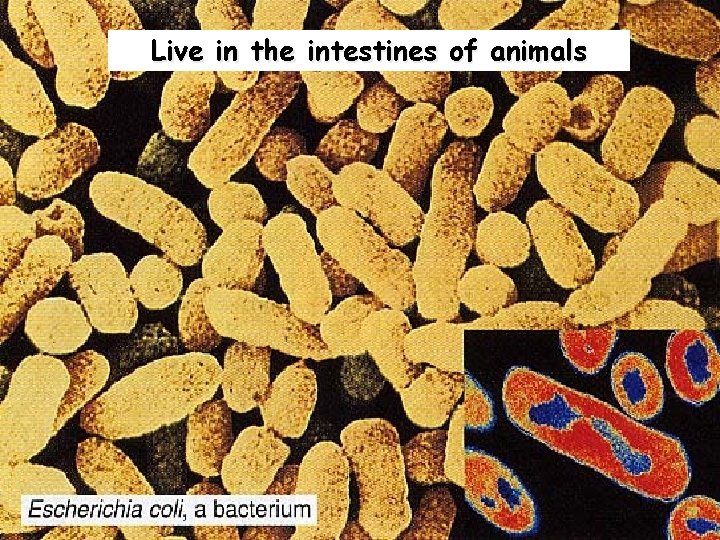
Live in the intestines of animals copyright cmassengale 19
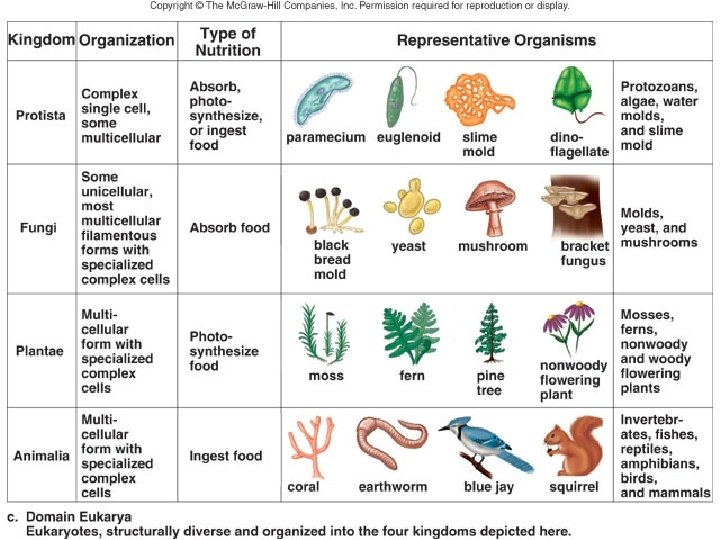
Domain Eukarya is Divided into Kingdoms • • Protista Fungi Plantae Animalia copyright cmassengale 20
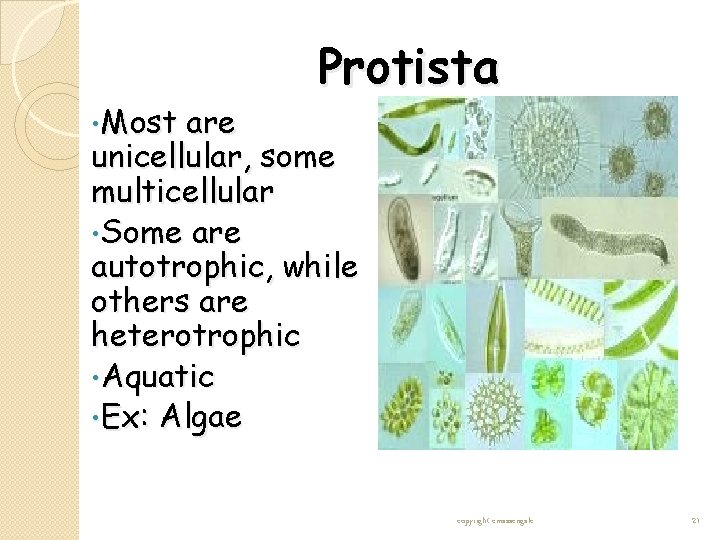
• Most Protista are unicellular, some multicellular • Some are autotrophic, while others are heterotrophic • Aquatic • Ex: Algae copyright cmassengale 21
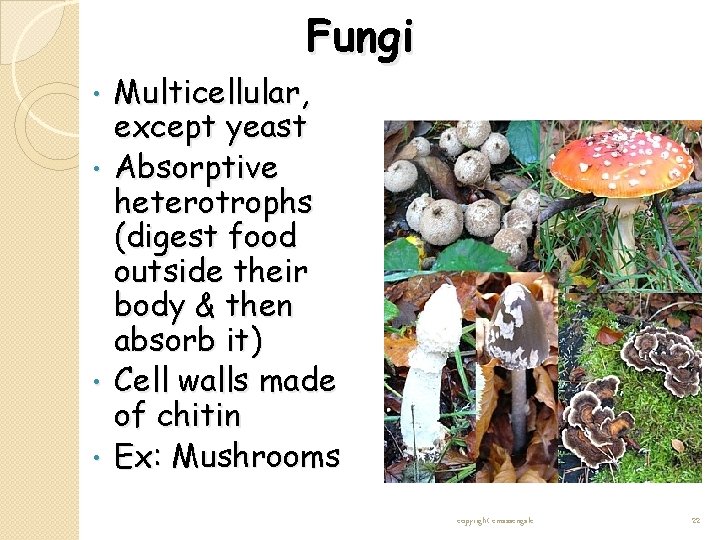
Fungi • • Multicellular, except yeast Absorptive heterotrophs (digest food outside their body & then absorb it) Cell walls made of chitin Ex: Mushrooms copyright cmassengale 22
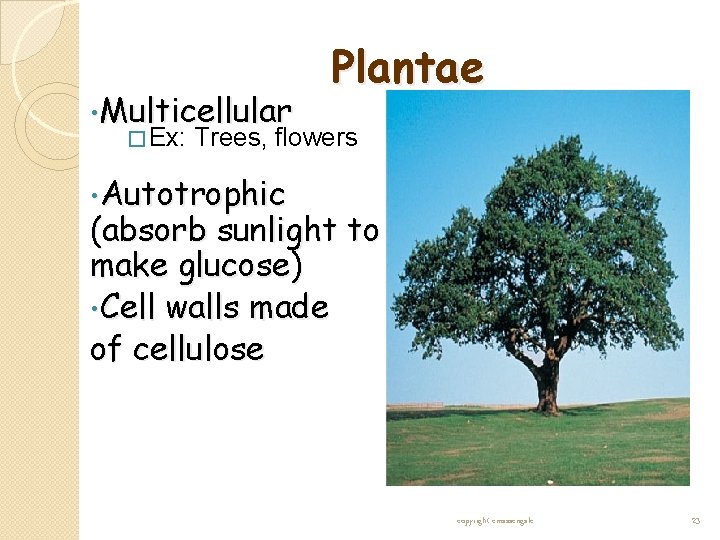
Plantae • Multicellular � Ex: Trees, flowers • Autotrophic (absorb sunlight to make glucose) • Cell walls made of cellulose copyright cmassengale 23
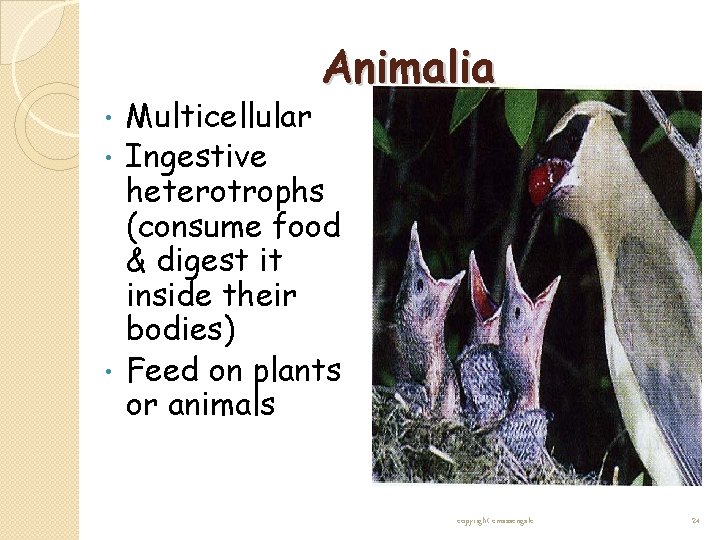
Animalia Multicellular • Ingestive heterotrophs (consume food & digest it inside their bodies) • Feed on plants or animals • copyright cmassengale 24
Domain Kingdom Bacteria Eubacteria Archaebacteria – No peptidoglycan Eukarya Animals Plants Fungi Protists
copyright cmassengale 26
Classification is based on evolutionary relationships How is the hierarchy like a time machine? � ◦ The higher the level, the further back in time that common ancestor existed. copyright cmassengale 27
How does Linnaeus’ system of classification help to illustrate the unity of life? �We see the similarities and the differences. Organisms in the same genus share many features, while those in the same kingdom have many differences, but still share common traits. copyright cmassengale 28
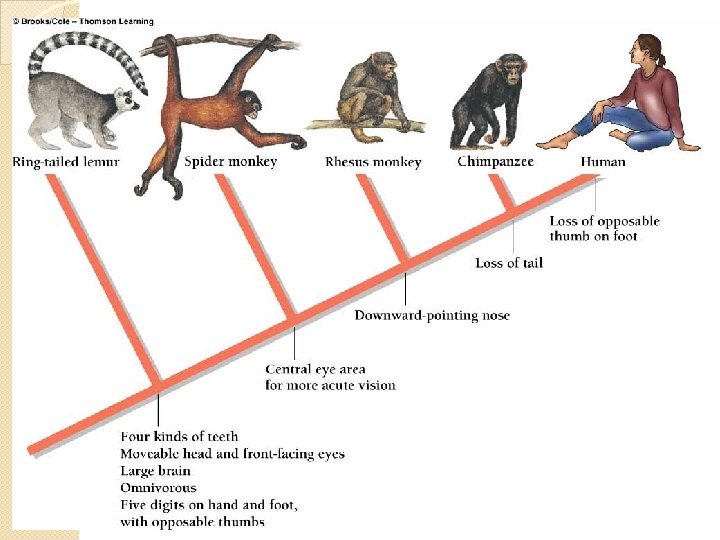
Primate Cladogram copyright cmassengale 29
Basis for Modern Taxonomy Homologous structures Similar embryo development • DNA, RNA • copyright cmassengale 30
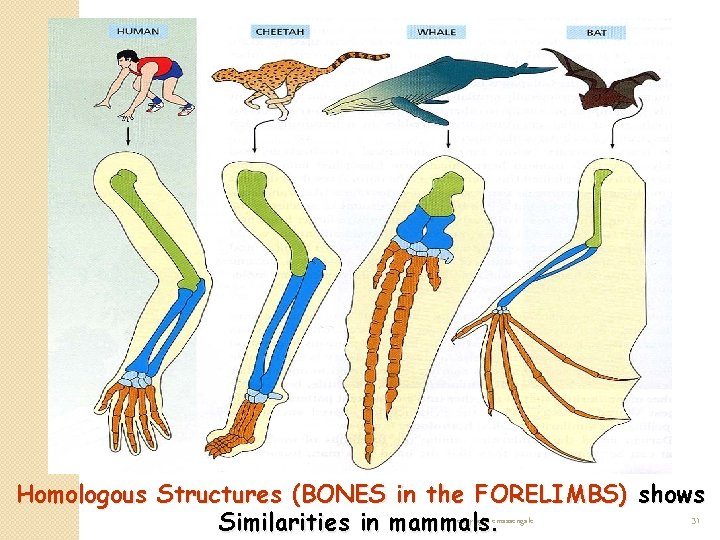
Homologous Structures (BONES in the FORELIMBS) shows copyright cmassengale 31 Similarities in mammals.
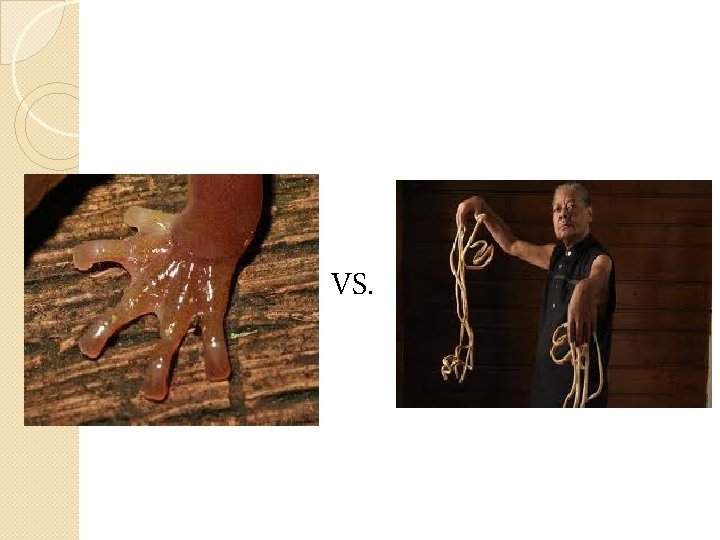
What’s Cladistics? �The classification based on common ancestry. The goal of cladistics is to place species in order in which they descended from a common ancestor.
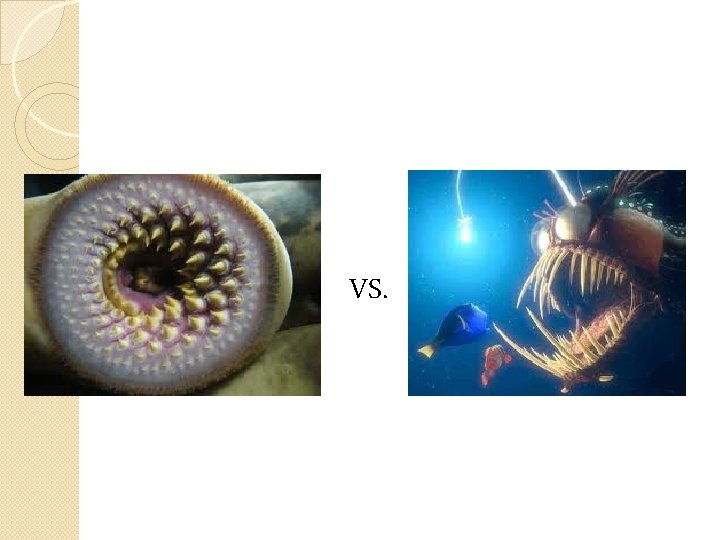
VS.
VS.
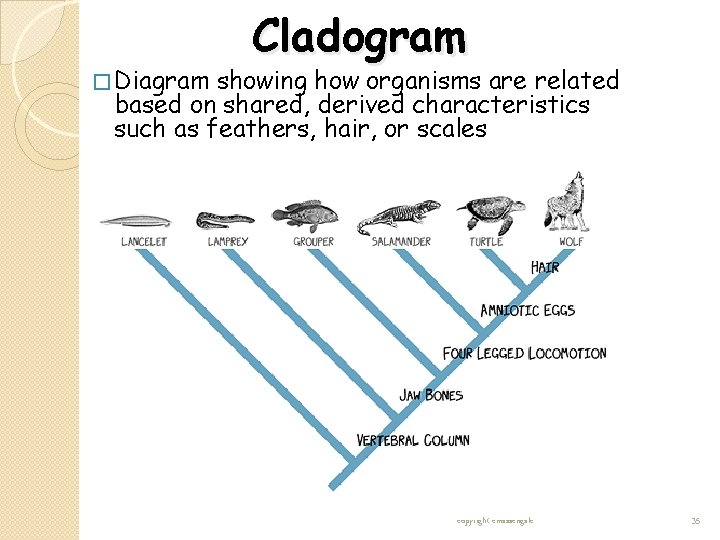
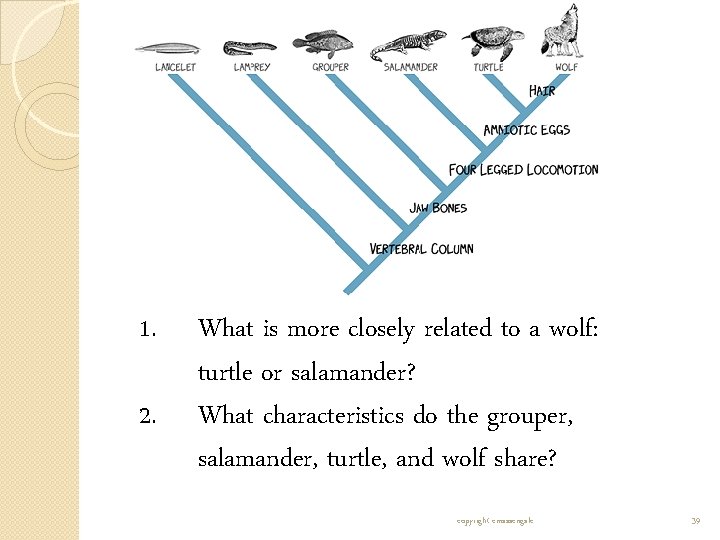
� Diagram Cladogram showing how organisms are related based on shared, derived characteristics such as feathers, hair, or scales copyright cmassengale 35
Cladogram: �Derived characters-groups of species placed in order by the characters (traits) that have added up over time. They are shown as dash marks between the branches of a cladogram. All species above a dash mark share the derived character.
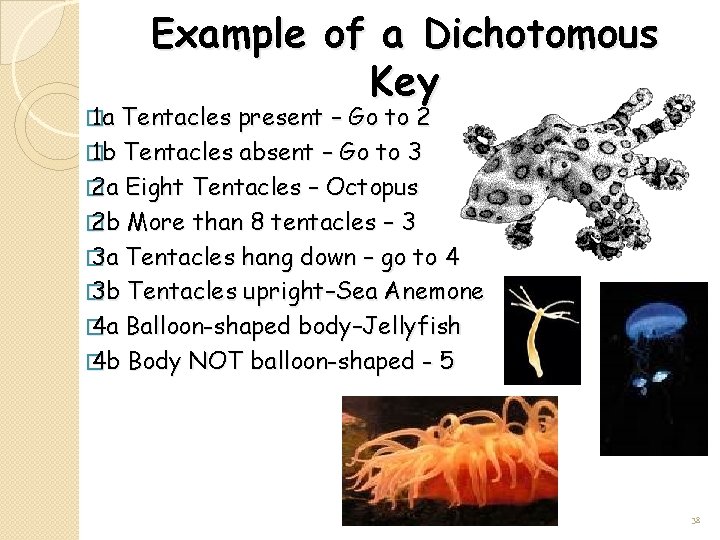
Dichotomous Keys Used to identify organisms • Characteristics given in pairs • Read both characteristics and either go to another set of characteristics OR identify the organism • copyright cmassengale 37
� 1 a Example of a Dichotomous Key Tentacles present – Go to 2 � 1 b Tentacles absent – Go to 3 � 2 a Eight Tentacles – Octopus � 2 b More than 8 tentacles – 3 � 3 a Tentacles hang down – go to 4 � 3 b Tentacles upright–Sea Anemone � 4 a Balloon-shaped body–Jellyfish � 4 b Body NOT balloon-shaped - 5 copyright cmassengale 38
1. 2. What is more closely related to a wolf: turtle or salamander? What characteristics do the grouper, salamander, turtle, and wolf share? copyright cmassengale 39