
Classification Classification to put things geographic entities in

- Slides: 21
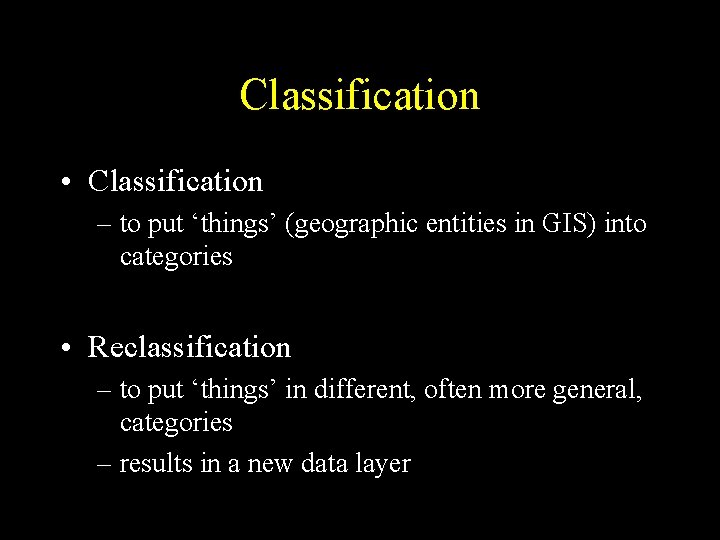
Classification • Classification – to put ‘things’ (geographic entities in GIS) into categories • Reclassification – to put ‘things’ in different, often more general, categories – results in a new data layer
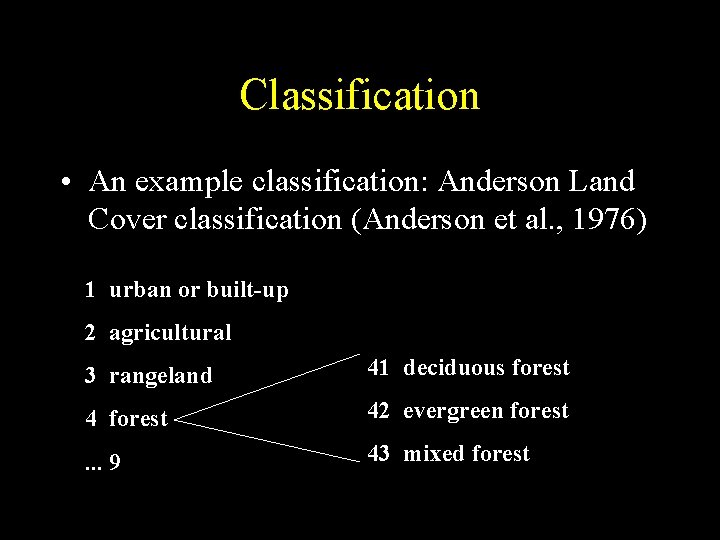
Classification • An example classification: Anderson Land Cover classification (Anderson et al. , 1976) 1 urban or built-up 2 agricultural 3 rangeland 41 deciduous forest 42 evergreen forest . . . 9 43 mixed forest
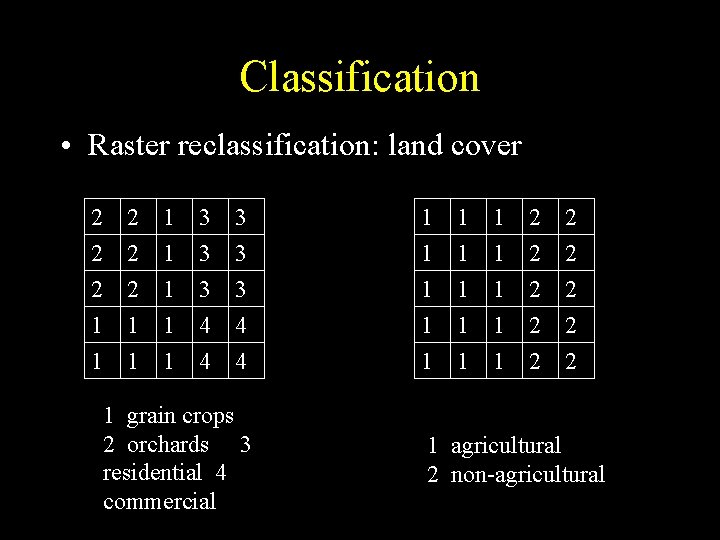
Classification • Raster reclassification: land cover 2 2 2 1 3 1 3 3 1 1 1 1 1 2 2 2 1 1 1 4 4 1 1 1 2 2 1 grain crops 2 orchards 3 residential 4 commercial 1 agricultural 2 non-agricultural
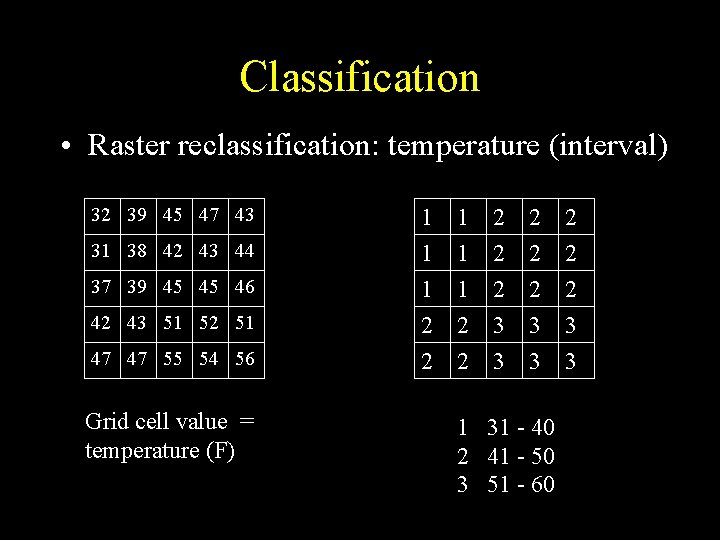
Classification • Raster reclassification: temperature (interval) 32 39 45 47 43 37 39 45 45 46 1 1 1 2 2 2 2 2 42 43 51 52 51 2 2 3 3 3 47 47 55 54 56 2 2 3 31 38 42 43 44 Grid cell value = temperature (F) 1 31 - 40 2 41 - 50 3 51 - 60
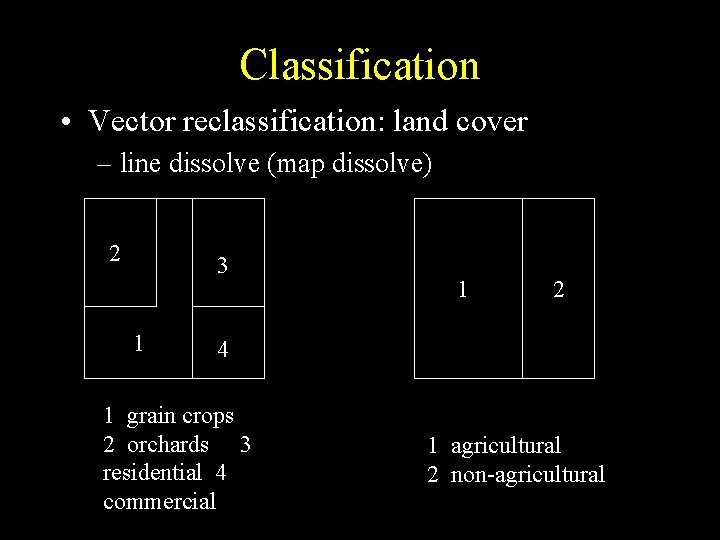
Classification • Vector reclassification: land cover – line dissolve (map dissolve) 2 3 1 1 2 4 1 grain crops 2 orchards 3 residential 4 commercial 1 agricultural 2 non-agricultural
Classification • Buffer: classification of within/without a given proximity – vector: a polygon ‘around’ a feature Line buffer Point buffer Polygon buffer
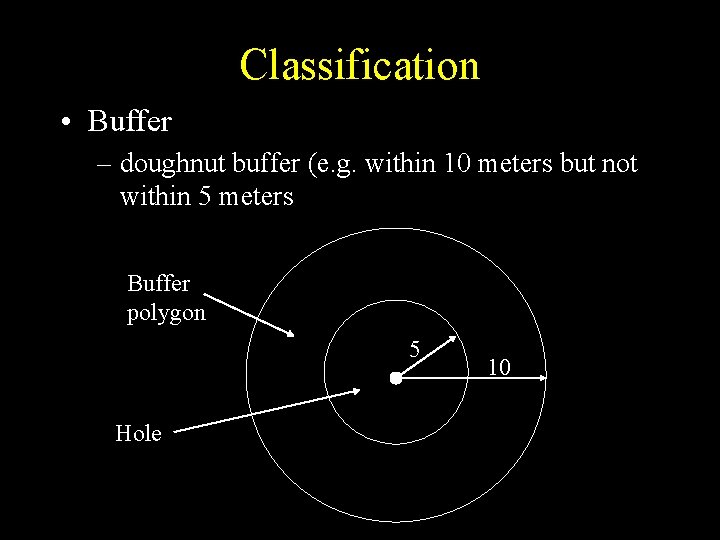
Classification • Buffer – doughnut buffer (e. g. within 10 meters but not within 5 meters Buffer polygon 5 Hole 10
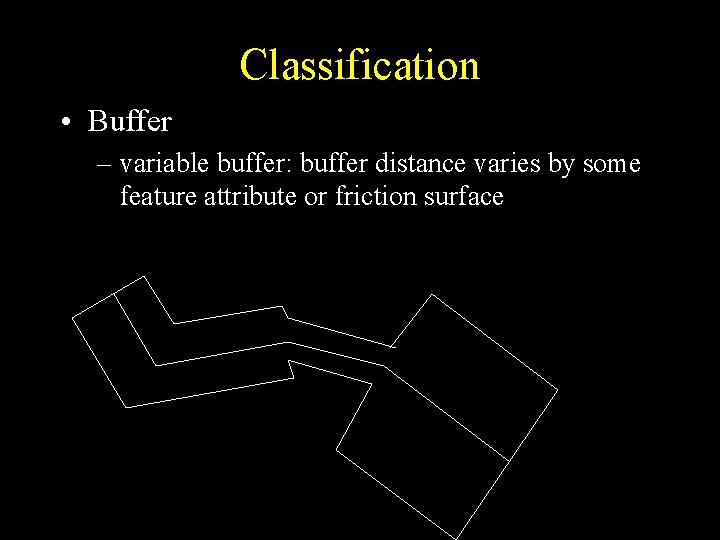
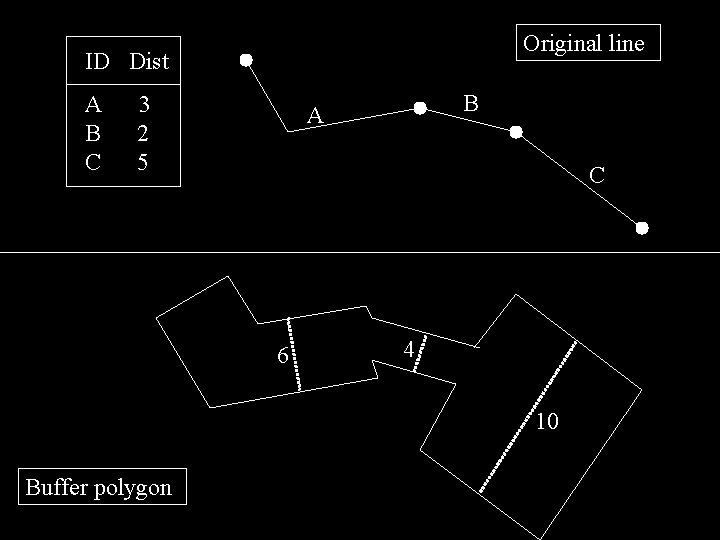
Classification • Buffer – variable buffer: buffer distance varies by some feature attribute or friction surface
Original line ID Dist A B C 3 2 5 B A C 6 4 10 Buffer polygon
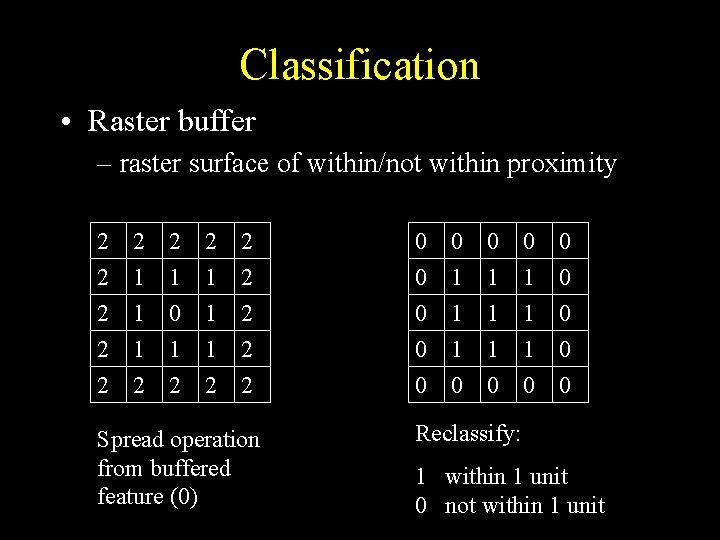
Classification • Raster buffer – raster surface of within/not within proximity 2 2 1 1 0 1 2 2 2 0 0 1 1 0 0 0 2 1 1 1 2 0 1 1 1 0 2 2 2 0 0 0 Spread operation from buffered feature (0) Reclassify: 1 within 1 unit 0 not within 1 unit
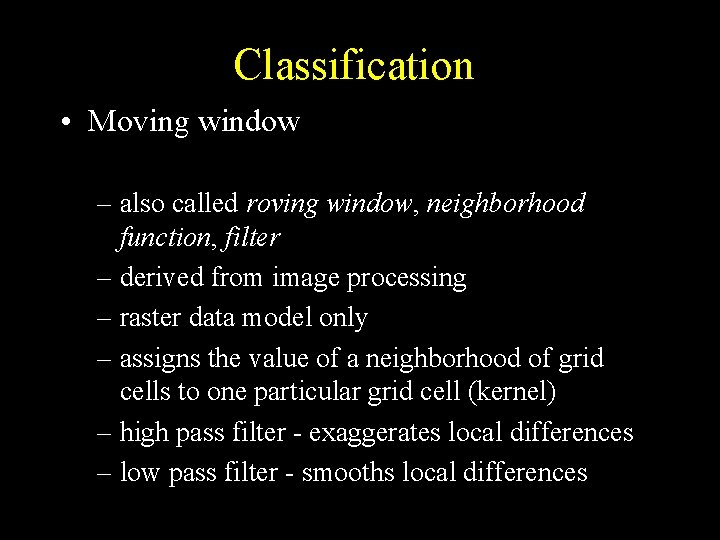
Classification • Moving window – also called roving window, neighborhood function, filter – derived from image processing – raster data model only – assigns the value of a neighborhood of grid cells to one particular grid cell (kernel) – high pass filter - exaggerates local differences – low pass filter - smooths local differences
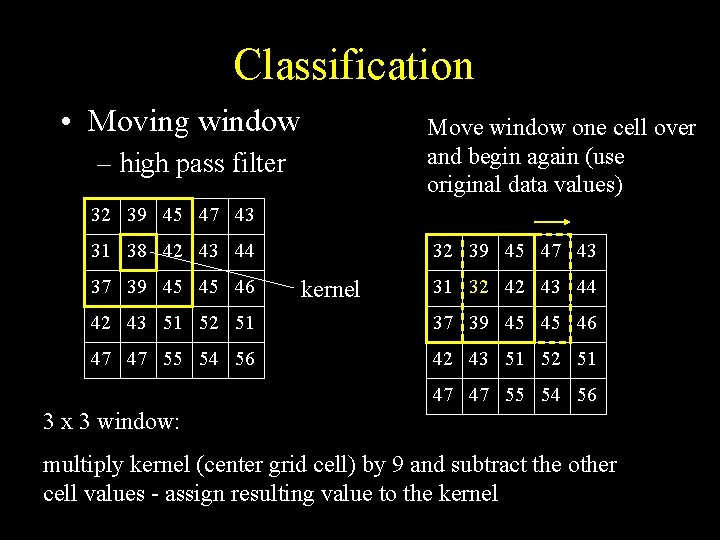
Classification • Moving window Move window one cell over and begin again (use original data values) – high pass filter 32 39 45 47 43 31 38 42 43 44 37 39 45 45 46 32 39 45 47 43 kernel 31 32 42 43 44 42 43 51 52 51 37 39 45 45 46 47 47 55 54 56 42 43 51 52 51 47 47 55 54 56 3 x 3 window: multiply kernel (center grid cell) by 9 and subtract the other cell values - assign resulting value to the kernel
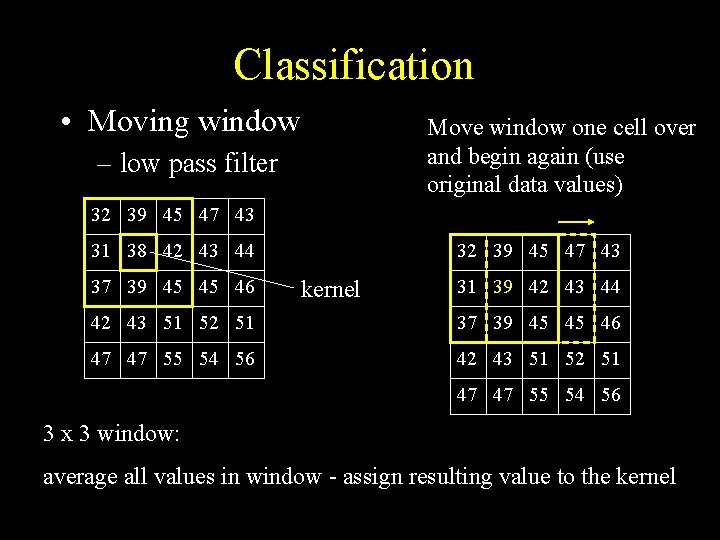
Classification • Moving window Move window one cell over and begin again (use original data values) – low pass filter 32 39 45 47 43 31 38 42 43 44 37 39 45 45 46 32 39 45 47 43 kernel 31 39 42 43 44 42 43 51 52 51 37 39 45 45 46 47 47 55 54 56 42 43 51 52 51 47 47 55 54 56 3 x 3 window: average all values in window - assign resulting value to the kernel
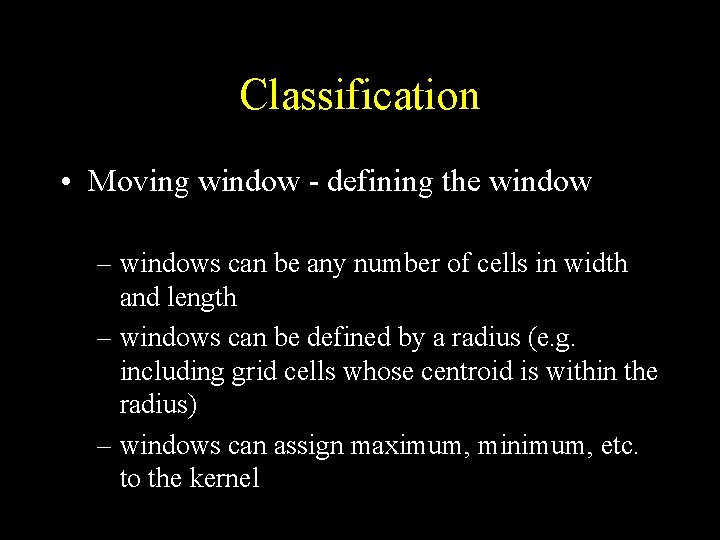
Classification • Moving window - defining the window – windows can be any number of cells in width and length – windows can be defined by a radius (e. g. including grid cells whose centroid is within the radius) – windows can assign maximum, minimum, etc. to the kernel
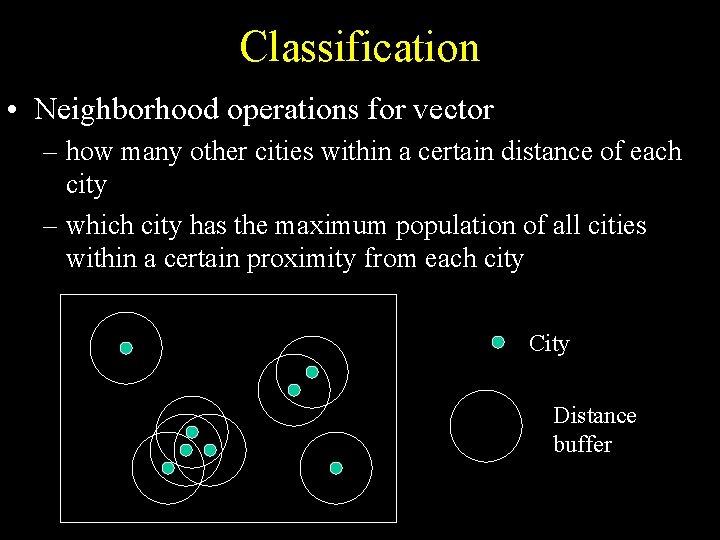
Classification • Neighborhood operations for vector – how many other cities within a certain distance of each city – which city has the maximum population of all cities within a certain proximity from each city City Distance buffer
Classification • Terrain classification – slope – aspect (orientation) – intervisibility
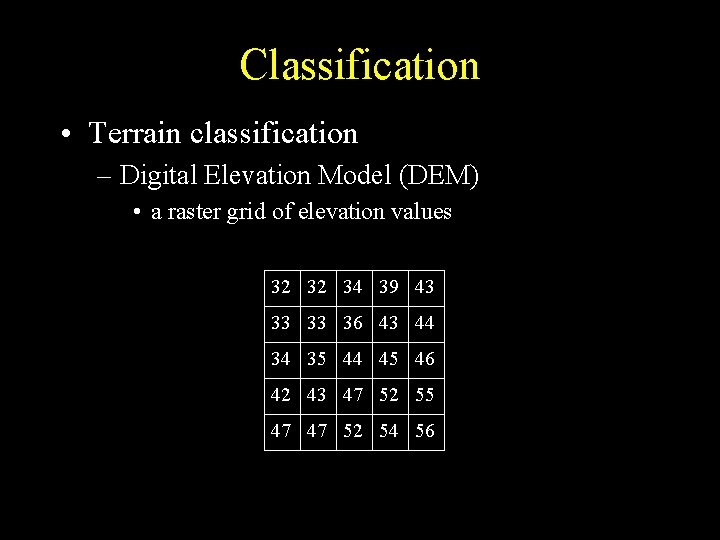
Classification • Terrain classification – Digital Elevation Model (DEM) • a raster grid of elevation values 32 32 34 39 43 33 33 36 43 44 34 35 44 45 46 42 43 47 52 55 47 47 52 54 56
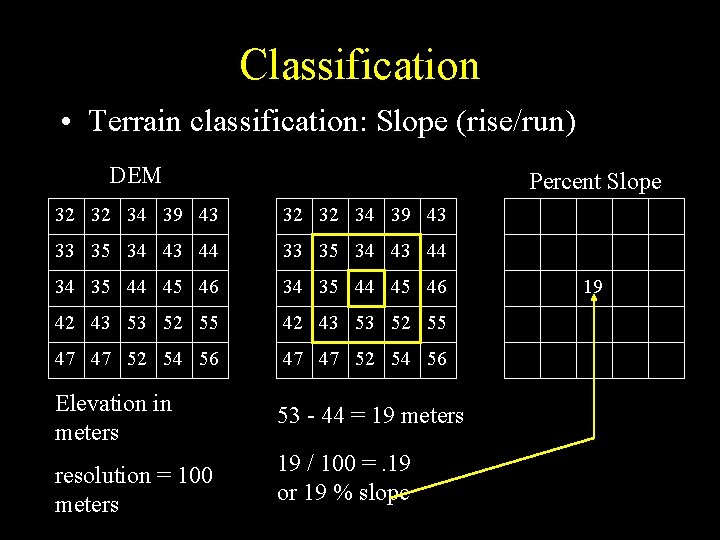
Classification • Terrain classification: Slope (rise/run) DEM Percent Slope 32 32 34 39 43 33 35 34 43 44 34 35 44 45 46 42 43 53 52 55 47 47 52 54 56 Elevation in meters 53 - 44 = 19 meters resolution = 100 meters 19 / 100 =. 19 or 19 % slope 19
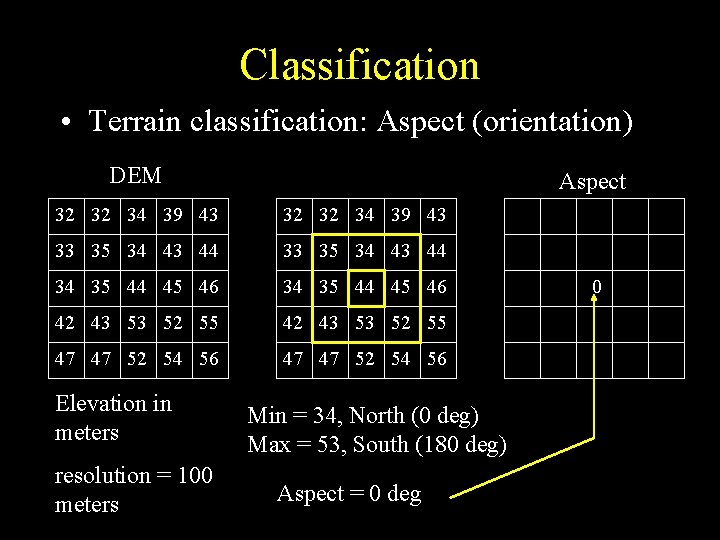
Classification • Terrain classification: Aspect (orientation) DEM Aspect 32 32 34 39 43 33 35 34 43 44 34 35 44 45 46 42 43 53 52 55 47 47 52 54 56 Elevation in meters resolution = 100 meters Min = 34, North (0 deg) Max = 53, South (180 deg) Aspect = 0 deg 0
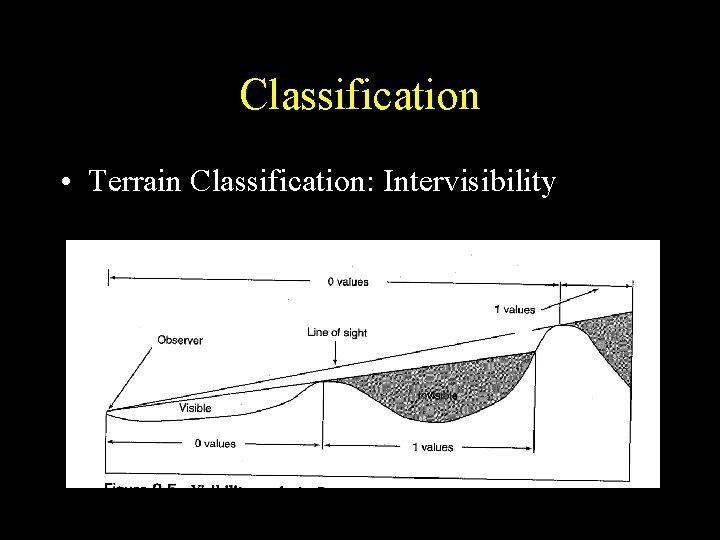
Classification • Terrain Classification: Intervisibility
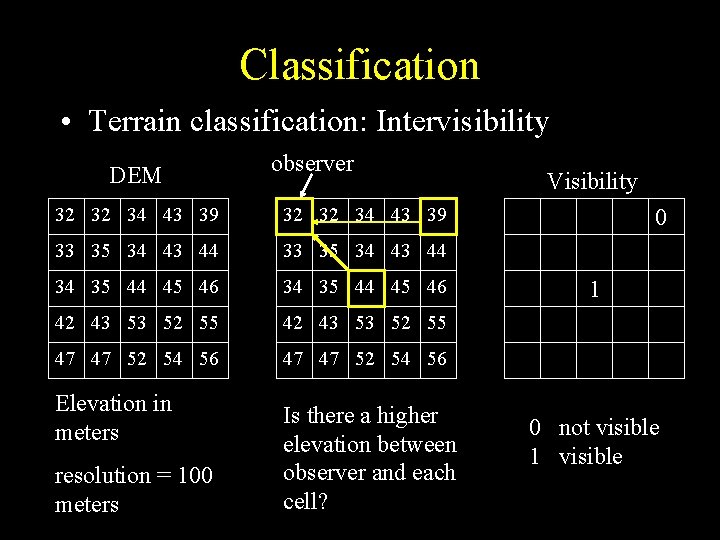
Classification • Terrain classification: Intervisibility DEM observer 32 32 34 43 39 33 35 34 43 44 34 35 44 45 46 42 43 53 52 55 47 47 52 54 56 Elevation in meters resolution = 100 meters Is there a higher elevation between observer and each cell? Visibility 0 1 0 not visible 1 visible