
Classification Classification System There are 13 billion known
Classification
Classification System There are 13 billion known species of organisms; only 5% of all organisms that ever lived!!!!! Classification systems are how we organize organisms. The classification of organisms has changed and evolved over the years due to new knowledge • Greater understanding of evolutionary relationships, thanks to DNA technology, has allowed for more detailed classification
What is Classification? § Taxonomy is the study of classifying organisms and giving them a universally accepted name § § Classification is the arrangement of organisms into orderly groups based on their similarities Aristotle developed one of the earliest classification systems § Divided things as either plants or animals § Divided animals by their ability to swim, fly, or walk

Carolus Linnaeus 1707 – 1778 Called the “Father of Taxonomy” Classified organisms by their structure Developed the modern system of naming known as binomial nomenclature Two-word name (Genus & species)
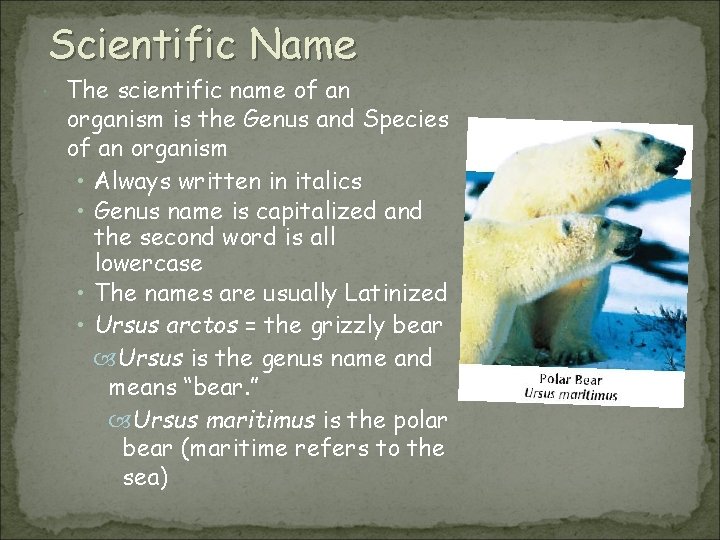
Scientific Name The scientific name of an organism is the Genus and Species of an organism • Always written in italics • Genus name is capitalized and the second word is all lowercase • The names are usually Latinized • Ursus arctos = the grizzly bear Ursus is the genus name and means “bear. ” Ursus maritimus is the polar bear (maritime refers to the sea)
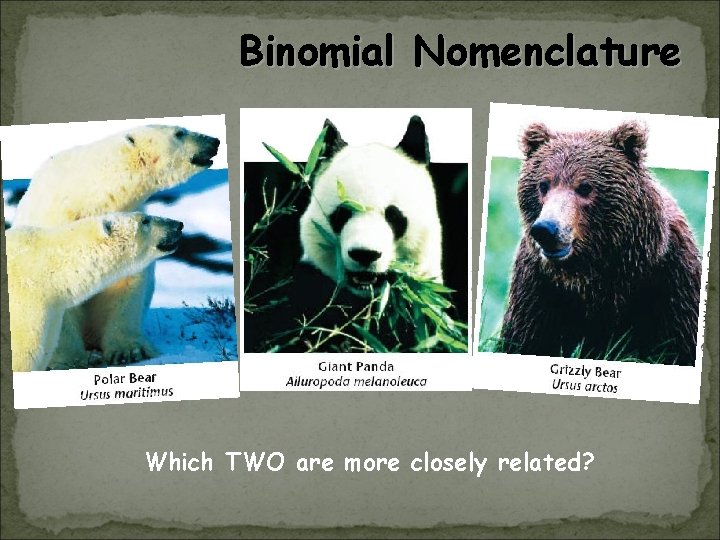
Binomial Nomenclature Which TWO are more closely related?
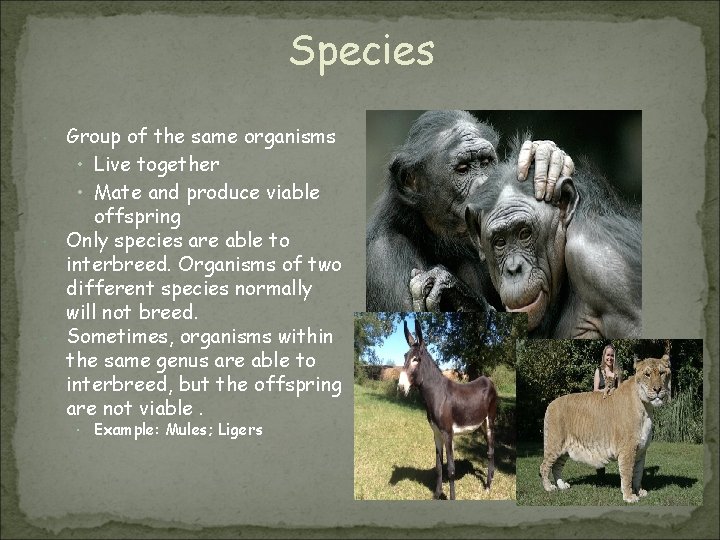
Species Group of the same organisms • Live together • Mate and produce viable offspring Only species are able to interbreed. Organisms of two different species normally will not breed. Sometimes, organisms within the same genus are able to interbreed, but the offspring are not viable. Example: Mules; Ligers
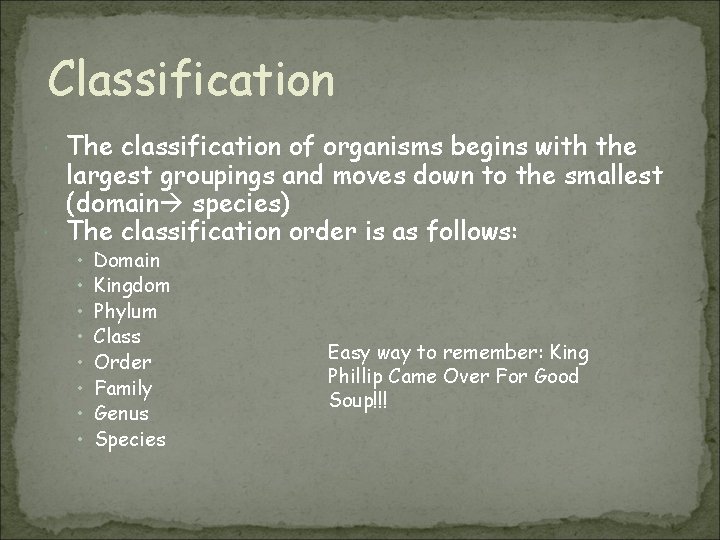
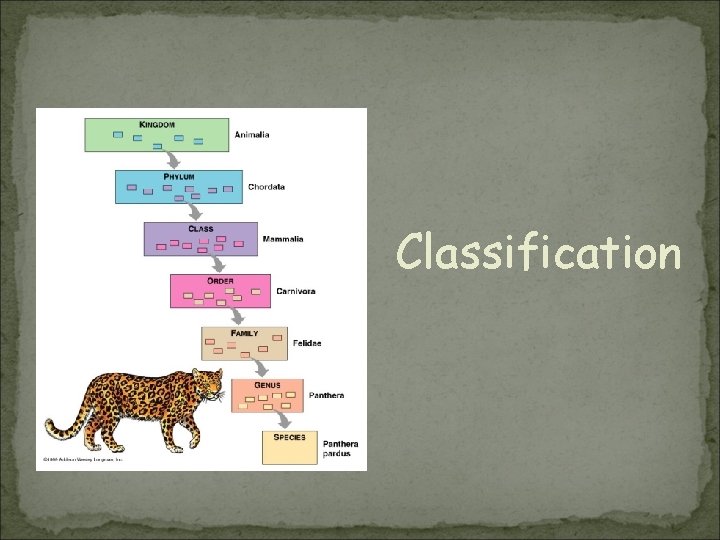
Classification The classification of organisms begins with the largest groupings and moves down to the smallest (domain species) The classification order is as follows: • • Domain Kingdom Phylum Class Order Family Genus Species Easy way to remember: King Phillip Came Over For Good Soup!!!
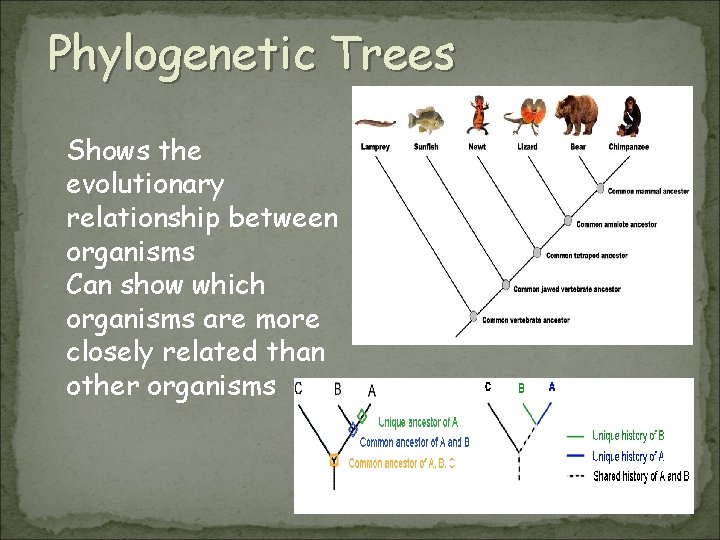
Phylogenetic Trees Shows the evolutionary relationship between organisms Can show which organisms are more closely related than other organisms
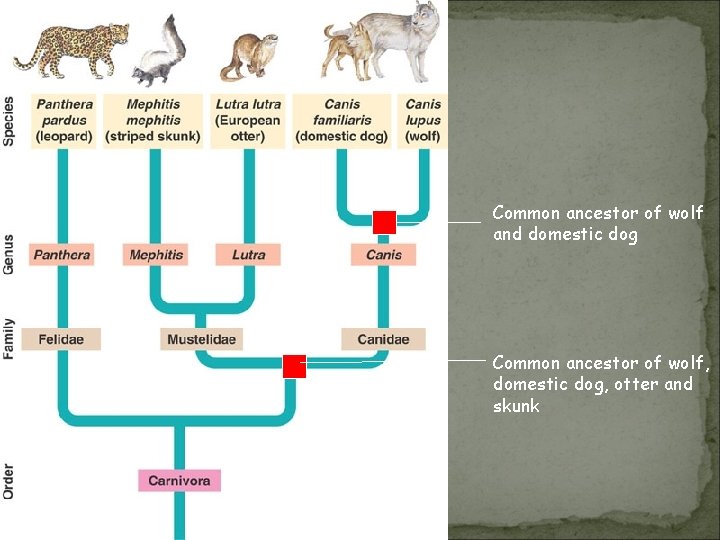
Common ancestor of wolf and domestic dog Common ancestor of wolf, domestic dog, otter and skunk
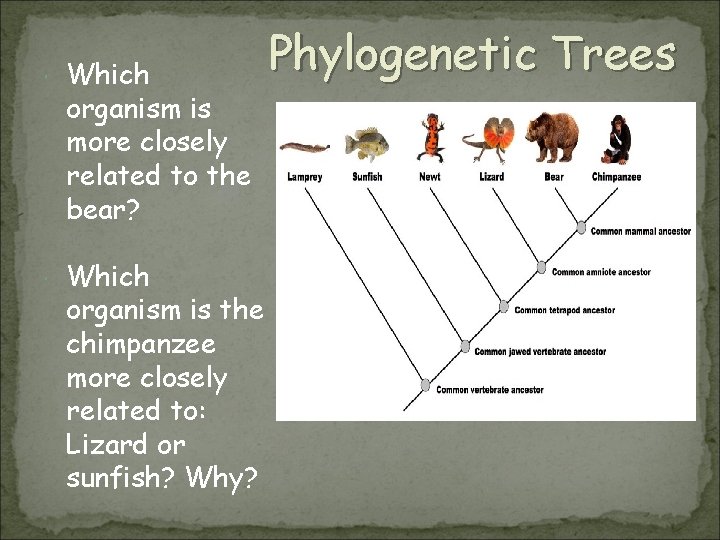
Which organism is more closely related to the bear? Which organism is the chimpanzee more closely related to: Lizard or sunfish? Why? Phylogenetic Trees
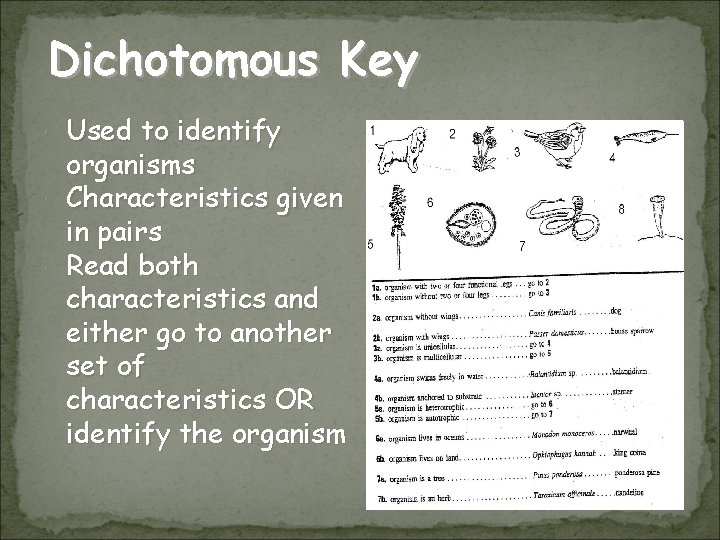
Dichotomous Key Used to identify organisms Characteristics given in pairs Read both characteristics and either go to another set of characteristics OR identify the organism
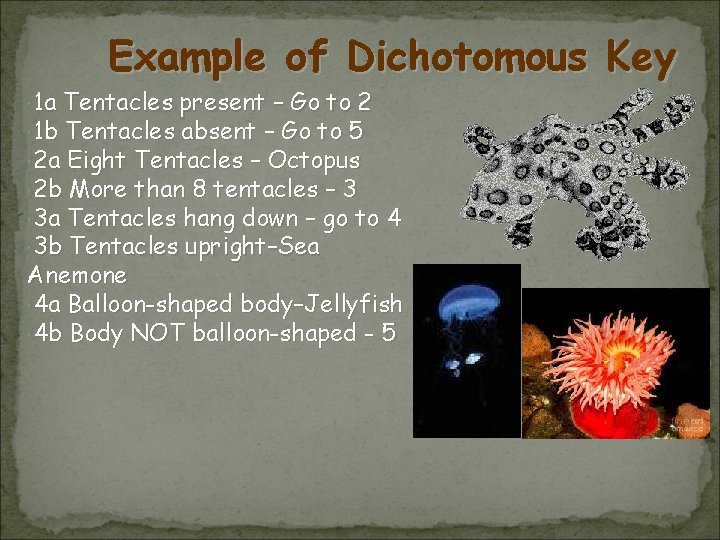
1 a Example of Dichotomous Key Tentacles present – Go to 2 1 b Tentacles absent – Go to 5 2 a Eight Tentacles – Octopus 2 b More than 8 tentacles – 3 3 a Tentacles hang down – go to 4 3 b Tentacles upright–Sea Anemone 4 a Balloon-shaped body–Jellyfish 4 b Body NOT balloon-shaped - 5
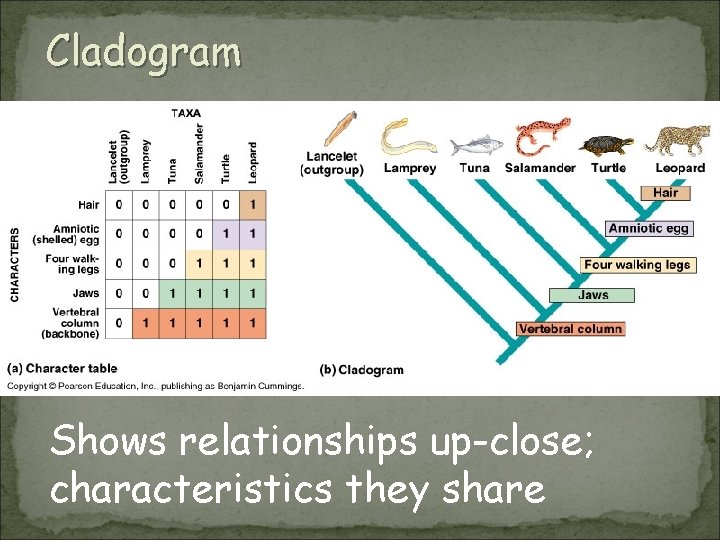
Cladogram Shows relationships up-close; characteristics they share
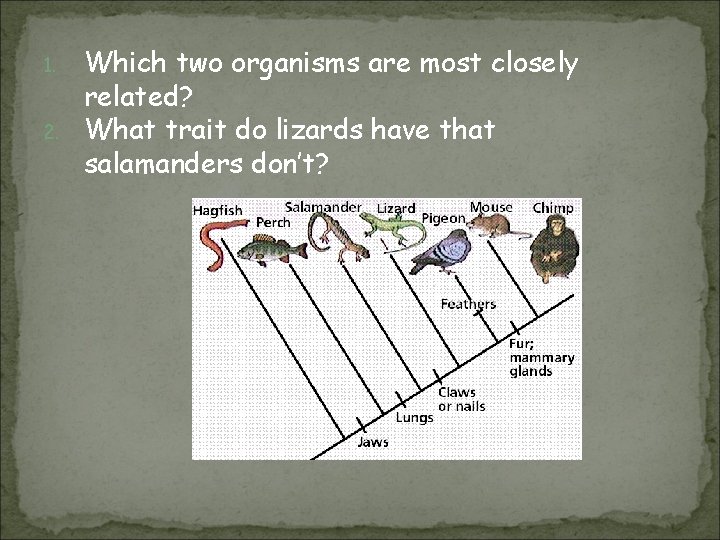
1. 2. Which two organisms are most closely related? What trait do lizards have that salamanders don’t?
Domains Broadest, most inclusive taxon Three domains Archaea and Eubacteria are unicellular prokaryotes (no nucleus or membranebound organelles) Eukarya are more complex and have a nucleus and membrane-bound organelles
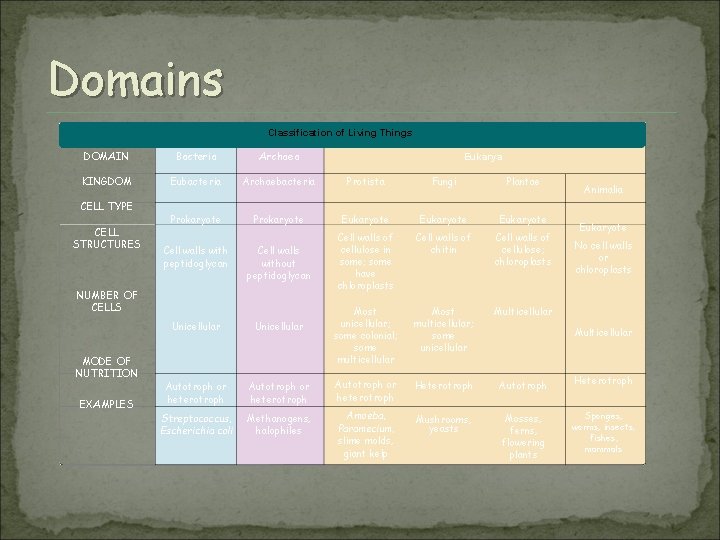
Domains Classification of Living Things DOMAIN Bacteria Archaea KINGDOM Eubacteria Archaebacteria Protista Fungi Plantae Prokaryote Eukaryote Cell walls without peptidoglycan Cell walls of cellulose in some; some have chloroplasts Cell walls of chitin Cell walls of cellulose; chloroplasts Most unicellular; some colonial; some multicellular Most multicellular; some unicellular Multicellular CELL TYPE CELL STRUCTURES Cell walls with peptidoglycan NUMBER OF CELLS MODE OF NUTRITION EXAMPLES Eukarya Animalia Eukaryote No cell walls or chloroplasts Unicellular Autotroph or heterotroph Heterotroph Autotroph Heterotroph Streptococcus, Escherichia coli Methanogens, halophiles Amoeba, Paramecium, slime molds, giant kelp Mushrooms, yeasts Mosses, ferns, flowering plants Sponges, worms, insects, fishes, mammals Multicellular
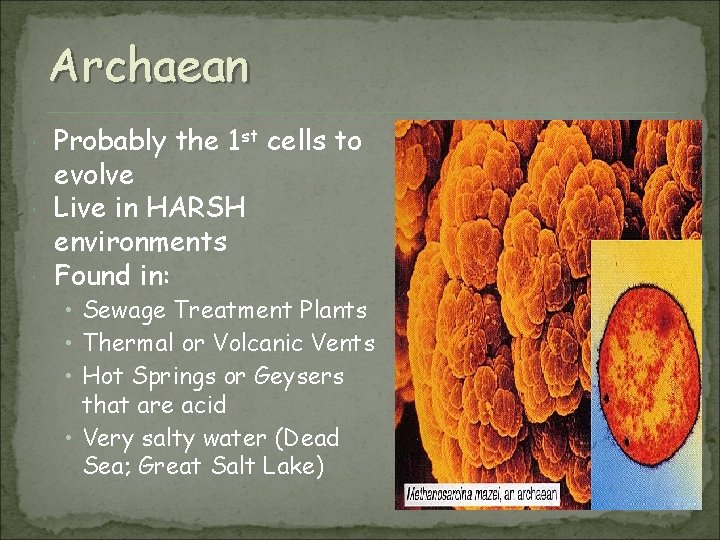
Archaean Probably the 1 st cells to evolve Live in HARSH environments Found in: • Sewage Treatment Plants • Thermal or Volcanic Vents • Hot Springs or Geysers that are acid • Very salty water (Dead Sea; Great Salt Lake)
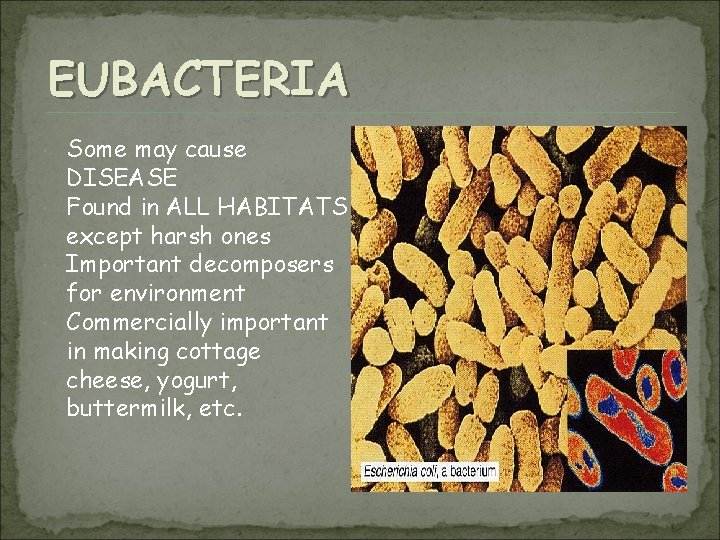
EUBACTERIA Some may cause DISEASE Found in ALL HABITATS except harsh ones Important decomposers for environment Commercially important in making cottage cheese, yogurt, buttermilk, etc.
Domain Eukarya is Divided into Kingdoms Protista (protozoans, algae…) Fungi (mushrooms, yeasts …) Plantae (multicellular plants) Animalia (multicellular animals)
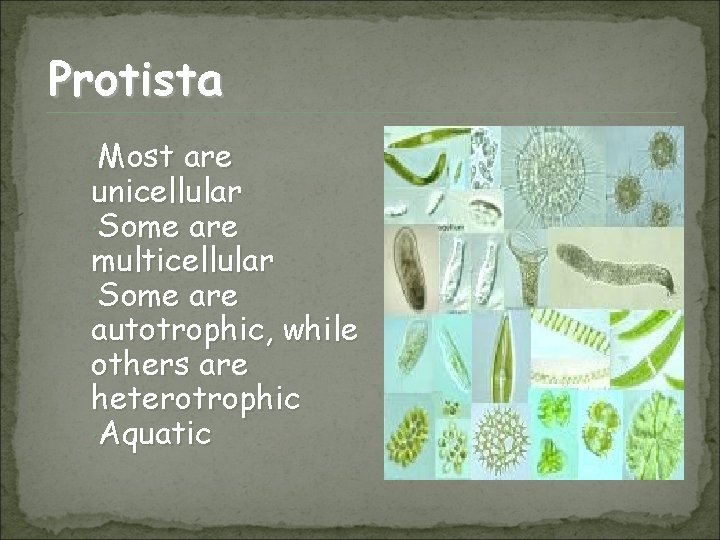
Protista Most are unicellular Some are multicellular Some are autotrophic, while others are heterotrophic Aquatic
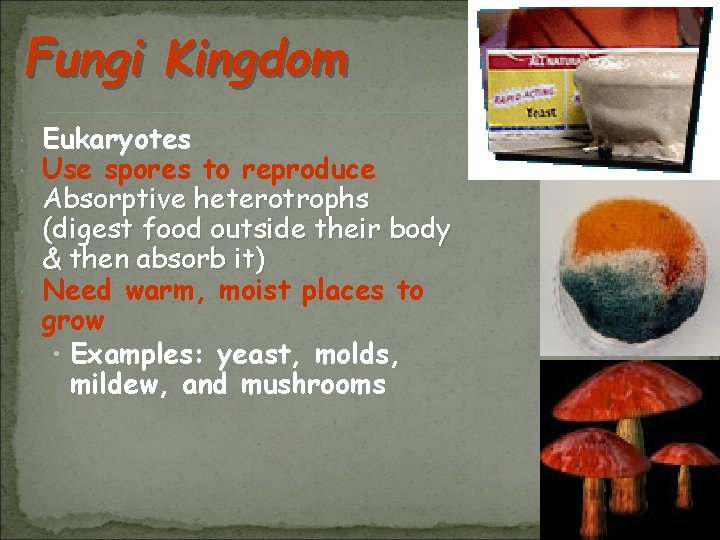
Fungi Kingdom Eukaryotes Use spores to reproduce Absorptive heterotrophs (digest food outside their body & then absorb it) Need warm, moist places to grow • Examples: yeast, molds, mildew, and mushrooms
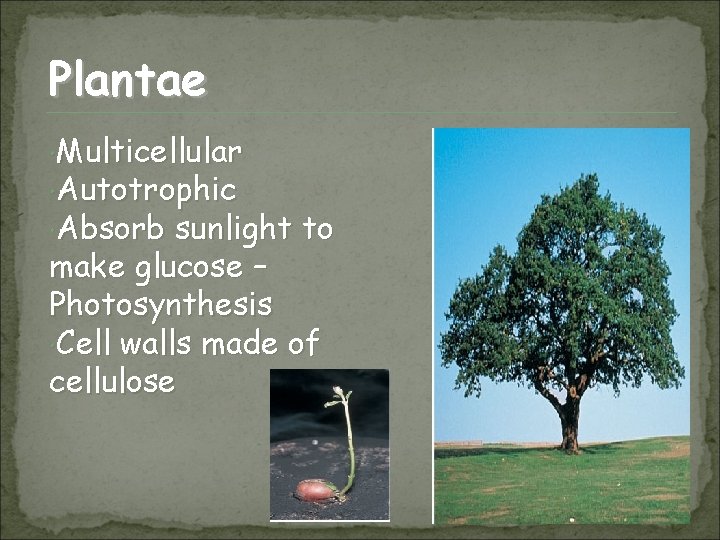
Plantae Multicellular Autotrophic Absorb sunlight to make glucose – Photosynthesis Cell walls made of cellulose
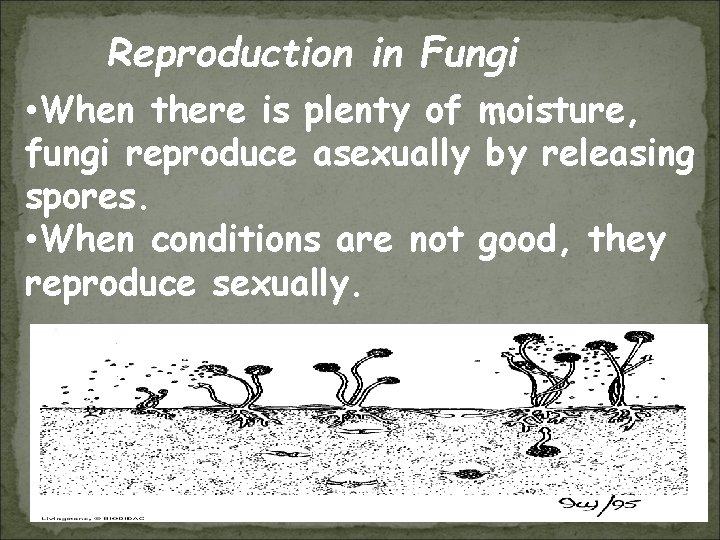
Reproduction in Fungi • When there is plenty of moisture, fungi reproduce asexually by releasing spores. • When conditions are not good, they reproduce sexually.
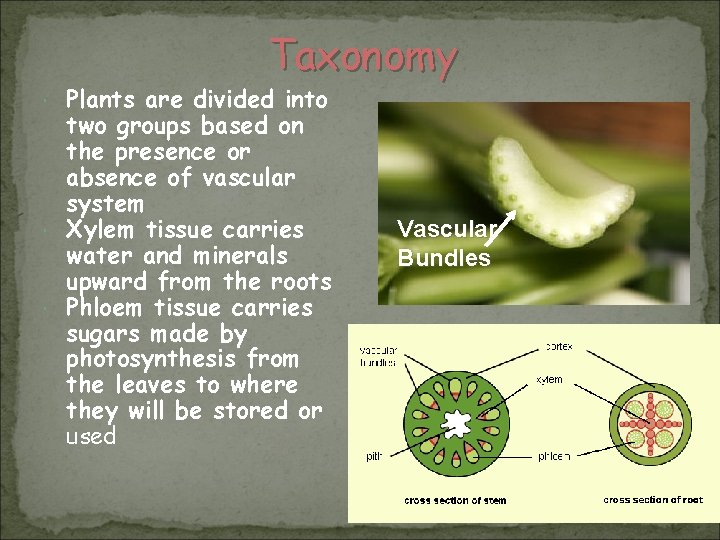
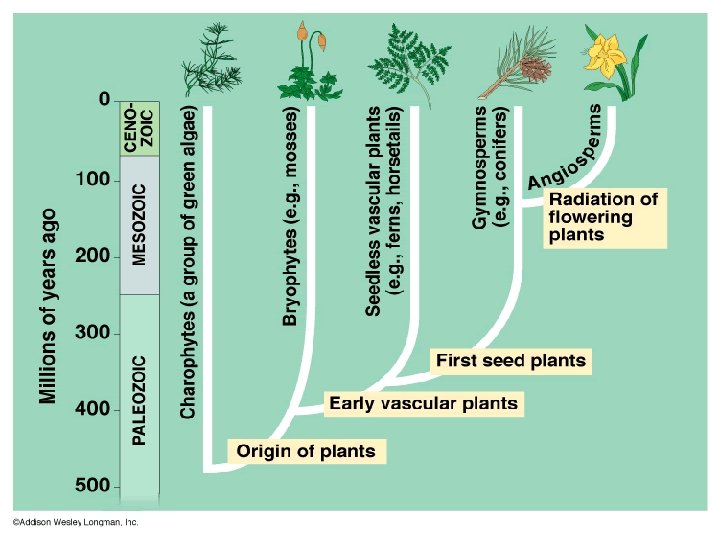
Taxonomy Plants are divided into two groups based on the presence or absence of vascular system Xylem tissue carries water and minerals upward from the roots Phloem tissue carries sugars made by photosynthesis from the leaves to where they will be stored or used Vascular Bundles
26
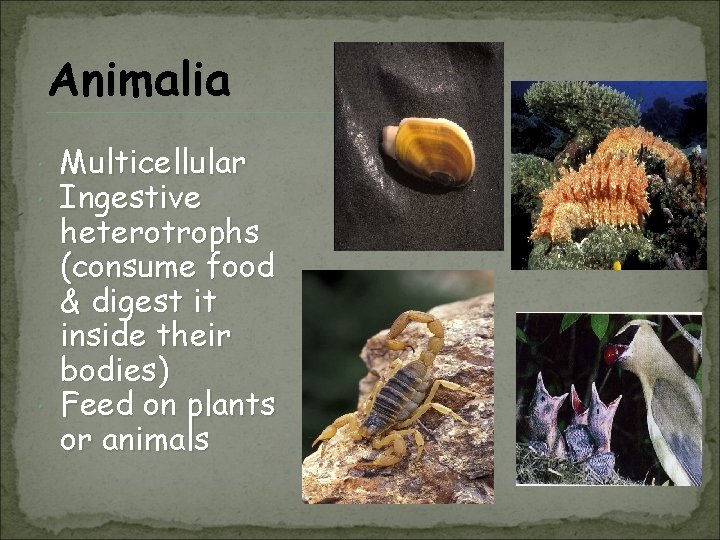
Animalia Multicellular Ingestive heterotrophs (consume food & digest it inside their bodies) Feed on plants or animals
- Slides: 27