
Classification Ch 18 Part 2 The Domain System


- Slides: 22
Classification Ch. 18 (Part 2)
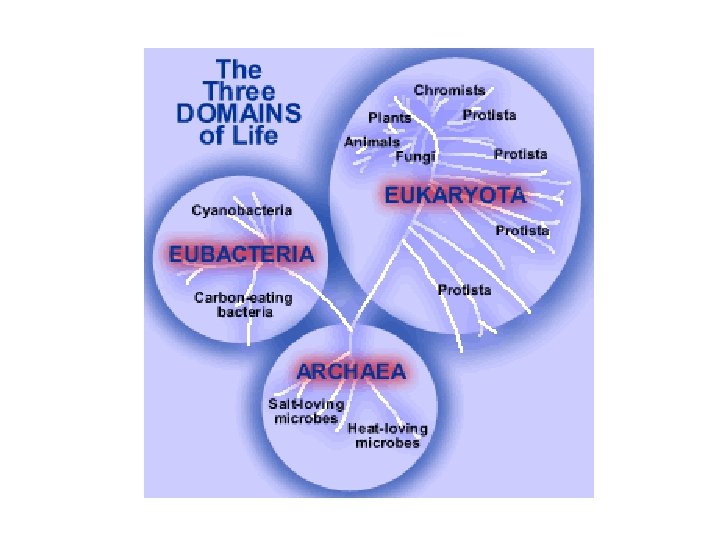
• The Domain System • Molecular analyses have given rise to the new larger category called the Domain. • The three-domain system of taxonomy that is now recognized by many scientists. • The domain is a more inclusive category than any other—larger than a kingdom.
Watch the video on the Domain System… http: //www. youtube. com/watch? v=g Su. Ro. DGp. KWw
–The Three Domains Are: • Eukarya, which is composed of the Kingdoms that include protists, fungi, plants, and animals. • Bacteria, which corresponds to the Kingdom Eubacteria (true bacteria). • Archaea, which corresponds to the Kingdom Archaebacteria.
• Modern classification is a rapidly changing science. • As new information is gained about organisms in the domains Bacteria and Archaea, they may be subdivided into additional kingdoms.
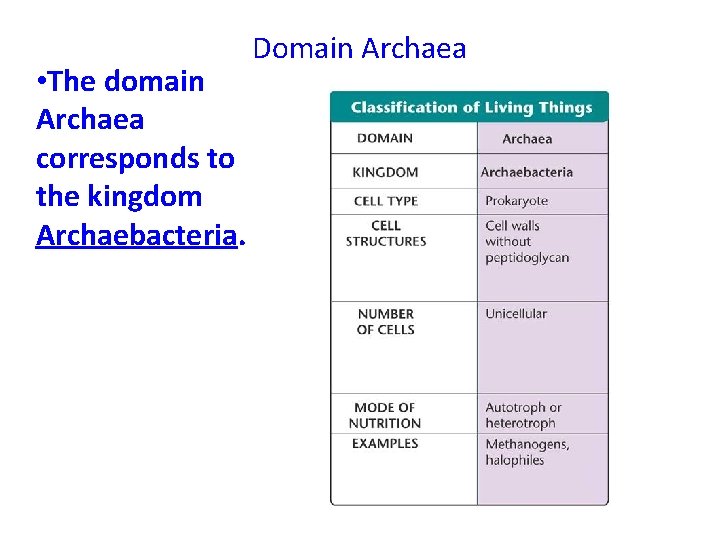
• The domain Archaea corresponds to the kingdom Archaebacteria. Domain Archaea
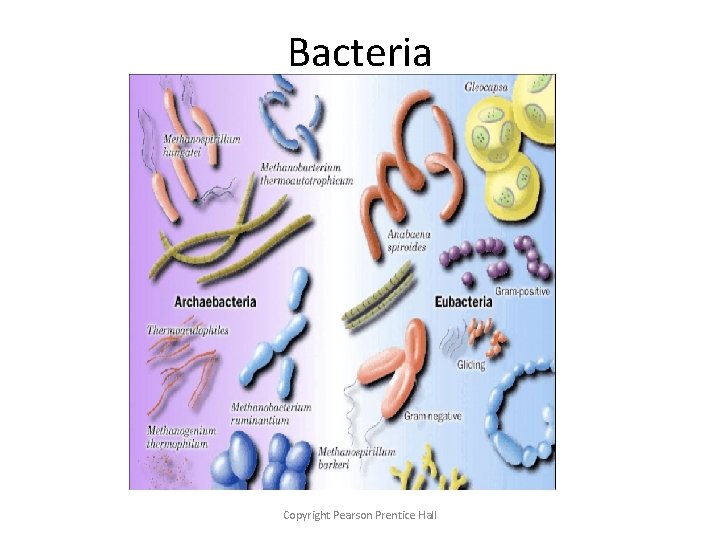
• Domain Archaea • Members of the domain Archaea are unicellular prokaryotes. • They live in extreme environments – similar to early Earth (no oxygen, extremely hot, toxic). They are the most ancient group of organisms on the planet. • Their cell walls lack a protein found in more recent organisms – peptidoglycan.
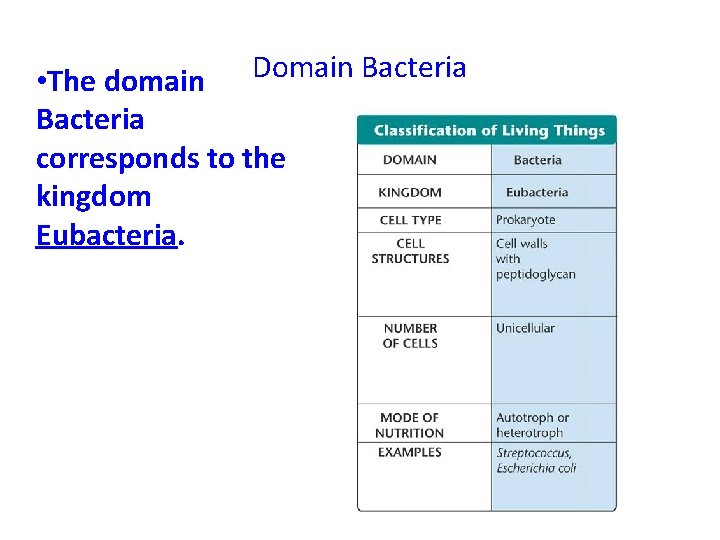
• The domain Domain Bacteria corresponds to the kingdom Eubacteria.
• Domain Bacteria • Members of the domain Bacteria are unicellular prokaryotes. • Their cells have thick, rigid cell walls that surround a cell membrane. • Their cell walls contain peptidoglycan a more recently derived characteristic.
Bacteria Copyright Pearson Prentice Hall
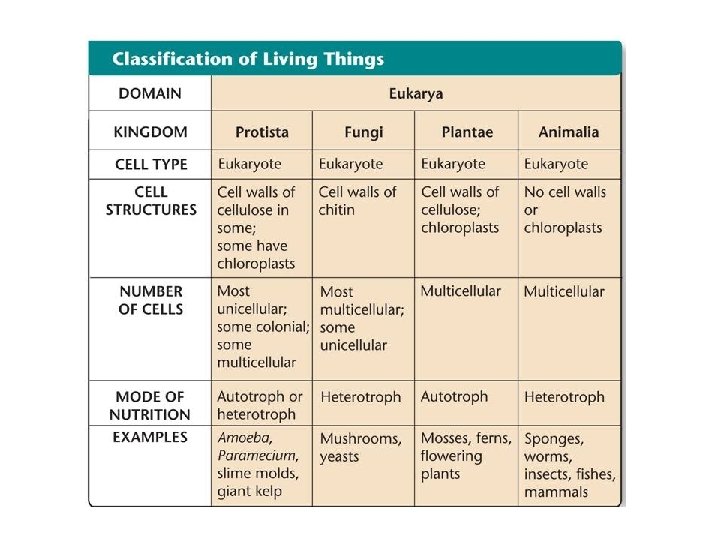
• Domain Eukarya • The domain Eukarya consists of organisms that have a nucleus. • Eukarya includes the Kingdoms –Protista –Fungi –Plantae –Animalia
Domain Eukarya
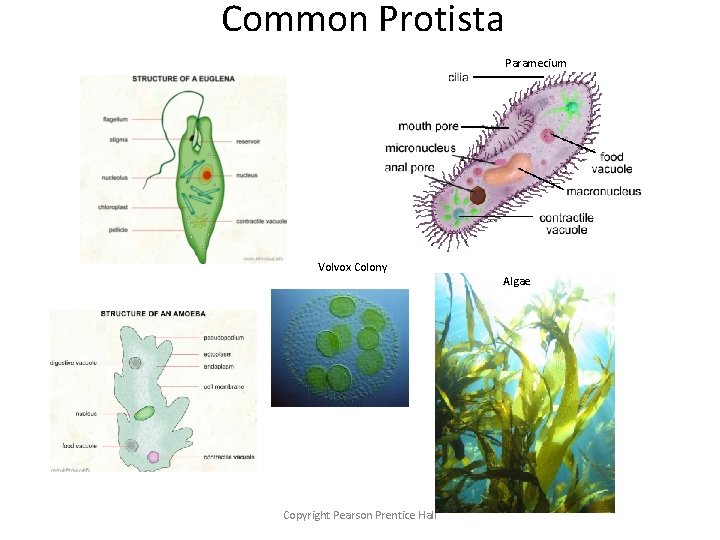
–Protista Domain Eukarya • The kingdom Protista is composed of eukaryotic organisms that cannot be classified as animals, plants, or fungi so they get dumped here. • Its members display the greatest variety. • They can be unicellular or multicellular; photosynthetic or heterotrophic; and can share characteristics with plants, fungi, or animals.
Common Protista Paramecium Volvox Colony Copyright Pearson Prentice Hall Algae
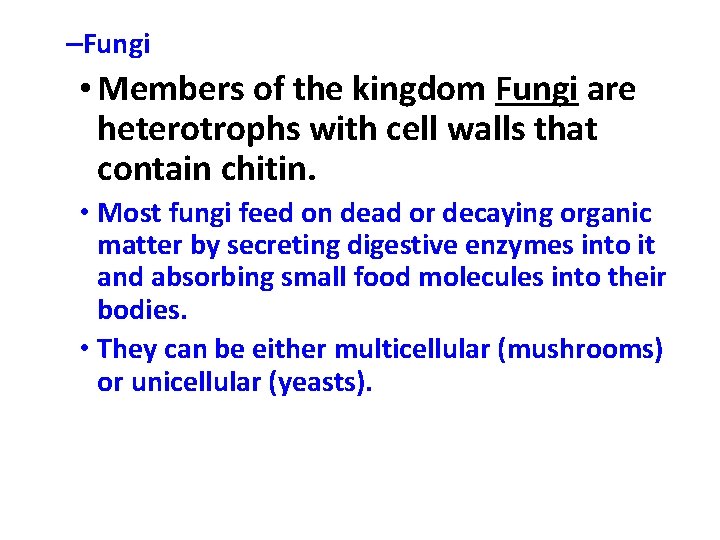
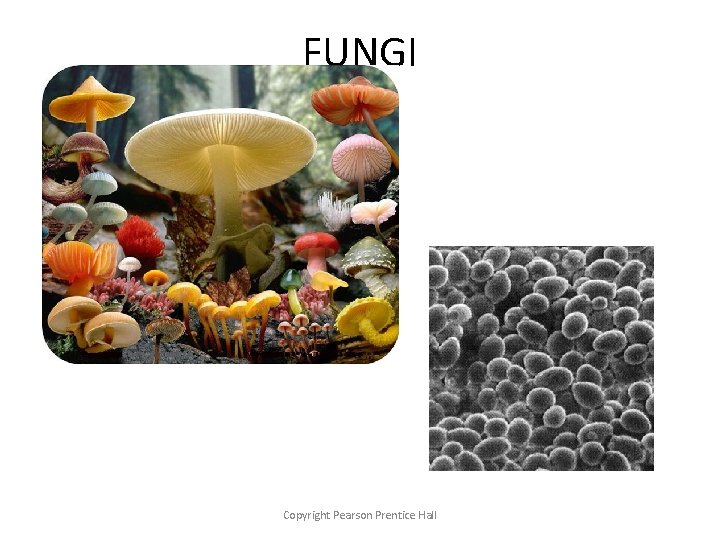
–Fungi • Members of the kingdom Fungi are heterotrophs with cell walls that contain chitin. • Most fungi feed on dead or decaying organic matter by secreting digestive enzymes into it and absorbing small food molecules into their bodies. • They can be either multicellular (mushrooms) or unicellular (yeasts).
FUNGI Copyright Pearson Prentice Hall
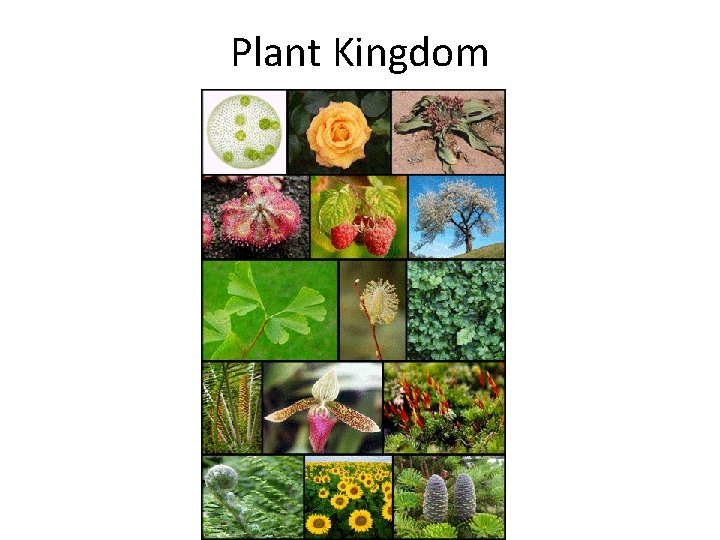
Domain Eukarya –Plantae • Members of the kingdom Plantae are multicellular, photosynthetic autotrophs. • Plants are nonmotile—they cannot move from place to place. • Plants have cell walls that contain cellulose. • The plant kingdom includes cone-bearing and flowering plants as well as mosses and ferns.
Plant Kingdom Copyright Pearson Prentice Hall
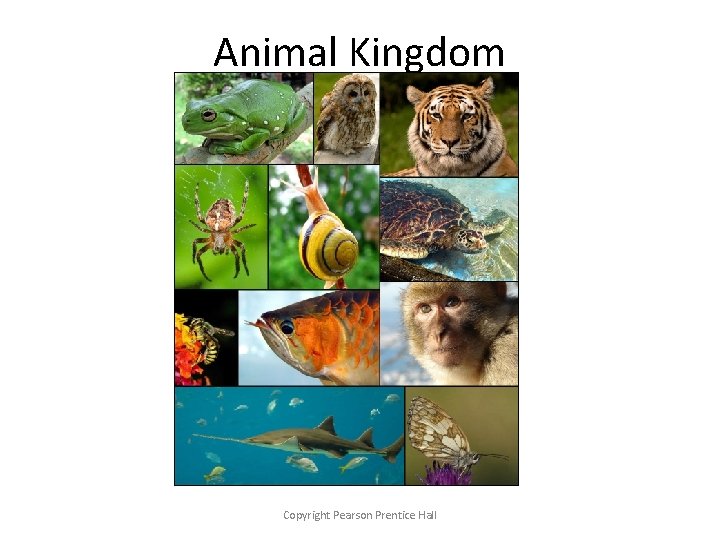
Domain Eukarya –Animalia • Members of the kingdom Animalia are multicellular and heterotrophic. • The cells of animals do not have cell walls. • Most animals can move about. • There is great diversity within the animal kingdom, and many species exist in nearly every part of the planet.
Animal Kingdom Copyright Pearson Prentice Hall
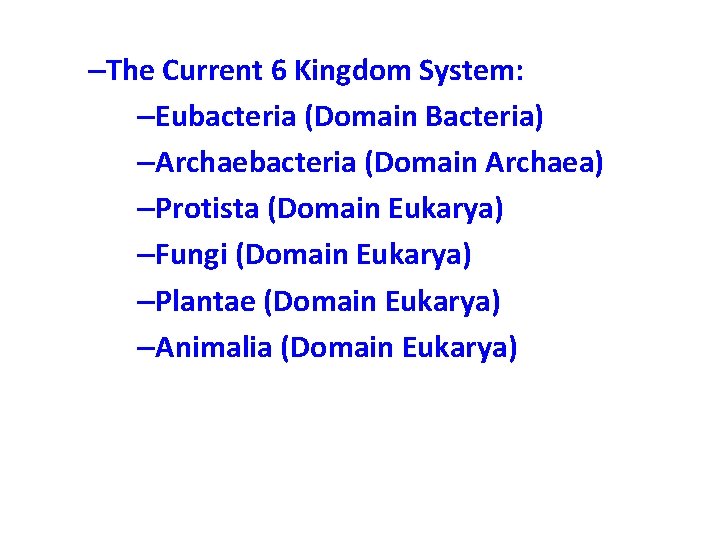
–The Current 6 Kingdom System: –Eubacteria (Domain Bacteria) –Archaebacteria (Domain Archaea) –Protista (Domain Eukarya) –Fungi (Domain Eukarya) –Plantae (Domain Eukarya) –Animalia (Domain Eukarya)