
Classification by trophic level Classification by zonation Factors
• Classification by trophic level • Classification by zonation • Factors affecting the distribution of aquatic organisms • Characteristic organisms for each lake zone

Classification by Trophic Level A. Primary Producers • Produce organic material from elemental nutrients • Ex: • photosynthesis where light is used as an energy source • chemosynthesis where a chemical reaction is used as an energy source
B. Consumers • • Feed on primary producers or other consumers Ex: zooplankton, fish, people C. Decomposers • • Convert organic material back to nutrients, e. g. mineralization Ex: bacteria, fungi

Classification by Zonation A. Psammolittoral zone • In the beach sand • Ex: specialized copepods, rotifers, nematodes B. Limnetic, Pelagic zone • In the water • Ex: phytoplankton, zooplankton, fish
C. Benthic zone • On the bottom • Epifauna – those that live and move about on the lake bottom – ex: crayfish, dragonfly larvae • Infauna – those that live beneath the mud surface – ex: nematodes, some insect larvae
Factors Affecting the Distribution of Aquatic Organisms A. General principles 1. Leibig’s “Law of the Minimum” 2. Shelford’s “Law of Tolerance” 1. eurothermal – withstands a large temperature range, ex: carp 2. stenothermal- only withstands a small temperature range
B. Stratification – temperature • ex: refuge for daphnia – chemical • ex: oxygen distribution, only certain organisms can withstand anoxia C. Light – photic zone – need light for photosynthesis – photoinhibition – high levels of light, especially in the UV range, inhibits photosynthesis
D. Nature of the substrate – interstitial space – minimum space requirements – erodability • ex: macrophyte rooting E. Water movement – gas and nutrient supply/replenishment – transports organisms • ex: build of up of algae downwind
F. Availability of nutrients and/or prey – ex: zooplankton migrations to graze in shallow zones – ex: blue-green algae sink to deeper, nutrientrich water at night than float to the surface during the day for light G. Species interactions – physical avoidance of predators – competition for nutrients, prey, and light
Characteristic Organisms for Each Lake Zone A. Limnetic zone 1. Plankton a. Phytoplankton – plant plankton Major Groups: Cyanophyta – Blue-green algae Chrysophyta – Golden-yellow algae Dinophyta – Dinoflagellates Euglenophyta – Euglena Chlorophyta – Green algae Bacillariophyta – Diatoms Cryptophyta - Cryptomonads
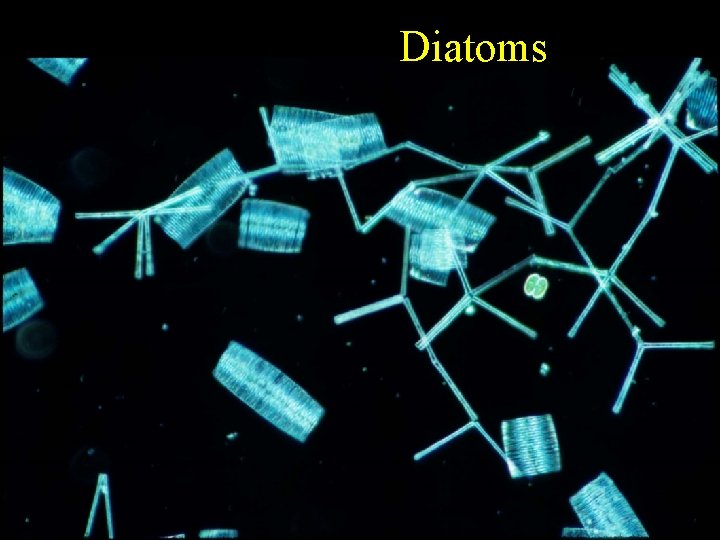
Diatoms
b. zooplankton – animal plankton Major Groups: Copepoda – Copepods Diaptomus Cladocerans e. g. Bosmina, Daphnia, Rotifers

Copepods

Bosmina
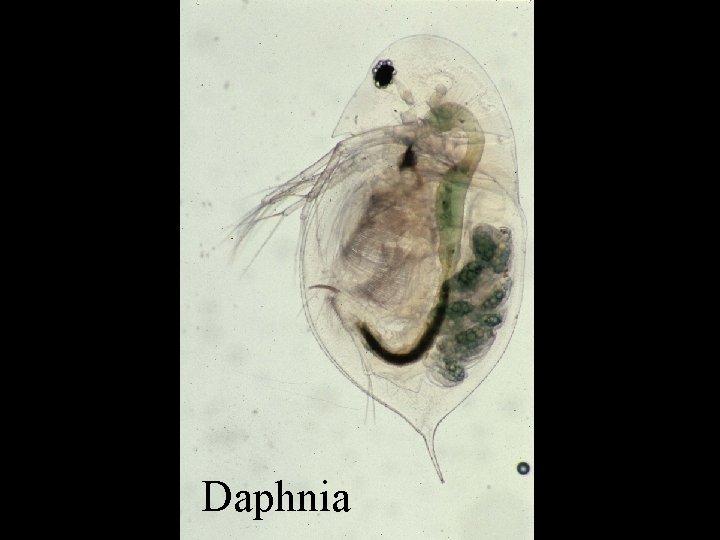
Daphnia
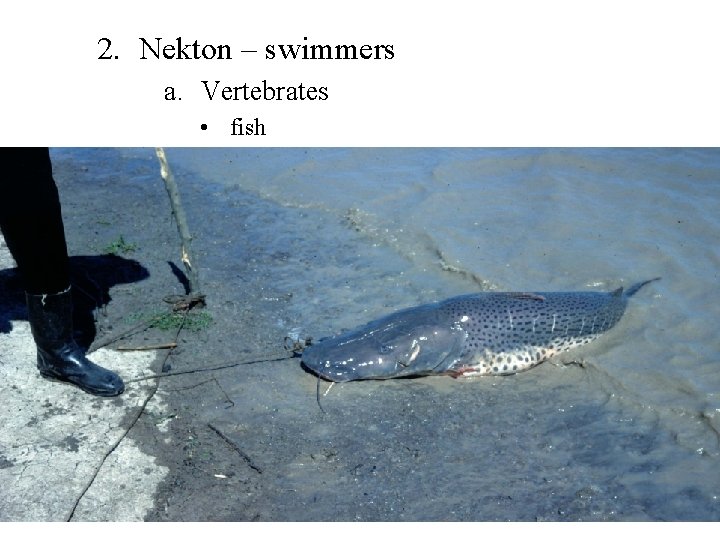
2. Nekton – swimmers a. Vertebrates • fish
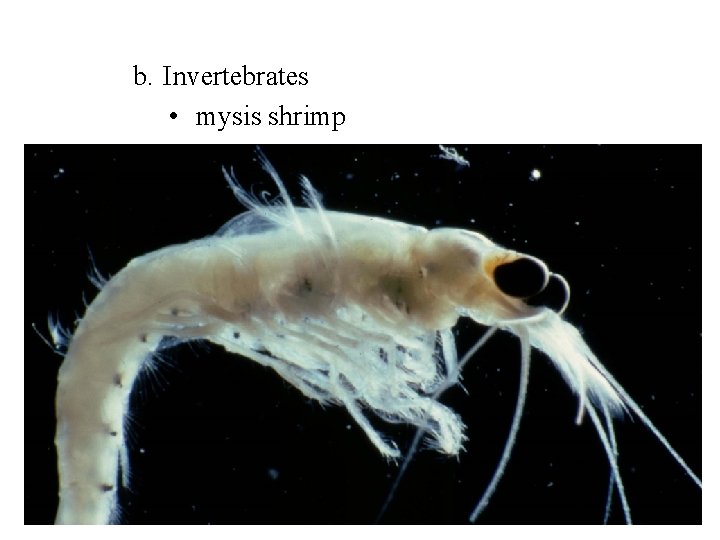
b. Invertebrates • mysis shrimp
B. Littoral Zone 1. Plants a. Aquatic macrophytes i. emergent plants • cattails ii. rooted plants with floating leaves • lily pads iii. submerged vegetation • Eurasian milfoil
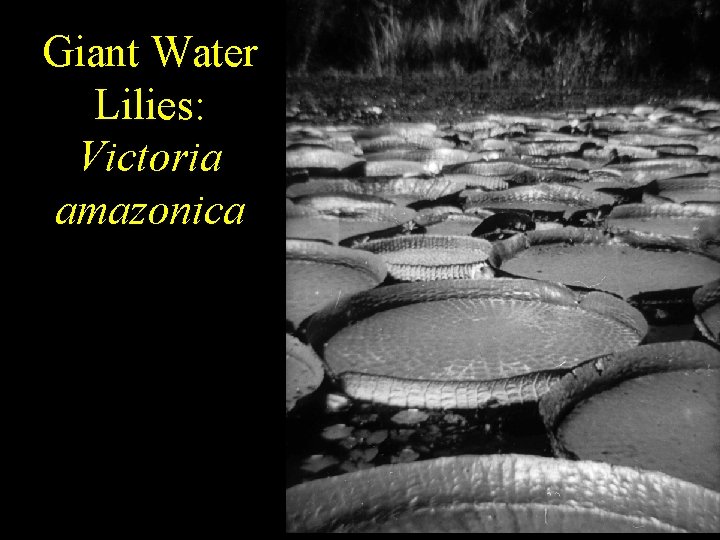
Giant Water Lilies: Victoria amazonica
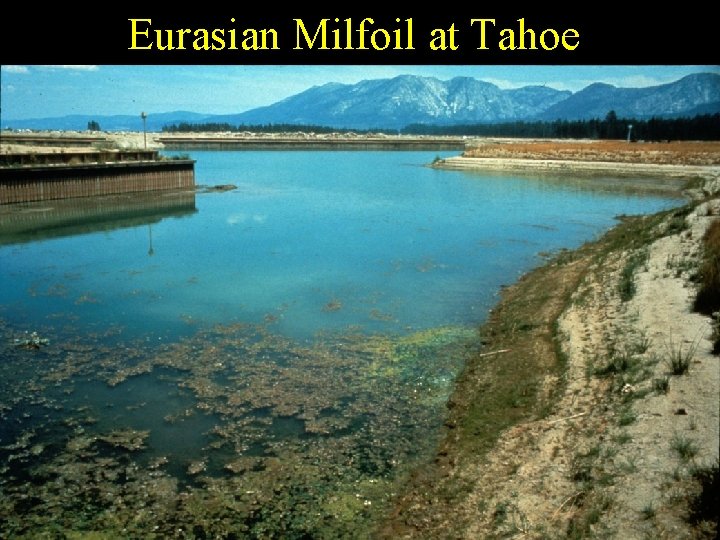
Eurasian Milfoil at Tahoe
b. Algae – attached and free Major groups: Bacillariophyta - diatoms Chlorophyta – green algae Filamentous green algae (pond scum) Spirogyra, which are often attached Oedogonium Cynanophyta - blue-green algae

Spirogyra, sp.
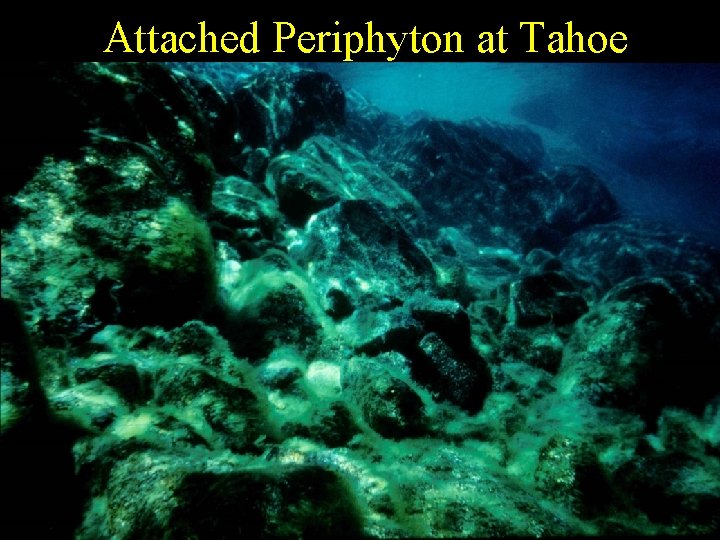
Attached Periphyton at Tahoe
Periphyton – attached algae a. b. c. d. e. “aufwuches” Epilithic periphyton Epipelic periphyton Epiphytic periphyton Epizoic periphyton defined by the zone where they are found
2. Animals a. Invertebrates: – snails (gastropods) and mussels (Bivalve mollusks) – damsel, mayfly, and dragonfly nymphs – rotifers – flatworms – hydra – midges – crayfish (crustaceans) – isopods – copepods – cladocerans
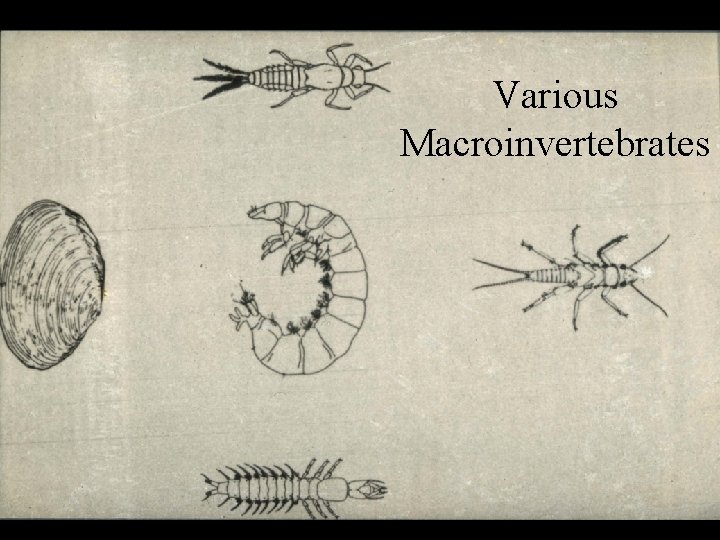
Various Macroinvertebrates
b. Burrowing organisms (infauna) – – clams annelids snails chironomids c. Nekton – fish – diving beetles (insects) d. Vertebrates – – frogs, toads salamanders turtles water snakes
C. Profundal zone 1. Bacteria and fungi are the major components 2. Blood worms (chironomid larvae) 3. Clams 4. Chaoborus (phantom larvae) D. Pleuston • moved by the wind • floating on the surface
E. Neuston 1. Epineuston • attached to the top of the surface 2. Hyponeuston • attached to the bottom of the surface
- Slides: 29