
Classification Biology Mrs Parker Print the next slide

Classification Biology Mrs. Parker

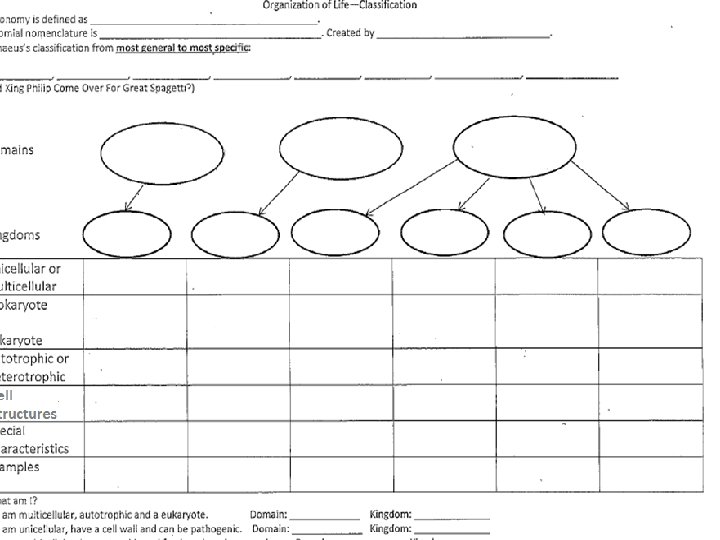
Print the next slide (3) and fill out the chart as you go through the powerpoint
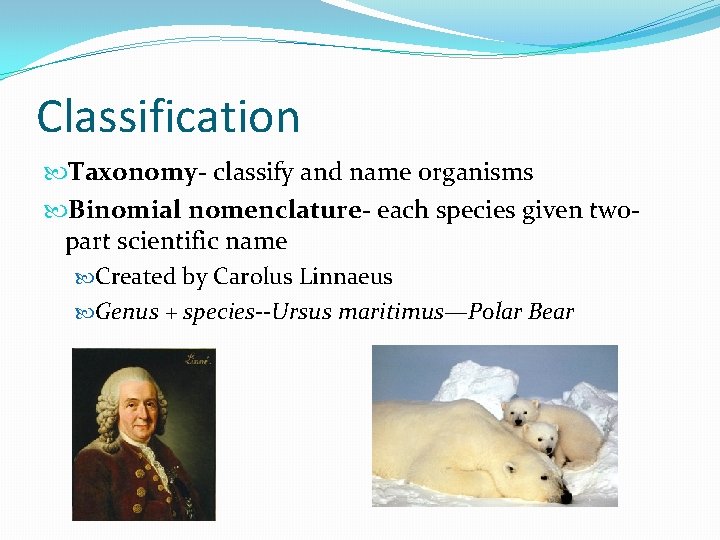
Classification Taxonomy- classify and name organisms Binomial nomenclature- each species given twopart scientific name Created by Carolus Linnaeus Genus + species--Ursus maritimus—Polar Bear

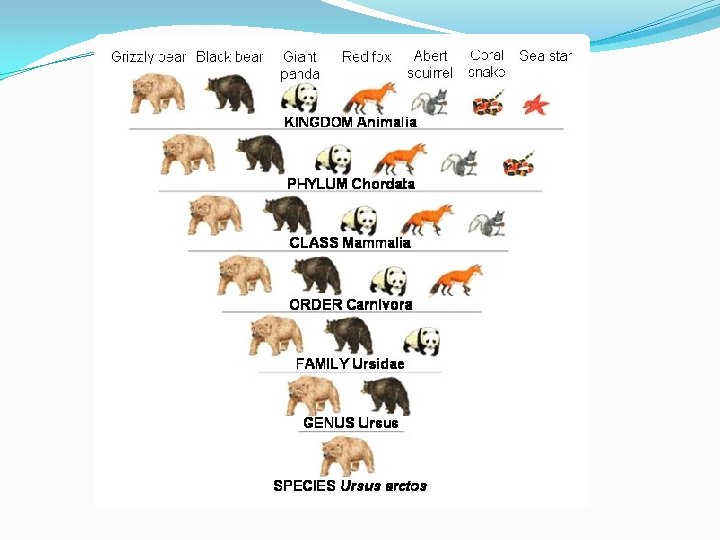
Linnaeus’s Classification Taxon- each level in classification system Domain (Most general) Kingdom Phylum Class Order Family Genus Species (Most specific) (Did King Philip Come Over For Great Spaghetti? )
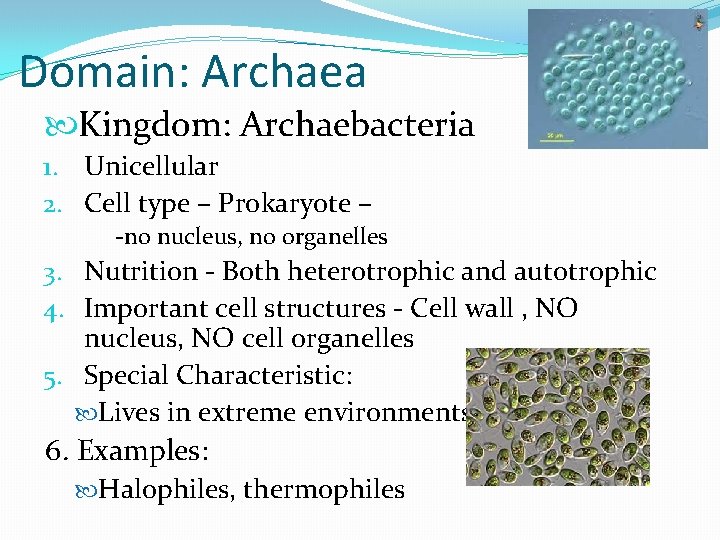
Domain: Archaea Kingdom: Archaebacteria 1. Unicellular 2. Cell type – Prokaryote – -no nucleus, no organelles 3. Nutrition - Both heterotrophic and autotrophic 4. Important cell structures - Cell wall , NO nucleus, NO cell organelles 5. Special Characteristic: Lives in extreme environments 6. Examples: Halophiles, thermophiles
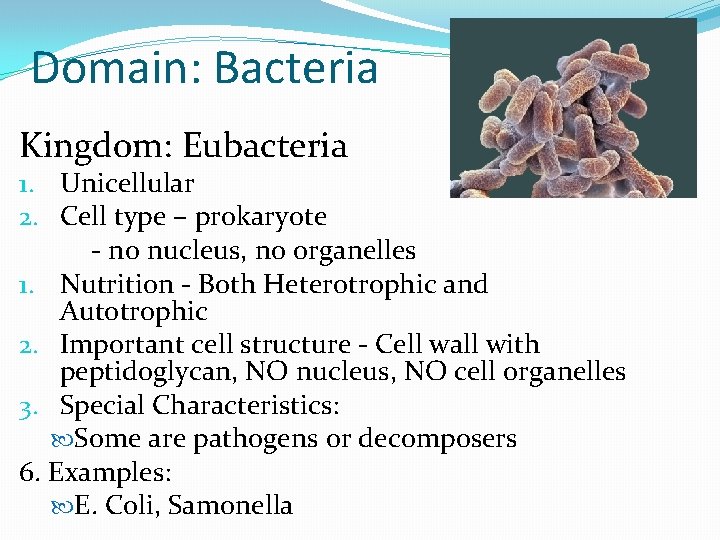
Domain: Bacteria Kingdom: Eubacteria 1. Unicellular 2. Cell type – prokaryote - no nucleus, no organelles 1. Nutrition - Both Heterotrophic and Autotrophic 2. Important cell structure - Cell wall with peptidoglycan, NO nucleus, NO cell organelles 3. Special Characteristics: Some are pathogens or decomposers 6. Examples: E. Coli, Samonella
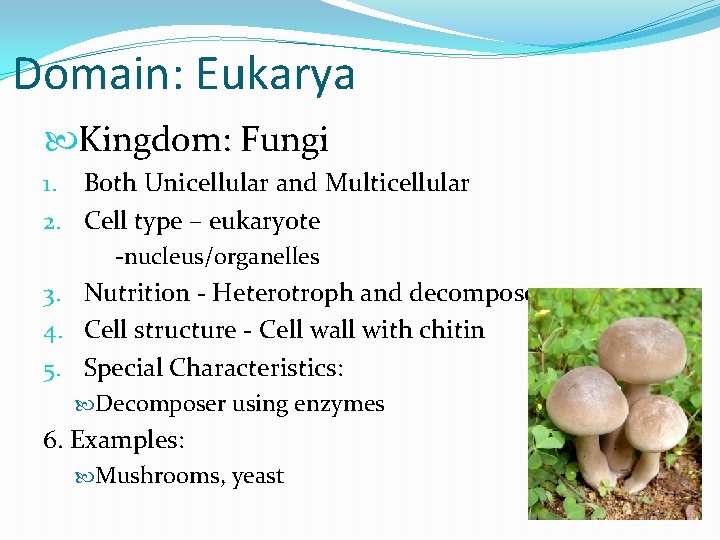
Domain: Eukarya Kingdom: Fungi 1. Both Unicellular and Multicellular 2. Cell type – eukaryote -nucleus/organelles 3. Nutrition - Heterotroph and decomposer 4. Cell structure - Cell wall with chitin 5. Special Characteristics: Decomposer using enzymes 6. Examples: Mushrooms, yeast
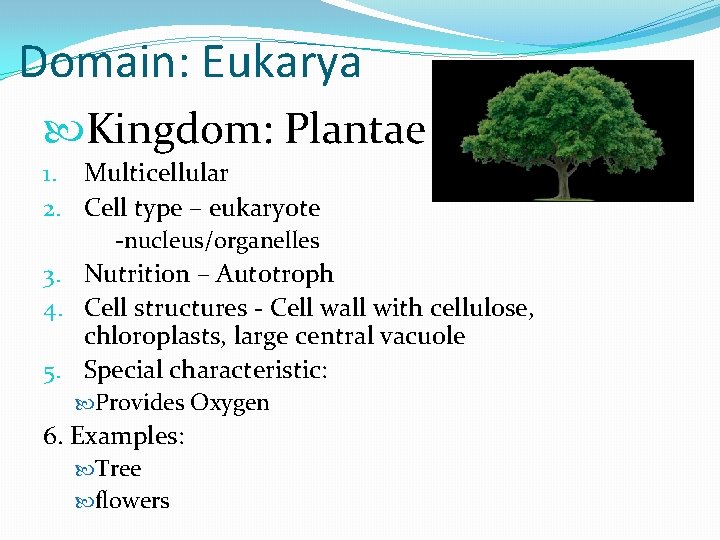
Domain: Eukarya Kingdom: Plantae 1. Multicellular 2. Cell type – eukaryote -nucleus/organelles 3. Nutrition – Autotroph 4. Cell structures - Cell wall with cellulose, chloroplasts, large central vacuole 5. Special characteristic: Provides Oxygen 6. Examples: Tree flowers
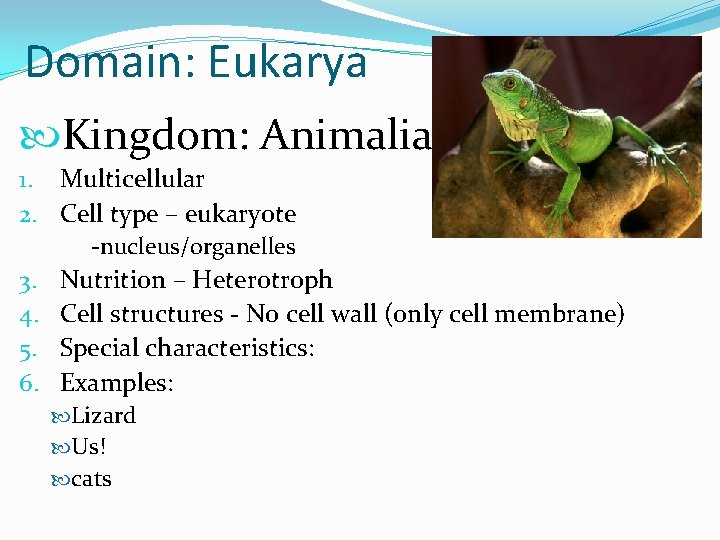
Domain: Eukarya Kingdom: Animalia 1. Multicellular 2. Cell type – eukaryote -nucleus/organelles 3. Nutrition – Heterotroph 4. Cell structures - No cell wall (only cell membrane) 5. Special characteristics: 6. Examples: Lizard Us! cats
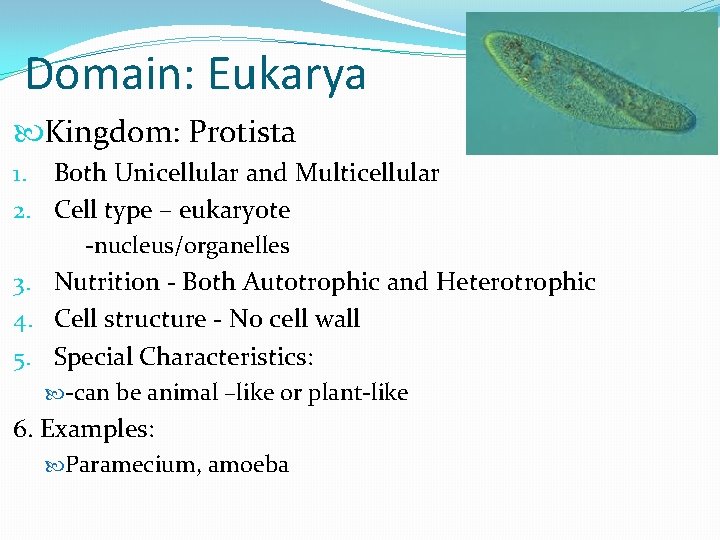
Domain: Eukarya Kingdom: Protista 1. Both Unicellular and Multicellular 2. Cell type – eukaryote -nucleus/organelles 3. Nutrition - Both Autotrophic and Heterotrophic 4. Cell structure - No cell wall 5. Special Characteristics: -can be animal –like or plant-like 6. Examples: Paramecium, amoeba


What am I? 1. I am multi-cellular, autotrophic and a eukaryote Domain: Eukarya Kingdom: Plantae 2. I am unicellular, have a cell wall and can be pathogenic Domain: Bacteria Kindgom: Eubacteria 3. I am multi-cellular, heterotrophic and feed on decaying organisms Domain: Eukarya Kingdom: Fungi


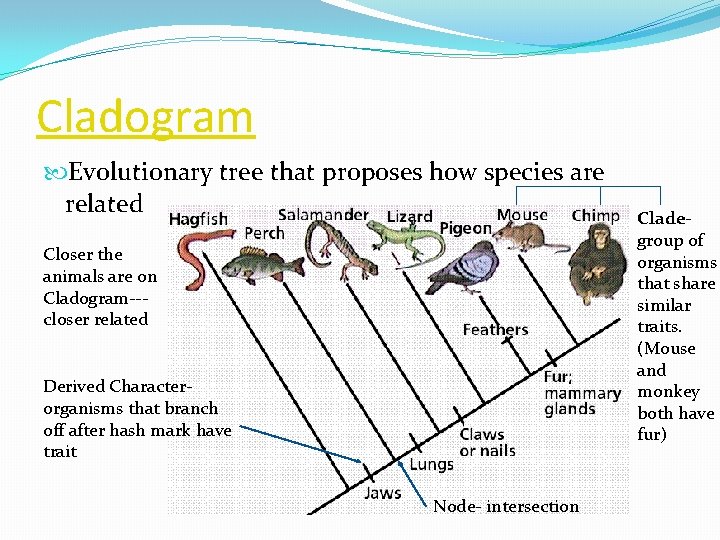
Cladogram Evolutionary tree that proposes how species are related Closer the animals are on Cladogram--closer related Derived Characterorganisms that branch off after hash mark have trait Node- intersection Cladegroup of organisms that share similar traits. (Mouse and monkey both have fur)
Create a cladogram Archaebacteria: Halophiles Eubacteria: E. Coli Protista: Paramecium Fungi: Mushroom Plantae: Tree Animalia: Lizard
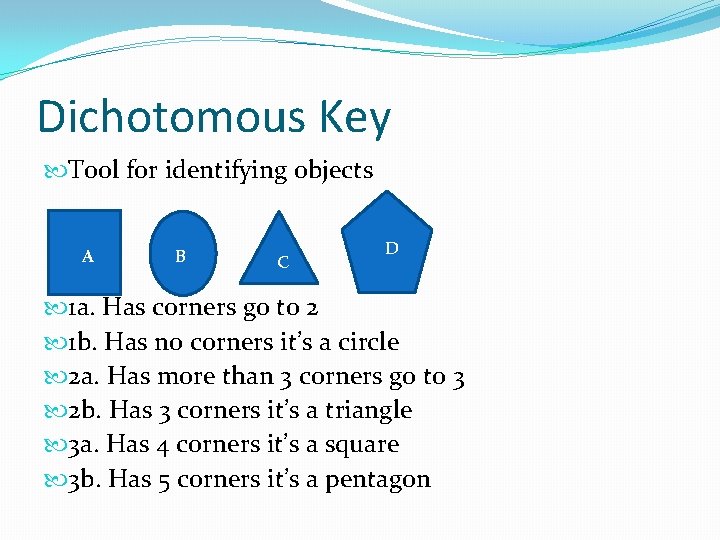
Dichotomous Key Tool for identifying objects A B C D 1 a. Has corners go to 2 1 b. Has no corners it’s a circle 2 a. Has more than 3 corners go to 3 2 b. Has 3 corners it’s a triangle 3 a. Has 4 corners it’s a square 3 b. Has 5 corners it’s a pentagon
- Slides: 20