
Classification Aristotle 384 BC Classified organisms as either
Classification
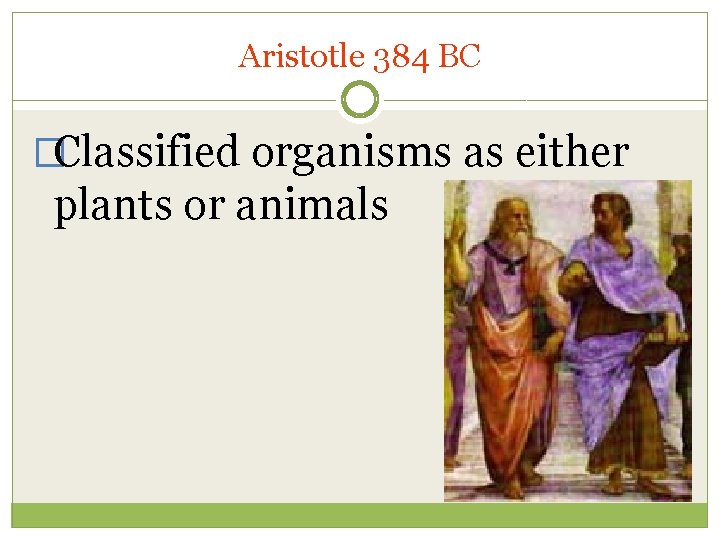
Aristotle 384 BC �Classified organisms as either plants or animals
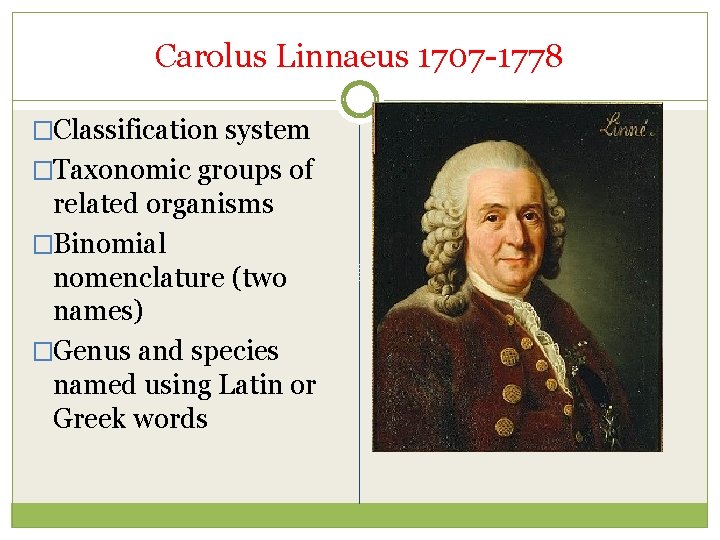
Carolus Linnaeus 1707 -1778 �Classification system �Taxonomic groups of related organisms �Binomial nomenclature (two names) �Genus and species named using Latin or Greek words
Binomial Nomenclature �An organism’s genus is always written first; the organism’s species is always written second �The genus is Capitalized; the species is written in lower case �Scientific names of organisms are always italicized or underlined �Ex: Homo sapiens
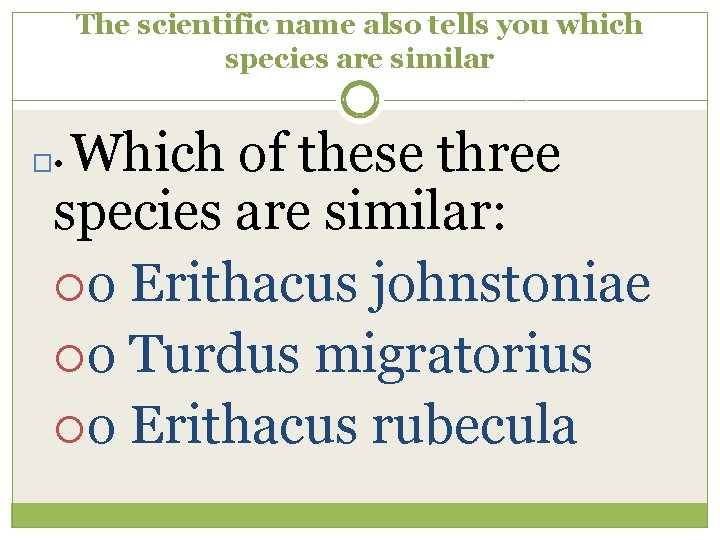
The scientific name also tells you which species are similar Which of these three species are similar: o Erithacus johnstoniae o Turdus migratorius o Erithacus rubecula � •
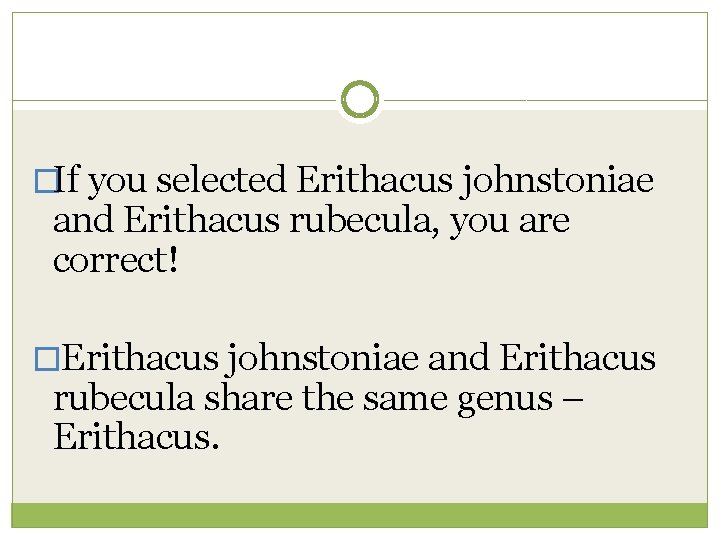
�If you selected Erithacus johnstoniae and Erithacus rubecula, you are correct! �Erithacus johnstoniae and Erithacus rubecula share the same genus – Erithacus.
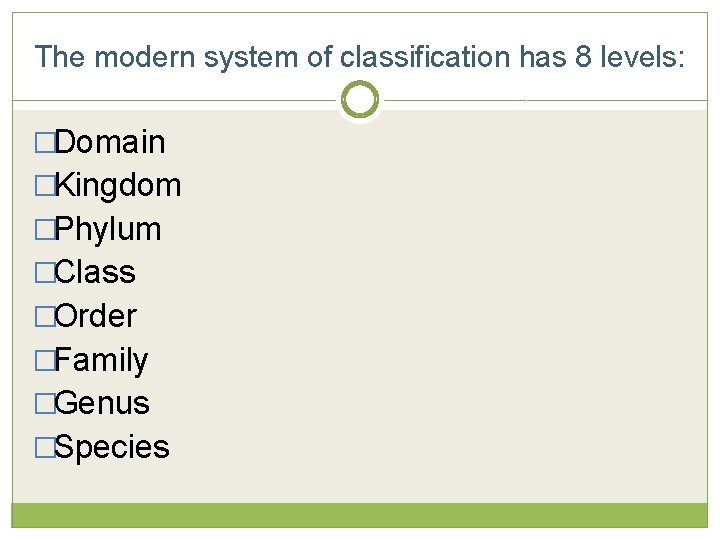
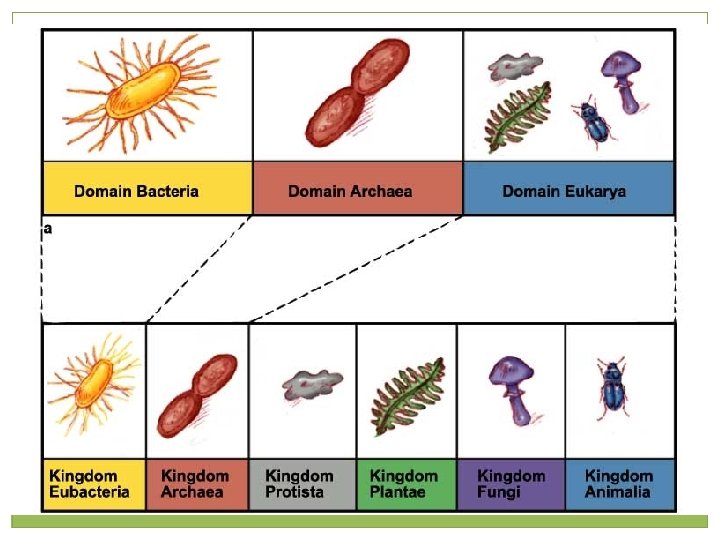
The modern system of classification has 8 levels: �Domain �Kingdom �Phylum �Class �Order �Family �Genus �Species
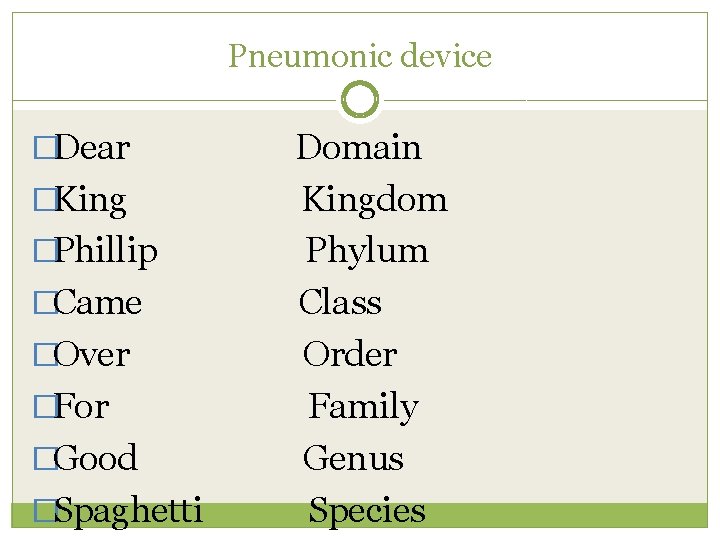
Pneumonic device �Dear �King �Phillip �Came �Over �For �Good �Spaghetti Domain Kingdom Phylum Class Order Family Genus Species
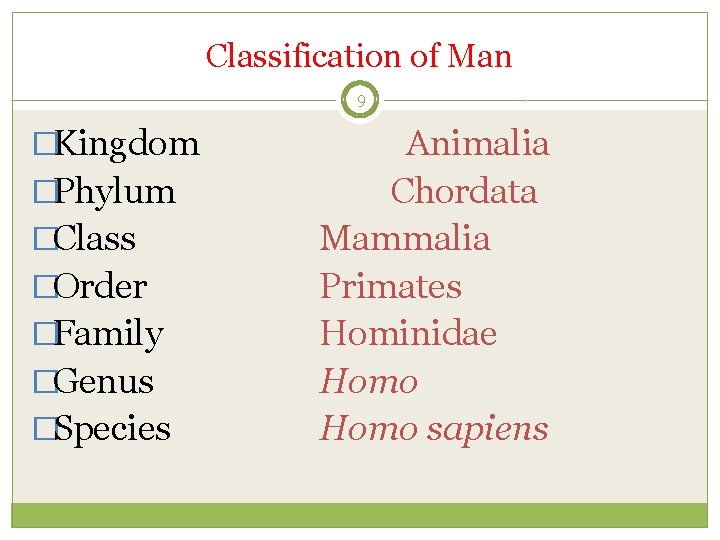
Classification of Man 9 �Kingdom �Phylum �Class �Order �Family �Genus �Species Animalia Chordata Mammalia Primates Hominidae Homo sapiens
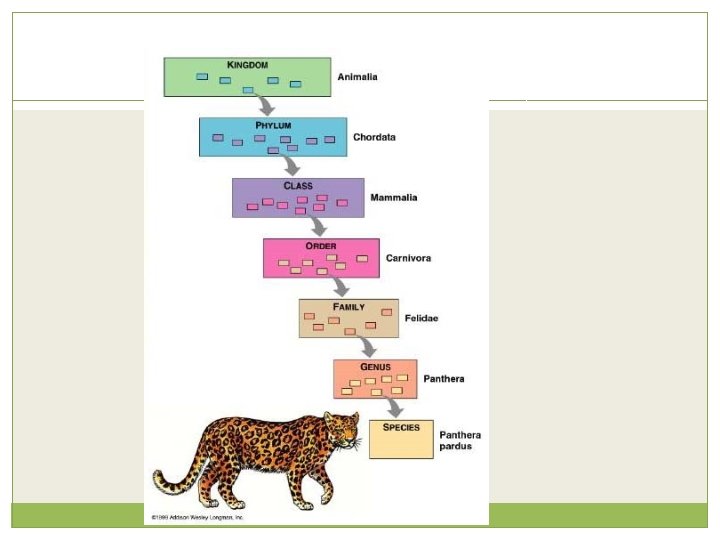
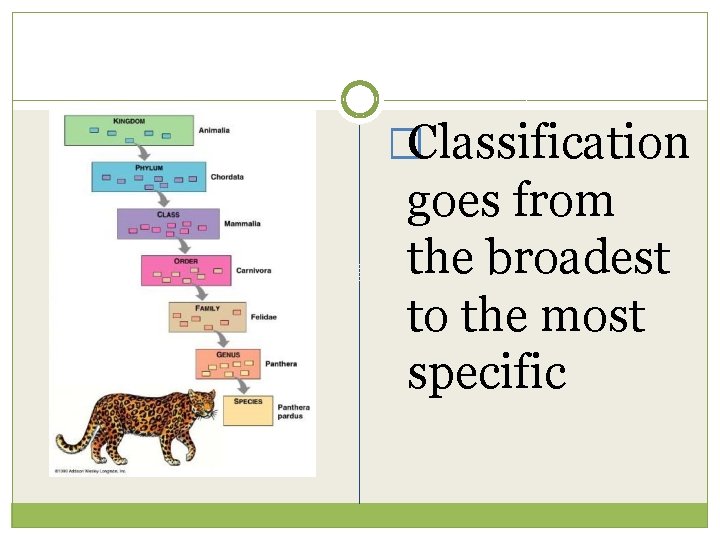
�Classification goes from the broadest to the most specific
Phylum �In the kingdom Animalia over there are over 41 different phyla �We will be discussing around 21 of them
Class �Class comes between phylum and order �As for the other well-known ranks, there is the option of an immediately lower rank, indicated by the prefix sub-: subclass �Each phylum can have between 1 -8 classes in it
�There are definitions of the following taxonomic ranks in the International Code of Zoological Nomenclature: superfamily, subfamily, tribe, subtribe, genus, subgenus, species, subspecies.
�Starting from the most specific we have species. �A genus contains the species �A family contains the genera. Similar genera are grouped together
�Similar families are combined into an order. �Orders with common properties are united in a class. �Classes with similar characteristics are assigned to a phylum. �Similar phyla are collected into a kingdom. �Similar kingdoms are grouped into domains.
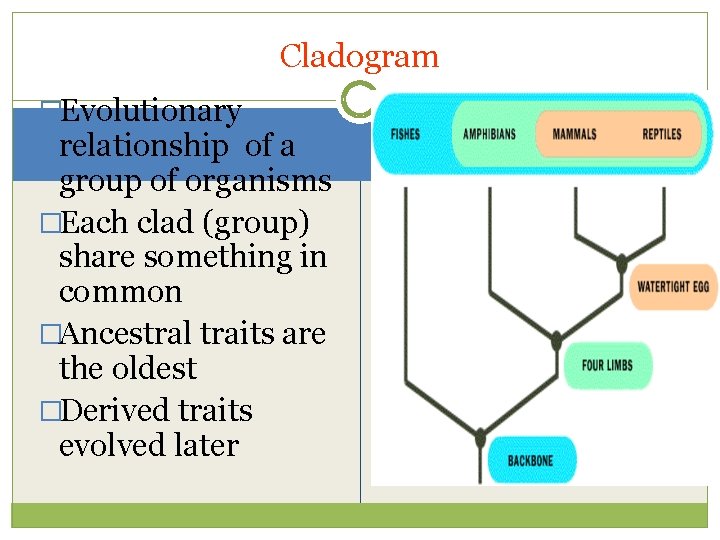
Cladogram �Evolutionary relationship of a group of organisms �Each clad (group) share something in common �Ancestral traits are the oldest �Derived traits evolved later
- Slides: 18