
Classification and Taxonomy Why Classify Scientists classify organisms
- Slides: 26
Classification and Taxonomy
Why Classify? ? ? Scientists classify organisms in order to organise the great diversity of organisms into manageable groups to aid study Classification systems have two features: A universally accepted name for each organism (so all scientists all over the world know they are talking about the same thing) A placement of organisms into groups that have a real biological meaning Organisms in the same group share important traits or characteristics.
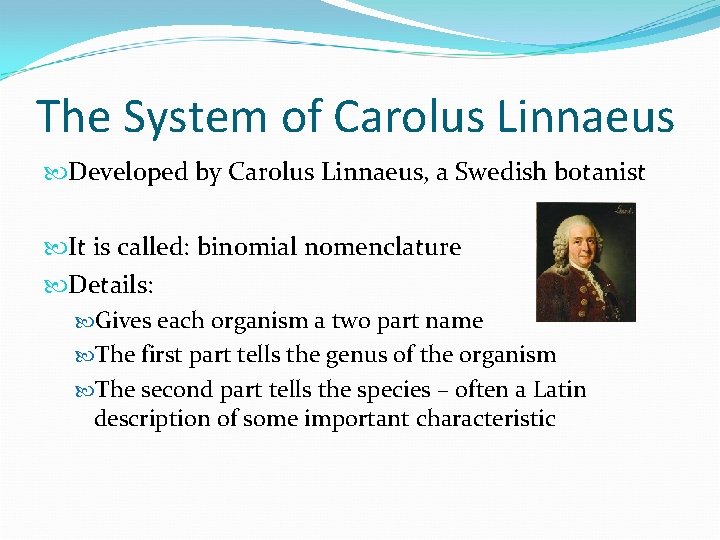
The System of Carolus Linnaeus Developed by Carolus Linnaeus, a Swedish botanist It is called: binomial nomenclature Details: Gives each organism a two part name The first part tells the genus of the organism The second part tells the species – often a Latin description of some important characteristic
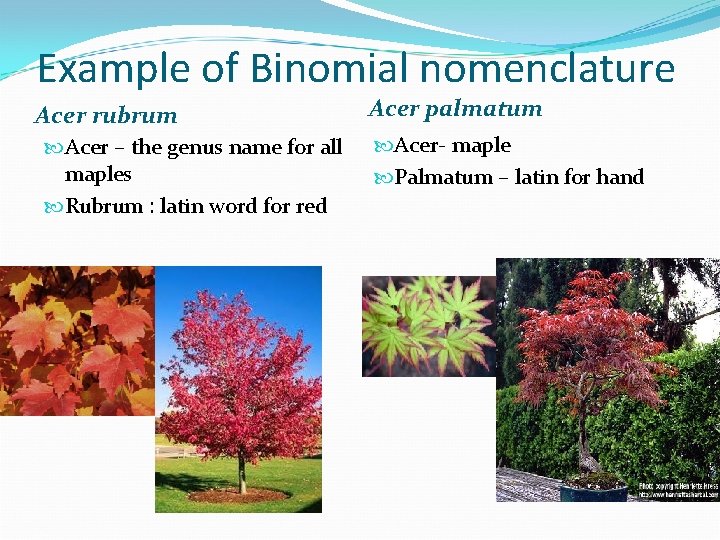
Example of Binomial nomenclature Acer rubrum Acer – the genus name for all maples Rubrum : latin word for red Acer palmatum Acer- maple Palmatum – latin for hand
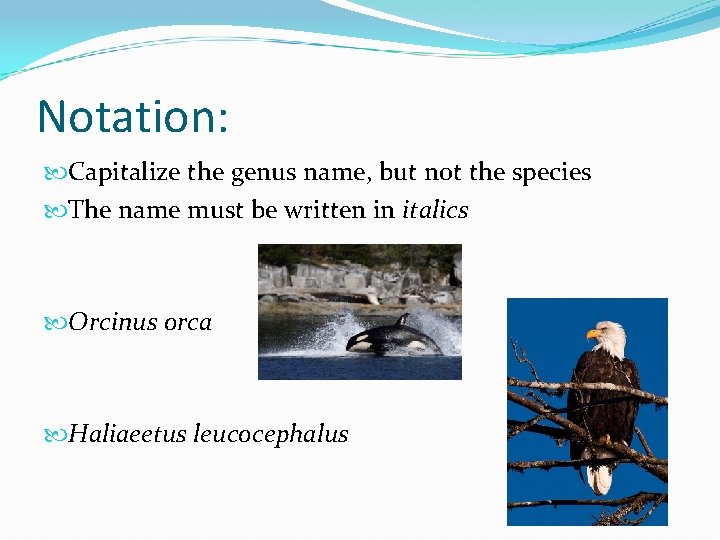
Notation: Capitalize the genus name, but not the species The name must be written in italics Orcinus orca Haliaeetus leucocephalus
The Classification System of Linnaeus After naming organisms he grouped them according to shared body features. Organisms that shared important characteristics were classified as the same group. Taxa = groups Taxonomy = the science of naming organisms and assigning them into species
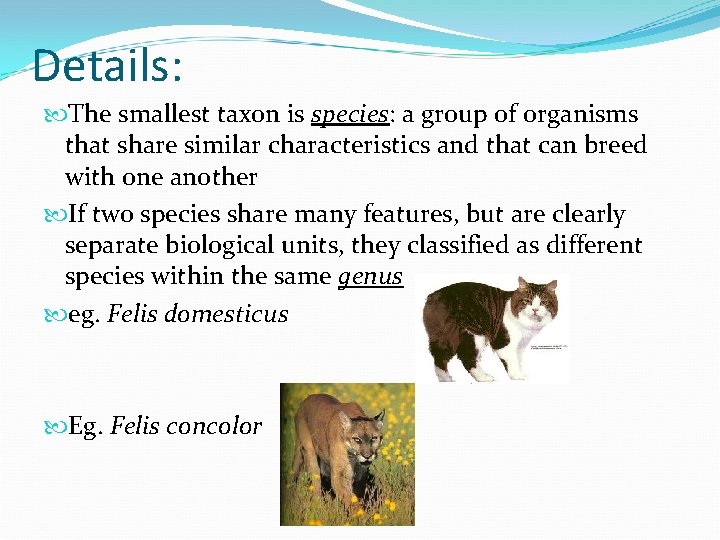
Details: The smallest taxon is species: a group of organisms that share similar characteristics and that can breed with one another If two species share many features, but are clearly separate biological units, they classified as different species within the same genus eg. Felis domesticus Eg. Felis concolor
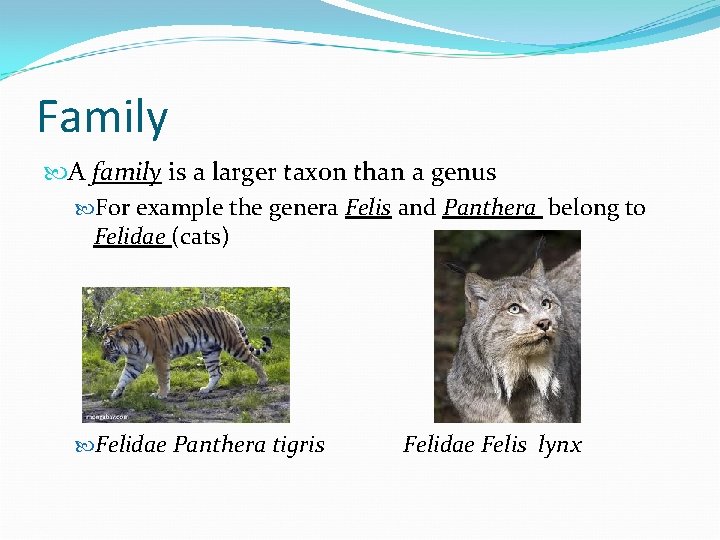
Family A family is a larger taxon than a genus For example the genera Felis and Panthera belong to Felidae (cats) Felidae Panthera tigris Felidae Felis lynx
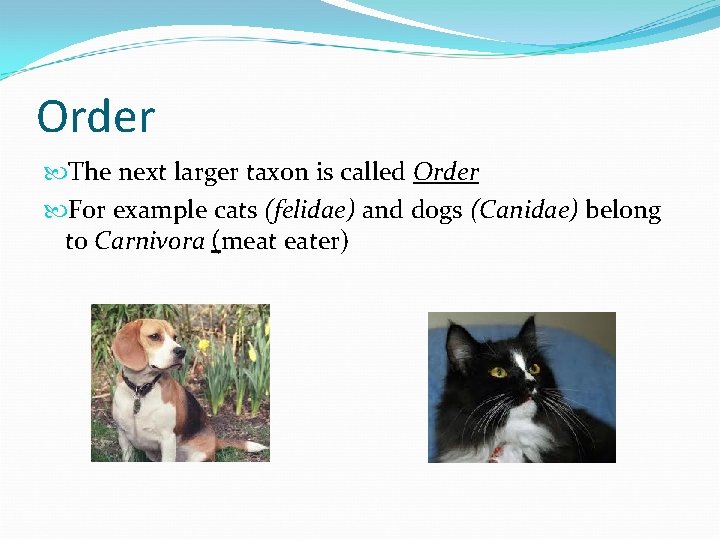
Order The next larger taxon is called Order For example cats (felidae) and dogs (Canidae) belong to Carnivora (meat eater)
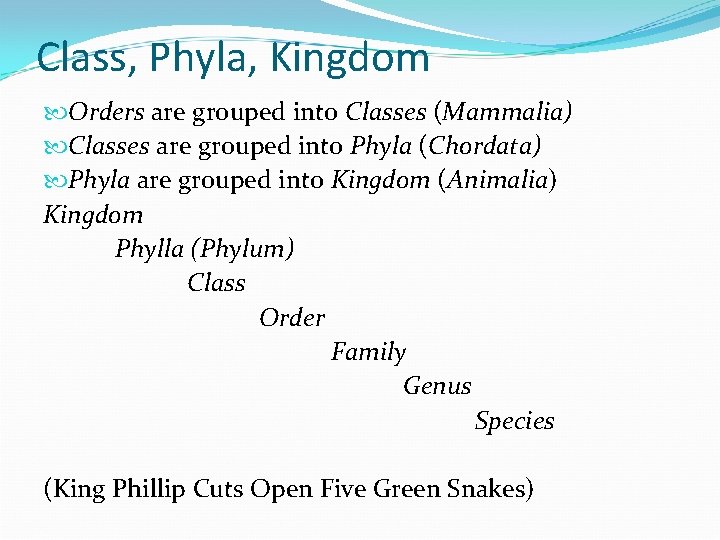
Class, Phyla, Kingdom Orders are grouped into Classes (Mammalia) Classes are grouped into Phyla (Chordata) Phyla are grouped into Kingdom (Animalia) Kingdom Phylla (Phylum) Class Order Family Genus Species (King Phillip Cuts Open Five Green Snakes)
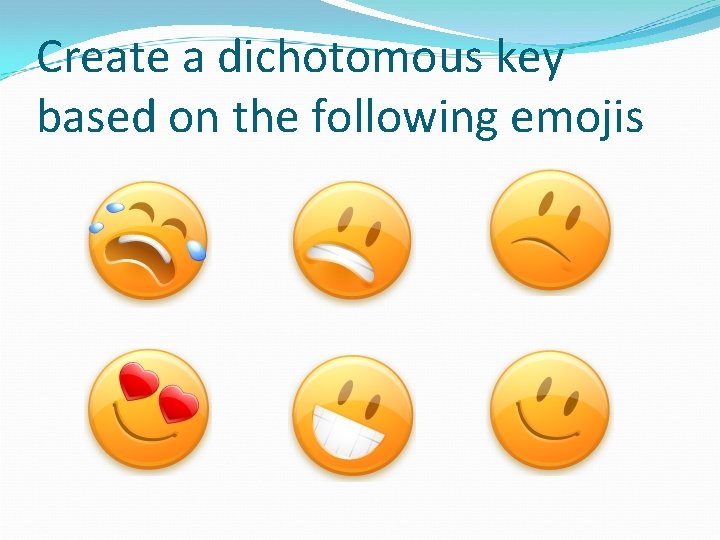
Create a dichotomous key based on the following emojis
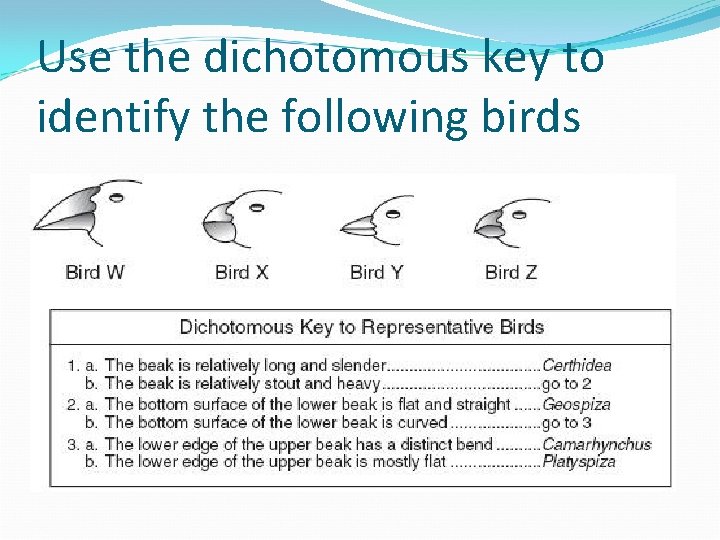
Use the dichotomous key to identify the following birds
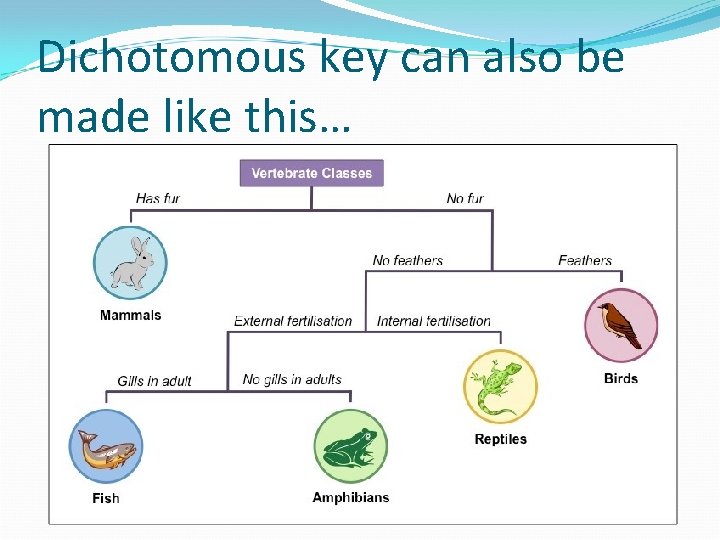
Dichotomous key can also be made like this…
Dichotomous Key – Shoe Activity In groups of 5 -6 use the whiteboards to create a dichotomous key on the different shoes each group member is wearing. Making sure to have questions listed and ensure each shoe is classified as it’s own “species”
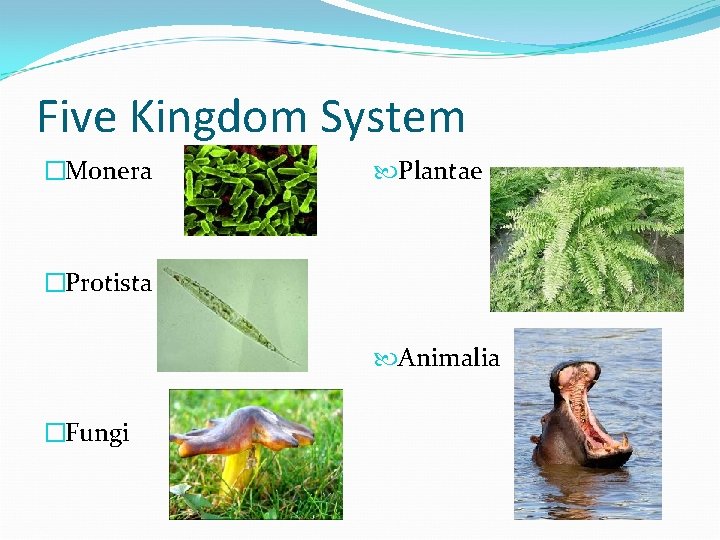
Five Kingdom System �Monera Plantae �Protista Animalia �Fungi
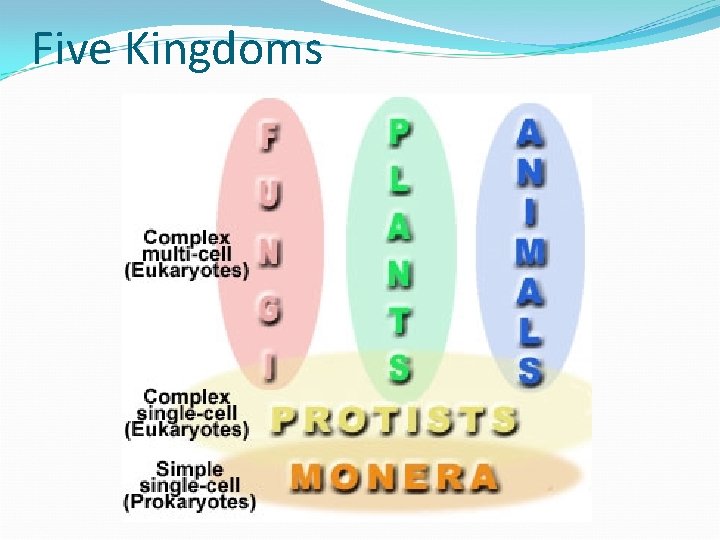
Five Kingdoms
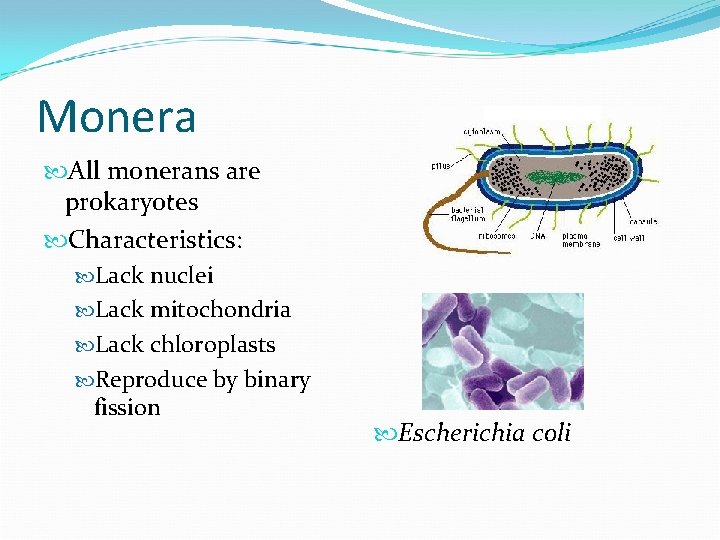
Monera All monerans are prokaryotes Characteristics: Lack nuclei Lack mitochondria Lack chloroplasts Reproduce by binary fission Escherichia coli
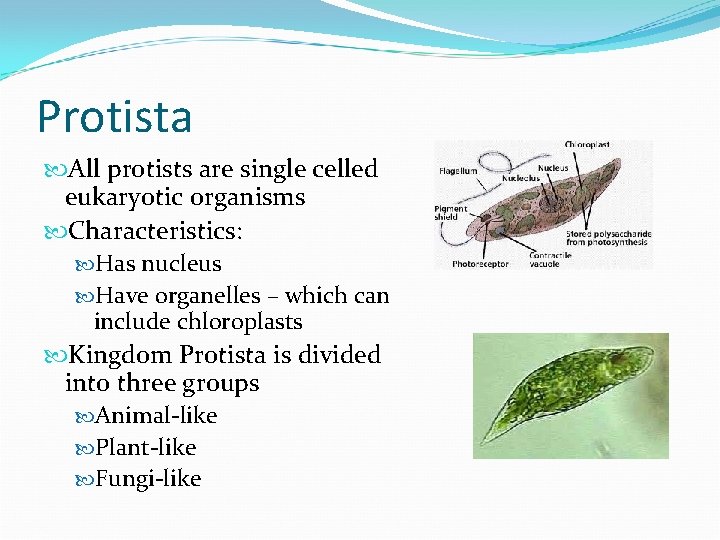
Protista All protists are single celled eukaryotic organisms Characteristics: Has nucleus Have organelles – which can include chloroplasts Kingdom Protista is divided into three groups Animal-like Plant-like Fungi-like
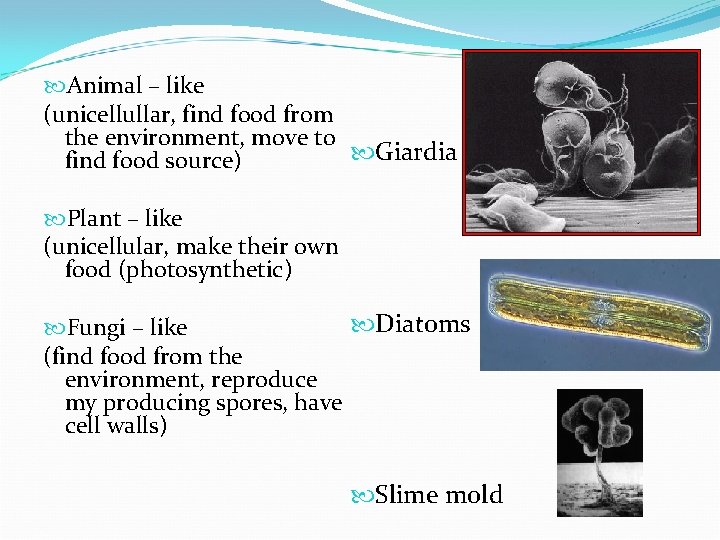
Animal – like (unicellullar, find food from the environment, move to Giardia find food source) Plant – like (unicellular, make their own food (photosynthetic) Diatoms Fungi – like (find food from the environment, reproduce my producing spores, have cell walls) Slime mold
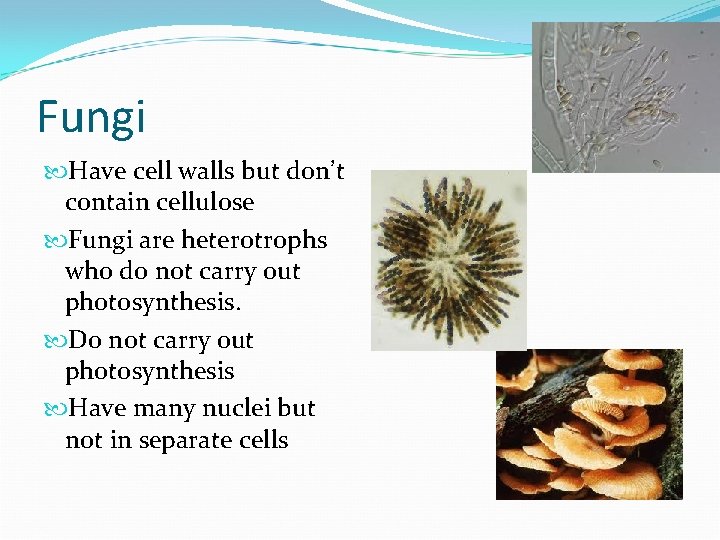
Fungi Have cell walls but don’t contain cellulose Fungi are heterotrophs who do not carry out photosynthesis. Do not carry out photosynthesis Have many nuclei but not in separate cells
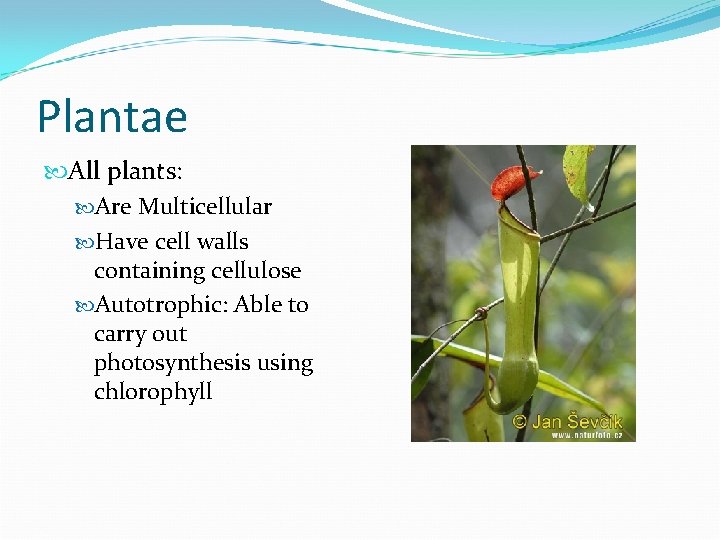
Plantae All plants: Are Multicellular Have cell walls containing cellulose Autotrophic: Able to carry out photosynthesis using chlorophyll
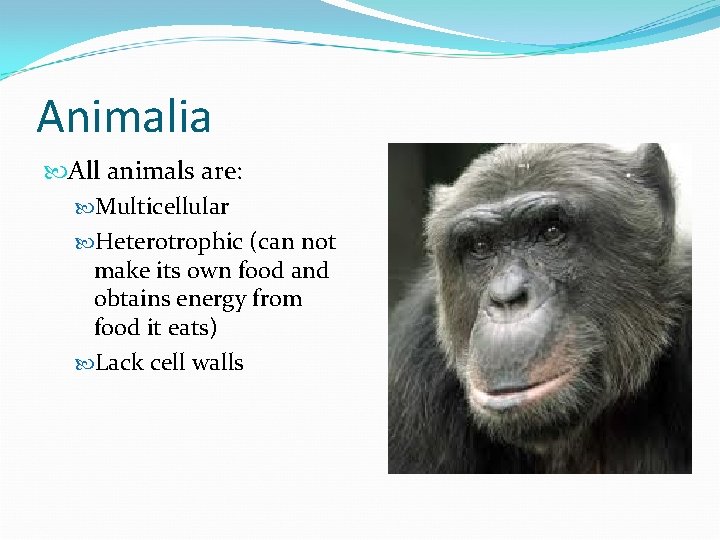
Animalia All animals are: Multicellular Heterotrophic (can not make its own food and obtains energy from food it eats) Lack cell walls
Taxonomy Today Why things have changed? Only the taxon species has a clear biological identity Members share a common gene pool because they interbreed The organisms themselves decide who belongs and who doesn’t to their species All other taxa are “constructed” by biologists They try to use biologically important characteristics, but… different biologists have different opinions Some species have been moved into different taxa (and others will be in the future)
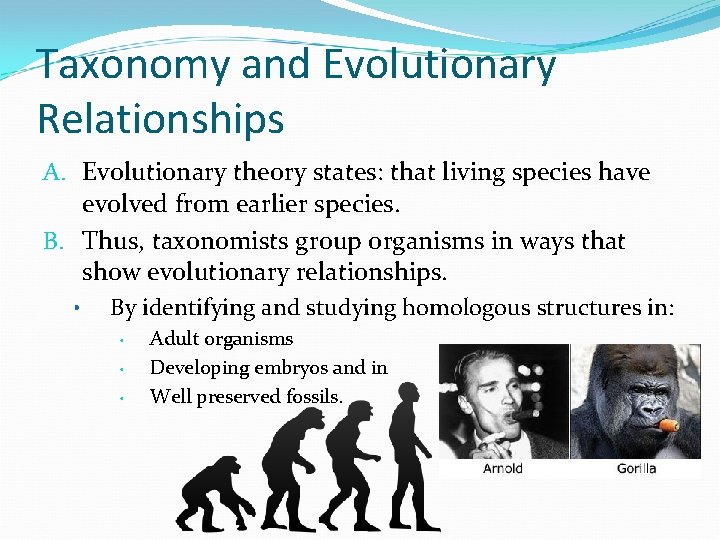
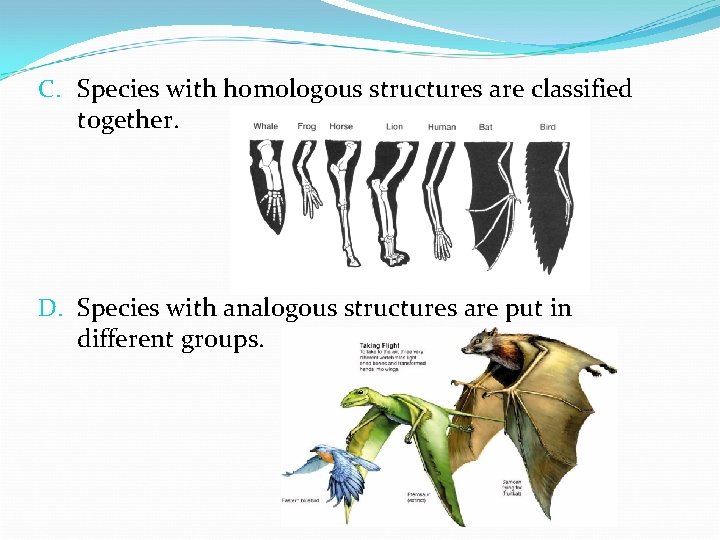
Taxonomy and Evolutionary Relationships A. Evolutionary theory states: that living species have evolved from earlier species. B. Thus, taxonomists group organisms in ways that show evolutionary relationships. • By identifying and studying homologous structures in: • • • Adult organisms Developing embryos and in Well preserved fossils.
C. Species with homologous structures are classified together. D. Species with analogous structures are put in different groups.
Biochemical Taxonomy Taxonomists use molecular similarities to classify organisms Biochemical similarities All organisms (except some viruses) use DNA to carry genetic information Organisms may be different but their genes and the proteins that they make are very similar The sequence of the cytochrome c protein (used in the electron transport chain) is carried by all organisms, but differs slightly between species These differences have been caused by mutations that occur after the ancestors of the living species diverged To help us classify organisms into groups, taxonomists can compare: Nucleotide sequences in DNA and RNA Amino acid sequences of proteins