
Classification and Taxonomy Ecology Unit Objective 8 10
Classification and Taxonomy (Ecology Unit: Objective 8) 10 th Grade Biology Bonneville High School
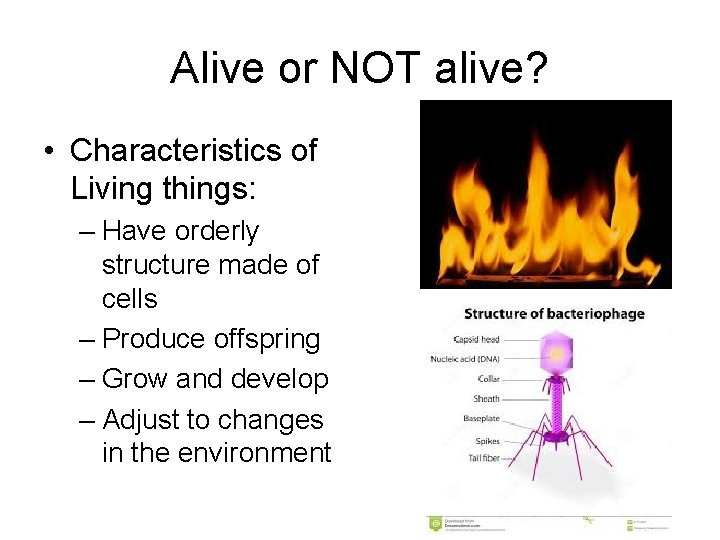
Alive or NOT alive? • Characteristics of Living things: – Have orderly structure made of cells – Produce offspring – Grow and develop – Adjust to changes in the environment
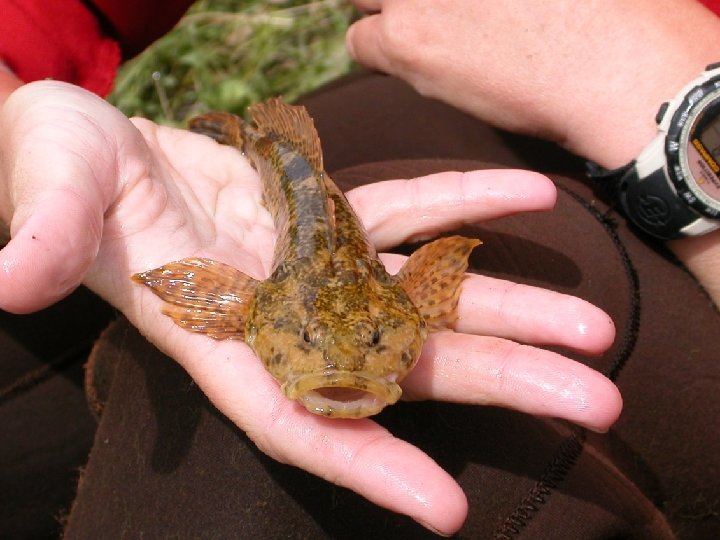
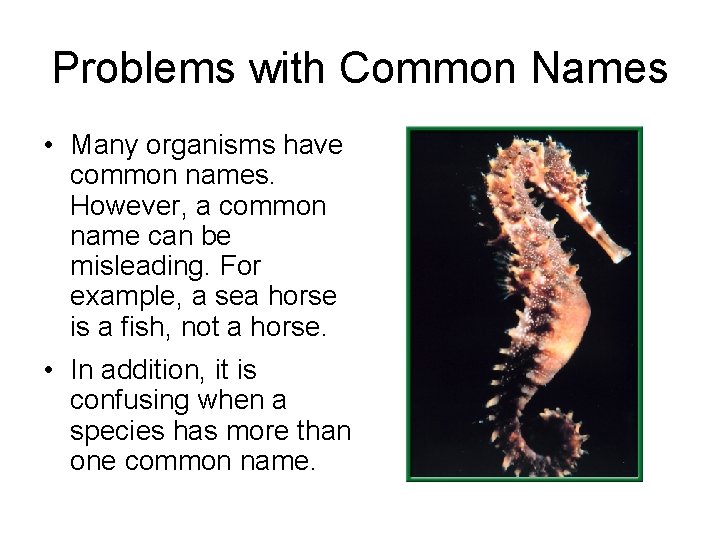
Problems with Common Names • Many organisms have common names. However, a common name can be misleading. For example, a sea horse is a fish, not a horse. • In addition, it is confusing when a species has more than one common name.

Which is an Elk?
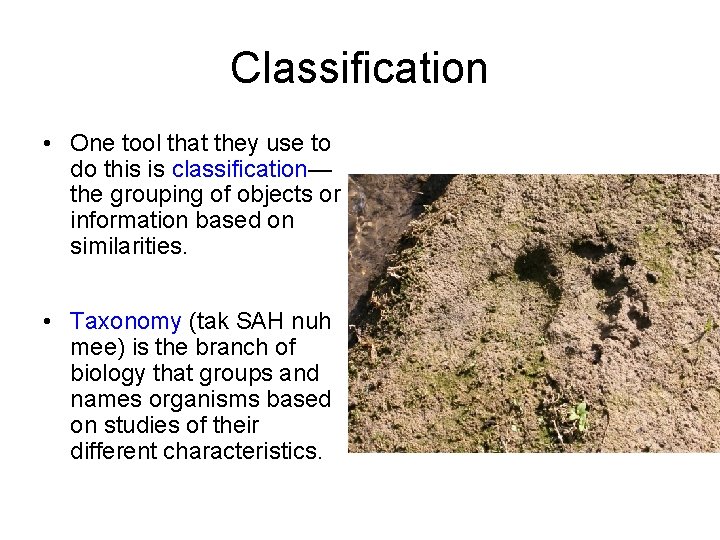
Classification • One tool that they use to do this is classification— the grouping of objects or information based on similarities. • Taxonomy (tak SAH nuh mee) is the branch of biology that groups and names organisms based on studies of their different characteristics.
Systems of Classification • Aristotle’s system: The Greek philosopher Aristotle (384 -322 B. C. ) developed the first widely accepted system of biological classification. – He classified all the organisms he knew into two groups: plants and animals. – According to his system, birds, bats, and flying insects are classified together even though they have little in common besides the ability to fly. – As time passed, more organisms were discovered and some did not fit easily into Aristotle’s groups, but many centuries passed before Aristotle’s system was replaced.
Linnaeus’s system of binomial nomenclature • In the late eighteenth century, a Swedish botanist, Carolus Linnaeus (1707 -1778), developed a method of grouping organisms that is still used by scientists today. • Linnaeus’s system was based on physical and structural similarities of organisms. • As a result, the groupings revealed the relationships of the organisms. • Eventually, some biologists proposed that structural similarities reflect the evolutionary relationships of species.
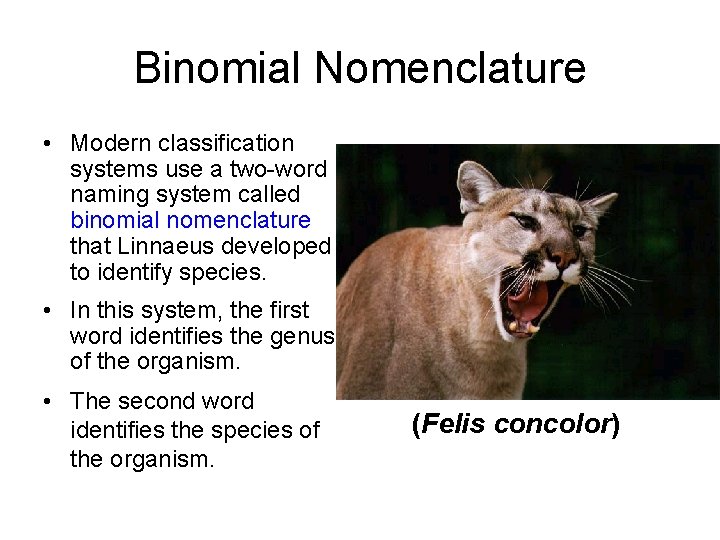
Binomial Nomenclature • Modern classification systems use a two-word naming system called binomial nomenclature that Linnaeus developed to identify species. • In this system, the first word identifies the genus of the organism. • The second word identifies the species of the organism. (Felis concolor)
Binomial Nomenclature • The first word in the two word name is called the Genus. – A genus (JEE nus) (plural, genera) consists of a group of similar species. • The second word, which sometimes describes a characteristic of the organism, is called the specific epithet. • Taxonomists are required to use Latin because the language is no longer used in conversation and, therefore, does not change.
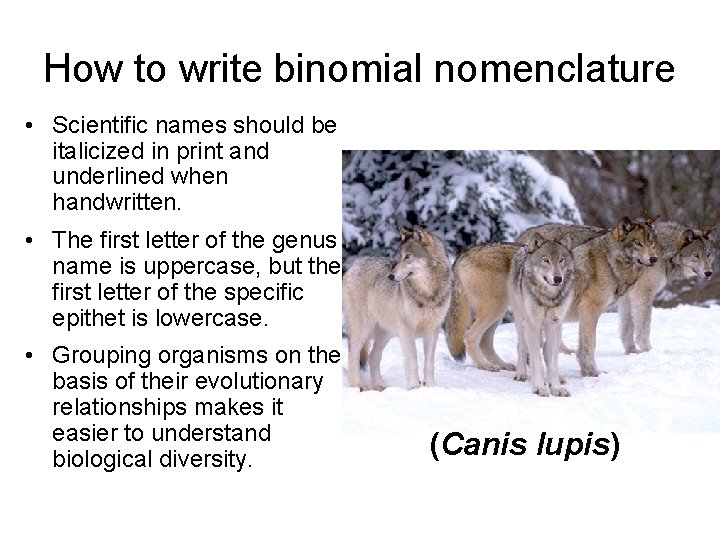
How to write binomial nomenclature • Scientific names should be italicized in print and underlined when handwritten. • The first letter of the genus name is uppercase, but the first letter of the specific epithet is lowercase. • Grouping organisms on the basis of their evolutionary relationships makes it easier to understand biological diversity. (Canis lupis)
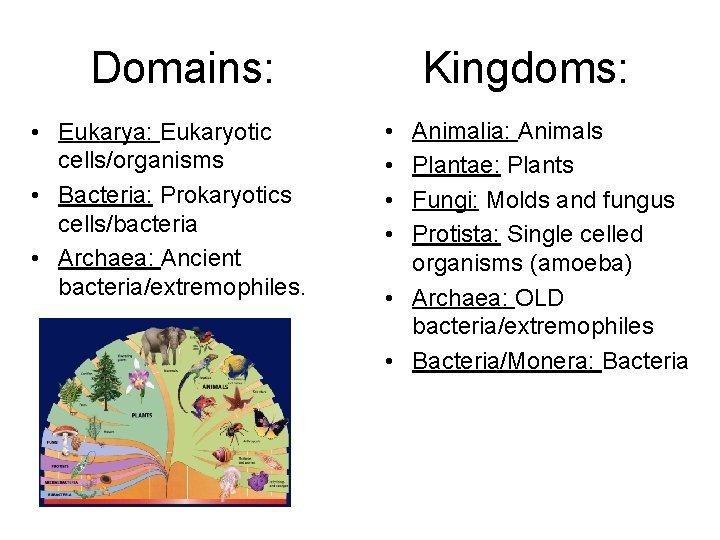
Domains: • Eukarya: Eukaryotic cells/organisms • Bacteria: Prokaryotics cells/bacteria • Archaea: Ancient bacteria/extremophiles. Kingdoms: • • Animalia: Animals Plantae: Plants Fungi: Molds and fungus Protista: Single celled organisms (amoeba) • Archaea: OLD bacteria/extremophiles • Bacteria/Monera: Bacteria
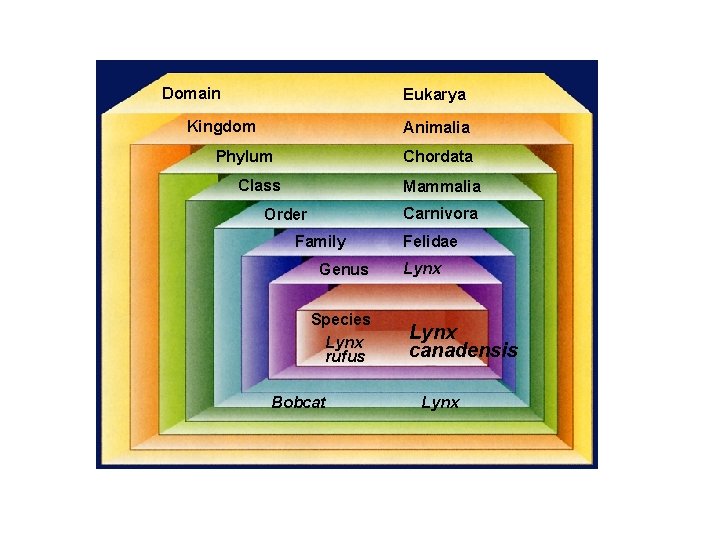
Domain Eukarya Kingdom Animalia Chordata Phylum Class Mammalia Carnivora Order Family Genus Species Lynx rufus Bobcat Felidae Lynx canadensis Lynx
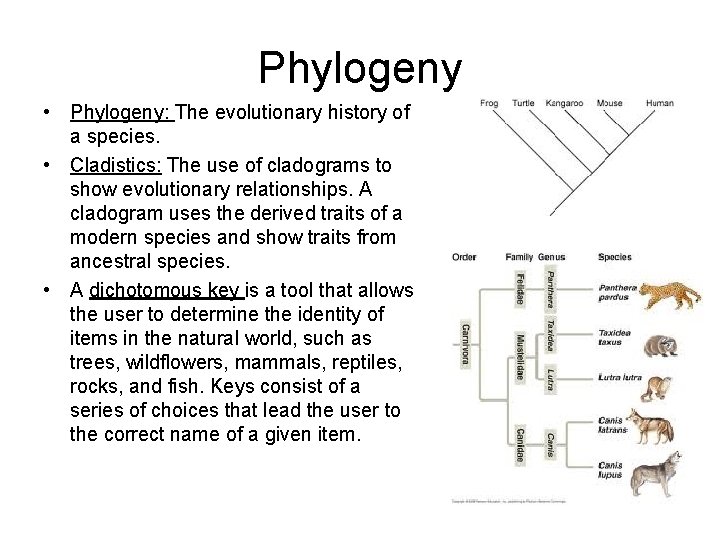
Phylogeny • Phylogeny: The evolutionary history of a species. • Cladistics: The use of cladograms to show evolutionary relationships. A cladogram uses the derived traits of a modern species and show traits from ancestral species. • A dichotomous key is a tool that allows the user to determine the identity of items in the natural world, such as trees, wildflowers, mammals, reptiles, rocks, and fish. Keys consist of a series of choices that lead the user to the correct name of a given item.
- Slides: 14