
Classification and Structure of Bones Goals for Today
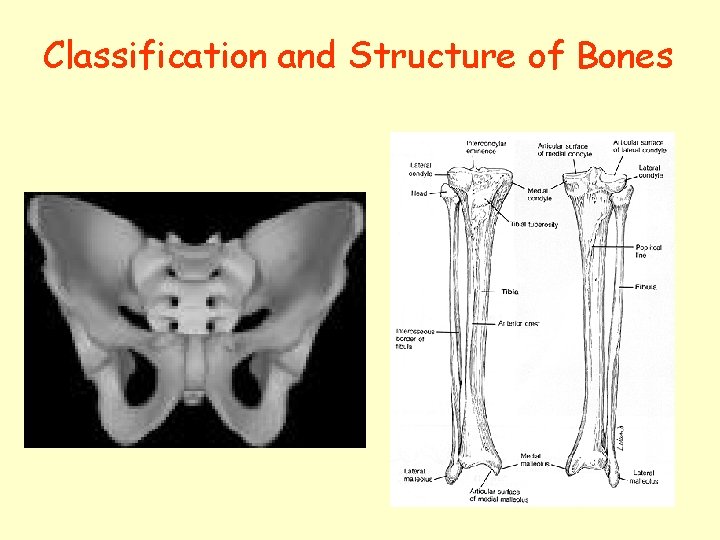
Classification and Structure of Bones
Goals for Today Learn about skeletal support system Learn about the 4 bone groups Learn about bone structure Learn about bone markings and their functions
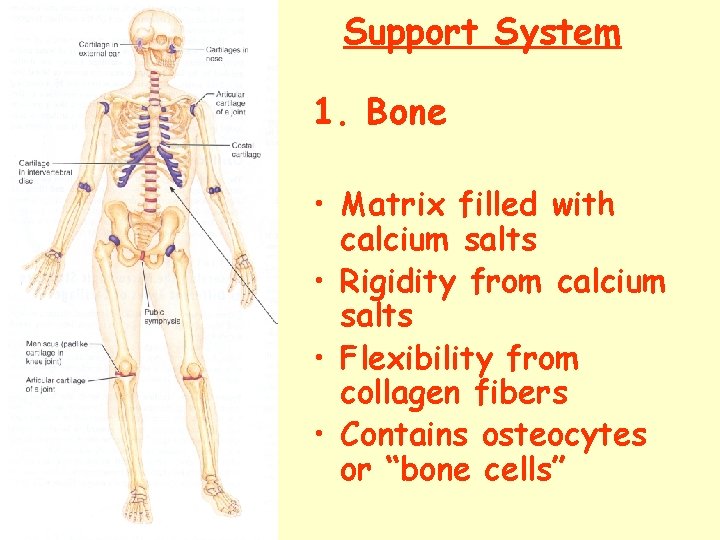
Support System 1. Bone • Matrix filled with calcium salts • Rigidity from calcium salts • Flexibility from collagen fibers • Contains osteocytes or “bone cells”
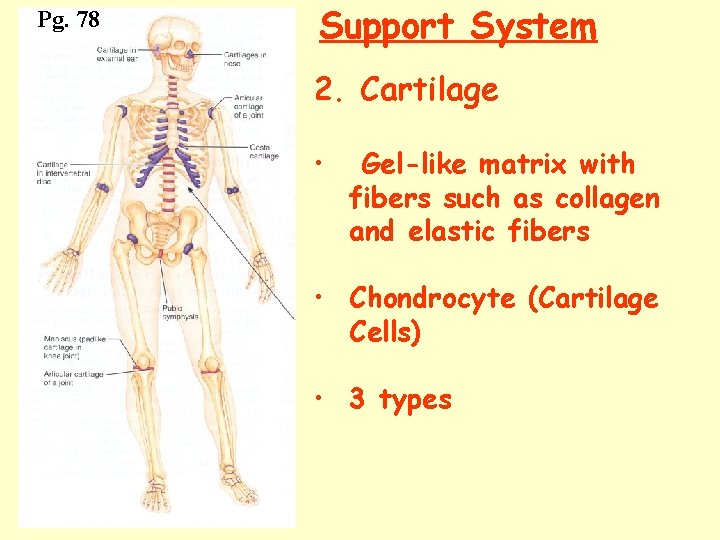
Pg. 78 Support System 2. Cartilage • Gel-like matrix with fibers such as collagen and elastic fibers • Chondrocyte (Cartilage Cells) • 3 types
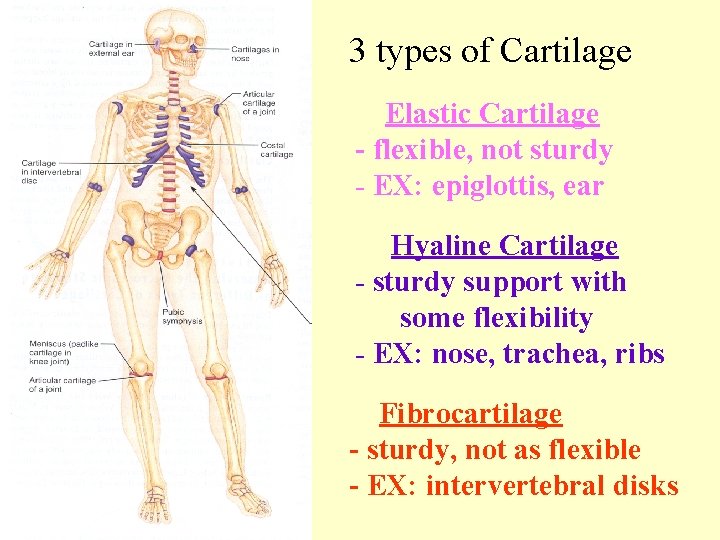
3 types of Cartilage Elastic Cartilage - flexible, not sturdy - EX: epiglottis, ear Hyaline Cartilage - sturdy support with some flexibility - EX: nose, trachea, ribs Fibrocartilage - sturdy, not as flexible - EX: intervertebral disks
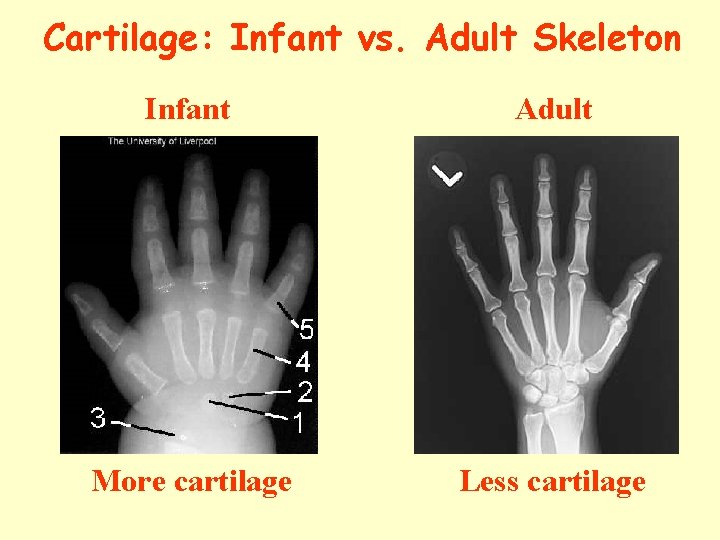
Cartilage: Infant vs. Adult Skeleton Infant Adult More cartilage Less cartilage
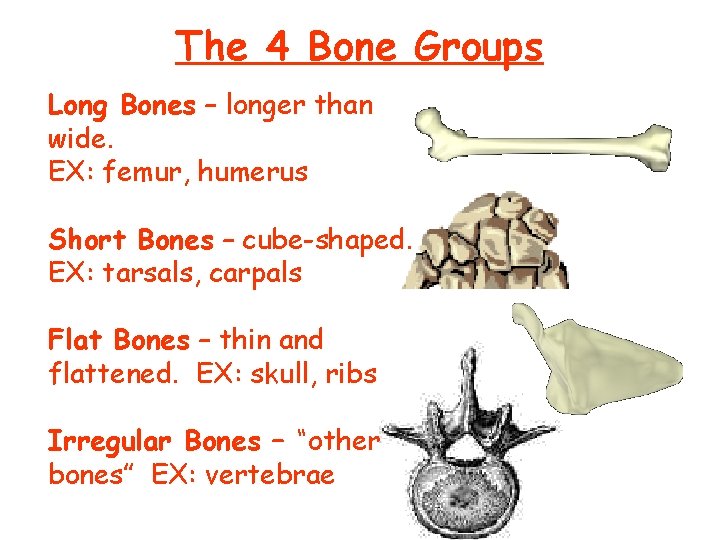
The 4 Bone Groups Long Bones – longer than wide. EX: femur, humerus Short Bones – cube-shaped. EX: tarsals, carpals Flat Bones – thin and flattened. EX: skull, ribs Irregular Bones – “other bones” EX: vertebrae
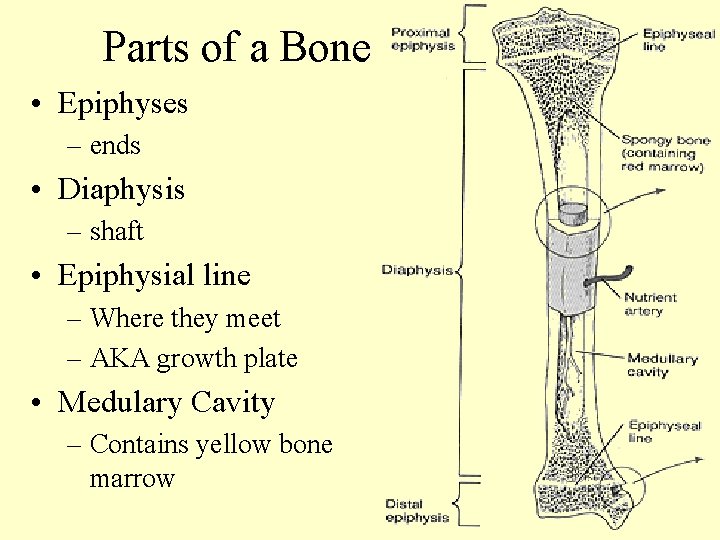
Parts of a Bone • Epiphyses – ends • Diaphysis – shaft • Epiphysial line – Where they meet – AKA growth plate • Medulary Cavity – Contains yellow bone marrow
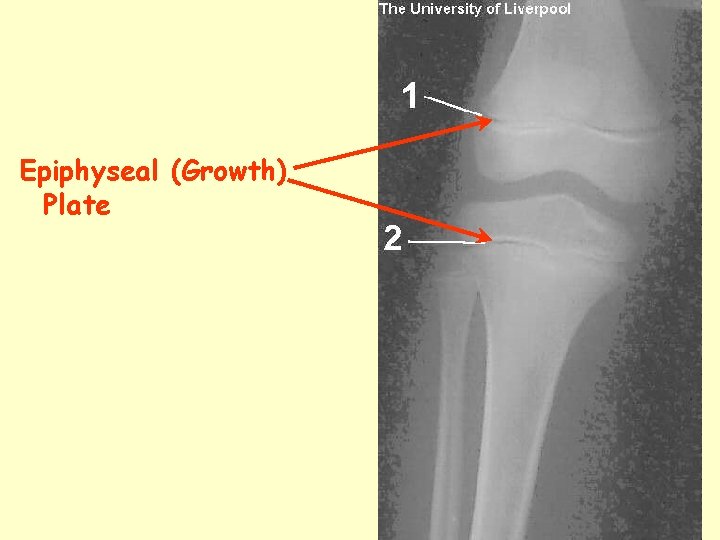
Epiphyseal (Growth) Plate
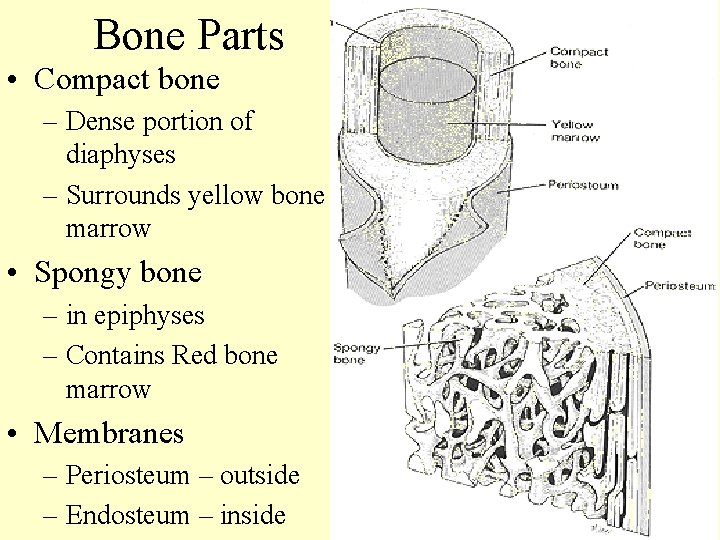
Bone Parts • Compact bone – Dense portion of diaphyses – Surrounds yellow bone marrow • Spongy bone – in epiphyses – Contains Red bone marrow • Membranes – Periosteum – outside – Endosteum – inside
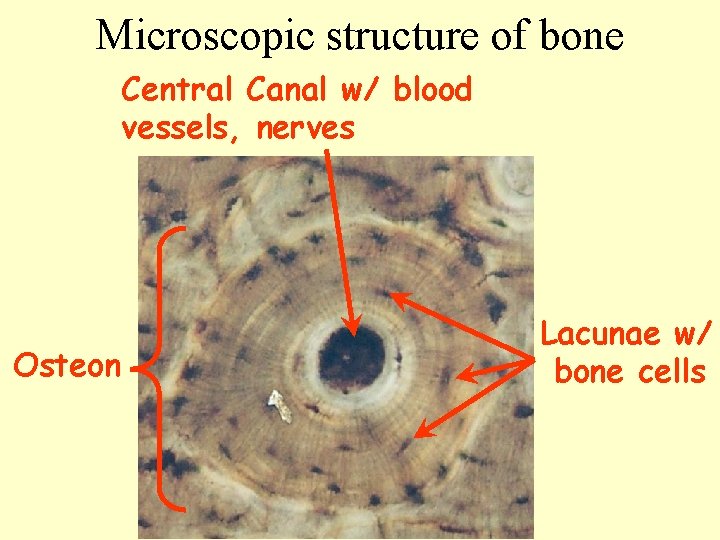
Microscopic structure of bone Central Canal w/ blood vessels, nerves Osteon Lacunae w/ bone cells
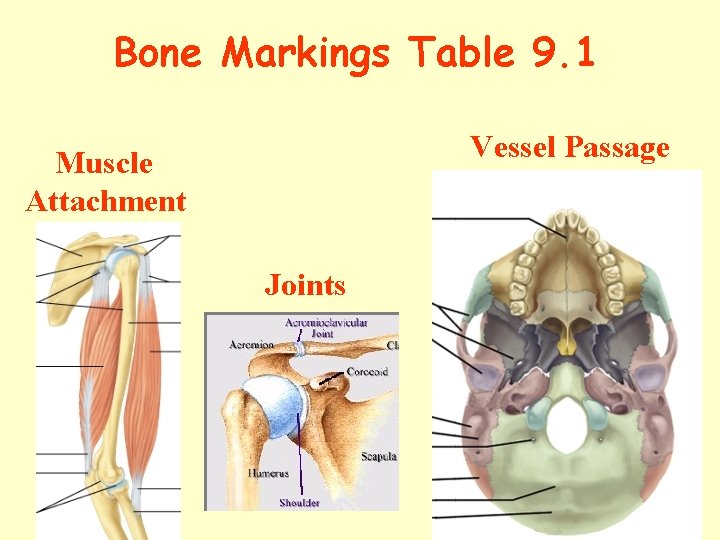
Bone Markings Table 9. 1 Vessel Passage Muscle Attachment Joints
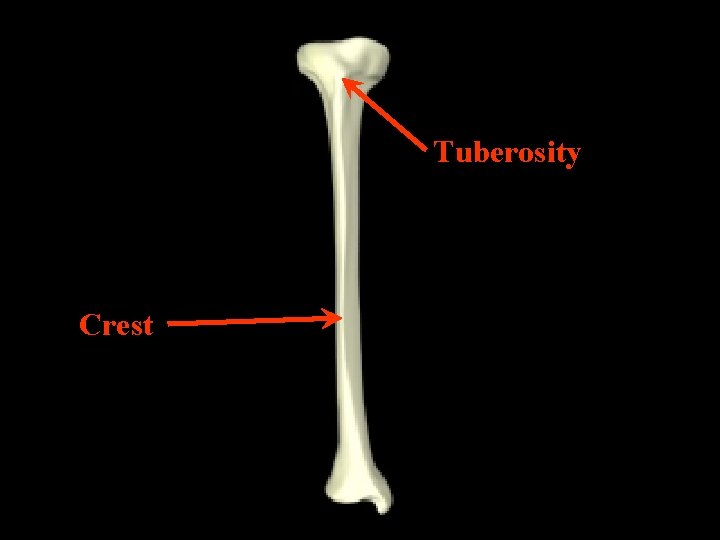
Tuberosity Crest
- Slides: 14