
Classification and Phylogenetic Relationships Early natural historians classified
- Slides: 16
Classification and Phylogenetic Relationships • Early natural historians classified organisms based on shared features • Now we seek to understand how organisms features are related to phylogenetic relationships, descent from a common ancestor • Classifications and relationships change over time, as we learn more details and test hypotheses
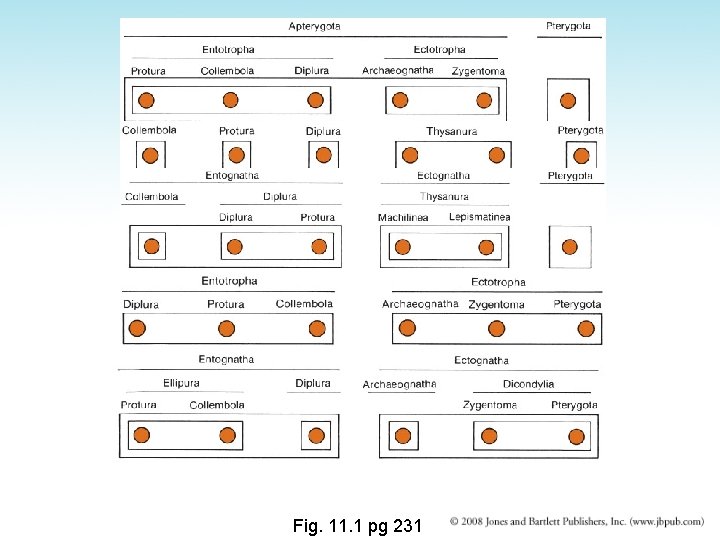
Fig. 11. 1 pg 231
Species Concepts • How to recognize species – Morphological species – Biological species – Evolutionary species
Morphological Species • Assemblages of individuals with morphological features in common • Separable from other assemblages by discontinuities in a number of features • Numerical (phenetic) taxonomy – Incorporates statistical tools to identify taxonomic distinctions – High statistical correlation of large number of characters distinguishes groups
Biological Species • From Buffon – A sexually interbreeding (or potentially interbreeding) group, separated from other species by reproductive isolation • Difficulties – Allopatric populations – Subjective scale of success for interbreeding – Cannot test fossils • Sibling species – Nearly identical but do not normally cross-fertilize • Polytipic species – Multiple geographic subspecies, can exchange genes if come into contact – Does not apply to plants – Horizontal gene transmission between different species
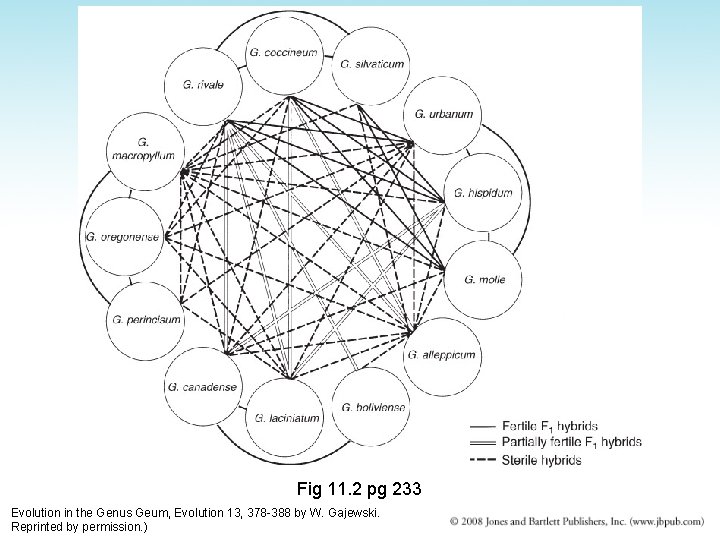
Fig 11. 2 pg 233 Evolution in the Genus Geum, Evolution 13, 378 -388 by W. Gajewski. Reprinted by permission. )
Evolutionary Species • Evolutionary isolation • Not dependent upon sexual isolation • A species concept that incorporates change over time – Stage when group has attained complete separation subjective
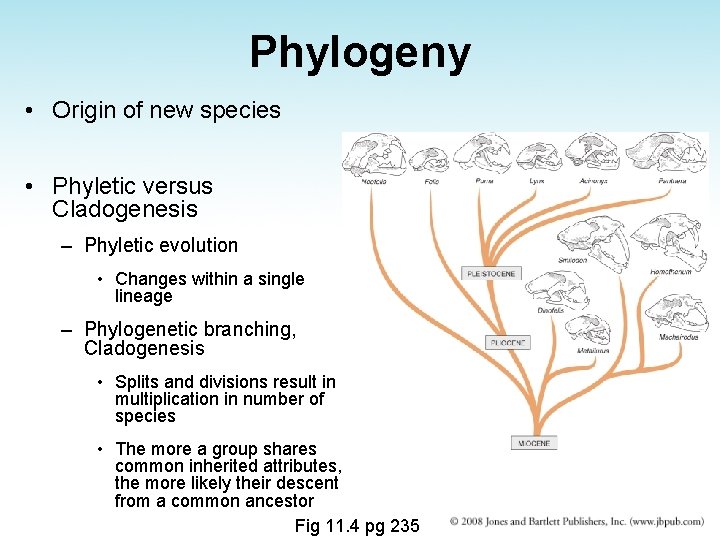
Phylogeny • Origin of new species • Phyletic versus Cladogenesis – Phyletic evolution • Changes within a single lineage – Phylogenetic branching, Cladogenesis • Splits and divisions result in multiplication in number of species • The more a group shares common inherited attributes, the more likely their descent from a common ancestor Fig 11. 4 pg 235
Phylogeny • Shared attributes can occur by several ways – Homology • Feature is shared because species derived from common ancestor – Homoplasy • Common feature but ancestor was different • Similar adaptation from different starting points – Parallelism » Immediate common ancestor was different – Convergence » Lineage has been separated for considerable time
Homology • A phenotypic feature that is shared due to common ancestry • It is critical to specify the level at which homology is designated – Genetic > Development > Morphology > Function – Serial homology • Similarities among parts of the same organism • E. g. vertebrae – Homologous features, may arise by different developmental pathways
Homology, Partial Homology and Percent Similarity • Homology as applied to DNA sequence similarity – Orthologous genes • Genes duplicated in different species – Paralogous genes • Genes duplicated within a species • Partial Homology, percent similarity – Early molecular workers comparing two genes might have discussed partial homology, percent similarity between to genes – No longer accepted – Homologous or not homologous
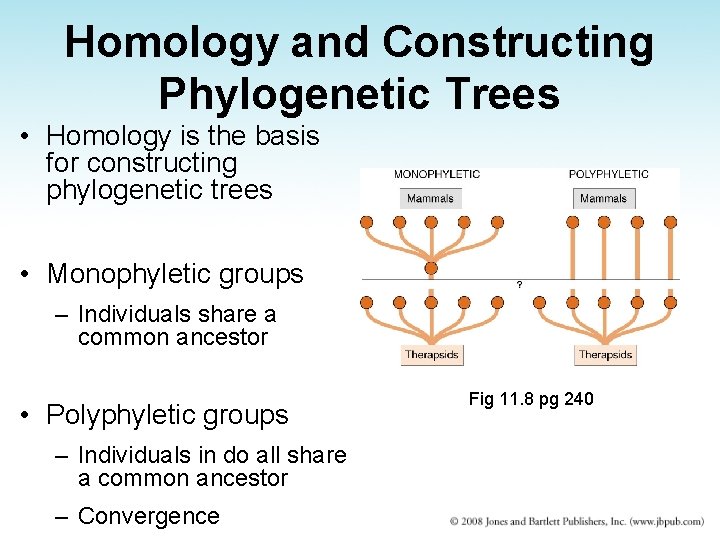
Homology and Constructing Phylogenetic Trees • Homology is the basis for constructing phylogenetic trees • Monophyletic groups – Individuals share a common ancestor • Polyphyletic groups – Individuals in do all share a common ancestor – Convergence Fig 11. 8 pg 240
Phylogenetic Trees • Phylogeny is something that happened • Classification is an arrangement of its results • Ideal multi-limbed phylogenetic tree would include all ancestral populations – Impossible • Most species are unknown (fossils) • Unable to compute, to complex
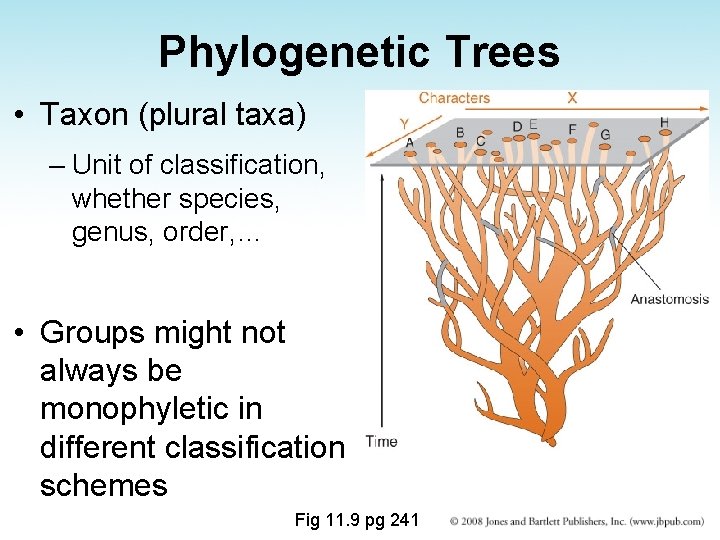
Phylogenetic Trees • Taxon (plural taxa) – Unit of classification, whether species, genus, order, … • Groups might not always be monophyletic in different classification schemes Fig 11. 9 pg 241
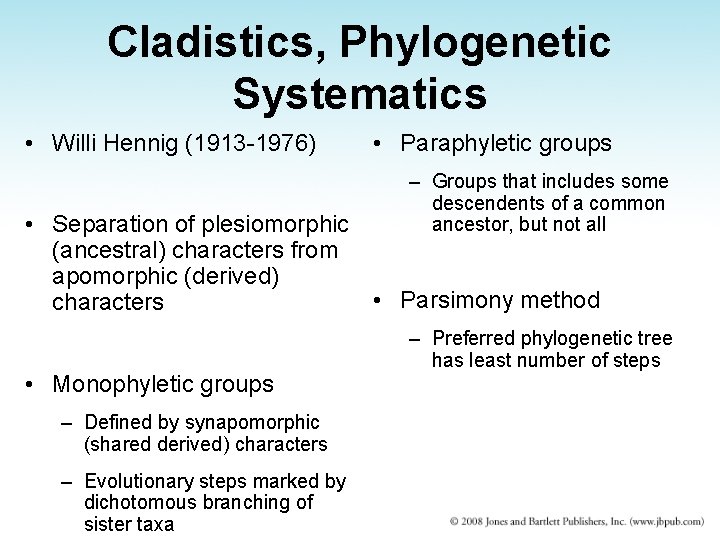
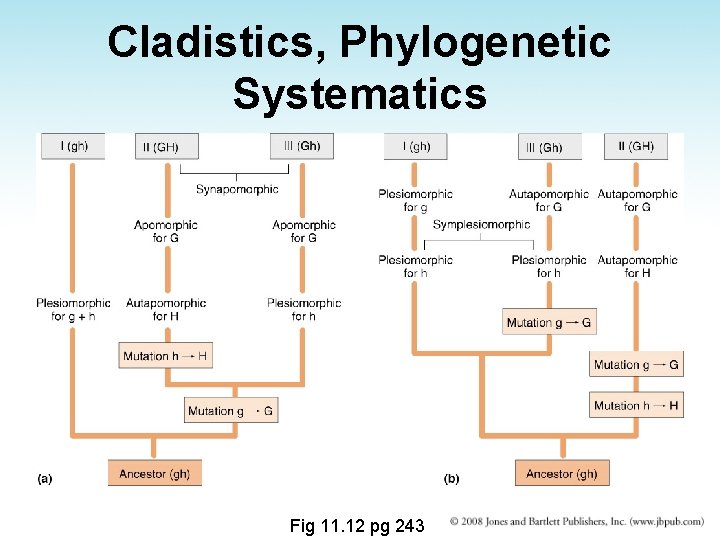
Cladistics, Phylogenetic Systematics • Willi Hennig (1913 -1976) • Paraphyletic groups – Groups that includes some descendents of a common ancestor, but not all • Separation of plesiomorphic (ancestral) characters from apomorphic (derived) • Parsimony method characters • Monophyletic groups – Defined by synapomorphic (shared derived) characters – Evolutionary steps marked by dichotomous branching of sister taxa – Preferred phylogenetic tree has least number of steps
Cladistics, Phylogenetic Systematics Fig 11. 12 pg 243