
Classification 8 a Define taxonomy and recognize the

- Slides: 50
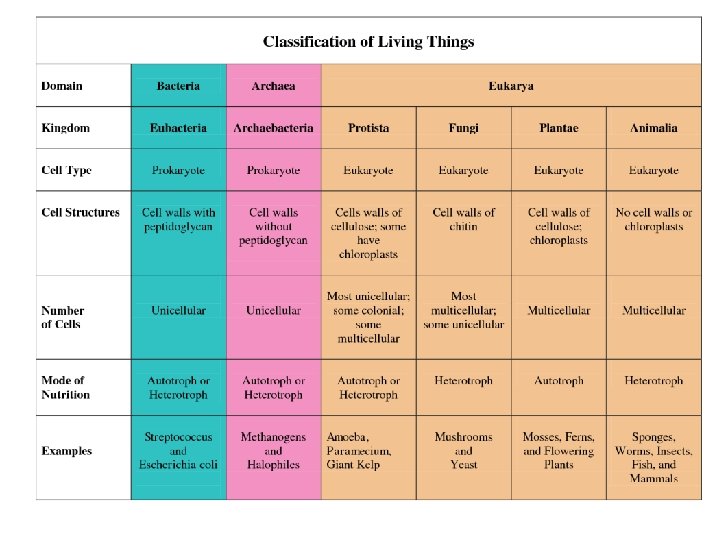
Classification 8 a Define taxonomy and recognize the importance of a standardized taxonomic system 8 b Categorize organisms using a hierarchical classification system based on similarities and differences shared among groups 8 c Compare characteristics of taxonomic groups including archaea, bacteria, protists, fungi, plants and animals
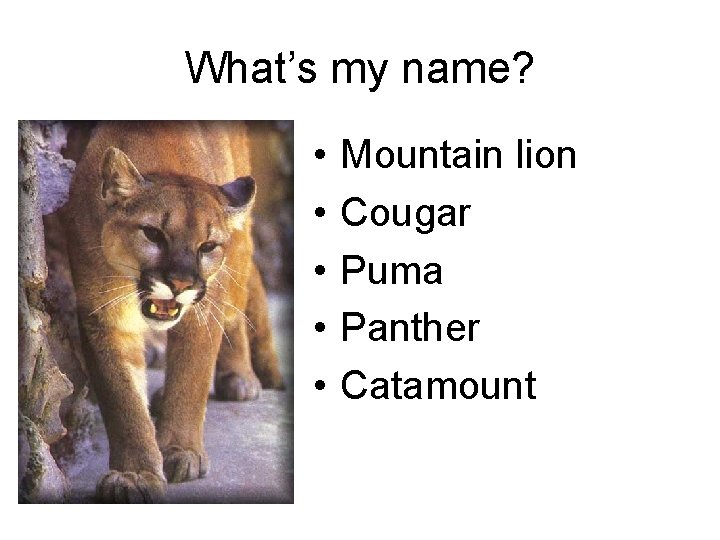
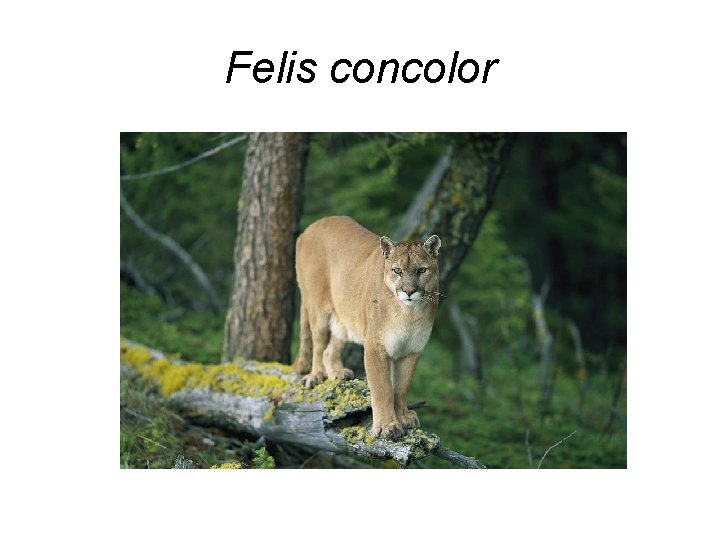
What’s my name? • • • Mountain lion Cougar Puma Panther Catamount
Taxonomy • the naming, describing, and classifying organisms based on characteristics
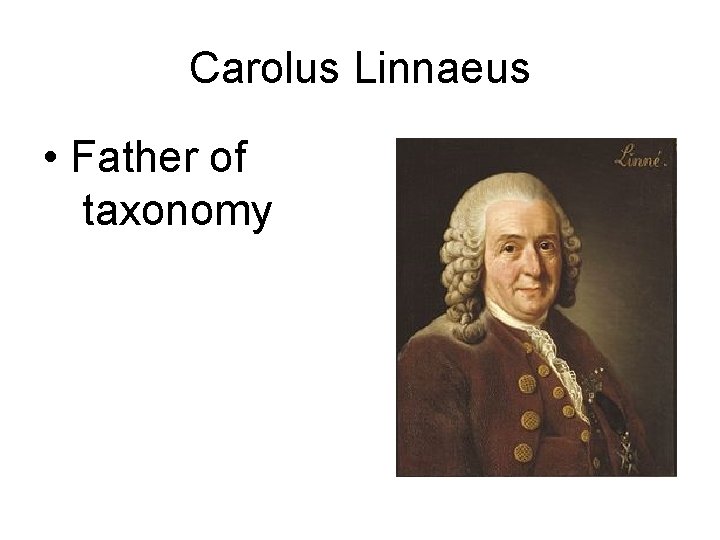
Carolus Linnaeus • Father of taxonomy
Binomial Nomenclature • formal system of naming organisms by giving each a name composed of two parts, both of which use Latin
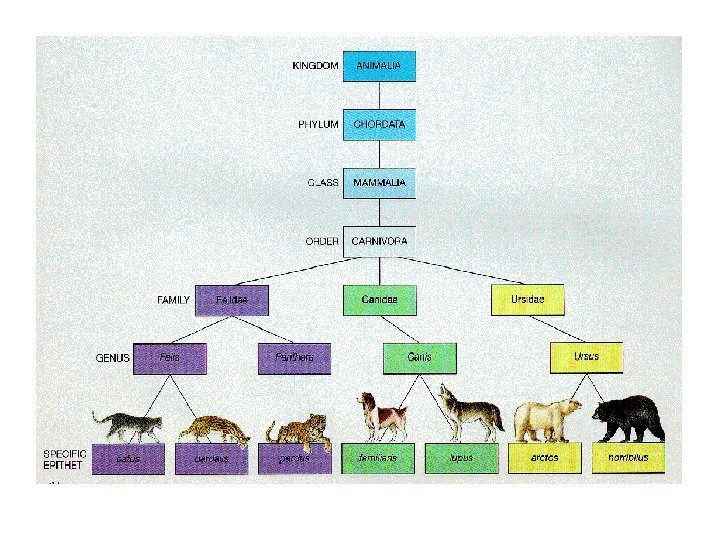
Scientific Names • The first word is the organism’s Genus (closely related species) • The second word is the organism’s species • Genus species
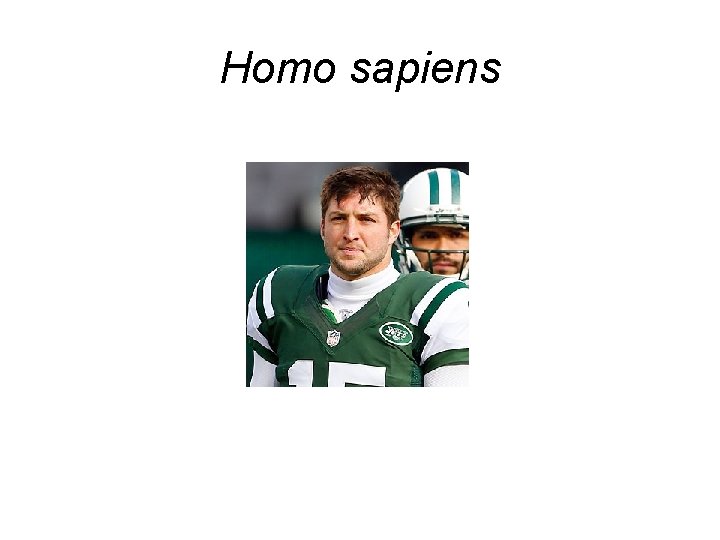
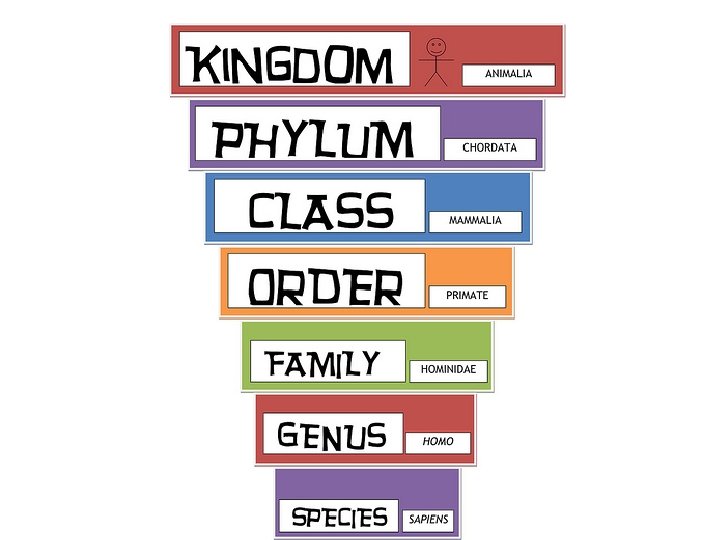
Homo sapiens
Felis concolor
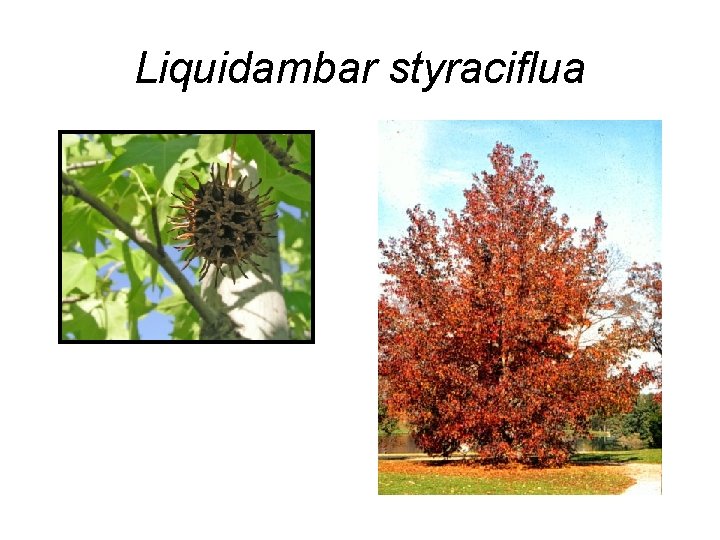
Liquidambar styraciflua
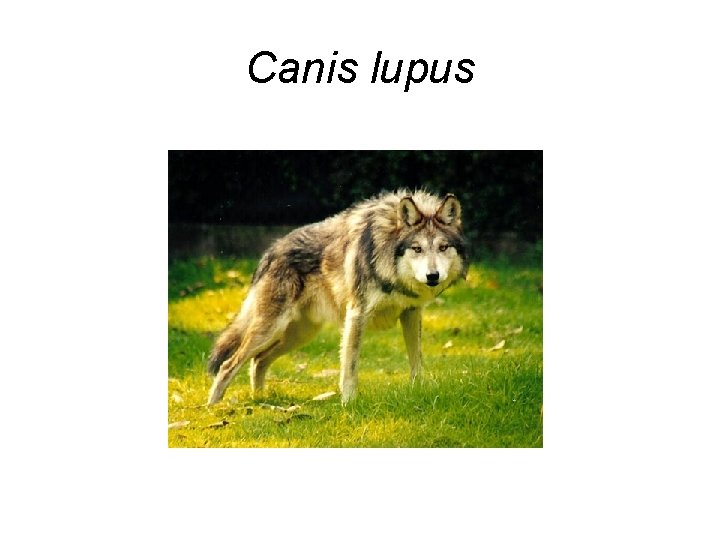
Canis lupus
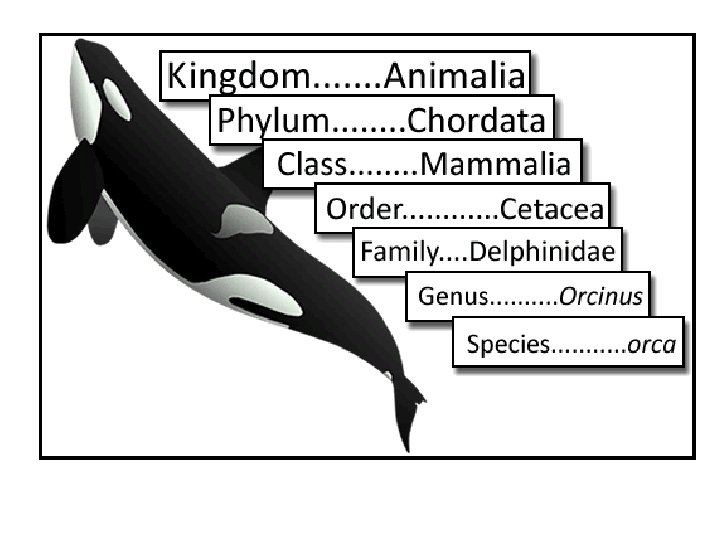
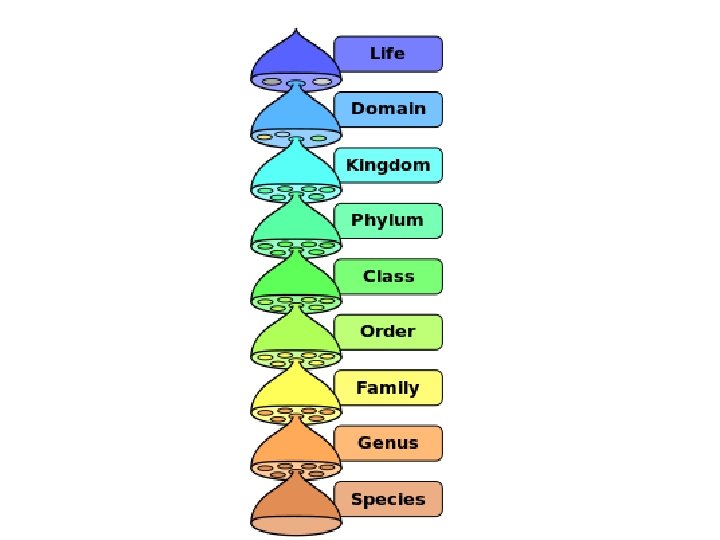
Flowchart Linnaeus’s System of Classification: General to Specific Section 18 -1 Kingdom Phylum Class Order Family Genus Species
Why classify? • To group organisms according to similarities • To name organisms in a way that all scientists across the world can communicate (to get around language barriers)
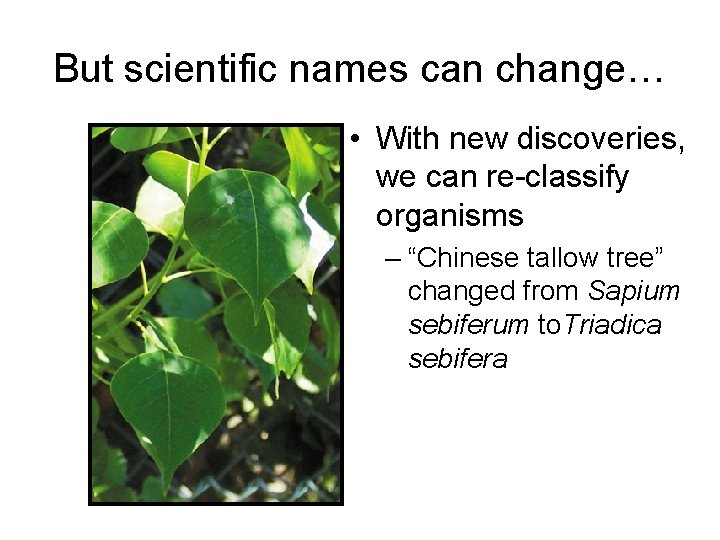
But scientific names can change… • With new discoveries, we can re-classify organisms – “Chinese tallow tree” changed from Sapium sebiferum to. Triadica sebifera
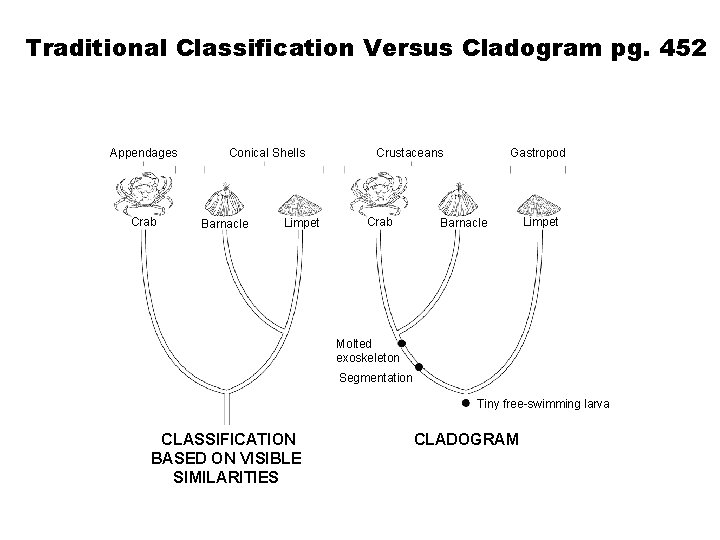
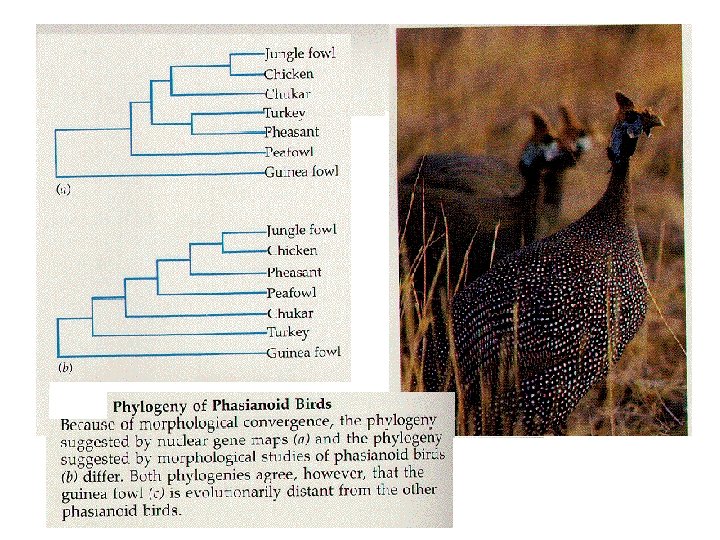
Modern Evolutionary Classification • The old Linnaeus way of using visible physical similarities puts organisms that are very different in the same groups. • So, now organisms are grouped according to characteristics that show common ancestry. • Phylogeny – the study of evolutionary relationships among organisms. • All members of a genus share a recent common ancestor.
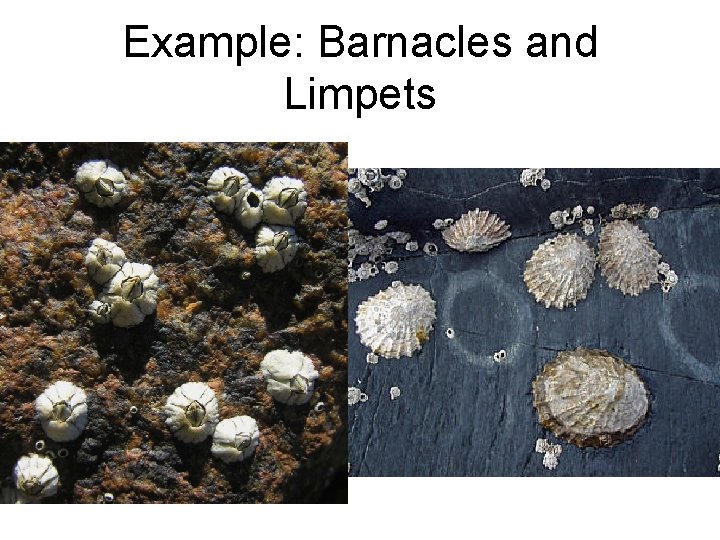
Example: Barnacles and Limpets
Traditional Classification Versus Cladogram pg. 452 Appendages Crab Conical Shells Barnacle Limpet Crustaceans Crab Gastropod Barnacle Limpet Molted exoskeleton Segmentation Tiny free-swimming larva CLASSIFICATION BASED ON VISIBLE SIMILARITIES CLADOGRAM
Example: Barnacles and Limpets • Adult barnacles look and act like limpets. • Limpets have similar insides to a snail and don’t shed their shells like a snail – mollusks. • Barnacles have similar anatomy and development to crabs – crustaceans. • So, barnacles are grouped with crabs and limpets are grouped with snails.
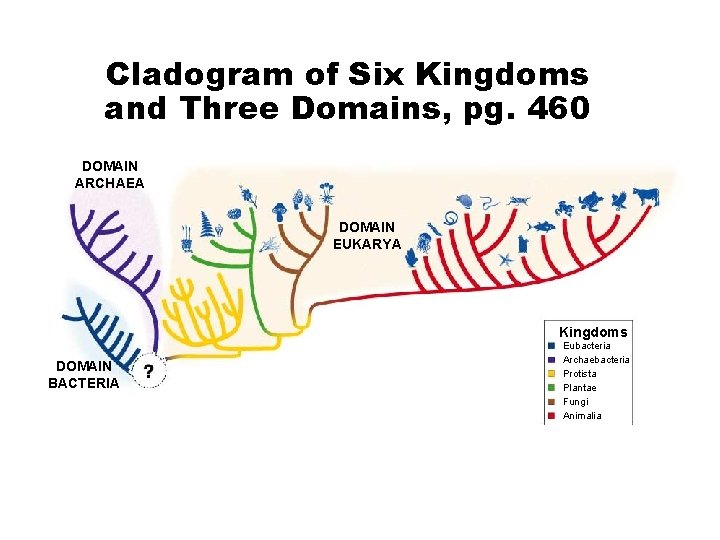
Cladogram • diagram that shows the evolutionary relationships among organisms
• The closer together in a relational “line” the organisms are, the more closely they are related (the more recent their common ancestor) • The more similar the DNA the more recently they shared a common ancestor and the more closely they are related.
Derived Character • trait that is shared by organisms with a recent common ancestor
Clade • Group consisting of its ancestor and all its descendants
Cladogram of Six Kingdoms and Three Domains, pg. 460 DOMAIN ARCHAEA DOMAIN EUKARYA Kingdoms DOMAIN BACTERIA Eubacteria Archaebacteria Protista Plantae Fungi Animalia
http: //ccl. northwestern. edu/simevolution/ob onu/cladograms/Open-This-File. swf
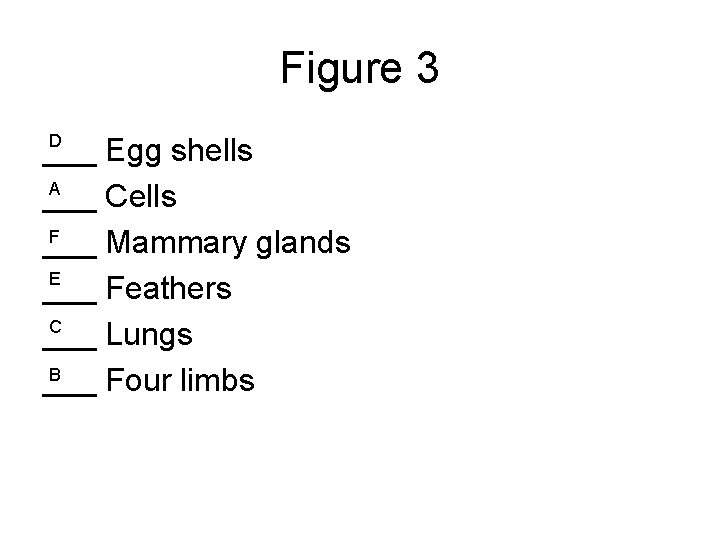
Figure 3 D ___ Egg shells A ___ Cells F ___ Mammary glands E ___ Feathers C ___ Lungs B ___ Four limbs
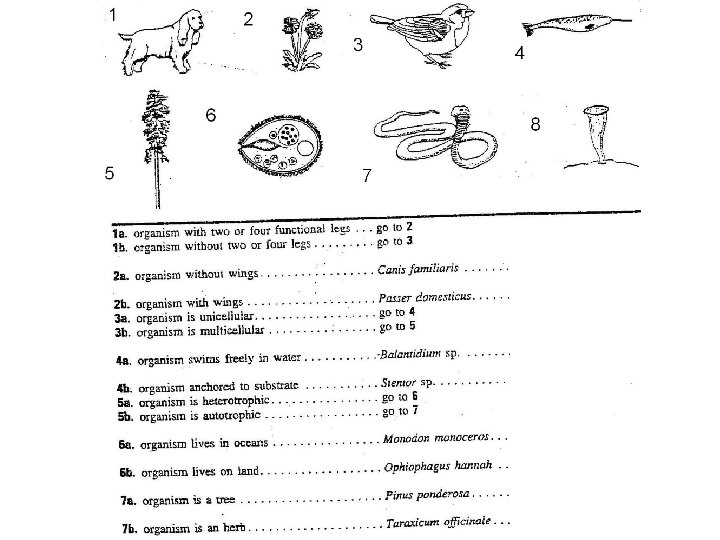
Dichotomous Key • Series of ordered steps you follow to ID an organism • To use, you read both options, decide which variation is best, and move on to the next step.
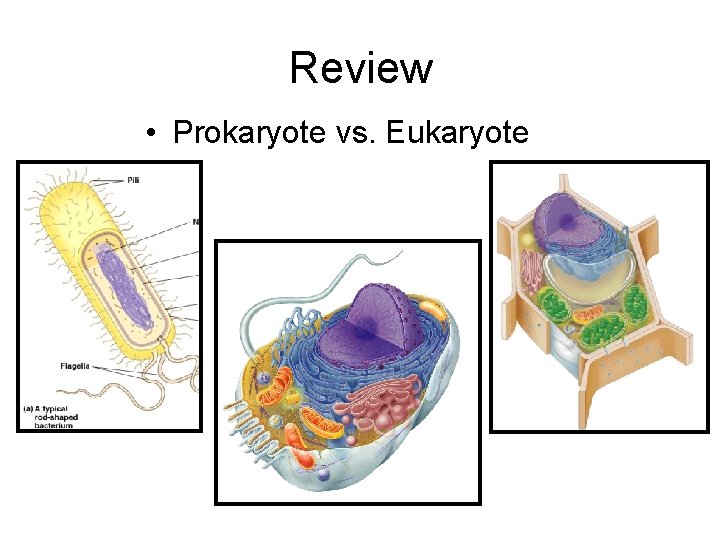
Review • Prokaryote vs. Eukaryote
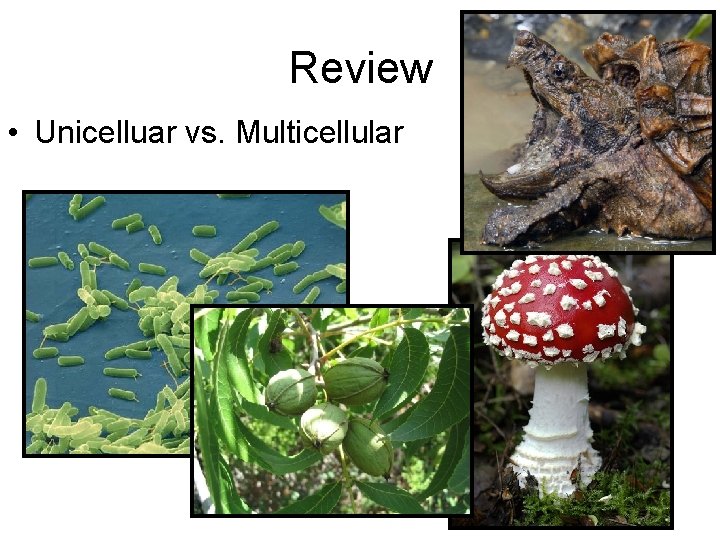
Review • Unicelluar vs. Multicellular
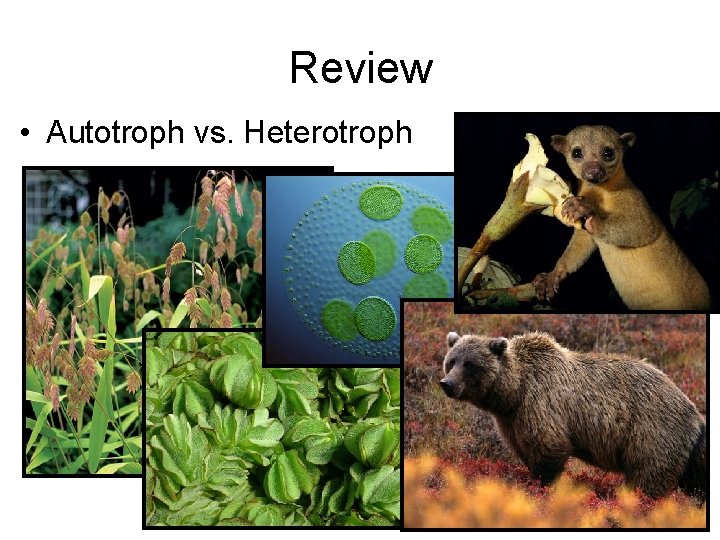
Review • Autotroph vs. Heterotroph
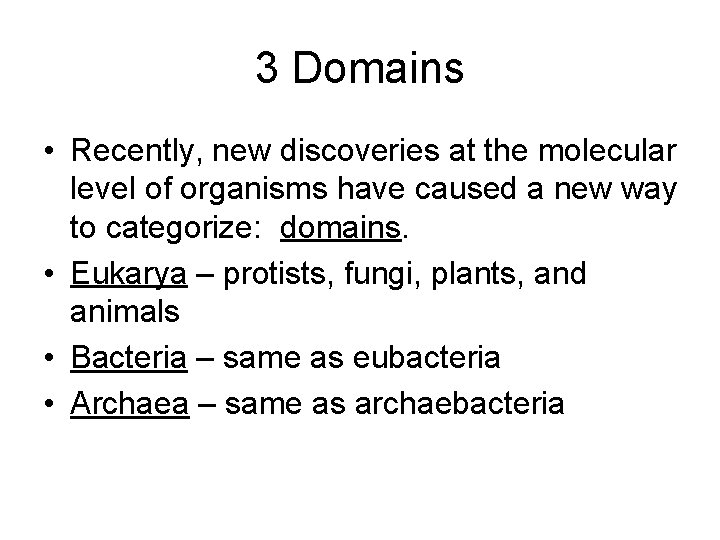
3 Domains • Recently, new discoveries at the molecular level of organisms have caused a new way to categorize: domains. • Eukarya – protists, fungi, plants, and animals • Bacteria – same as eubacteria • Archaea – same as archaebacteria
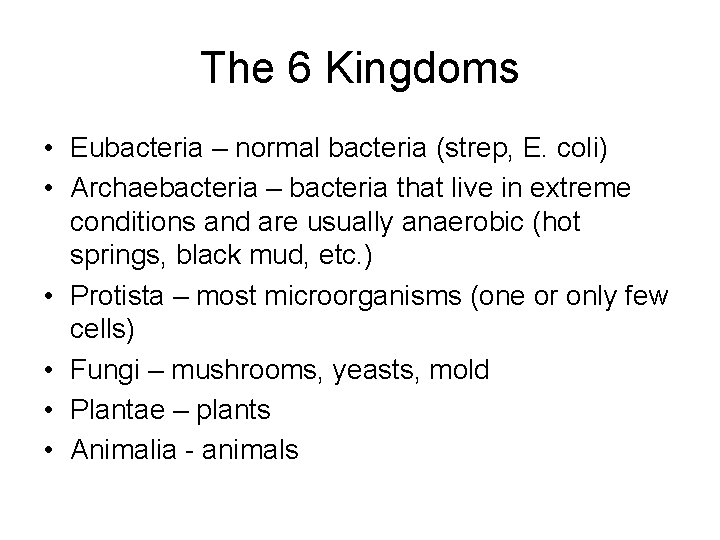
The 6 Kingdoms • Eubacteria – normal bacteria (strep, E. coli) • Archaebacteria – bacteria that live in extreme conditions and are usually anaerobic (hot springs, black mud, etc. ) • Protista – most microorganisms (one or only few cells) • Fungi – mushrooms, yeasts, mold • Plantae – plants • Animalia - animals
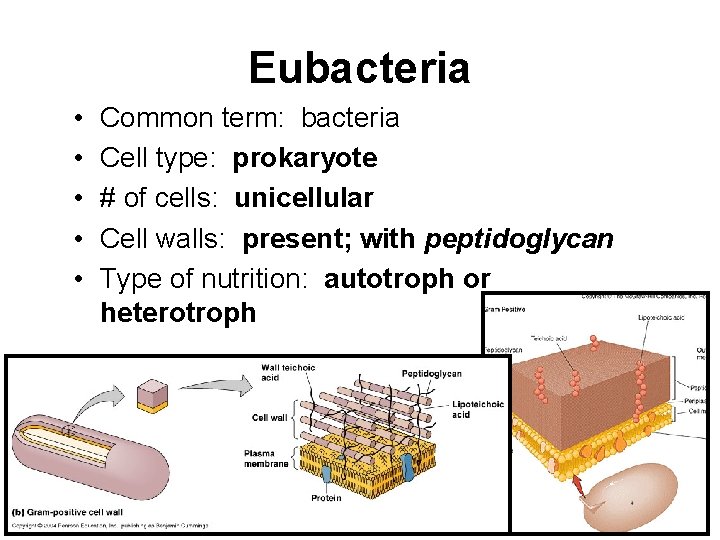
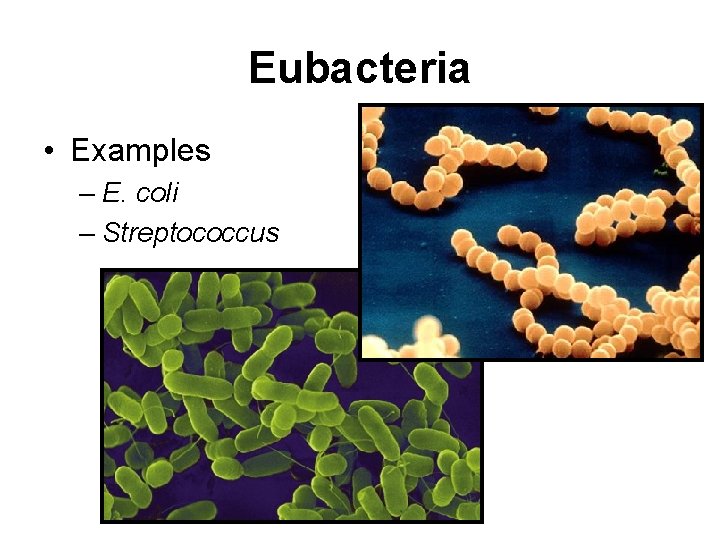
Eubacteria • • • Common term: bacteria Cell type: prokaryote # of cells: unicellular Cell walls: present; with peptidoglycan Type of nutrition: autotroph or heterotroph
Eubacteria • Examples – E. coli – Streptococcus
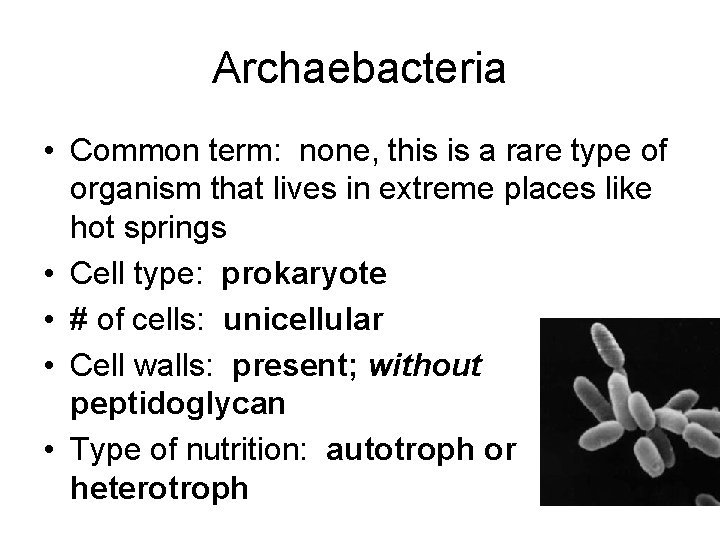
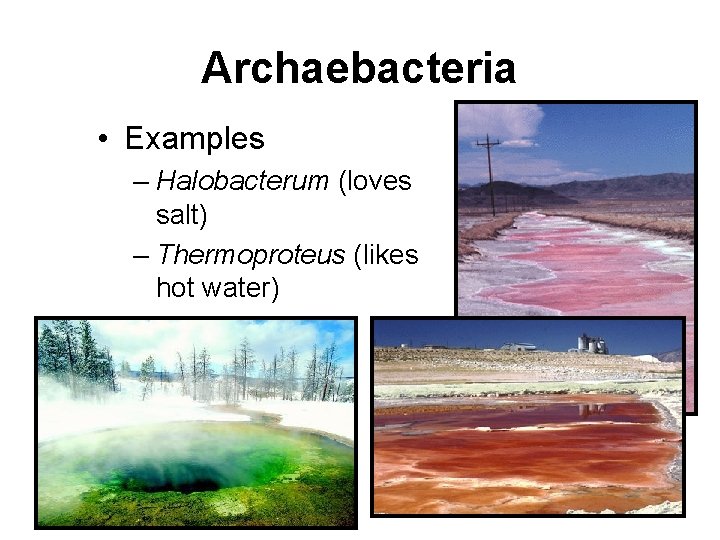
Archaebacteria • Common term: none, this is a rare type of organism that lives in extreme places like hot springs • Cell type: prokaryote • # of cells: unicellular • Cell walls: present; without peptidoglycan • Type of nutrition: autotroph or heterotroph
Archaebacteria • Examples – Halobacterum (loves salt) – Thermoproteus (likes hot water)
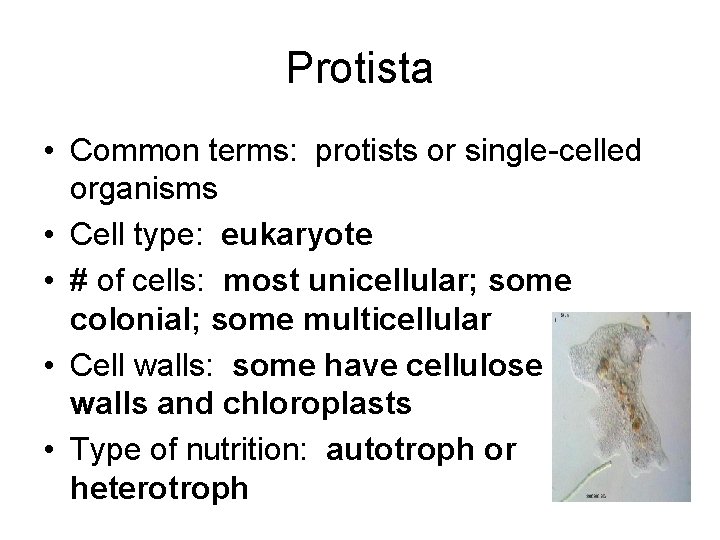
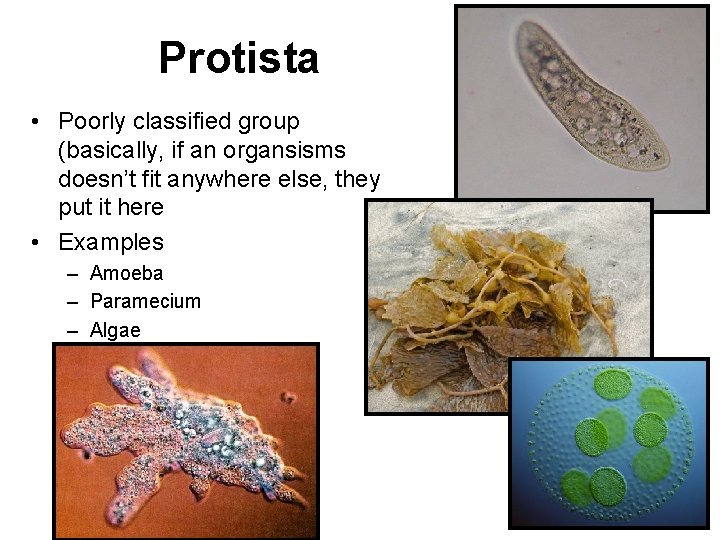
Protista • Common terms: protists or single-celled organisms • Cell type: eukaryote • # of cells: most unicellular; some colonial; some multicellular • Cell walls: some have cellulose cell walls and chloroplasts • Type of nutrition: autotroph or heterotroph
Protista • Poorly classified group (basically, if an organsisms doesn’t fit anywhere else, they put it here • Examples – Amoeba – Paramecium – Algae
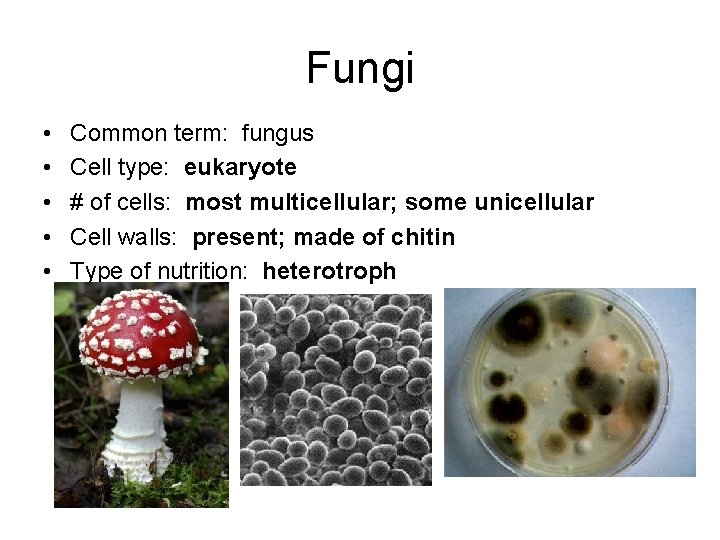
Fungi • • • Common term: fungus Cell type: eukaryote # of cells: most multicellular; some unicellular Cell walls: present; made of chitin Type of nutrition: heterotroph
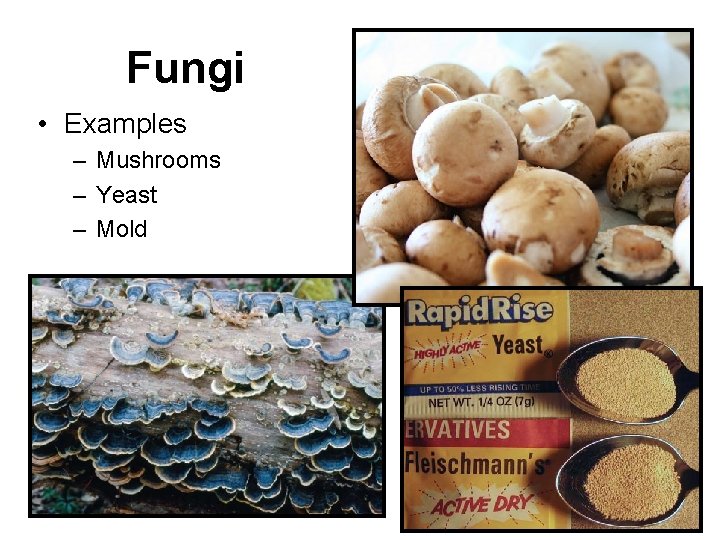
Fungi • Examples – Mushrooms – Yeast – Mold
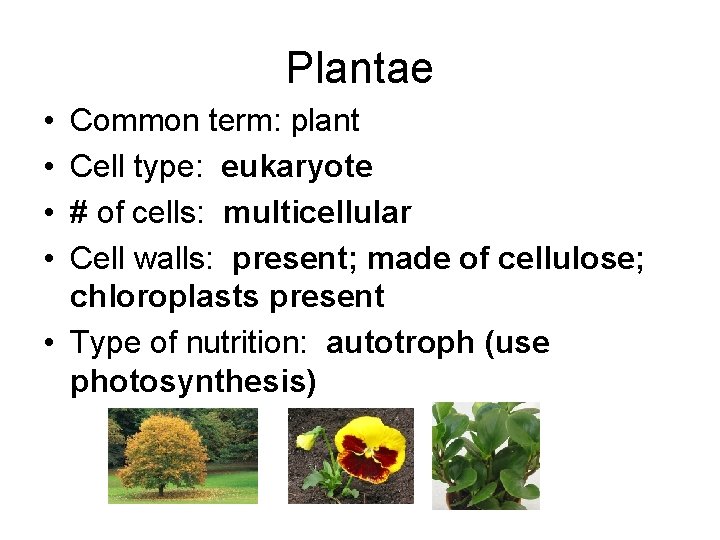
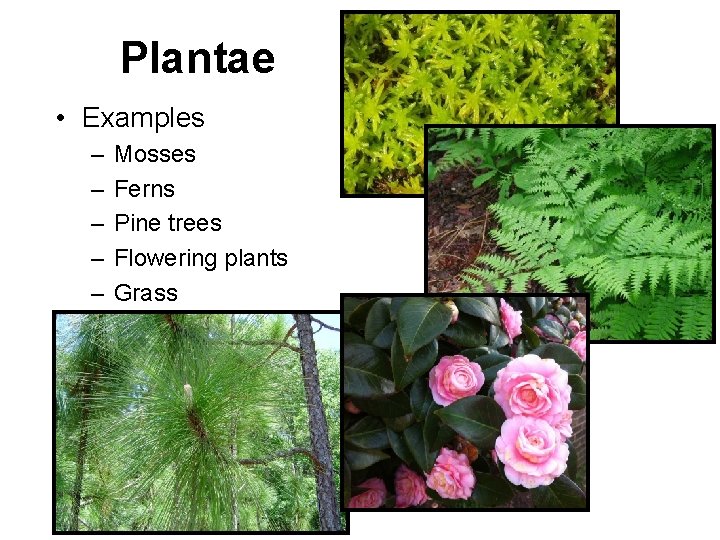
Plantae • • Common term: plant Cell type: eukaryote # of cells: multicellular Cell walls: present; made of cellulose; chloroplasts present • Type of nutrition: autotroph (use photosynthesis)
Plantae • Examples – – – Mosses Ferns Pine trees Flowering plants Grass
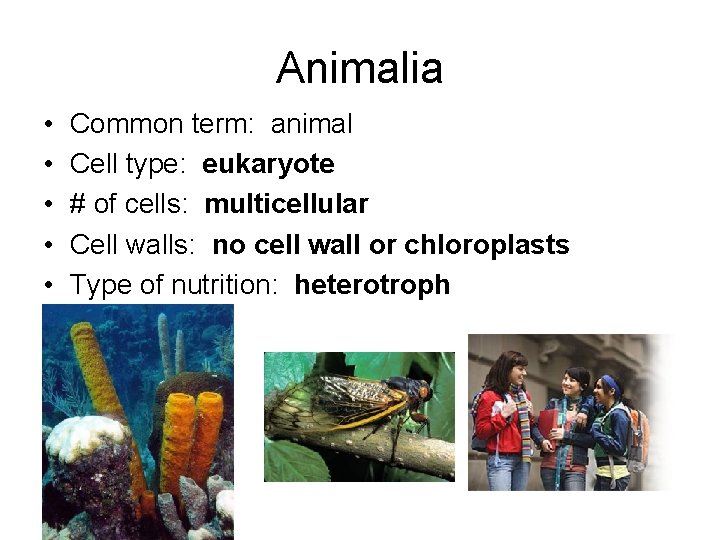
Animalia • • • Common term: animal Cell type: eukaryote # of cells: multicellular Cell walls: no cell wall or chloroplasts Type of nutrition: heterotroph
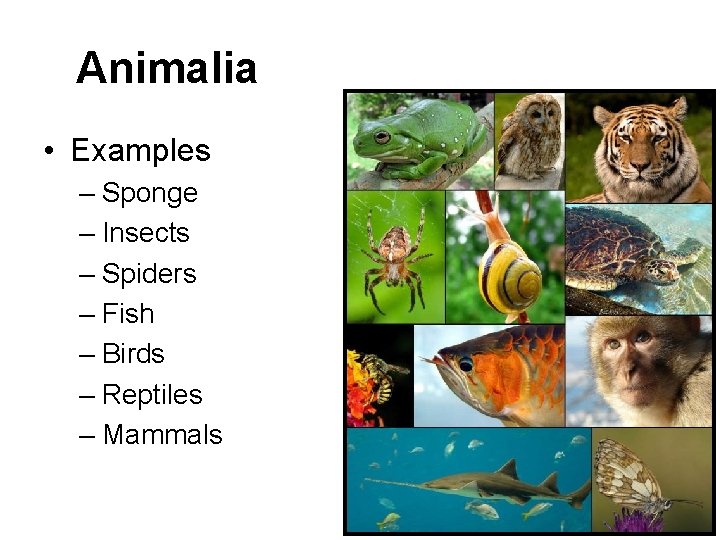
Animalia • Examples – Sponge – Insects – Spiders – Fish – Birds – Reptiles – Mammals