
Classification 1 What is Classification Classificationtaxonomy is the
- Slides: 31
Classification 1
What is Classification? Classification/taxonomy is the arrangement of organisms into orderly groups based on their similarities Taxonomists are scientists that identify & name organisms 2
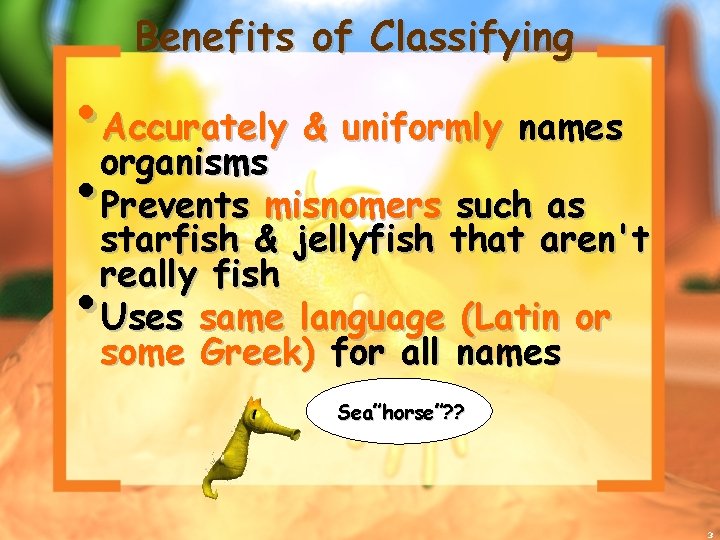
Benefits of Classifying • organisms Accurately & uniformly names • starfish Prevents misnomers such as & jellyfish that aren't really fish • some Uses same language (Latin or Greek) for all names some Greek) for all names Sea”horse”? ? 3
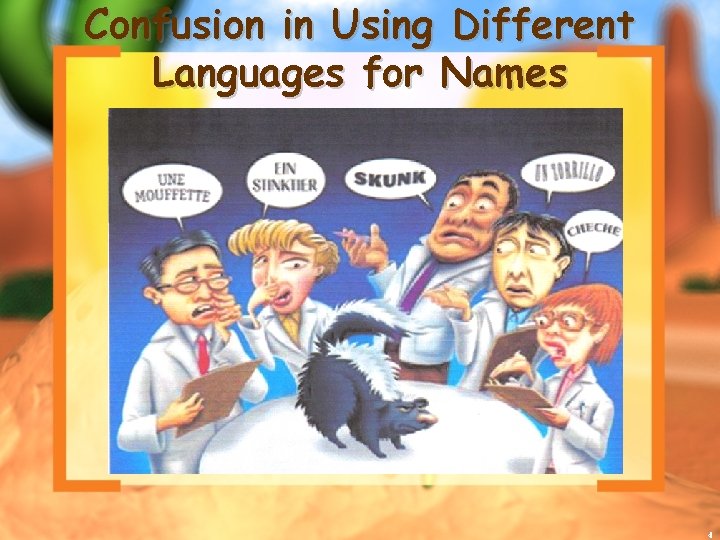
Confusion in Using Different Languages for Names 4
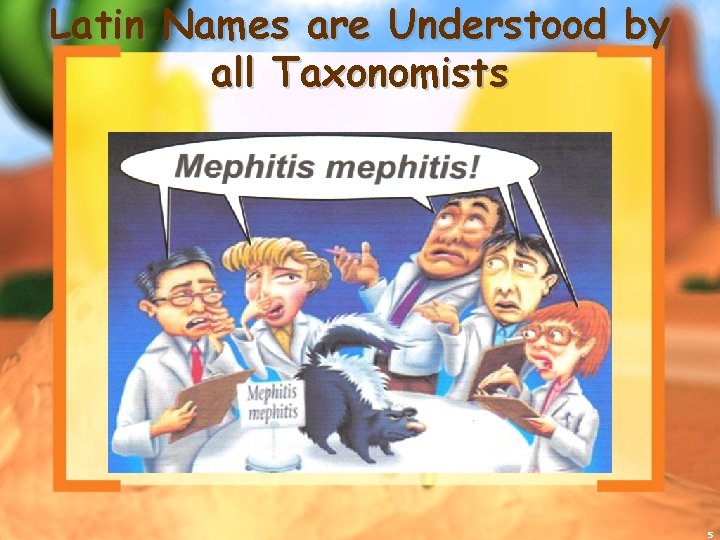
Latin Names are Understood by all Taxonomists 5
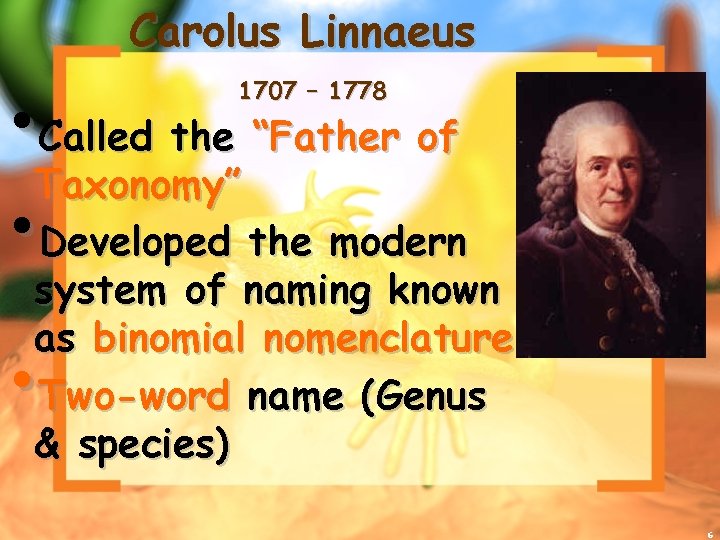
Carolus Linnaeus • Called the “Father of Taxonomy” • Developed the modern 1707 – 1778 system of naming known as binomial nomenclature Two-word name (Genus & species) • 6
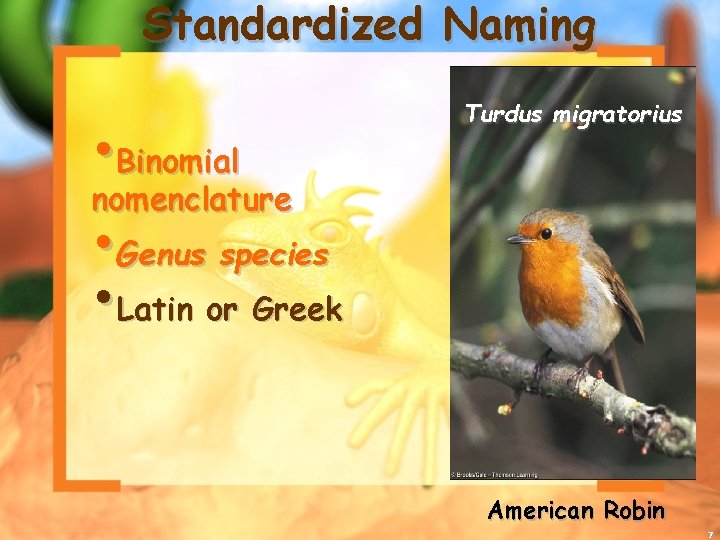
Standardized Naming • Binomial nomenclature • Genus species • Latin or Greek Turdus migratorius American Robin 7
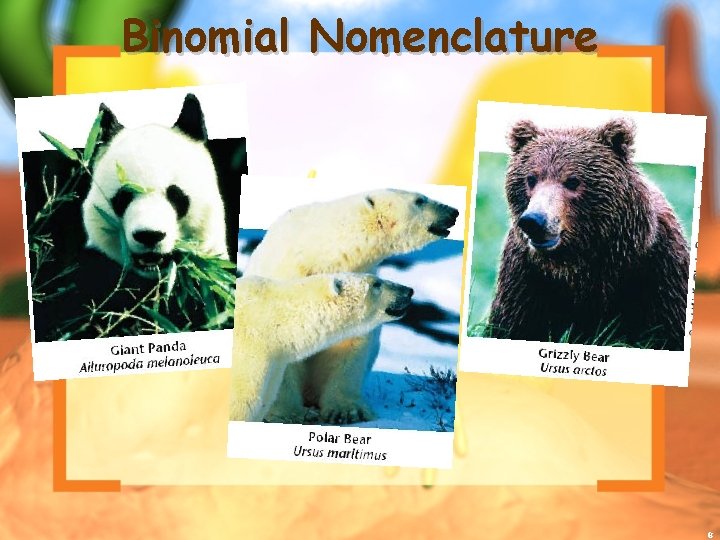
Binomial Nomenclature 8
Classification Groups • Taxon ( taxa-plural) is a category into which related organisms are placed There is a hierarchy of groups (taxa) from broadest to most specific • 9
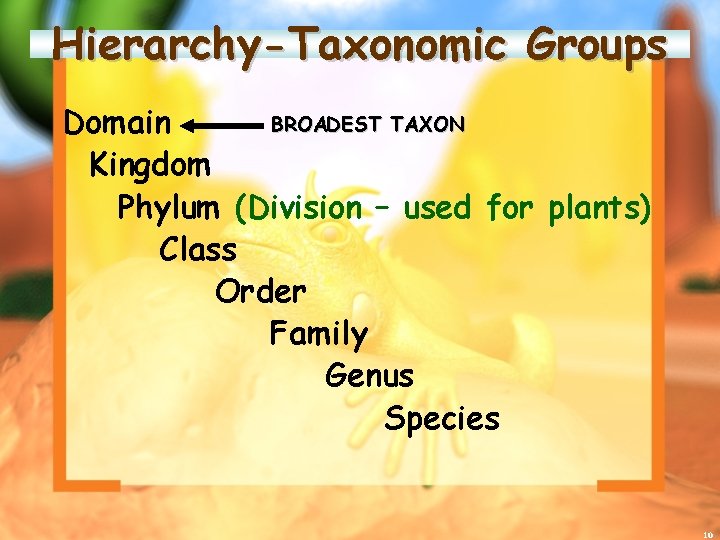
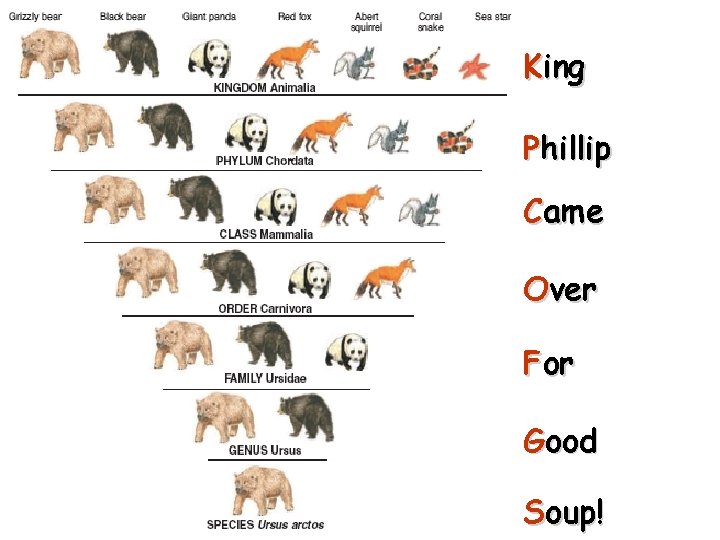
Hierarchy-Taxonomic Groups BROADEST TAXON Domain Kingdom Phylum (Division – used for plants) Class Order Family Genus Species 10
King Phillip Came Over For Good Soup! 11
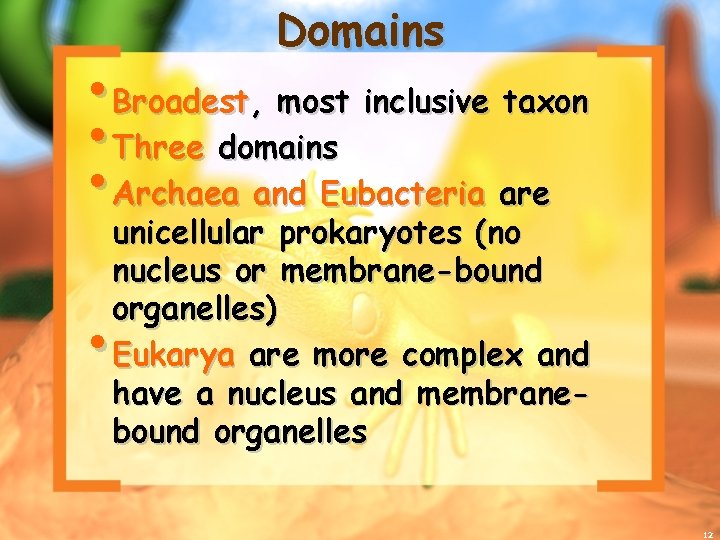
Domains • Broadest, most inclusive taxon • Three domains • Archaea and Eubacteria are unicellular prokaryotes (no nucleus or membrane-bound organelles) Eukarya are more complex and have a nucleus and membranebound organelles • 12
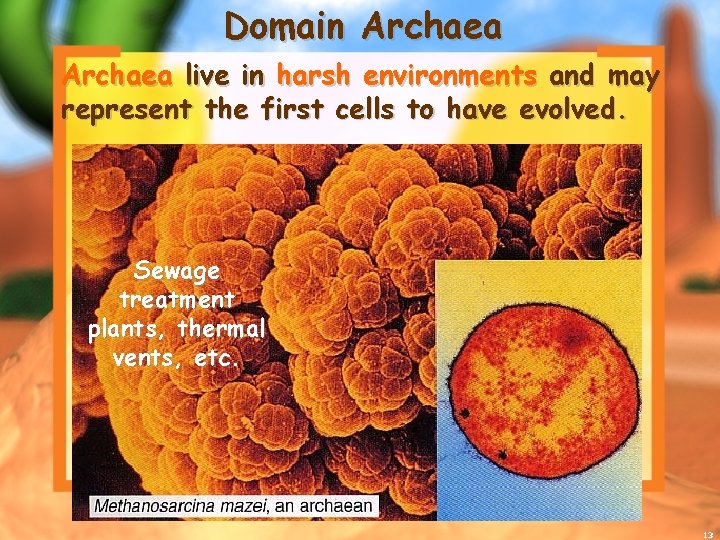
Domain Archaea live in harsh environments and may represent the first cells to have evolved. Sewage treatment plants, thermal vents, etc. 13
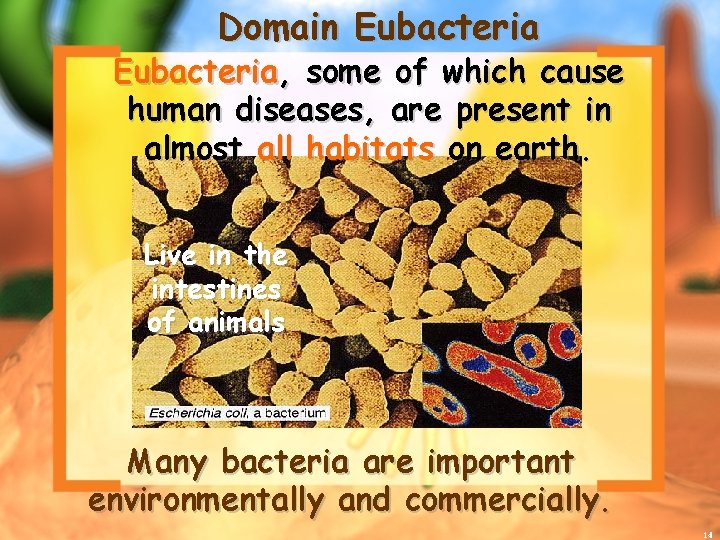
Domain Eubacteria, some of which cause human diseases, are present in almost all habitats on earth. Live in the intestines of animals Many bacteria are important environmentally and commercially. 14
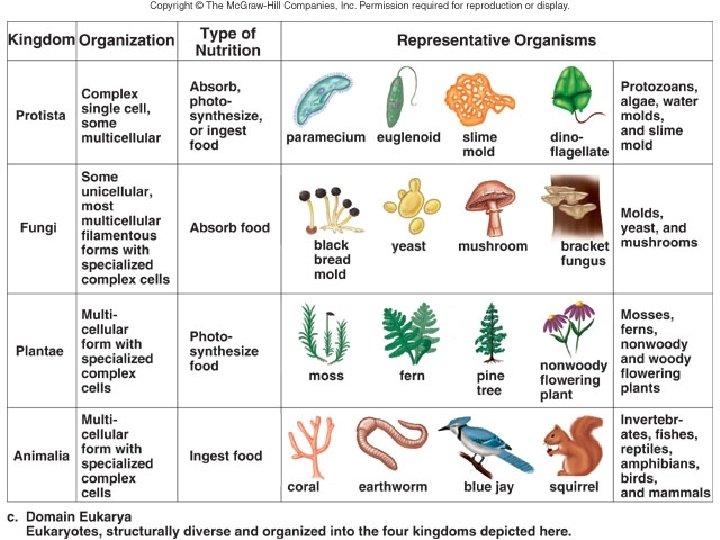
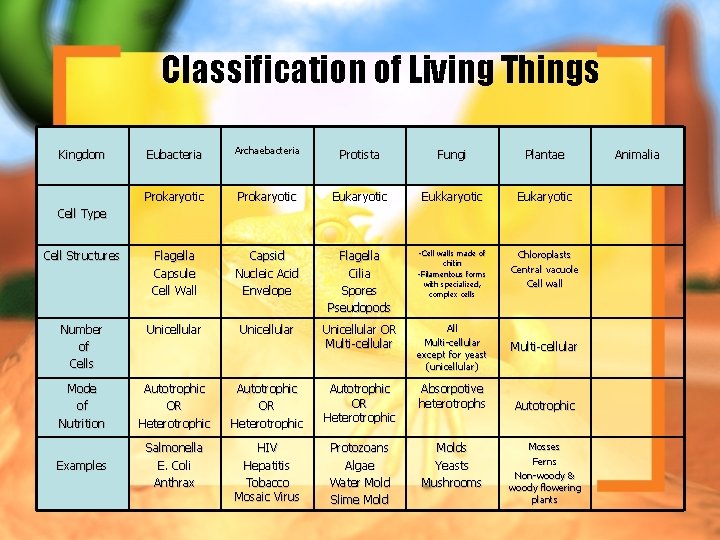
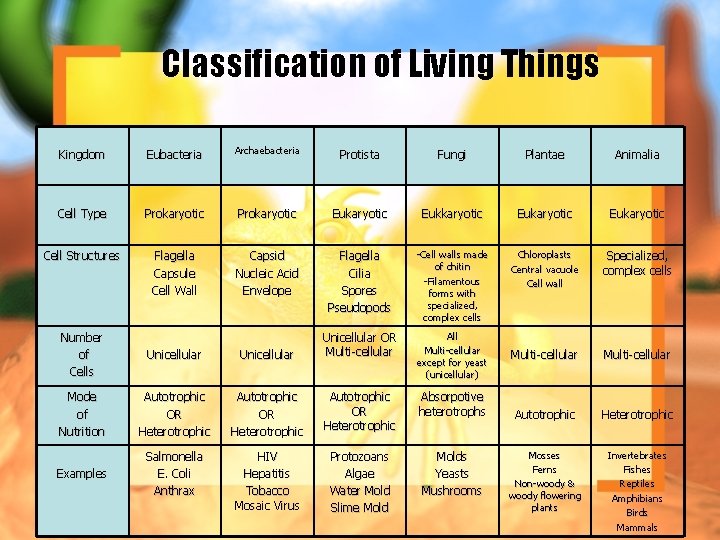
Domain Eukarya is Divided into Kingdoms • Protista (protozoans, algae…) • Fungi (mushrooms, yeasts …) • Plantae (multicellular plants) • Animalia (multicellular animals) 15
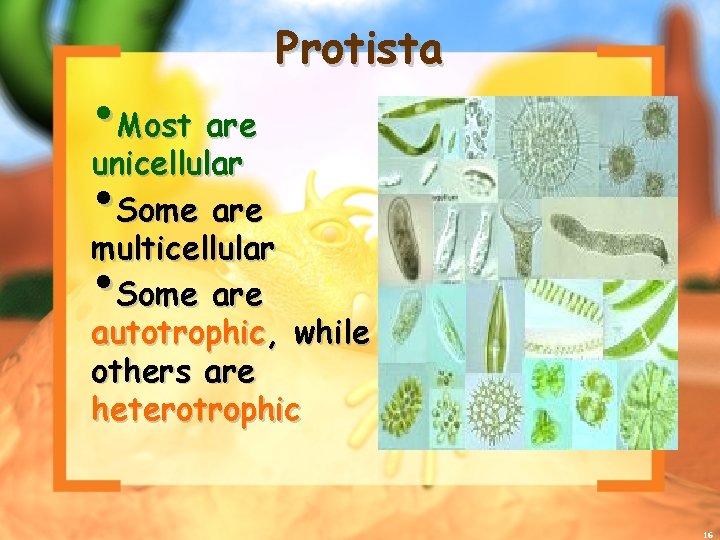
Protista • Most are unicellular • Some are multicellular • Some are autotrophic, while others are heterotrophic 16
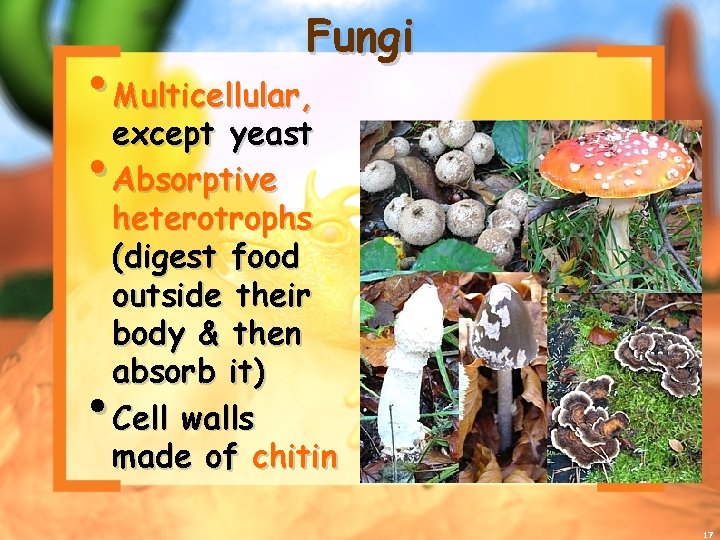
Fungi • Multicellular, except yeast • Absorptive heterotrophs (digest food outside their body & then absorb it) Cell walls made of chitin • 17
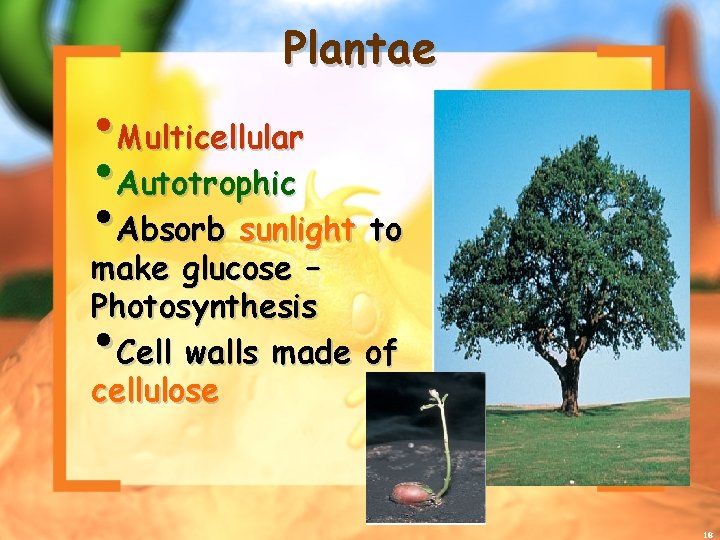
Plantae • Multicellular • Autotrophic • Absorb sunlight to make glucose – Photosynthesis Cell walls made of cellulose • 18
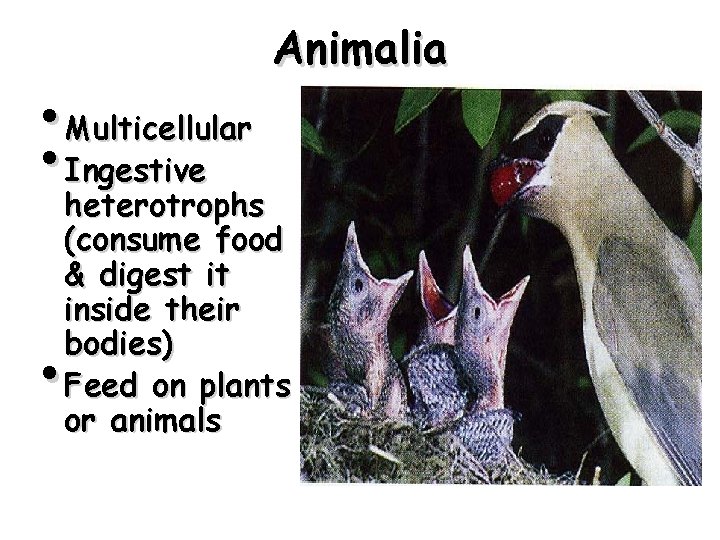
• Multicellular • Ingestive heterotrophs Animalia heterotrophs (consume food & digest it inside their bodies) Feed on plants or animals • 19
20
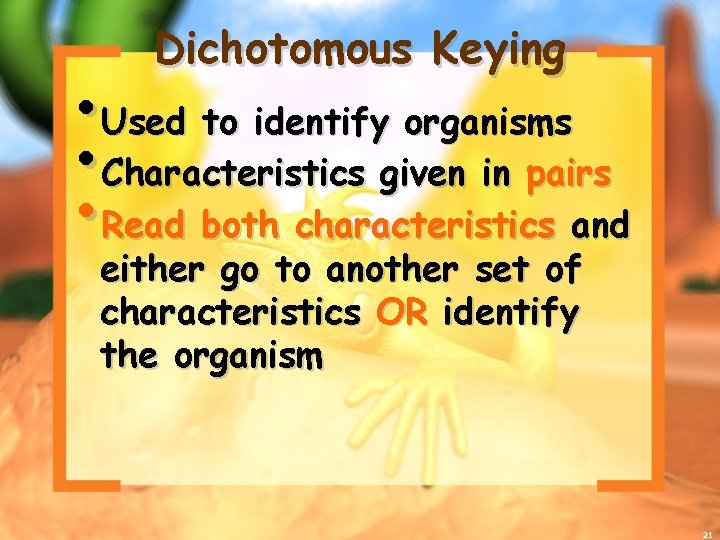
Dichotomous Keying • Used to identify organisms • Characteristics given in pairs • Read both characteristics and either go to another set of characteristics OR identify the organism 21
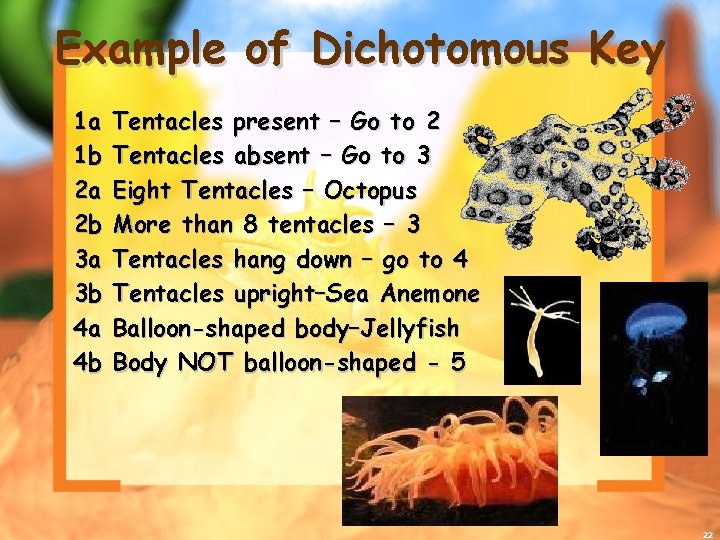
Example of Dichotomous Key 1 a 1 b 2 a 2 b 3 a 3 b 4 a 4 b Tentacles present – Go to 2 Tentacles absent – Go to 3 Eight Tentacles – Octopus More than 8 tentacles – 3 Tentacles hang down – go to 4 Tentacles upright–Sea Anemone Balloon-shaped body–Jellyfish Body NOT balloon-shaped - 5 22
Classification of Living Things
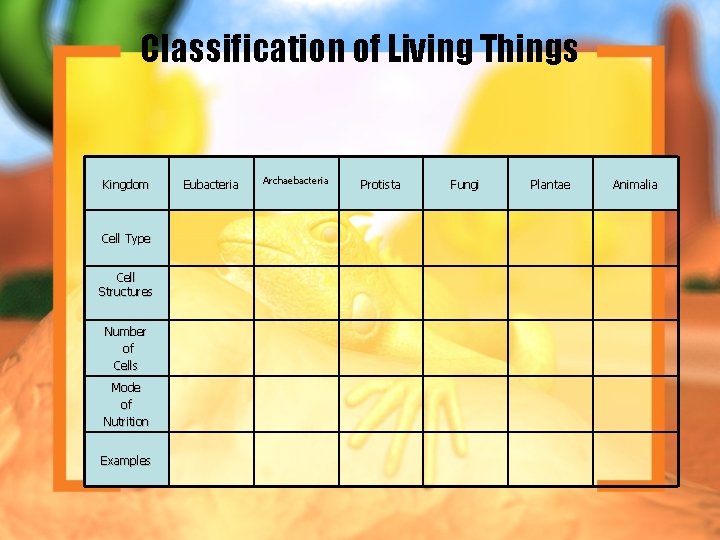
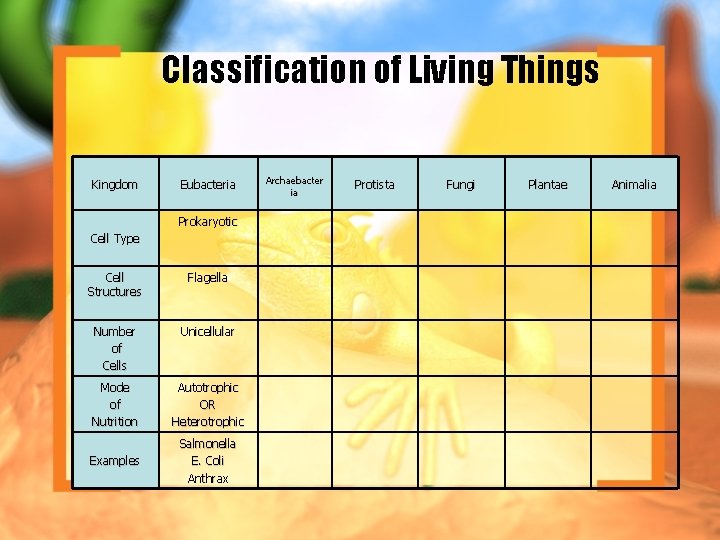
Classification of Living Things Kingdom Cell Type Cell Structures Number of Cells Mode of Nutrition Examples Eubacteria Archaebacteria Protista Fungi Plantae Animalia
Classification of Living Things Kingdom Eubacteria Prokaryotic Cell Type Cell Structures Flagella Number of Cells Unicellular Mode of Nutrition Autotrophic OR Heterotrophic Examples Salmonella E. Coli Anthrax Archaebacter ia Protista Fungi Plantae Animalia
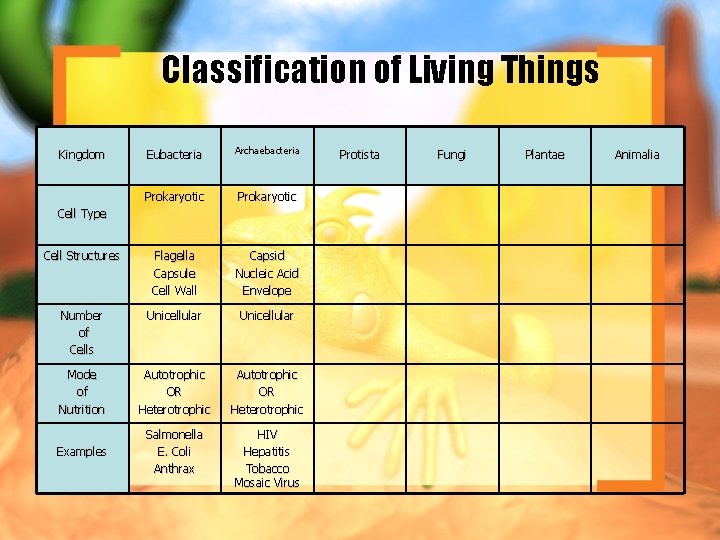
Classification of Living Things Eubacteria Archaebacteria Prokaryotic Cell Structures Flagella Capsule Cell Wall Capsid Nucleic Acid Envelope Number of Cells Unicellular Mode of Nutrition Autotrophic OR Heterotrophic Examples Salmonella E. Coli Anthrax HIV Hepatitis Tobacco Mosaic Virus Kingdom Cell Type Protista Fungi Plantae Animalia
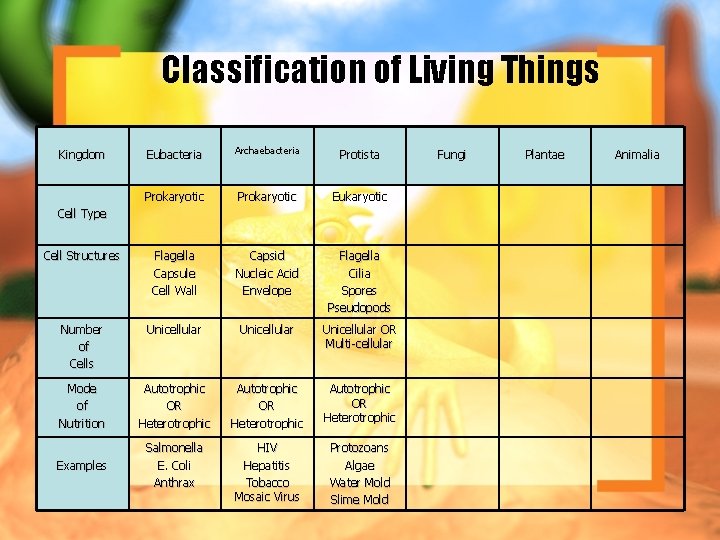
Classification of Living Things Eubacteria Archaebacteria Protista Prokaryotic Eukaryotic Cell Structures Flagella Capsule Cell Wall Capsid Nucleic Acid Envelope Flagella Cilia Spores Pseudopods Number of Cells Unicellular OR Multi-cellular Mode of Nutrition Autotrophic OR Heterotrophic Examples Salmonella E. Coli Anthrax HIV Hepatitis Tobacco Mosaic Virus Protozoans Algae Water Mold Slime Mold Kingdom Cell Type Fungi Plantae Animalia
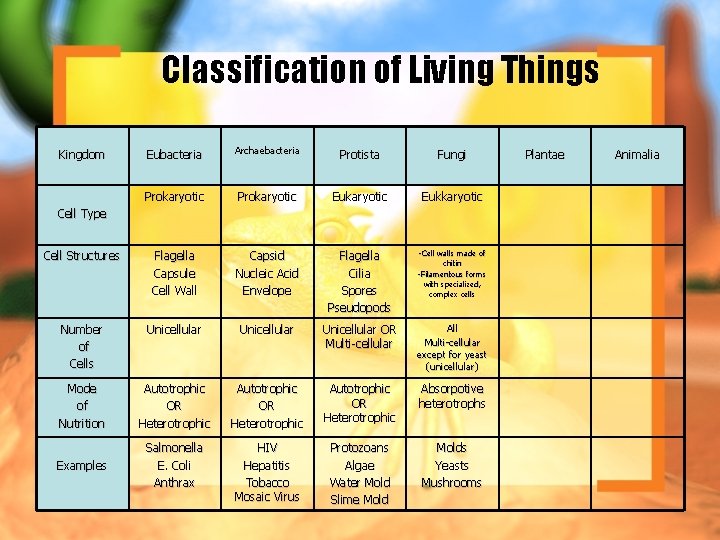
Classification of Living Things Eubacteria Archaebacteria Protista Fungi Prokaryotic Eukaryotic Eukkaryotic Cell Structures Flagella Capsule Cell Wall Capsid Nucleic Acid Envelope Flagella Cilia Spores Pseudopods -Cell walls made of chitin -Filamentous forms with specialized, complex cells Number of Cells Unicellular OR Multi-cellular All Multi-cellular except for yeast (unicellular) Mode of Nutrition Autotrophic OR Heterotrophic Absorpotive heterotrophs Examples Salmonella E. Coli Anthrax HIV Hepatitis Tobacco Mosaic Virus Protozoans Algae Water Mold Slime Molds Yeasts Mushrooms Kingdom Cell Type Plantae Animalia
Classification of Living Things Eubacteria Archaebacteria Protista Fungi Plantae Prokaryotic Eukaryotic Cell Structures Flagella Capsule Cell Wall Capsid Nucleic Acid Envelope Flagella Cilia Spores Pseudopods -Cell walls made of chitin -Filamentous forms with specialized, complex cells Chloroplasts Central vacuole Cell wall Number of Cells Unicellular OR Multi-cellular All Multi-cellular except for yeast (unicellular) Mode of Nutrition Autotrophic OR Heterotrophic Absorpotive heterotrophs Examples Salmonella E. Coli Anthrax HIV Hepatitis Tobacco Mosaic Virus Protozoans Algae Water Mold Slime Molds Yeasts Mushrooms Kingdom Cell Type Multi-cellular Autotrophic Mosses Ferns Non-woody & woody flowering plants Animalia
Classification of Living Things Kingdom Eubacteria Archaebacteria Protista Fungi Plantae Animalia Cell Type Prokaryotic Eukaryotic Eukaryotic Cell Structures Flagella Capsule Cell Wall Capsid Nucleic Acid Envelope Flagella Cilia Spores Pseudopods -Cell walls made of chitin -Filamentous forms with specialized, complex cells Chloroplasts Central vacuole Cell wall Specialized, complex cells All Multi-cellular except for yeast (unicellular) Multi-cellular Autotrophic Heterotrophic Mosses Ferns Non-woody & woody flowering plants Invertebrates Fishes Reptiles Amphibians Birds Mammals Number of Cells Unicellular OR Multi-cellular Mode of Nutrition Autotrophic OR Heterotrophic Absorpotive heterotrophs Examples Salmonella E. Coli Anthrax HIV Hepatitis Tobacco Mosaic Virus Protozoans Algae Water Mold Slime Molds Yeasts Mushrooms
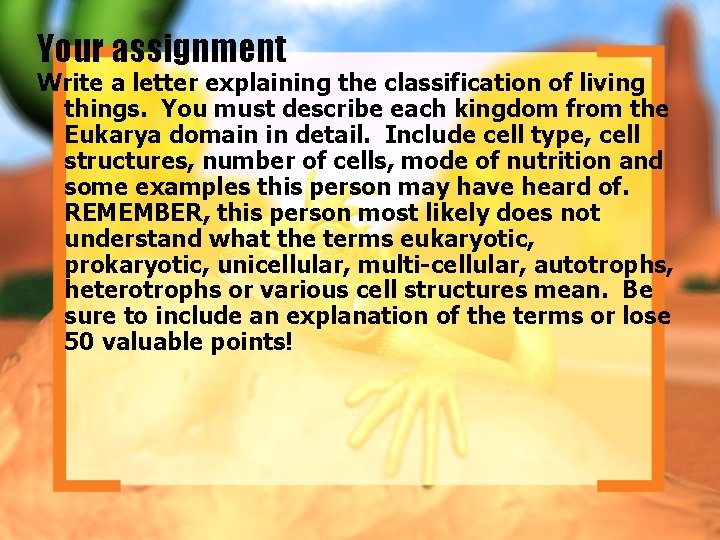
Your assignment Write a letter explaining the classification of living things. You must describe each kingdom from the Eukarya domain in detail. Include cell type, cell structures, number of cells, mode of nutrition and some examples this person may have heard of. REMEMBER, this person most likely does not understand what the terms eukaryotic, prokaryotic, unicellular, multi-cellular, autotrophs, heterotrophs or various cell structures mean. Be sure to include an explanation of the terms or lose 50 valuable points!