
Classification 1 Taxonomy The science of identifying classifying

- Slides: 17
Classification 1
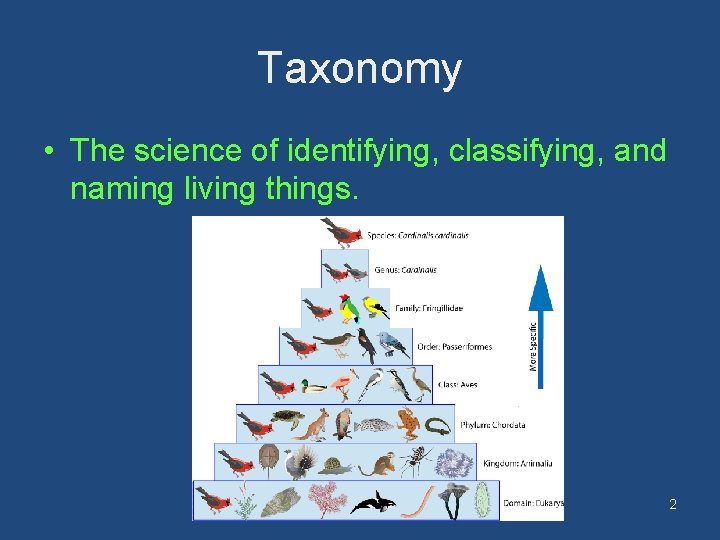
Taxonomy • The science of identifying, classifying, and naming living things. 2
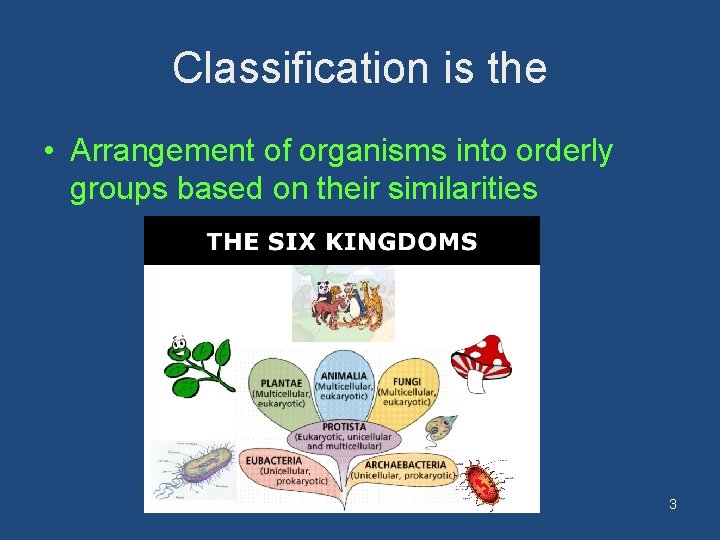
Classification is the • Arrangement of organisms into orderly groups based on their similarities 3
Classifying living things makes it easier for biologists to find the answers to many important questions: • How many known species are there? • What are the characteristics of each? • What are the relationships between these species? 4
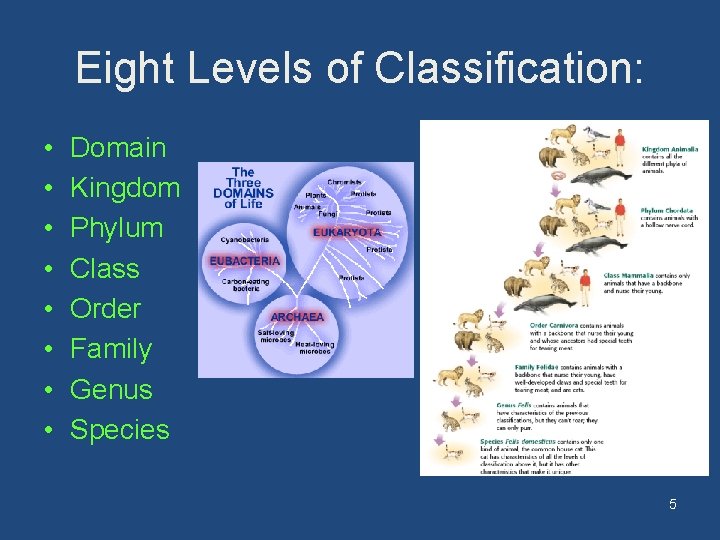
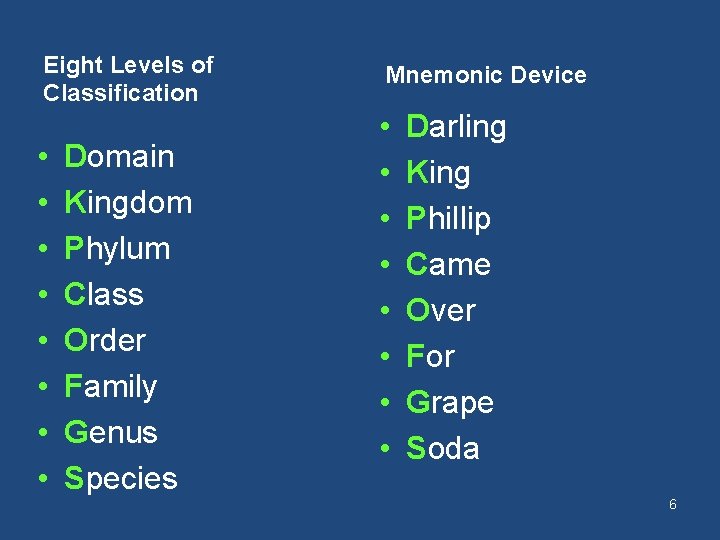
Eight Levels of Classification: • • Domain Kingdom Phylum Class Order Family Genus Species 5
Eight Levels of Classification • • Domain Kingdom Phylum Class Order Family Genus Species Mnemonic Device • • Darling King Phillip Came Over For Grape Soda 6
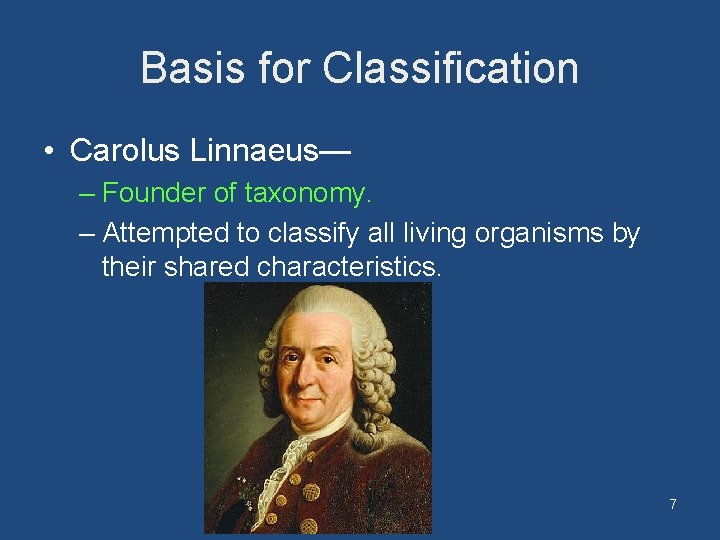
Basis for Classification • Carolus Linnaeus— – Founder of taxonomy. – Attempted to classify all living organisms by their shared characteristics. 7
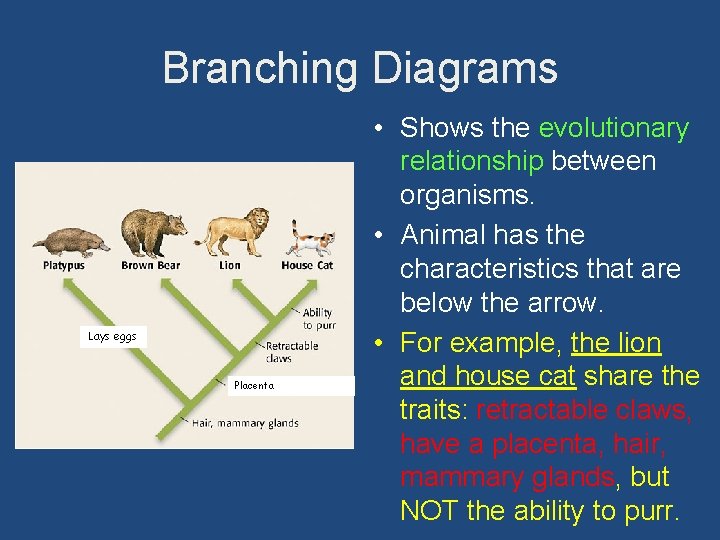
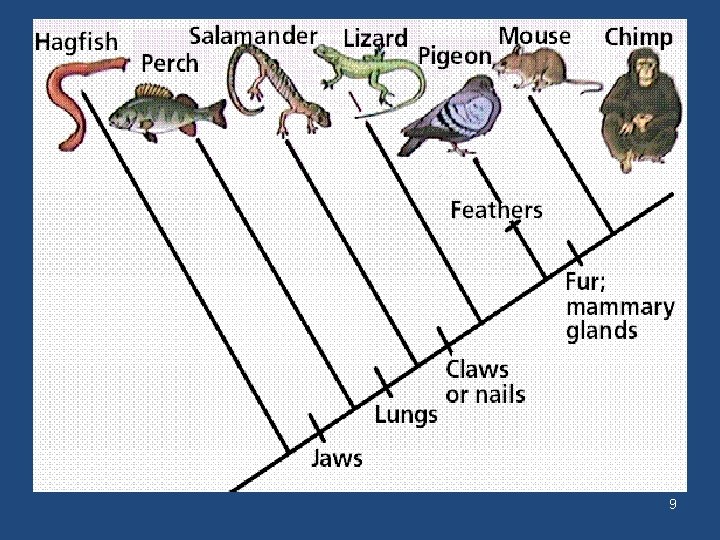
Branching Diagrams Lays eggs Placenta • Shows the evolutionary relationship between organisms. • Animal has the characteristics that are below the arrow. • For example, the lion and house cat share the traits: retractable claws, have a placenta, hair, mammary glands, but NOT the ability to purr.
9
Scientific Names • A scientific name is always the same for a specific organism no matter how many common names it might have. • Written in Latin or Greek • Scientific name is underlined or italicized • All known living things have a two-part scientific name 10
Two parts to the scientific name • Genus – First part of the name – The name always begins with a capital letter • Species – Second part of the name – The name always begins with a lowercase letter 11
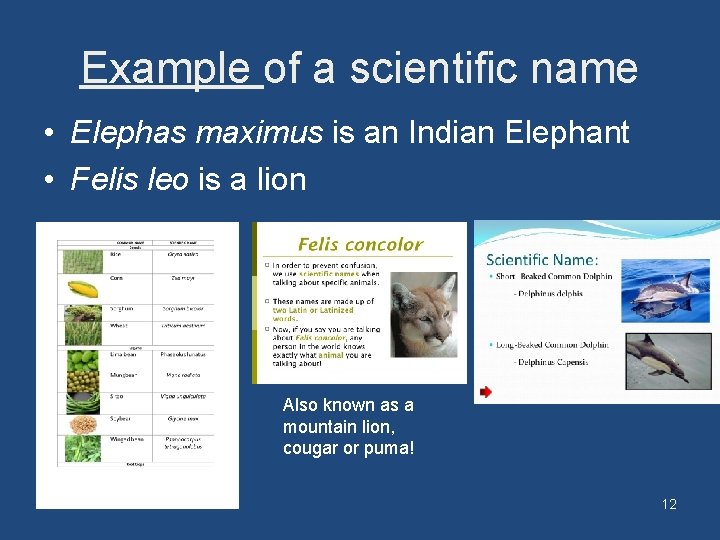
Example of a scientific name • Elephas maximus is an Indian Elephant • Felis leo is a lion Also known as a mountain lion, cougar or puma! 12
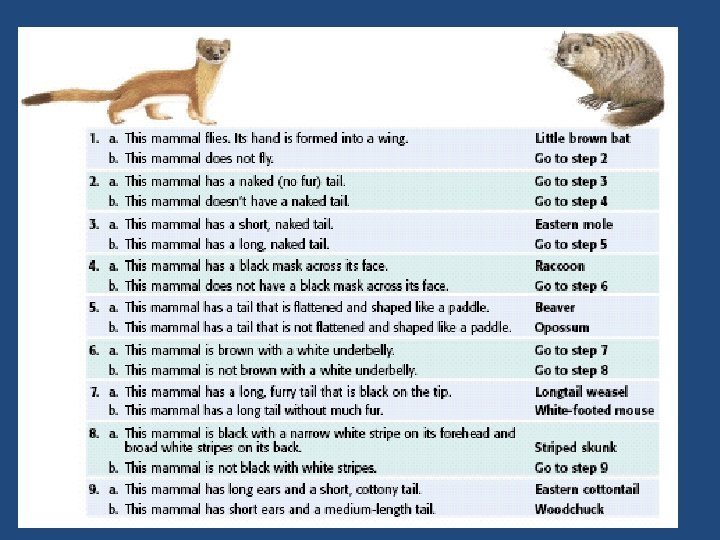
Dichotomous Keys • Aid in identifying unknown organisms • Consists of several pairs of descriptive statements • There are usually two alternative responses 13
14
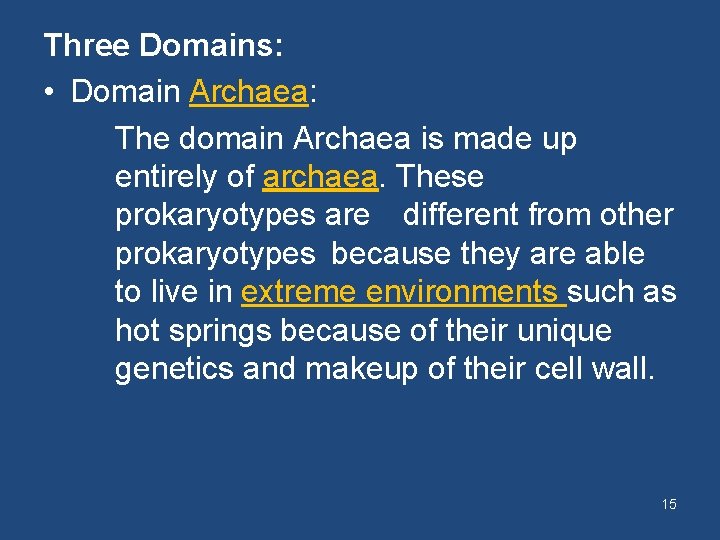
Three Domains: • Domain Archaea: The domain Archaea is made up entirely of archaea. These prokaryotypes are different from other prokaryotypes because they are able to live in extreme environments such as hot springs because of their unique genetics and makeup of their cell wall. 15
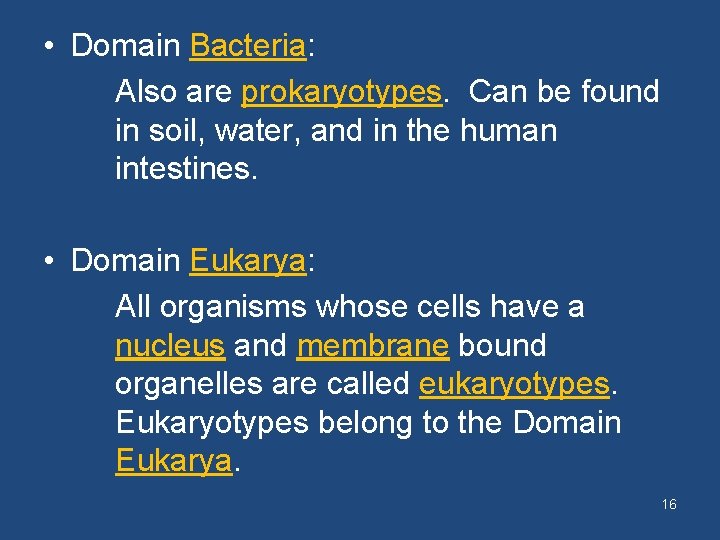
• Domain Bacteria: Also are prokaryotypes. Can be found in soil, water, and in the human intestines. • Domain Eukarya: All organisms whose cells have a nucleus and membrane bound organelles are called eukaryotypes. Eukaryotypes belong to the Domain Eukarya. 16
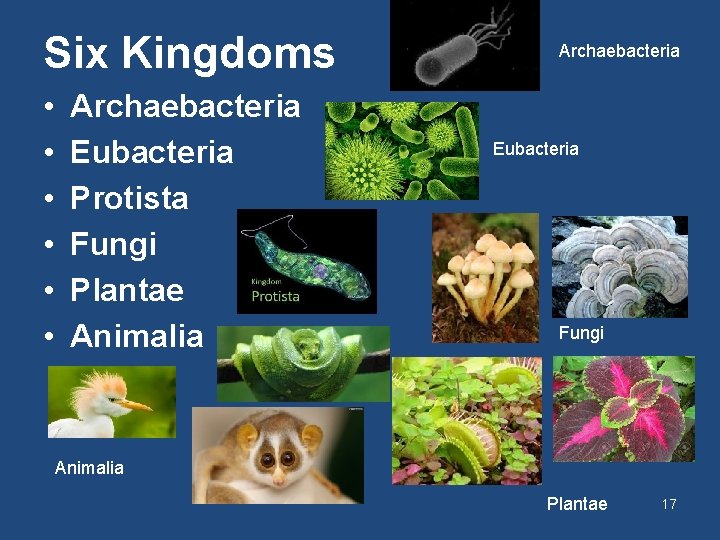
Six Kingdoms • • • Archaebacteria Eubacteria Protista Fungi Plantae Animalia Archaebacteria Eubacteria Fungi Animalia Plantae 17