
Classical Long Run Aggregate Supply Lower 6 th

- Slides: 6
Classical Long Run Aggregate Supply Lower 6 th Macro Aggregate Supply
Intro to Classical LRAS Classical Long Run Aggregate Supply Mr O’Grady
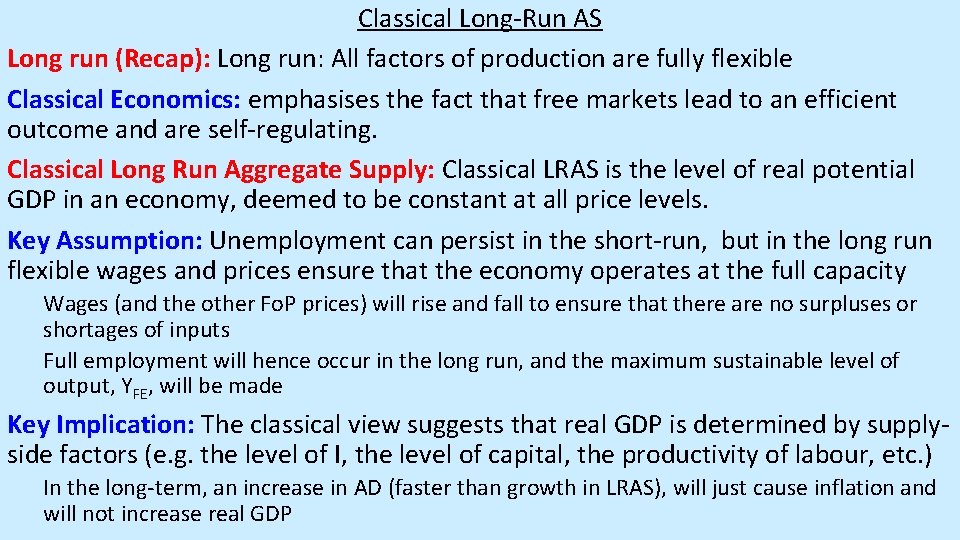
Classical Long-Run AS Long run (Recap): Long run: All factors of production are fully flexible Classical Economics: emphasises the fact that free markets lead to an efficient outcome and are self-regulating. Classical Long Run Aggregate Supply: Classical LRAS is the level of real potential GDP in an economy, deemed to be constant at all price levels. Key Assumption: Unemployment can persist in the short-run, but in the long run flexible wages and prices ensure that the economy operates at the full capacity Wages (and the other Fo. P prices) will rise and fall to ensure that there are no surpluses or shortages of inputs Full employment will hence occur in the long run, and the maximum sustainable level of output, YFE, will be made Key Implication: The classical view suggests that real GDP is determined by supplyside factors (e. g. the level of I, the level of capital, the productivity of labour, etc. ) In the long-term, an increase in AD (faster than growth in LRAS), will just cause inflation and will not increase real GDP
The Classical LRAS Curve Classical Long Run Aggregate Supply Mr O’Grady
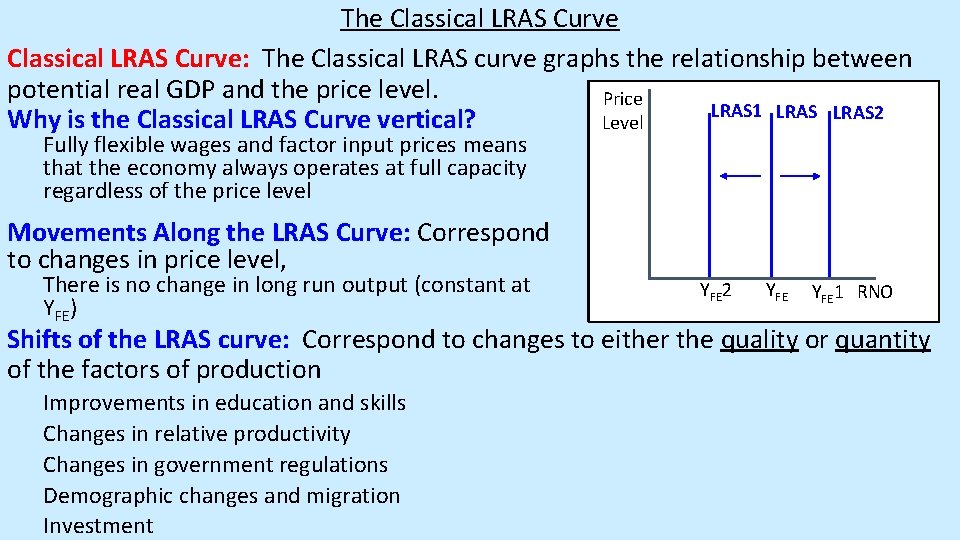
The Classical LRAS Curve: The Classical LRAS curve graphs the relationship between potential real GDP and the price level. Price LRAS 1 LRAS 2 Why is the Classical LRAS Curve vertical? Level Fully flexible wages and factor input prices means that the economy always operates at full capacity regardless of the price level A B Movements Along the LRAS Curve: Correspond to changes in price level, There is no change in long run output (constant at YFE) YFE 2 YFE 1 RNO Shifts of the LRAS curve: Correspond to changes to either the quality or quantity of the factors of production Improvements in education and skills Changes in relative productivity Changes in government regulations Demographic changes and migration Investment
Where next? Don’t forget to SUBSCRIBE! Visit our website: www. smootheconomics. co. uk Find more resources, extension materials, details of courses, competitions, and more! Follow our socials: Instagram: @smootheconomics Twitter: @Smooth. Economics Facebook: @Smooth. Economics