
Classical India 600 BCE 600 CE Indias geography
Classical India 600 BCE- 600 CE
India’s geography Subcontinent that includes modern day Pakistan, Bangladesh, Nepal, and Bhuten ¢ To the south is the Arabian Sea and the Bay of Bengal ¢ North are the Himalaya Mountains ¢ About 1/4 th the size of Europe ¢
India’s Geography B/c of its geography, the only time the whole subcontinent was united politically was under the British in the 1800 -1900 s. ¢ Asoka Maurya came close but didn’t get the far south under his control ¢
Things to consider Indian Empires didn’t last for more than a couple hundred years ¢ India has maintained a consistent cultural unity ¢
Aryans Named for their use of the language Sanskrit ¢ Migrated into the Ganges region around 1000 BCE ¢ Provided written works, but aren’t a “history” like was Rome and China would write ¢
Vedas Sacred poems written in Sanskrit ¢ Religious texts of early Aryan society ¢ Recorded some history ¢ Rigveda ¢ written around 1500 -1200 BCE l 1028 hymns l More religious than historical l Did account for some conquering the Aryans did as they moved into the region l

Vedas ¢ Brahmanas l ¢ Upanishads l ¢ give instructions for rituals and sacrifices mystical speculations Puranas legends and folktales l written between 500 BCE- 500 CE l Contain genealogical lists of rulers l Mixes facts with fables l
Vedas ¢ Mahbharta and Ramayana Accounts for events from 1000 to 700 BCE l Mahbharta is the longest poem in the world l Tells of a civil war between two families l Contains the Bhagavad-Gita l • Gives advice to a warrior during battle
Aryan Politics ¢ ¢ Hundreds of chiefdoms that would fight with each other Leader titled Raja who had a council of elders Leadership based on heredity and family lines Around 750 BCE population increases allowed for political groupings of land to develop l janapadas l Magadha was the most powerful

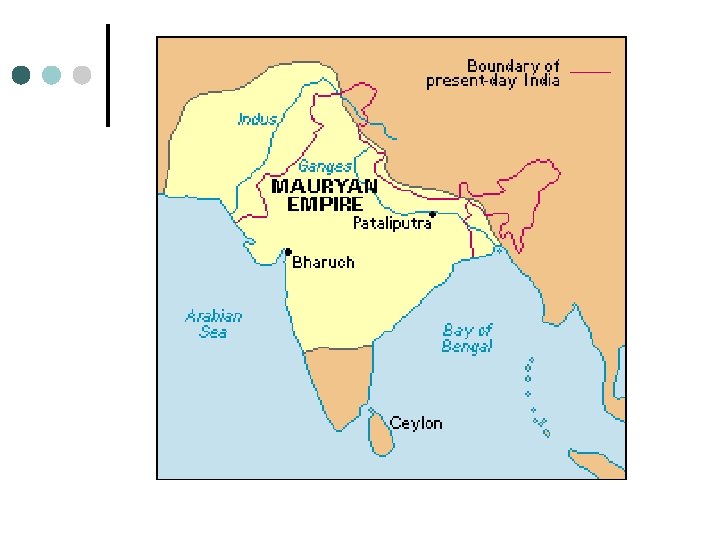
Chandragupta Maurya R. 321 -297 BCE ¢ Leader of Magadha ¢ Took troops north after Alexander left in 326 BCE ¢ Bindusara (r. 297 -272 BCE) would expand south ¢ Asoka (r. 265 -238 BCE) would rule from Afghanistan to NW Bay of Bengal (100 million people) ¢
Ashoka Maurya 268 - 232 BCE ¢ Brought rest of India under his control ¢ Used centralized bureaucracy of his grandfather ¢ After battle with Kalinga in the east, he converted to Buddhism ¢ Created capital city Pataliputra ¢ Centralized treasury ¢ Inscribed edicts on pillars ¢
Government under Mauryans Family lineages are really important ¢ Had well paid ministers and bureaucrats ¢ Had a book Arthasastra ¢ manual on politics and economics l Concept of danda niti (policy of the big stick) l All neighbors are potential enemies l Weak states should be conquered l Encouraged the use of spies l
Government under Mauryans ¢ Goal was to provide citizens with the opportunity to achieve the four major goals in life: Artha (wealth) l Kama (sensual pleasure) l Dharma (the fulfillment of religious and social duties) l Moksha (the release from earthly existance) l
Society Men had power over women ¢ Men must protect women ¢ Women must run the household according to the wishes of the men ¢ Women were the be readily available to men ¢ Women very rarely had property rights ¢
Caste System ¢ ¢ ¢ ¢ Organized society by hereditary distinctions & occupations Brahmins: priests Kshatriyas: Warriors and aristocrats Vaishyas: Artisans and merchants Shudras: peasants and serfs Untouchables These categories were further split into jati
Economics Expansion of agriculture ¢ Massive irrigation systems ¢ Trade was encouraged through the building of roads ¢ State regulated guilds (associations of businessmen) ¢
End of Mauyran Dynasty After Asokas’ death, economic decline led to the end of Mauyran Dynasty ¢ Last emperor was assassinated in 184 BCE ¢ Soldiers were being paid well and weren’t defending the government ¢
Between Maurayn and Gupta Trade flourished ¢ Beginning of the Silk Road ¢ Coins reflect Greek influence ¢ Lots of invasions from the east ¢
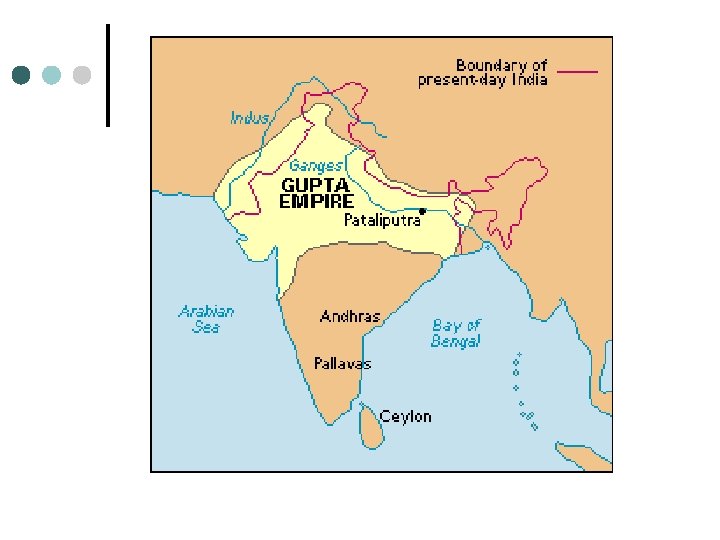
Gupta Empire ¢ ¢ ¢ Chandra Gupta I (r 320 -330) centralized India again by forming alliances with aristocratic families Somudra (330 -380) expanded to the south Chandra Gupta II conquered western territories and made them pay tribute & created marriage alliances Did not centralize governments Allowed local rulers and alliance systems to govern
Trade cities developed along the Silk Road and the coast ¢ Monsoon winds allowed for trade with Africa ¢
Golden Age Sanskrit became the official language ¢ Old Vedas were rewritten and restored ¢ Scholars studied the Vedas and Arthasastra ¢ Resurgence of Hinduism ¢ Caste system was elaborated and enforced more strictly ¢
Fall of the Gupta Emperors started to lose power ¢ New conquerors showed up in the 400 s. ¢ Hunas from northern China ¢ Caused loss of trade ¢ Decline in culture (specifically attacked Buddhist monasteries) ¢ Allowed new nomad groups into the region ¢
- Slides: 24