
Classical Conditioning Pavlov Watson Definition Method of learning
- Slides: 31
Classical Conditioning Pavlov Watson
Definition Method of learning in which associations are made between a natural stimulus and a learned, neutral stimulus
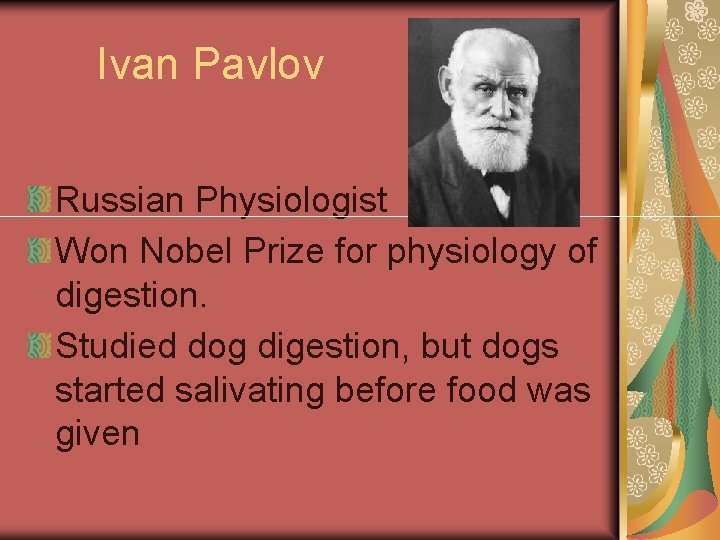
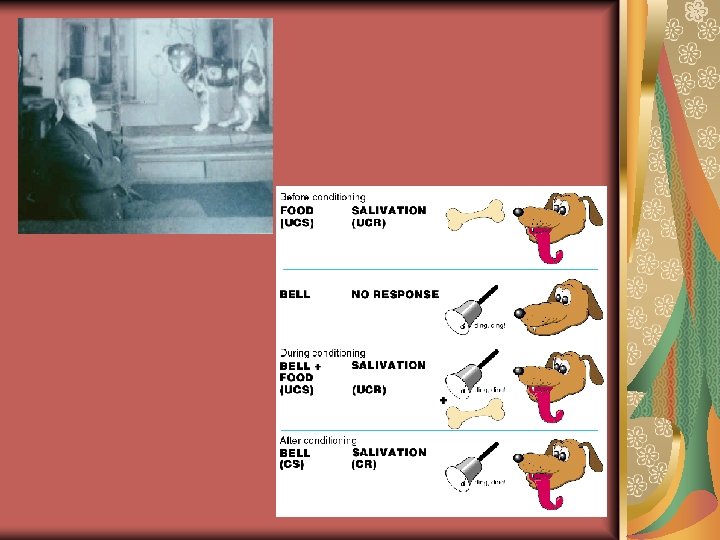
Ivan Pavlov Russian Physiologist Won Nobel Prize for physiology of digestion. Studied dog digestion, but dogs started salivating before food was given
Ivan Pavlov The mere sight of feeder caused salivation even without food present Thus, classical conditioning was born For every stimulus there is a response
Stimulus anything that elicits a response
Response a reaction to a stimulus
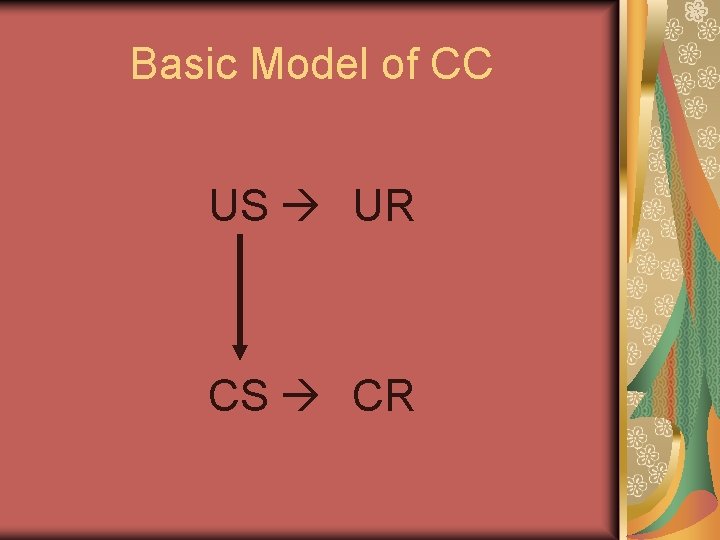
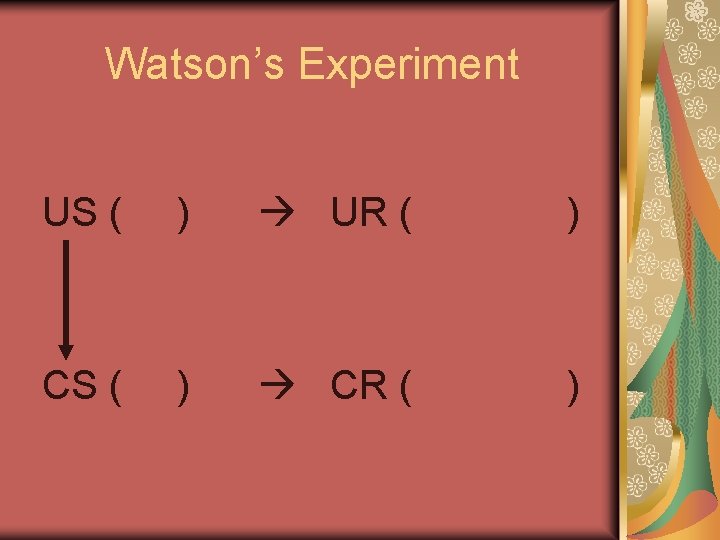
Basic Model of CC US UR CS CR
US (unconditioned stimulus) something that automatically creates a response
UR (unconditioned response) Automatic response to natural stimulus
CS (conditioned stimulus) something that was neutral that was paired with natural stimulus
CR (conditioned response) a response to a stimulus that was brought about by learning (learned response)
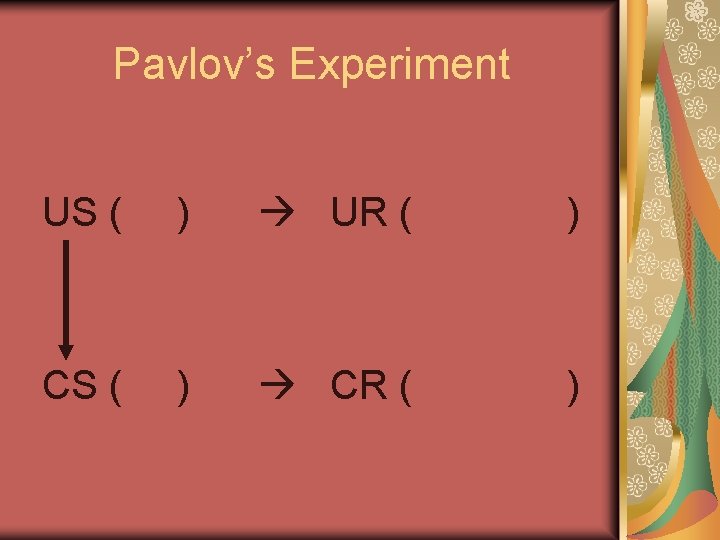
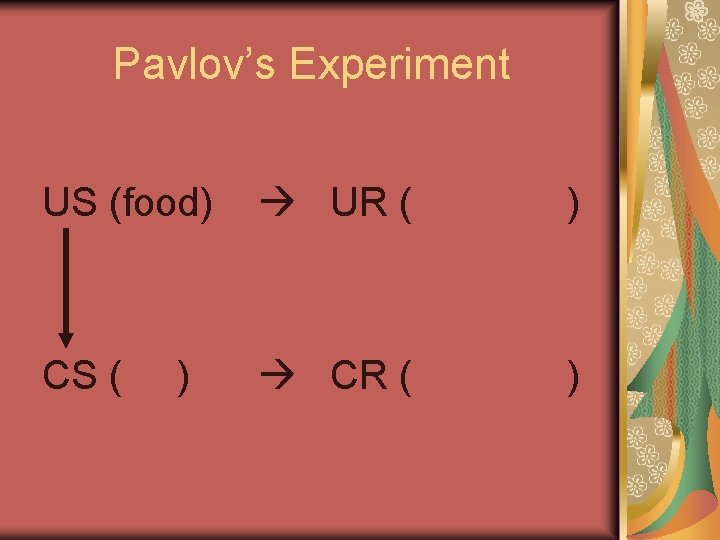
Pavlov’s Experiment US ( ) UR ( ) CS ( ) CR ( )
Pavlov’s Experiment US (food) UR ( ) CS ( CR ( ) )
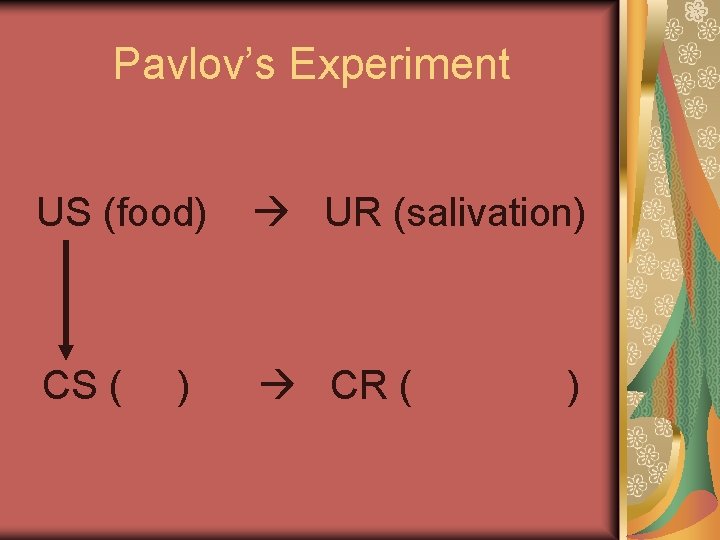
Pavlov’s Experiment US (food) UR (salivation) CS ( CR ( ) )
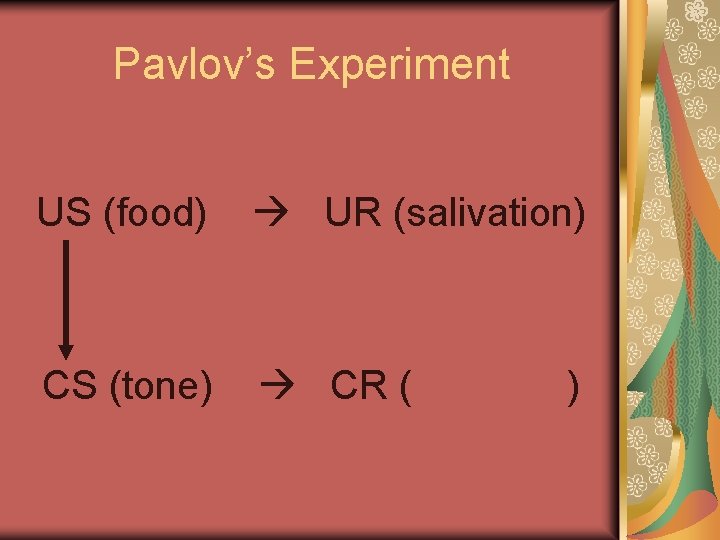
Pavlov’s Experiment US (food) UR (salivation) CS (tone) CR ( )
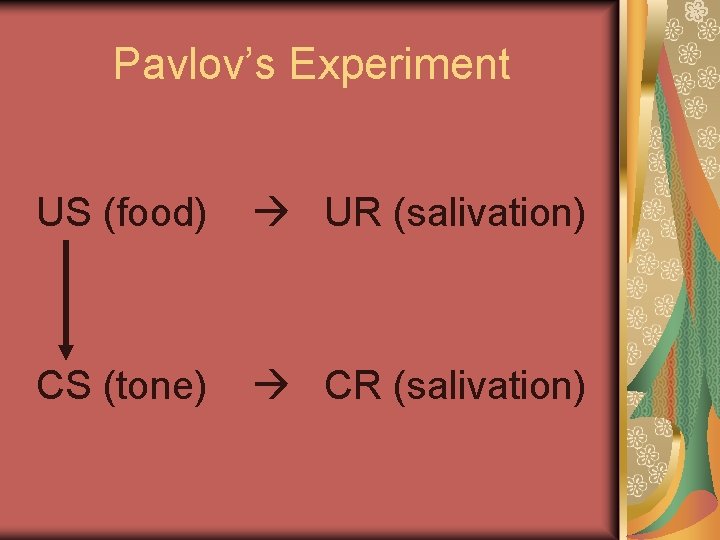
Pavlov’s Experiment US (food) UR (salivation) CS (tone) CR (salivation)
Pavlov proved our behavior can be conditioned, but can our emotions? John Watson tests the question…can we learn fear?
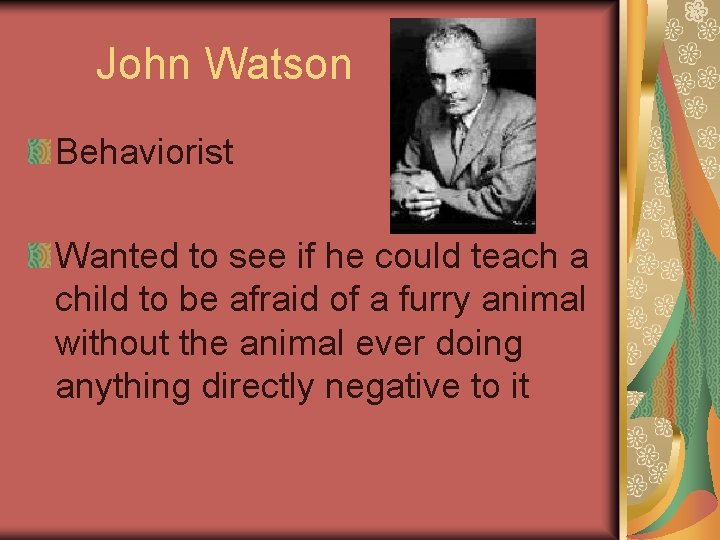
John Watson Behaviorist Wanted to see if he could teach a child to be afraid of a furry animal without the animal ever doing anything directly negative to it
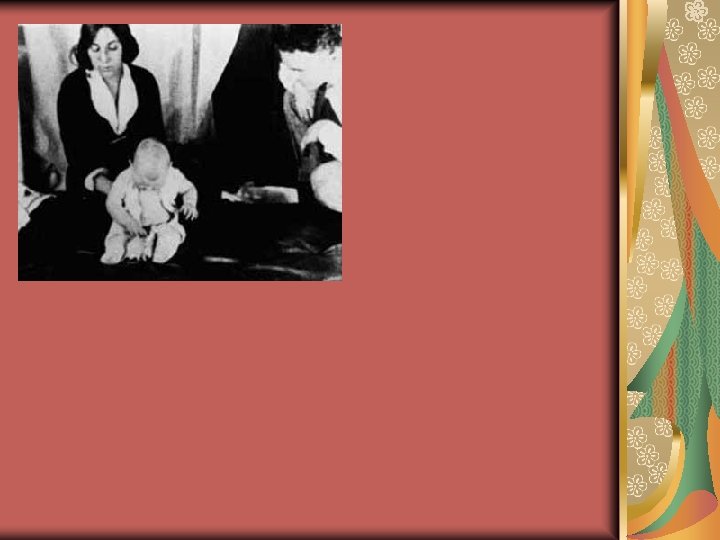
John Watson’s Experiment Little Albert was a healthy 11 month old baby who was used in Watson's experiment. Little Albert was put in a room with a furry rat. Albert played with the rat with no fear.
Watson’s Experiment Watson snuck up behind Albert and banged a steel bar with a hammer creating a very loud noise. Albert started to cry. This went on a couple of times. Eventually, when Albert saw the rat he began to cry.
Watson’s Experiment Watson began to become curious about other white objects. So, he started studying the effects of generalization spreading a response from one stimulus to another that is similar.
Watson’s Experiment Watson brought in: a white rabbit fur coat cotton a Santa Claus mask All of which created some response.
So, what did Watson prove? a person can be conditioned emotionally to neutral objects a conditioned response can be generalized to other objects with similar characteristics
What happened to Little Albert? Unknown He was adopted before conditioning could be reversed
Watson’s Experiment US ( ) UR ( ) CS ( ) CR ( )
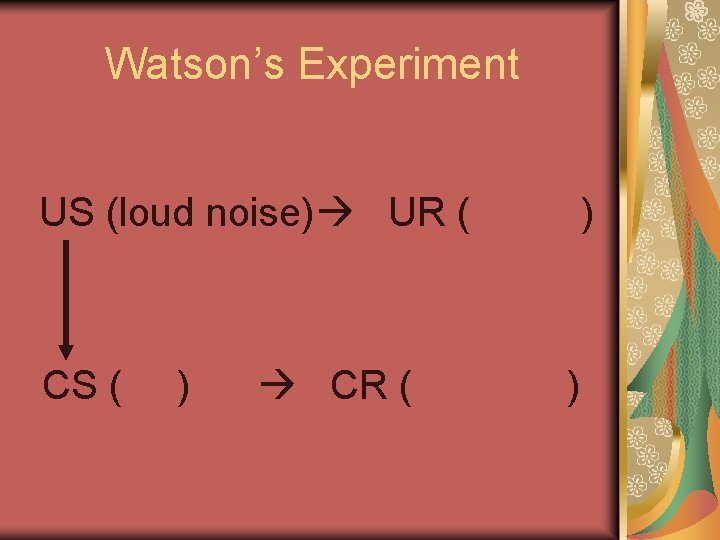
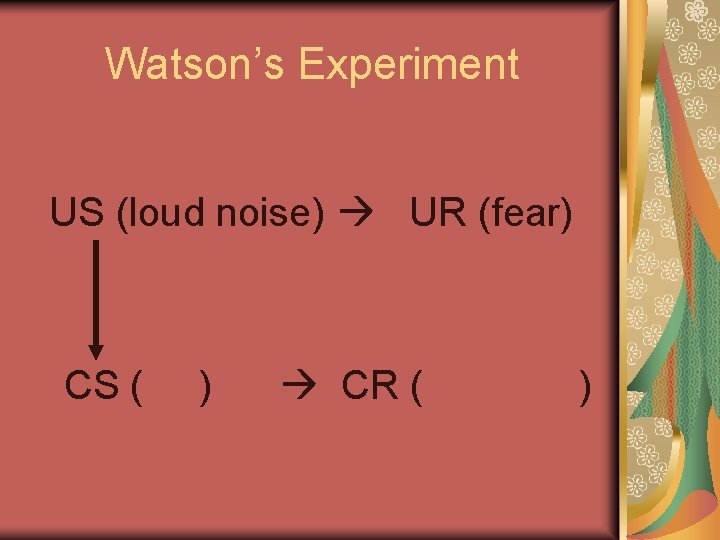
Watson’s Experiment US (loud noise) UR ( CS ( ) CR ( ) )
Watson’s Experiment US (loud noise) UR (fear) CS ( ) CR ( )
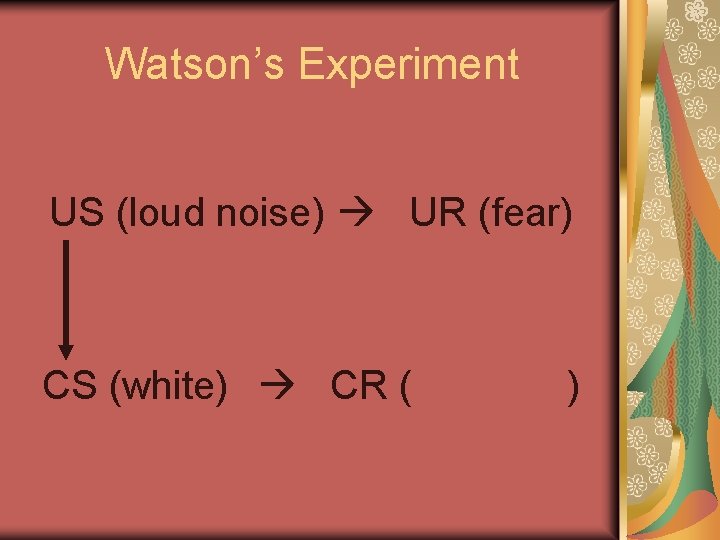
Watson’s Experiment US (loud noise) UR (fear) CS (white) CR ( )
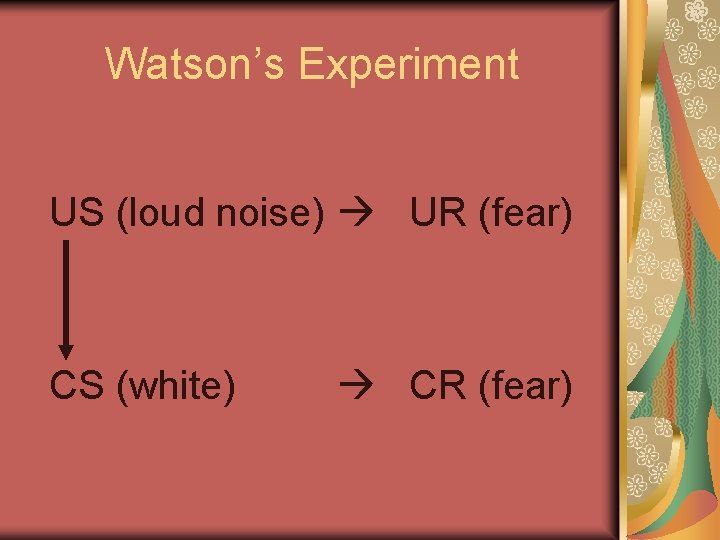
Watson’s Experiment US (loud noise) UR (fear) CS (white) CR (fear)