
Classical Astronomy the positions and motions of objects
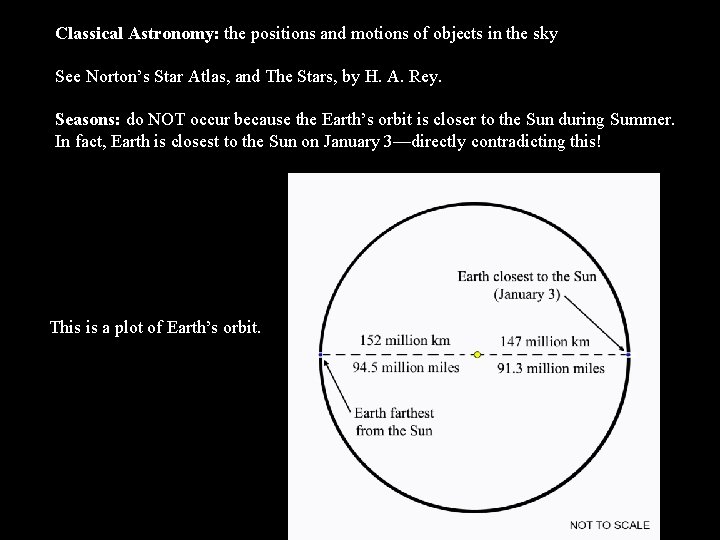
Classical Astronomy: the positions and motions of objects in the sky See Norton’s Star Atlas, and The Stars, by H. A. Rey. Seasons: do NOT occur because the Earth’s orbit is closer to the Sun during Summer. In fact, Earth is closest to the Sun on January 3—directly contradicting this! This is a plot of Earth’s orbit.
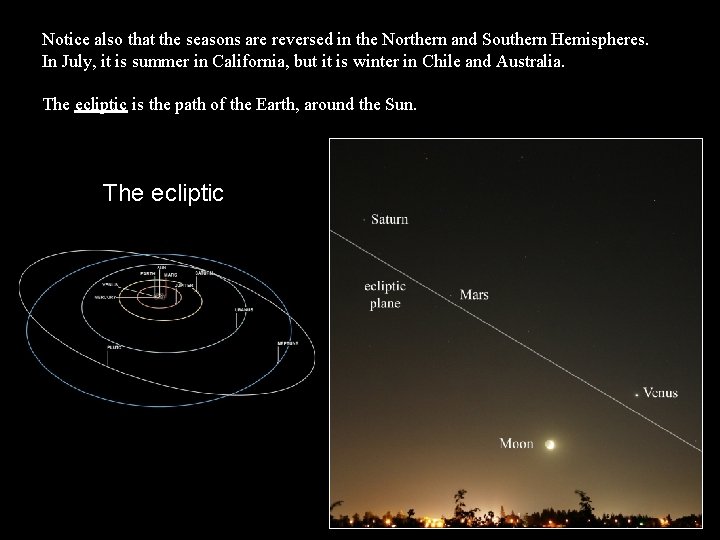
Notice also that the seasons are reversed in the Northern and Southern Hemispheres. In July, it is summer in California, but it is winter in Chile and Australia. The ecliptic is the path of the Earth, around the Sun. The ecliptic
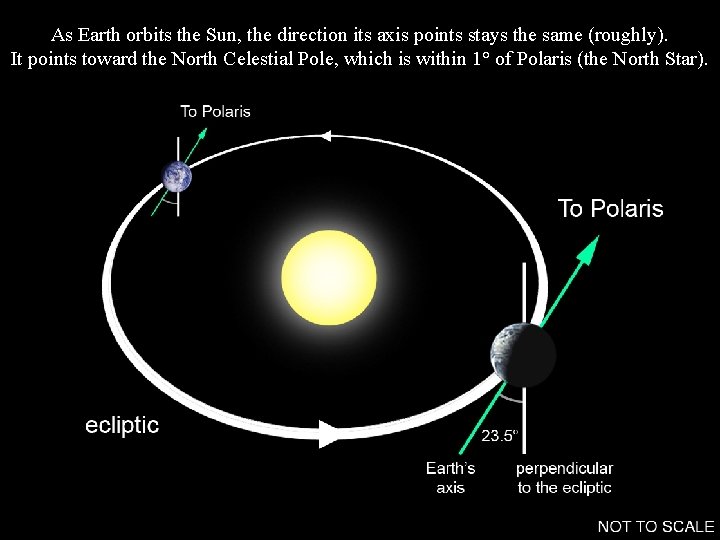
As Earth orbits the Sun, the direction its axis points stays the same (roughly). It points toward the North Celestial Pole, which is within 1° of Polaris (the North Star).
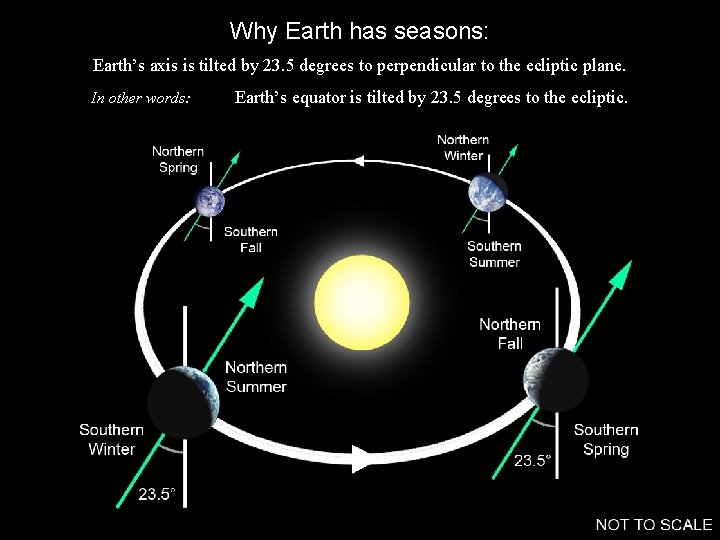
Why Earth has seasons: Earth’s axis is tilted by 23. 5 degrees to perpendicular to the ecliptic plane. In other words: Earth’s equator is tilted by 23. 5 degrees to the ecliptic.
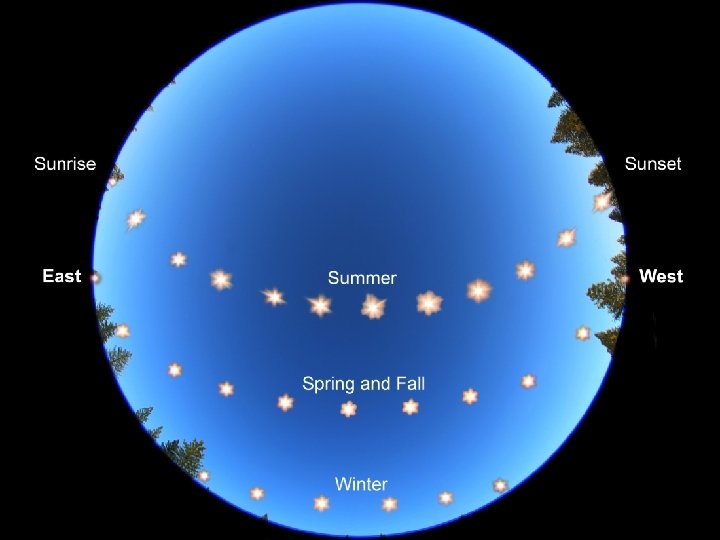
The seasons happen because the Earth’s equator is tilted by 23 degrees to the ecliptic. Because of this: In summer: the Sun rises north of East, and sets north of West. It passes high overhead (but not overhead, unless you’re in the tropics), and is above the horizon for a long time, so the days are long. In winter: the Sun rises south of East, and sets south of West. It doesn’t pass very high in the sky, and is above the horizon for a short time, so the days are short. Stonehenge and other ancient monuments used this to tell the time of year. (All of this is reversed in the Southern Hemisphere, of course. )
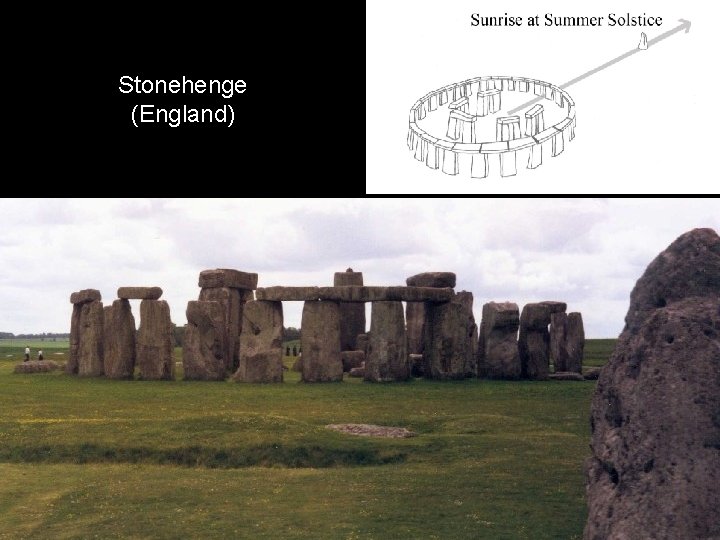
Stonehenge (England)
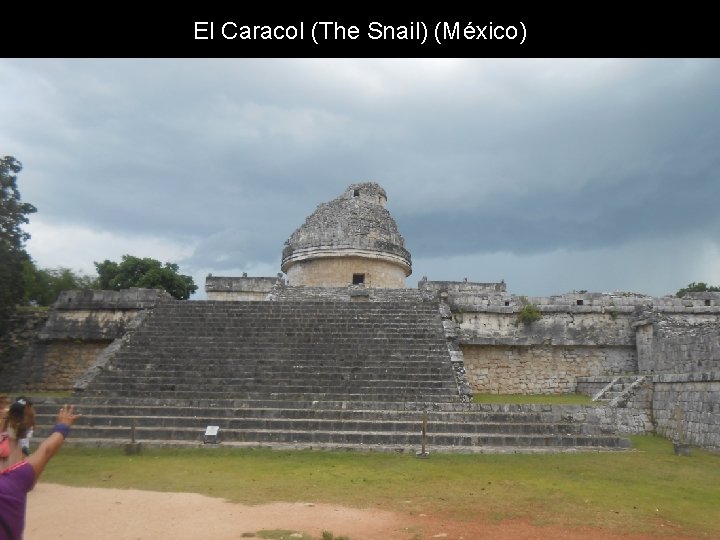
El Caracol (The Snail) (México)

Solar energy for home heating and cooling
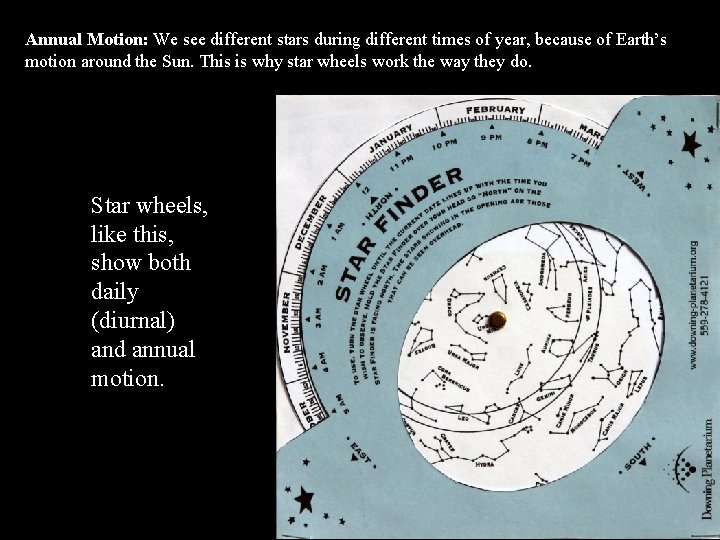
Annual Motion: We see different stars during different times of year, because of Earth’s motion around the Sun. This is why star wheels work the way they do. Star wheels, like this, show both daily (diurnal) and annual motion.
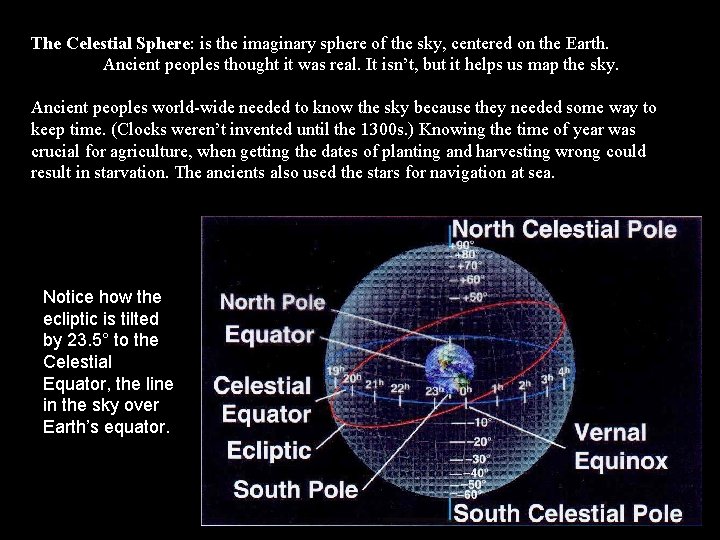
The Celestial Sphere: is the imaginary sphere of the sky, centered on the Earth. Ancient peoples thought it was real. It isn’t, but it helps us map the sky. Ancient peoples world-wide needed to know the sky because they needed some way to keep time. (Clocks weren’t invented until the 1300 s. ) Knowing the time of year was crucial for agriculture, when getting the dates of planting and harvesting wrong could result in starvation. The ancients also used the stars for navigation at sea. Notice how the ecliptic is tilted by 23. 5° to the Celestial Equator, the line in the sky over Earth’s equator.
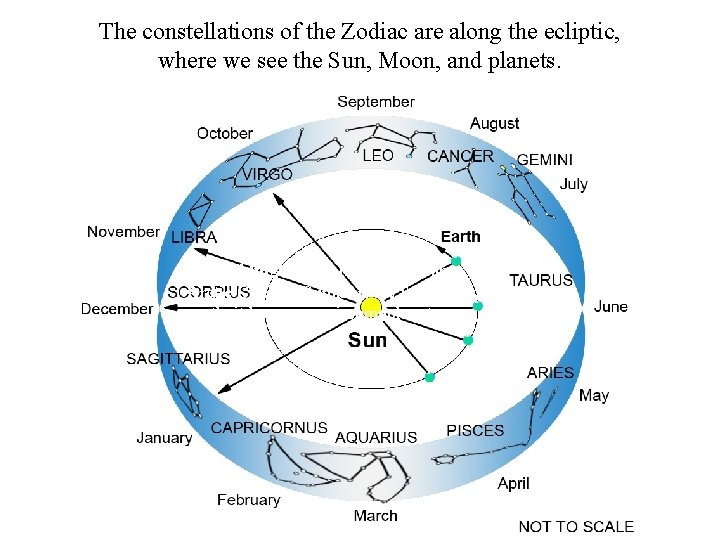
The constellations of the Zodiac are along the ecliptic, where we see the Sun, Moon, and planets. The Midnight Sun: If you travel above the Arctic Circle in Summer, the Sun is so far north, it becomes a circumpolar star.
The Ecliptic: is the line in Earth’s sky where the Sun appears to move, through the year. What it really is: the path of Earth’s orbit around the Sun. The other planets orbit the Sun near the ecliptic plane, too. The Constellations of the Zodiac: are the twelve constellations through which the ecliptic passed, during the time of the ancient Greeks, who made up these constellations. The Sun, Moon, and planets are never far from here. The Vernal Equinox is when the Sun crosses the Celestial Equator, going from South to North. It is celebrated as the first day of Spring, usually on March 21. It also defines 0 hours right ascension. The Autumnal Equinox is when the Sun crosses the Celestial Equator, going North to South. It’s celebrated as the first day of Autumn, usually on September 21. The Summer Solstice is when the Sun is farthest north on the ecliptic; The Winter Solstice is when the Sun is farthest south on the ecliptic.
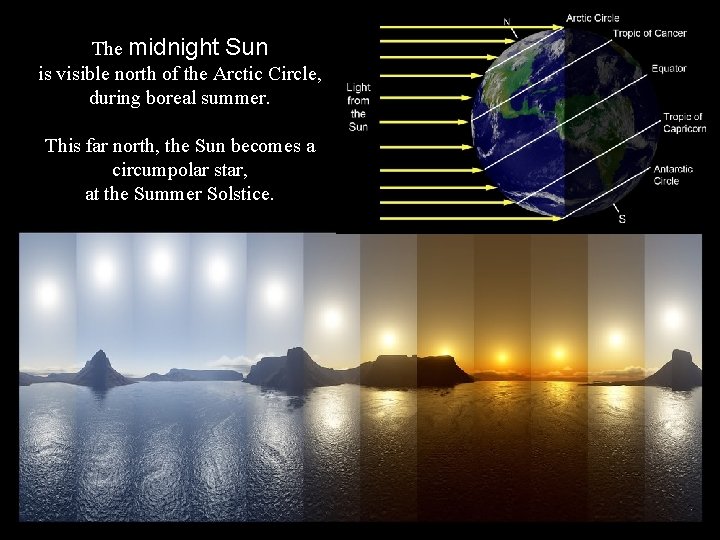
The midnight Sun is visible north of the Arctic Circle, during boreal summer. This far north, the Sun becomes a circumpolar star, at the Summer Solstice.
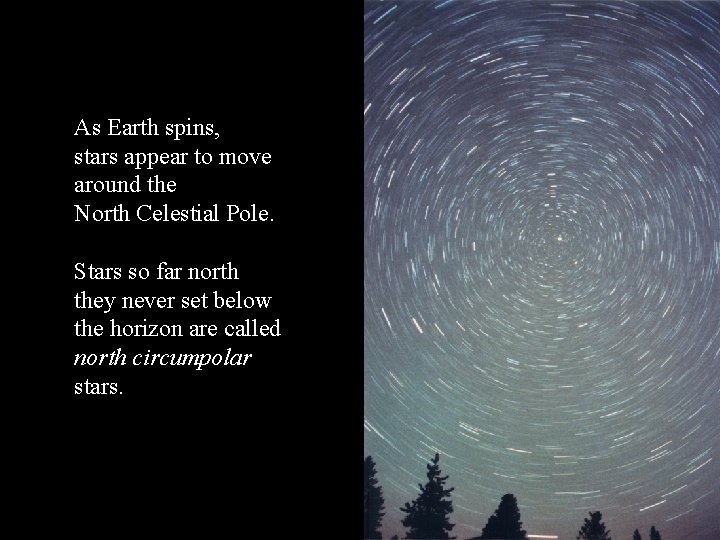
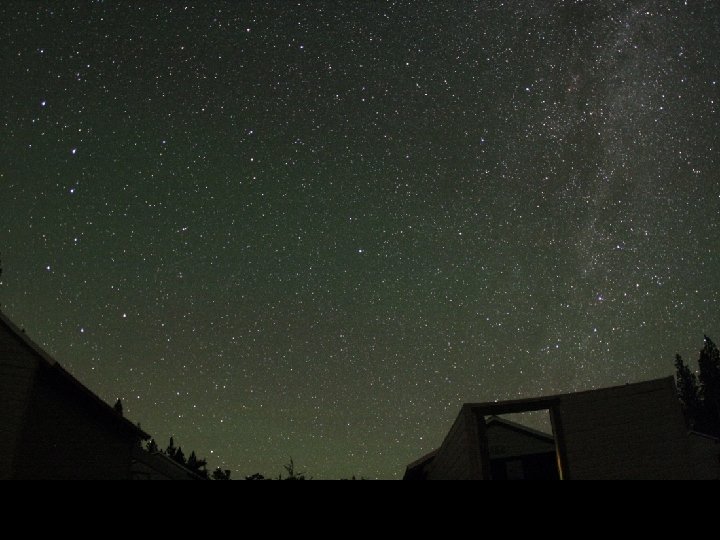
As Earth spins, stars appear to move around the North Celestial Pole. Stars so far north they never set below the horizon are called north circumpolar stars.
Circumpolar Stars: are so far north, they never set below the horizon, as Earth spins. Fresno is at latitude 37 degrees north, so stars within 37 degrees of the North Celestial Pole, which have declinations greater that 53 degrees north (90 – 37 = 53), never set below the horizon, when observed from Fresno. There also stars so far south, we can never see them from Fresno. These are called South Circumpolar stars. Polaris, also called the North Star, is not the brightest star in the sky. There are roughly 100 stars brighter than it is. Polaris is special because, purely by luck, it is nearly at the North Celestial Pole, the place in the sky directly above Earth’s North Pole. Polaris has a declination of about 90 degrees north. This means that Polaris is always in the north. You can use it to find your direction. Pull off the road and stop the car, before you do!
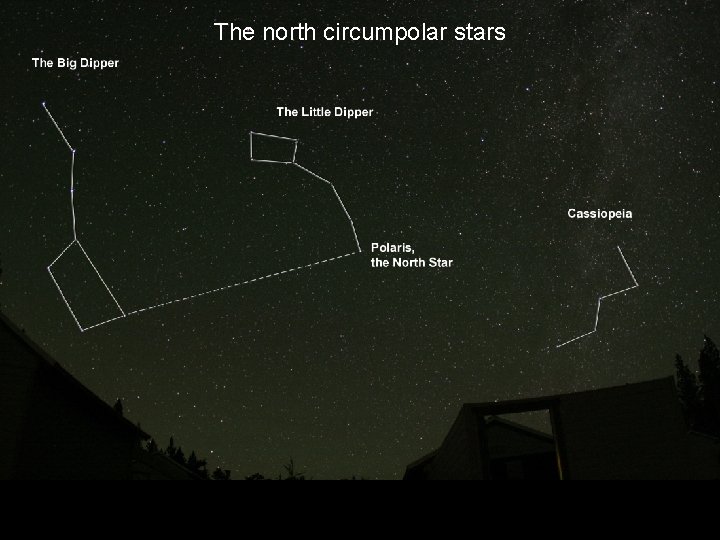
The north circumpolar stars
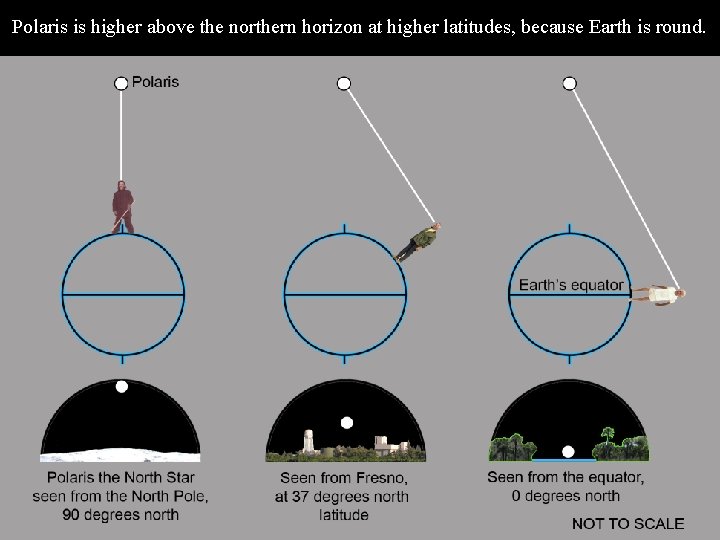
Polaris is higher above the northern horizon at higher latitudes, because Earth is round.
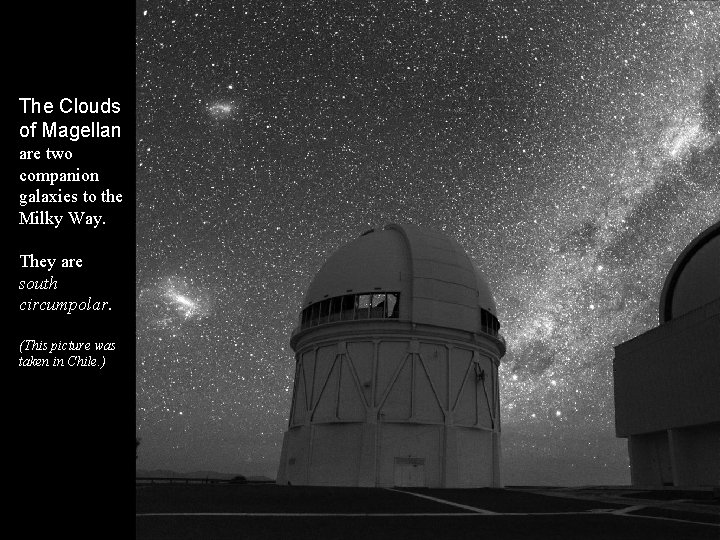
The Clouds of Magellan are two companion galaxies to the Milky Way. They are south circumpolar. (This picture was taken in Chile. )
- Slides: 20