
Classes of vertebrates include fishes amphibians reptiles birds
• Classes of vertebrates include fishes, amphibians, reptiles, birds, and mammals.
Chapter 28 Fishes and Amphibians 28. 1 Fishes Characteristics of Vertebrates § Notochord: flexible rod that is replaced by a backbone § Dorsal Nerve Cord: main nerve pathway to the brain § Pharyngeal slits: slits in the throat region (gills)
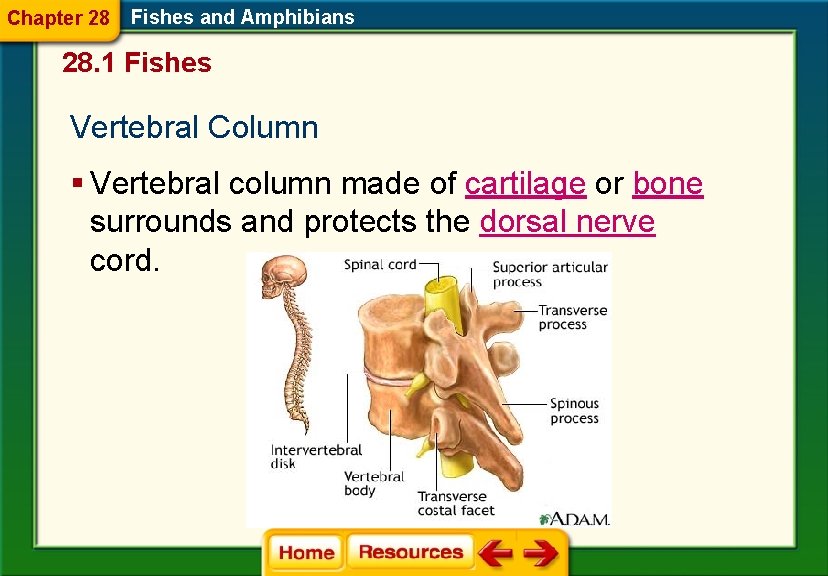
Chapter 28 Fishes and Amphibians 28. 1 Fishes Vertebral Column § Vertebral column made of cartilage or bone surrounds and protects the dorsal nerve cord.

§ The vertebral column functions as a strong, flexible rod that muscles can pull against during swimming or running.

Fish: Form and Function • Most fish have jaws, paired fins, gills, and scales
Chapter 28 Fishes and Amphibians 28. 1 Fishes Neural Crest Neural crest: a group of cells that develop from the nerve cord in vertebrates. § Portions of the brain and skull, certain sense organs, and some nerve fibers are some of the structures that develop from the neural crest.
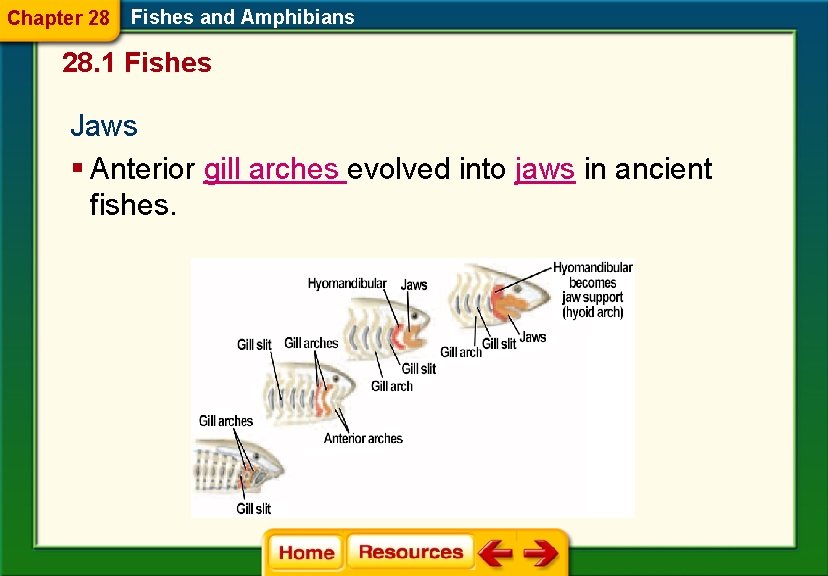
Chapter 28 Fishes and Amphibians 28. 1 Fishes Jaws § Anterior gill arches evolved into jaws in ancient fishes.

Chapter 28 Fishes and Amphibians 28. 1 Fishes Paired Fins § Fin: a paddle-shaped structure that is used for balance, steering, and propulsion § Paired fins reduce the chance of rolling to the side and allow for better steering during swimming.
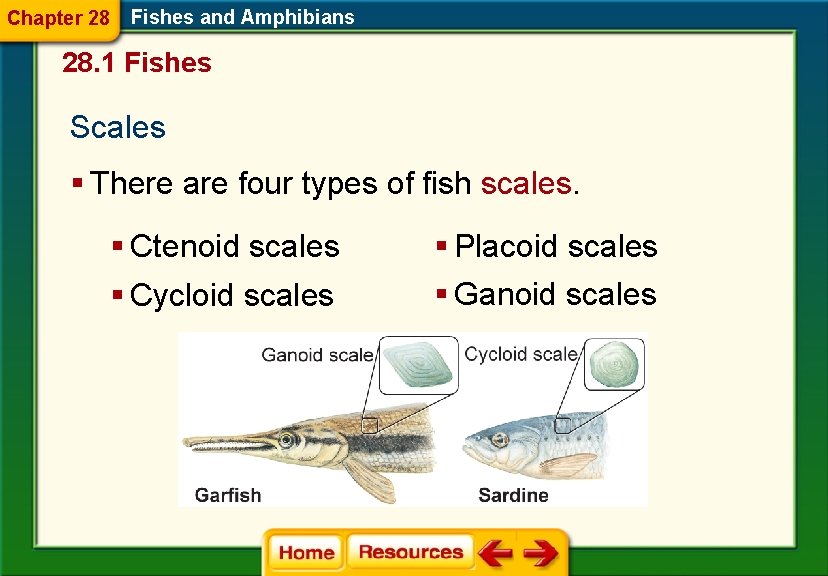
Chapter 28 Fishes and Amphibians 28. 1 Fishes Scales § There are four types of fish scales. § Ctenoid scales § Cycloid scales § Placoid scales § Ganoid scales
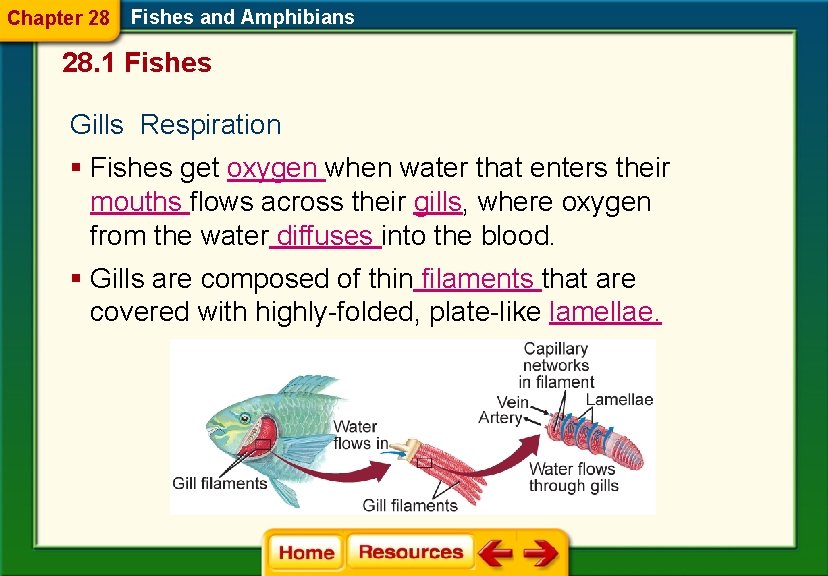
Chapter 28 Fishes and Amphibians 28. 1 Fishes Gills Respiration § Fishes get oxygen when water that enters their mouths flows across their gills, where oxygen from the water diffuses into the blood. § Gills are composed of thin filaments that are covered with highly-folded, plate-like lamellae.
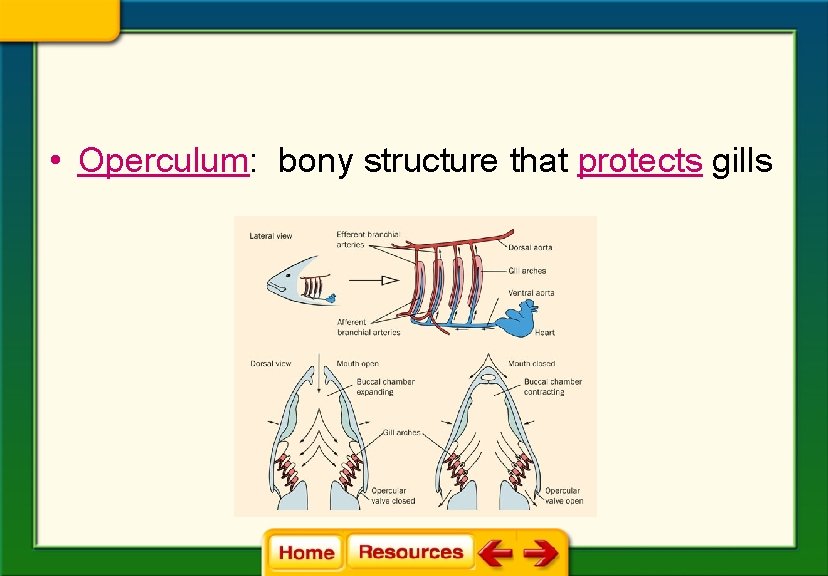
• Operculum: bony structure that protects gills
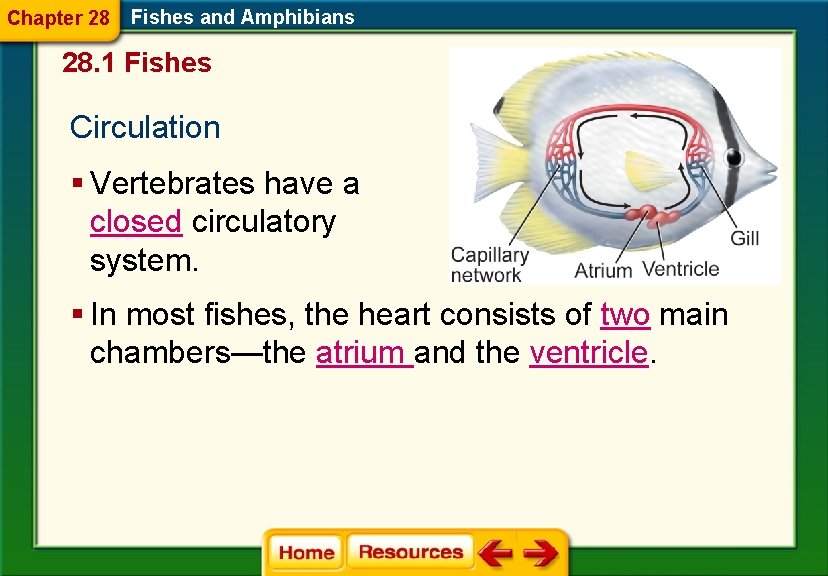
Chapter 28 Fishes and Amphibians 28. 1 Fishes Circulation § Vertebrates have a closed circulatory system. § In most fishes, the heart consists of two main chambers—the atrium and the ventricle.

Chapter 28 Fishes and Amphibians
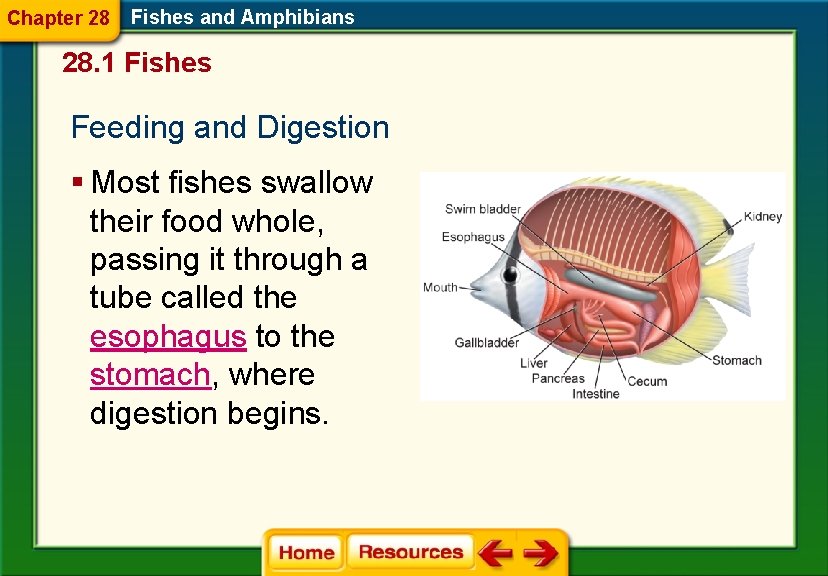
Chapter 28 Fishes and Amphibians 28. 1 Fishes Feeding and Digestion § Most fishes swallow their food whole, passing it through a tube called the esophagus to the stomach, where digestion begins.
Chapter 28 Fishes and Amphibians 28. 1 Fishes Excretion § Kidneys: filter waste from blood § A nephron is a filtering unit within the kidney that helps maintain the salt and water balance of the body and to remove cellular waste products from the blood
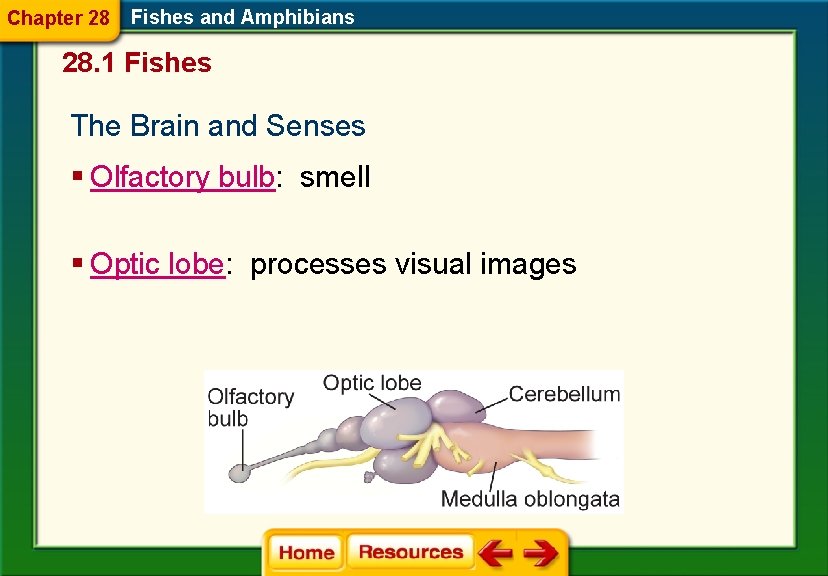
Chapter 28 Fishes and Amphibians 28. 1 Fishes The Brain and Senses § Olfactory bulb: smell § Optic lobe: processes visual images

• Cerebellum: controls coordination • Medulla oblongata: regulates function of internal organs and helps maintain balance • Cerebrum: basic behaviors
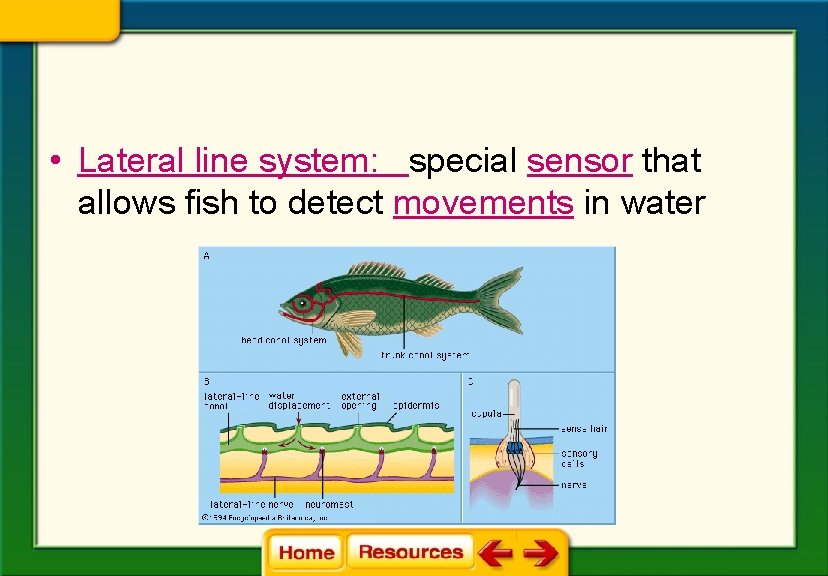
• Lateral line system: special sensor that allows fish to detect movements in water
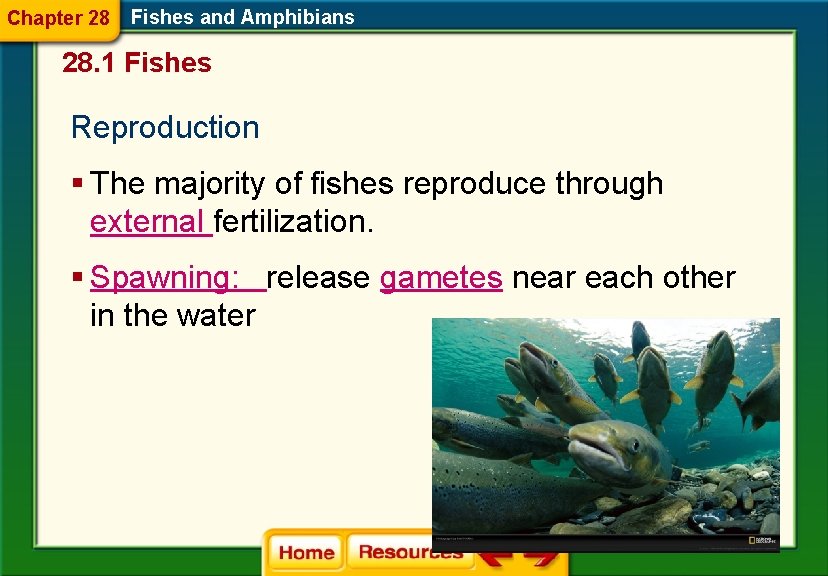
Chapter 28 Fishes and Amphibians 28. 1 Fishes Reproduction § The majority of fishes reproduce through external fertilization. § Spawning: release gametes near each other in the water

Chapter 28 Fishes and Amphibians 28. 1 Fishes Movement § Streamlined shape § Paired fins § Swim bladder: filled with gas that assists with buoyancy § Fishes move through the water by contracting muscle groups on either side of their bodies.
Chapter 28 Fishes and Amphibians 28. 2 Diversity of Today’s Fishes Classes of Fishes § Scientists have grouped fishes into three classes based on their body structure. § Jawless fishes § Cartilaginous fishes § Bony fishes
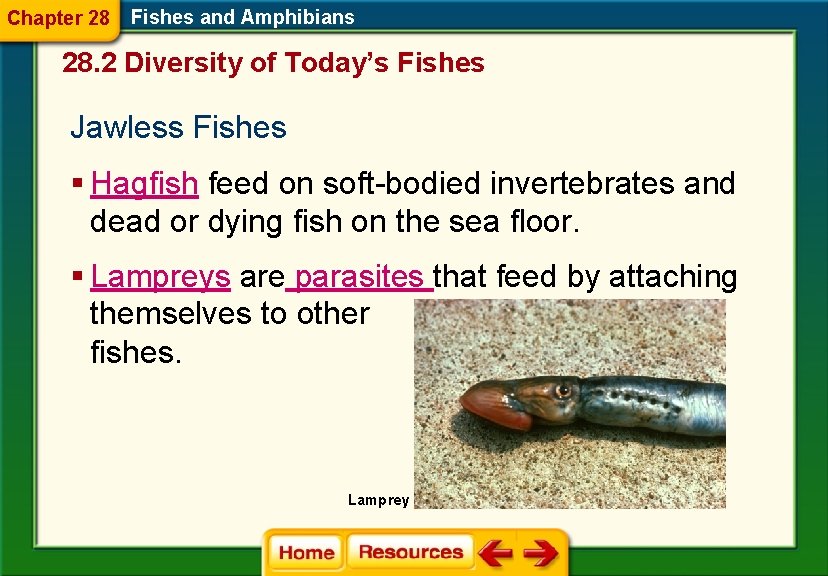
Chapter 28 Fishes and Amphibians 28. 2 Diversity of Today’s Fishes Jawless Fishes § Hagfish feed on soft-bodied invertebrates and dead or dying fish on the sea floor. § Lampreys are parasites that feed by attaching themselves to other fishes. Lamprey
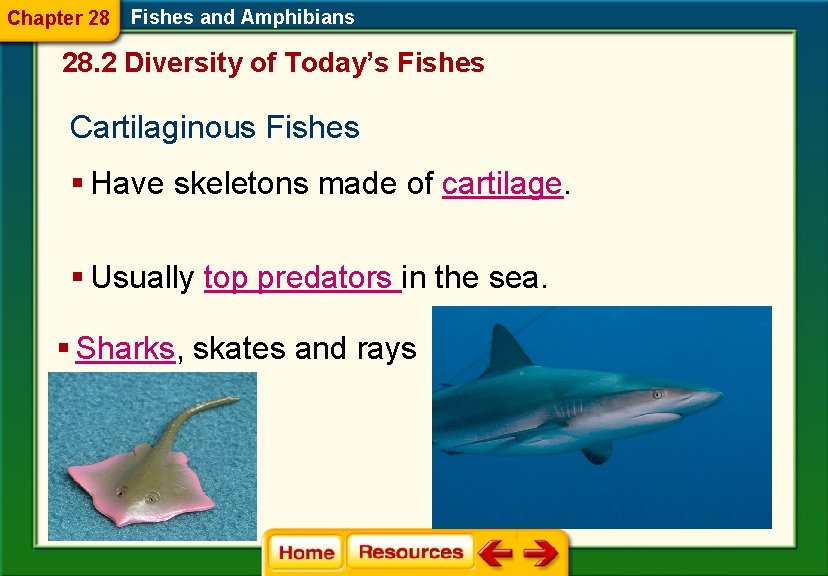
Chapter 28 Fishes and Amphibians 28. 2 Diversity of Today’s Fishes Cartilaginous Fishes § Have skeletons made of cartilage. § Usually top predators in the sea. § Sharks, skates and rays
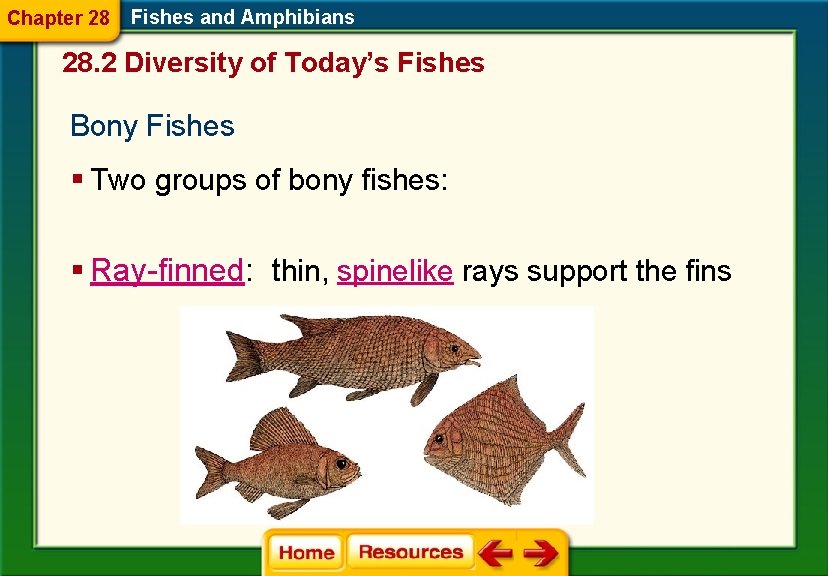
Chapter 28 Fishes and Amphibians 28. 2 Diversity of Today’s Fishes Bony Fishes § Two groups of bony fishes: § Ray-finned: thin, spinelike rays support the fins
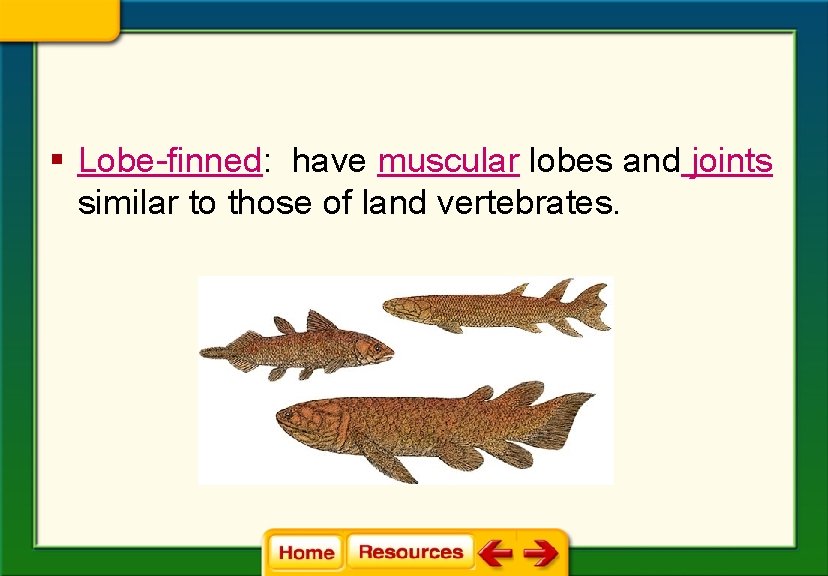
§ Lobe-finned: have muscular lobes and joints similar to those of land vertebrates.

Chapter 28 Fishes and Amphibians
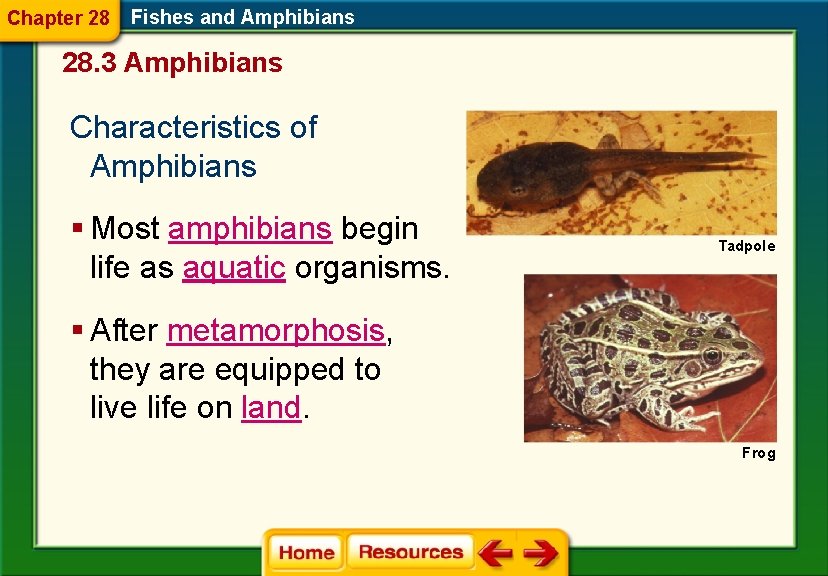
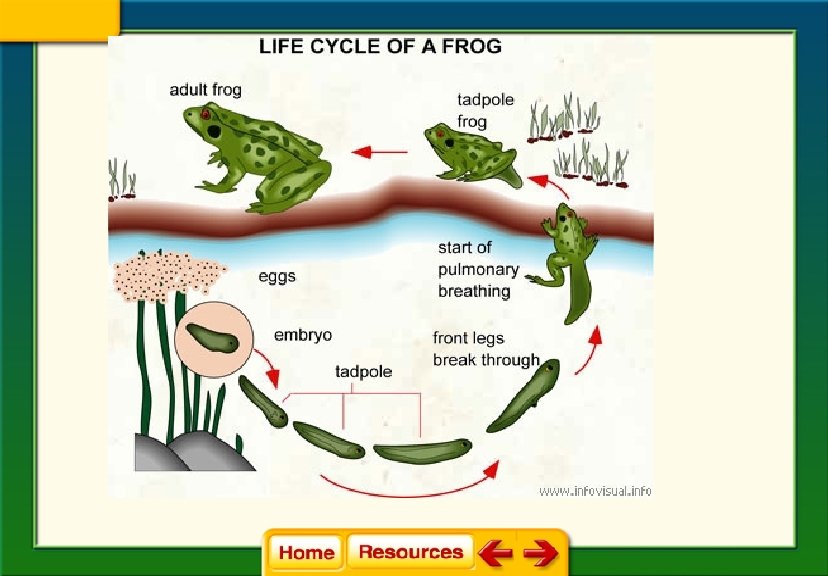
Chapter 28 Fishes and Amphibians 28. 3 Amphibians Characteristics of Amphibians § Most amphibians begin life as aquatic organisms. Tadpole § After metamorphosis, they are equipped to live life on land. Frog
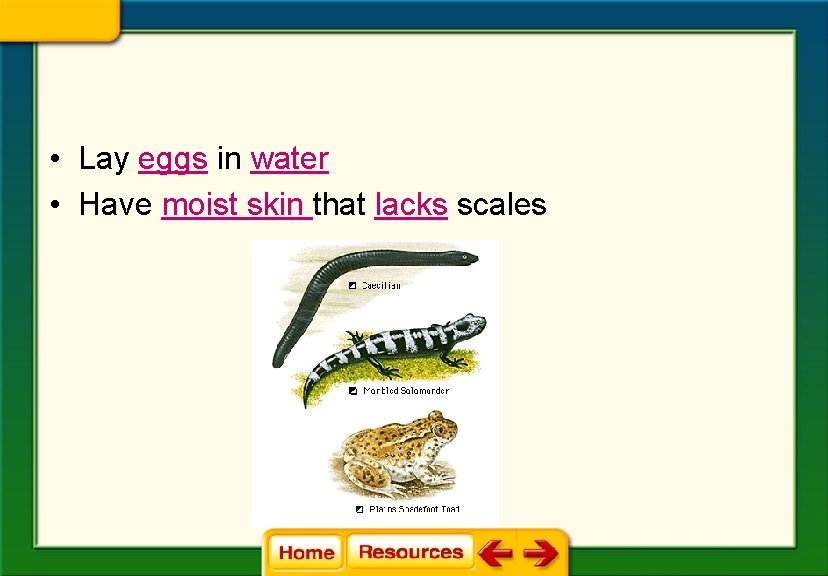
• Lay eggs in water • Have moist skin that lacks scales

Chapter 28 Fishes and Amphibians
Chapter 28 Fishes and Amphibians 28. 3 Amphibians Feeding and Digestion § Most frog larvae are herbivores, whereas salamander larvae are carnivores. § As adults, their diets are similar as both groups become predators. § The digestive system of an amphibian is very similar to that of a fish.
Chapter 28 Fishes and Amphibians 28. 3 Amphibians Excretion § Kidneys (most) § Diffusion through skin § Ammonia is excreted by amphibians that live in the water. § Urea is stored in the bladder and removed from the body through the cloaca.

• Cloaca: posterior opening at the end of the digestive tract used to excrete urine and feces.
Chapter 28 Fishes and Amphibians 28. 3 Amphibians Respiration § As larvae, most exchange gases through their skin and gills (diffusion) § As adults, most breathe through lungs, their thin, moist skin, and cavities in the mouth.
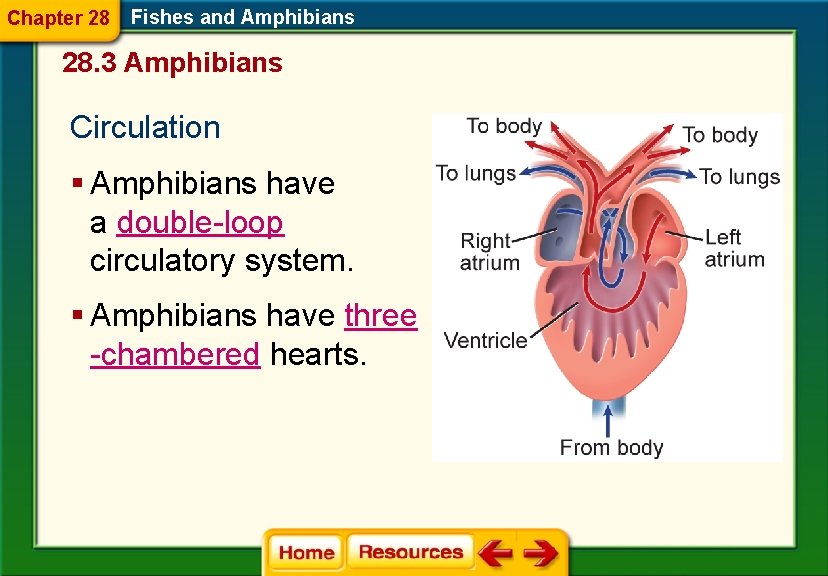
Chapter 28 Fishes and Amphibians 28. 3 Amphibians Circulation § Amphibians have a double-loop circulatory system. § Amphibians have three -chambered hearts.
Chapter 28 Fishes and Amphibians 28. 3 Amphibians The Brain and Senses § Amphibians use sight § Frogs have nictitating membranes that protect their eyes. § Tympanic membrane to hear high-pitched sounds and to amplify sounds from the vocal cords.

Chapter 28 Fishes and Amphibians
Chapter 28 Fishes and Amphibians 28. 3 Amphibians Reproduction and Development § In most amphibians, fertilization is external § Eggs must be laid and fertilized in water § Tadpoles hatch from the egg and undergo metamorphosis from a fishlike animal to an air -breathing one. Virtual Frog Dissection
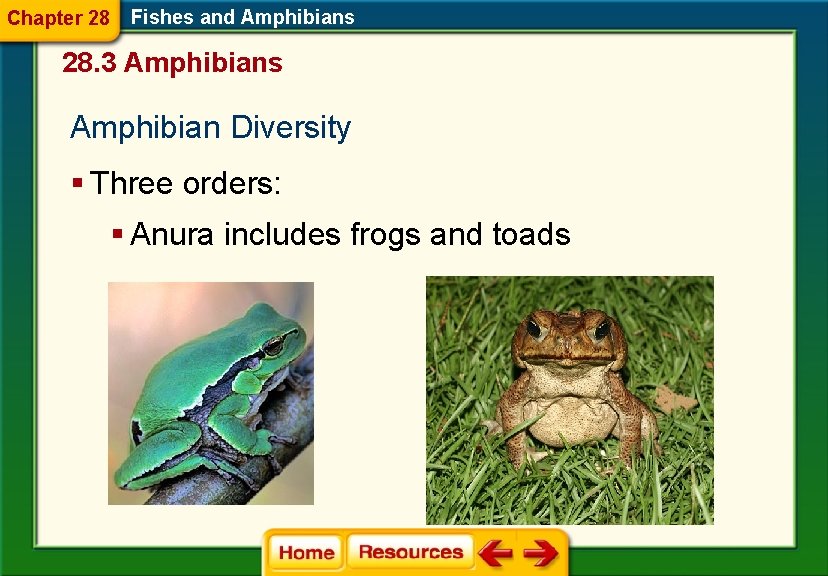
Chapter 28 Fishes and Amphibians 28. 3 Amphibians Amphibian Diversity § Three orders: § Anura includes frogs and toads
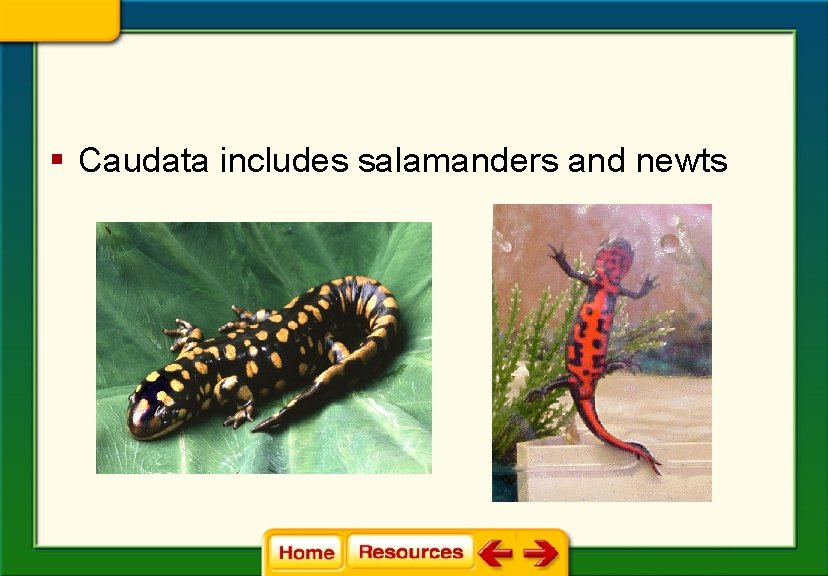
§ Caudata includes salamanders and newts
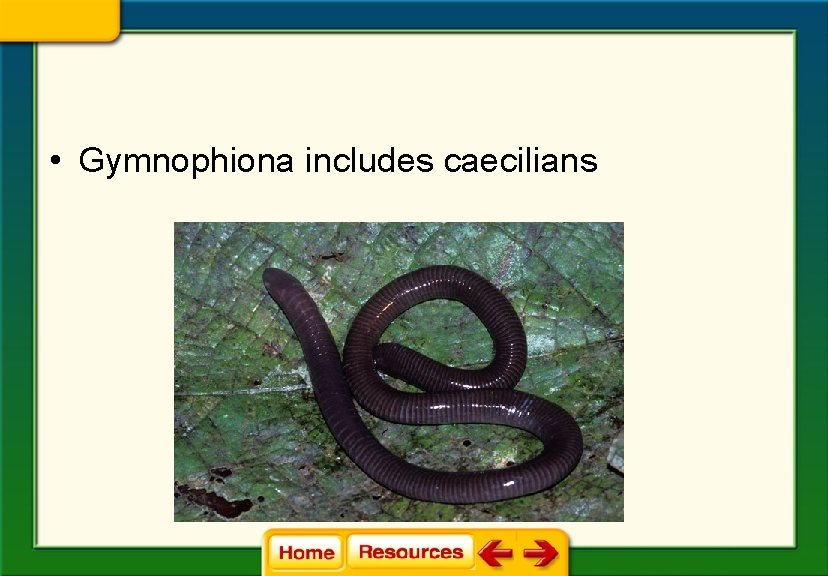
• Gymnophiona includes caecilians
- Slides: 42