
Classes I cavity preparation and Restorations The outline

- Slides: 45
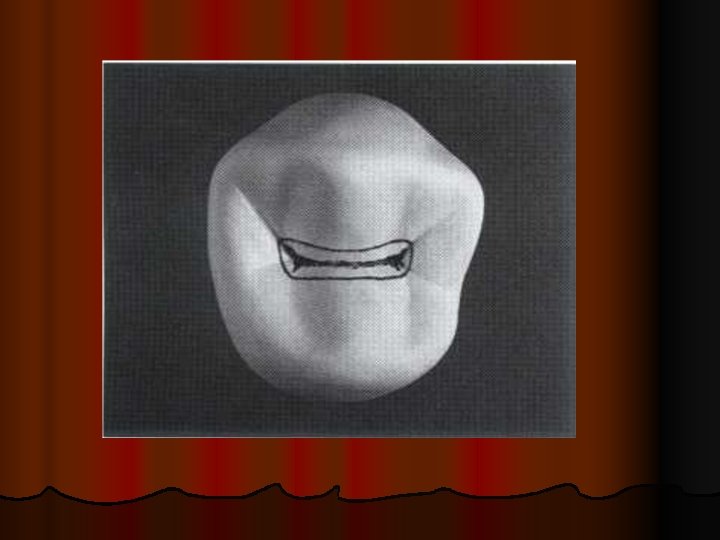
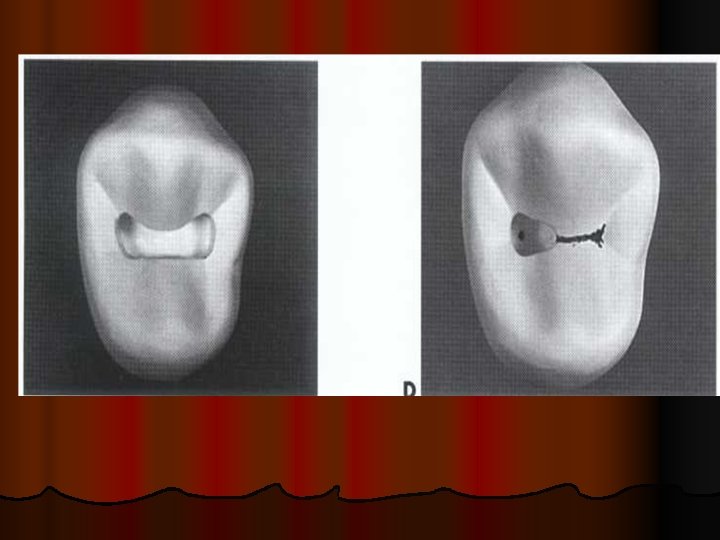
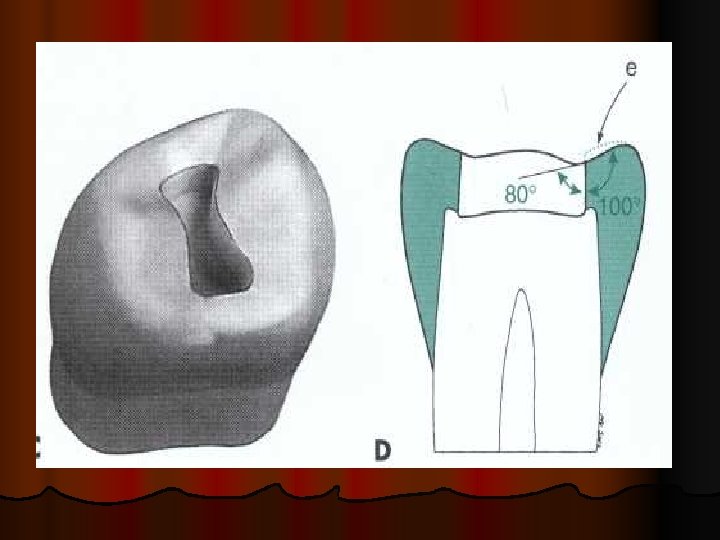
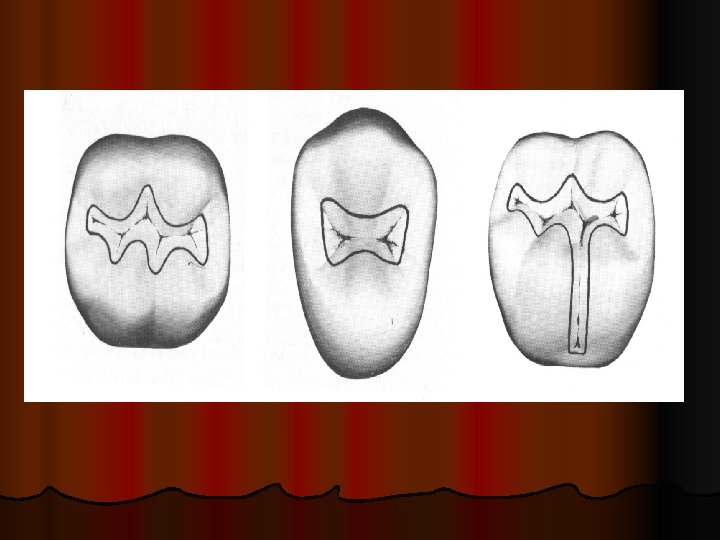
Classes I cavity preparation and Restorations The outline form For the Class I occlusal amalgam tooth preparation should include (1) All faulty defective occlusal pits and fissures (2) in a way that sharp angles in the marginal outline are avoided.
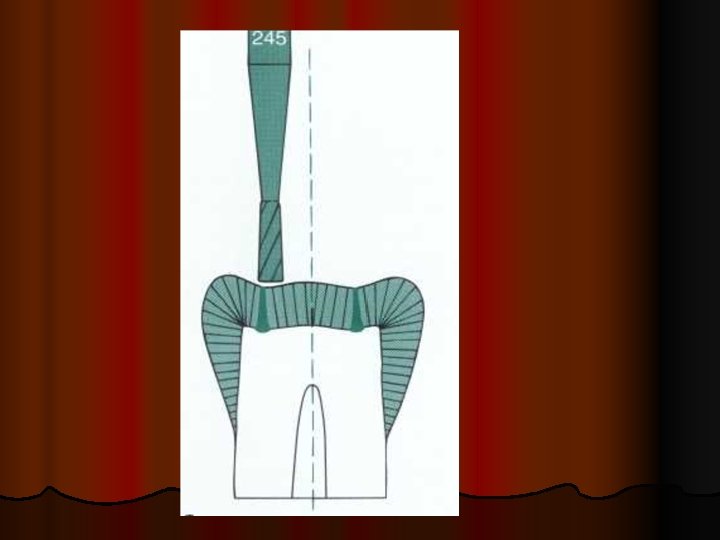
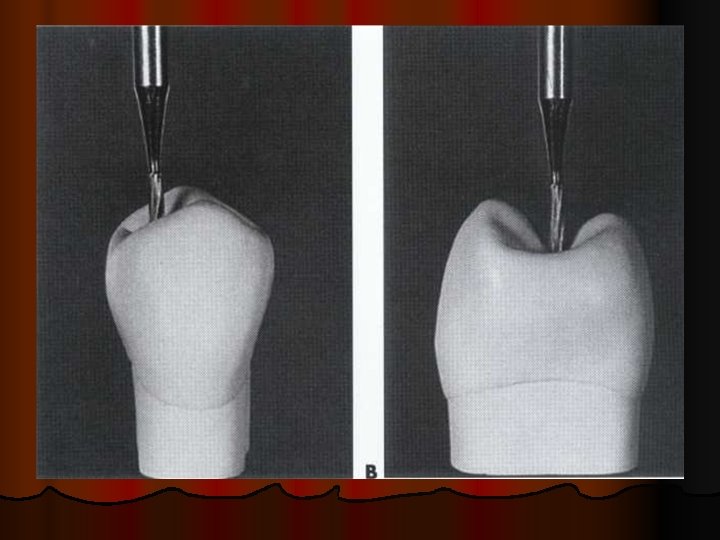
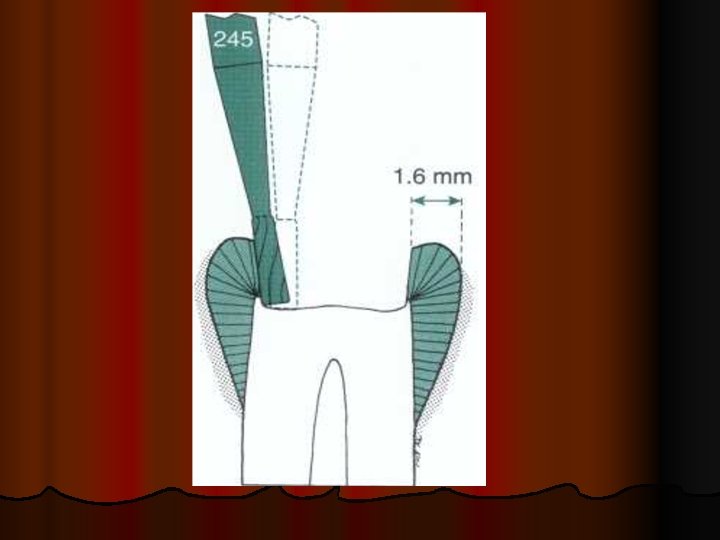
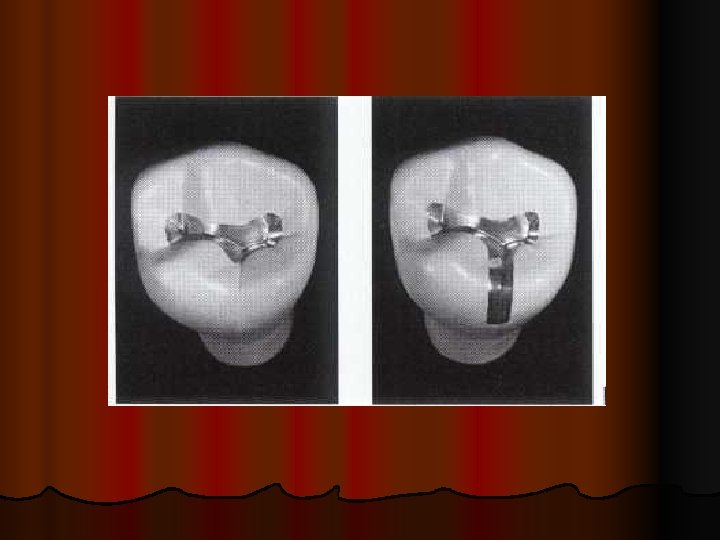
(3) The marginal outline for maxillary premolars is somewhat butterfly shaped, because of extension to include the developmental fissures facially and lingually. (4) Begin the Class I occlusal tooth preparation by entering the deepest or most carious pit with a punch cut using the No. 245 carbide bur at high speed with airwater spray. (5) A punch cut is performed by orienting the bur so that its long axis parallels the long axis of the tooth crown and then the bur is inserted directly into the faulty pit.
(6) As the bur enters the pit, the proper depth of 1. 5 mm (one half the length of the cutting portion of the bur) should be established. The 1. 5 mm pulpal depth is measured at the central fissure. (7) Distal extension into the distal marginal ridge to include a fissure or caries occasionally requires a slight tilting of the bur distally (no more than 10 degrees). This creates a slight occlusal divergence to the distal wall to prevent undermining the marginal ridge of its dentin support and enamel.
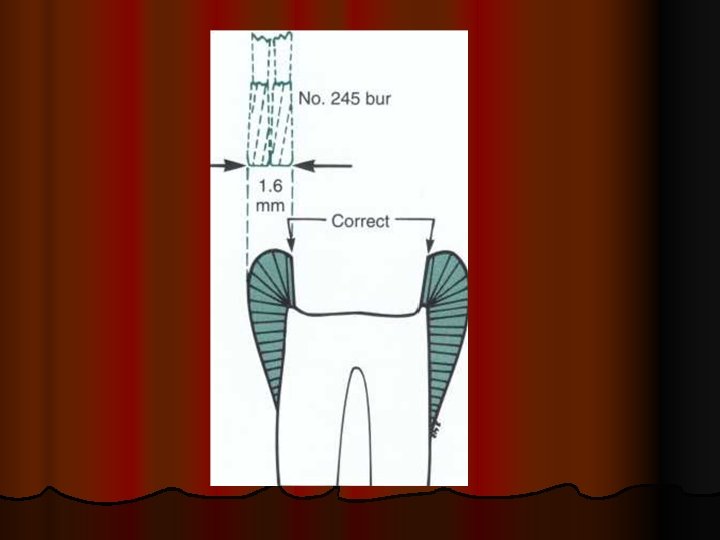
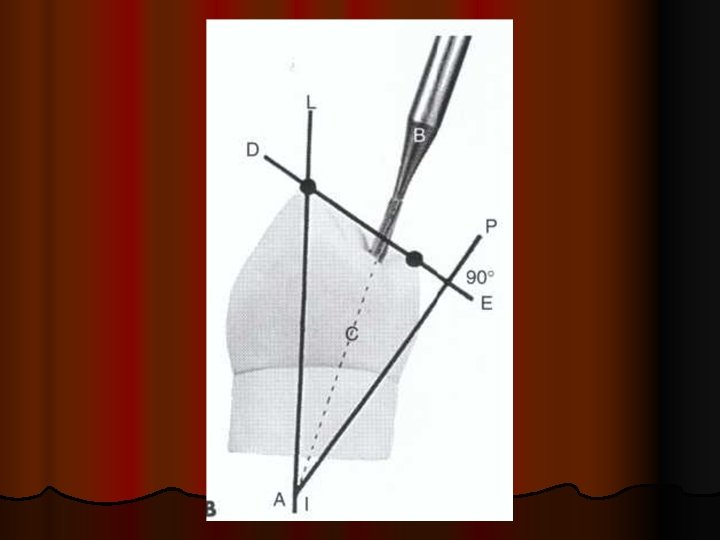
(8) Ideally the width of the isthmus need be no more than the diameter of the bur. It has been demonstrated that an isthmus width of one fourth the distance between the cusp tips does not reduce the strength of the tooth.
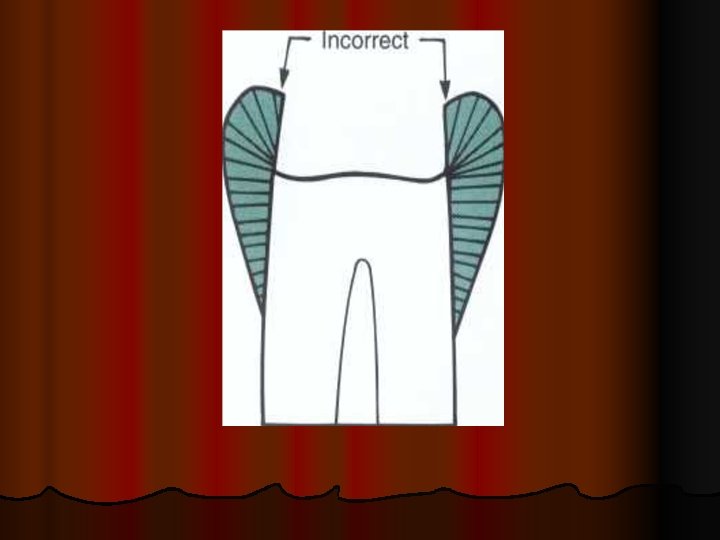
(9) It should be emphasized that minimal faciolingual width of the outline form and minimal occlusal convergence of the facial and lingual walls is desired. This is ideally achieved when the bur makes only one pass along the central fissure. The remainder of any occlusal enamel defects is included in the outline, and the facial and lingual walls are extended, if necessary, to remove enamel undermined by caries. The strongest and ideal enamel margin should be made up of full-length enamel rods resting on sound dentin.
Resistance form (1) Sufficient area or areas of relatively flat pulpal floor in sound tooth structure to resist forces directed in the long axis of the tooth and provide a strong, stable seat for the restoration. (2) Minimal extension of external walls, which reduces weakening the tooth.
(3)Strong, ideal enamel margins (4) Sufficient depth (i. e. , 1. 5 mm) to result in adequate thickness of the restoration, providing resistance to fracture and wear.
Retention form It provides by The parallelism or slight occlusal convergence of two or more opposing, external walls. Pulp protection If the tooth preparation is of ideal or shallow depth, no liner or base is indicated. In deeper carious excavations (where the remaining dentin thickness is judged to be 0. 5 to 1. 0 mm), place a thin layer of bases and liner.
An occlusal cavosurface bevel is contraindicated in the tooth preparation for an amalgam restoration. It is important to provide an approximate 90 - to 100 -degree cavosurface angle which should result in 80 to 90 -degree amalgam at the margins this butt joint margin of enamel and amalgam is the strongest for both. Amalgam is a brittle material with low edge strength and tends to chip under occlusal stress if its angle at the margins is less than 80 degrees.
Every completed tooth preparation should be inspected and cleaned before restoration. The tooth preparation should be free of debris after rinsing the tooth with the air-water syringe.
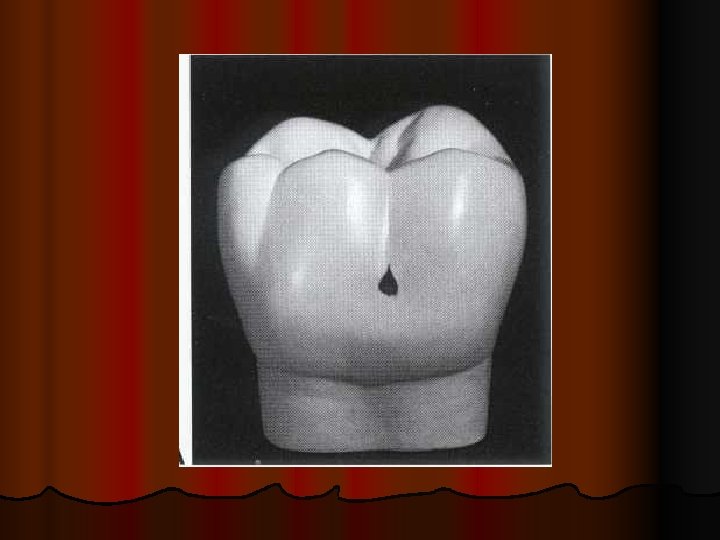
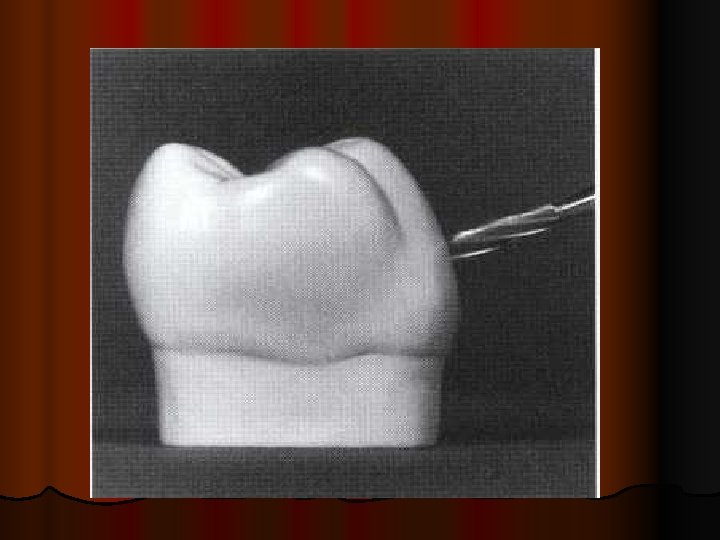
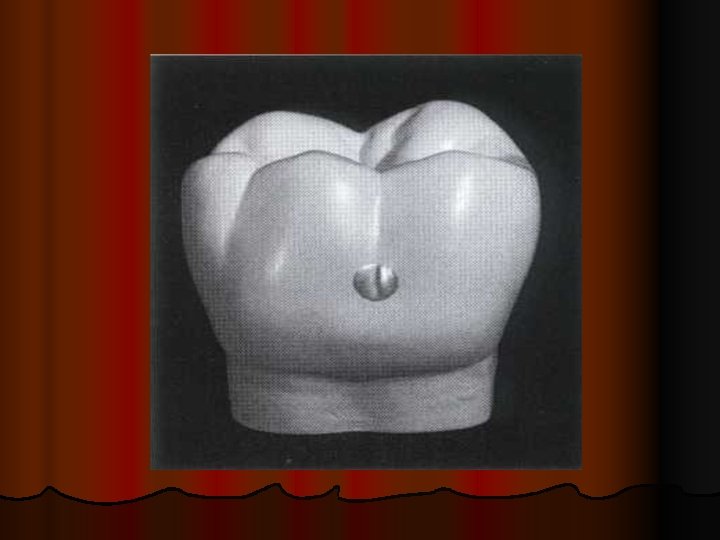
The facial pit of the mandibular molar 1. The facial surface of man. Molars some times has adevelopmental pits but no facial fissure. 2. C. P is started by placing the bur perpendicular to the buccal surface. A small bur size is used for small defect and vise versa.
4. The pit should be entered using a punch cut in one smooth insertion to a depth of 1. 5 mm. which will place the axial wall just into dentin. 5. The contour of the axial wall should follow and be parallel to the external tooth surface.
6. The cavity should be dried and examined for any remaining caries which must be removed mostly with a round bur. 7. A base or liner can be used if indicated 8. Maintaining the bur perpendicular to the facial surface results in cavity walls that are parallel or slightly undercut which will provide retention if needed.
9. A no. 1/4 round bur is used to make small under cut in the dentin in the axiogengival line angle that should not undermined the enamel. 10. The out line can be round , oval or triangular.
The lingual pit of the maxillary incisor (1)A carious pit or fissure on the lingual surface of max. ant. Teeth may be restored with amalgam since the defect generally is small and esthetic is not a factor. (2) The direction of the cutting follows the orientation of the pit.
(3) the cavity out line should be extended if necessary to ensure 90 cavosurface margin. (4) the preparation out line determined by the extend of caries but its generally conservative. (5) Since the lingual enamel is thinner the depth of intial cavity preparation is 1 -1. 2 mm which will avoid exposure of lingual pulp horn if present.
(6) the bur should be also perpendicular to the palatal surface. (7) Any remaining caries should be removed by using appropriate size round bur. (8) If additional retention is required retentive groove can be made in the same way for buccal pit. (9) A base or liner can be used if
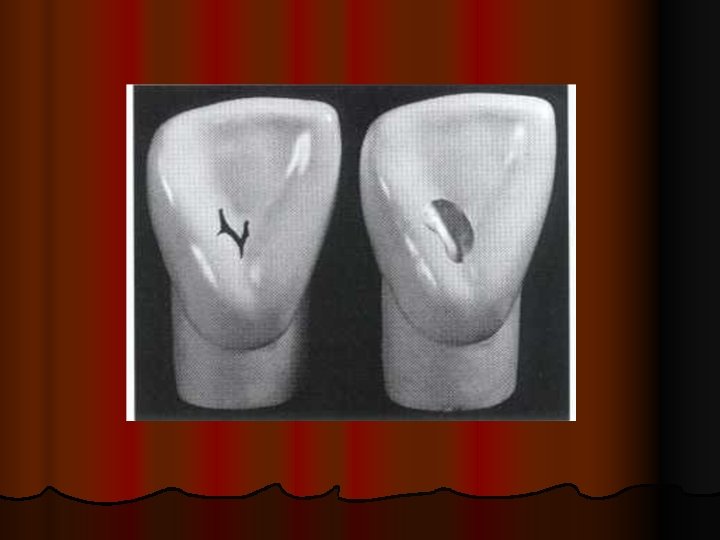
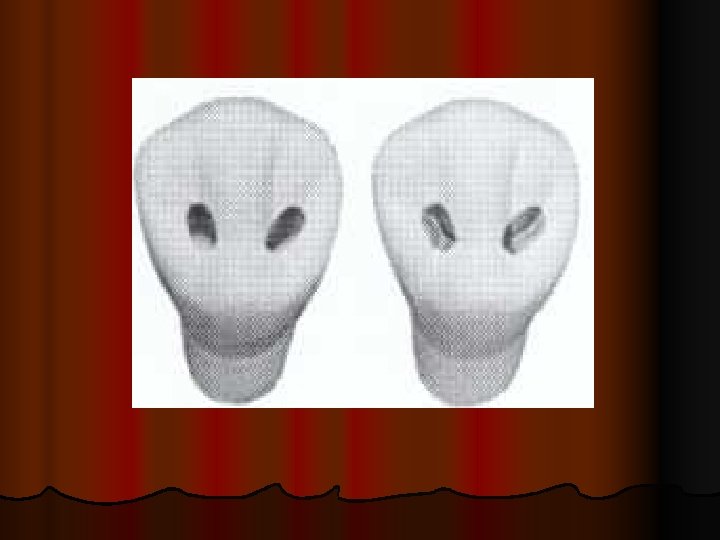
The occlusal pits of the mandibular first premolar 1. many mand. 1 st. premolars have no central occlusal fissure because of the very large facial cusp and its heavy transverse ridge of enamel , However occlusal pits ( mesial, distal or both) may exsist 2. Generally these are easily restored by placing a small pit amalgam restoration with the bur properly tilted.
3. The pit should be entered with a punch cut to depth of 1. 5 - 2 mm. 4. The bur should maintain perpendicular to the occlusal plane. 5. The pulpal floor will decline lowered lingual aspect that will prevent exposure of prominent buccal pulp horn and provide dental support for the small lingual cusp.
6. The direction of the prepared facial wall will result in amalgam that approached 90 at the cavosurface margin. this preparation is usually done more at the expence of the facial cusp than of the lingual cusp. 7. Care should be taken not to undermined the enamel and the proximal marginal ridge and the small lingual cusp.
8. However when there an existing central occlusal fissure or the 2 occ. Pits are in close proximately or both then a conventional occlusal out line for the preparation may be indicated.
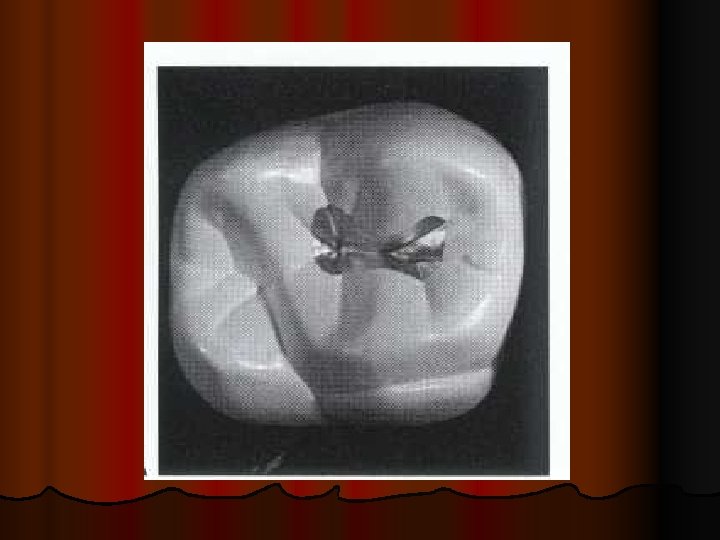
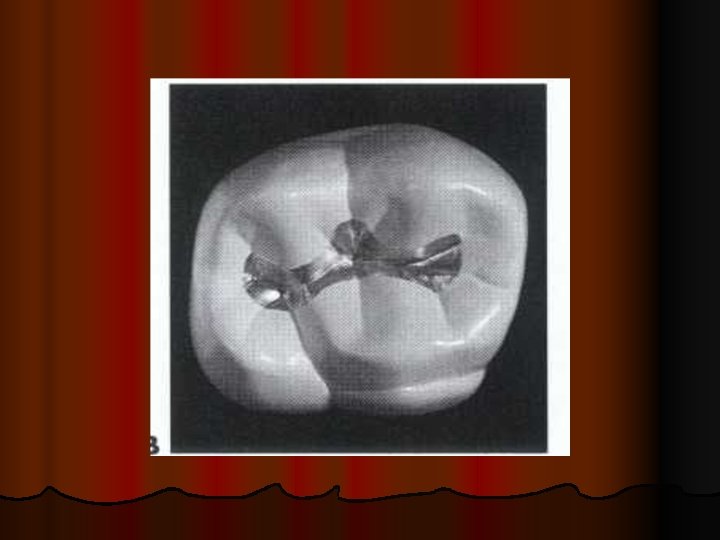
The occlusal pits and fissures of the maxillary first Molar Usually the occlusal surface of max. 1 st molar is divided into mesial and distal halves by the oblique ridge if there this caries of the mesial fossa , central fossa and distal fossa, then 2 separated conventional class I cavity preparation should be made
The oblique ridge of enamel should not be crossed in C. P , unless the ridge is undermined by caries or had deep fissure leaving the oblique ridge intact will preserve the strength of the tooth. however , if its necessary to extend through the oblique ridge , the distal pit area should be included in the out line form and also the distal oblique and lingual fissure if there are caries.
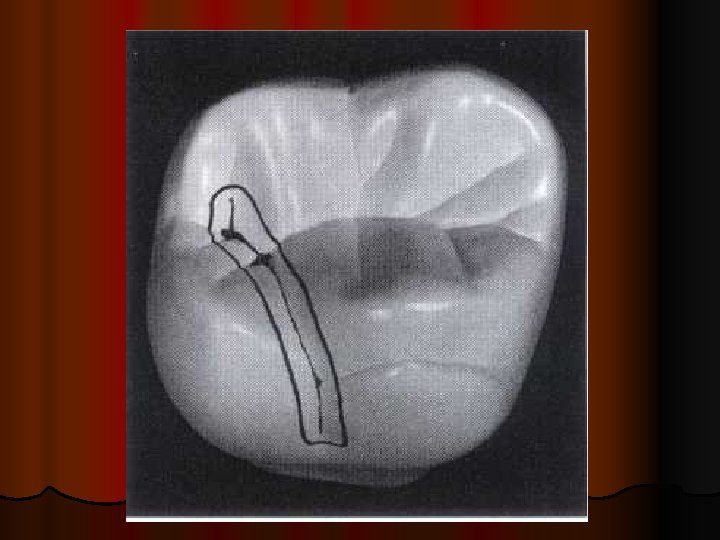
CLASS I OCCLUSOLINGUAL AMALGAM RESTORATIONS Occlusolingual (OL) amalgam restorations may be used on maxillary molars when a lingual fissure connects with the distal oblique fissure and distal pit on the occlusal surface.
(1)The tooth preparation should be no wider than necessary; ideally the mesiodistal width of the lingual extension should not exceed 1 mm, except for extension necessary to remove carious or undermined enamel or to include unusual fissuring. (2)When indicated, the tooth preparation should be cut more at the expense of the oblique ridge rather than centering over the fissure (weakening the small distolingual cusp).
(3)Especially on smaller teeth, the occlusal portion may have a slight distal tilt to conserve the dentin support of the distal marginal ridge. (4 )The margins should extend as little as possible onto the oblique ridge, distolingual cusp, and distal marginal. ridge.