
CLASS VI Delhi Public School WHAT ARE ARTICLES
CLASS VI Delhi Public School
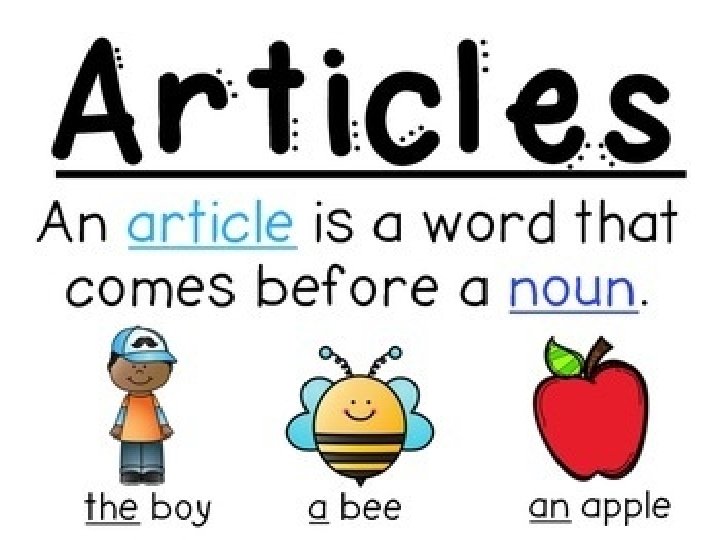
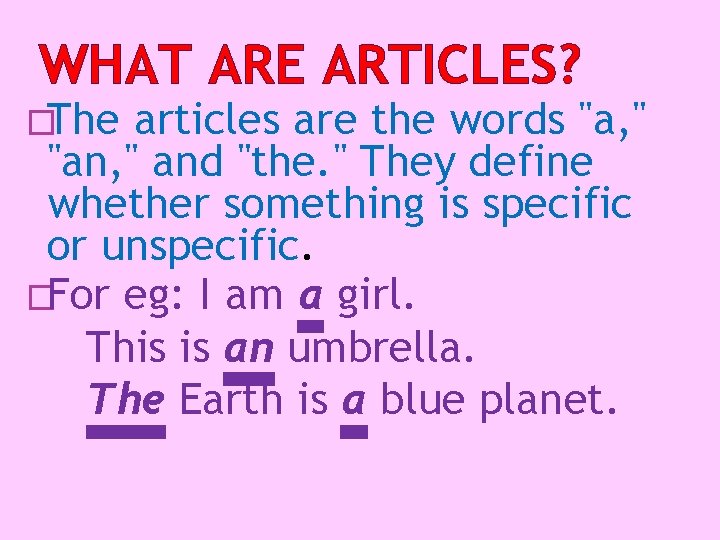
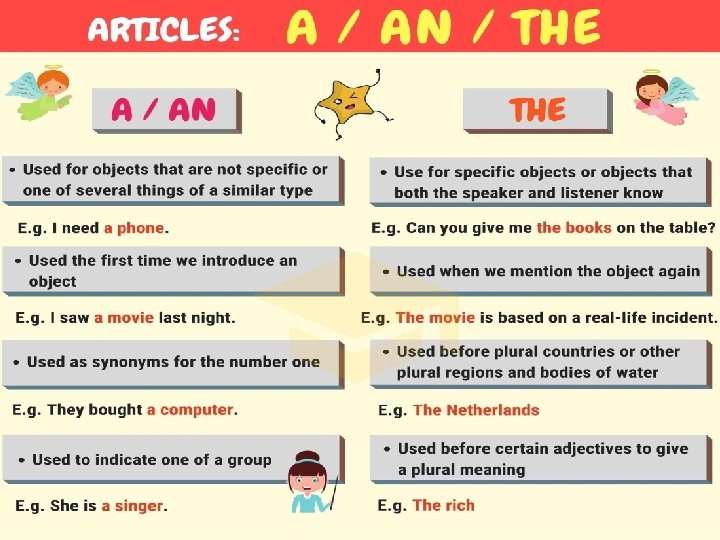
WHAT ARE ARTICLES? �The articles are the words "a, " "an, " and "the. " They define whether something is specific or unspecific. �For eg: I am a girl. This is an umbrella. The Earth is a blue planet.
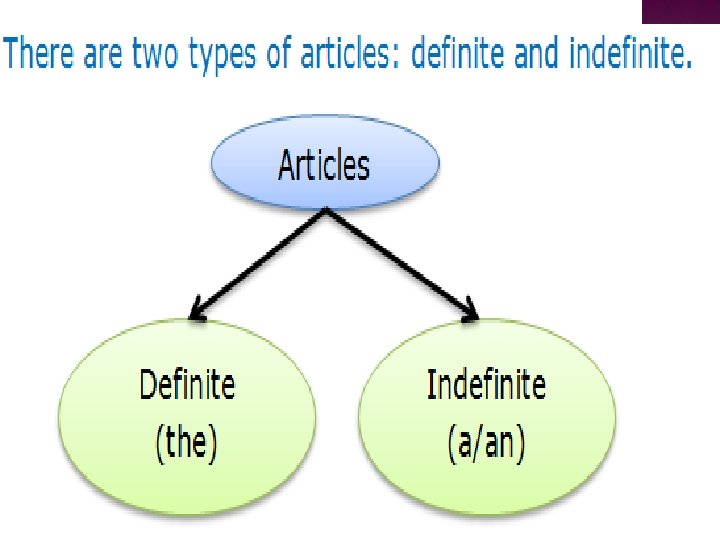
INDEFINITE ARTICLES A, AN
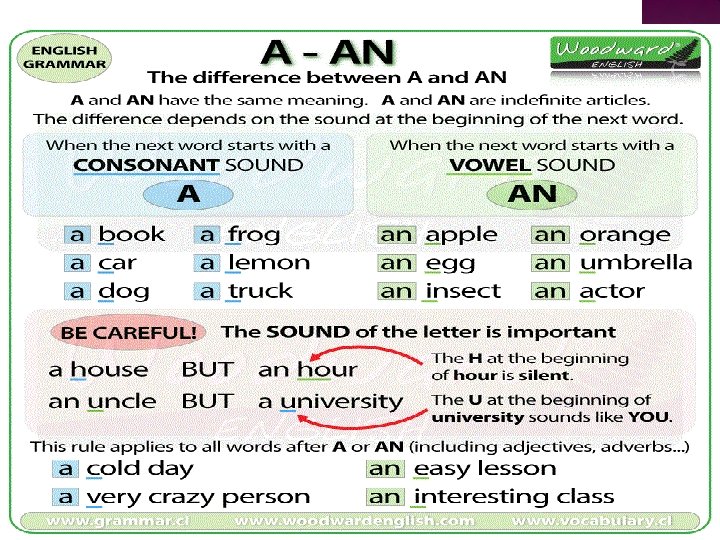
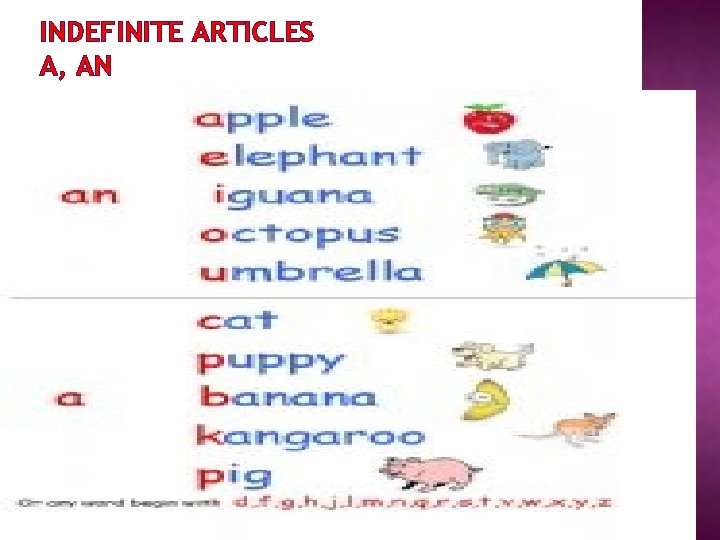
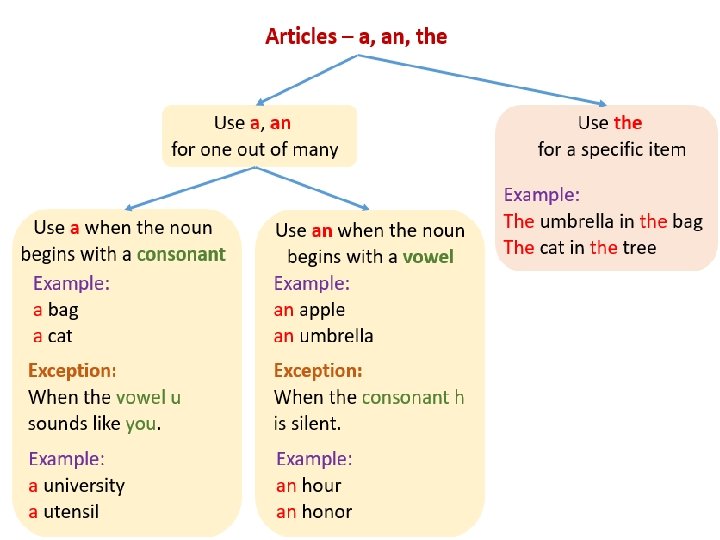
INDEFINITE ARTICLES A, AN The English language has two indefinite articles, “a” and “an. ” While the article “a” is used before nouns or words that begin with consonant sounds, even if they begin with a vowel, the article “an” is used before nouns or words that begin with vowel sounds including those that are spelled beginning with consonant letters. � Examples for its use are the following sentences: “An hour would seem an eternity when you are waiting for someone you haven’t seen in a long time. ” “I was born in a town on the outskirts of the city. ” “I prefer a European-made car over one that is made in the USA. ” �
OBSERVE THE SOUND. 1. If the noun begins with a vowel sound use the article ‘an’. For eg: I am an MA in English. Here ‘MA’ begins with a vowel sound, even if it looks like a consonant, that is why we use the article ‘an’ before it. � 2. If the vowel sound is a diphthong ( a sound formed by the combination of two vowels in a single syllable, in which the sound begins as one vowel and moves towards another like university, European, ivory, etc. ) we use the article ‘a’ before the noun. For eg: a university a european

EXERCISES � Exercises: A, B, C, D are to be done for homework, (pages 38, 39, 40) in the GRAMMAR
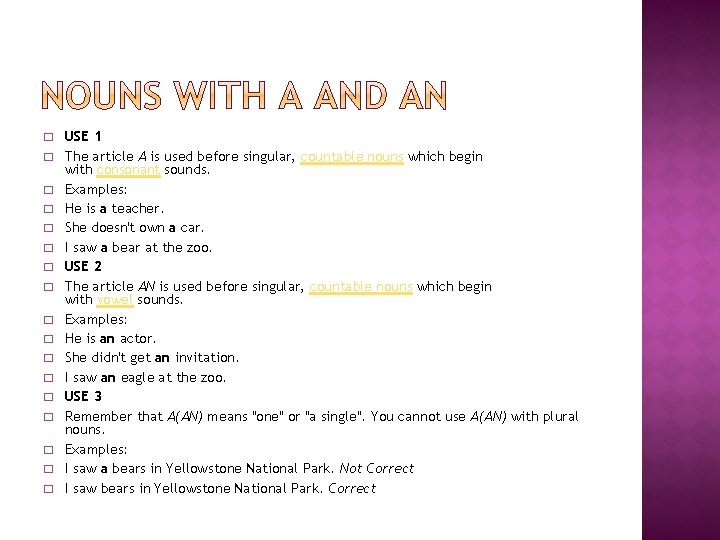
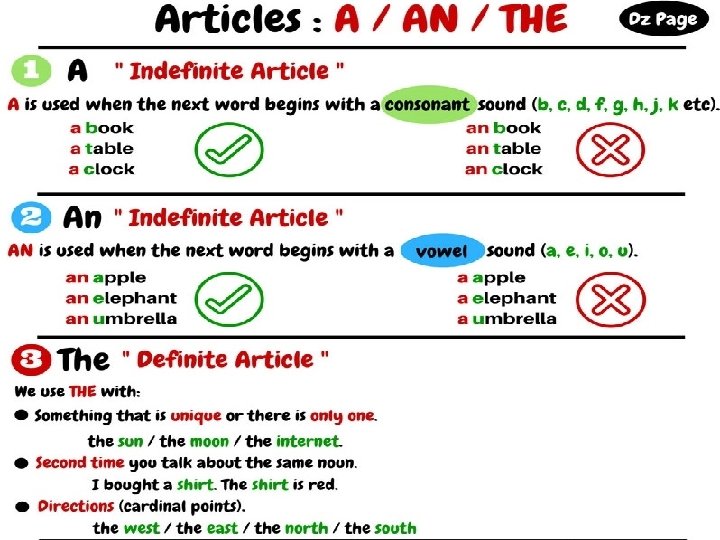
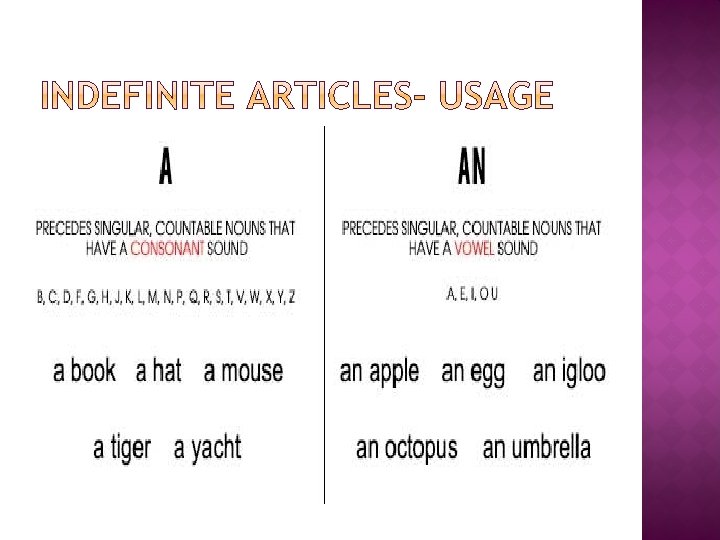
� � � � � USE 1 The article A is used before singular, countable nouns which begin with consonant sounds. Examples: He is a teacher. She doesn't own a car. I saw a bear at the zoo. USE 2 The article AN is used before singular, countable nouns which begin with vowel sounds. Examples: He is an actor. She didn't get an invitation. I saw an eagle at the zoo. USE 3 Remember that A(AN) means "one" or "a single". You cannot use A(AN) with plural nouns. Examples: I saw a bears in Yellowstone National Park. Not Correct I saw bears in Yellowstone National Park. Correct
USE 4 If there is an adjective or an adverb-adjective combination before the noun, A(AN) should agree with the first sound in the adjective or the adverb-adjective combination. Examples: He is an excellent teacher. I saw a really beautiful eagle at the zoo. � USE 5 Use A before words such as "European" or "university" which sound like they start with a consonant even if the first letter is a vowel. Also use A before letters and numbers which sound like they begin with a consonant, such as "U", "J", "1" or "9". Remember, it is the sound not the spelling which is important. For example, "1" is spelled O-N-E; however, it is pronounced "won" like it starts with a "W". Examples: She has a euro. Sounds like "yu-ro". That number is a "1". Sounds like "won". � USE 6 Use AN before words such as "hour" which sound like they start with a vowel even if the first letter is a consonant. Also use AN before letters and numbers which sound like they begin with a vowel, such as "F" or "8". Remember, it is the sound not the spelling which is important. For example, "F" is pronounced "eff" like it starts with an "E". Examples: I only have an hour for lunch. Sounds like "au-er". Does his name begin with an "F"? Sounds like "eff". �
USE 7 Some words such as "herb" or "hospital" are more complicated because they are pronounced differently in different English accents. In most American accents, the "h" in "herb" is silent, so Americans usually say "an herb". In many British accents, the "h" in "herb" is pronounced, so many British say "a herb". In some British accents, the "h" in hospital is silent, so some British will say "an hospital" instead of "a hospital". � USE 8 In English, some nouns are considered uncountable such as: information, air, advice, salt and fun. We do not use A(AN) with these uncountable nouns. (Learn more about countable and uncountable nouns. ) Examples: She gives a good advice. Not Correct She gives good advice. Correct �
EXERCISE �HOMEWORK: Exercise: E (PAGE 41) to be done in the grammar book
Sometimes it is possible to have a noun phrase with NO article—it is called the "ZERO article". � For eg: � I need a bowl of rice. ← indefinite article � I like the rice in this restaurant. ← definite article � I eat rice every day. ← ZERO article
�General meaning �cars, people �life, water �Abstract nouns �education, happiness, music
�Names � People: Mary, Bill, Josef � Places: Jupiter, Russia, Bangkok, Heathrow Airport, Cambridge University, Waterloo Station � Streets: Oxford Street, Wall Street, Picadilly Circus � Languages: English, Russian � Academic subjects: History, Law, Physics � Days, months: Monday, November
Games and Sports • football, chess Meals • breakfast, lunch, dinner Noun + Number • platform 3, room 7, page 44 Routine Places • in bed, at home, to school, to work � Movement or Transport � on foot, by car, by bus, by air � Newspaper Headlines, Notices, User Guides � Plane Crashes On House, Keep Area Clean, Insert battery
� � � � � Here are some example sentences showing the ZERO article in context. Cars can be dangerous. We seldom see courage like that. I could see clouds in the sky. There was milk on the doorstep. I gave it to Mary. She arrived in Bangkok yesterday. Do you speak French? He is good at tennis. People will travel to Mars soon. He is in room 45. Please turn to page 67. She's in bed. Are you at home? They took her to hospital. I'm leaving town tomorrow by car. I go to school by bus. We usually meet on Monday. November is quite cold.
�Exercises : F and G are to be done in the grammar book as Homework(pages: 41 and 42) �Practice questions on page 44 is to be done as Classwork


- Slides: 29