
Class Struggle and Technology in NeoVictorian Novel Victorian
- Slides: 30
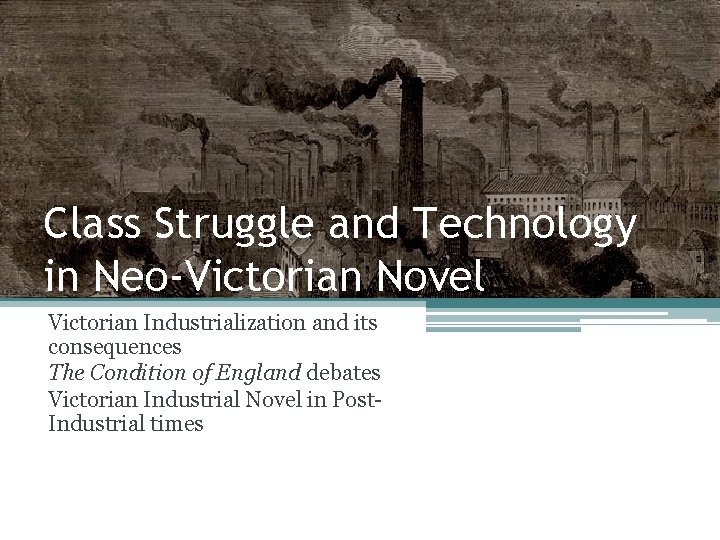
Class Struggle and Technology in Neo-Victorian Novel Victorian Industrialization and its consequences The Condition of England debates Victorian Industrial Novel in Post. Industrial times
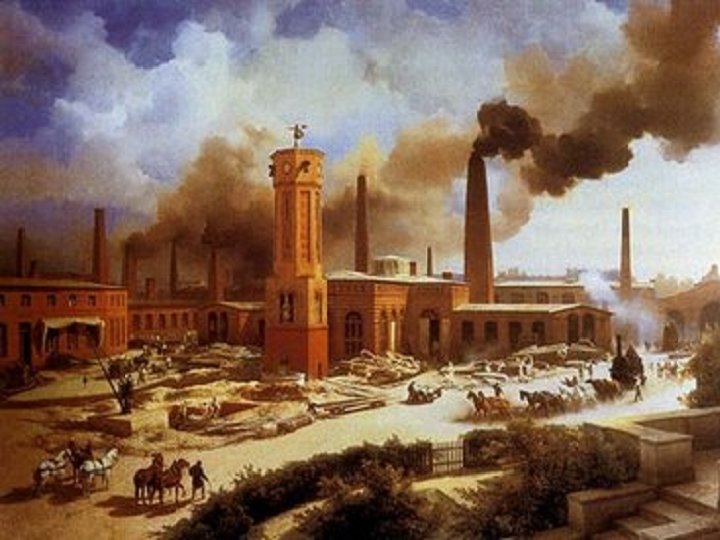
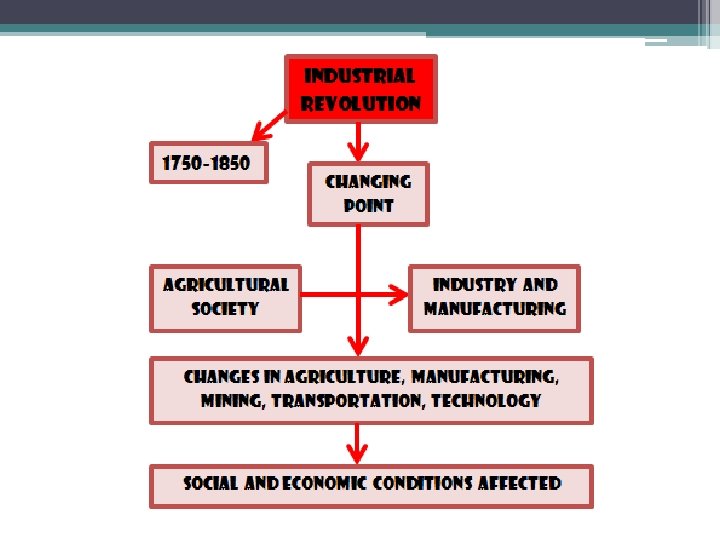
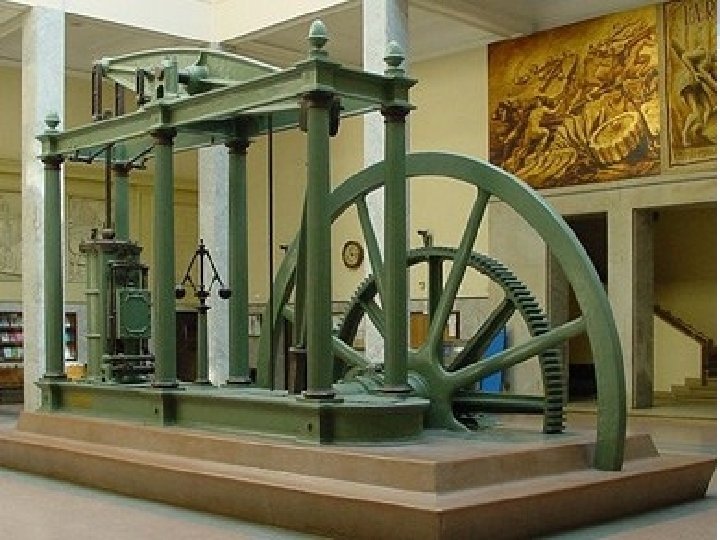
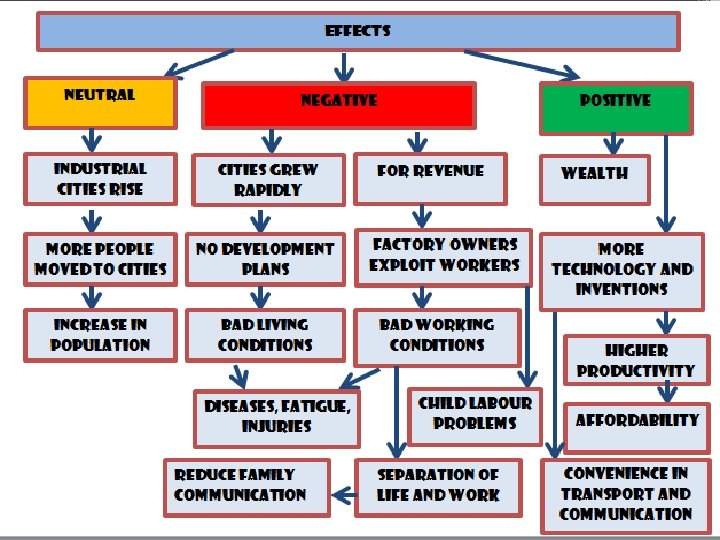
Victorian Industrial Revolution • "Industrial revolution, a rapid development in industry; spec. (freq. with capital initials) the development which took place in England in the late eighteenth and early nineteenth centuries, chiefly owing to the introduction of new or improved machinery and large-scale production methods. [Oxford English Dictionary (OED)] • Industrial revolution the vast social and economic changes that resulted from the development of steam-powered machinery and mass-production methods, beginning in the late eighteenth century in Great Britain and extending through the nineteenth century elsewhere in the world. [Academic Press Dictionary of Science and Technology] • "The Industrial Revolution is not simply an acceleration of economic growth, but an acceleration of growth because of, and through, economic and social transformation. " [Hobsawm]
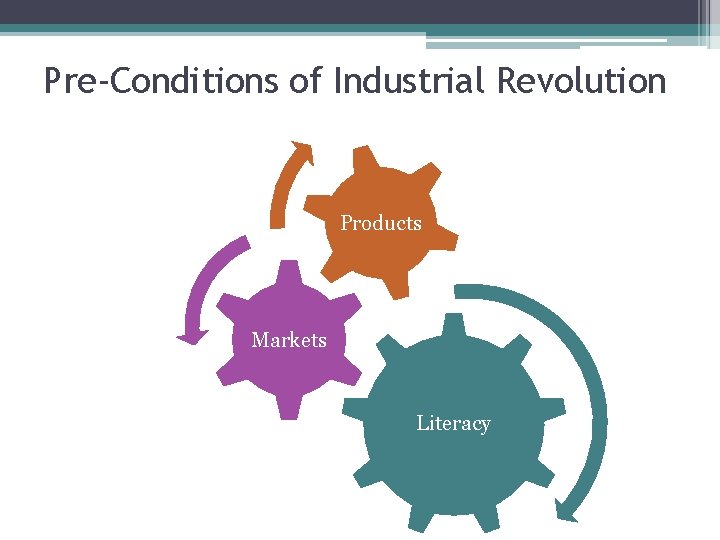
Pre-Conditions of Industrial Revolution Products Markets Literacy
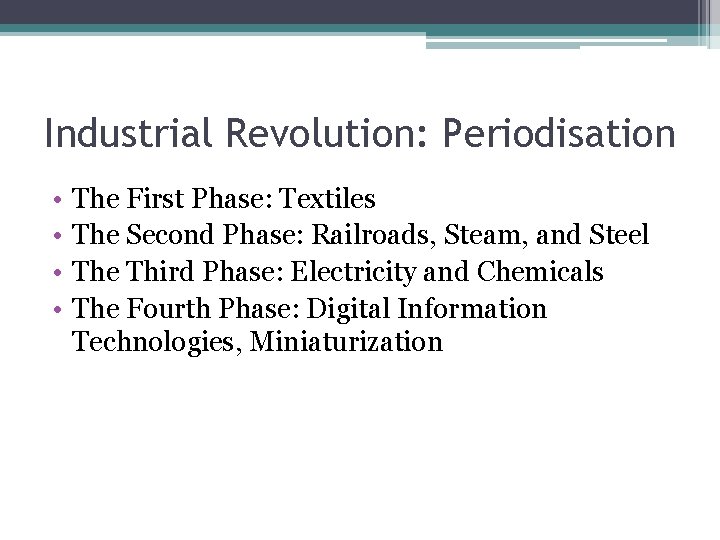
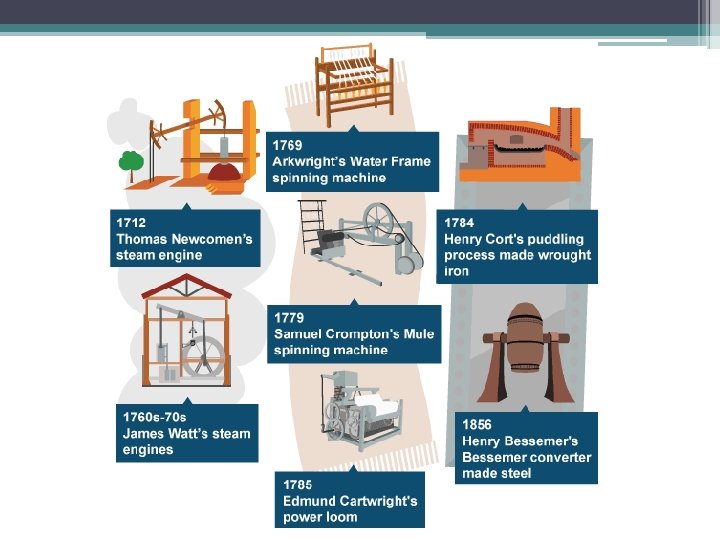
Industrial Revolution: Periodisation • • The First Phase: Textiles The Second Phase: Railroads, Steam, and Steel The Third Phase: Electricity and Chemicals The Fourth Phase: Digital Information Technologies, Miniaturization
Creators of Industrial Revolution • • • Richard Arkwright and the Spinning Jenny John Kay, Inventor of the Fly Shuttle John Heathcoat and the Bobbin-net Machine Robert Peel and Roller Printing on Calico James Watt and the Steam Engine Rev. William Lee, inventor of the Stocking Frame • Jacquard and his Punch Card Loom • Charles Wheatstone, inventor of the Telegraph, Bellows-blown concertina, Steroscope
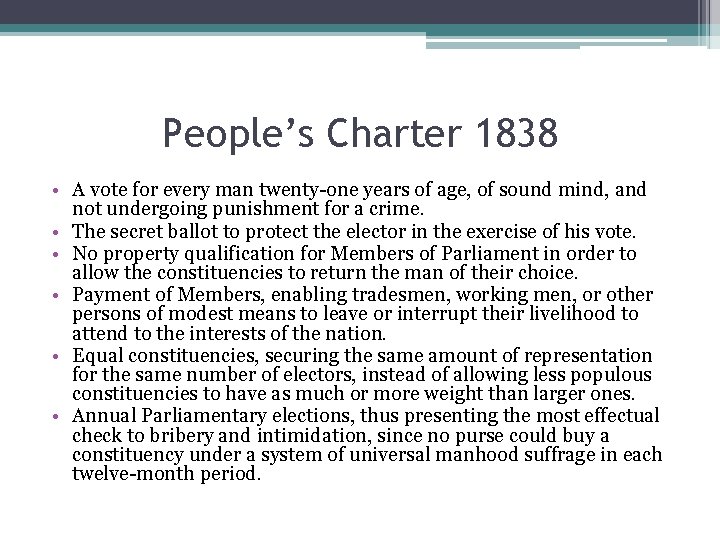
People’s Charter 1838 • A vote for every man twenty-one years of age, of sound mind, and not undergoing punishment for a crime. • The secret ballot to protect the elector in the exercise of his vote. • No property qualification for Members of Parliament in order to allow the constituencies to return the man of their choice. • Payment of Members, enabling tradesmen, working men, or other persons of modest means to leave or interrupt their livelihood to attend to the interests of the nation. • Equal constituencies, securing the same amount of representation for the same number of electors, instead of allowing less populous constituencies to have as much or more weight than larger ones. • Annual Parliamentary elections, thus presenting the most effectual check to bribery and intimidation, since no purse could buy a constituency under a system of universal manhood suffrage in each twelve-month period.
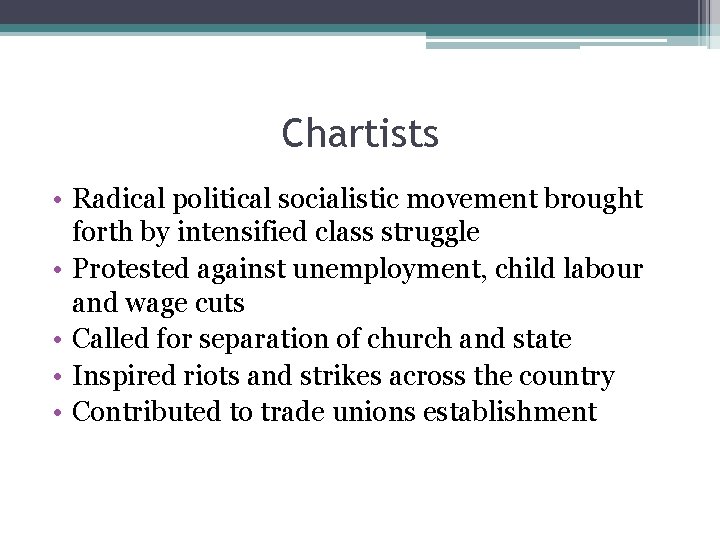
Chartists • Radical political socialistic movement brought forth by intensified class struggle • Protested against unemployment, child labour and wage cuts • Called for separation of church and state • Inspired riots and strikes across the country • Contributed to trade unions establishment
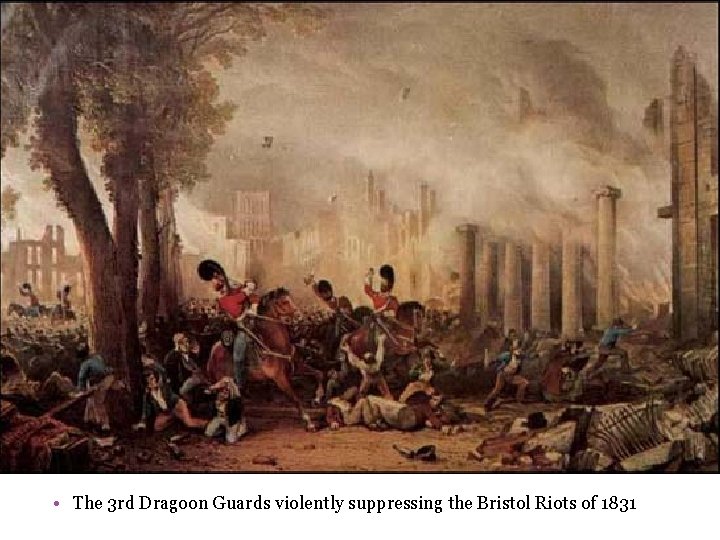
• The 3 rd Dragoon Guards violently suppressing the Bristol Riots of 1831
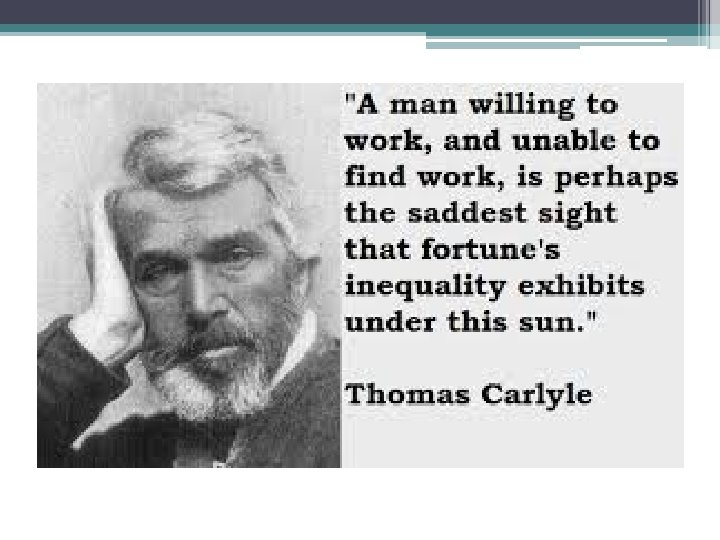
The Condition of England Debates • Raised by Thomas Carlyle in “Chartism” (1839) • Caused by social unrest and the growing antagonism between the rich and the poor; • Aimed at setting peace between old landlord aristocracy and capitalists; • Dealt with consequences of Industrial Revolution and discussed possible social reforms
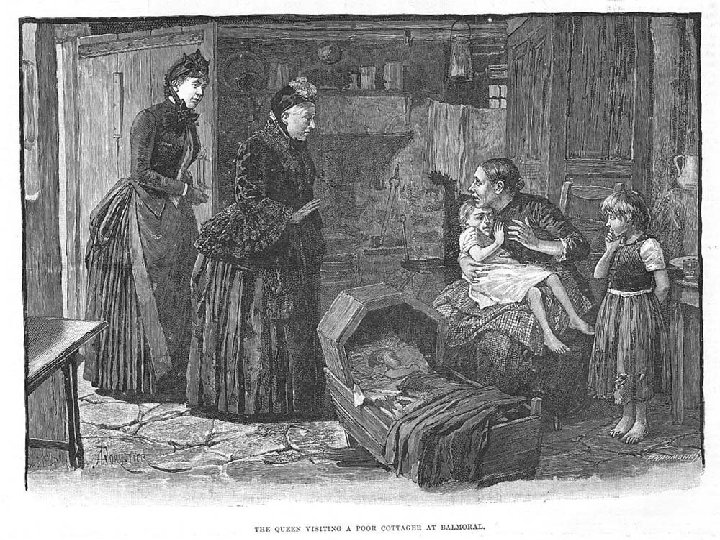
The Condition of England Novel • Social novel aka Industrial novel • Key topic: the social consequences of the Industrial Revolution in England • Paternalistic approach vs benevolent and humanitarian attitude inspiring social reform • Polemical in principle • Contains, apart from fictional plot, a debate or discourse about the current state of the nation • Instrument of social analysis and a platform for reform messages
Industrial Novel: Generic Cliché • The industrial novels all share some common characteristics: the detailed documentation of the suffering of the poor, the reproduction of working-class speech through dialect, criticism of the effects of industrialism, the discussion of contemporary reform movements like Chartism and Utilitarianism, and some attempt — usually individual and internal — at a solution to social problems. Frequently the plot is developed around a sensitive protagonist, usually male, whose moral, intellectual, or emotional development spans the course of the novel and whose romantic attachments are troubled and conflicted. The protagonist is typically searching for a way to express or mitigate the dissatisfaction of the working class as he takes his role as their spokesman. The industrial novel, which combined narrative interest with protest, was a response to a particularly dismal period in which bank failures and the scarcity of jobs created conditions that many writers saw as deplorable. Robin B. Colby
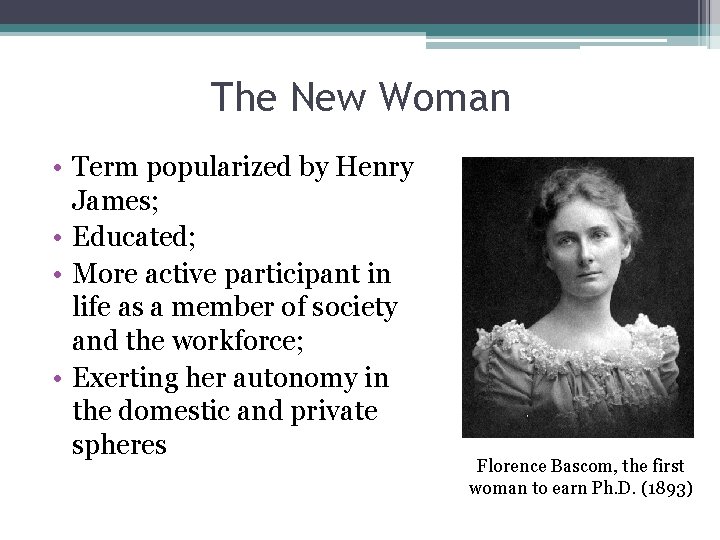
The New Woman • Term popularized by Henry James; • Educated; • More active participant in life as a member of society and the workforce; • Exerting her autonomy in the domestic and private spheres Florence Bascom, the first woman to earn Ph. D. (1893)
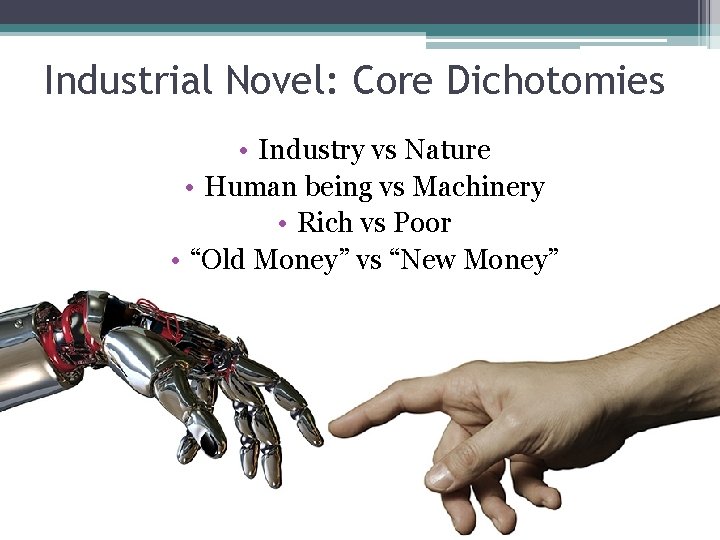
Industrial Novel: Core Dichotomies • Industry vs Nature • Human being vs Machinery • Rich vs Poor • “Old Money” vs “New Money”
Classical Industrial Novels • Benjamin Disraeli’s Coningsby and Sybil; • Elizabeth Gaskell’s Mary Barton and North and South; • Charles Dickens’s Dombey and Son and Hard Times; • Charlotte Brontë’s Shirley; • Charles Kingsley’s Alton Locke and Yeast.
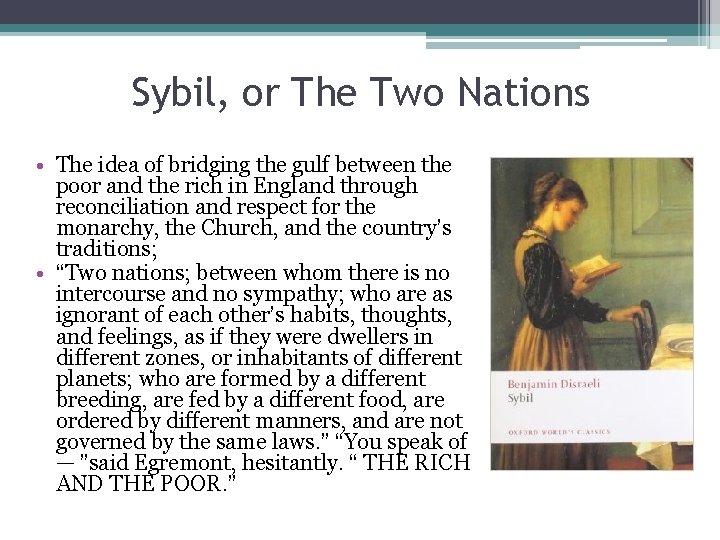
Sybil, or The Two Nations • The idea of bridging the gulf between the poor and the rich in England through reconciliation and respect for the monarchy, the Church, and the country’s traditions; • “Two nations; between whom there is no intercourse and no sympathy; who are as ignorant of each other’s habits, thoughts, and feelings, as if they were dwellers in different zones, or inhabitants of different planets; who are formed by a different breeding, are fed by a different food, are ordered by different manners, and are not governed by the same laws. ” “You speak of — ”said Egremont, hesitantly. “ THE RICH AND THE POOR. ”
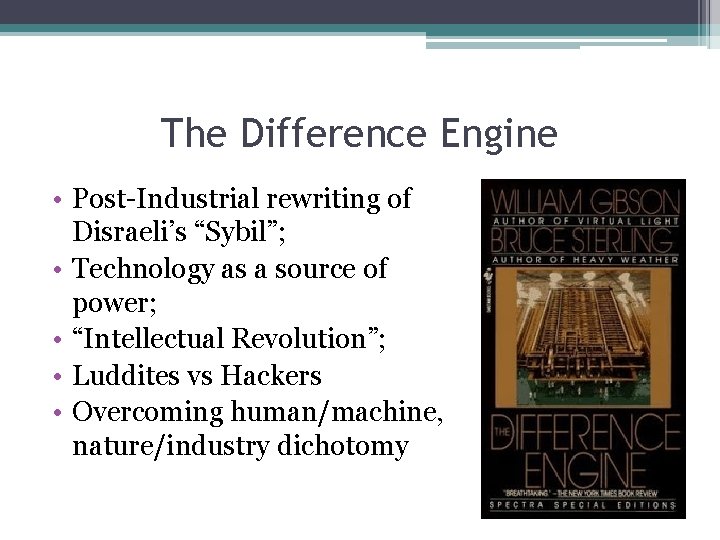
The Difference Engine • Post-Industrial rewriting of Disraeli’s “Sybil”; • Technology as a source of power; • “Intellectual Revolution”; • Luddites vs Hackers • Overcoming human/machine, nature/industry dichotomy