
Class Structure in Feudal Japan What is Feudalism

- Slides: 11
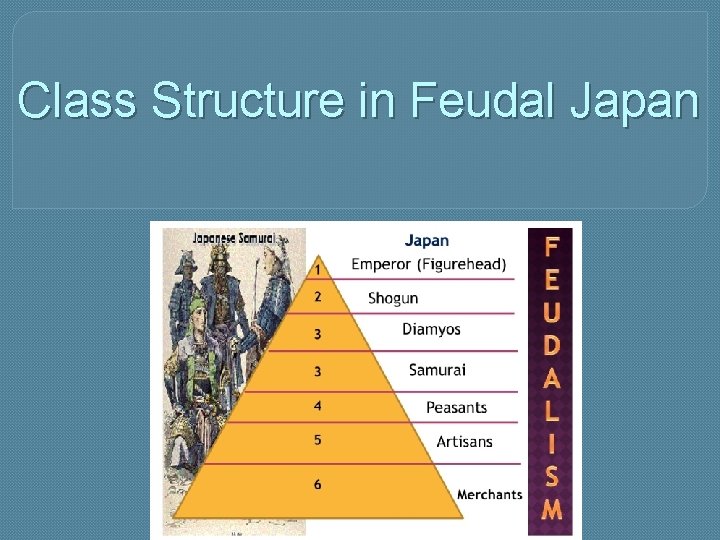
Class Structure in Feudal Japan
What is Feudalism? �Feudalism is a political, economic, and social system based on loyalty, the holding of land, and military service.
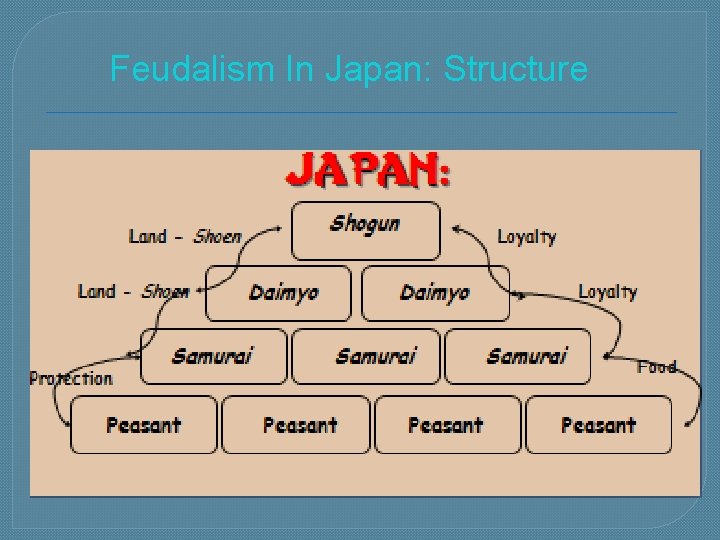
Feudalism In Japan: Structure
Shogun �The Shogun, or military commander, were • Hereditary military governors of Japan • de facto rulers of Japan �But often appointed by the Emperor • Ruled over the Daimyos, Samurai, and the lower classes • Most known Shogunate was the Tokugawa Shogunate which lasted 250 years
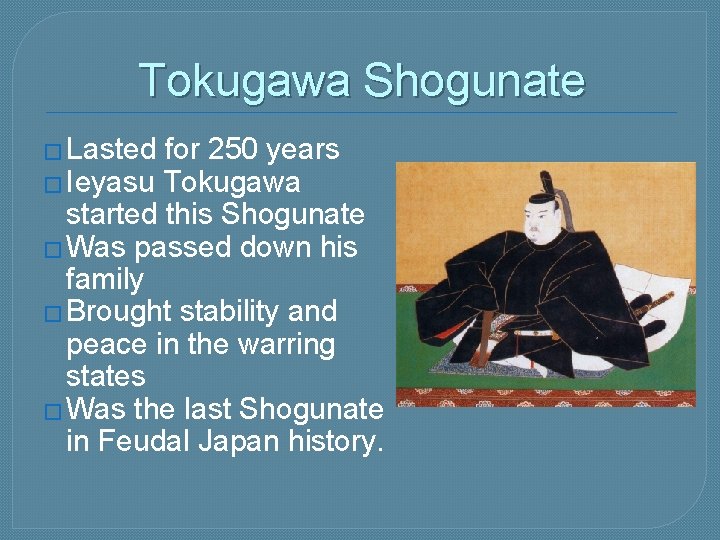
Tokugawa Shogunate � Lasted for 250 years � Ieyasu Tokugawa started this Shogunate � Was passed down his family � Brought stability and peace in the warring states � Was the last Shogunate in Feudal Japan history.
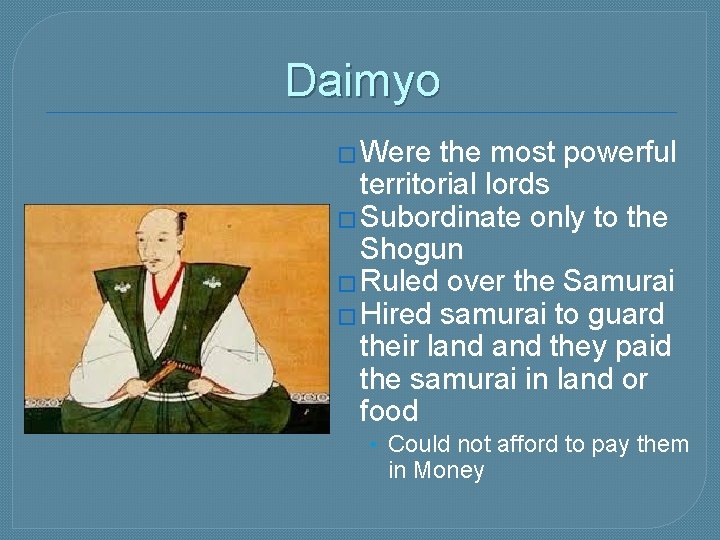
Daimyo � Were the most powerful territorial lords � Subordinate only to the Shogun � Ruled over the Samurai � Hired samurai to guard their land they paid the samurai in land or food • Could not afford to pay them in Money
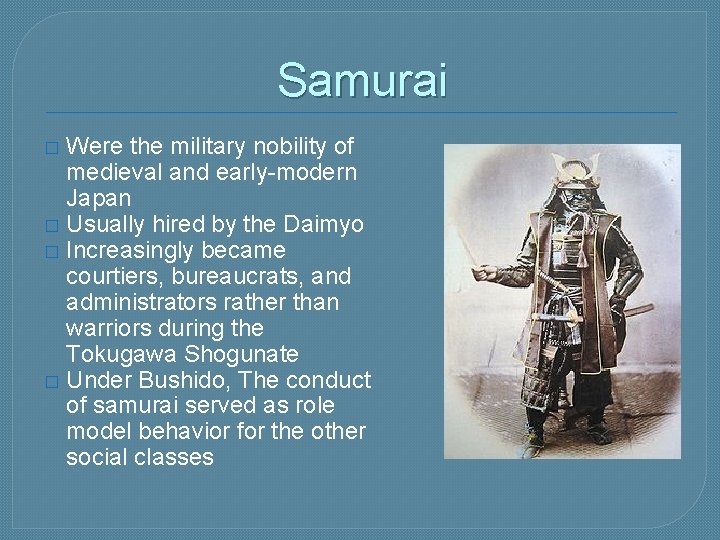
Samurai Were the military nobility of medieval and early-modern Japan � Usually hired by the Daimyo � Increasingly became courtiers, bureaucrats, and administrators rather than warriors during the Tokugawa Shogunate � Under Bushido, The conduct of samurai served as role model behavior for the other social classes �
Peasants �Made up 90% of the population �Consisted of Farmers, Artisans, and Merchants. �Farmers were higher on the class structure right under the Samurai, while the Merchants were on the lower end.
Farmers � Farmers were superior to artisans and merchants because they produced the food that all the other classes depended upon � During the reign of the third Tokugawa shogun, farmers were not allowed to eat any of the rice they grew. • They had to hand it all over to their daimyo, and then wait for him to give some back as charity.
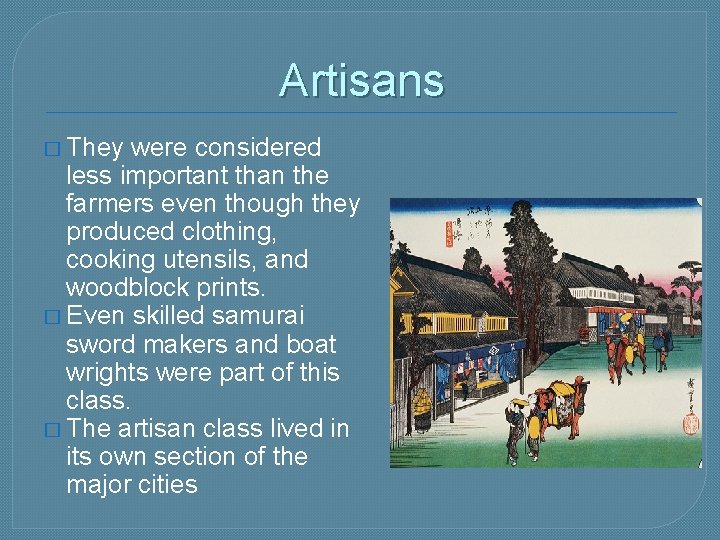
Artisans � They were considered less important than the farmers even though they produced clothing, cooking utensils, and woodblock prints. � Even skilled samurai sword makers and boat wrights were part of this class. � The artisan class lived in its own section of the major cities
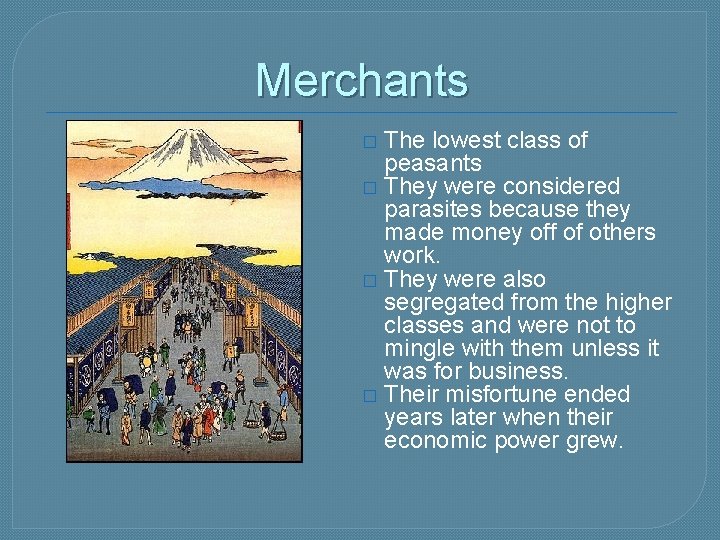
Merchants The lowest class of peasants � They were considered parasites because they made money off of others work. � They were also segregated from the higher classes and were not to mingle with them unless it was for business. � Their misfortune ended years later when their economic power grew. �