
Class Slides Set 26 A Tim Roufs section



- Slides: 72
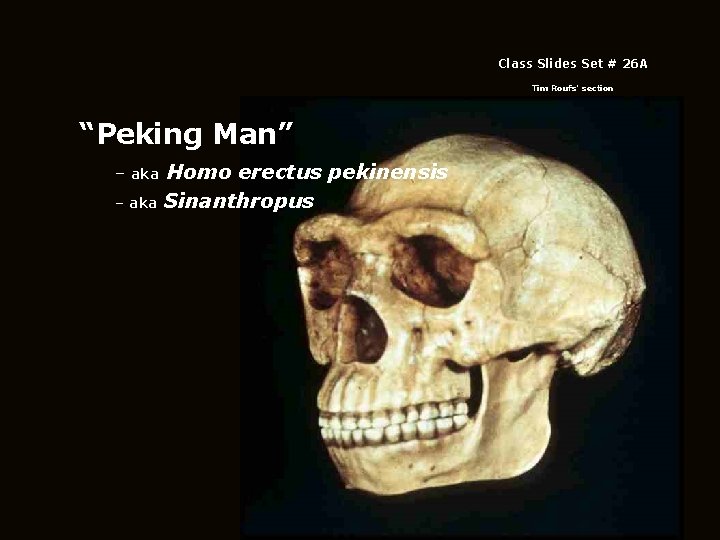
Class Slides Set # 26 A Tim Roufs’ section “Peking Man” – aka Homo erectus pekinensis Sinanthropus
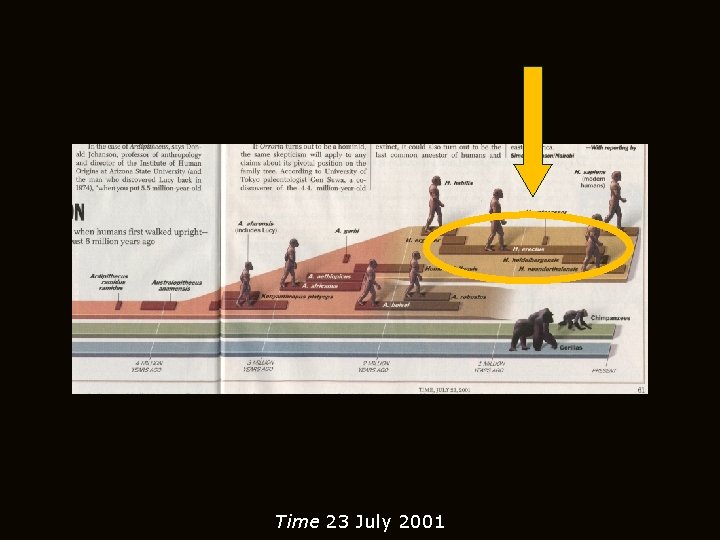
Time 23 July 2001
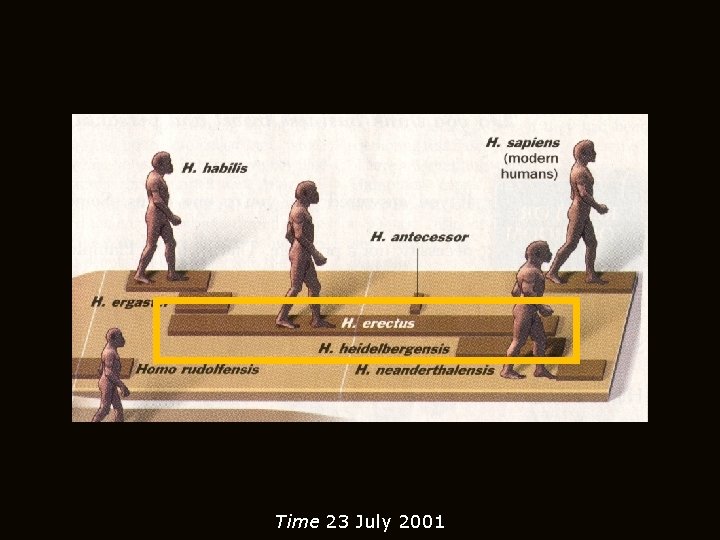
Time 23 July 2001
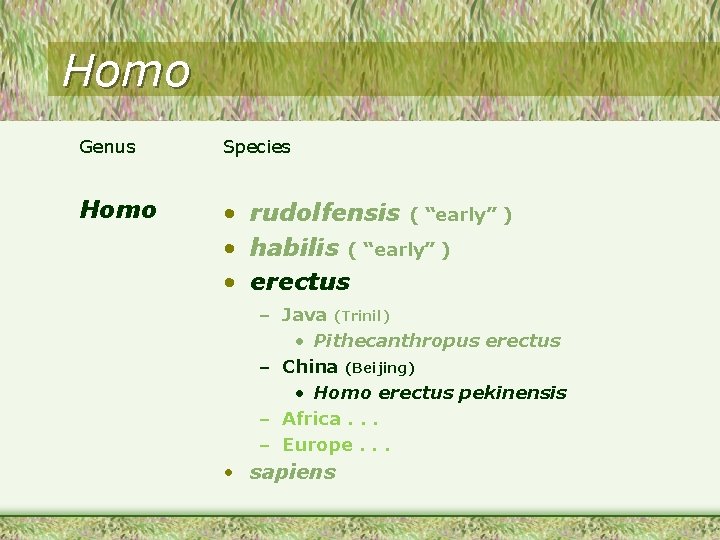
Homo Genus Species Homo • rudolfensis ( “early” ) • habilis ( “early” ) • erectus – Java (Trinil) • Pithecanthropus erectus – China (Beijing) • Homo erectus pekinensis – Africa. . . – Europe. . . • sapiens
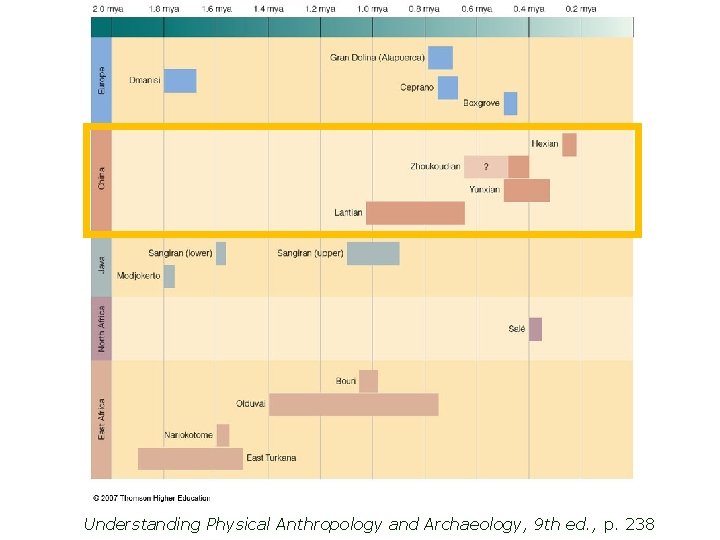
Understanding Physical Anthropology and Archaeology, 9 th ed. , p. 238
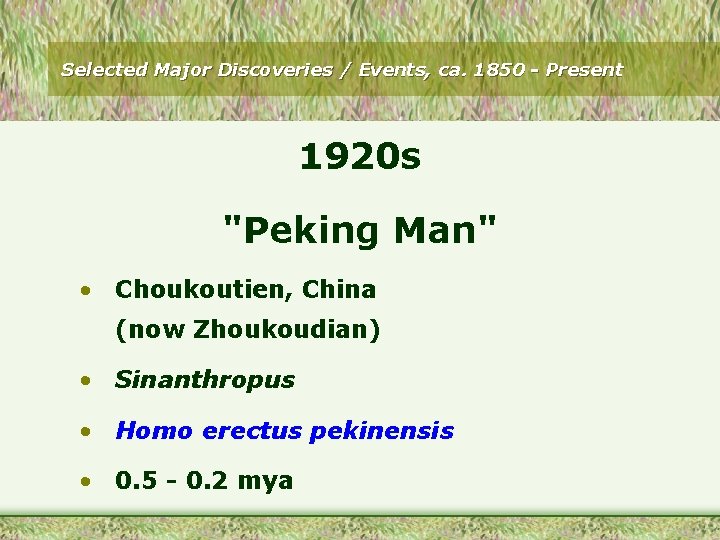
Selected Major Discoveries / Events, ca. 1850 - Present 1920 s "Peking Man" • Choukoutien, China (now Zhoukoudian) • Sinanthropus • Homo erectus pekinensis • 0. 5 - 0. 2 mya
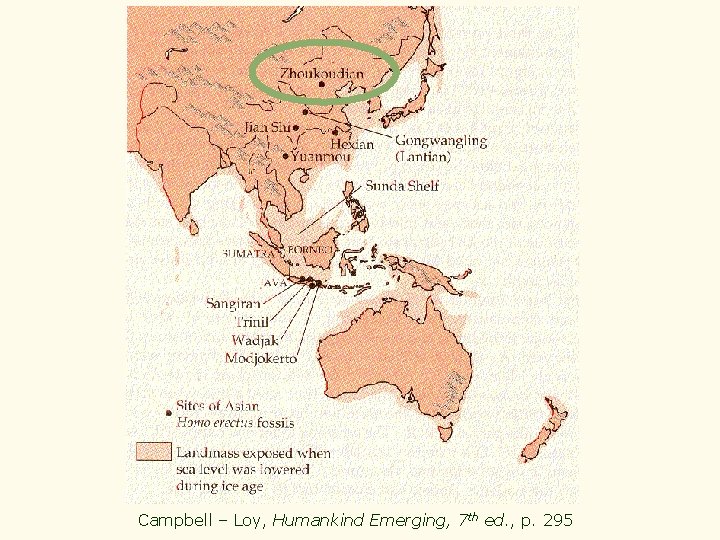
Major Sites: China Choukoutien = Zhoukoudian ( Chou-kou-tien )
Campbell – Loy, Humankind Emerging, 7 th ed. , p. 295
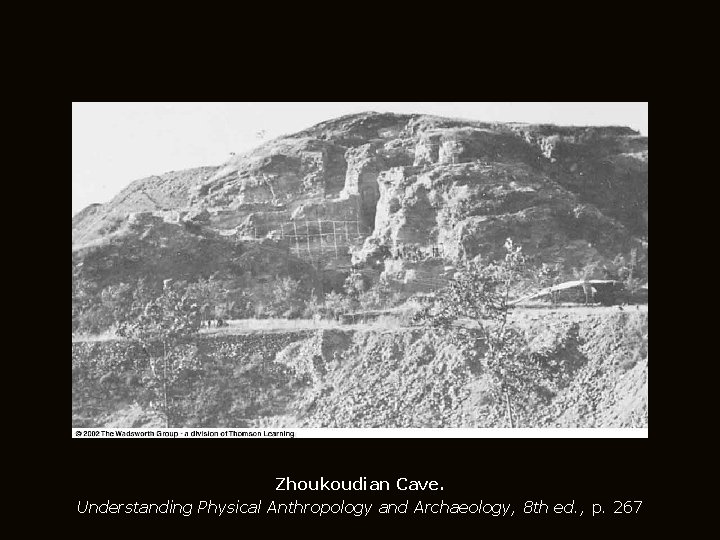
Zhoukoudian Cave. Understanding Physical Anthropology and Archaeology, 8 th ed. , p. 267
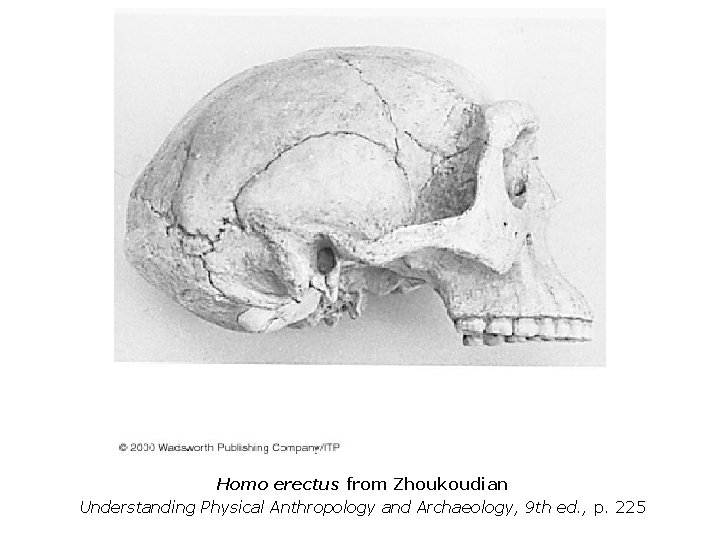
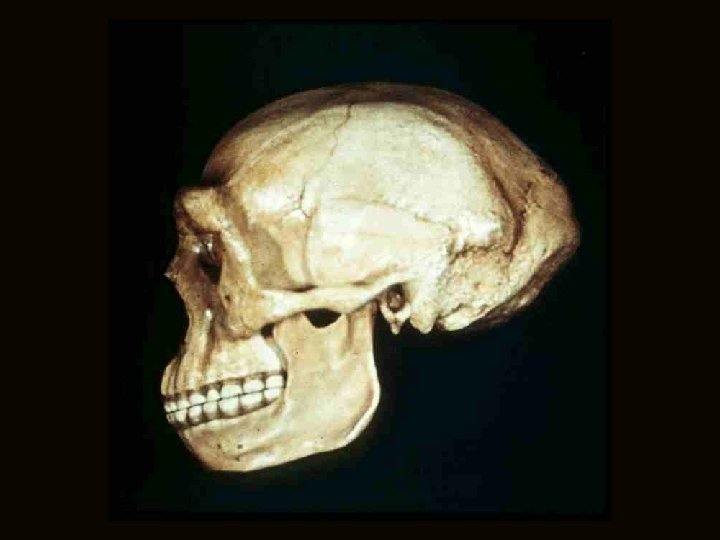
Homo erectus from Zhoukoudian Understanding Physical Anthropology and Archaeology, 9 th ed. , p. 225
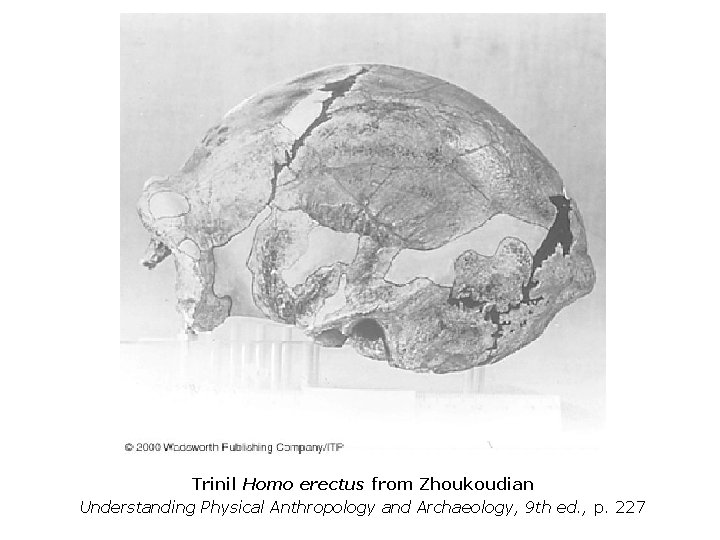
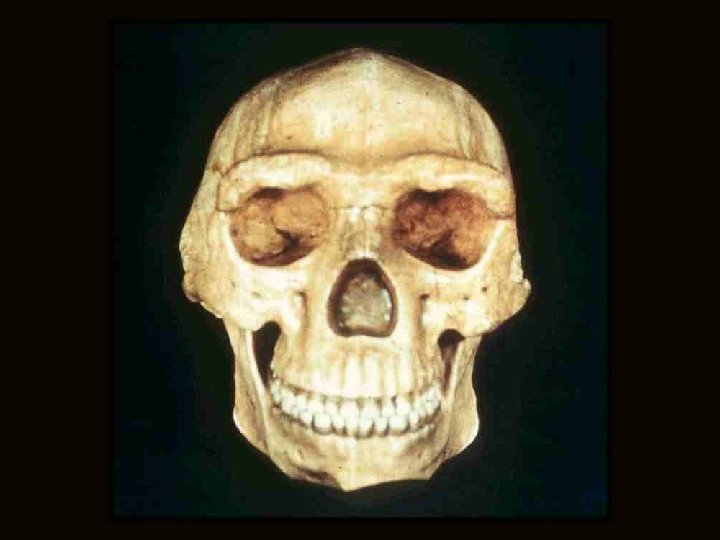
Trinil Homo erectus from Zhoukoudian Understanding Physical Anthropology and Archaeology, 9 th ed. , p. 227
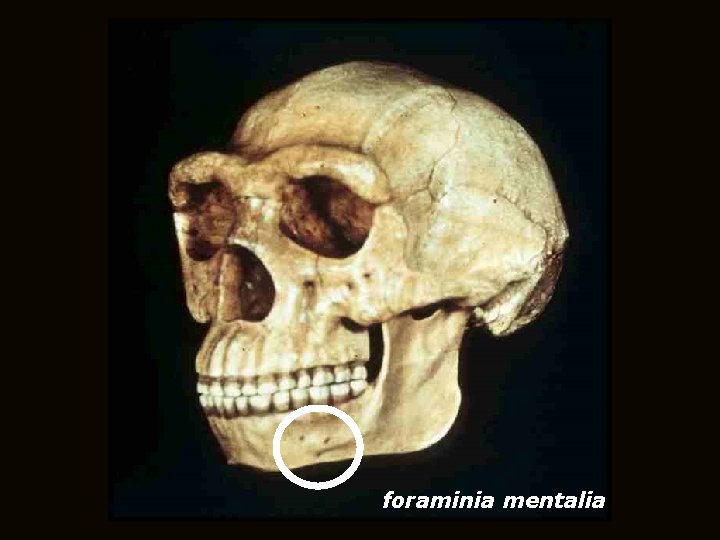
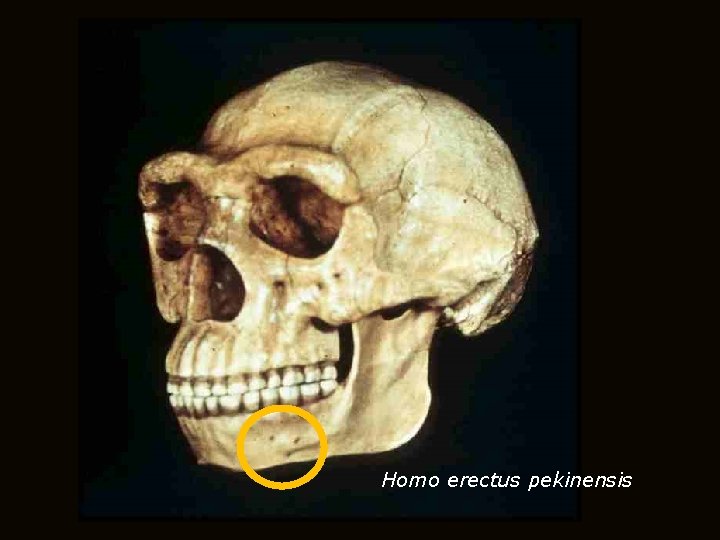
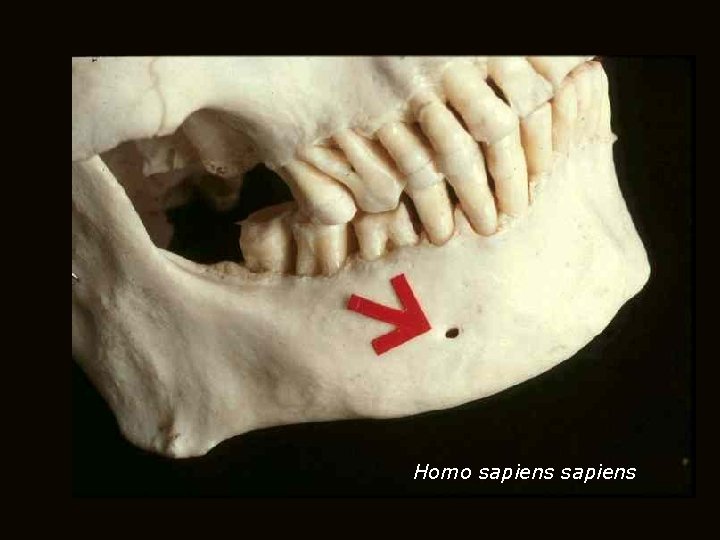
foraminia mentalia
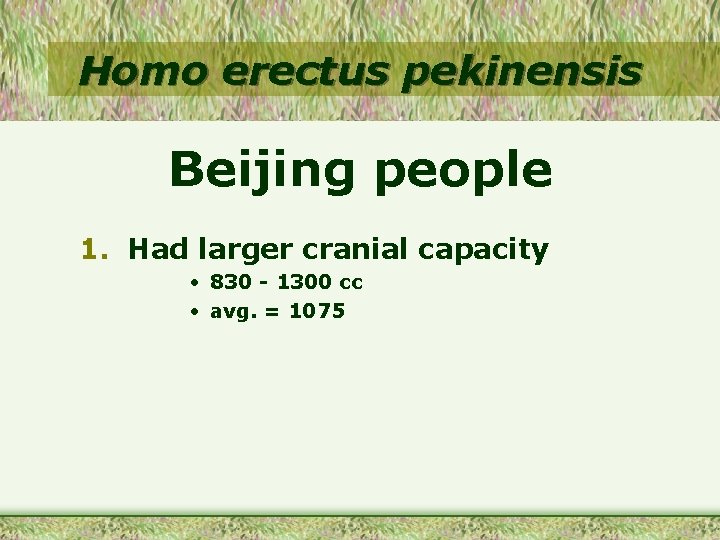
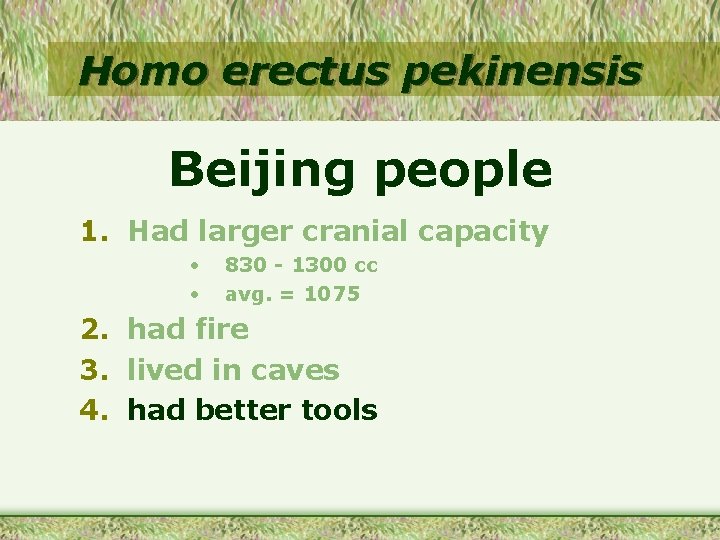
Homo erectus pekinensis Beijing people 1. Had larger cranial capacity • 830 - 1300 cc • avg. = 1075
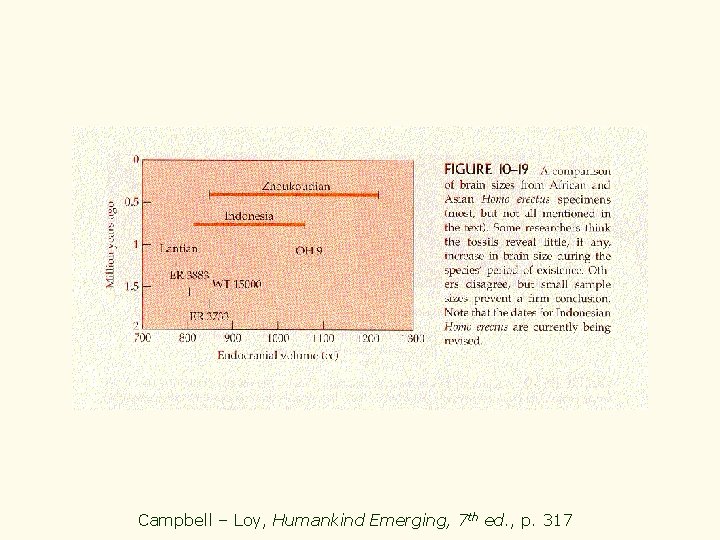
Campbell – Loy, Humankind Emerging, 7 th ed. , p. 317
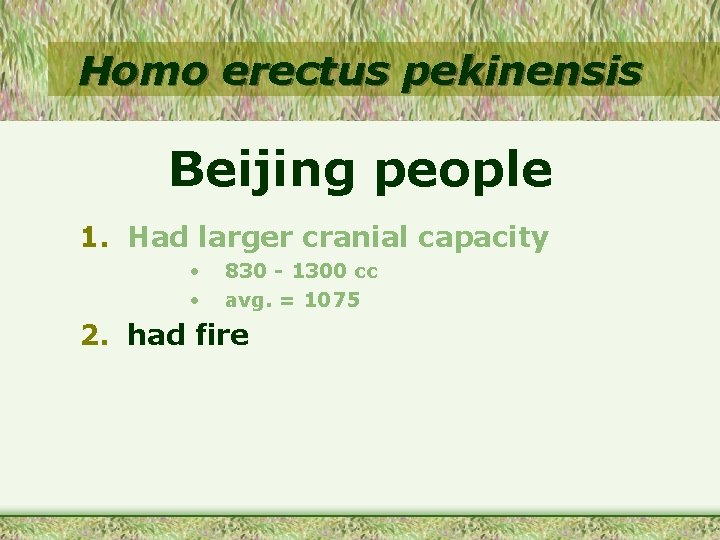
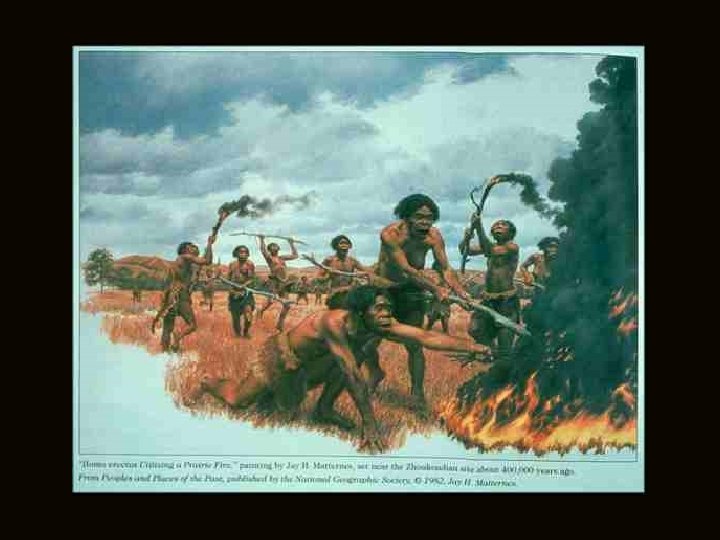
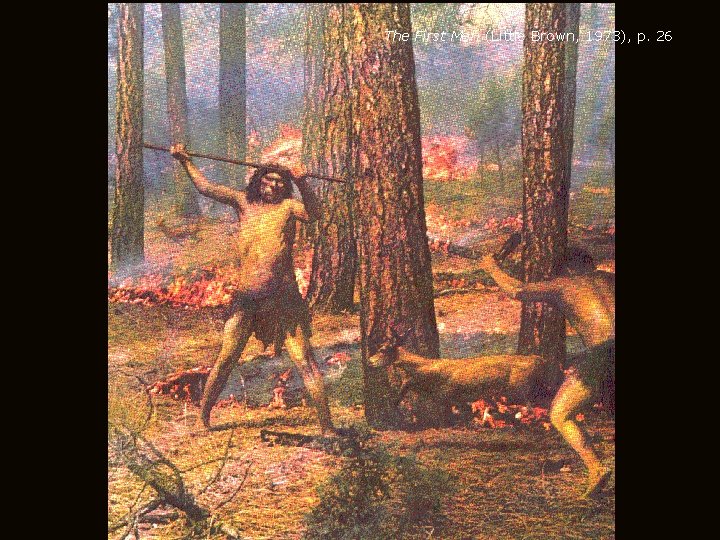
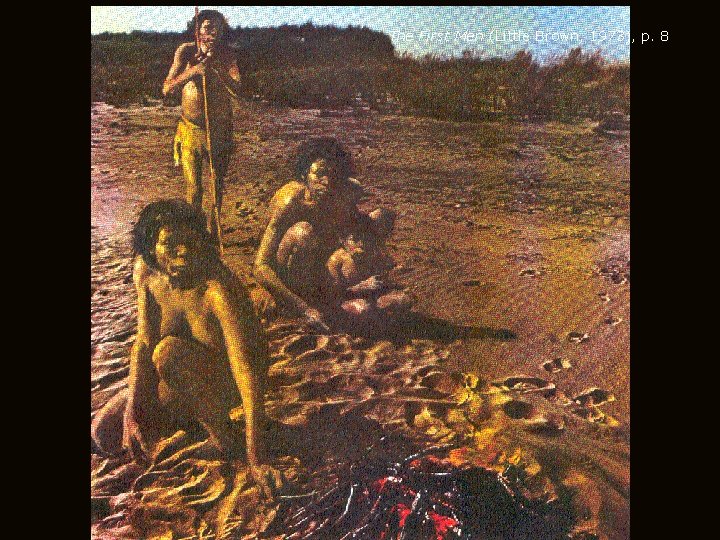
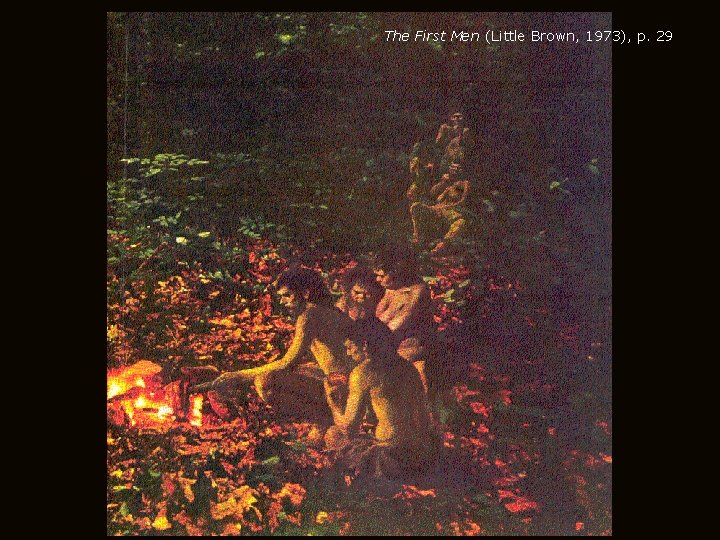
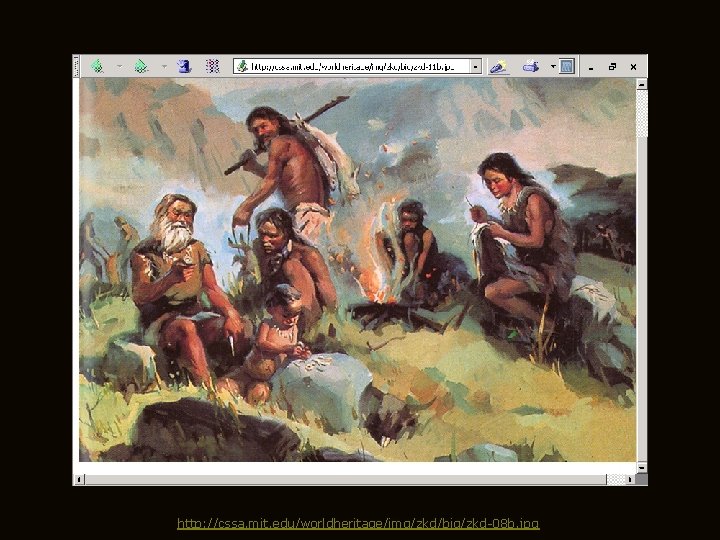
Homo erectus pekinensis Beijing people 1. Had larger cranial capacity • • 830 - 1300 cc avg. = 1075 2. had fire
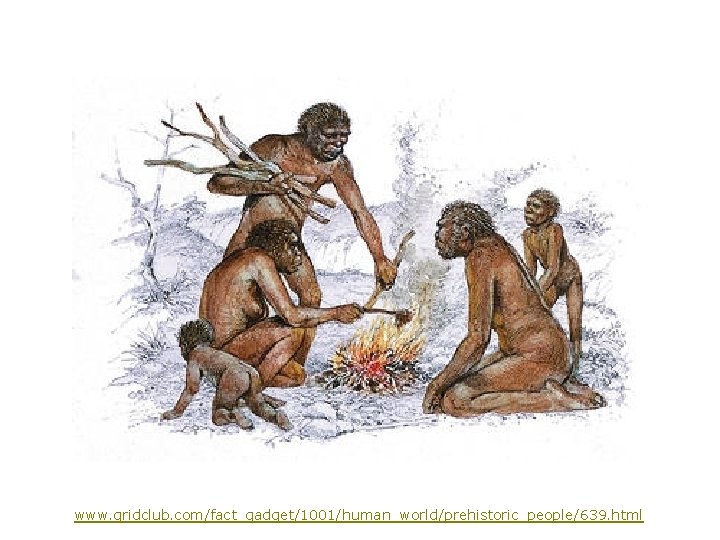
www. gridclub. com/fact_gadget/1001/human_world/prehistoric_people/639. html
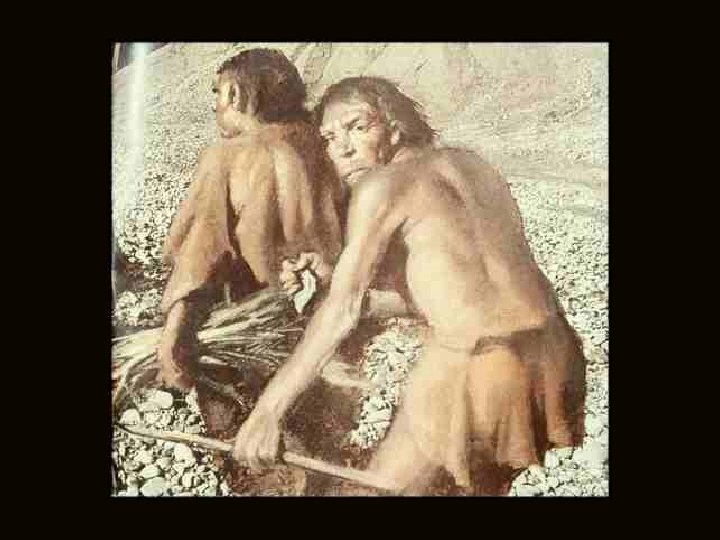
The First Men (Little Brown, 1973), p. 26
The First Men (Little Brown, 1973), p. 8
The First Men (Little Brown, 1973), p. 29
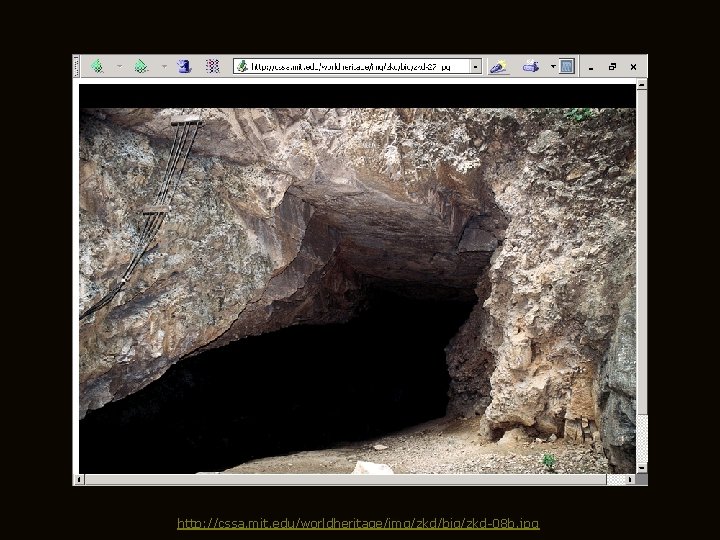
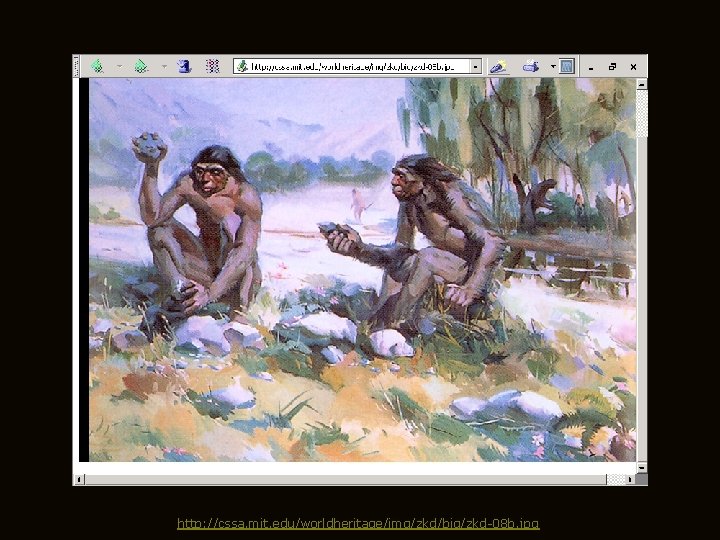
Homo erectus pekinensis Beijing people 1. Had larger cranial capacity • • 830 - 1300 cc avg. = 1075 2. had fire 3. lived in caves
http: //cssa. mit. edu/worldheritage/img/zkd/big/zkd-08 b. jpg
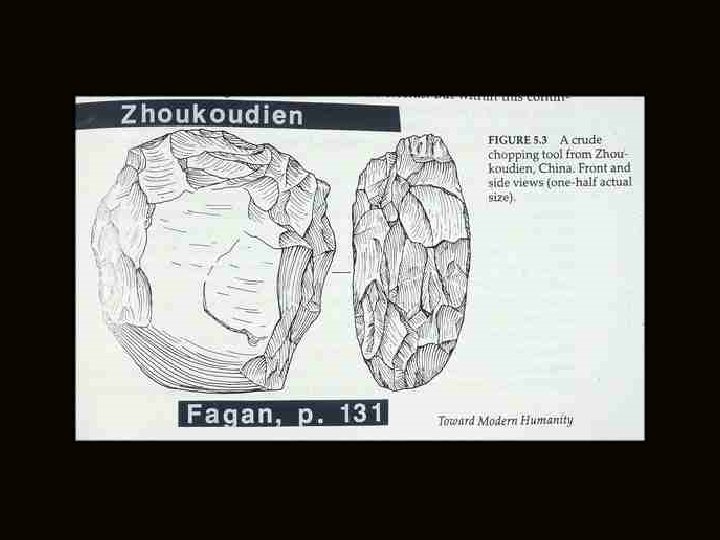
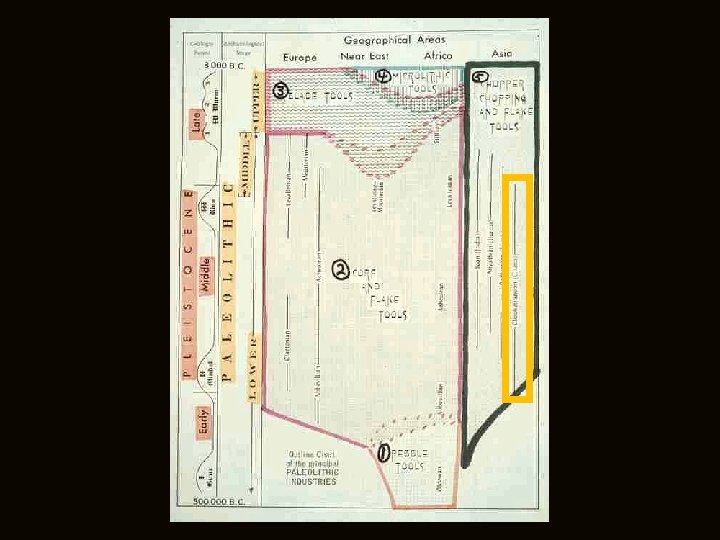
Homo erectus pekinensis Beijing people 1. Had larger cranial capacity • • 830 - 1300 cc avg. = 1075 2. had fire 3. lived in caves 4. had better tools
http: //cssa. mit. edu/worldheritage/img/zkd/big/zkd-08 b. jpg
http: //cssa. mit. edu/worldheritage/img/zkd/big/zkd-08 b. jpg
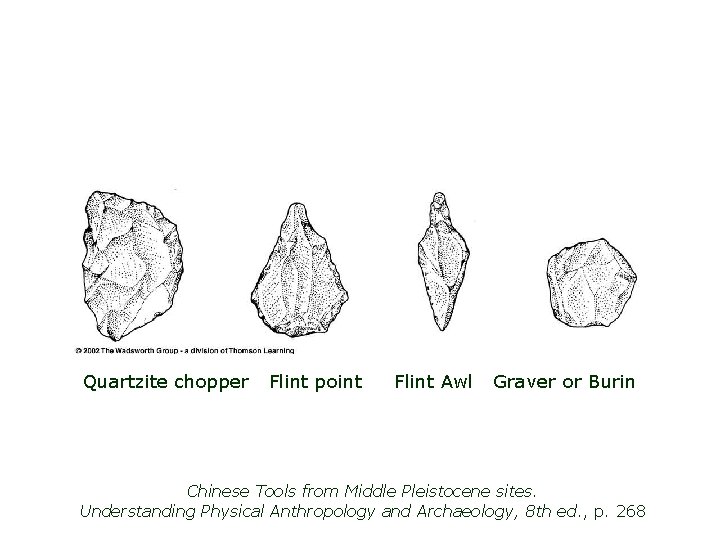
Quartzite chopper Flint point Flint Awl Graver or Burin Chinese Tools from Middle Pleistocene sites. Understanding Physical Anthropology and Archaeology, 8 th ed. , p. 268
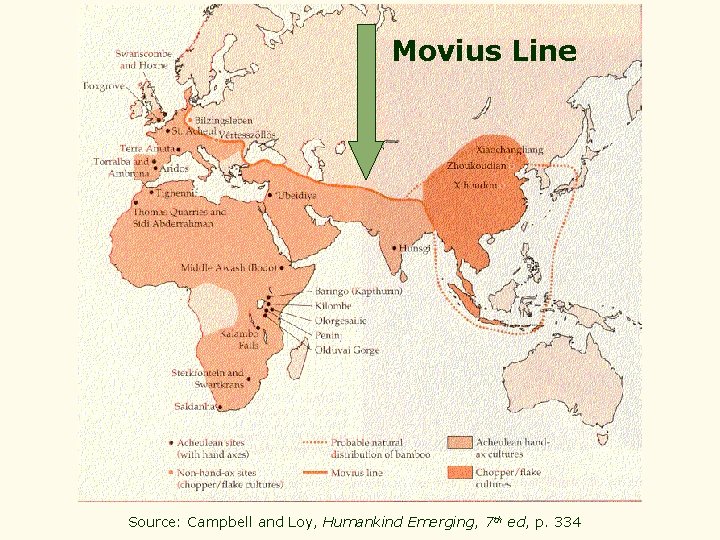
Movius Line Source: Campbell and Loy, Humankind Emerging, 7 th ed, p. 334
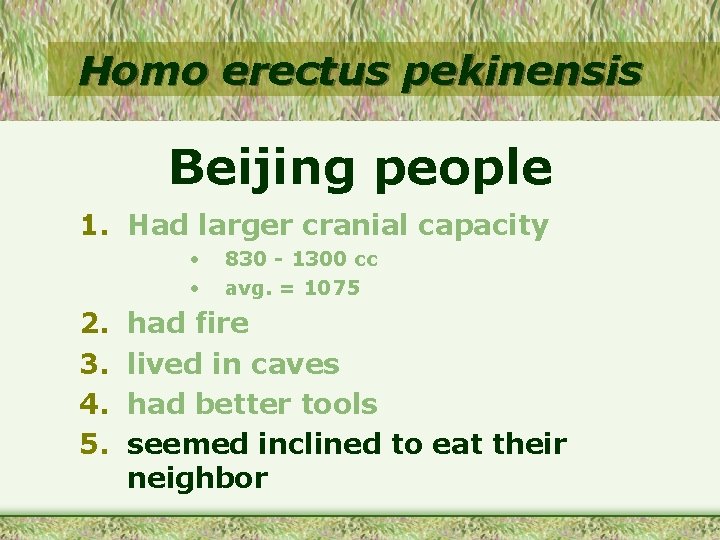
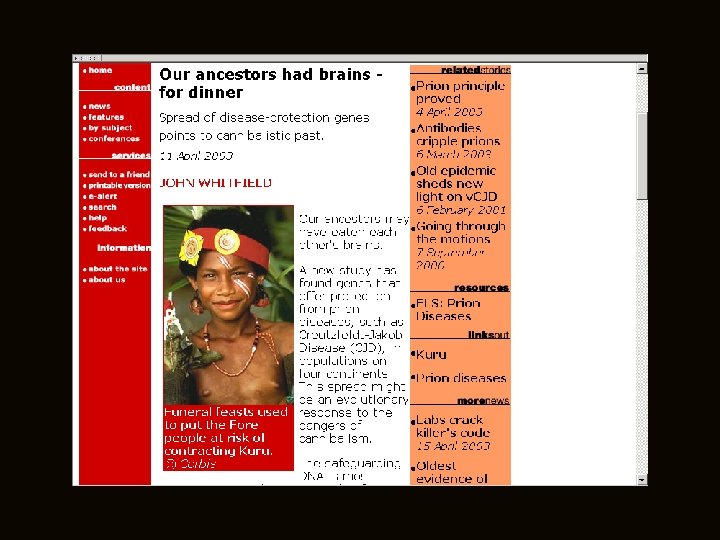
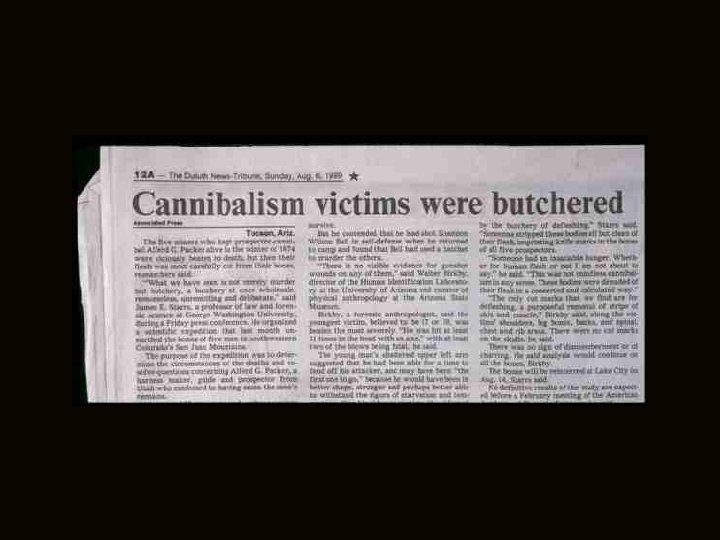
Homo erectus pekinensis Beijing people 1. Had larger cranial capacity • • 2. 3. 4. 5. 830 - 1300 cc avg. = 1075 had fire lived in caves had better tools seemed inclined to eat their neighbor
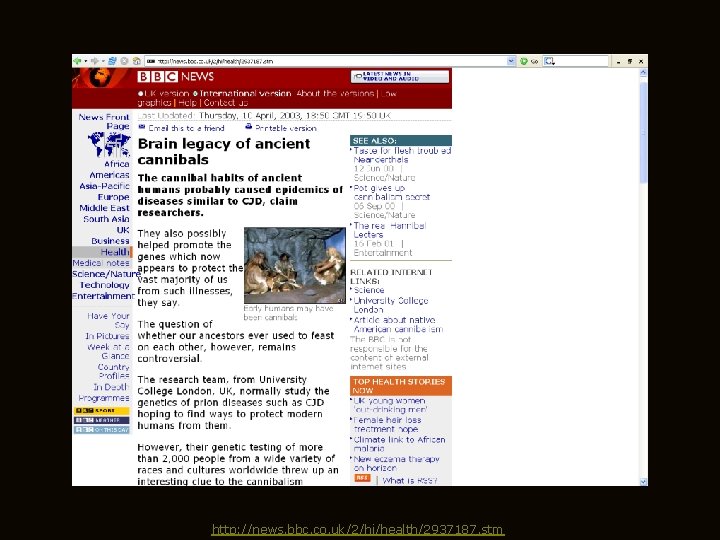
http: //news. bbc. co. uk/2/hi/health/2937187. stm
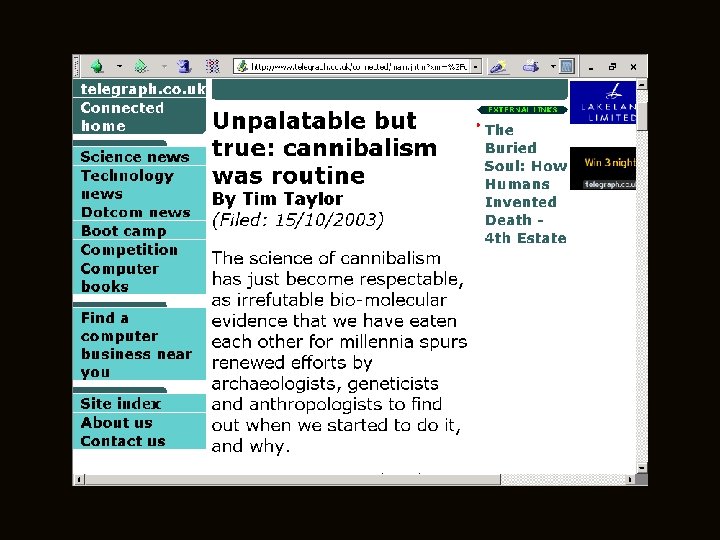
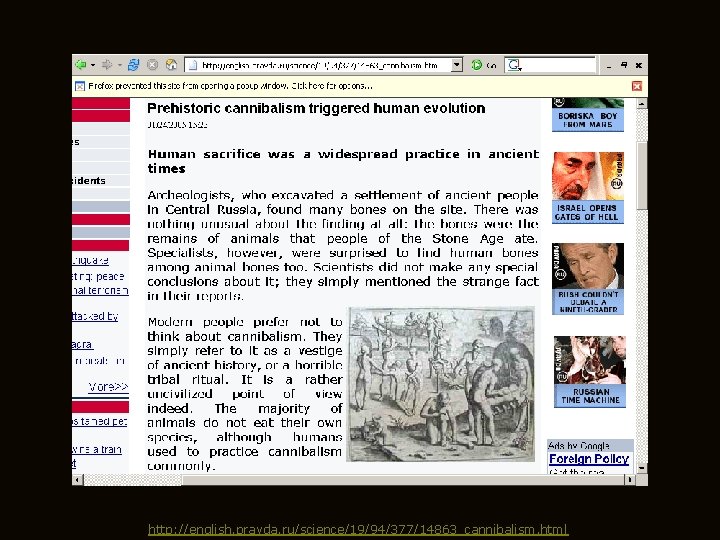
http: //english. pravda. ru/science/19/94/377/14863_cannibalism. html
Homo erectus pekinensis Types of Cannibalism • Survival
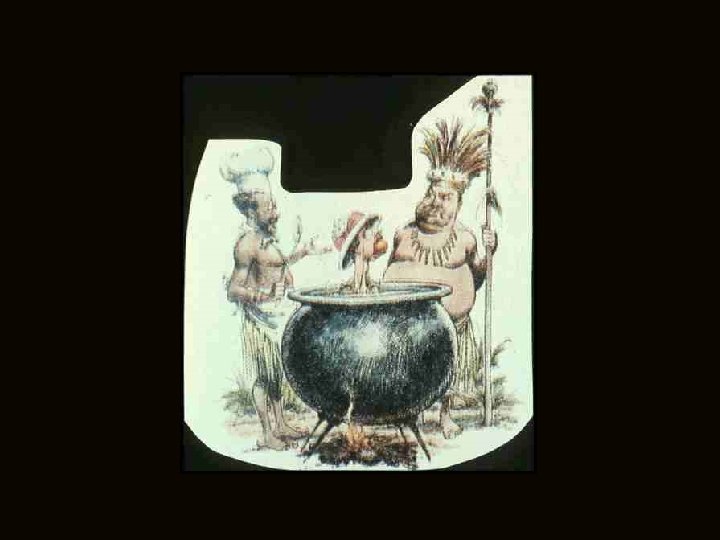
Homo erectus pekinensis Types of Cannibalism • Survival • Gustatory
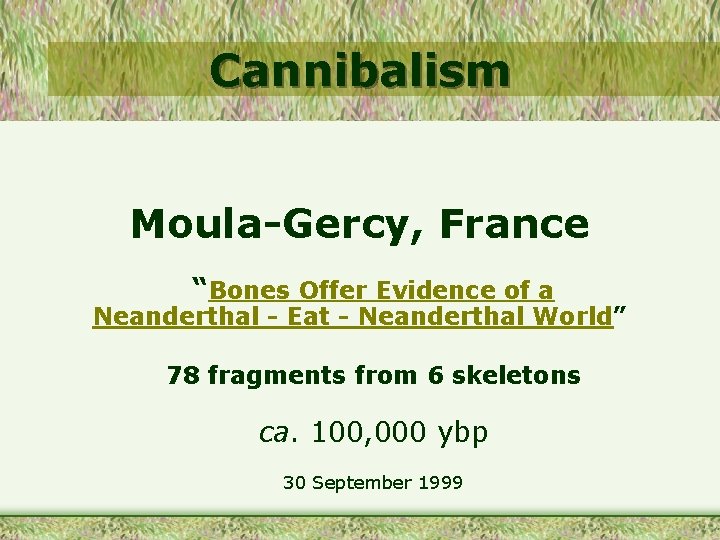
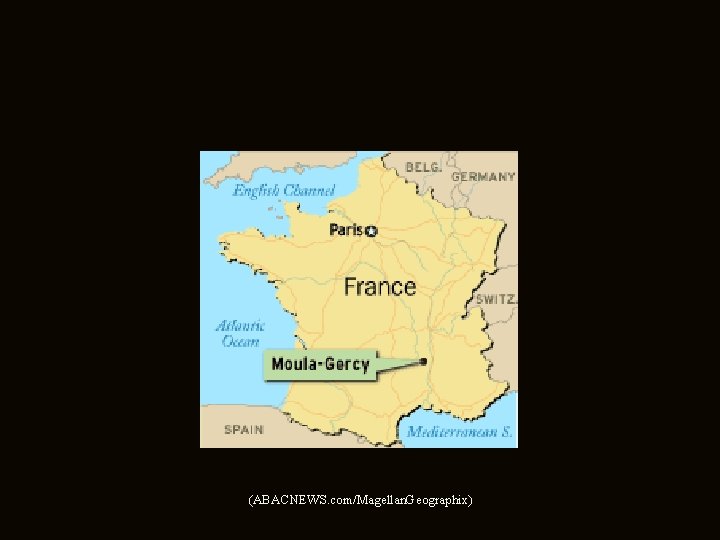
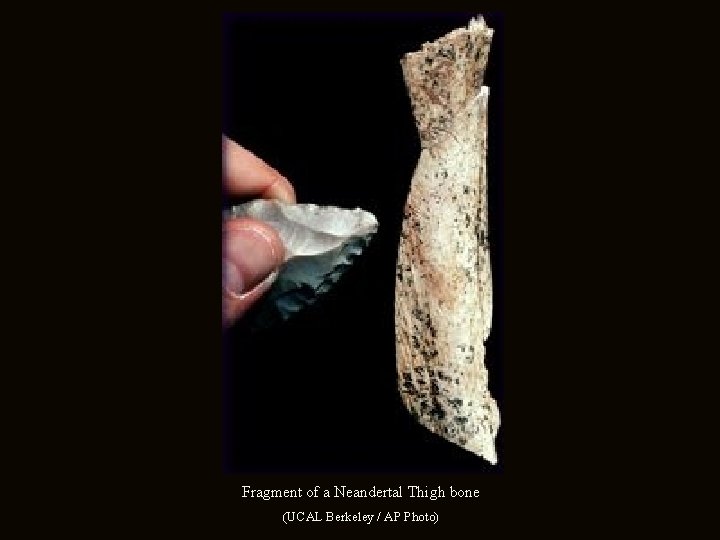
Cannibalism Moula-Gercy, France “Bones Offer Evidence of a Neanderthal - Eat - Neanderthal World” 78 fragments from 6 skeletons ca. 100, 000 ybp 30 September 1999
(ABACNEWS. com/Magellan. Geographix)
Fragment of a Neandertal Thigh bone (UCAL Berkeley / AP Photo)
Homo erectus pekinensis Types of Cannibalism • Survival • Gustatory • Ritualistic or Incorporative
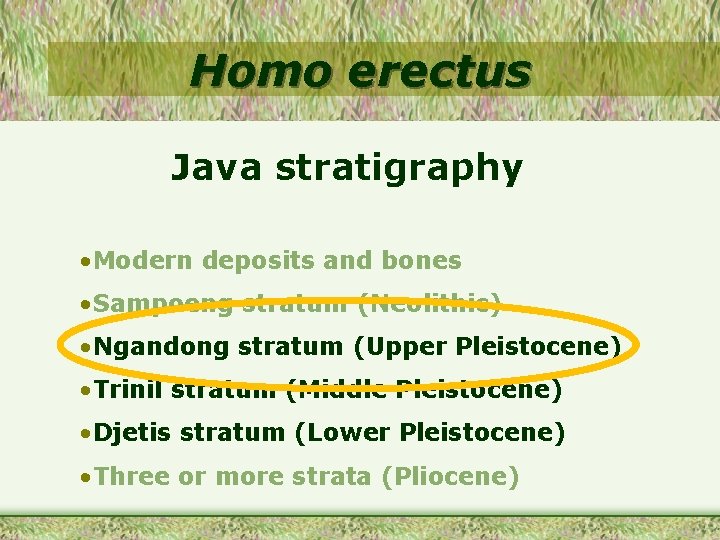
Homo erectus Java stratigraphy • Modern deposits and bones • Sampoeng stratum (Neolithic) • Ngandong stratum (Upper Pleistocene) • Trinil stratum (Middle Pleistocene) • Djetis stratum (Lower Pleistocene) • Three or more strata (Pliocene)
Homo erectus pekinensis Beijing people were geographically isolated This shows up in. . .
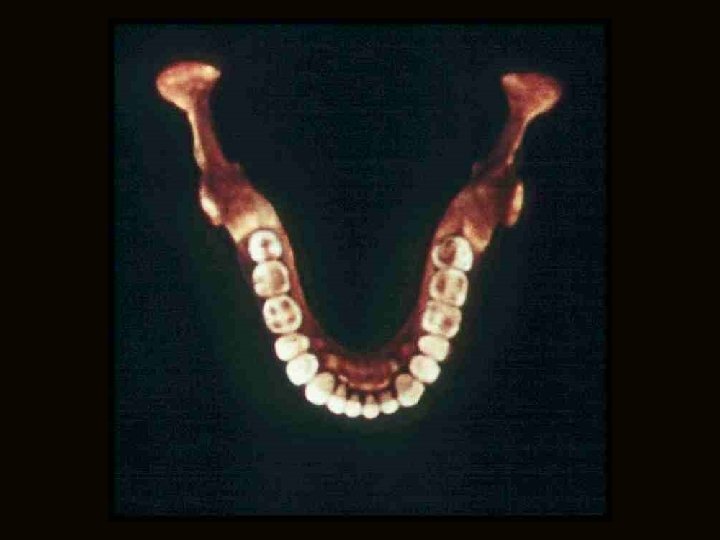
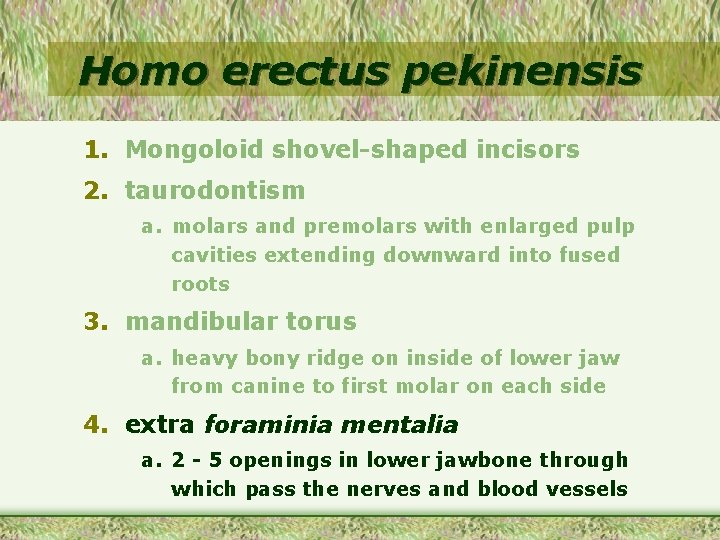
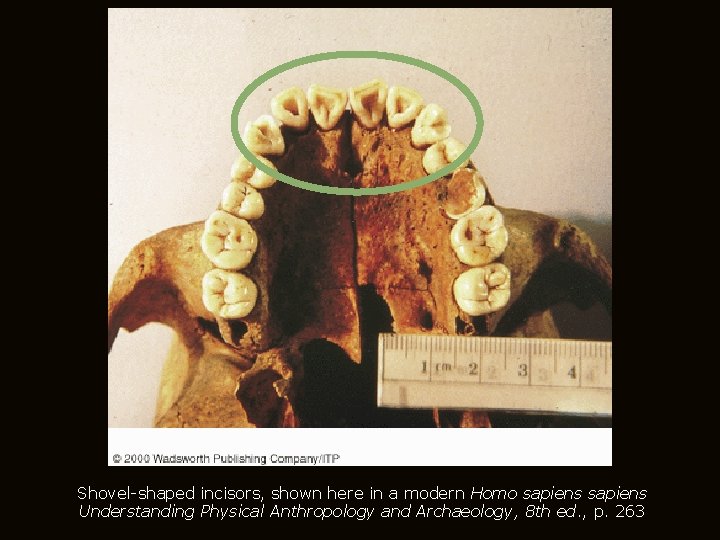
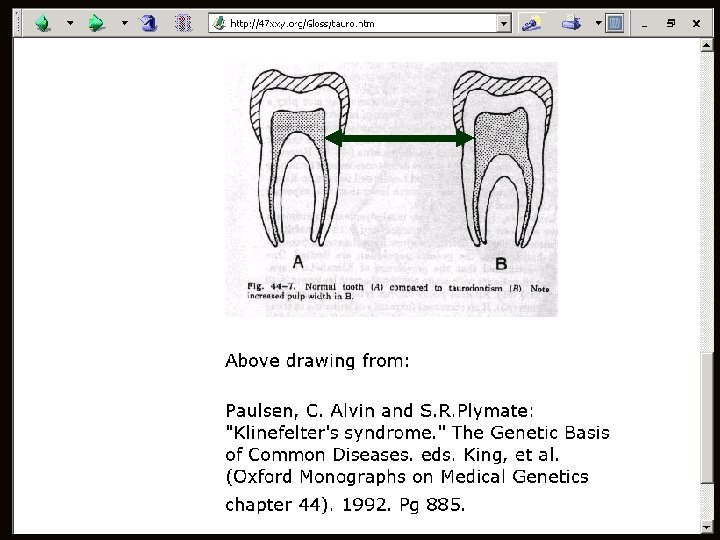
Homo erectus pekinensis 1. Mongoloid shovel-shaped incisors 2. taurodontism a. molars and premolars with enlarged pulp cavities extending downward into fused roots 3. mandibular torus a. heavy bony ridge on inside of lower jaw from canine to first molar on each side 4. extra foraminia mentalia a. 2 - 5 openings in lower jawbone through which pass the nerves and blood vessels
Homo erectus pekinensis 1. Mongoloid shovel-shaped incisors
Shovel-shaped incisors, shown here in a modern Homo sapiens Understanding Physical Anthropology and Archaeology, 8 th ed. , p. 263
Homo erectus pekinensis 1. Mongoloid shovel-shaped incisors 2. taurodontism a. molars and premolars with enlarged pulp cavities extending downward into fused roots
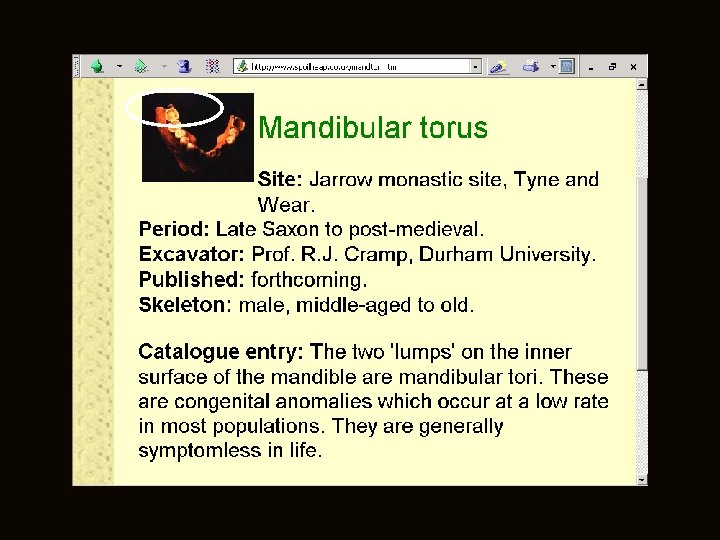
Homo erectus pekinensis 1. Mongoloid shovel-shaped incisors 2. taurodontism a. molars and premolars with enlarged pulp cavities extending downward into fused roots 3. mandibular torus a. heavy bony ridge on inside of lower jaw from canine to first molar on each side
Homo erectus pekinensis 1. Mongoloid shovel-shaped incisors 2. taurodontism a. molars and premolars with enlarged pulp cavities extending downward into fused roots 3. mandibular torus a. heavy bony ridge on inside of lower jaw from canine to first molar on each side 4. extra foraminia mentalia a. 2 - 5 openings in lower jawbone through which pass the nerves and blood vessels
Homo erectus pekinensis
Homo sapiens
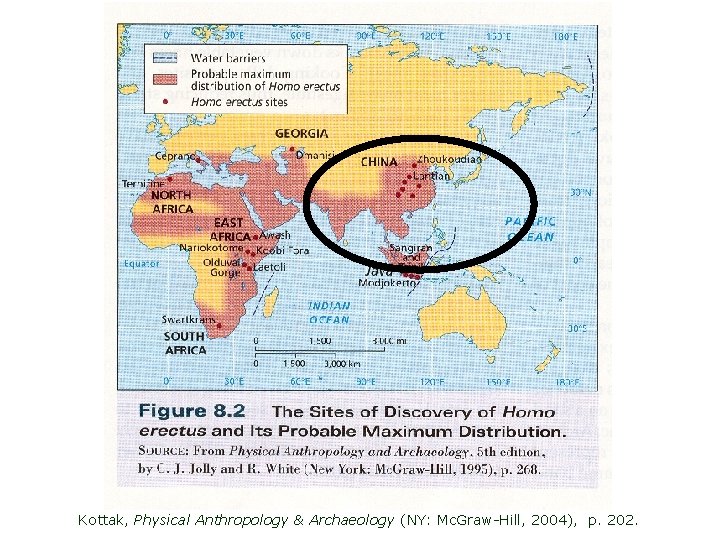
Kottak, Physical Anthropology & Archaeology (NY: Mc. Graw-Hill, 2004), p. 202.
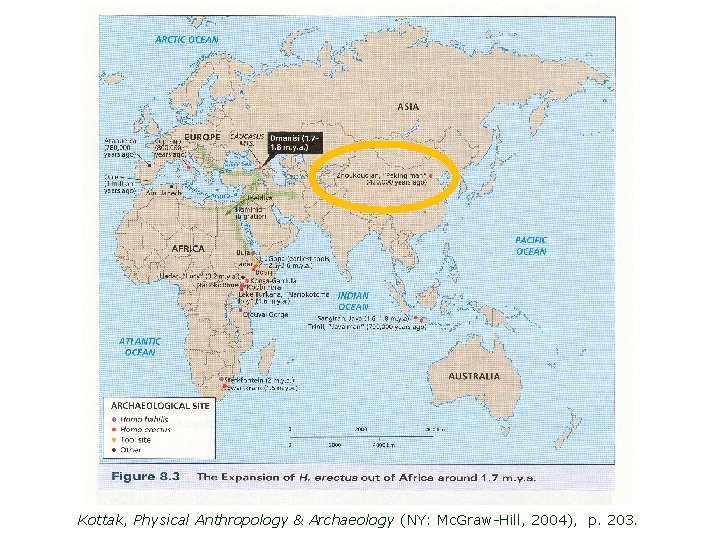
Kottak, Physical Anthropology & Archaeology (NY: Mc. Graw-Hill, 2004), p. 203.
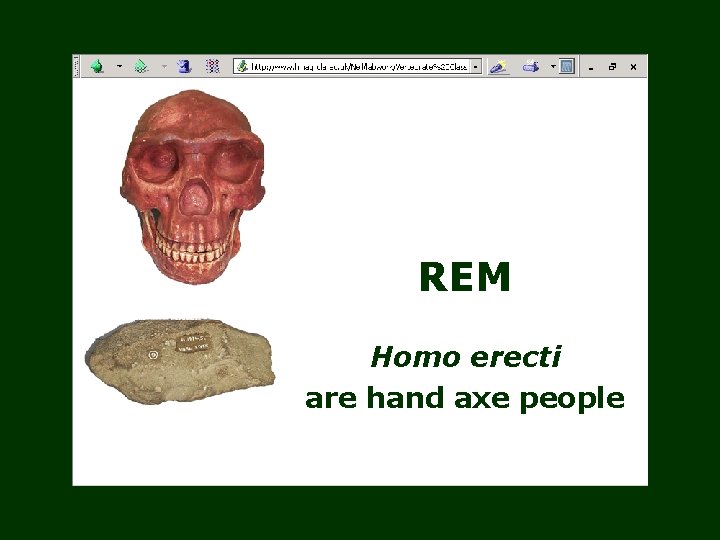
REM Homo erecti are hand axe people
Next: Homo erectus in Africa