
Class Slides Set 15 A Bipedalism LegsFeet and
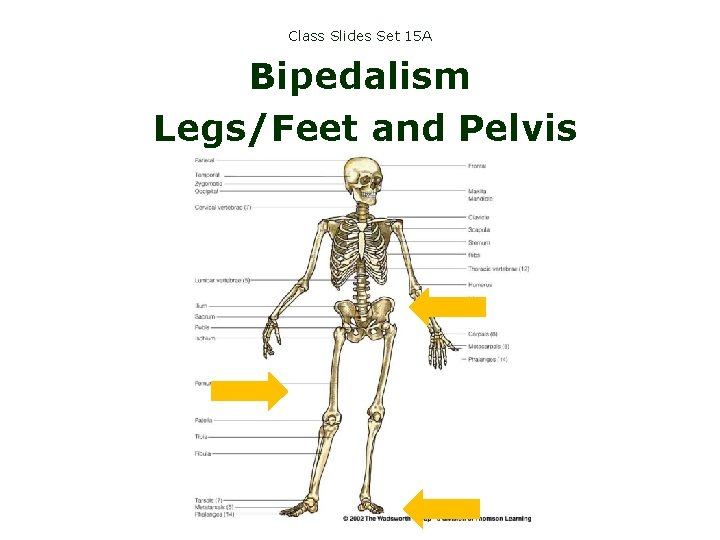
Class Slides Set 15 A Bipedalism Legs/Feet and Pelvis
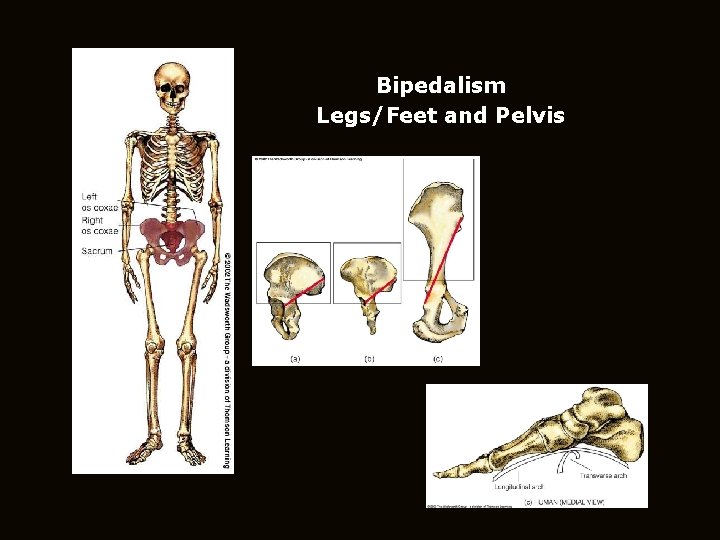
Bipedalism Legs/Feet and Pelvis
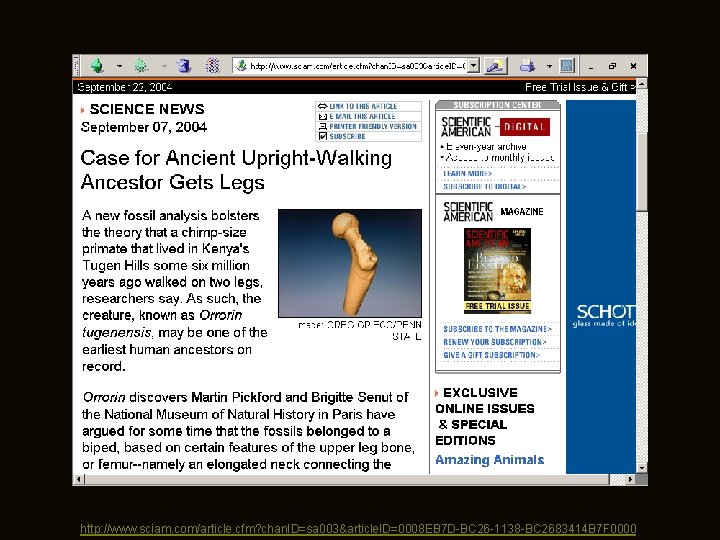
http: //www. sciam. com/article. cfm? chan. ID=sa 003&article. ID=0008 EB 7 D-BC 26 -1138 -BC 2683414 B 7 F 0000
Arm swinging and erect (bipedal) or semi-erect walking resulted in a number of postcranial changes

Postcranial = below the head (with bipeds) behind the head (with quadrupeds)

Postcrania Modern human New World monkey Understanding Physical Anthropology and Archaeology, 9 th ed. , pp. 200, 429, 121
Apes The ability to assume a fairly erect posture produced important changes
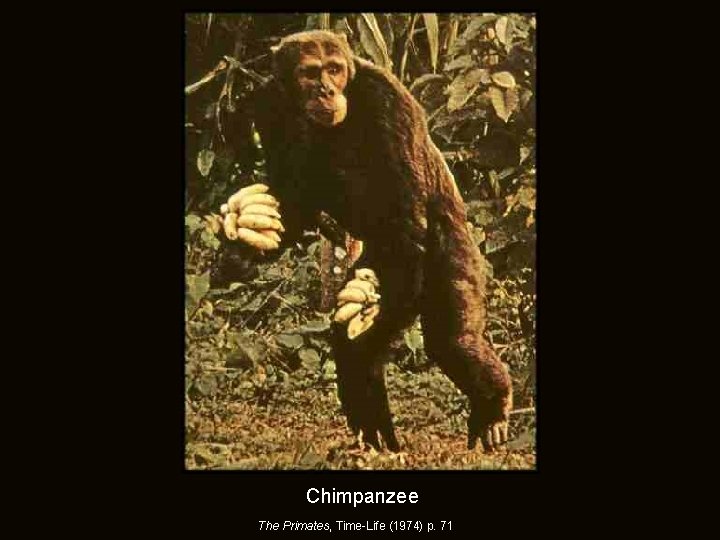
Chimpanzee The Primates, Time-Life (1974) p. 71
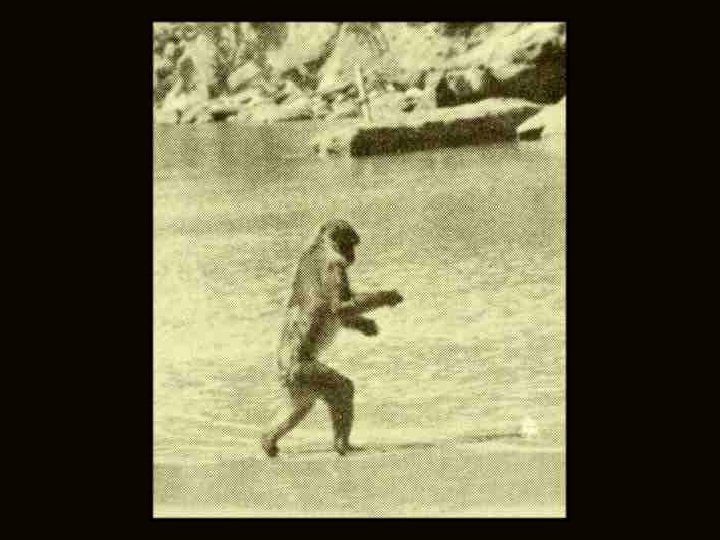
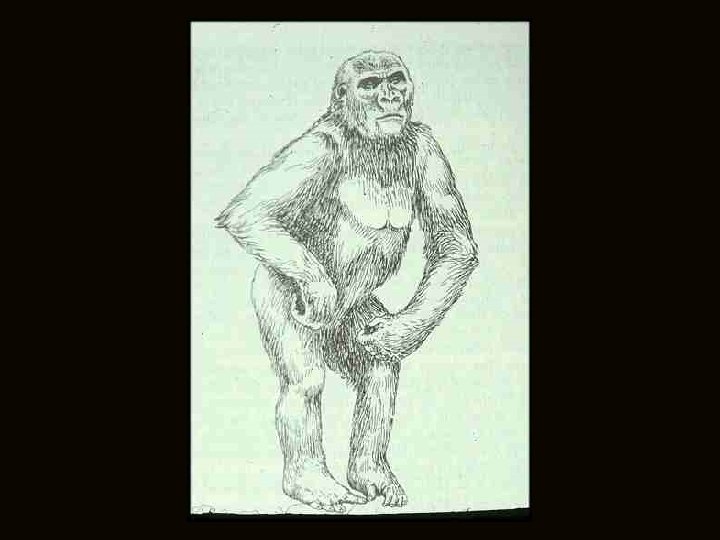
Bipedal Locomotion Why bipedalism?

Possible Factors Influencing the Initial Evolution of Bipedal Locomotion in Hominids. Understanding Physical Anthropology and Archaeology, 8 th ed. , p. 217
Bipedalism is related to tool use
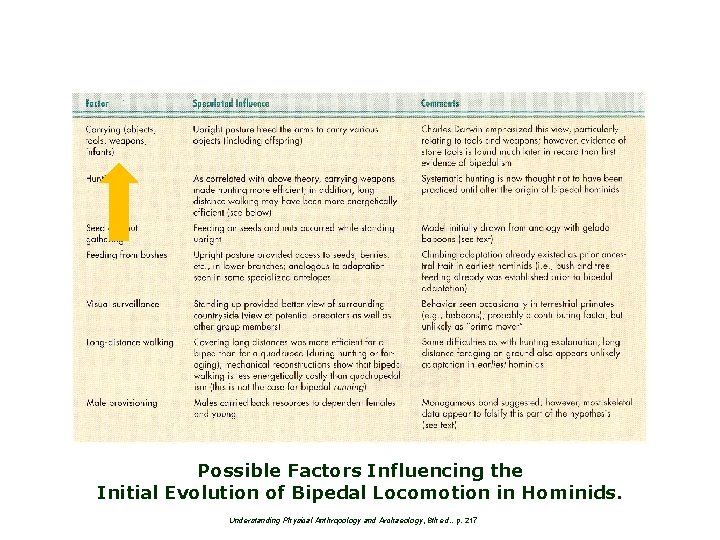
Possible Factors Influencing the Initial Evolution of Bipedal Locomotion in Hominids. Understanding Physical Anthropology and Archaeology, 8 th ed. , p. 217
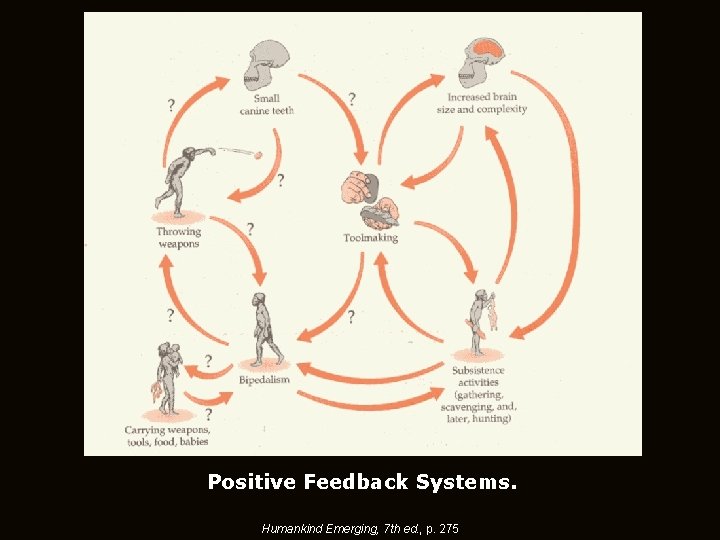
Positive Feedback Systems. Humankind Emerging, 7 th ed. , p. 275
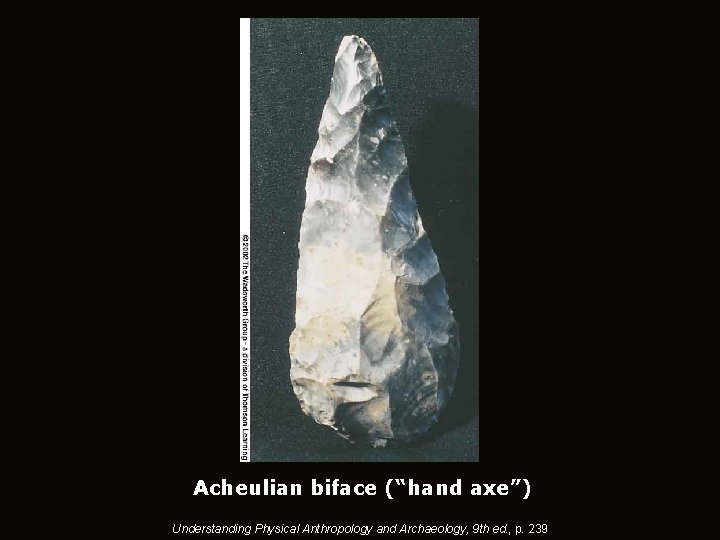
Acheulian biface (“hand axe”) Understanding Physical Anthropology and Archaeology, 9 th ed. , p. 239
Bipedalism more about bipedalism and to tool use later

Bipedalism also makes hunting more energy efficient
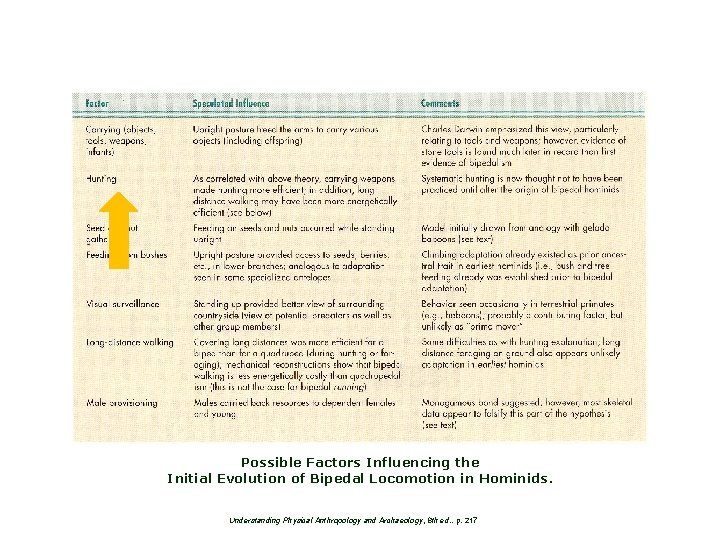
Possible Factors Influencing the Initial Evolution of Bipedal Locomotion in Hominids. Understanding Physical Anthropology and Archaeology, 8 th ed. , p. 217
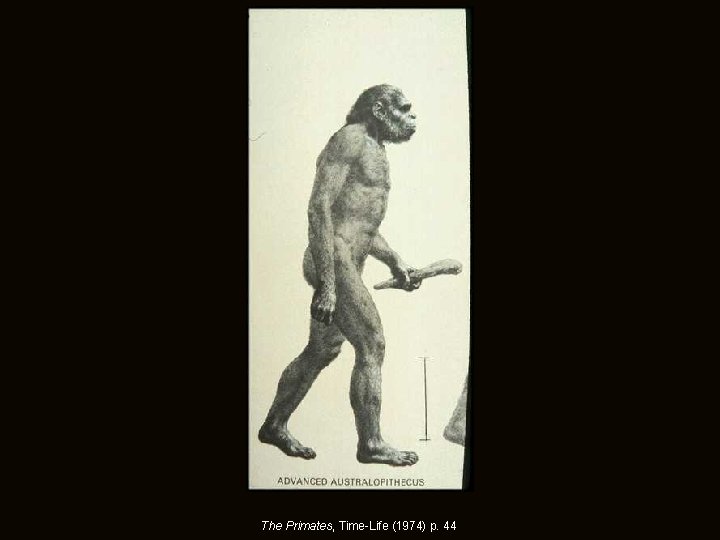
The Primates, Time-Life (1974) p. 44

Bipedalism Seed and nut gathering and Feeding from bushes
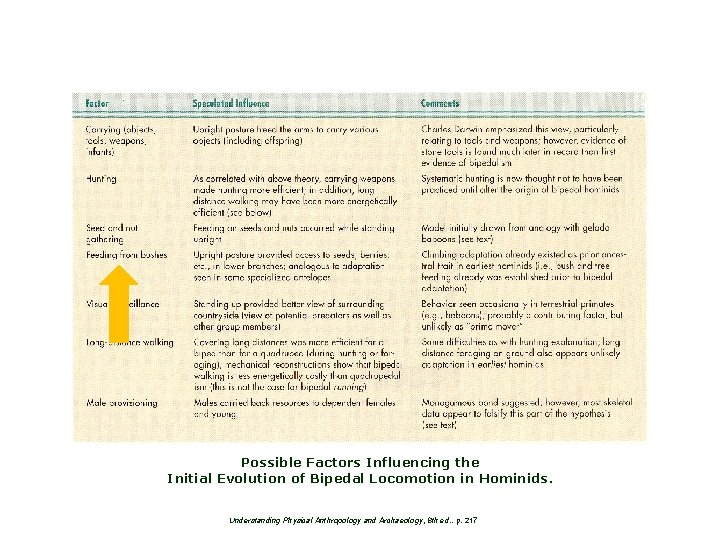
Possible Factors Influencing the Initial Evolution of Bipedal Locomotion in Hominids. Understanding Physical Anthropology and Archaeology, 8 th ed. , p. 217
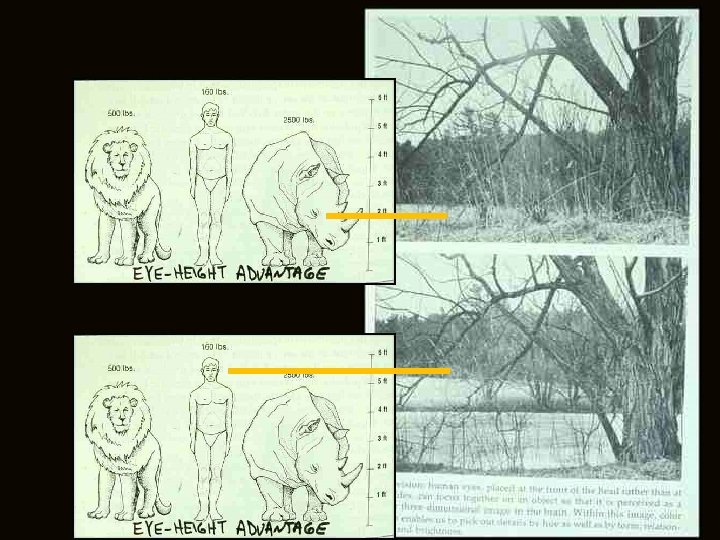
Bipedalism and vision (visual surveillance)
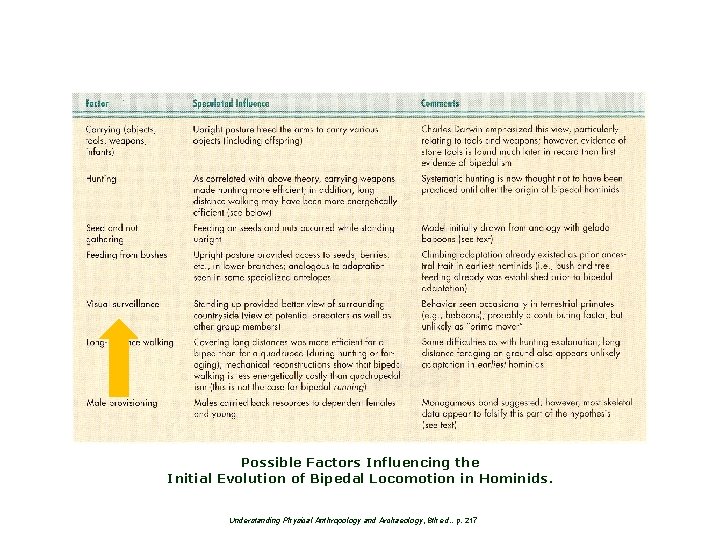
Possible Factors Influencing the Initial Evolution of Bipedal Locomotion in Hominids. Understanding Physical Anthropology and Archaeology, 8 th ed. , p. 217
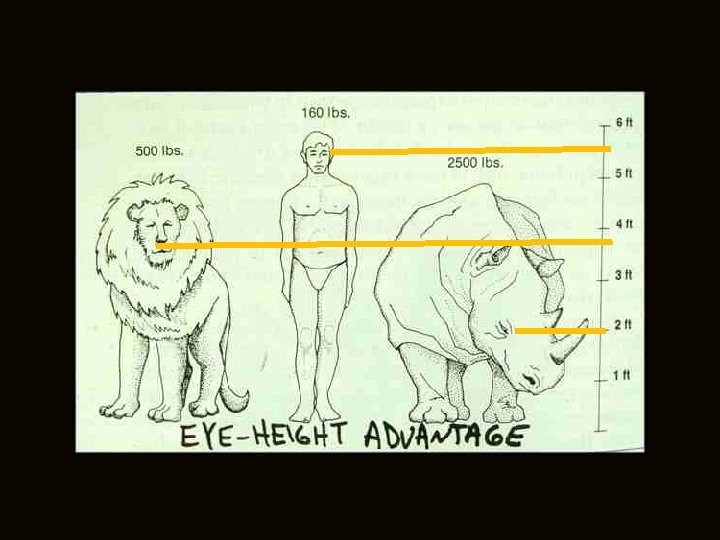
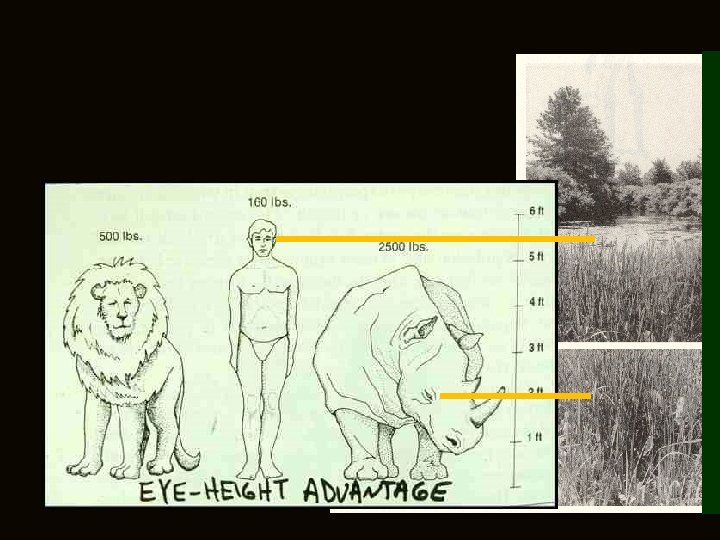
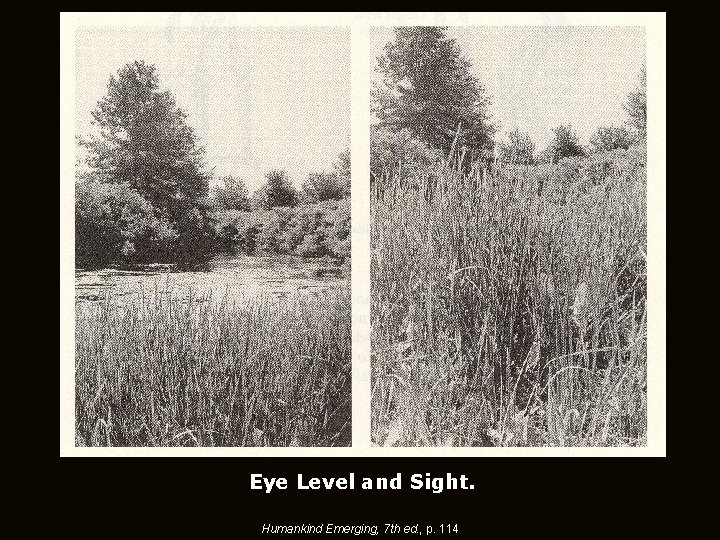
Eye Level and Sight. Humankind Emerging, 7 th ed. , p. 114
Bipedalism and Long-distance walking
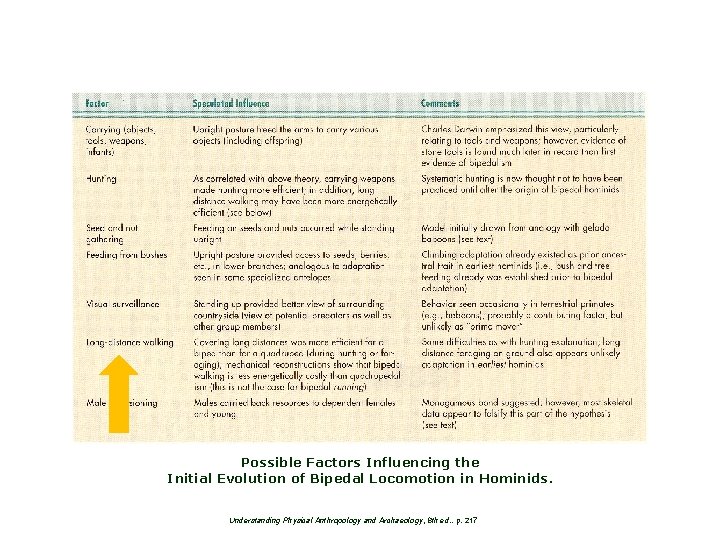
Possible Factors Influencing the Initial Evolution of Bipedal Locomotion in Hominids. Understanding Physical Anthropology and Archaeology, 8 th ed. , p. 217
Bipedalism Male help in “provisioning” Owen Lovejoy “provisioning hypothesis”
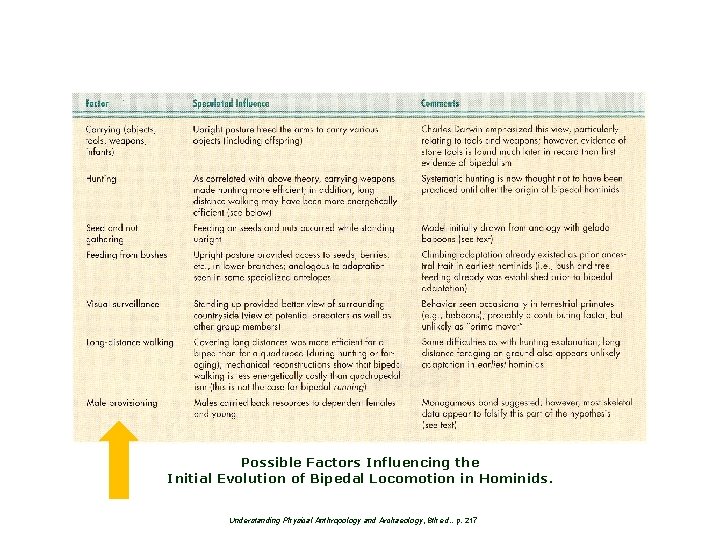
Possible Factors Influencing the Initial Evolution of Bipedal Locomotion in Hominids. Understanding Physical Anthropology and Archaeology, 8 th ed. , p. 217
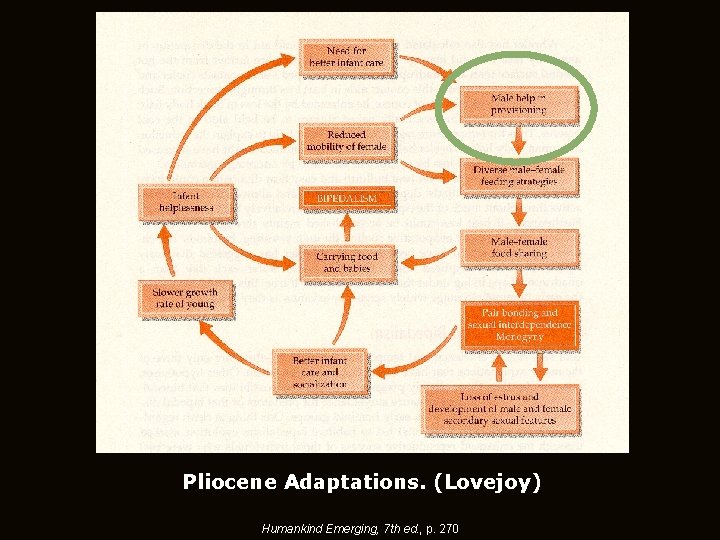
Pliocene Adaptations. (Lovejoy) Humankind Emerging, 7 th ed. , p. 270
Bipedalism and other hominid traits
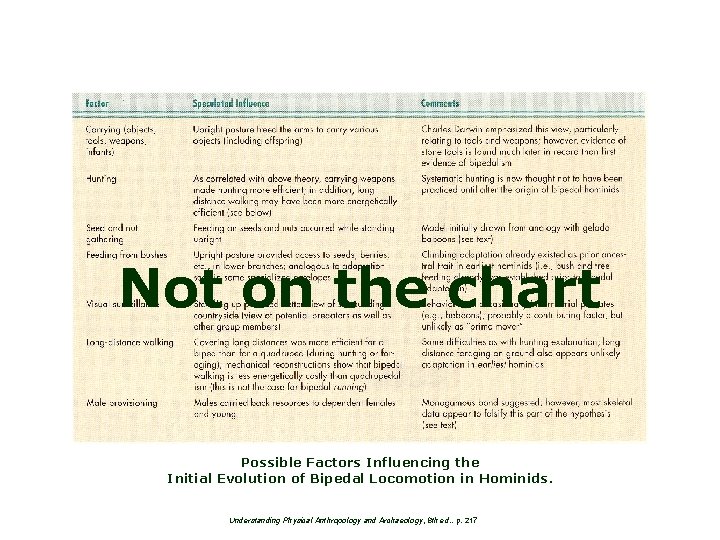
Not on the chart Possible Factors Influencing the Initial Evolution of Bipedal Locomotion in Hominids. Understanding Physical Anthropology and Archaeology, 8 th ed. , p. 217
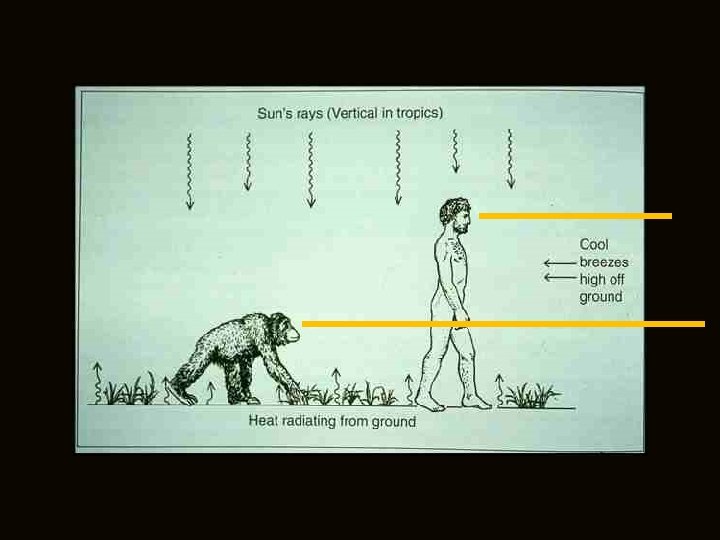
Bipedalism body temperature

http: //news. bbc. co. uk/sport 1/hi/other_sports/1468591. stm
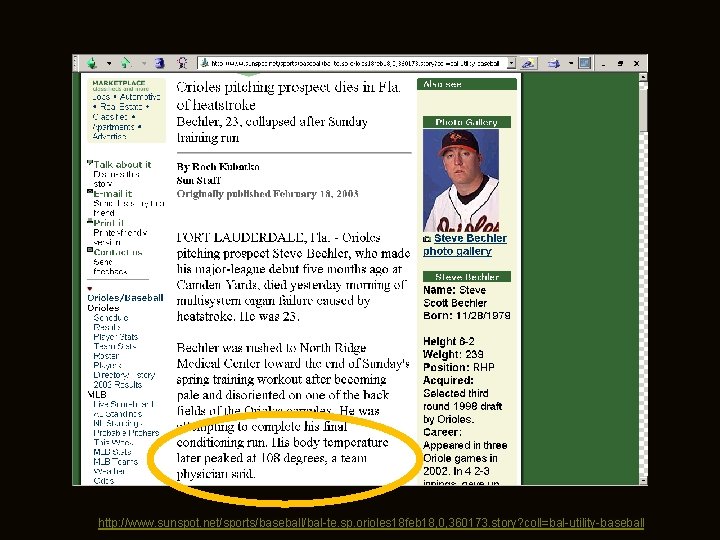
http: //www. sunspot. net/sports/baseball/bal-te. sp. orioles 18 feb 18, 0, 360173. story? coll=bal-utility-baseball
Bipedalism R. Falk (1989) suggested that bipedalism resulted in the development of a cooling mechanism for the brain. CA 31: 2: 187
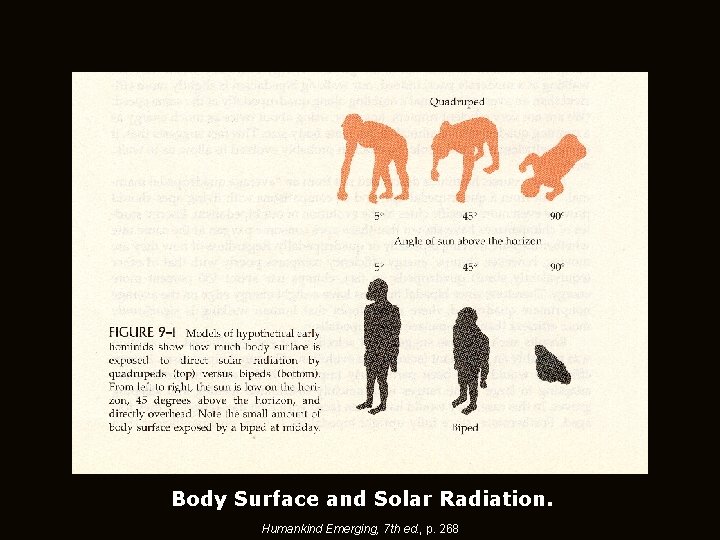
Body Surface and Solar Radiation. Humankind Emerging, 7 th ed. , p. 268
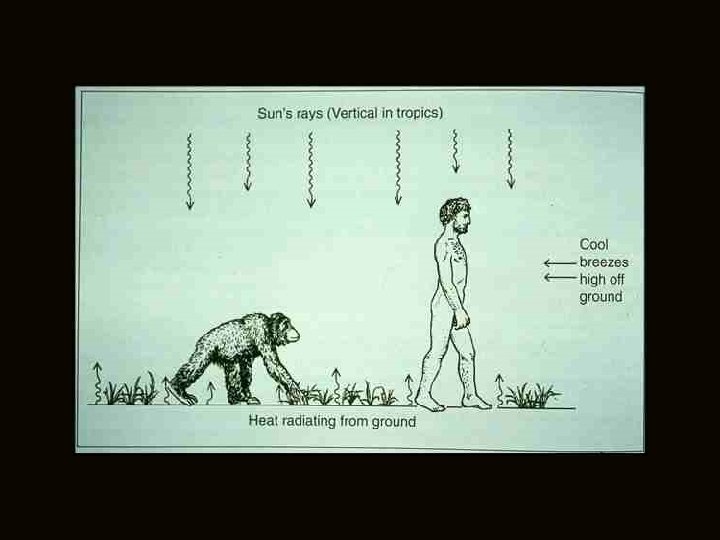
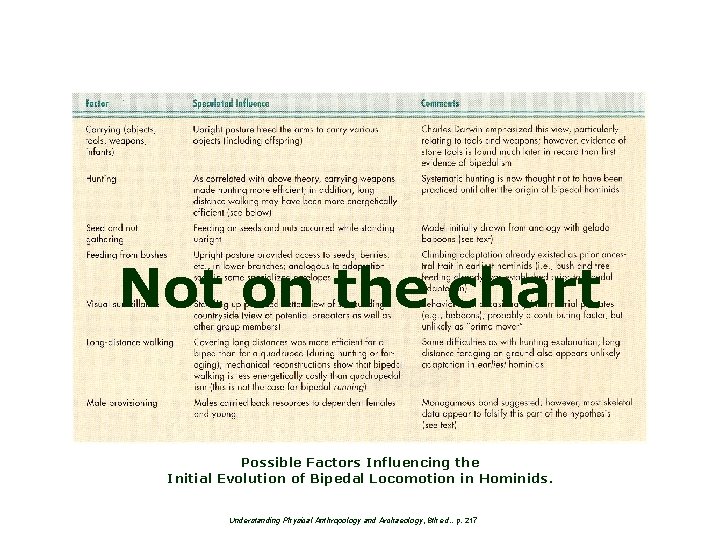
Not on the chart Possible Factors Influencing the Initial Evolution of Bipedal Locomotion in Hominids. Understanding Physical Anthropology and Archaeology, 8 th ed. , p. 217
Bipedalism may have been an arboreal forest adaptation

Week 07 Video: Search for the First Human -A Secrets of the Dead Special
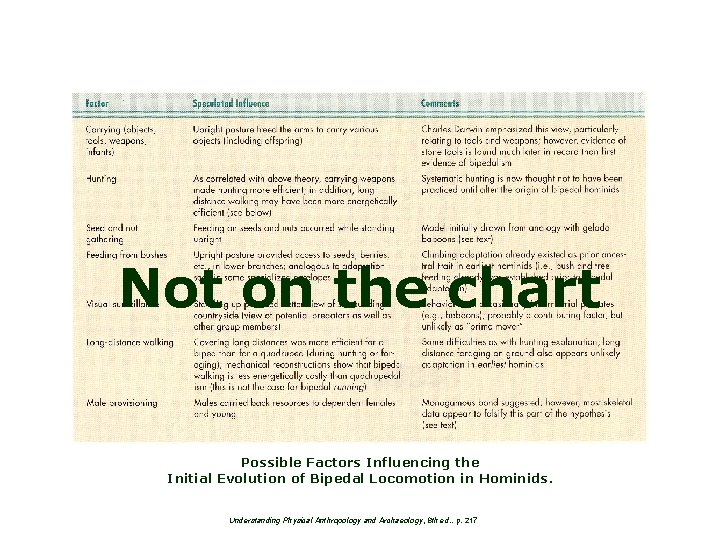
Not on the chart Possible Factors Influencing the Initial Evolution of Bipedal Locomotion in Hominids. Understanding Physical Anthropology and Archaeology, 8 th ed. , p. 217
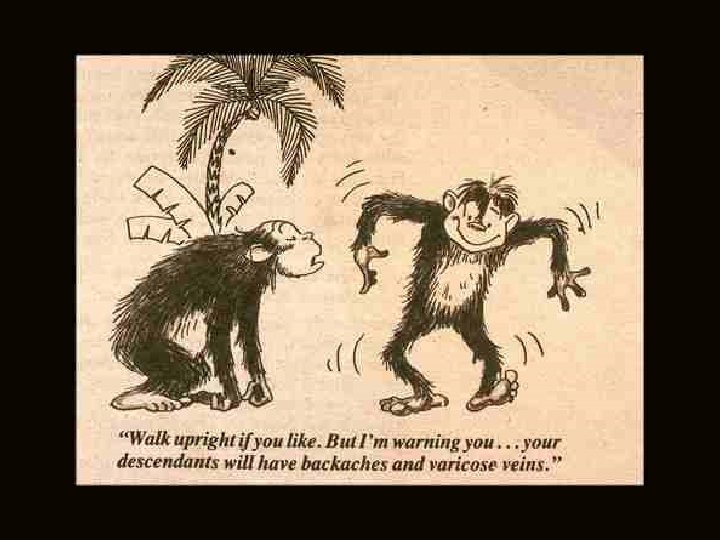
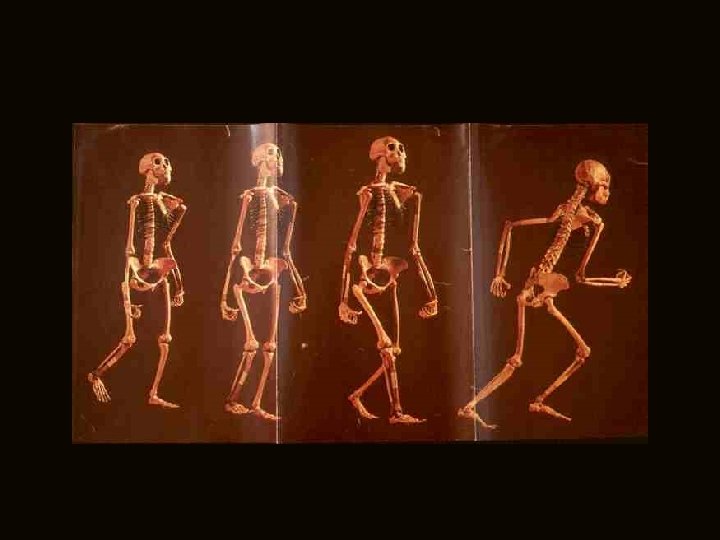
Bipedal walking resulted in a number of postcranial changes in the legs and feet. . .
The legs and feet. . . feet become more foot-like
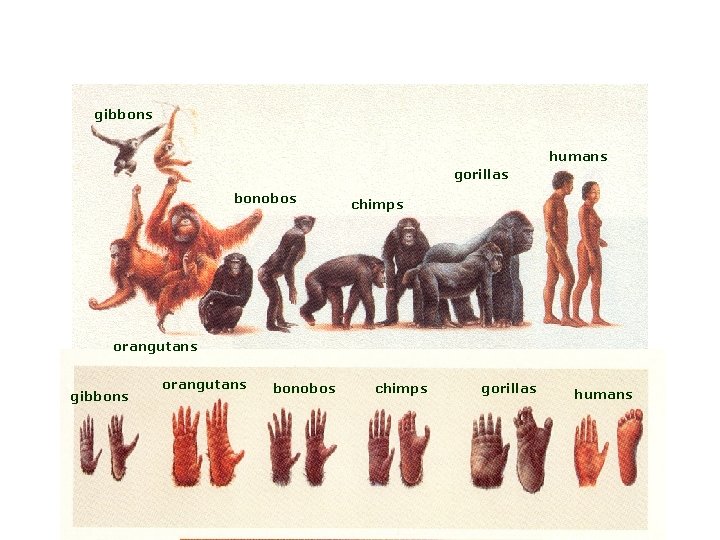
gibbons humans gorillas bonobos chimps orangutans gibbons orangutans bonobos chimps gorillas Campbell and Loy, Humankind Emerging, 8 th ed, p. 138 f humans
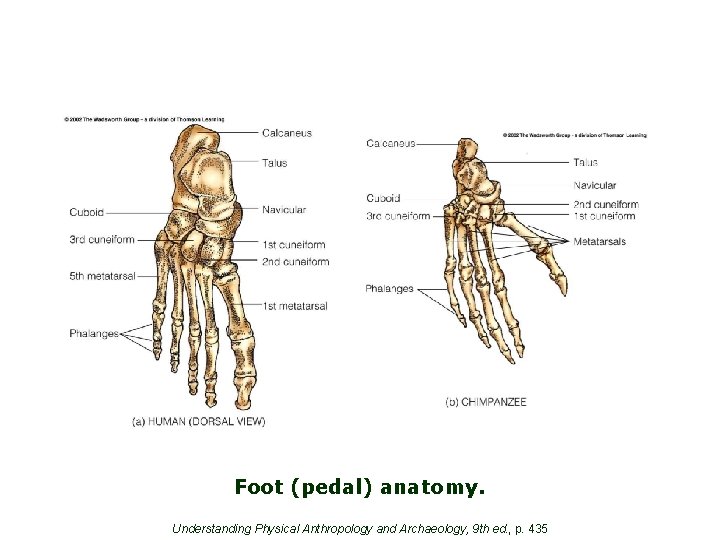
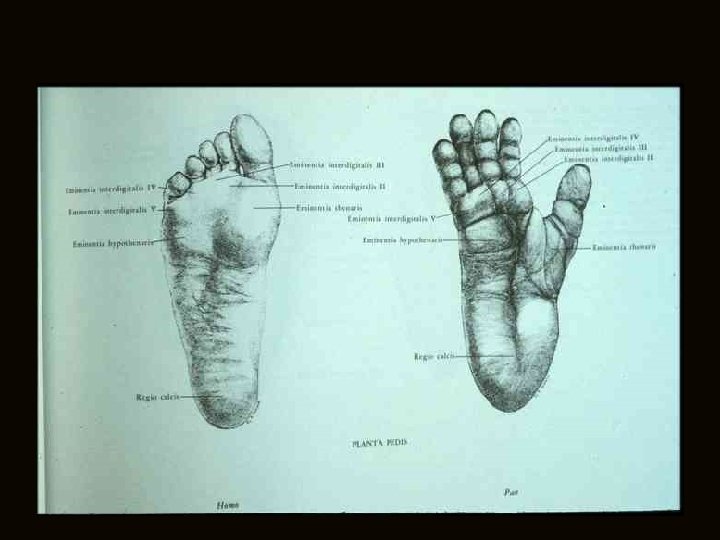
Foot (pedal) anatomy. Understanding Physical Anthropology and Archaeology, 9 th ed. , p. 435
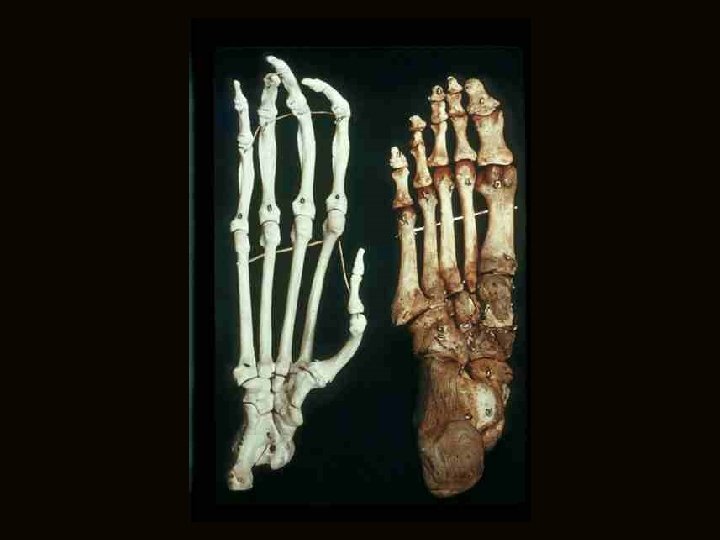
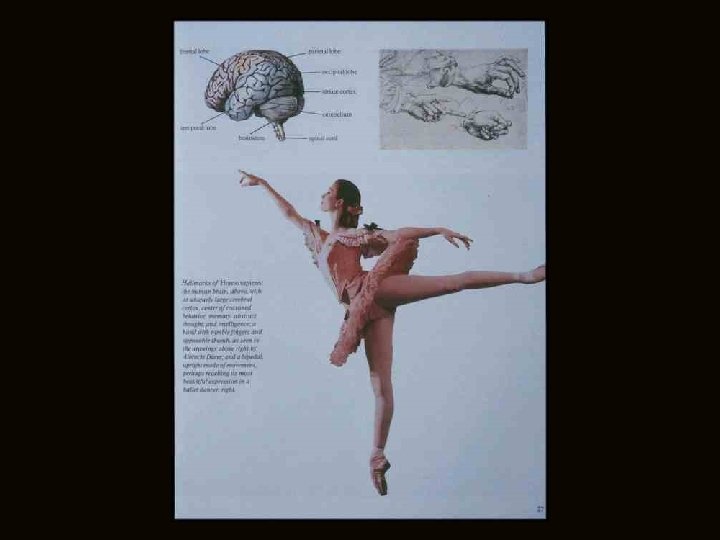
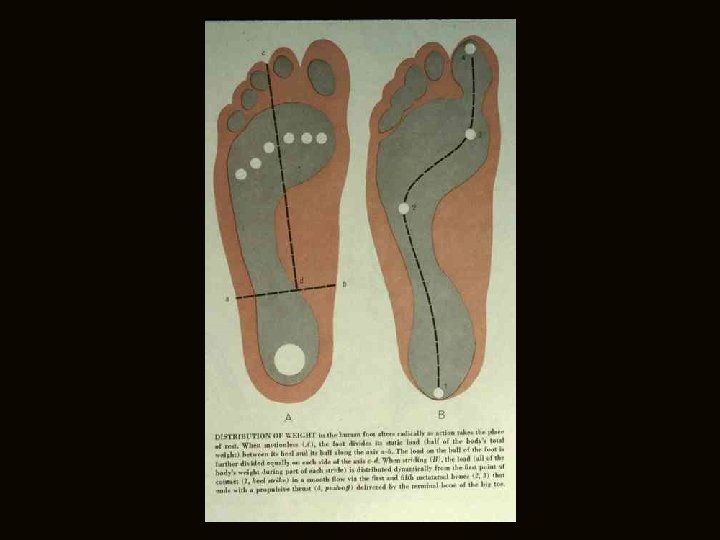
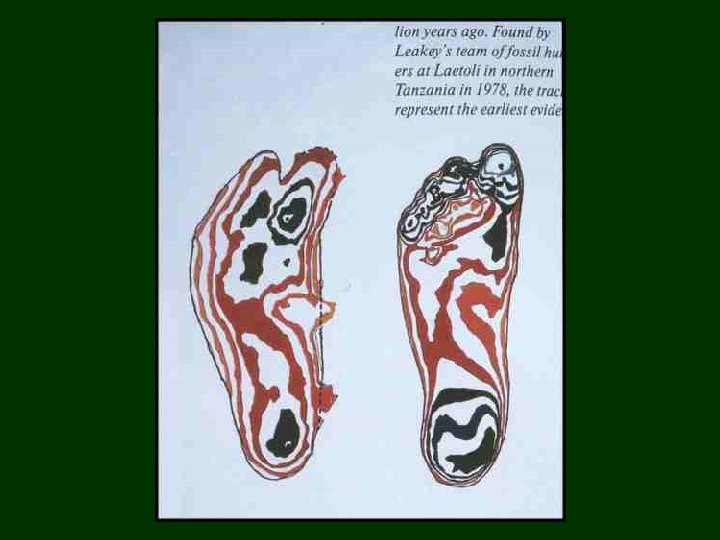
Grover Krantz. Humankind Emerging, 7 th ed. , p. 383
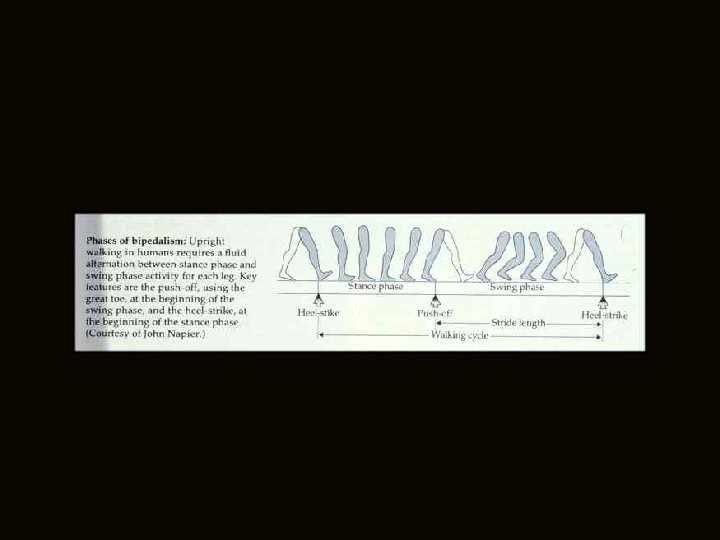
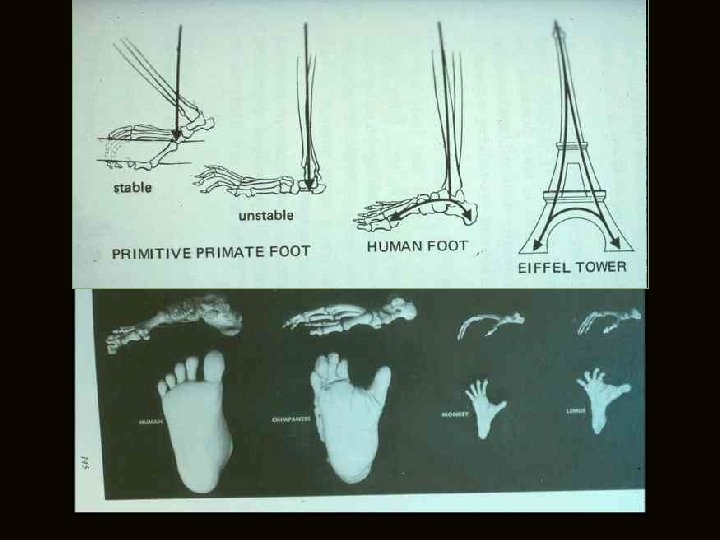
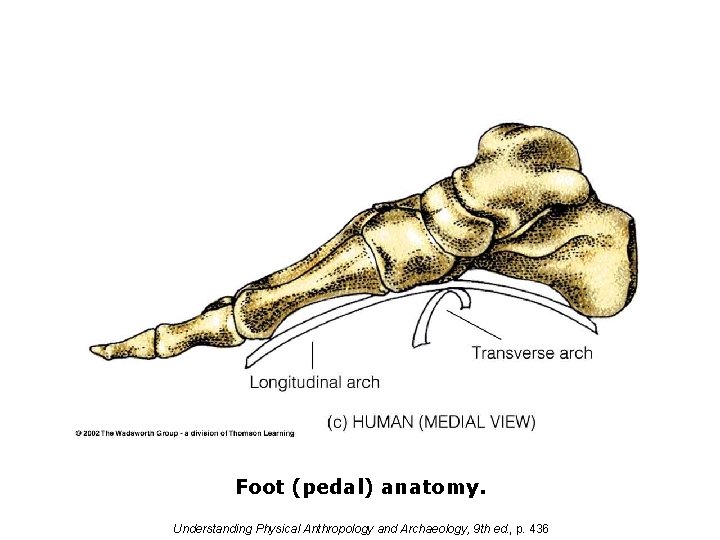
Foot (pedal) anatomy. Understanding Physical Anthropology and Archaeology, 9 th ed. , p. 436
Leg bones are much stouter and have more pronounced dorsal ridges (on the back)
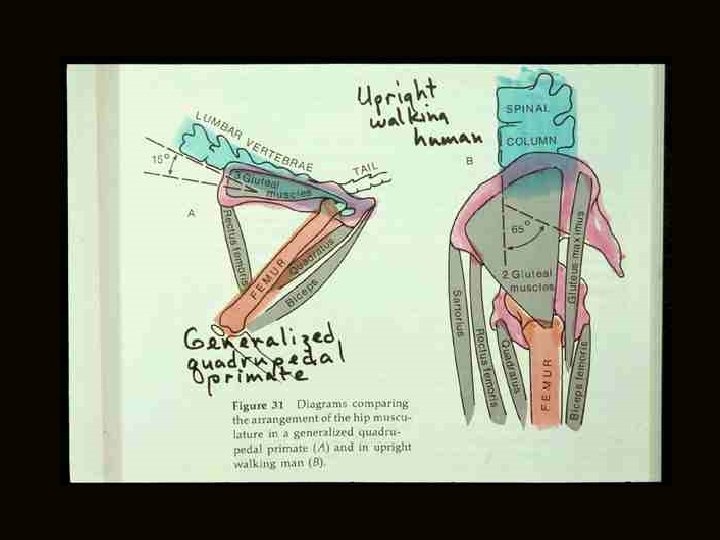
Leg muscle structures change
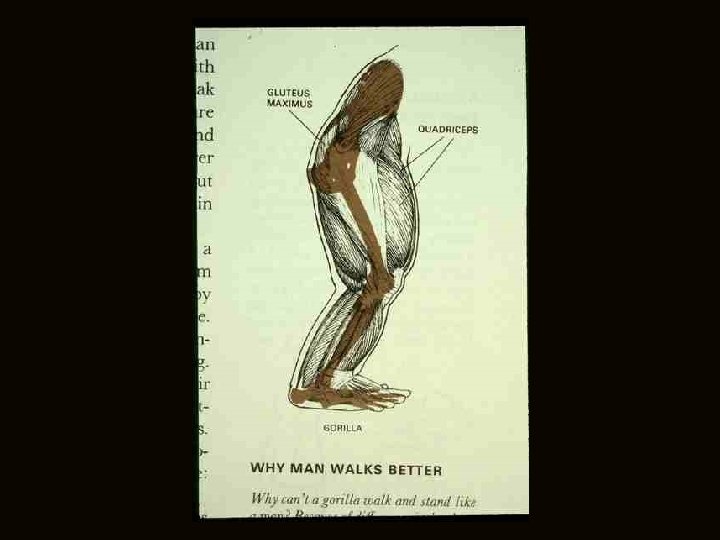
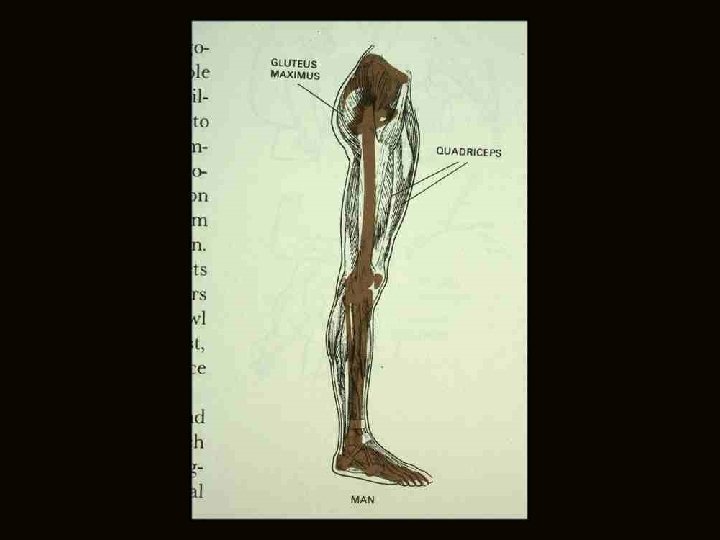
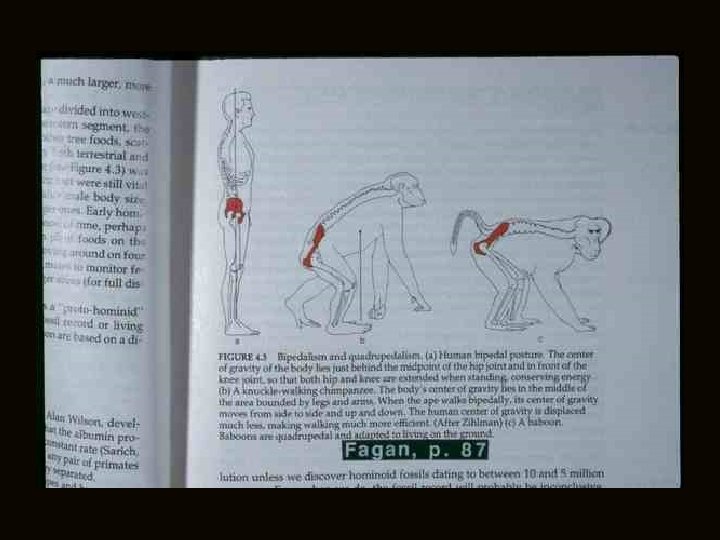
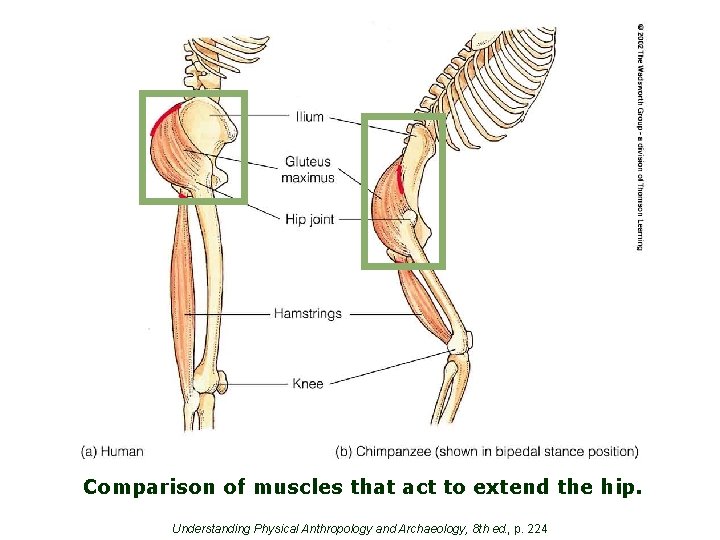
Comparison of muscles that act to extend the hip. Understanding Physical Anthropology and Archaeology, 8 th ed. , p. 224
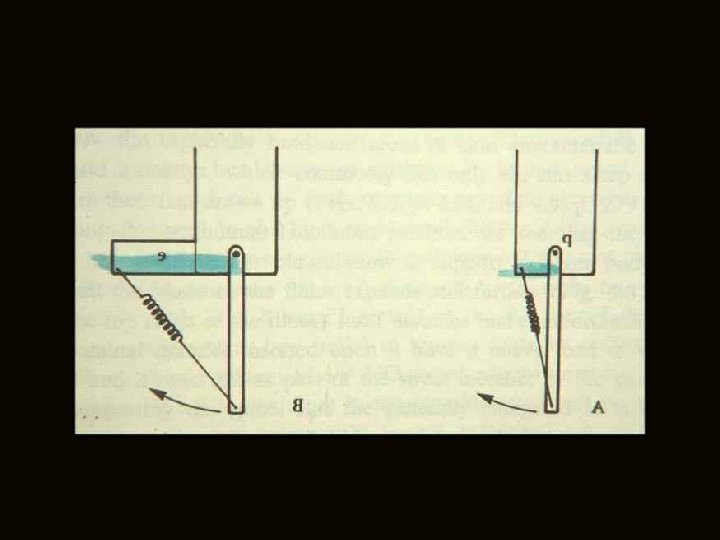
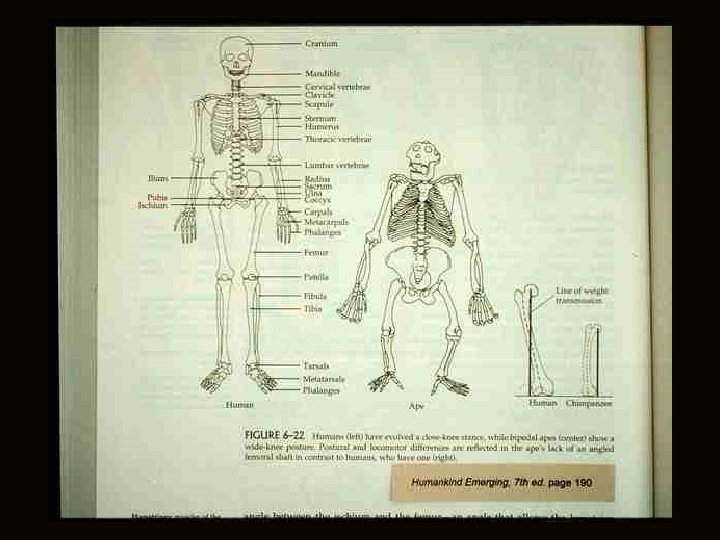
Humans have developed a “closed-knee stance”
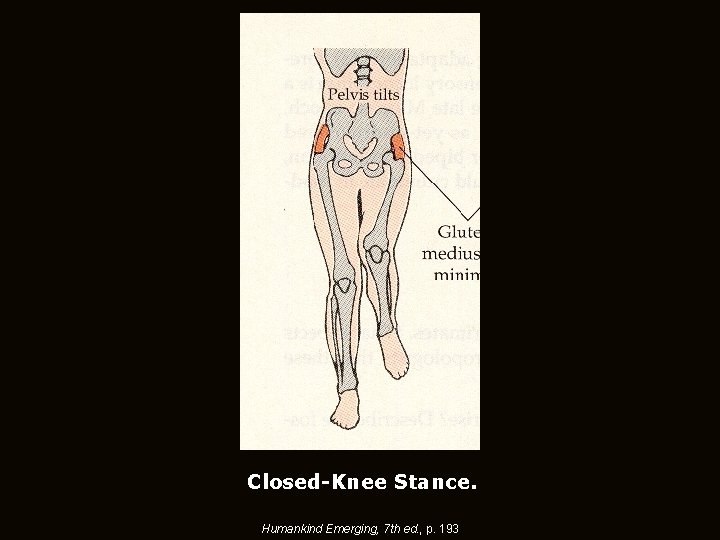
Closed-Knee Stance. Humankind Emerging, 7 th ed. , p. 193
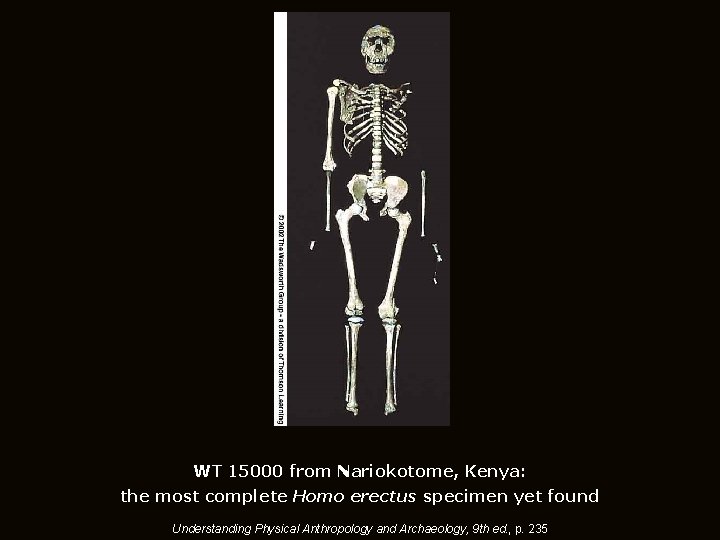
WT 15000 from Nariokotome, Kenya: the most complete Homo erectus specimen yet found Understanding Physical Anthropology and Archaeology, 9 th ed. , p. 235
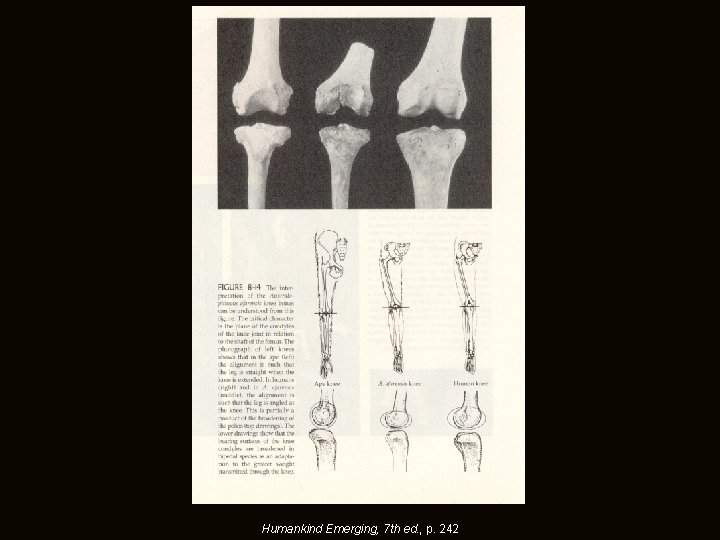
Humankind Emerging, 7 th ed. , p. 242
There is a loss of some mobility and “prehensility” in feet

Prehensility = the ability to grasp
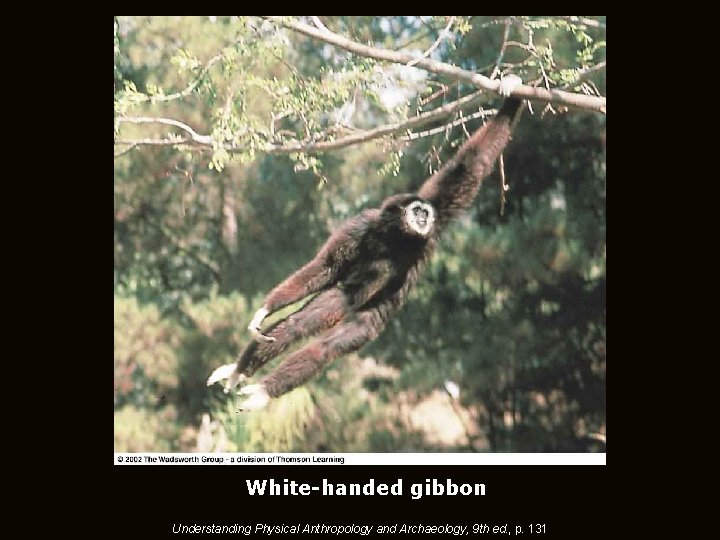
White-handed gibbon Understanding Physical Anthropology and Archaeology, 9 th ed. , p. 131
A number of changes take place in the pelvis. . .
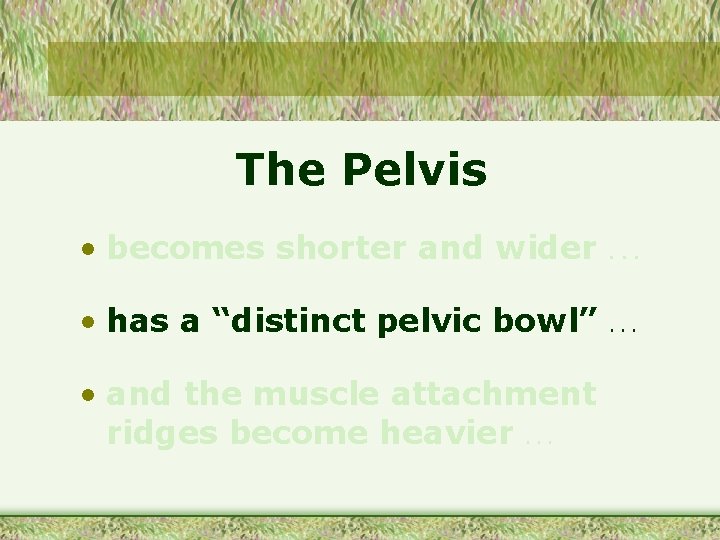
The Pelvis • becomes shorter and wider . . . • has a “distinct pelvic bowl” . . . • and the muscle attachment ridges become heavier. . .
The Pelvis • becomes shorter and wider . . . • has a “distinct pelvic bowl” . . . • and the muscle attachment ridges become heavier. . .
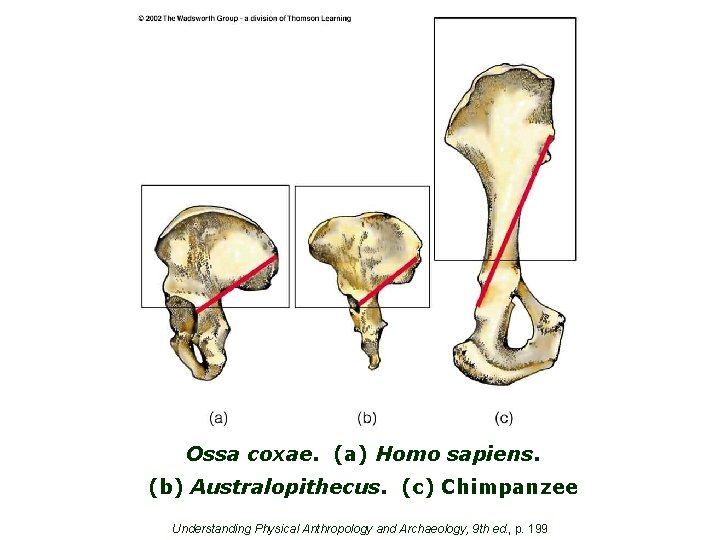
Ossa coxae. (a) Homo sapiens. (b) Australopithecus. (c) Chimpanzee Understanding Physical Anthropology and Archaeology, 9 th ed. , p. 199
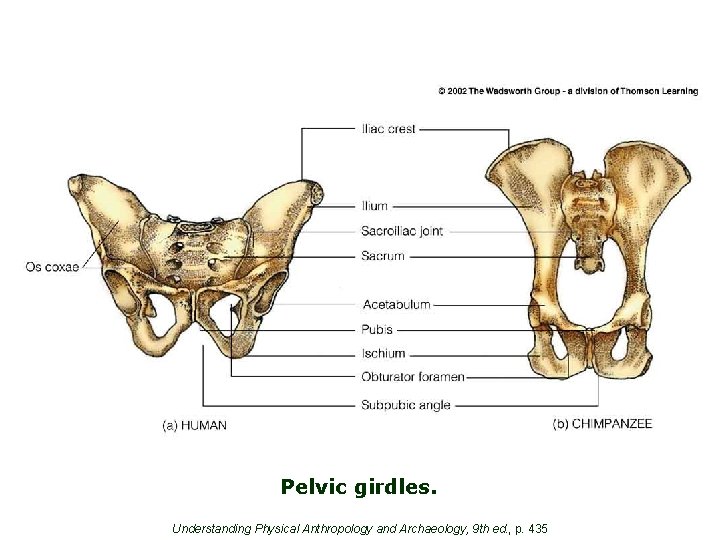
Pelvic girdles. Understanding Physical Anthropology and Archaeology, 9 th ed. , p. 435
The Pelvis • becomes shorter and wider . . . • has a “distinct pelvic bowl” . . . • and the muscle attachment ridges become heavier. . .
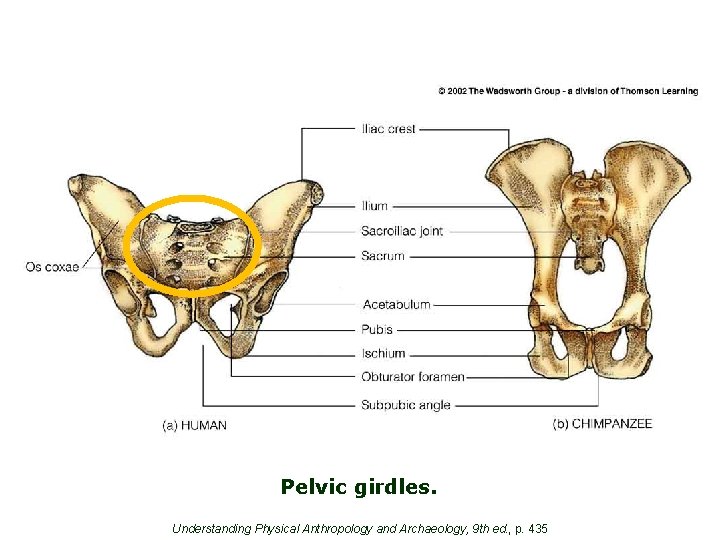
Pelvic girdles. Understanding Physical Anthropology and Archaeology, 9 th ed. , p. 435
And the muscle attachment ridges one the pelvis become heavier. . .
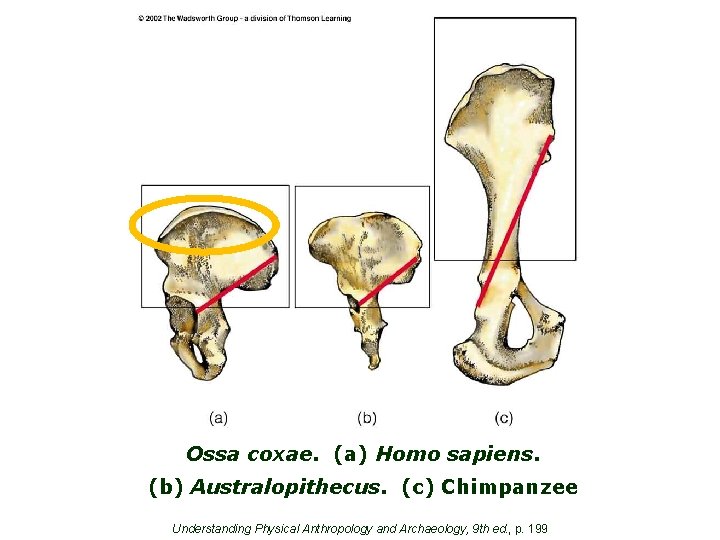
Ossa coxae. (a) Homo sapiens. (b) Australopithecus. (c) Chimpanzee Understanding Physical Anthropology and Archaeology, 9 th ed. , p. 199
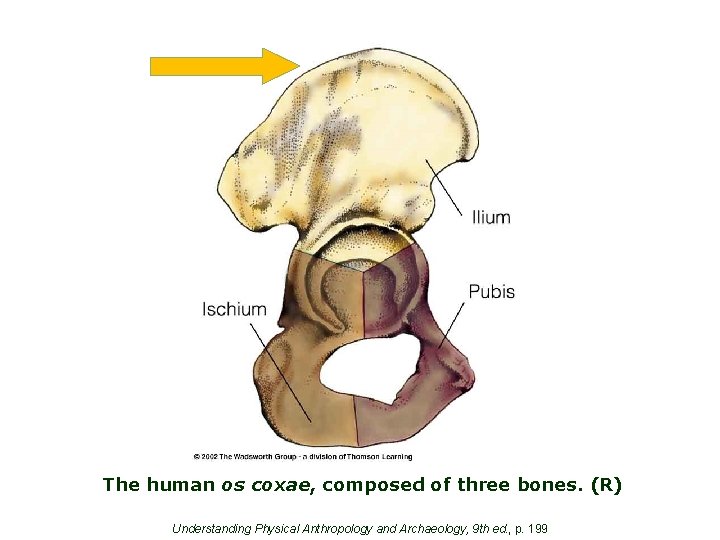
The human os coxae, composed of three bones. (R) Understanding Physical Anthropology and Archaeology, 9 th ed. , p. 199

More on pelvic changes later, with the discussion of Australopithecus (“southern ape”)
External tails are lost
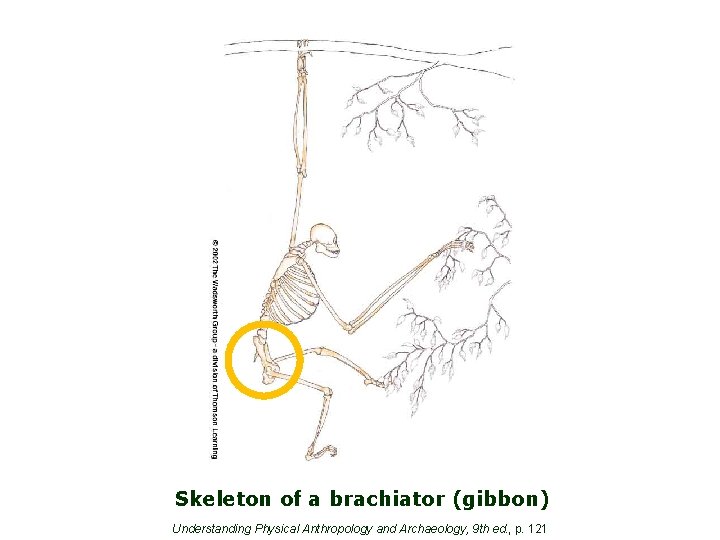
Skeleton of a brachiator (gibbon) Understanding Physical Anthropology and Archaeology, 9 th ed. , p. 121
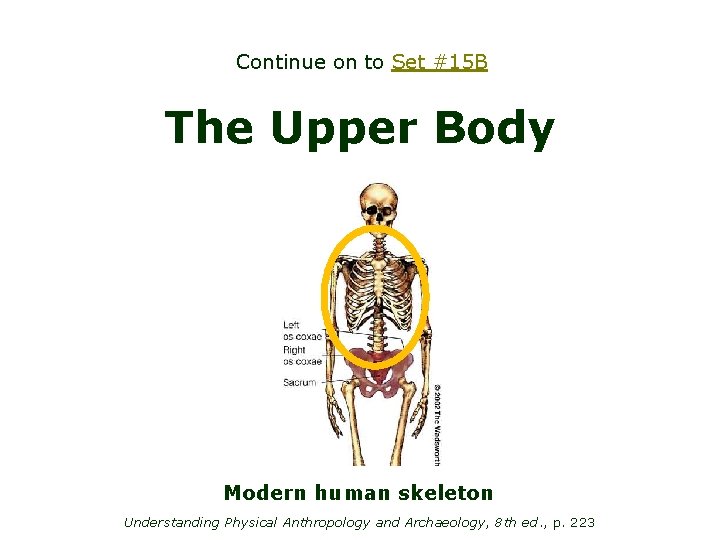
Continue on to Set #15 B The Upper Body Modern human skeleton Understanding Physical Anthropology and Archaeology, 8 th ed. , p. 223
- Slides: 91