
CLASS SESSION 3 OUTBREAK INVESTIGATION II CALCULATION OF

CLASS SESSION 3 OUTBREAK INVESTIGATION II: CALCULATION OF ATTACK RATE AND ATTACK RATE RATIO Epidemiology 503, Section 2
2 In-Class Exercise from Last Class 1. You are going to need some background information on Cyclospora. What would be a good place to get reliable information? 2. What is the incubation period for cyclosporiasis? How does knowing the incubation period help you to identify the possible sources of the men’s exposure to Cyclospora? 3. How might these people have become infected? What’s the mode of transmission of Cyclospora? 4. Is it possible that one of the men was the source of infection for the others? Why or why not? 5. Do you think that it is likely that the businessmen became infected with cyclosporiasis in Texas? Why? 6. If you were part of the team, how would you approach gathering data on the Texas outbreak? Who would you gather data on? What questions would you ask them? Justify your approach. 7. What is the name for this type of description of illness in an outbreak investigation? Why is it important to be specific in such a description? 8. List three “next steps” that should be taken to prevent a future outbreak like this one among the public.
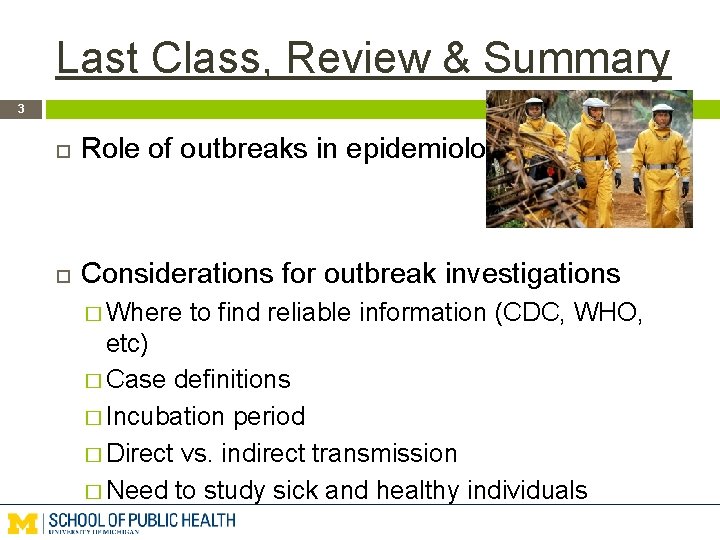
Last Class, Review & Summary 3 Role of outbreaks in epidemiology Considerations for outbreak investigations � Where to find reliable information (CDC, WHO, etc) � Case definitions � Incubation period � Direct vs. indirect transmission � Need to study sick and healthy individuals

“Next Steps” following outbreak 4 Identify contamination source and the chain of movement Prevent further contamination Media campaign Evaluate current policies and procedures
Today 5 We will go through some of the calculations used to: �Identify the extent (seriousness) of an outbreak Attack Rate �Indicate the possible source of an outbreak Attack Rate Ratio
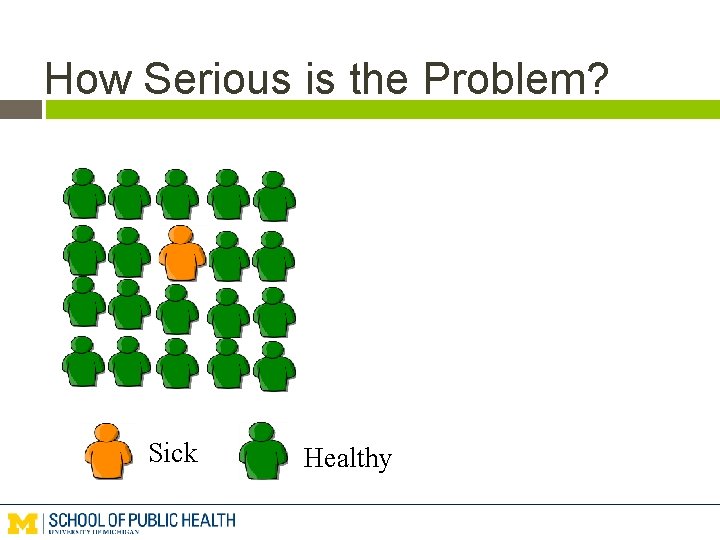
How Serious is the Problem? Sick Healthy
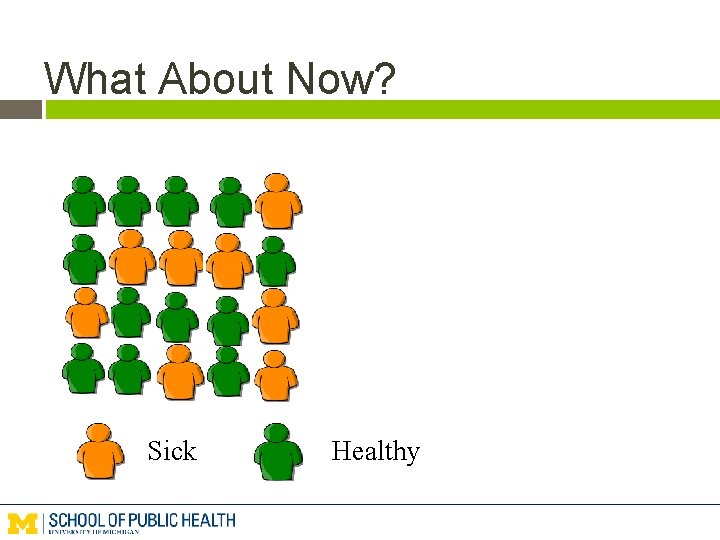
What About Now? Sick Healthy
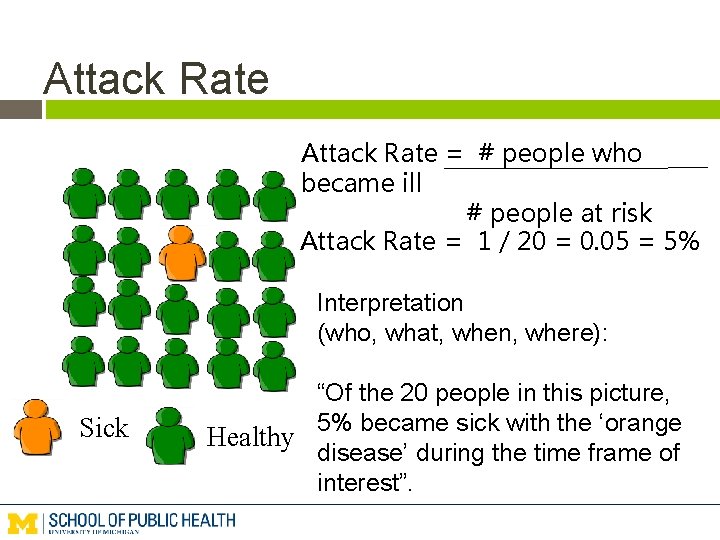
Attack Rate = # people who became ill # people at risk Attack Rate = 1 / 20 = 0. 05 = 5% Interpretation (who, what, when, where): Sick “Of the 20 people in this picture, 5% became sick with the ‘orange Healthy disease’ during the time frame of interest”.
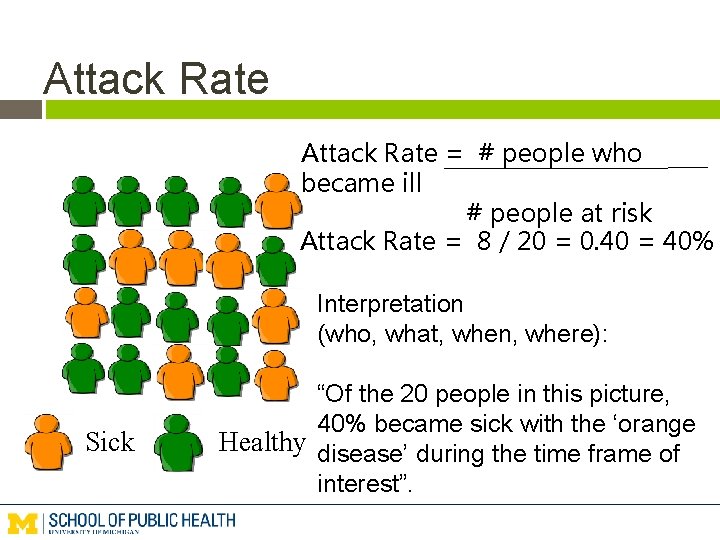
Attack Rate = # people who became ill # people at risk Attack Rate = 8 / 20 = 0. 40 = 40% Interpretation (who, what, when, where): Sick “Of the 20 people in this picture, 40% became sick with the ‘orange Healthy disease’ during the time frame of interest”.
Thought question: How do you know when an outbreak is “serious”?
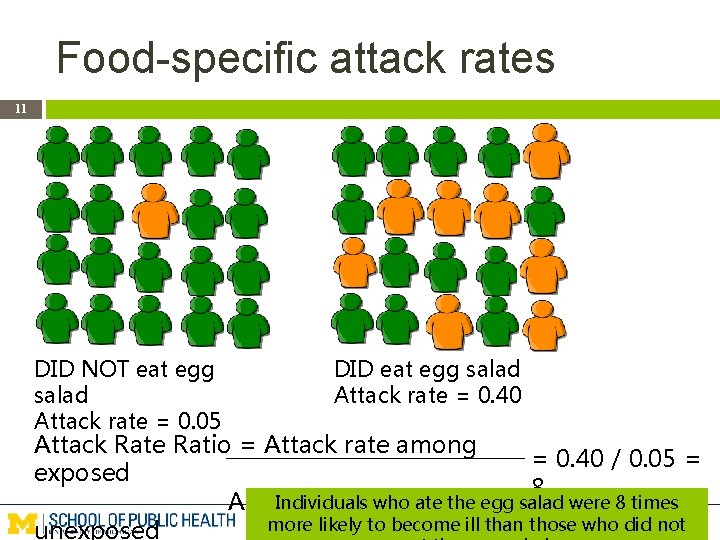
Food-specific attack rates 11 DID NOT eat egg salad Attack rate = 0. 05 DID eat egg salad Attack rate = 0. 40 Attack Rate Ratio = Attack rate among = 0. 40 / 0. 05 = exposed 8 Individuals who ate the egg salad were 8 times Attack rate among more likely to become ill than those who did not unexposed
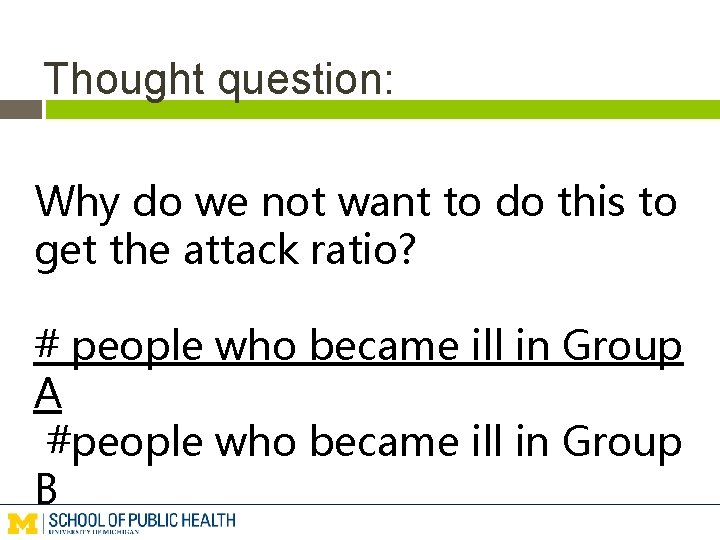
Thought question: Why do we not want to do this to get the attack ratio? # people who became ill in Group A #people who became ill in Group B
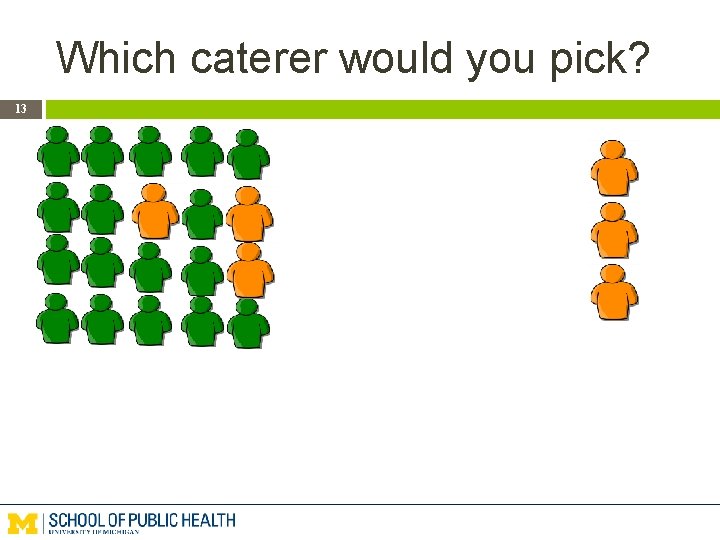
Which caterer would you pick? 13
Final Thoughts 14 Attack rates aren’t really “rates” � To truly be a rate, there must be a component of time � Attack proportion would be a better term � Outbreaks thought to happen so fast that attack “rate” is assumed to be over course of the outbreak Always frame your interpretations in terms of the: � WHO � WHAT � WHEN � WHERE
- Slides: 14