
Class in Indian Society Class people living in
- Slides: 8
Class in Indian Society Class – people living in the society with similar material conditions (money, assets and power), economic position and life chances Two main approaches to understand Class - Attributional - Relational
Approaches Atrributional – what are the criteria? - Size of assets/Landholding - Income Level/range - Occupation type, etc By Income 1) Upper class, middle class and lower class
Approaches By Landholding Size 2) Farmers (by government) – Large farmers (10 ha and above), medium farmers (4 -10 ha), semi-medium farmers (2 -4 ha), small (1 -2 ha), landless (none) -
Approaches 2) Relational – what are the criteria? - Means of production - Ownership and control of production e. g ruling class/landlord class/Feudal class - Labour appropriation (surplus labour) e. g labour class/working class/exploited
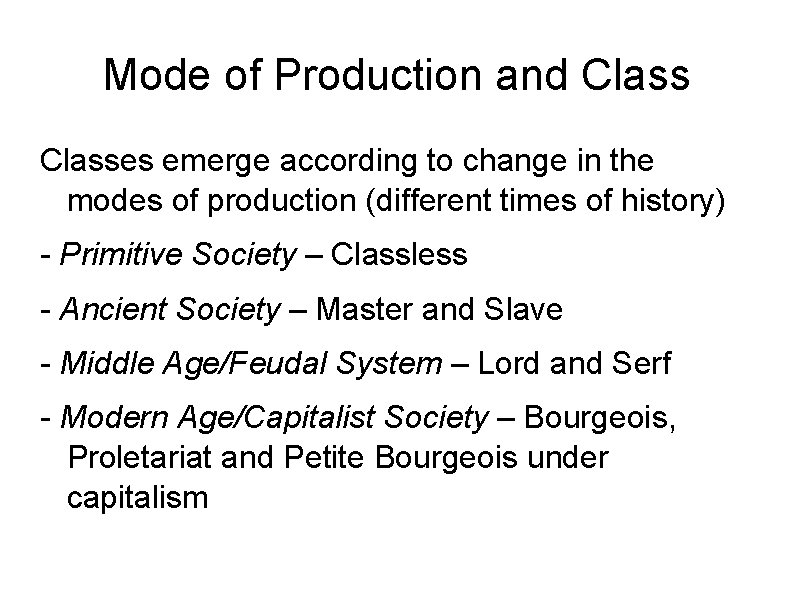
Mode of Production and Classes emerge according to change in the modes of production (different times of history) - Primitive Society – Classless - Ancient Society – Master and Slave - Middle Age/Feudal System – Lord and Serf - Modern Age/Capitalist Society – Bourgeois, Proletariat and Petite Bourgeois under capitalism
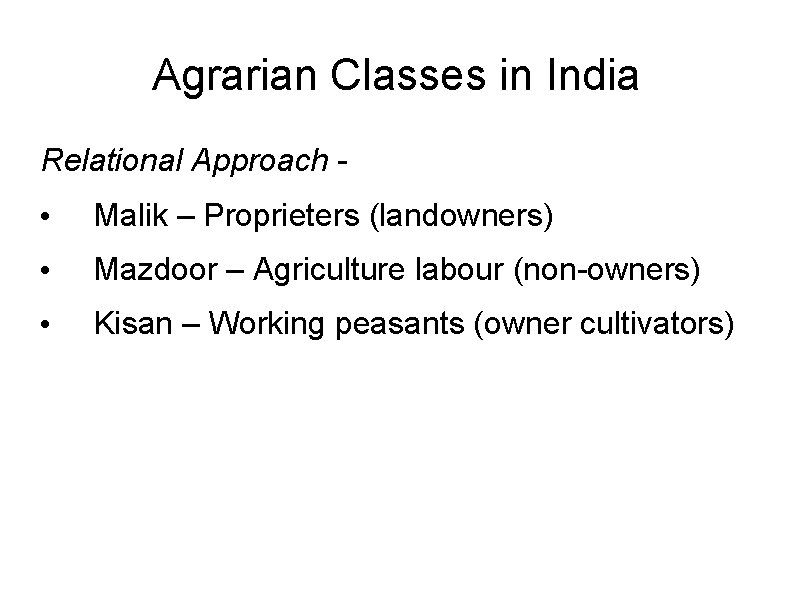
Agrarian Classes in India Relational Approach - • Malik – Proprieters (landowners) • Mazdoor – Agriculture labour (non-owners) • Kisan – Working peasants (owner cultivators)
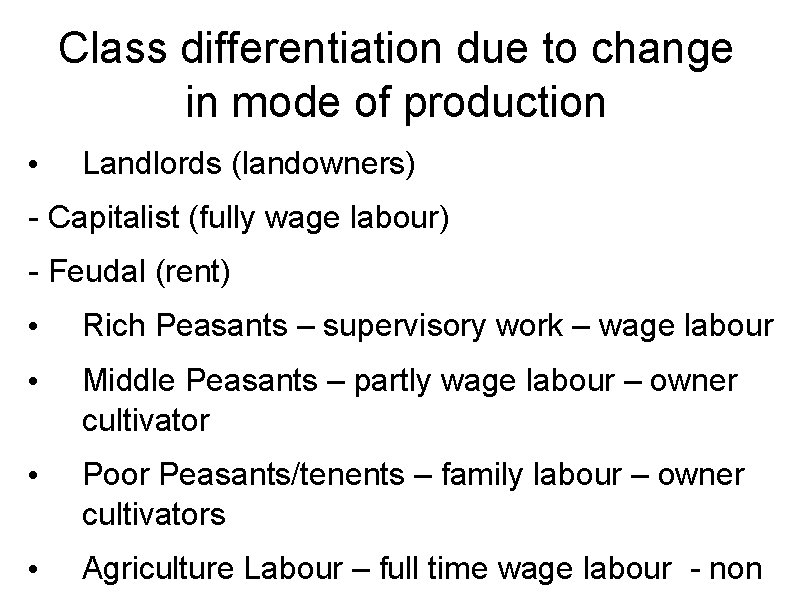
Class differentiation due to change in mode of production • Landlords (landowners) - Capitalist (fully wage labour) - Feudal (rent) • Rich Peasants – supervisory work – wage labour • Middle Peasants – partly wage labour – owner cultivator • Poor Peasants/tenents – family labour – owner cultivators • Agriculture Labour – full time wage labour - non
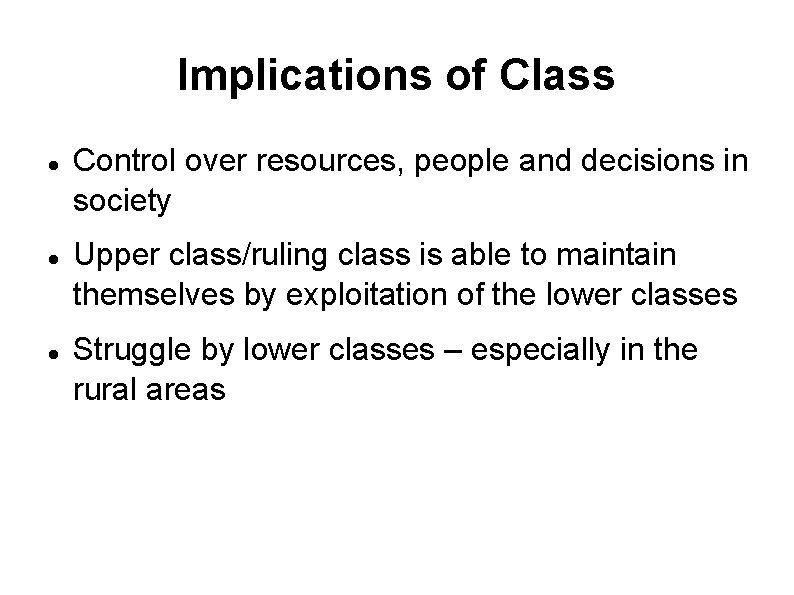
Implications of Class Control over resources, people and decisions in society Upper class/ruling class is able to maintain themselves by exploitation of the lower classes Struggle by lower classes – especially in the rural areas