
CLASS II AMALGAM RESTORATIONS A Class II preparation
- Slides: 36
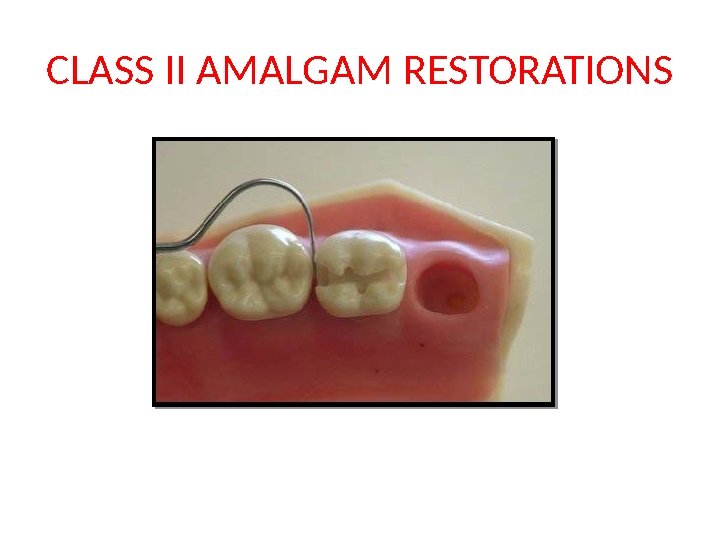
CLASS II AMALGAM RESTORATIONS
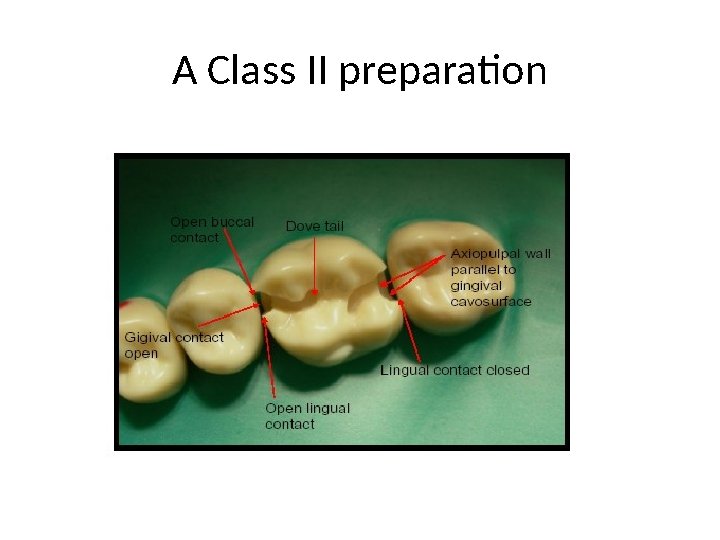
A Class II preparation
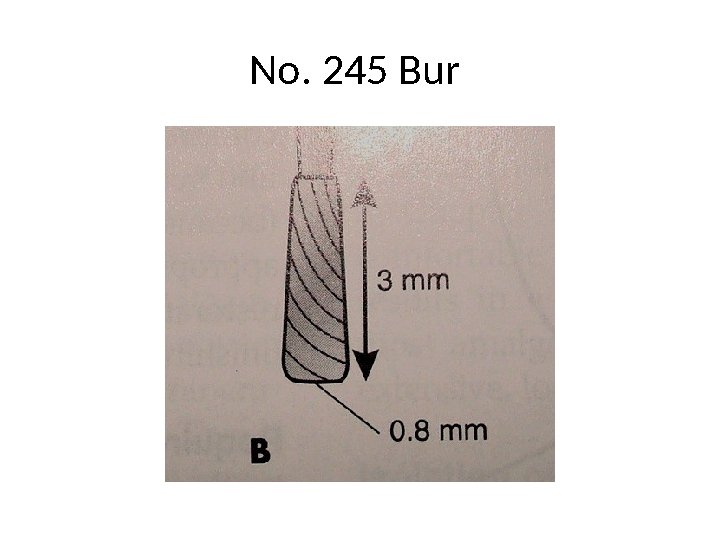
No. 245 Bur
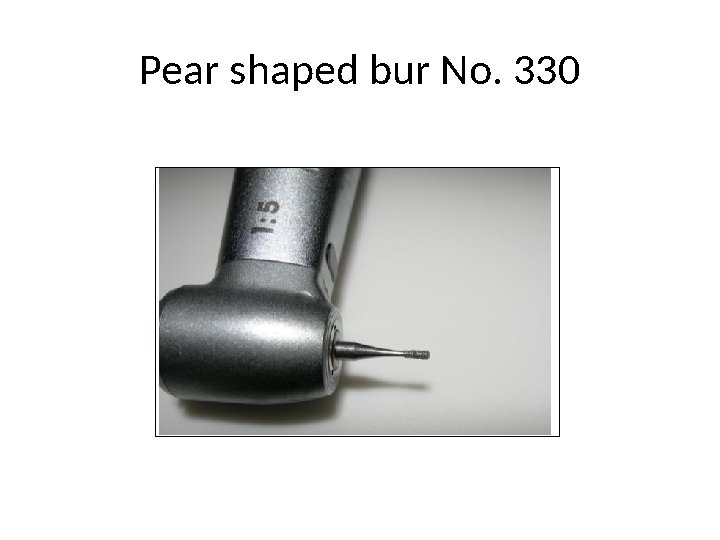
Pear shaped bur No. 330
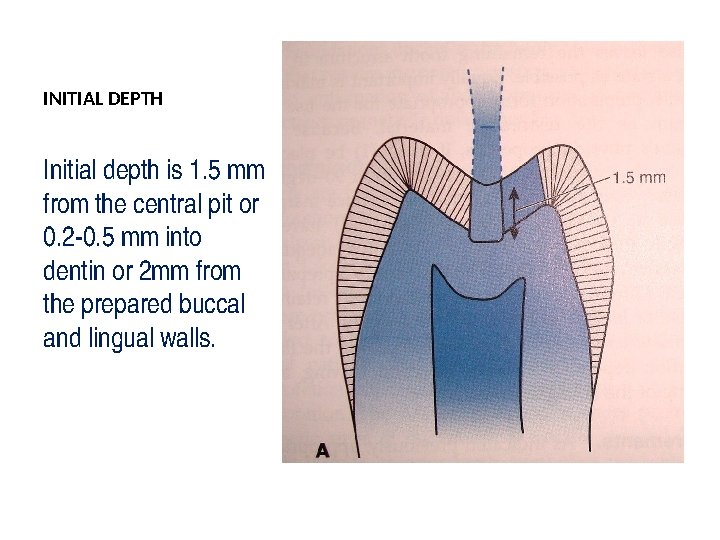
INITIAL DEPTH Initial depth is 1. 5 mm from the central pit or 0. 2 -0. 5 mm into dentin or 2 mm from the prepared buccal and lingual walls.
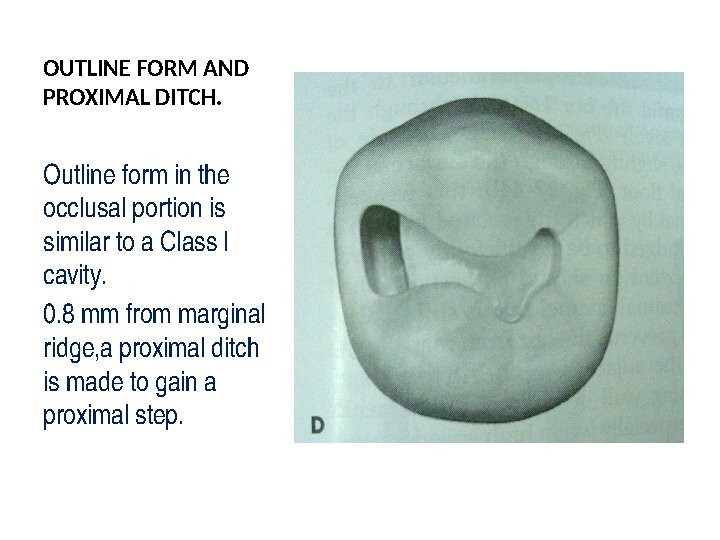
OUTLINE FORM AND PROXIMAL DITCH. Outline form in the occlusal portion is similar to a Class I cavity. 0. 8 mm from marginal ridge, a proximal ditch is made to gain a proximal step.
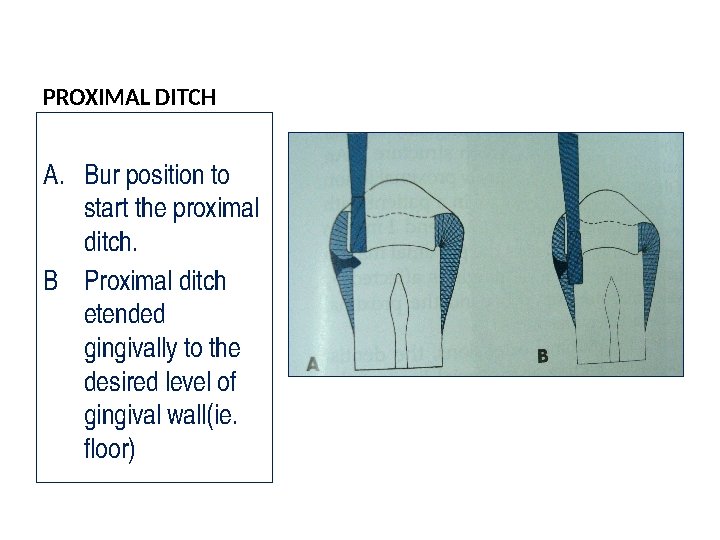
PROXIMAL DITCH A. Bur position to start the proximal ditch. B Proximal ditch etended gingivally to the desired level of gingival wall(ie. floor)
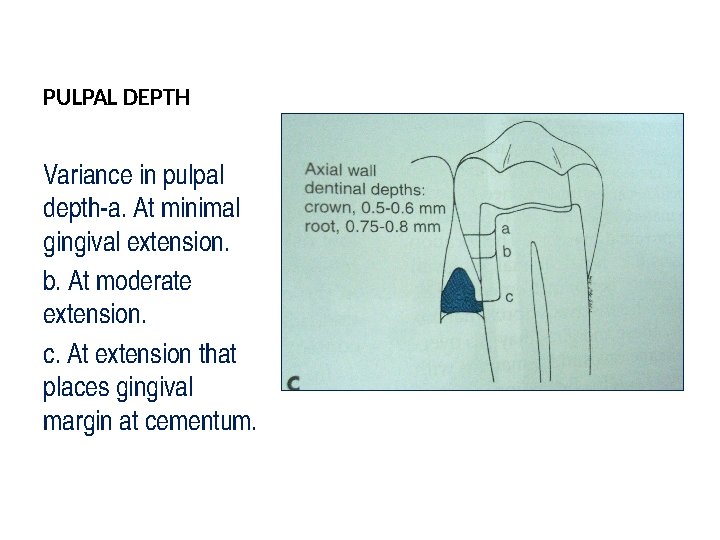
PULPAL DEPTH Variance in pulpal depth-a. At minimal gingival extension. b. At moderate extension. c. At extension that places gingival margin at cementum.
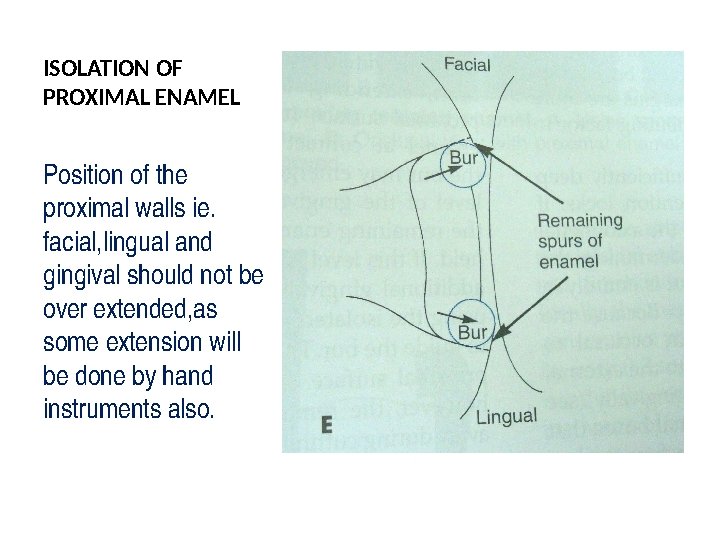
ISOLATION OF PROXIMAL ENAMEL Position of the proximal walls ie. facial, lingual and gingival should not be over extended, as some extension will be done by hand instruments also.
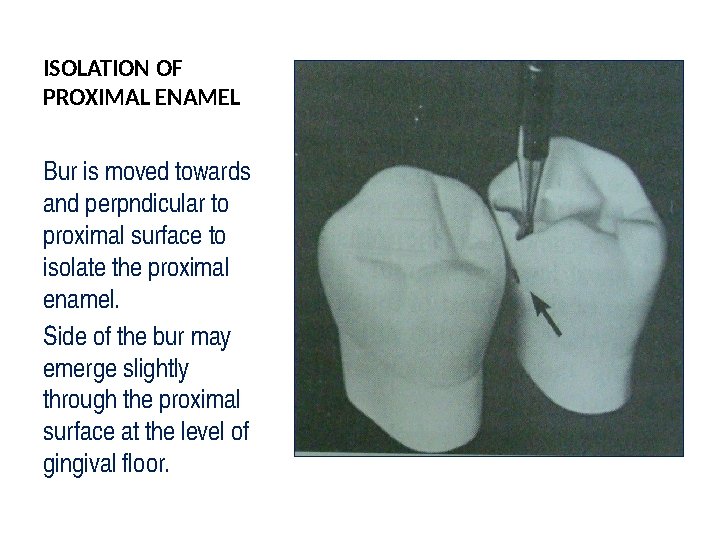
ISOLATION OF PROXIMAL ENAMEL Bur is moved towards and perpndicular to proximal surface to isolate the proximal enamel. Side of the bur may emerge slightly through the proximal surface at the level of gingival floor.
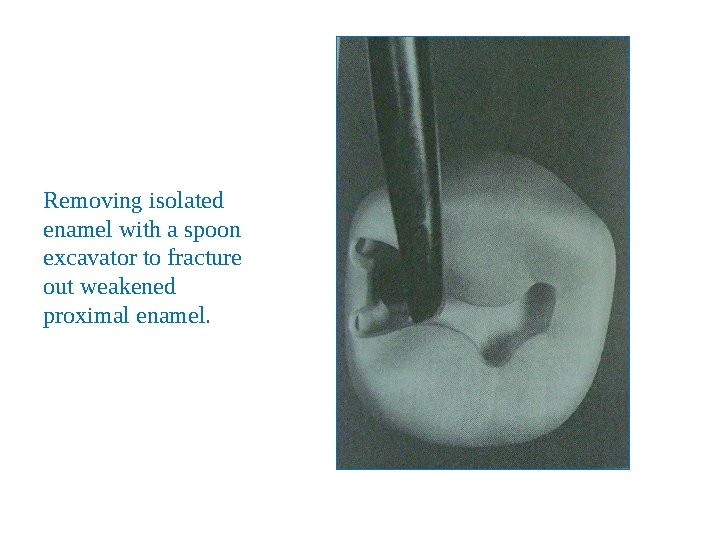
Removing isolated enamel with a spoon excavator to fracture out weakened proximal enamel.
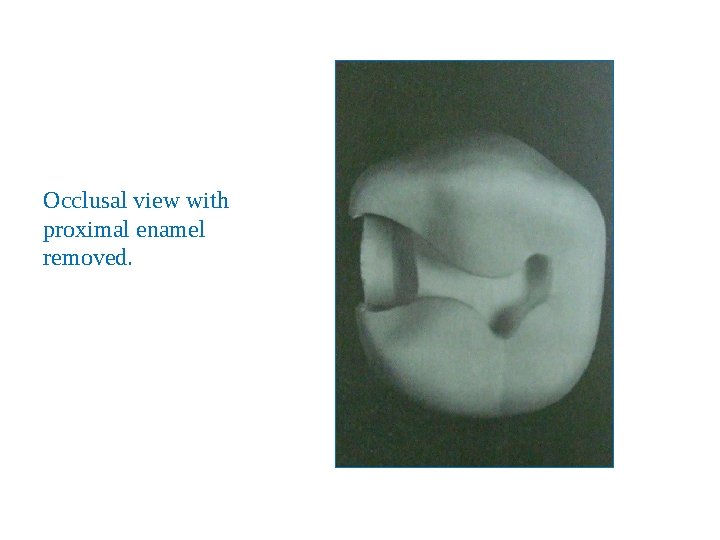
Occlusal view with proximal enamel removed.
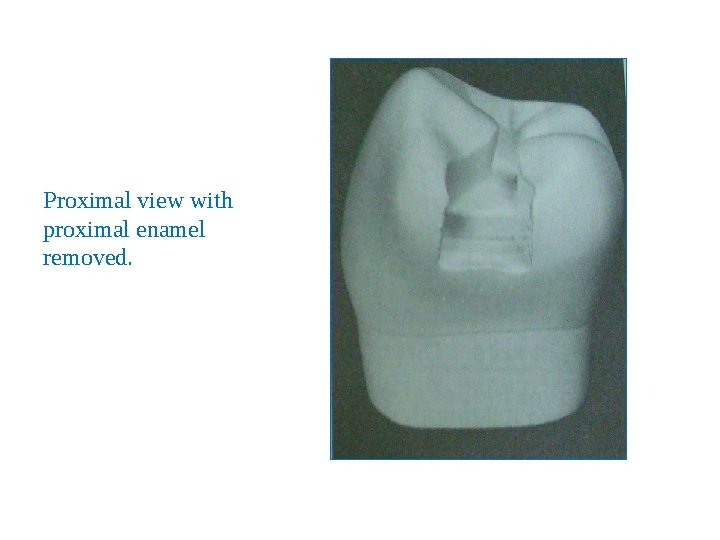
Proximal view with proximal enamel removed.
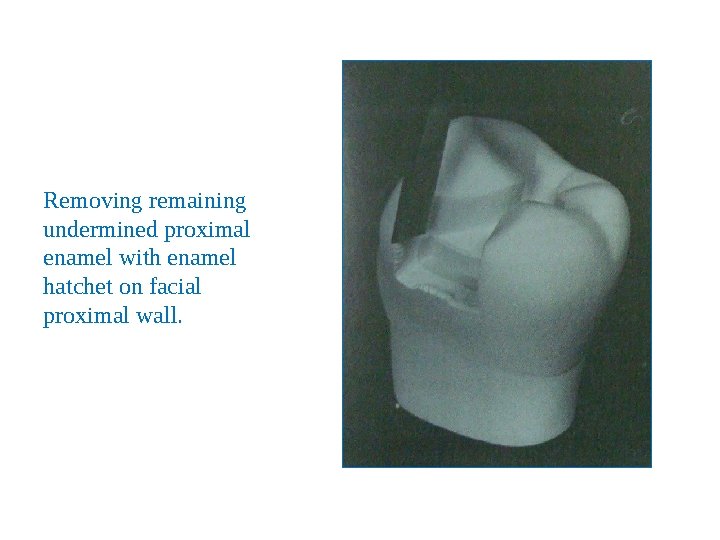
Removing remaining undermined proximal enamel with enamel hatchet on facial proximal wall.
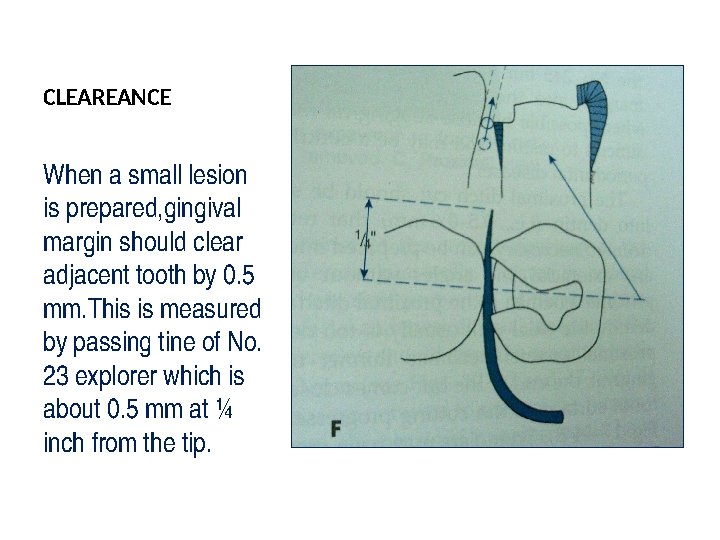
CLEAREANCE When a small lesion is prepared, gingival margin should clear adjacent tooth by 0. 5 mm. This is measured by passing tine of No. 23 explorer which is about 0. 5 mm at ¼ inch from the tip.
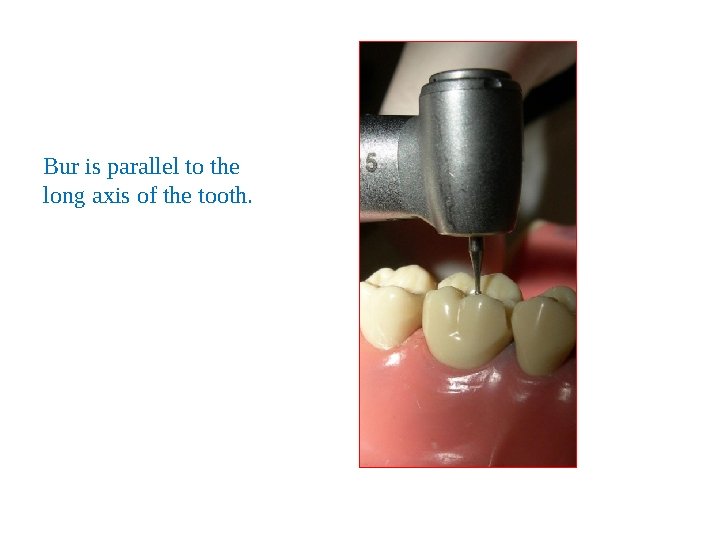
Bur is parallel to the long axis of the tooth.
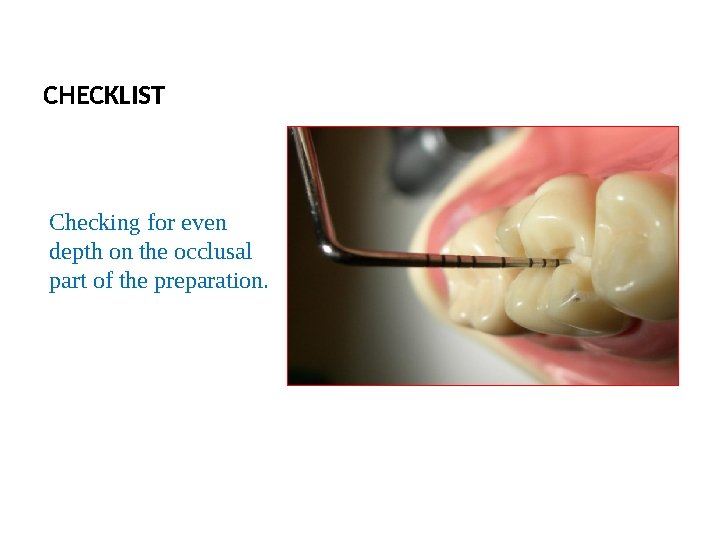
CHECKLIST Checking for even depth on the occlusal part of the preparation.
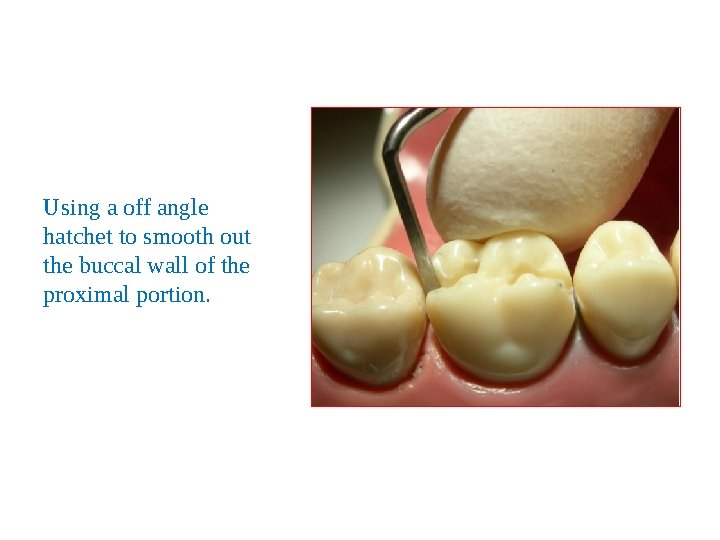
Using a off angle hatchet to smooth out the buccal wall of the proximal portion.
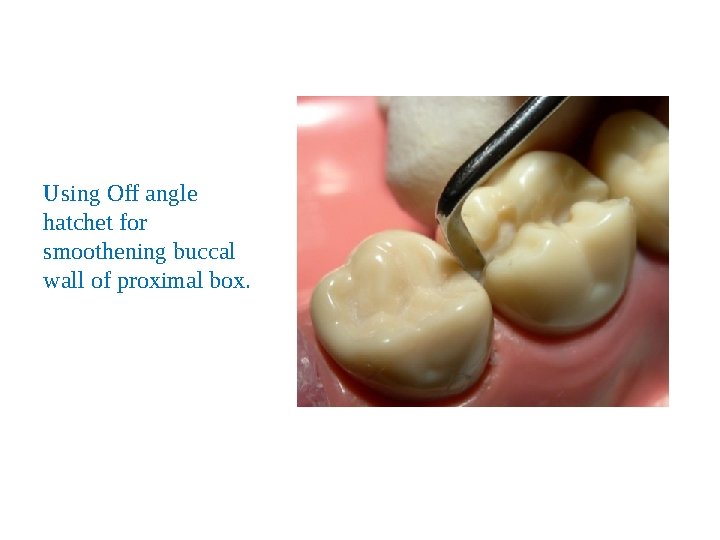
Using Off angle hatchet for smoothening buccal wall of proximal box.
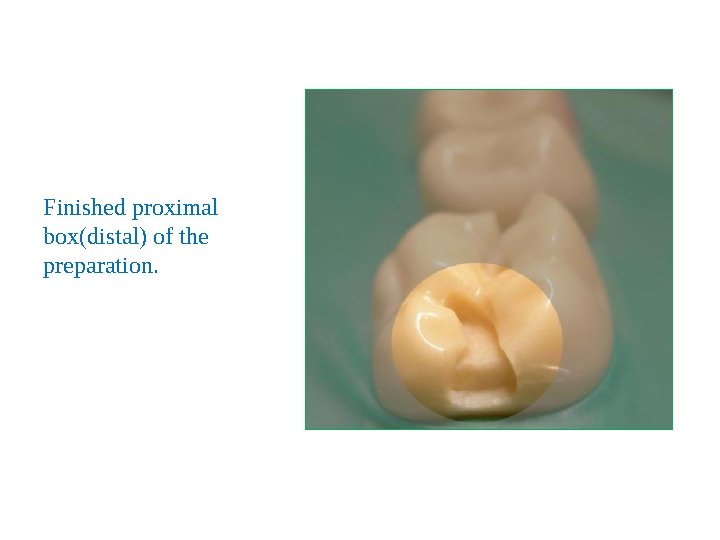
Finished proximal box(distal) of the preparation.
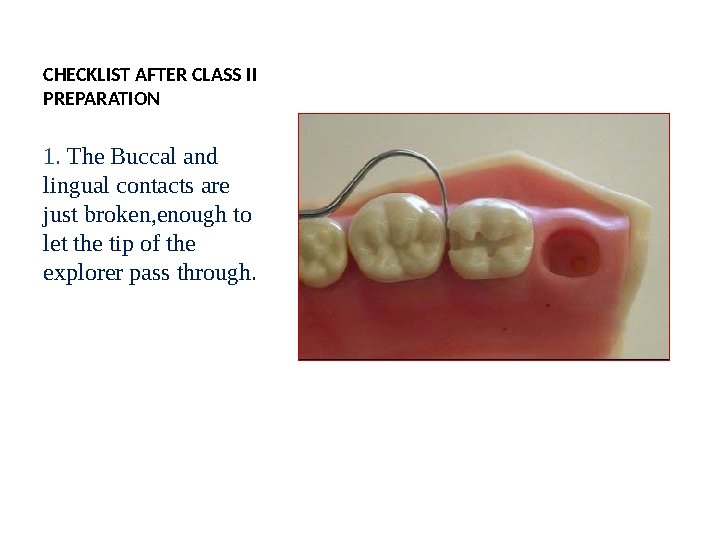
CHECKLIST AFTER CLASS II PREPARATION 1. The Buccal and lingual contacts are just broken, enough to let the tip of the explorer pass through.
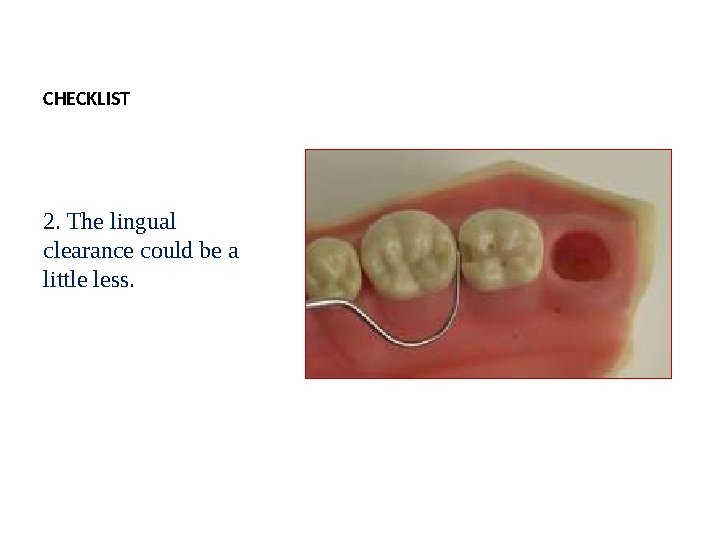
CHECKLIST 2. The lingual clearance could be a little less.
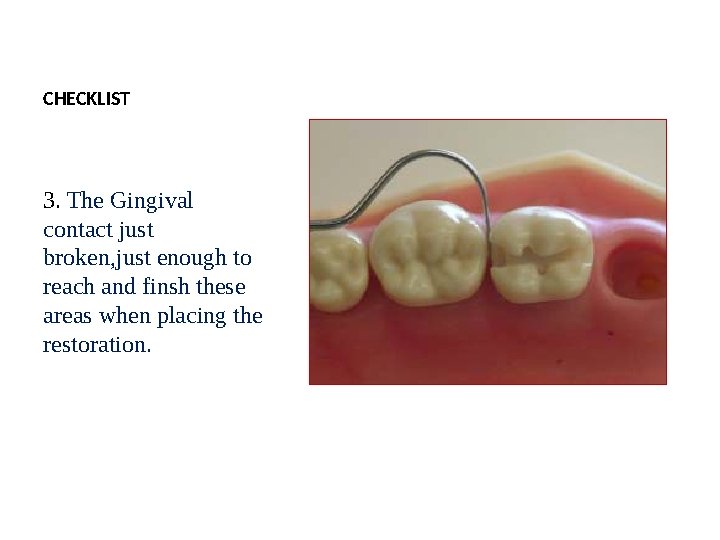
CHECKLIST 3. The Gingival contact just broken, just enough to reach and finsh these areas when placing the restoration.
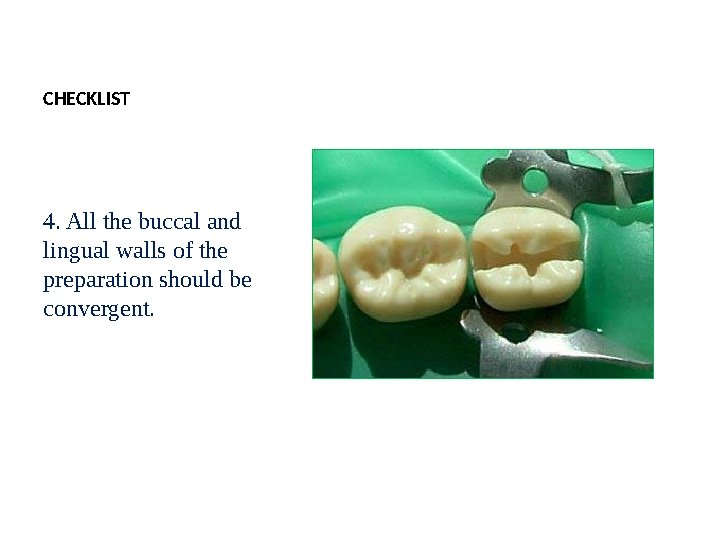
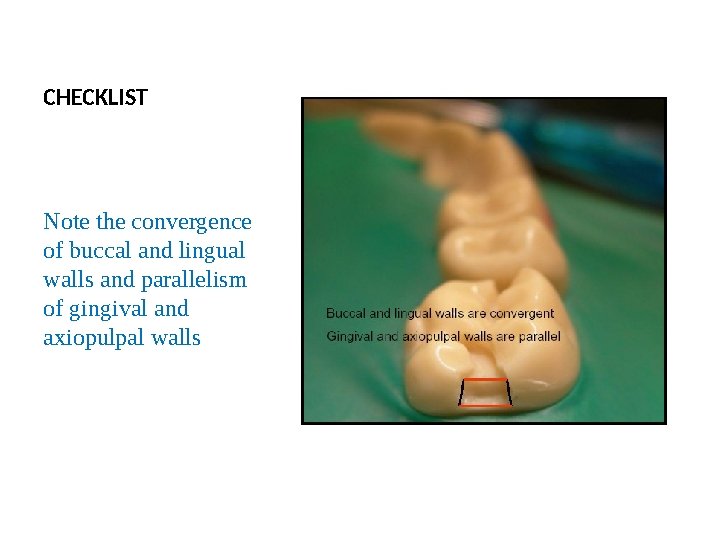
CHECKLIST 4. All the buccal and lingual walls of the preparation should be convergent.
CHECKLIST Note the convergence of buccal and lingual walls and parallelism of gingival and axiopulpal walls
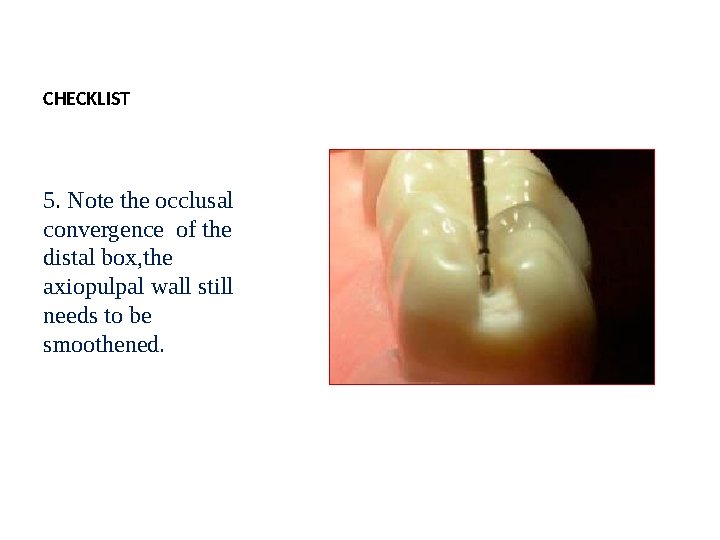
CHECKLIST 5. Note the occlusal convergence of the distal box, the axiopulpal wall still needs to be smoothened.
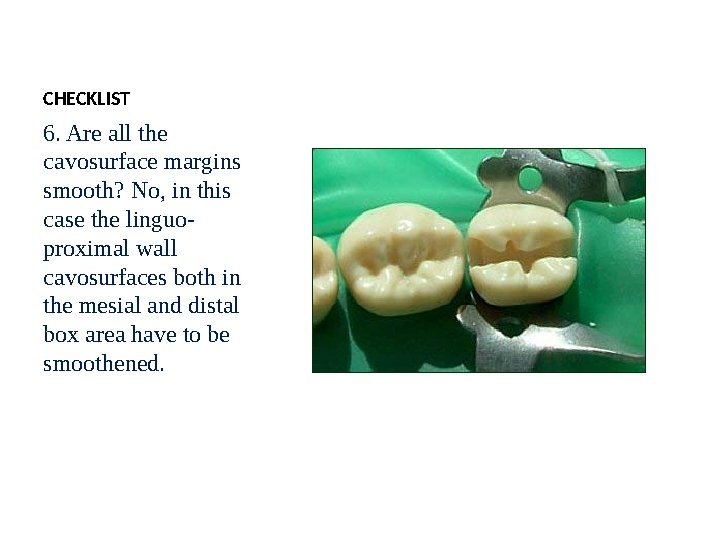
CHECKLIST 6. Are all the cavosurface margins smooth? No, in this case the linguoproximal wall cavosurfaces both in the mesial and distal box area have to be smoothened.
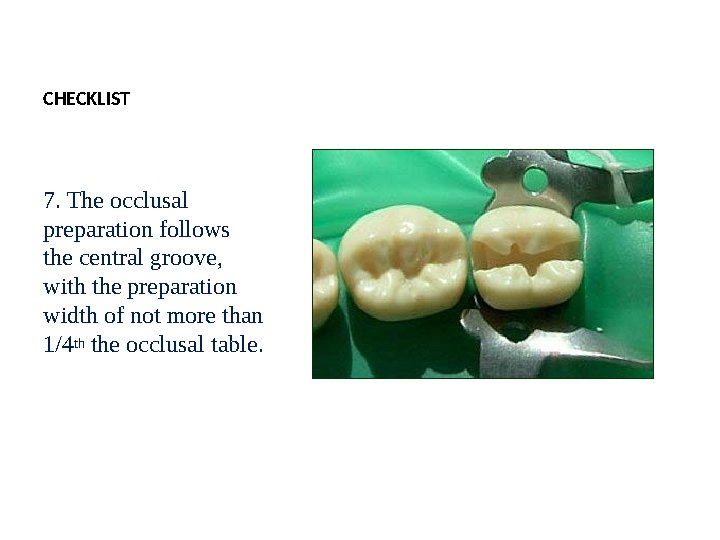
CHECKLIST 7. The occlusal preparation follows the central groove, with the preparation width of not more than 1/4 th the occlusal table.
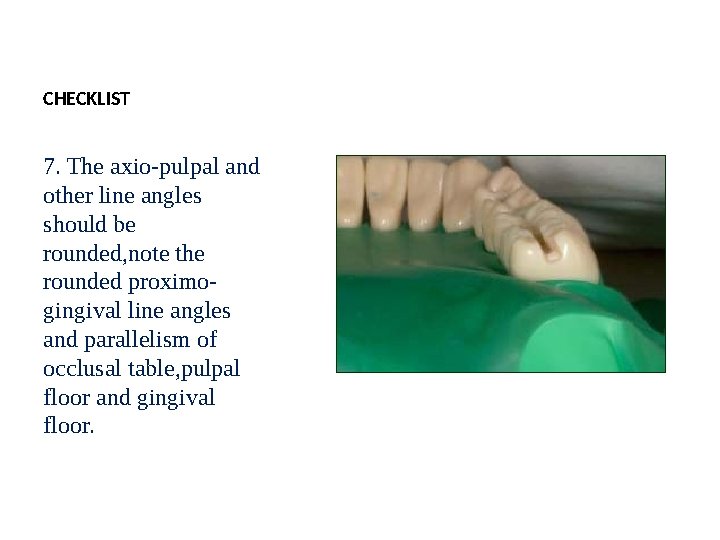
CHECKLIST 7. The axio-pulpal and other line angles should be rounded, note the rounded proximogingival line angles and parallelism of occlusal table, pulpal floor and gingival floor.
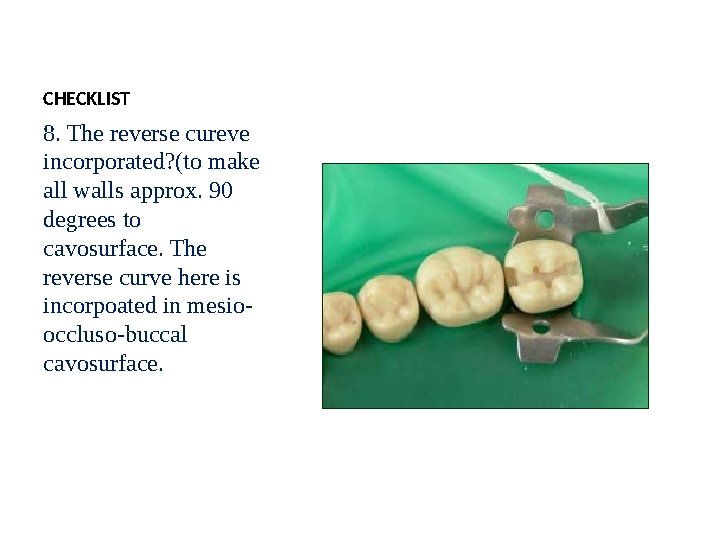
CHECKLIST 8. The reverse cureve incorporated? (to make all walls approx. 90 degrees to cavosurface. The reverse curve here is incorpoated in mesiooccluso-buccal cavosurface.
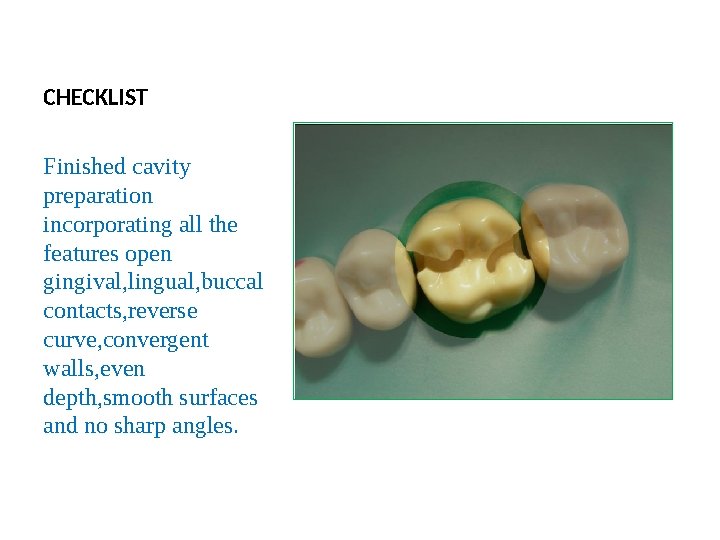
CHECKLIST Finished cavity preparation incorporating all the features open gingival, lingual, buccal contacts, reverse curve, convergent walls, even depth, smooth surfaces and no sharp angles.
• Q. 1 Initial depth for amalgam preparation is • A. half the length of no. 245 bur at central fissure • B. 1/3 rd length of no. 245 bur at central fissure • C. 2/3 rd length of no. 245 bur at central fissure • D. full length of no. 245 bur at central fissure
• Q. 2 Clearance at gingival seat from adjacent tooth should be • A. 0. 5 mm • B. 0. 8 mm • C. 1 mm • D. 1. 5 mm
• • • Q. 3 Pulpal wall in class II preparation is A. gingival seat B. axial wall C. buccal wall D. lingual wall
• • • Q. 4 Which is an external line angle A. axio-pulpal line angle b. axiogngival line angle c. facio-axial line angle D. axio-lingual line angle
• • • Q. 5 Dove tail provides a. Retention form B. resistance form C. convenience form D. outline form