
Class Basidiomyceteae Club fungi that produce spores on
Class : Basidiomyceteae Club fungi (that produce spores on basidia ) Characterization: • Septated mycelium. • Production of exogenous basidiospores. • Basidia are either septated or non-septated. • Examples: Agaricus (Mushroom)
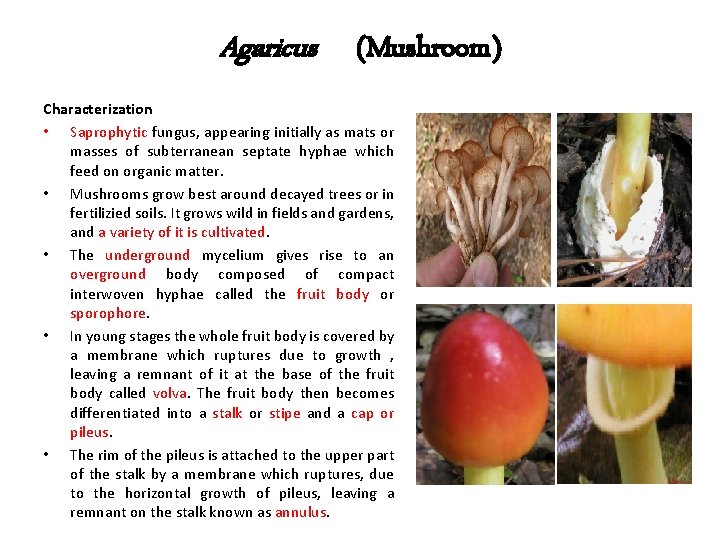
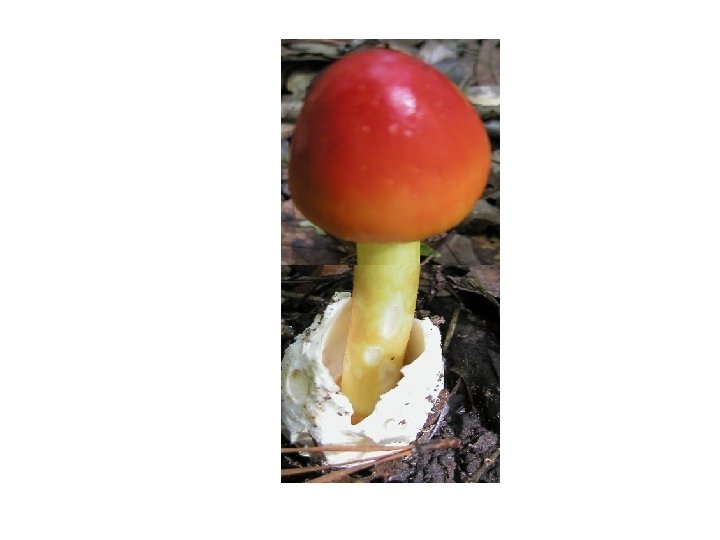
Agaricus (Mushroom) Characterization • Saprophytic fungus, appearing initially as mats or masses of subterranean septate hyphae which feed on organic matter. • Mushrooms grow best around decayed trees or in fertilizied soils. It grows wild in fields and gardens, and a variety of it is cultivated. • The underground mycelium gives rise to an overground body composed of compact interwoven hyphae called the fruit body or sporophore. • In young stages the whole fruit body is covered by a membrane which ruptures due to growth , leaving a remnant of it at the base of the fruit body called volva. The fruit body then becomes differentiated into a stalk or stipe and a cap or pileus. • The rim of the pileus is attached to the upper part of the stalk by a membrane which ruptures, due to the horizontal growth of pileus, leaving a remnant on the stalk known as annulus.
Economic importance The economic importance of members of agaricales is revealed by the following points: • Some of them are edible by man due to their nice flavor, taste and valuable content of protein and vitamin. • Mushroom-growing industry has developed in many countries of the world as the United States and France. • Other members are very poisonous. • Some are parasitic on higher plants. They cause diseases such as root rot of apple and wood destruction of many forest trees. • Some mushrooms (hallucinogenic mushrooms )ﻓﻄﺮﻳﺎﺕ ﺍﻟﻬﻠﻮﺳﺔ are being used experimentally in medicine as an aid to psychotherapy ﺍﻟﻌﻼﺝ ﺍﻟﻨﻔﺴﻲ. • A substance called psilocybin, extracted from such mushrooms, is being used in the study of schizophrenia ﺍﻷﻨﻔﺼﺎﻡ.
- Slides: 4