
CLASS AVES Class Aves Most paleontologists agree that
- Slides: 29
CLASS AVES
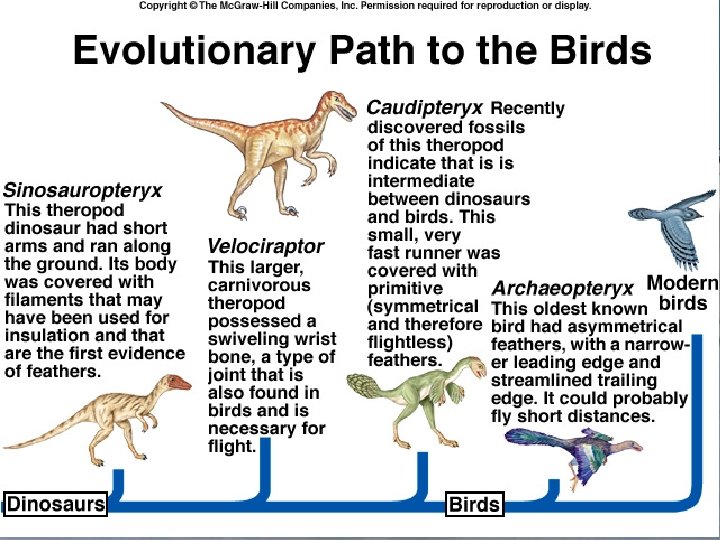
Class Aves • Most paleontologists agree that the common ancestor of all existing birds was a type of small, feathered dinosaur. • Recent fossil discoveries of feathered dinosaurs in China support this hypothesis.
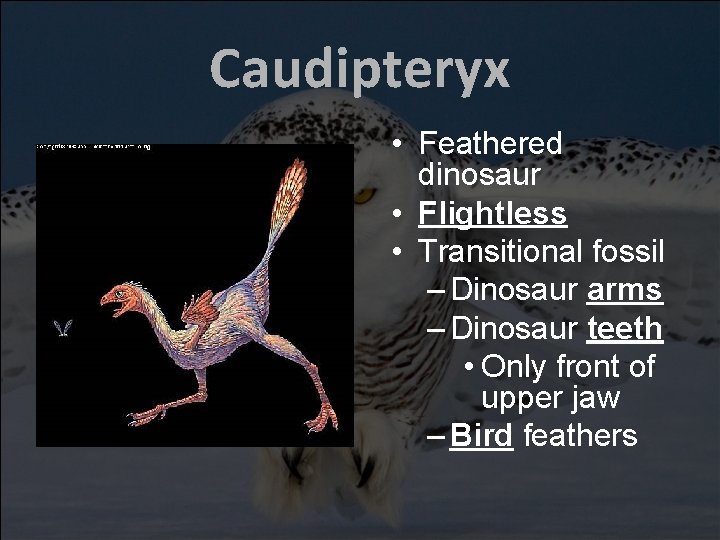
Caudipteryx • Feathered dinosaur • Flightless • Transitional fossil – Dinosaur arms – Dinosaur teeth • Only front of upper jaw – Bird feathers
Archaeopteryx • Represents an animal that lived about 150 million years ago. • Unlike modern birds, Archaeopteryx had clawed forelimbs, teeth, and a long tail with vertebrae—all reptilian characteristics. • In fact, if the feathers had not been preserved in the fossil, Archaeopteryx probably would have been identified as a small dinosaur.
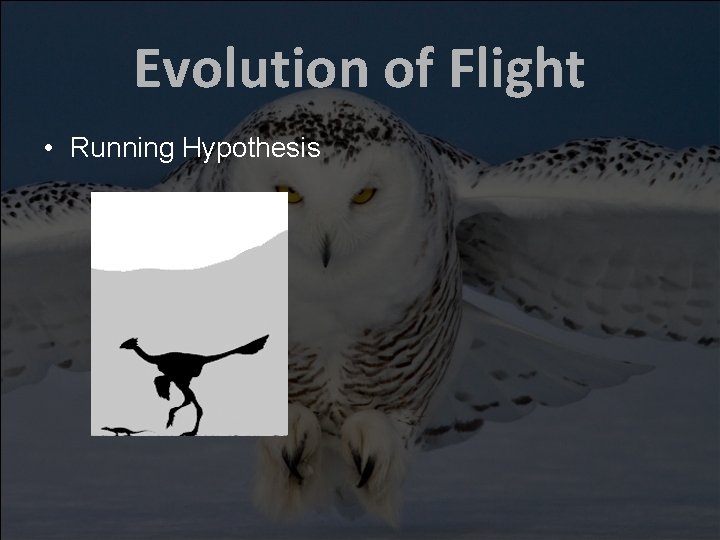
Evolution of Flight • Running Hypothesis
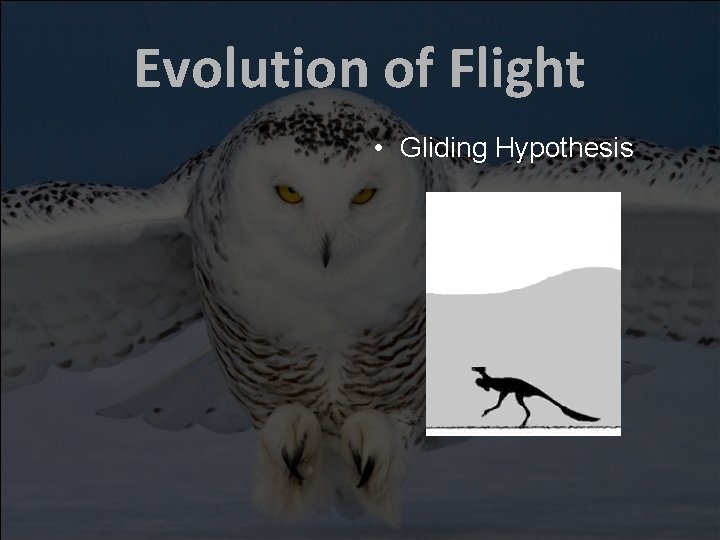
Evolution of Flight • Gliding Hypothesis
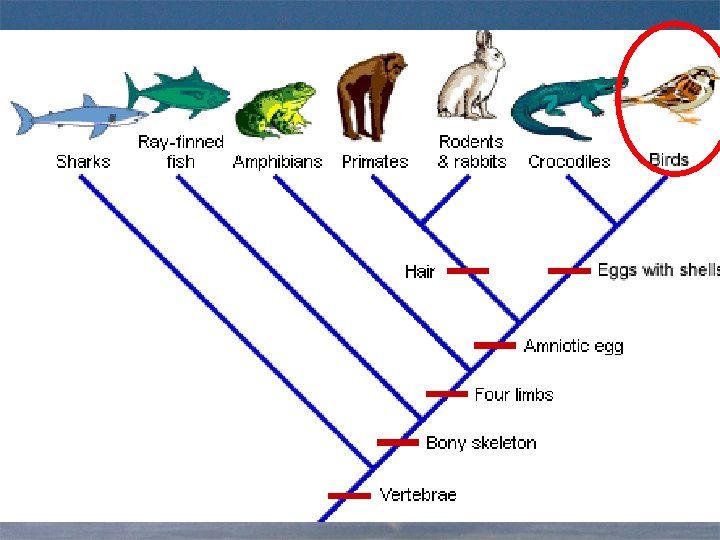
Ancestors • Molecular and fossil evidence has convinced most biologists that birds are actually reptiles. • The evidence indicates that crocodilians and birds are more closely related to each other than either one of them is to snakes and lizards.
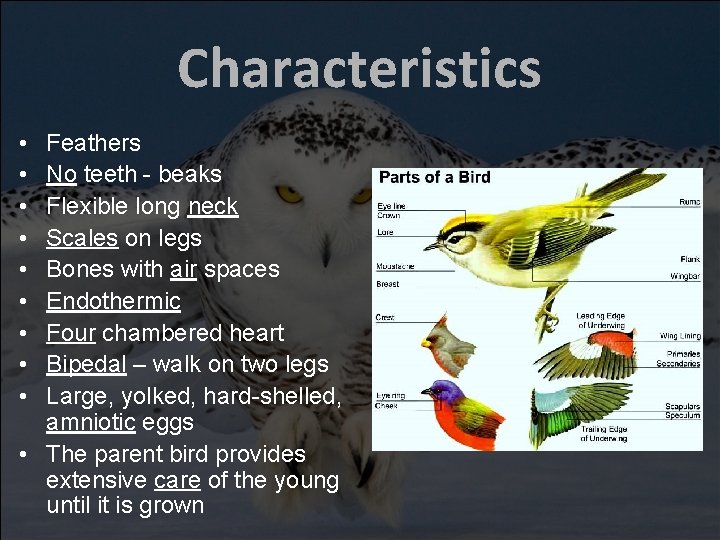
Characteristics • • • Feathers No teeth - beaks Flexible long neck Scales on legs Bones with air spaces Endothermic Four chambered heart Bipedal – walk on two legs Large, yolked, hard-shelled, amniotic eggs • The parent bird provides extensive care of the young until it is grown
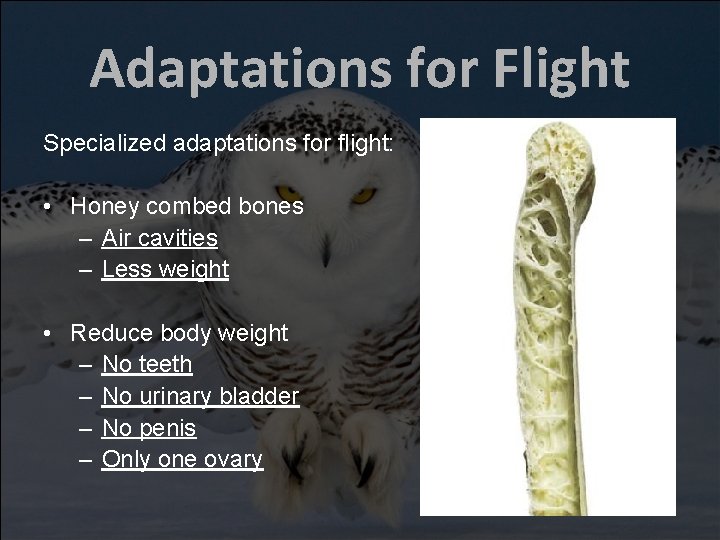
Adaptations for Flight Specialized adaptations for flight: • Honey combed bones – Air cavities – Less weight • Reduce body weight – No teeth – No urinary bladder – No penis – Only one ovary
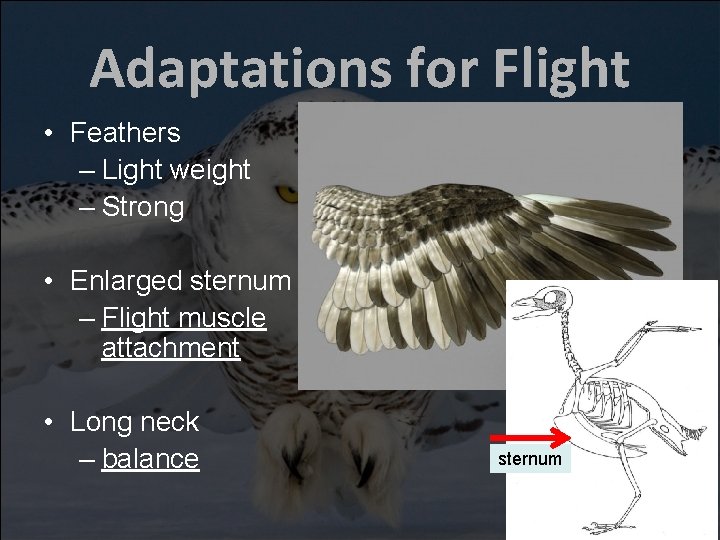
Adaptations for Flight • Feathers – Light weight – Strong • Enlarged sternum – Flight muscle attachment • Long neck – balance sternum
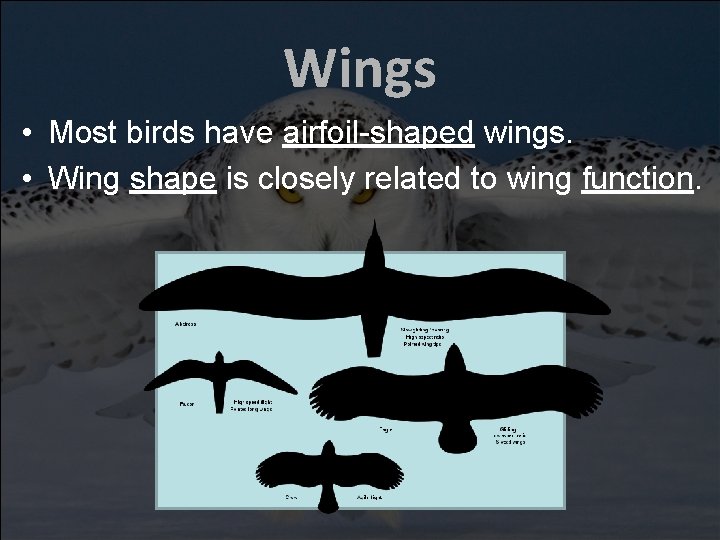
Wings • Most birds have airfoil-shaped wings. • Wing shape is closely related to wing function.
Flying Styles • Different styles of flying: – Cardinals and finches rapidly change altitude as they fly, a behavior that helps them avoid predators. – Falcons and albatrosses are hunting birds that soar, using their wings to gain altitude and then gliding on air currents without flapping. – Hummingbirds flap their wings as many as 80 times per second, enabling them to hover. – Penguins are flightless diving birds that use the same basic flight stroke to swim. – Chickens belong to a group of birds that can fly short distances, but are incapable of long flights. – Ostriches, emus, and kiwis cannot fly at all.
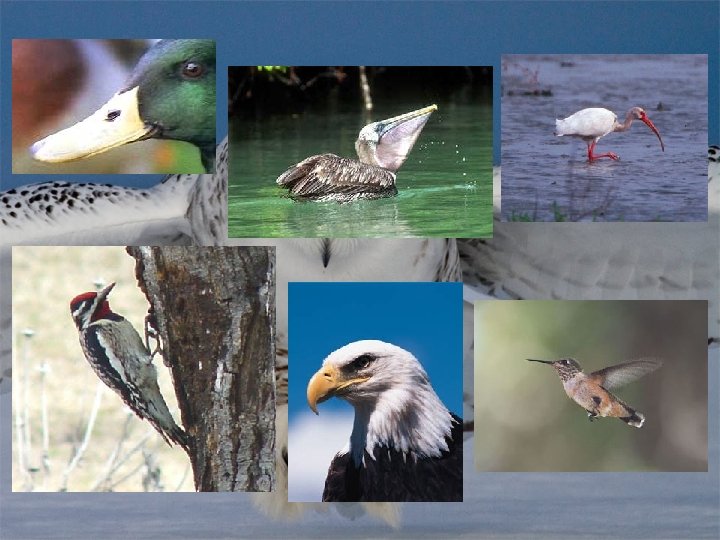
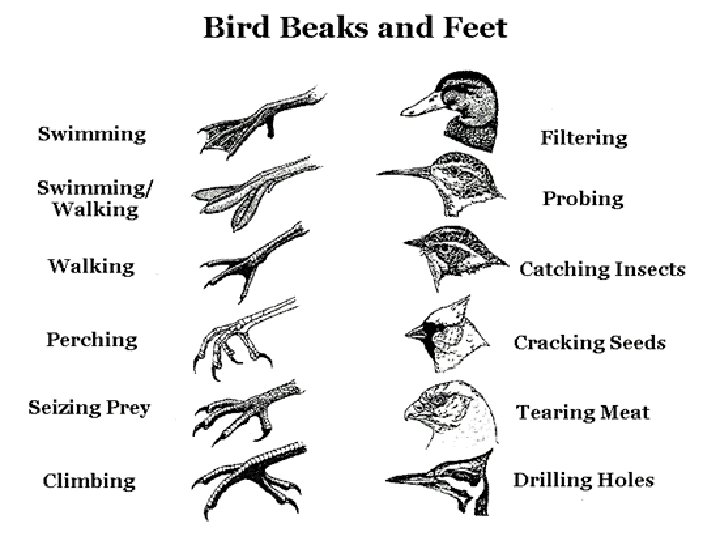
Beak • • Also called “bills” Made of keratin Nostrils function in breathing Variety of beak shapes reflects a wide range of functions • Beaks are not used for chewing, though some are used to break food into smaller pieces
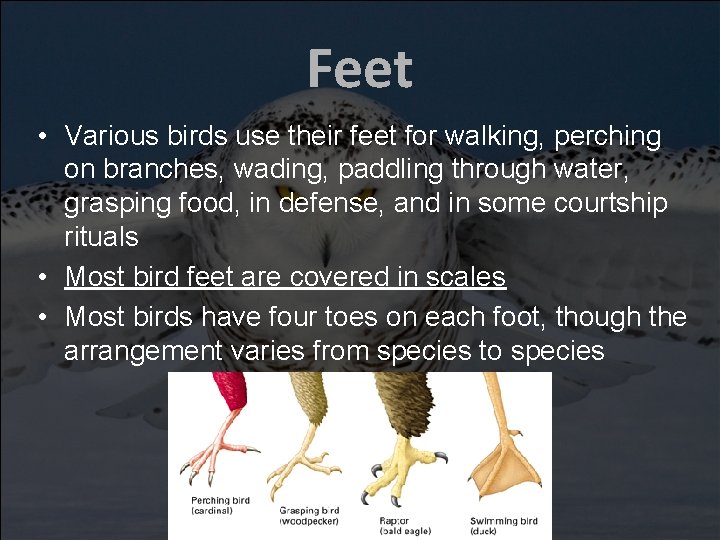
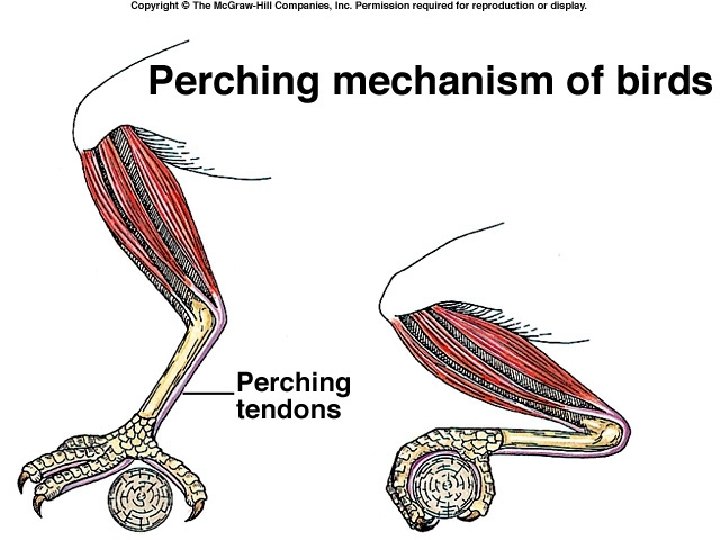
Feet • Various birds use their feet for walking, perching on branches, wading, paddling through water, grasping food, in defense, and in some courtship rituals • Most bird feet are covered in scales • Most birds have four toes on each foot, though the arrangement varies from species to species
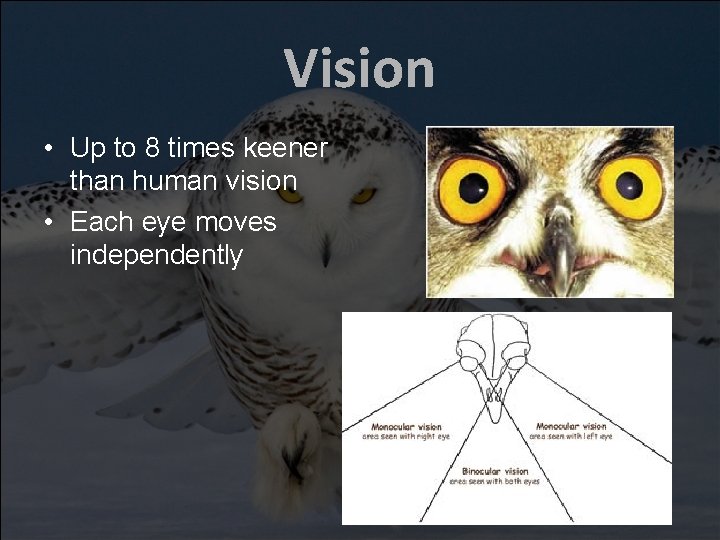
Vision • Up to 8 times keener than human vision • Each eye moves independently
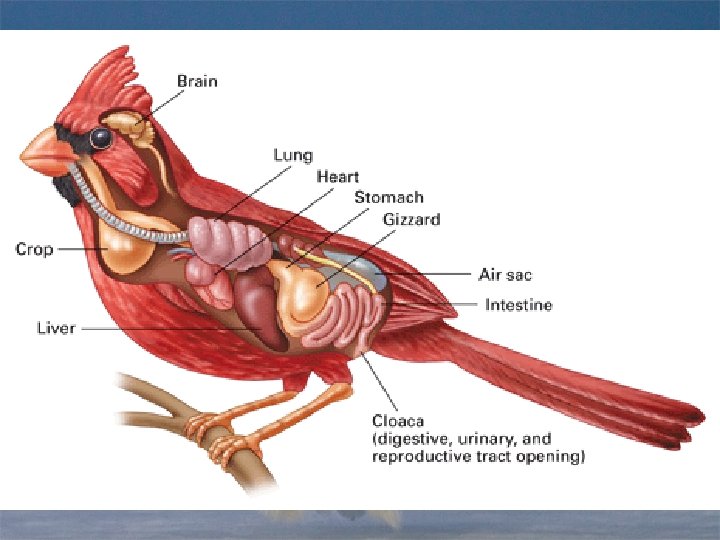
Metabolism • Birds have a system of branching air sacs that function with their lungs in respiration. • The system of air sacs supplies the high levels of oxygen needed to support a high rate of metabolism for the hard-working flight muscles. • This high metabolic activity also provides heat for endothermy.
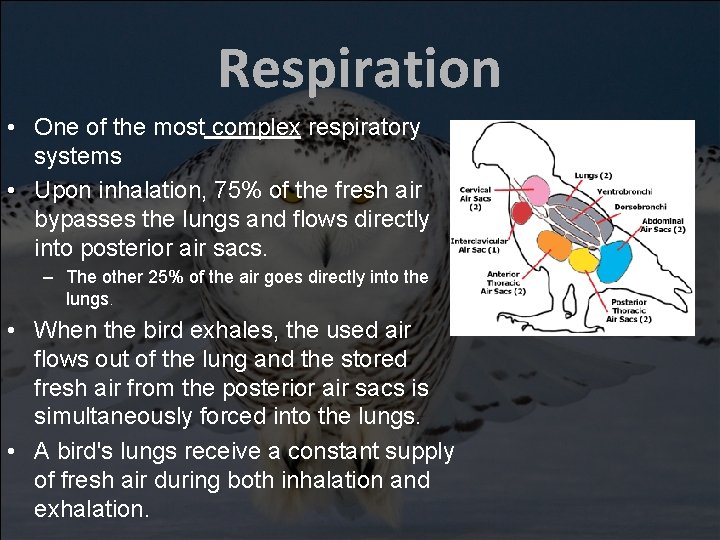
Respiration • One of the most complex respiratory systems • Upon inhalation, 75% of the fresh air bypasses the lungs and flows directly into posterior air sacs. – The other 25% of the air goes directly into the lungs. • When the bird exhales, the used air flows out of the lung and the stored fresh air from the posterior air sacs is simultaneously forced into the lungs. • A bird's lungs receive a constant supply of fresh air during both inhalation and exhalation.
Circulation • Bird circulatory systems efficiently deliver oxygen to cells. • Like amphibians and reptiles, birds have two pathways of blood flow: one from the heart to the lungs and back, and the other from the heart to the rest of the body and back. • Unlike amphibians and most reptiles, birds have a four-chambered heart with two separate ventricles that keep oxygen-rich blood from the lungs separate from the oxygen-depleted blood that passes through the heart.
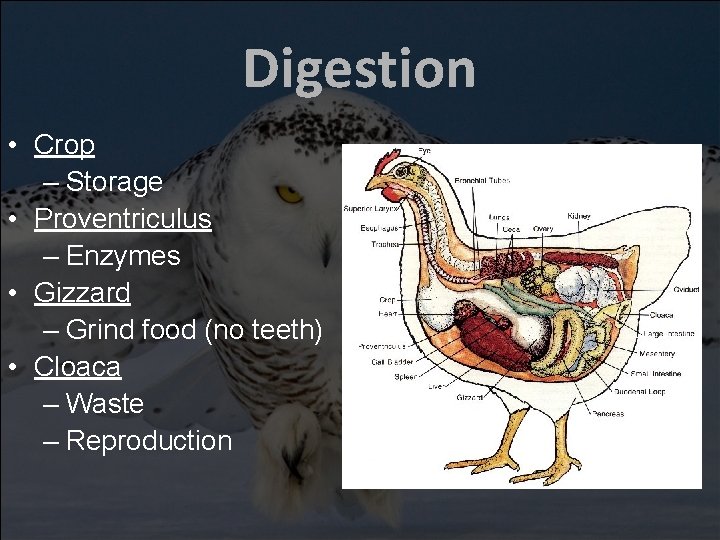
Digestion • Crop – Storage • Proventriculus – Enzymes • Gizzard – Grind food (no teeth) • Cloaca – Waste – Reproduction
Avian Reproduction • In the males of species without a phallus, sperm is stored within the proctodeum compartment within the cloaca prior to copulation. • During copulation, the female moves her tail to the side and the male either mounts the female from behind or moves very close to her. • He moves the opening of his cloaca, or vent, close to hers, so that the sperm can enter the female's cloaca, in what is referred to as a cloacal kiss. This can happen very fast, sometimes in less than one second.
Avian Reproduction • The sperm is stored in the female's cloaca for anywhere from a week to a year, depending on the species of bird. • Then, one by one, eggs will descend from the female's ovaries and become fertilized by the male's sperm, before being subsequently laid by the female. • The eggs will then continue their development in the nest.
Avian Reproduction • Many waterfowl and some other birds, such as the ostrich and turkey, do possess a phallus. • Except during copulation, it is hidden within the proctodeum compartment within the cloaca, just inside the vent. • The avian phallus differs from the mammalian penis in several ways, most importantly in that it is purely a copulatory organ and is not used for dispelling urine.
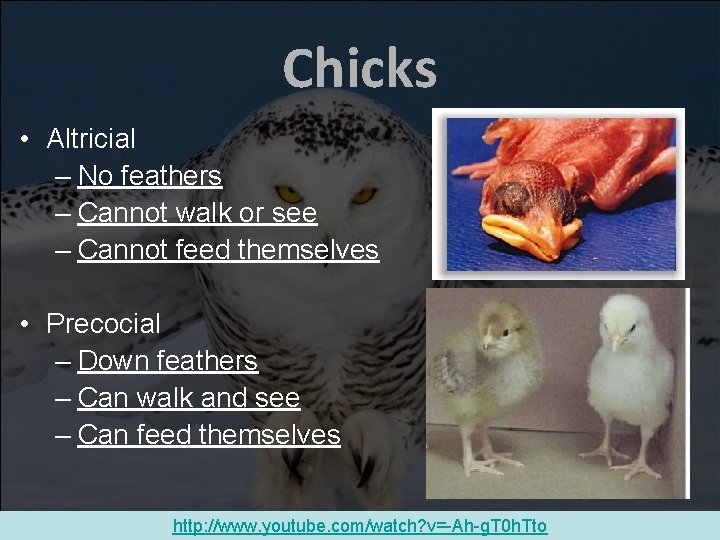
Chicks • Altricial – No feathers – Cannot walk or see – Cannot feed themselves • Precocial – Down feathers – Can walk and see – Can feed themselves http: //www. youtube. com/watch? v=-Ah-g. T 0 h. Tto