
Class Amphibia Herpetology is the study of reptiles
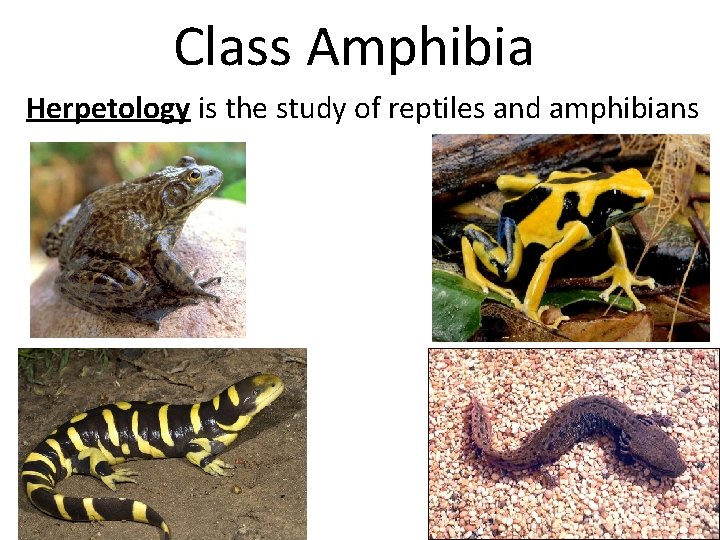
Class Amphibia Herpetology is the study of reptiles and amphibians
General Characteristics Amphibians: means both lives Frogs, salamanders, newts, toads, caecilians Bilateral Symmetry Ectothermy (cold blooded) Tetrapods - Four legged animals
Characteristics Con’t • Semi-aquatic, Semi-terrestrial –Live on both land water • Respiration –Gills replaced by lungs

Characteristics Con’t • Sexual reproduction –Monoecious (separate sexes) –External & Internal Fertilization
Complex Systems • Feeding: larvae = herbivores, adults = mostly carnivores. • Digestive tract: mouth > esophagus > stomach > small intestines > large intestine (colon) > cloaca • Respiration: larva = skin and gills, adult = lungs and some through skin • Many terrestrial salamanders = no lungs at all, through skin and mouth cavity

Circulation • Double loop system – 3 chamber heart right atrium, left atrium, and ventricle Compare Single to Double Loop Circulation • Single Loop: Heart --> Gills --> Body • Double Loop: Heart --> Lungs --> Heart --> Body
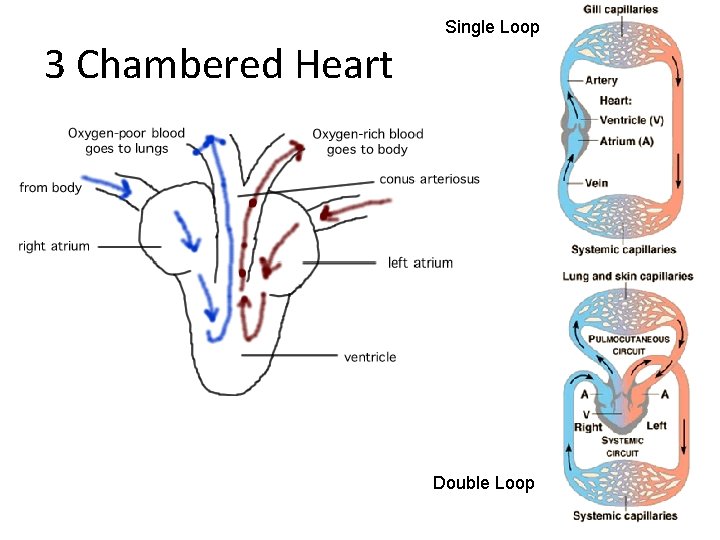
3 Chambered Heart Single Loop Double Loop
Excretion • Uric acid + Urea = urine Flow Of Waste: • Kidneys > ureters > small urinary bladder > cloaca
Reproduction • Females lay eggs in water, male deposits sperm over eggs • Most are external, some are internal • Larvae commonly called tadpoles • Metamorphism is when the tadpoles turn in to the adult frog • A few species will care for their eggs by incubating their young in their mouth, on their back, or stomach!

Reproduction - Continuation • Tadpoles • Differences Aquatic Single Loop Gills • Frogs • Differences Terrestrial or Aquatic Double Loop Lungs
Response • Eyes move in socket and have a protective structure = Nictitating membrane is a transparent membrane that covers the eye when the frog is in the water • Tympanic membranes = eardrums • Lateral Lines = detect water movement (vibrations)

Taxonomy • Kingdom- Animalia –Phylum Chordata • Subphylum Vertebrata –Class Amphibia » Order…
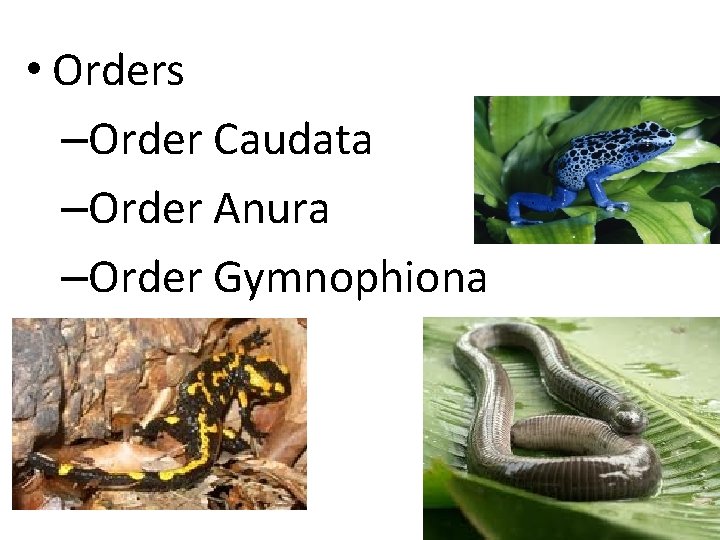
• Orders –Order Caudata –Order Anura –Order Gymnophiona
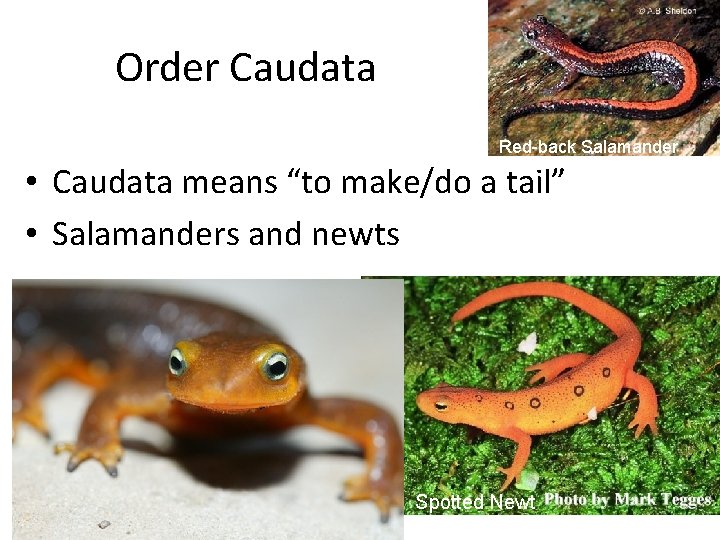
Order Caudata Red-back Salamander • Caudata means “to make/do a tail” • Salamanders and newts Spotted Newt
Caudata Con’t • Regenerative!! • Have unspecialized legs • Most have internal fertilization –Female walks over sperm cap and inserts it into cloaca

Order Anura • Frogs and toads • Have no tails as adults –Immatures do • Undergo metamorphosis –“many changes”
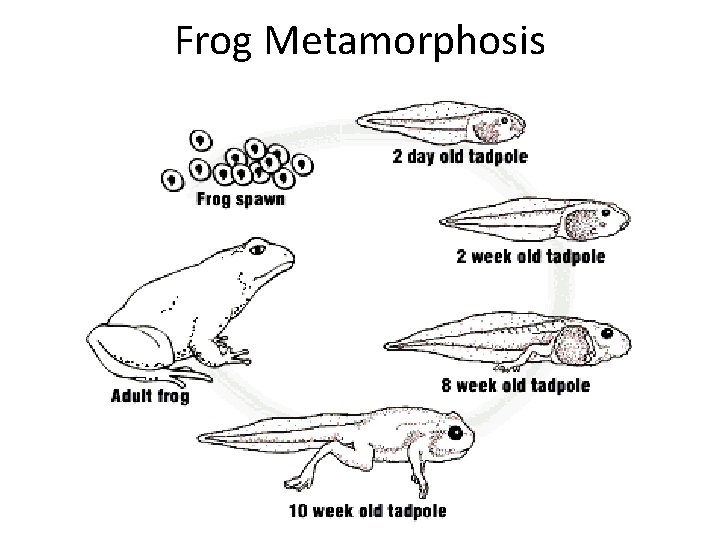
Frog Metamorphosis


• External fertilization • Difference between a frog and a toad: –Toads have dry & rough skin –Frogs have moist & wet skin

Order Gymnophiona • Caecilians • • • Worm-like Have fish-like scales Limbless Burrow in the ground Hard thick bony skull Underdeveloped eyes – Virtually blind • Tentacle to sense prey
- Slides: 20