
Class 2 State Structure Basic Facts about China
Class 2: State Structure

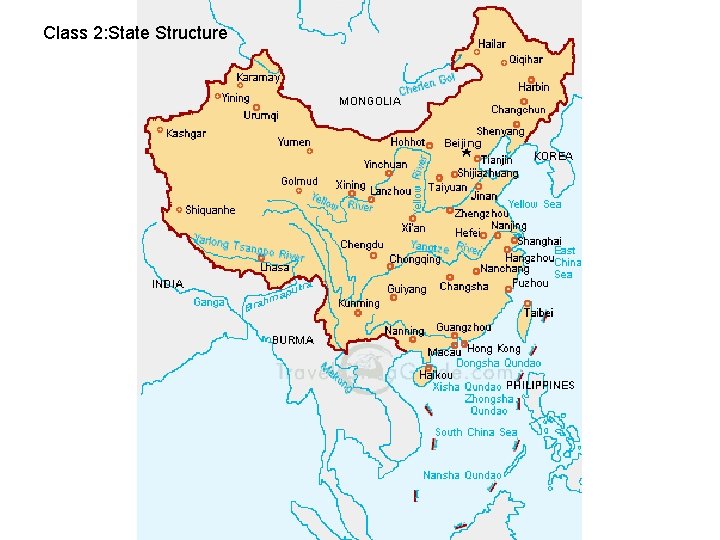
Basic Facts about China • Population – China 1. 4 billion – U. S. 290 million – EU 450 million • Size: Which country is bigger, China or the U. S. ? – CIA http: //www. cia. gov/cia/publications/factbook/geos/ch. html U. S. is bigger! – China. org http: //www. china. org. cn/e-changshi/index. htm China is bigger! • Nationalities: minorities 56; majority 1 (Han) • Provincial governments – – – 4 large cities: Beijing, Shanghai, Tianjin, Chongqing 23 provinces 5 autonomous regions 2 special administrative regions (SAR): Hong Kong and Macau Taiwan • Neighboring States
US-China Trade Statistics and China's World Trade Statistics http: //www. uschina. org/statistics/tradetable. html Trade in Goods (Imports, Exports and Trade Balance) with China http: //www. census. gov/foreign-trade/balance/c 5700. html
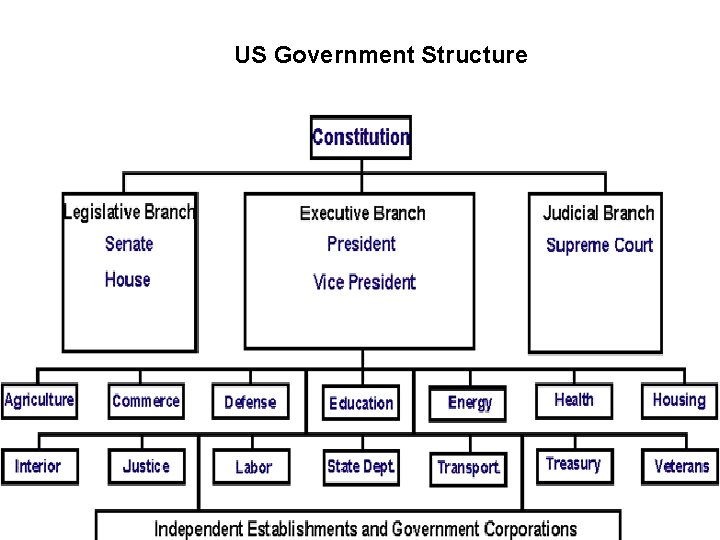
US Government Structure

Central Government
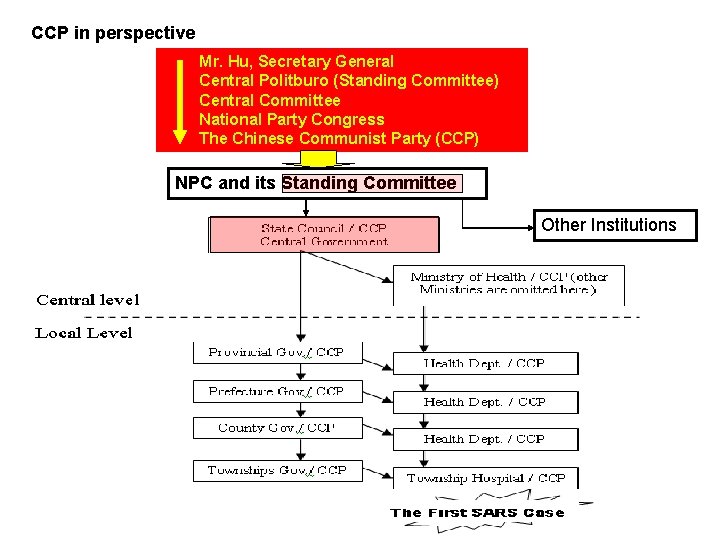
CCP in perspective Mr. Hu, Secretary General Central Politburo (Standing Committee) Central Committee National Party Congress The Chinese Communist Party (CCP) NPC and its Standing Committee Other Institutions
Who is the Chief? Party Chief Military Chief President of the PRC “Political power grows out of the barrel of a gun. ” -- Mao
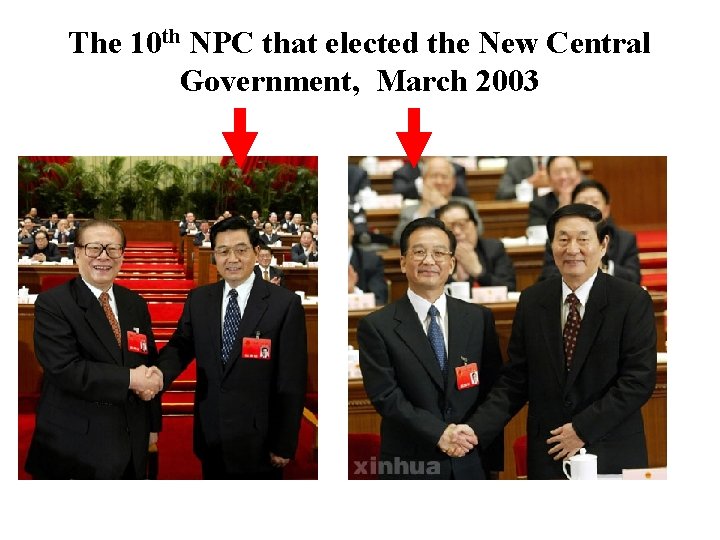
The 10 th NPC that elected the New Central Government, March 2003
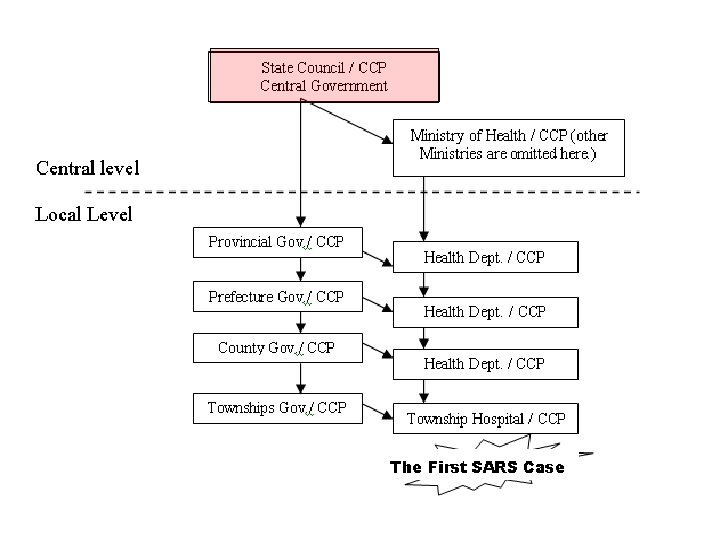
Relationships of the Central and Local Governments Principle: Democratic Centralism – The individual is subordinate to the group; – The Minority is subordinate to the majority; – The Lower is subordinate to the higher level; – The Local is subordinate to the central. Any problem with this principle?
- Slides: 10