
CLASS 15 How to tell that you are



- Slides: 25
CLASS 15
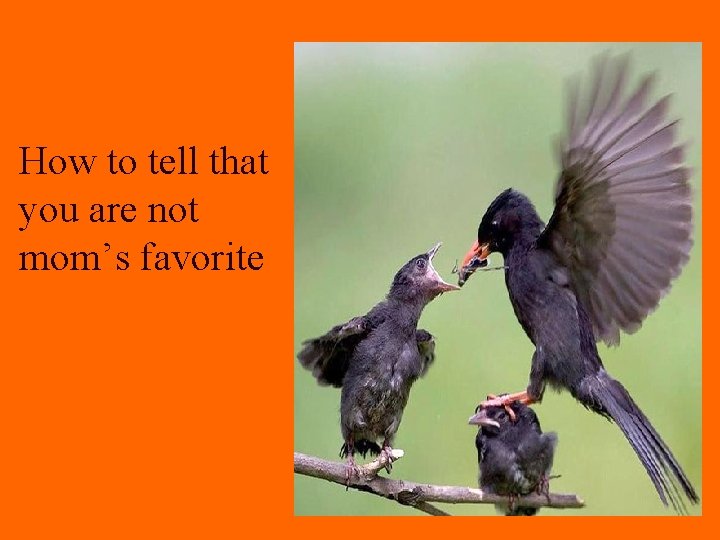
How to tell that you are not mom’s favorite
Social Development
Birth Order and Personality
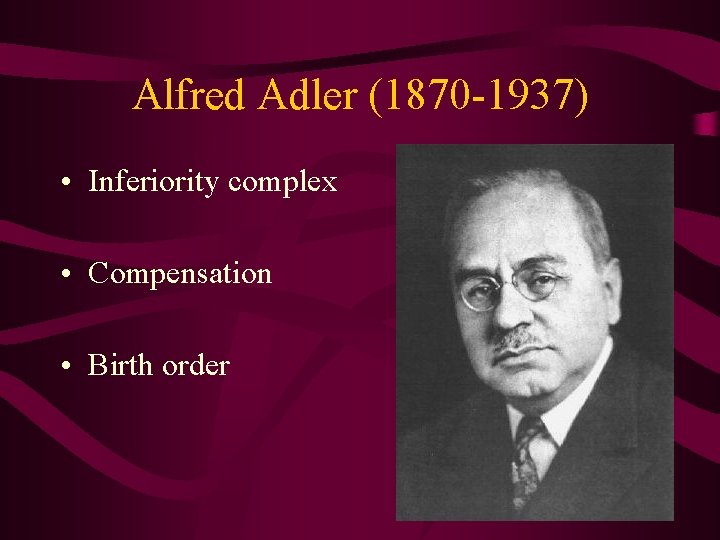
Alfred Adler (1870 -1937) • Inferiority complex • Compensation • Birth order
The Old Research Achievement Motivation Dependency Popularity
Ernst & Angst (1983) – Complete review of research – Effects are weak and scattered – Result: birth order ideas fell into disrepute
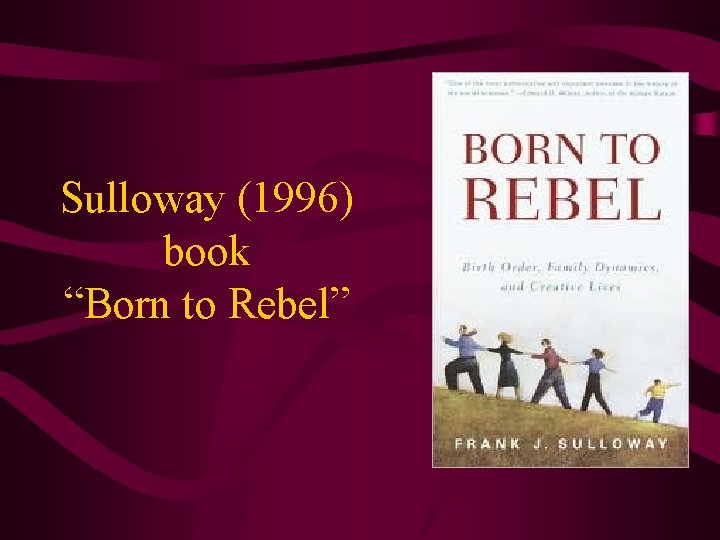
Sulloway (1996) book “Born to Rebel”
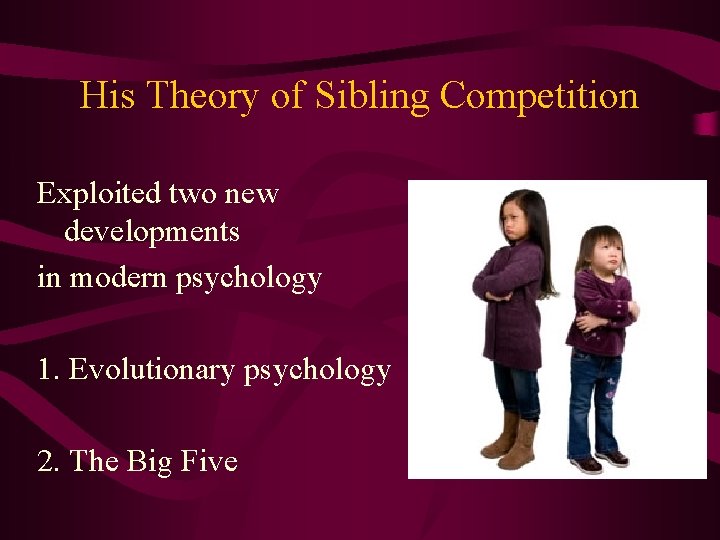
His Theory of Sibling Competition Exploited two new developments in modern psychology 1. Evolutionary psychology 2. The Big Five
Family dynamics • All children want parental approval • We want to fit into the family somewhere • i. e. , we try to find our niche
First borns • Have first choice • Pick the most approved behaviors: – Study and behave yourself • Explains their higher school achievement
• Also advantaged by size and strength • Therefore dominate other siblings • Identify with power and authority • Later continue to seek high status
• But as others grow, so does insecurity of first-borns • Continue to be concerned about maintaining status hierarchies • In short, they are conservative
LATER BORNS Disadvantaged in two ways: 1. STANDARD ROLE IS TAKEN – Therefore, need to be innovative, flexible – Continue to try new approaches to life – ie open to experience
2. THEY ARE UNDERPRIVILEGED – Constant striving for equal privileges – Later they identify with downtrodden and reject hierarchies – As adults, they are politically liberal
Two Sources of Data • Historical research • Contemporary personality surveys
Historical Research • Famous families • Children more different than one would expect • Achieve in different ways
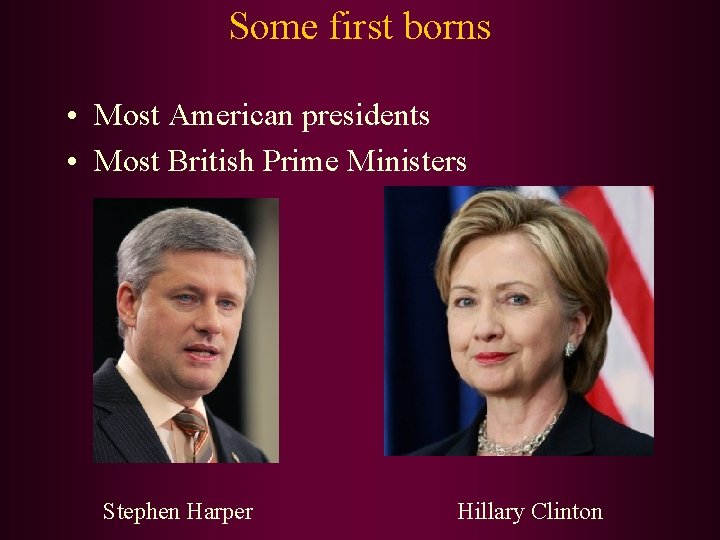
Some first borns • Most American presidents • Most British Prime Ministers Stephen Harper Hillary Clinton
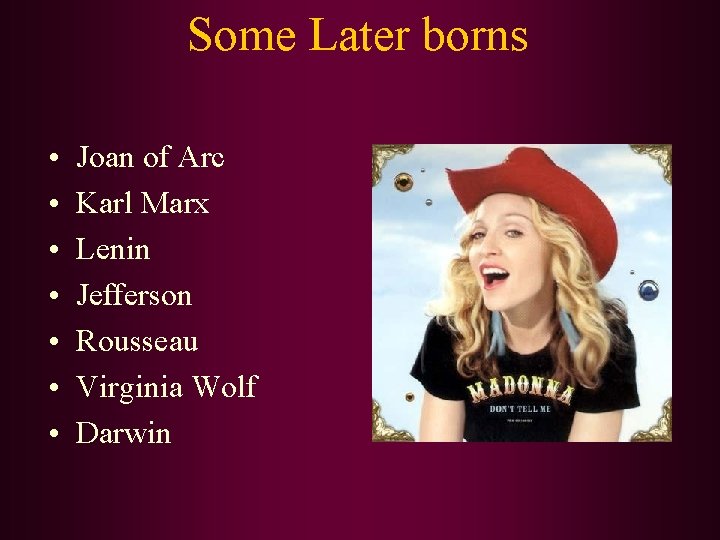
Some Later borns • • Joan of Arc Karl Marx Lenin Jefferson Rousseau Virginia Wolf Darwin
Personality Surveys • FBs more conservative, conscientious • LBs more liberal and open to experience • But depends on the method
Qualifications to theory • Genetics more important • Only children • Interactions with: – Temperament – Gender
Critique • Do these effects extend outside the home ? • Emerge later under stress ?
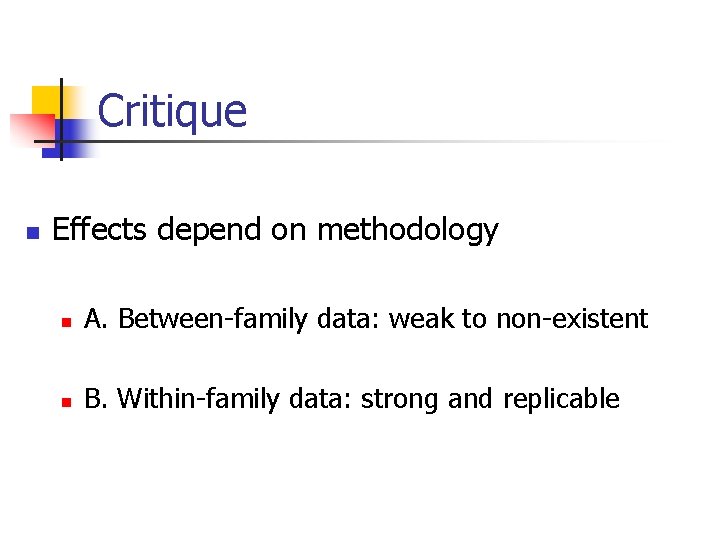
Critique n Effects depend on methodology n A. Between-family data: weak to non-existent n B. Within-family data: strong and replicable
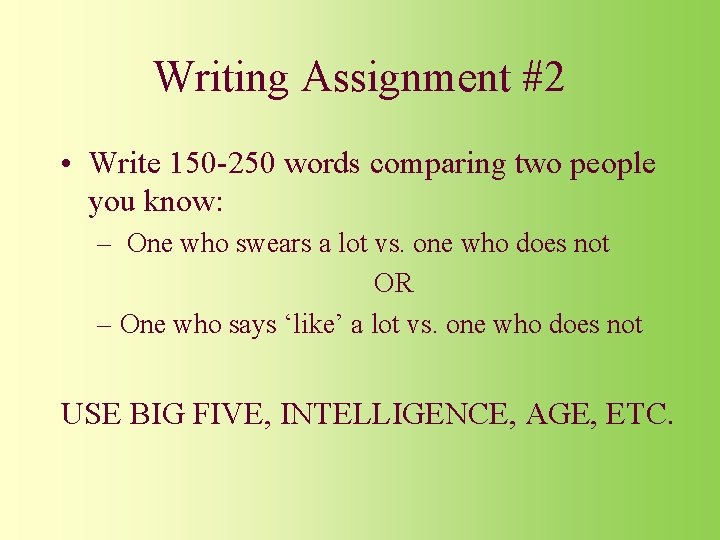
Writing Assignment #2 • Write 150 -250 words comparing two people you know: – One who swears a lot vs. one who does not OR – One who says ‘like’ a lot vs. one who does not USE BIG FIVE, INTELLIGENCE, AGE, ETC.
Submit to following email address • paulhus. sec. 8. 2@gmail. com • OR • paulhus. sec. 9. 2@gmail. com