
Class 11 Supervised Classification Training Fields Parallel Pipes
- Slides: 27
Class 11. Supervised Classification Training Fields Parallel Pipes Maximum Likelihood Classifier
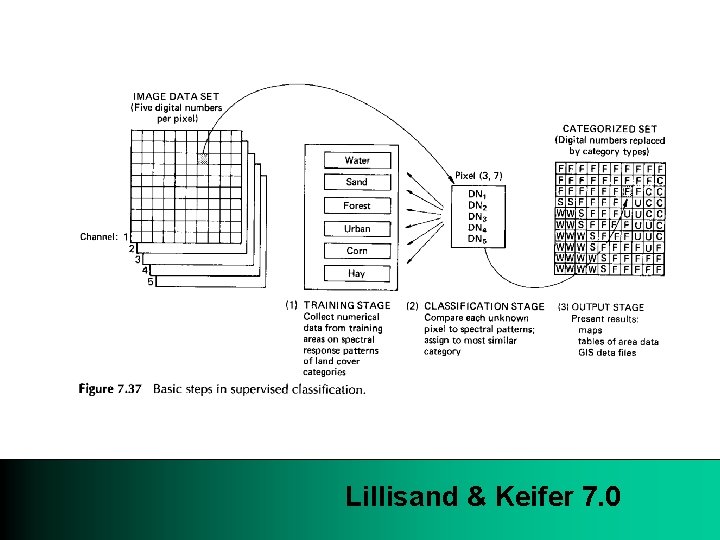
Definition Unsupervised classification is a process of grouping pixels that have similar spectral values and labeling each group with a class Supervised classification is to classify an image using known spectral information for each cover type
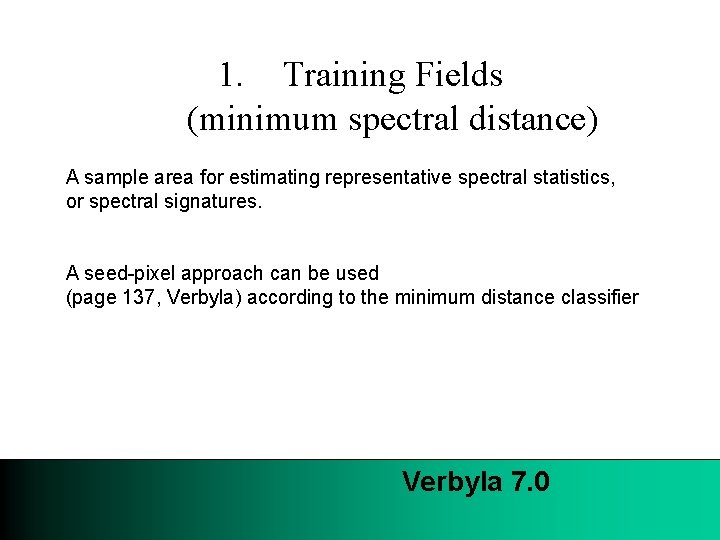
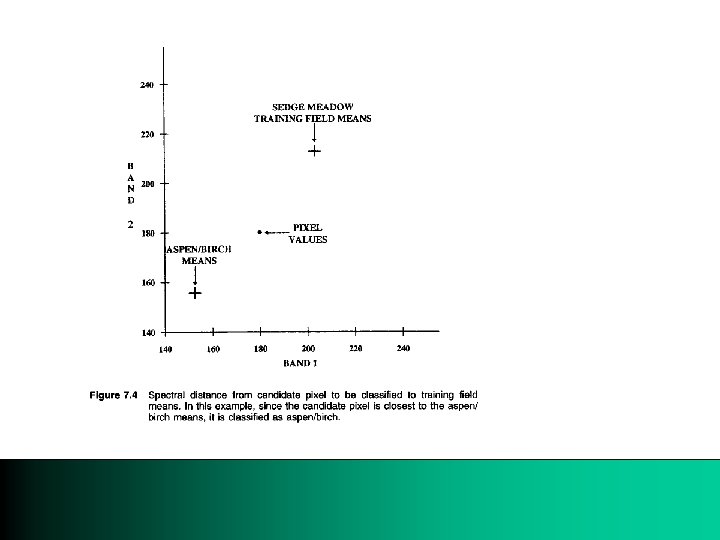
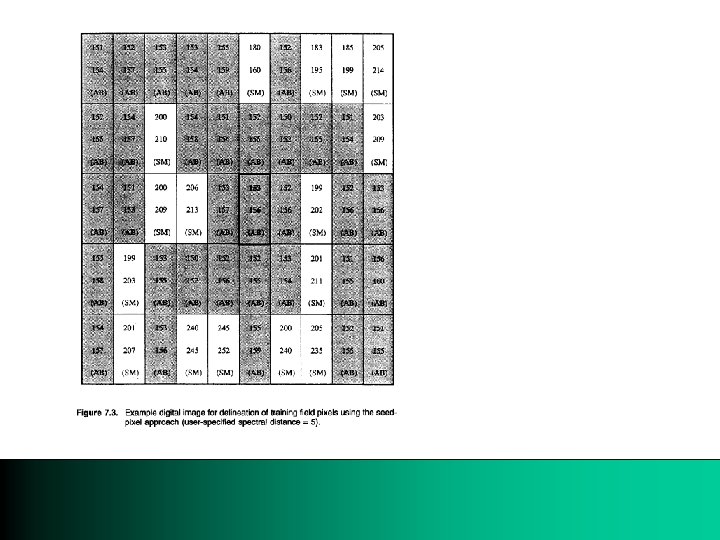
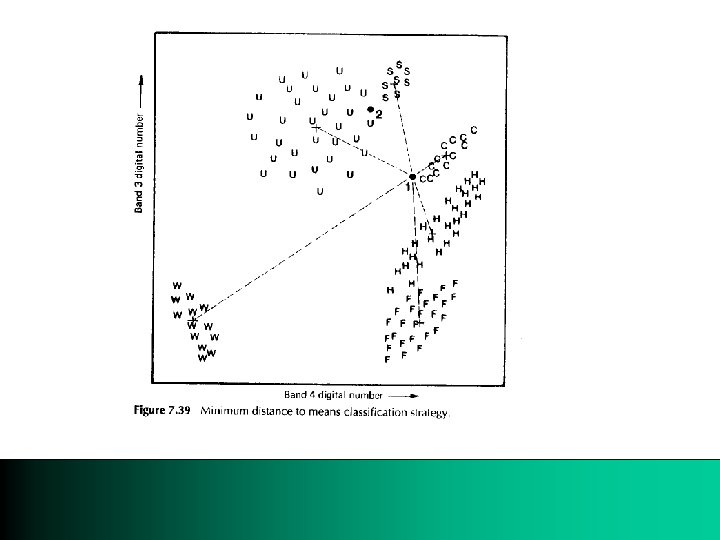
1. Training Fields (minimum spectral distance) A sample area for estimating representative spectral statistics, or spectral signatures. A seed-pixel approach can be used (page 137, Verbyla) according to the minimum distance classifier Verbyla 7. 0
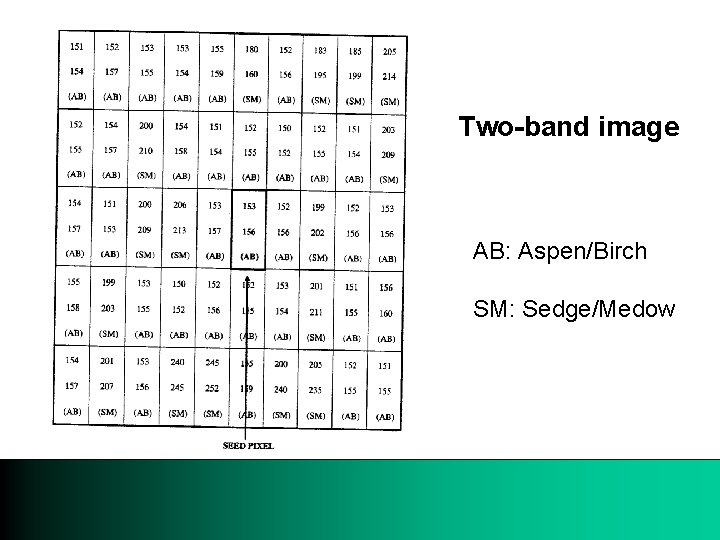
Two-band image AB: Aspen/Birch SM: Sedge/Medow
Lillisand & Keifer 7. 0
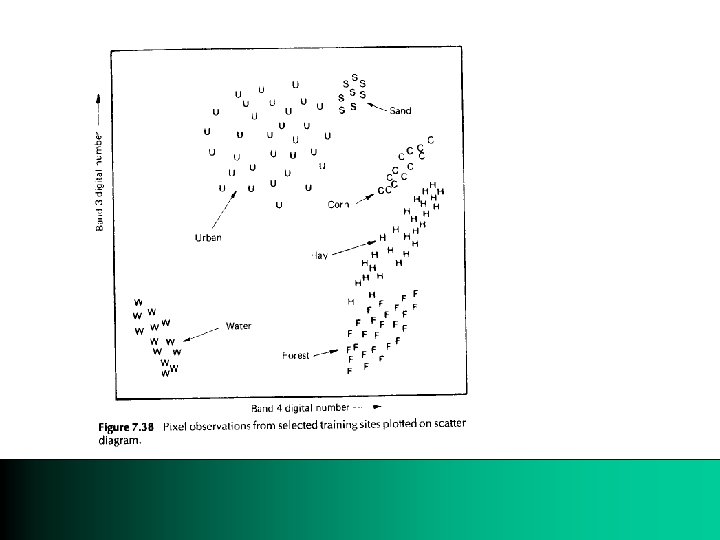
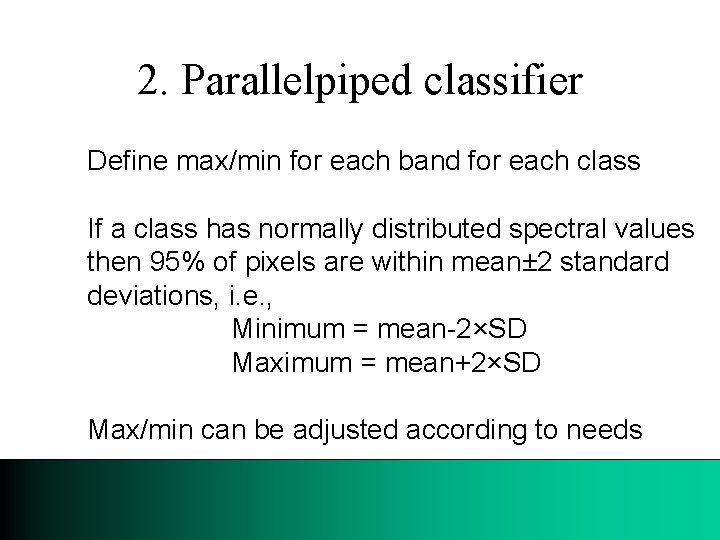
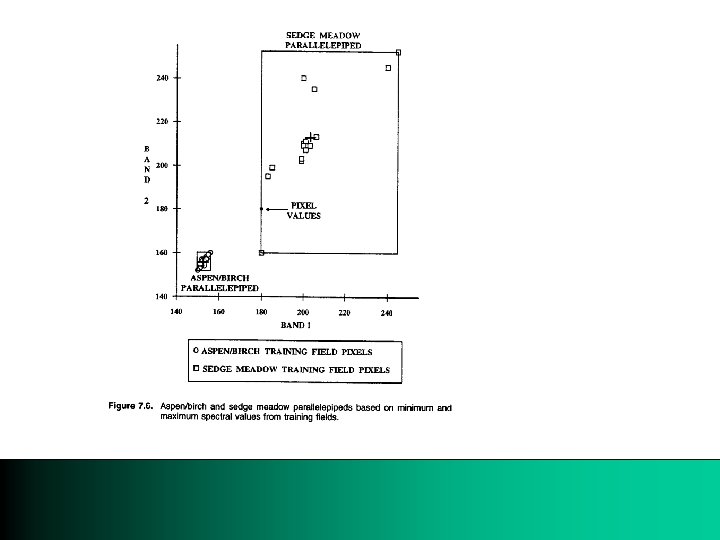
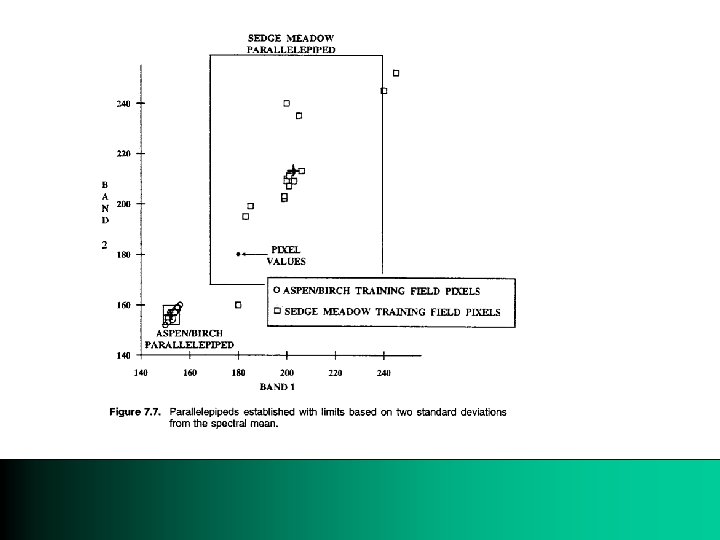
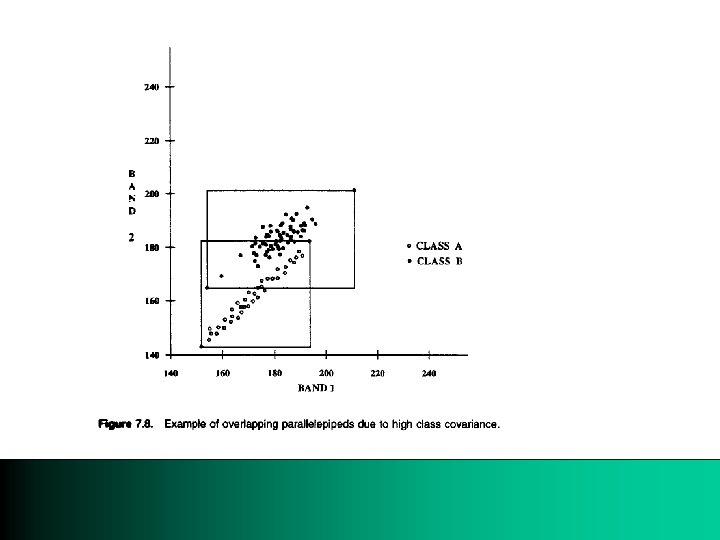
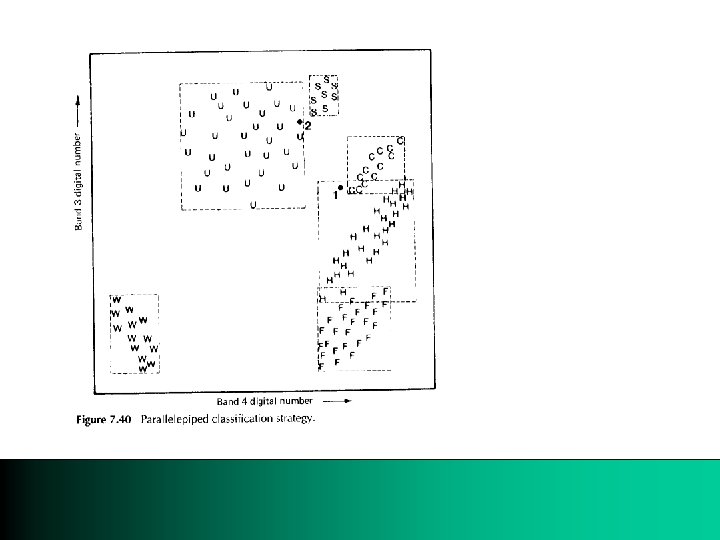
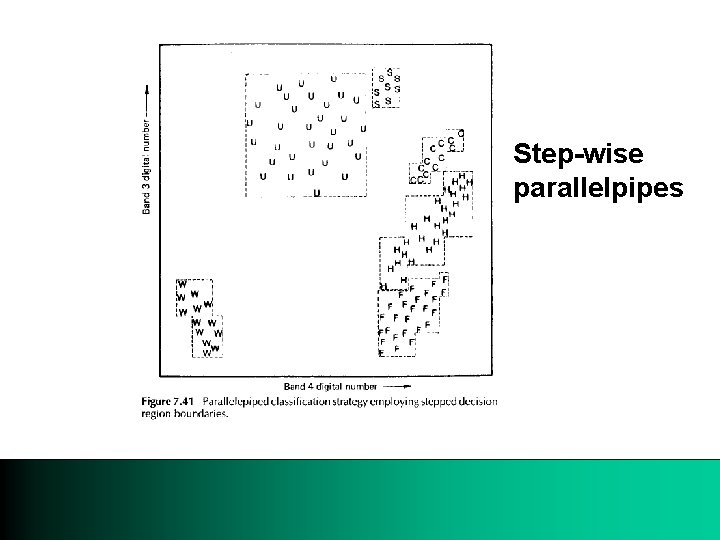
2. Parallelpiped classifier Define max/min for each band for each class If a class has normally distributed spectral values then 95% of pixels are within mean± 2 standard deviations, i. e. , Minimum = mean-2×SD Maximum = mean+2×SD Max/min can be adjusted according to needs
Step-wise parallelpipes
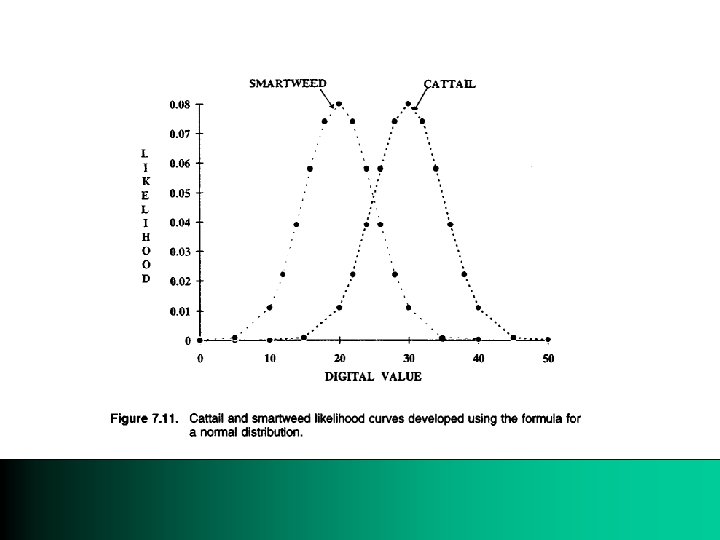
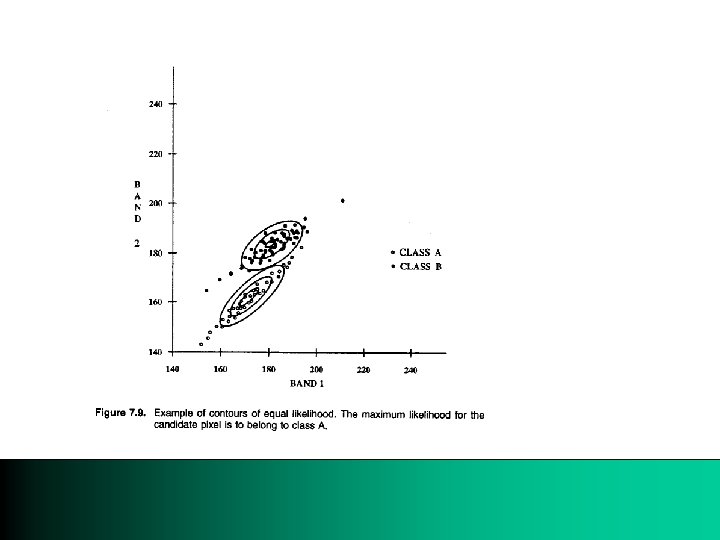
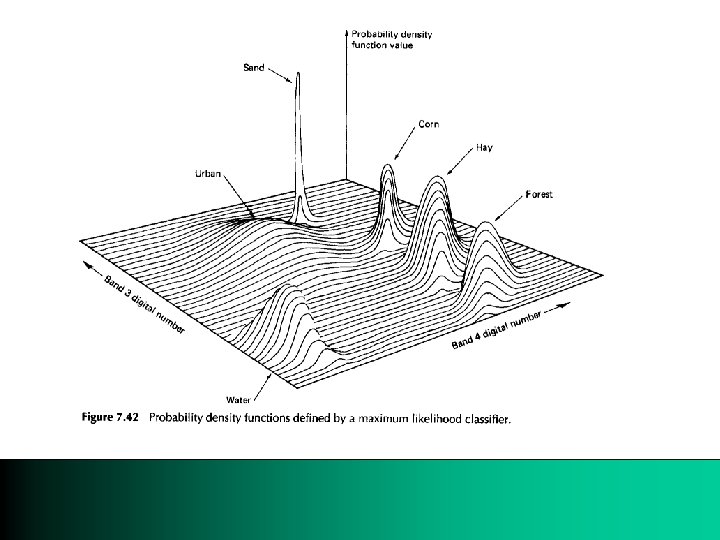
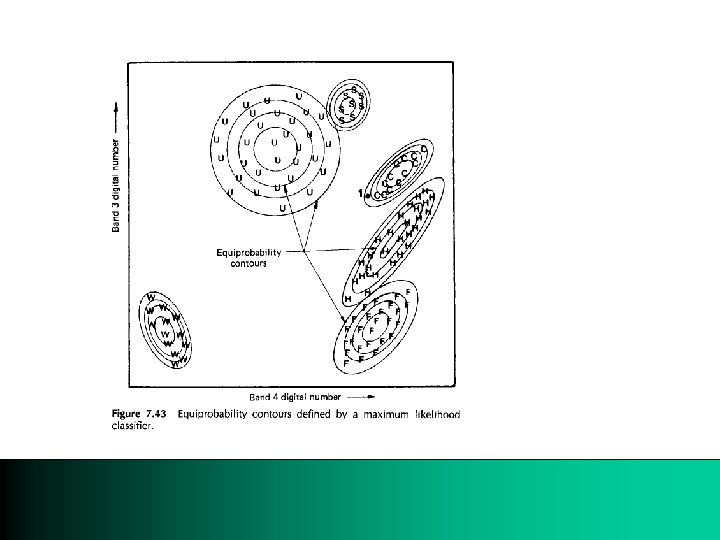
3. Maximum likelihood classifier From the training field, create contours of equal likelihood for each class. The highest likelihood for a candidate pixel determines the class of the pixel
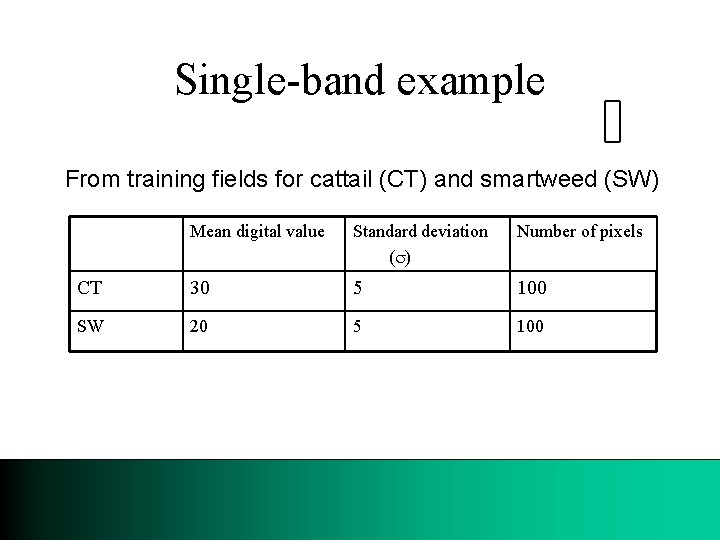
Single-band example From training fields for cattail (CT) and smartweed (SW) Mean digital value Standard deviation ( ) Number of pixels CT 30 5 100 SW 20 5 100
Class 12 Assessment of classification Accuracy Error Matrix (confusion matrix) User’s Accuracy Producer’s Accuracy Overall Accuracy Kappa Statistics
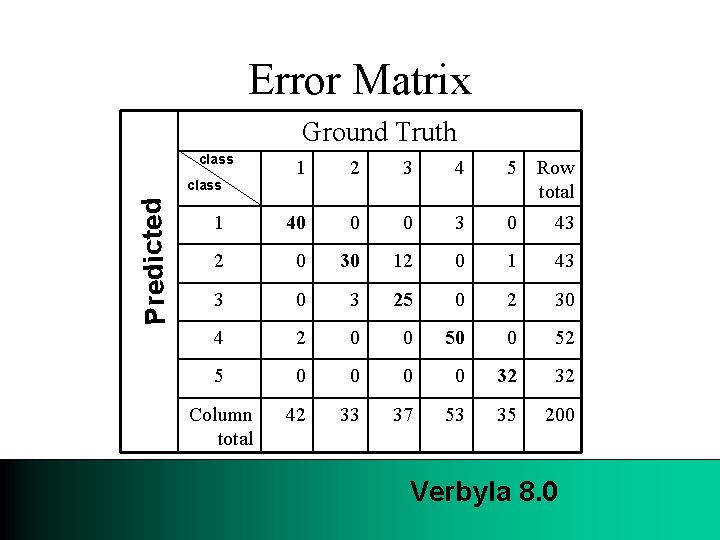
Error Matrix Ground Truth class 1 2 3 4 5 Row total 1 40 0 0 3 0 43 2 0 30 12 0 1 43 3 0 3 25 0 2 30 4 2 0 0 52 5 0 0 32 32 Column total 42 33 37 53 35 200 Predicted class Verbyla 8. 0
Overall Classification Accuracy It is the total number of correct class predictions (the sum of the diagonal cells) divided by the total number of cells. In this case, it is (40+30+25+50+32)/200 =88%
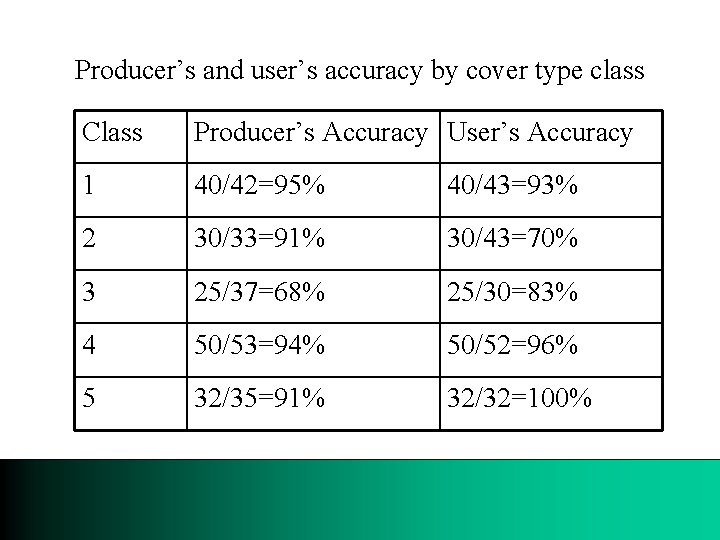
Producer’s and user’s accuracy by cover type class Class Producer’s Accuracy User’s Accuracy 1 40/42=95% 40/43=93% 2 30/33=91% 30/43=70% 3 25/37=68% 25/30=83% 4 50/53=94% 50/52=96% 5 32/35=91% 32/32=100%
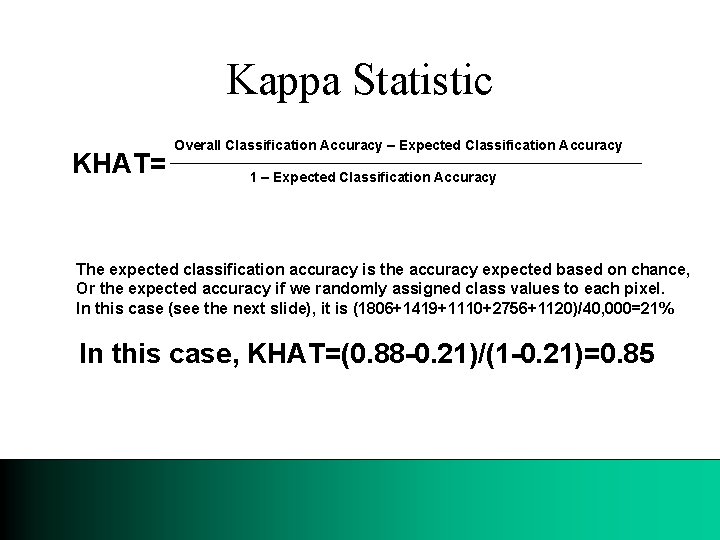
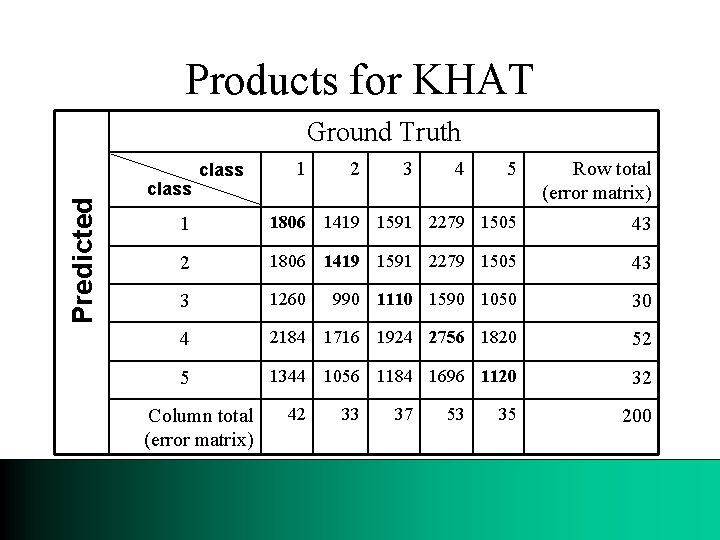
Kappa Statistic KHAT= Overall Classification Accuracy – Expected Classification Accuracy 1 – Expected Classification Accuracy The expected classification accuracy is the accuracy expected based on chance, Or the expected accuracy if we randomly assigned class values to each pixel. In this case (see the next slide), it is (1806+1419+1110+2756+1120)/40, 000=21% In this case, KHAT=(0. 88 -0. 21)/(1 -0. 21)=0. 85
Products for KHAT Predicted Ground Truth class 1 2 3 4 5 Row total (error matrix) 1 1806 1419 1591 2279 1505 43 2 1806 1419 1591 2279 1505 43 3 1260 990 1110 1590 1050 30 4 2184 1716 1924 2756 1820 52 5 1344 1056 1184 1696 1120 32 Column total (error matrix) 42 33 37 53 35 200