
CL 3 Amendments 2 3 4 1 One
- Slides: 11
CL #3: Amendments #2, 3, 4 1. One can wear • If true, write true. religious symbols due • If false, write to the Establishment false and change Clause of the first the underlined amendment. word to the 2. A newspaper article correct one. that purposely tries to destroy Oprah’s character could be slander.
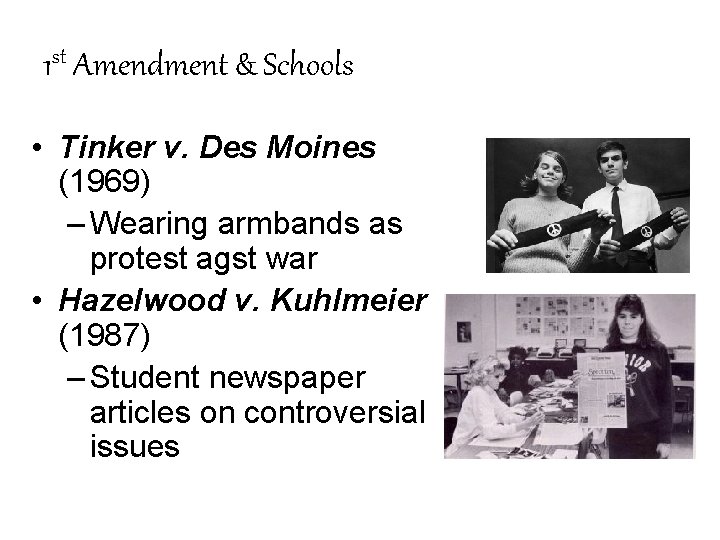
1 st Amendment & Schools • Tinker v. Des Moines (1969) – Wearing armbands as protest agst war • Hazelwood v. Kuhlmeier (1987) – Student newspaper articles on controversial issues
nd 2 Amendment 1. Right to state militia: protect from gov 2. Right to bear arms – Many exceptions: – Wash DC
rd 3 Amendment • Do not have to quarter troops
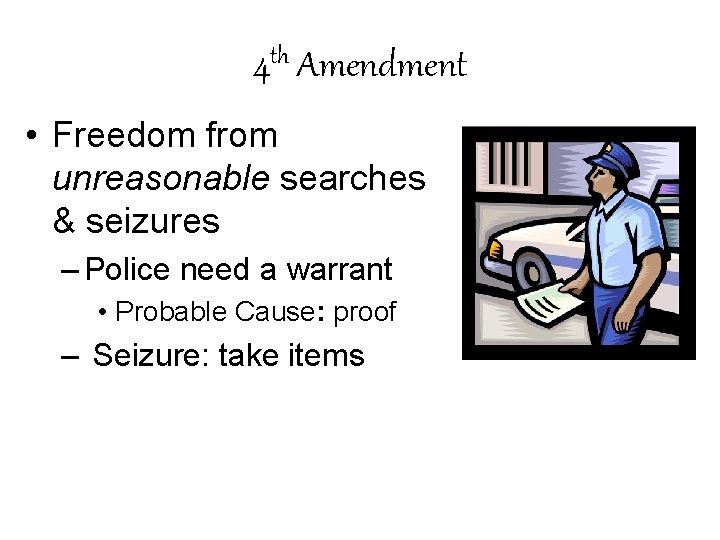
th 4 Amendment • Freedom from unreasonable searches & seizures – Police need a warrant • Probable Cause: proof – Seizure: take items
Exceptions • Plain View • Consent • Cars – Reasonable Suspicion • Arrest – Cell phones
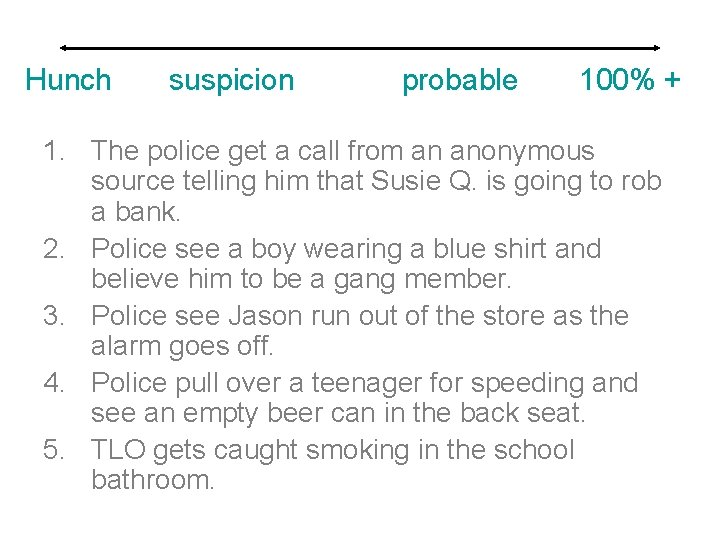
Hunch suspicion probable 100% + 1. The police get a call from an anonymous source telling him that Susie Q. is going to rob a bank. 2. Police see a boy wearing a blue shirt and believe him to be a gang member. 3. Police see Jason run out of the store as the alarm goes off. 4. Police pull over a teenager for speeding and see an empty beer can in the back seat. 5. TLO gets caught smoking in the school bathroom.
Exclusionary Rule • Items from an illegal search cannot be used in court • Mapp v. Ohio (1962) • Good faith exception
Privacy (implied) • 4 th implies a right to privacy • Drug Testing: search of body – Can jobs? – Can schools? • Lawrence v. Texas (2003)
Abortion: privacy applied to a person • Griswold v Connecticut (1965): • Roe v Wade (1973) • Planned Parenthood v Casey (1992) – Allows states to make some restrictions – minors notify parents, 24 hr waiting period – Overturns spousal notification
Searches in schools • New Jersey v TLO: schools can search if have reasonable suspicion