
CIVILIZATIONS OF PRECOLUMBIAN MEXICO Maya Olmec Teotihuacan place
CIVILIZATIONS OF PRE-COLUMBIAN MEXICO Maya, Olmec, Teotihuacan (place), and Azteca

Classical…what? Pre-Classical Period 2000 Classical Period 250 BC - 250 AD AD - 900 AD Post-Classical Period 900 - 1500 AD

Timeline Olmec 1200 BC-400 BC Maya 1800 BC-1500 AD Presence in Mexico beginning in ~1200 BC Teotihuacan 150 AD-750 AD Azteca 1200 AD-mid 1520 AD
The Olmec
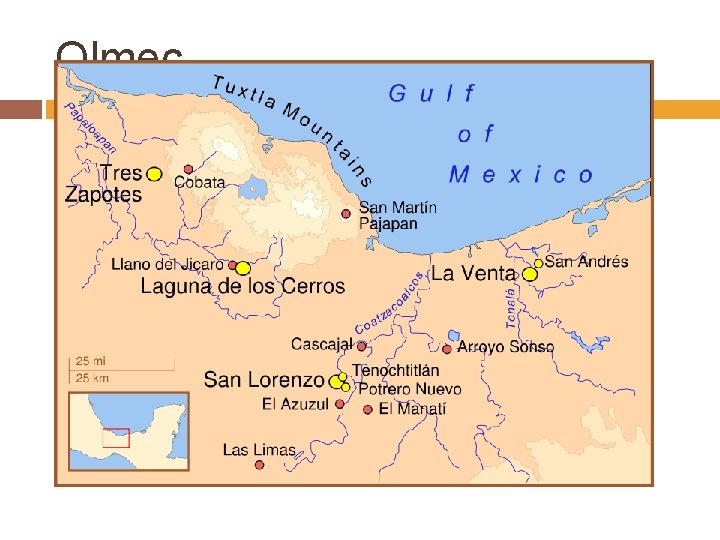
Olmec “Rubber People” in Nahuatl Mesoamerican formative years (1200 BC) Lived in current day Tabasco/Veracruz

Olmec Practiced ritual bloodletting and sacrifice Played ball Contributions include: Number 0 Writing (in Western Hemisphere) Mesoamerican calendar Possibly a compass Most known for their art Colossal Heads Rulers dressed as ball players 17 to-date Striking and beautiful
San Lorenzo Tenochtitlan Olmec settling that lasted from 1200 BC-900 BC Fertile soil that allowed for extensive agriculture and therefore settlement Around 900 BC the city was abandoned and was destroyed around 950 BC Internal uprising Foreign invasion Change in river path
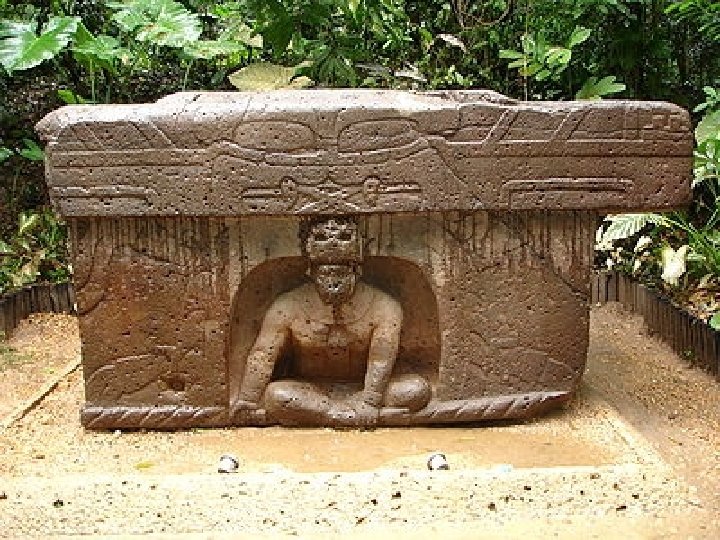
La Venta 900 BC-400 BC Great Pyramid (no good pictures, sorry!) A lot of offerings in the form of art
Olmec Religion Shaman and High Priests No written record of their religious beliefs Interpretation of artifacts shows a rain god and a feathered serpent diety
Decline Between 400 and 350 BC Specifics are unknown, but theories include: Agricultural issues: silting of rivers or some other problem causing them to abandon settlements Volcanic activity: volcanic activity at the time of their “disappearance” would have been high After the disappearance in that region, similar cultures began popping up elsewhere This may indicate a movement/migration
The Maya
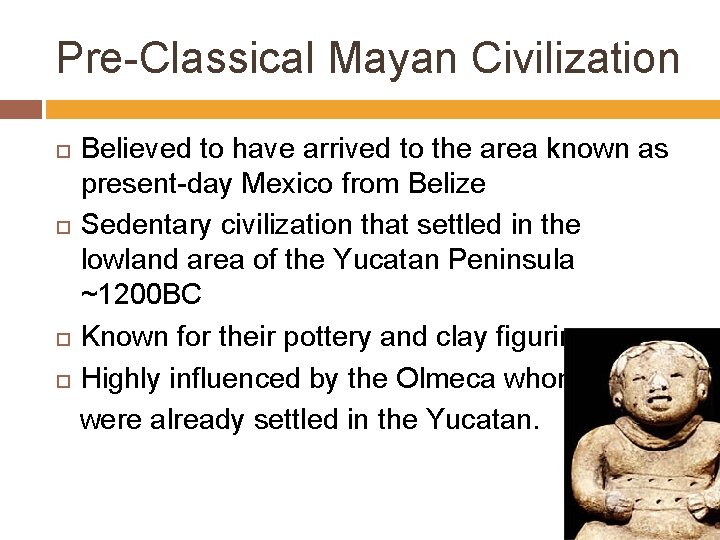
Pre-Classical Mayan Civilization Believed to have arrived to the area known as present-day Mexico from Belize Sedentary civilization that settled in the lowland area of the Yucatan Peninsula ~1200 BC Known for their pottery and clay figurines Highly influenced by the Olmeca whom were already settled in the Yucatan.
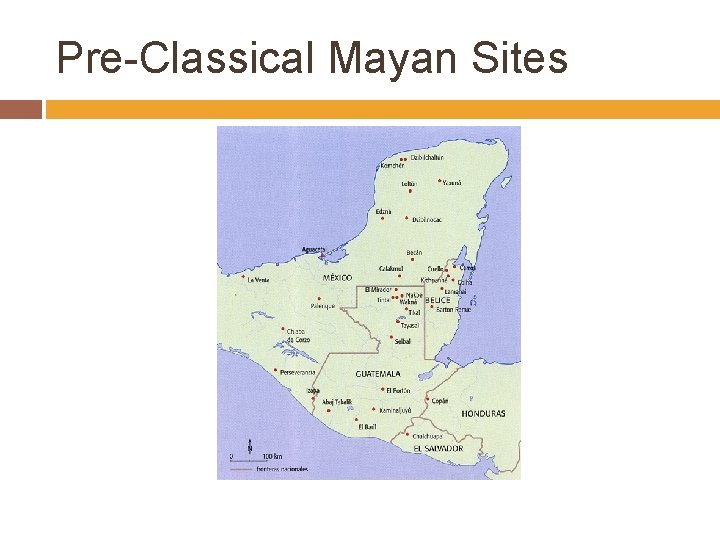
Pre-Classical Mayan Sites
Pre-Classical Maya Sedentary due to agriculture Corn, beans, cacao and pumpkins As population grew, developed hierarchy with nobles and priests Began developing first temples and the foundation for future pyramids Religion simple Based on the belief of life after death Veneration for the dead
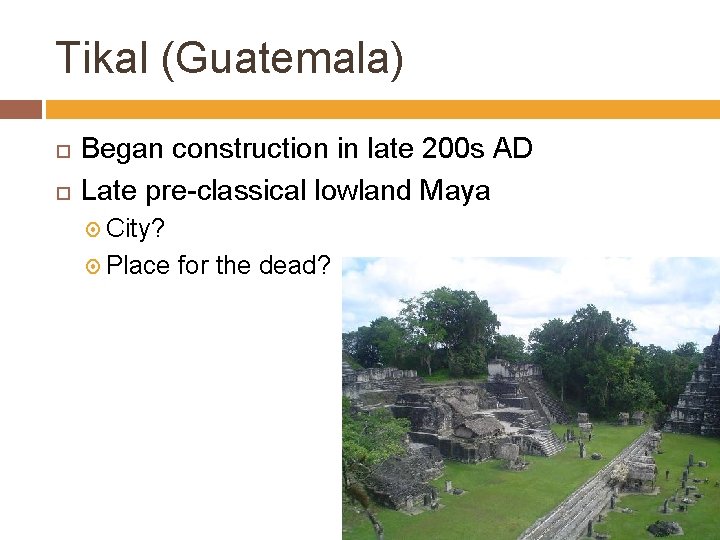
Tikal (Guatemala) Began construction in late 200 s AD Late pre-classical lowland Maya City? Place for the dead?
Classical Maya Peak of construction and urbanism Peak of monumental inscriptions Significant intellectual and artistic development Development of several independent citystates
Collapse of the Southern Lowland Mayas During the 8 th and 9 th centuries the southern lowland Mayan cities were abandoned Two schools of thought Ecological: disease, agricultural issues, climate change, environmental disaster Non-Ecological: fall of trade, foreign invasion, overpopulation, peasant revolt, etc…
Post Classical Maya From 10 th-early 16 th centuries, construction in the northern regions persisted Cities in the northern Yucatan flourished After a decline in the other ruling dynasties, Mayapan ruled all of the northern region until a revolt in 1450 Chichen Itza Coba (Tulum), Campeche (Edzna), Uxmal this is where the word “Maya” comes from After the revolt, the civilization deteriorated to competing city states until the Spanish took over the Yucatan
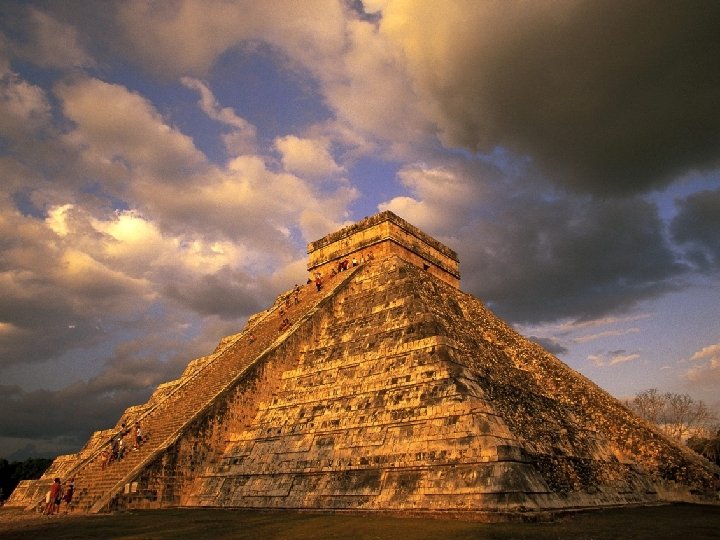
Post-Classical Structures
Spanish Conquest It took 170 years for the Spanish to take control of the Mayan Yucatan because there was not just one political center In 1697 the Spanish gained control of the area Burned Mayan documents and texts
Teotihuacan
Teotihuacan The name came from the Nahuatl language centuries after the city fell; “birth place of the gods” Mayan documents refer to it as “puh” which means “place of reeds” Mysterious origin of city Originally attributed to Toltec, “master builder”, but not possible
Teotihuacan Possibly due to volcanic activity during formative period, many cultural groups had to move location Ended up in Teotihuacan valley Multi-ethnic city Otomi, Zapotec, Mixtec, Maya, Nahua Totonacs claim to have built it, but that has yet to be established
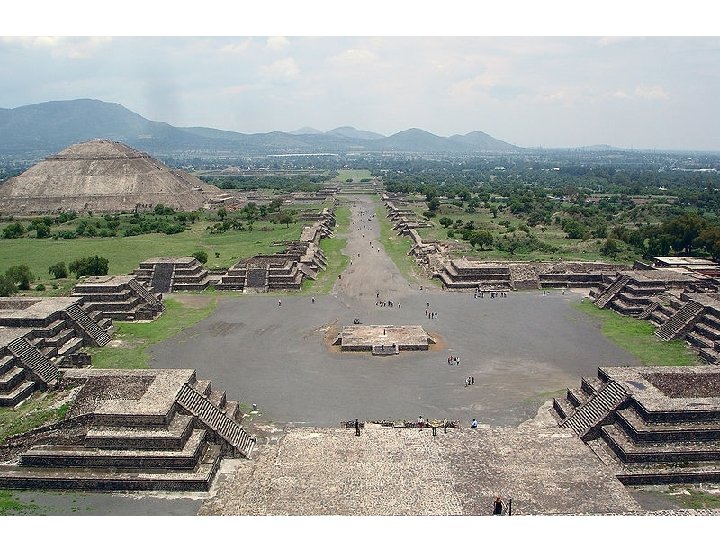
Teotihuacan Religion: multiple gods including feathered serpent and rain god Over 2000 structures At around 400 -500 AD there was a population of 200, 000 Making it the best city in the hemisphere if not the whole world Pyramids of the Sun and Moon (as later called by the Aztecs) stood on each end of the avenue
Teotihuacan Around 750 BC the culture just seemed to vanish Some evidence of a fire Believed to have been started by people invading the city Please Click Here : )
Aztec
Aztec Technically “Aztec” refers to a large group of people who speak the Nahuatl language Typically people refer only to the people that lived in Tenochtitlan which is NOT the same as Teotihuacan These people called themselves Mexica Tonochca or Colhua-Mexica Includes Mexica, Acolhua, Tepanecs
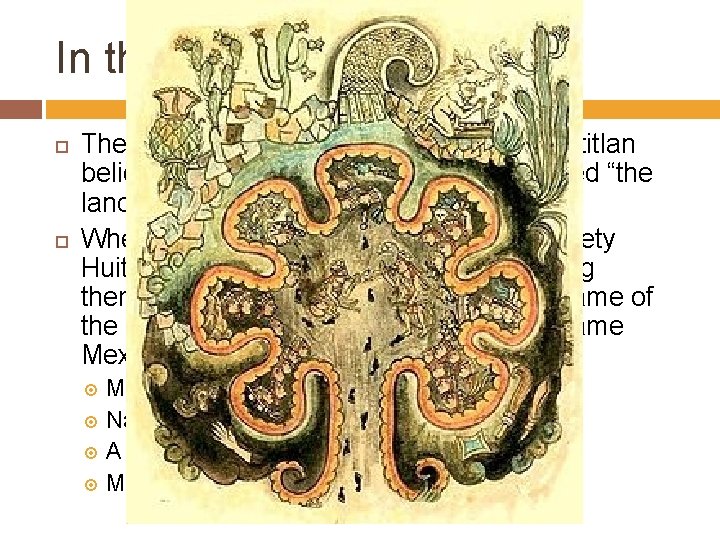
In the beginning… The Mexica people who settled in Tenochtitlan believed that they came from a place called “the land of seven caves” When they fled, it is said that their main diety Huitzilopochtli forbid them from ever calling themselves Azteca, because that is the name of the people they were fleeing, so they became Mexica Moon Name of leader A type of weedy plant Mexitl (secret “nickname” for Huitzilopochtli)
Migration & Culture The Nahua people began migrating from Northern Mexico because they were hunters and gatherers. Because of this migration, they mixed with many of the mesoamerican cultures in Mexico throughout the years and that is how they accumulated their religious and other cultural beliefs and behaviors
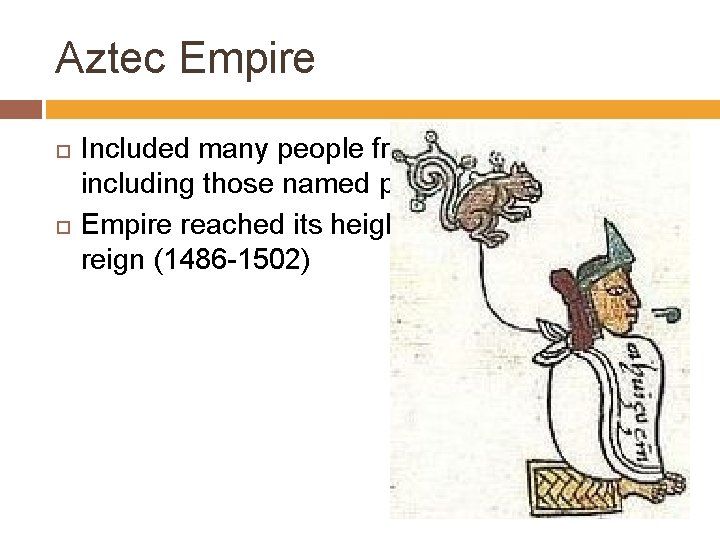
Aztec Empire Included many people from other city states, including those named previously Empire reached its height under Ahuizotl’s reign (1486 -1502)
Religion Initially the Mexica believed that Huitzilopochtli was only a tribal god and there were other gods above him Story of the moon and stars Eventually, as the civilization grew, Huitzilopochtli was raised up to share the same status as the other gods: Tlaloc, Tezcatlipoca, and Quetzalcoatl He essentially replaced Nanauatzin (sun god)
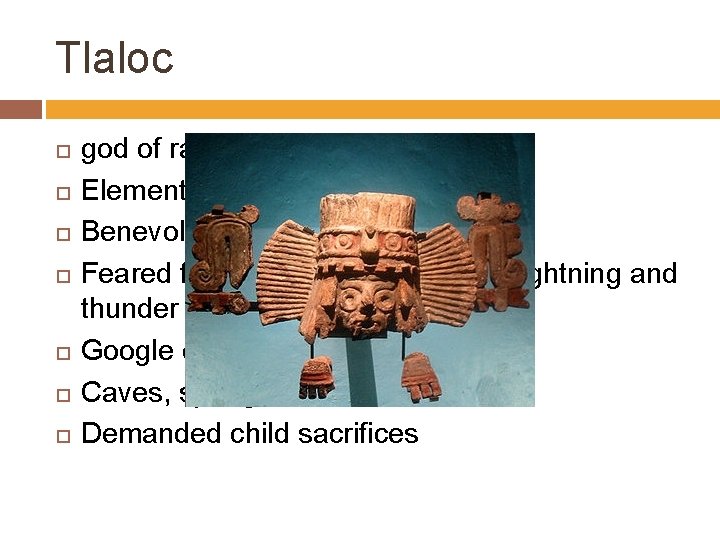
Tlaloc god of rain, fertility and water Element of water Benevolent Feared for his ability to send hail, lightning and thunder Google eyes and fangs Caves, springs, mountains Demanded child sacrifices
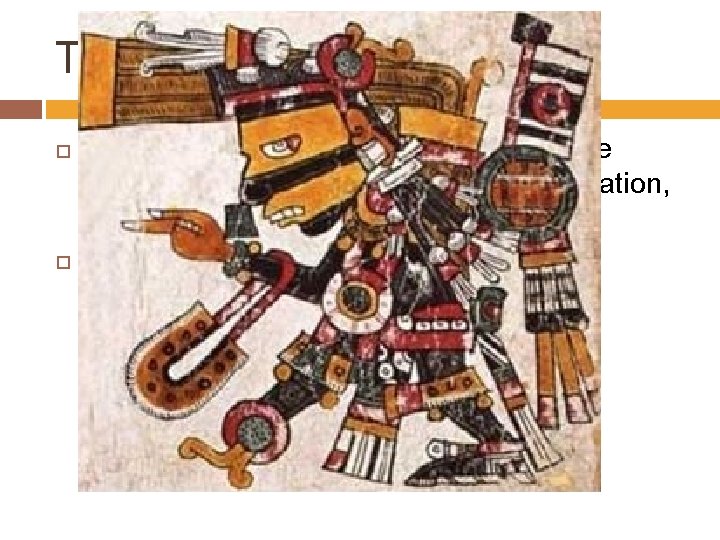
Tezcatlipoca night sky, the night winds, hurricanes, the north, the earth, obsidian, discord, temptation, jaguars, sorcery, beauty, war and strife Often seen as the rival of Quetzalcoatl
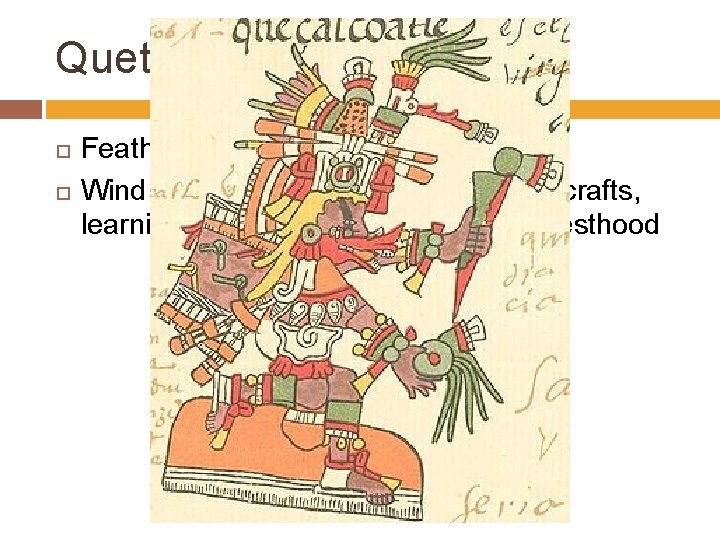
Quetzalcoatl Feathered serpent Wind, Venus, dawn, merchants, arts, crafts, learning, knowledge and patron of priesthood
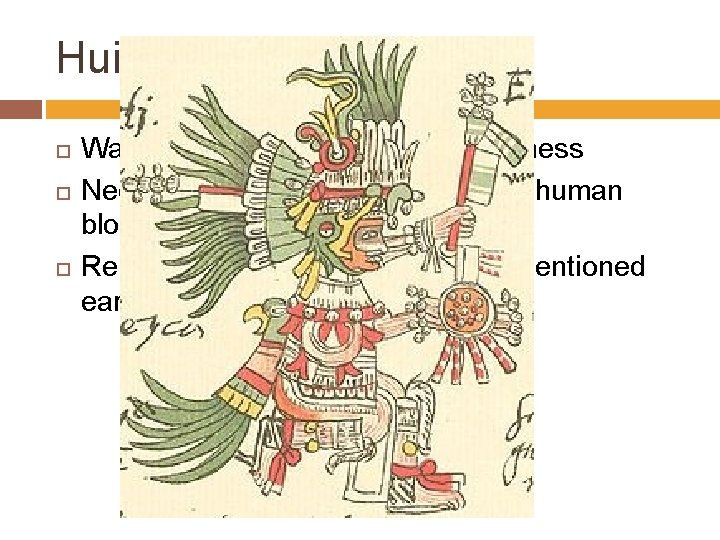
Huitzilopochtli Was in constant struggle with darkness Needed nourishment in the form of human blood at least every 52 years Replaced the former sun god (as mentioned earlier)
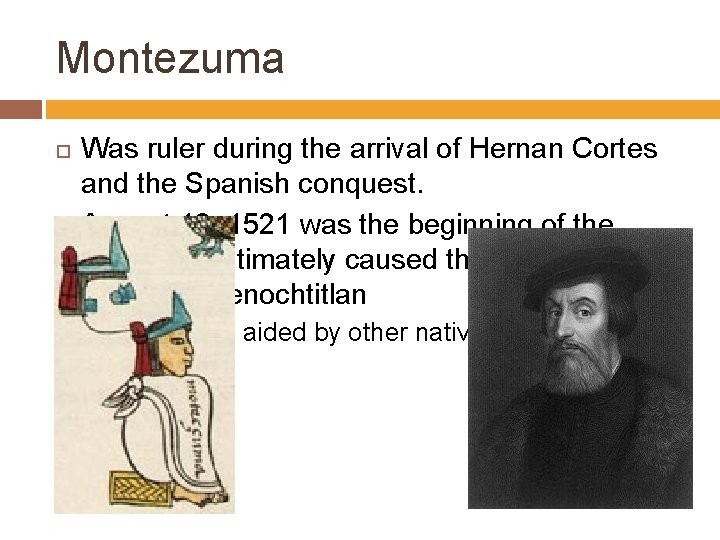
Montezuma Was ruler during the arrival of Hernan Cortes and the Spanish conquest. August 13, 1521 was the beginning of the seige that ultimately caused the fall of the empire at Tenochtitlan Cortes was aided by other native groups
HOMEWORK!!! (Due Thursday, 9/17) Choose one of the following: Look up Teotihuacan and describe the significance of the layout of “The Avenue of the Dead” What types of sacrifices were carried out by the people known as the Aztecs and why? What do you think happened to the Olmec civilization? 500 words, complete ENGLISH sentences, hand written
- Slides: 37