
CIVIL WAR The North and the ANACONDA PLAN
- Slides: 26
CIVIL WAR
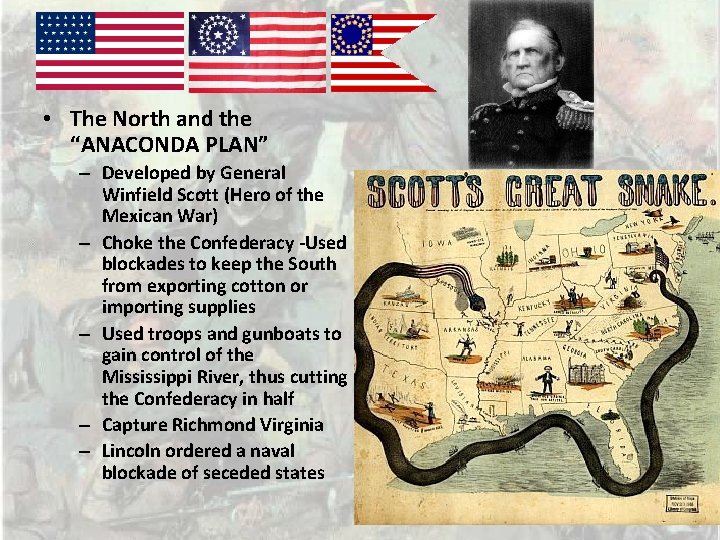
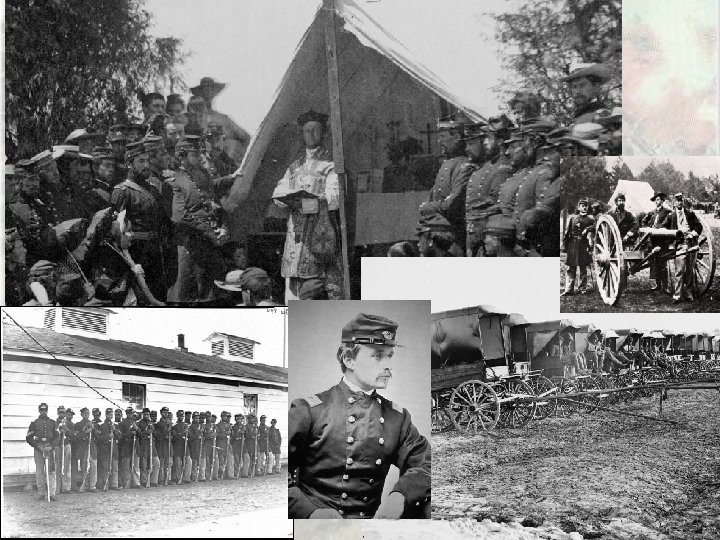
• The North and the “ANACONDA PLAN” – Developed by General Winfield Scott (Hero of the Mexican War) – Choke the Confederacy -Used blockades to keep the South from exporting cotton or importing supplies – Used troops and gunboats to gain control of the Mississippi River, thus cutting the Confederacy in half – Capture Richmond Virginia – Lincoln ordered a naval blockade of seceded states
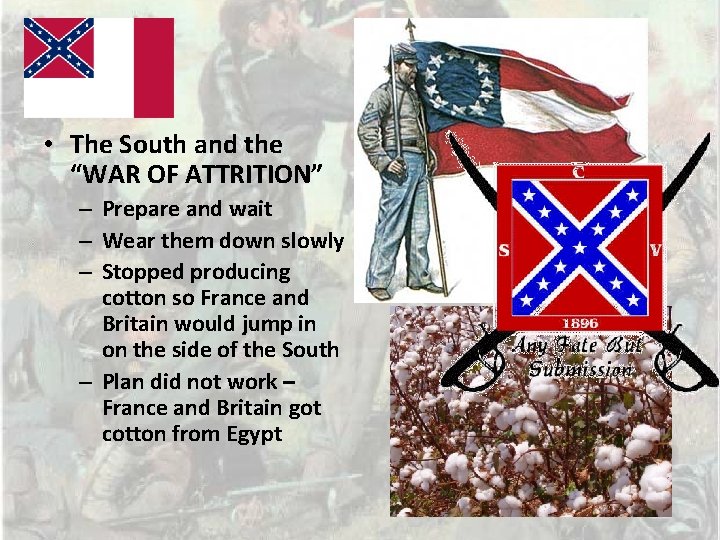
• The South and the “WAR OF ATTRITION” – Prepare and wait – Wear them down slowly – Stopped producing cotton so France and Britain would jump in on the side of the South – Plan did not work – France and Britain got cotton from Egypt
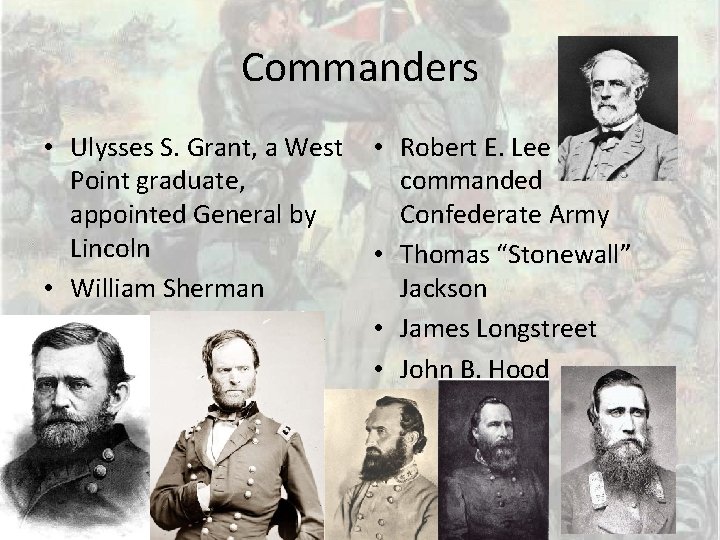
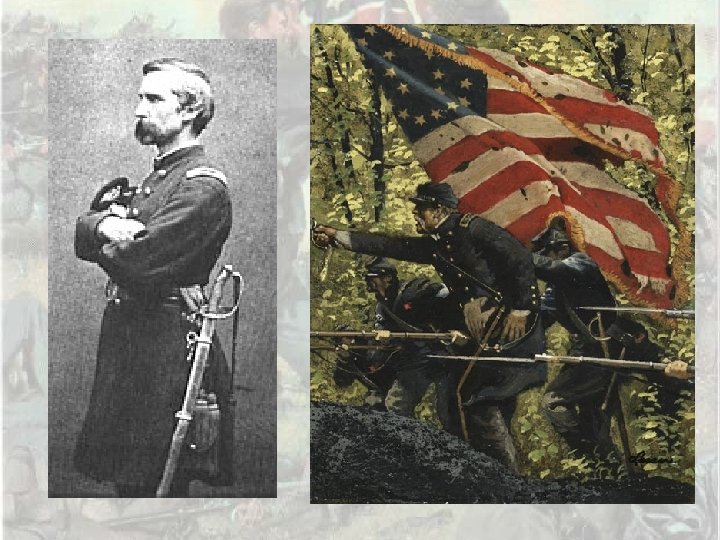
Commanders • Ulysses S. Grant, a West Point graduate, appointed General by Lincoln • William Sherman • Robert E. Lee commanded Confederate Army • Thomas “Stonewall” Jackson • James Longstreet • John B. Hood
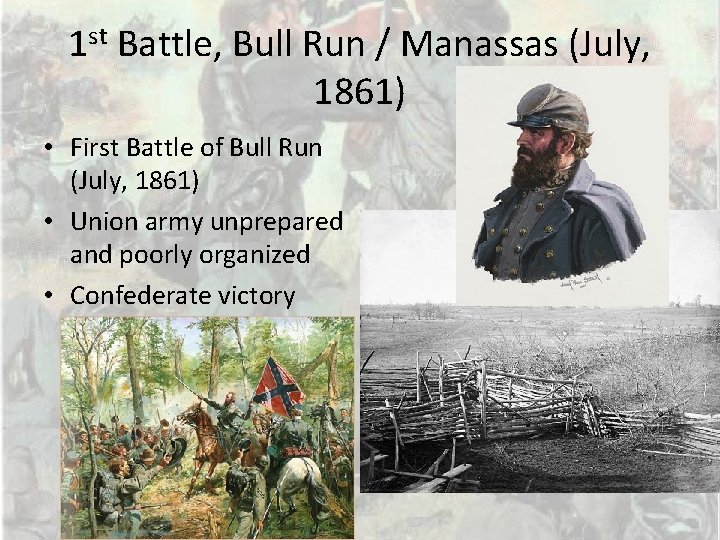
1 st Battle, Bull Run / Manassas (July, 1861) • First Battle of Bull Run (July, 1861) • Union army unprepared and poorly organized • Confederate victory
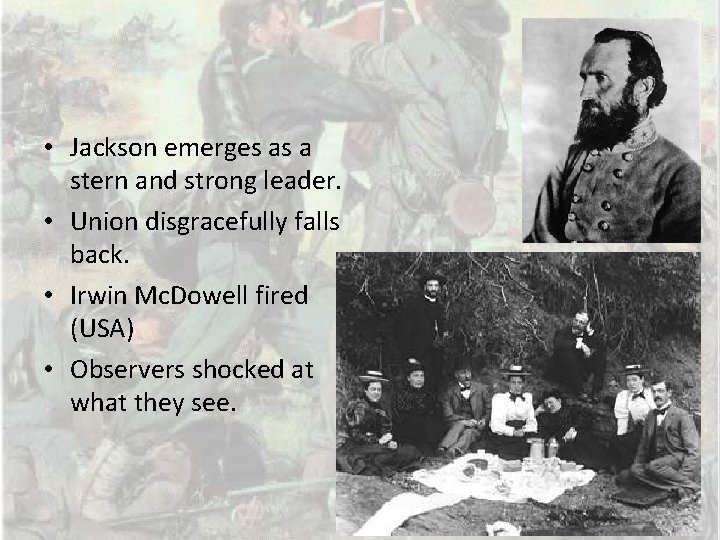
• Jackson emerges as a stern and strong leader. • Union disgracefully falls back. • Irwin Mc. Dowell fired (USA) • Observers shocked at what they see.
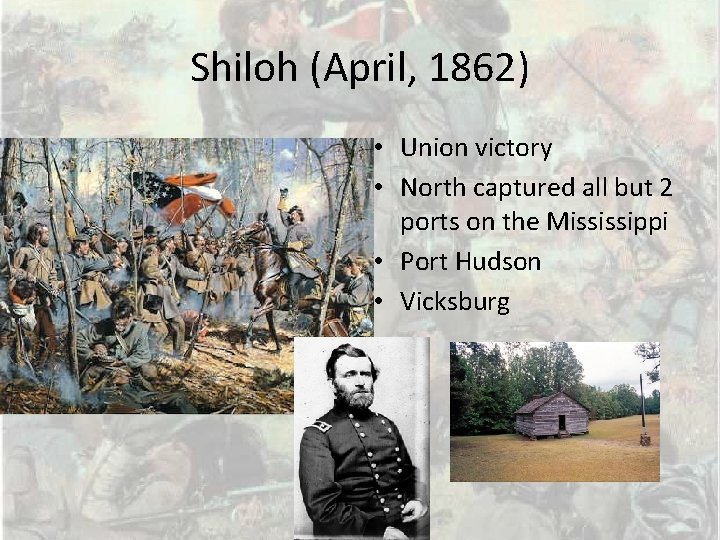
Shiloh (April, 1862) • Union victory • North captured all but 2 ports on the Mississippi • Port Hudson • Vicksburg
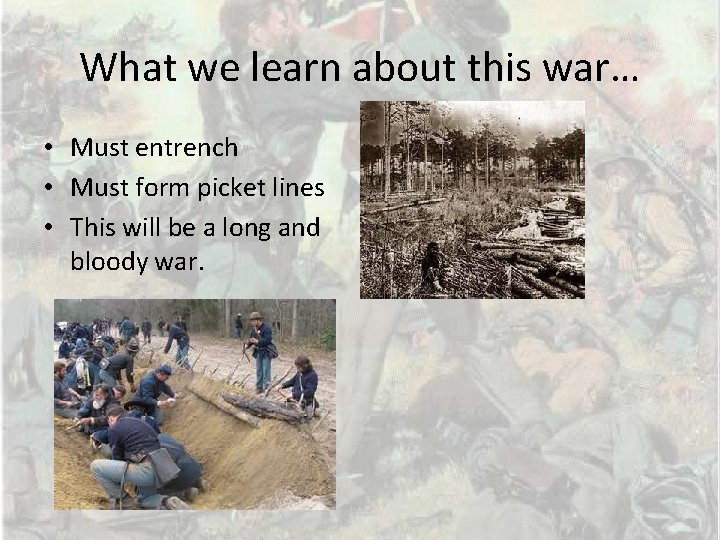
What we learn about this war… • Must entrench • Must form picket lines • This will be a long and bloody war.
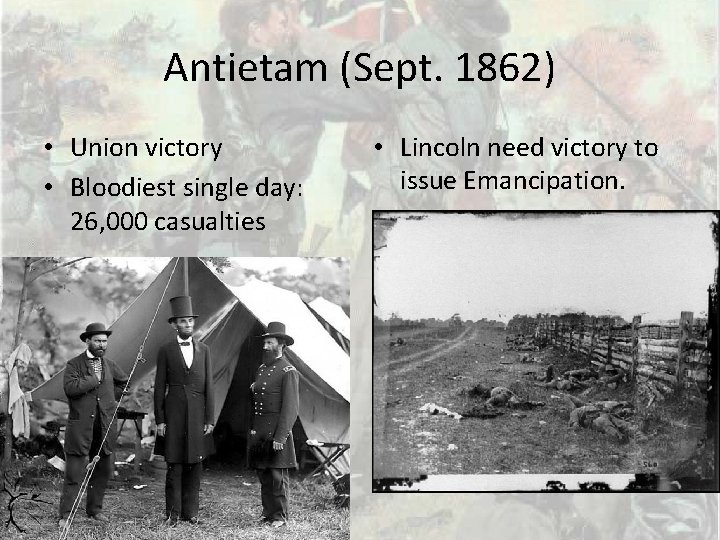
Antietam (Sept. 1862) • Union victory • Bloodiest single day: 26, 000 casualties • Lincoln need victory to issue Emancipation.
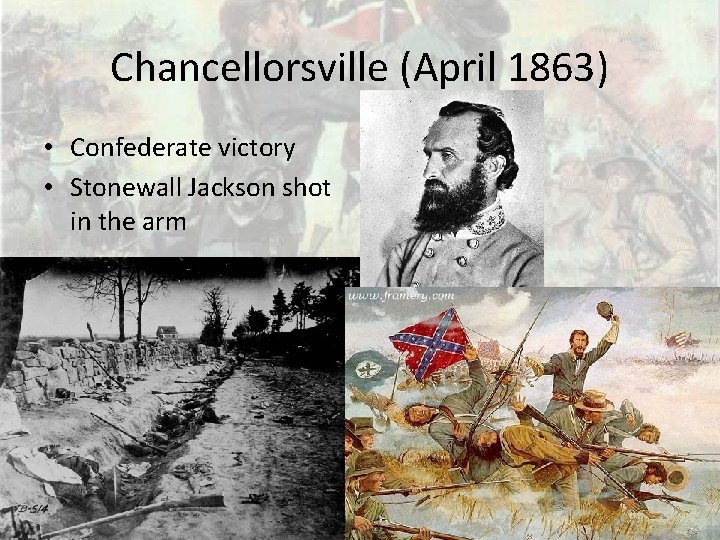
Chancellorsville (April 1863) • Confederate victory • Stonewall Jackson shot in the arm
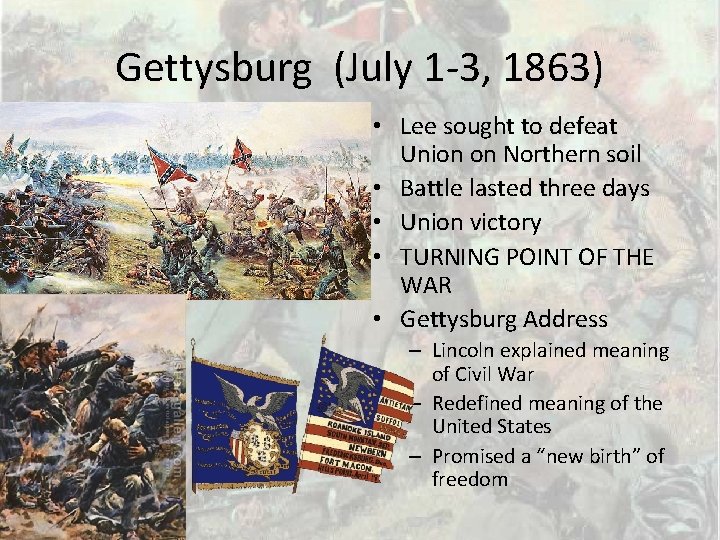
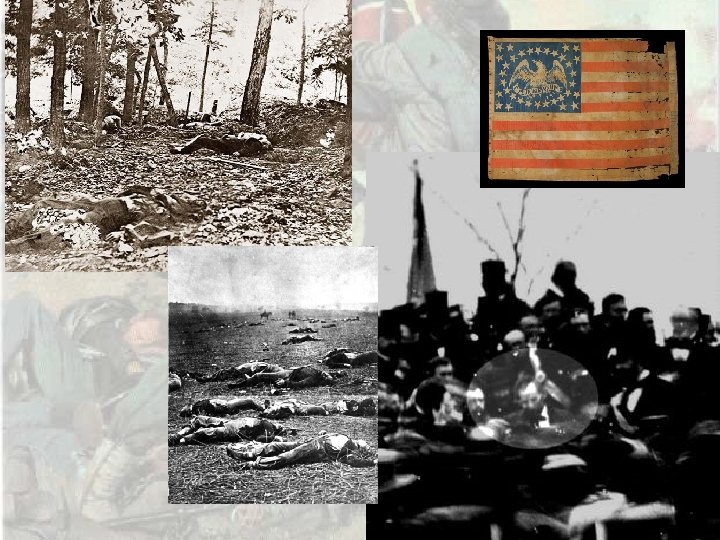
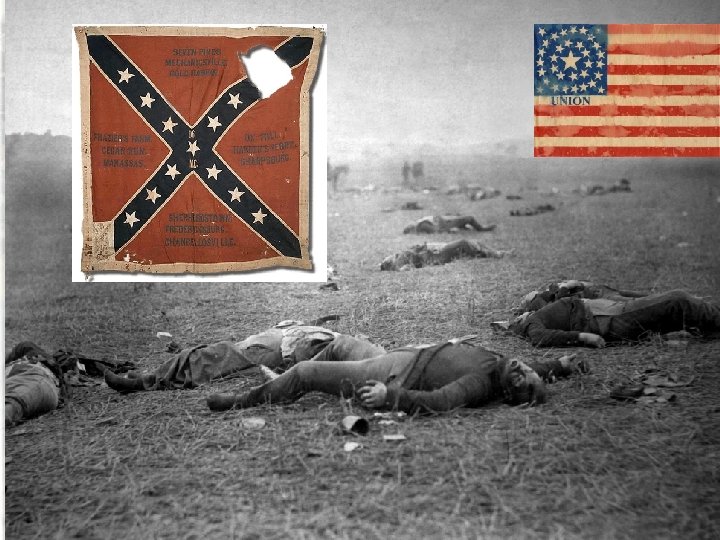
Gettysburg (July 1 -3, 1863) • Lee sought to defeat Union on Northern soil • Battle lasted three days • Union victory • TURNING POINT OF THE WAR • Gettysburg Address – Lincoln explained meaning of Civil War – Redefined meaning of the United States – Promised a “new birth” of freedom
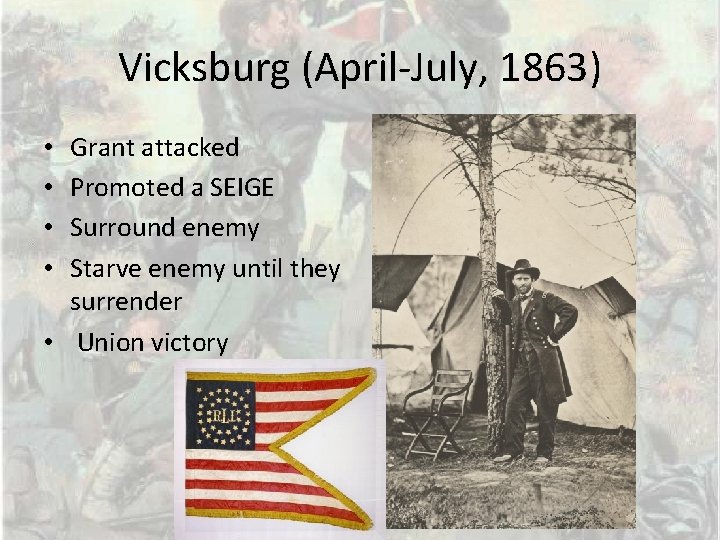
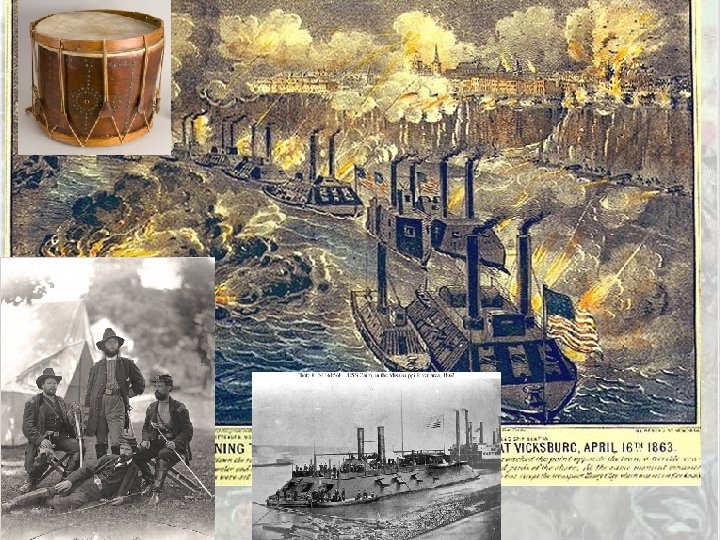
Vicksburg (April-July, 1863) Grant attacked Promoted a SEIGE Surround enemy Starve enemy until they surrender • Union victory • •
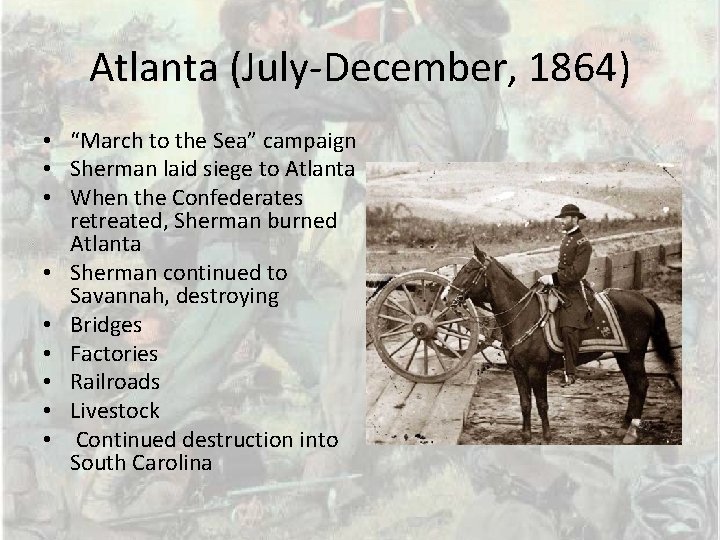
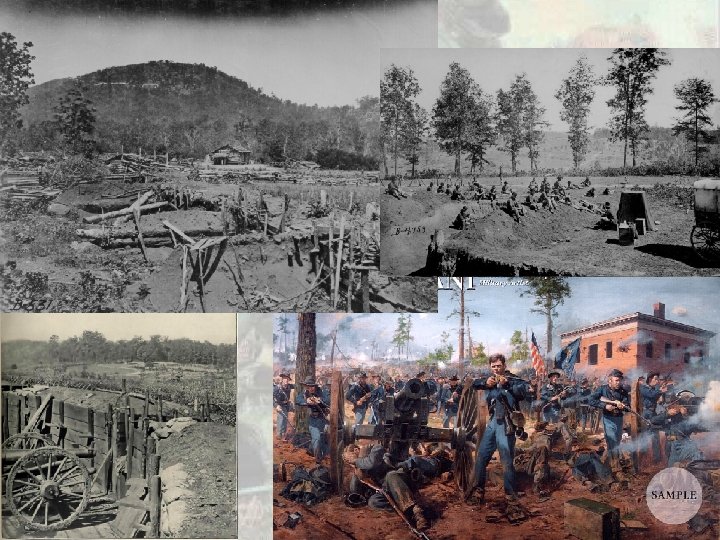
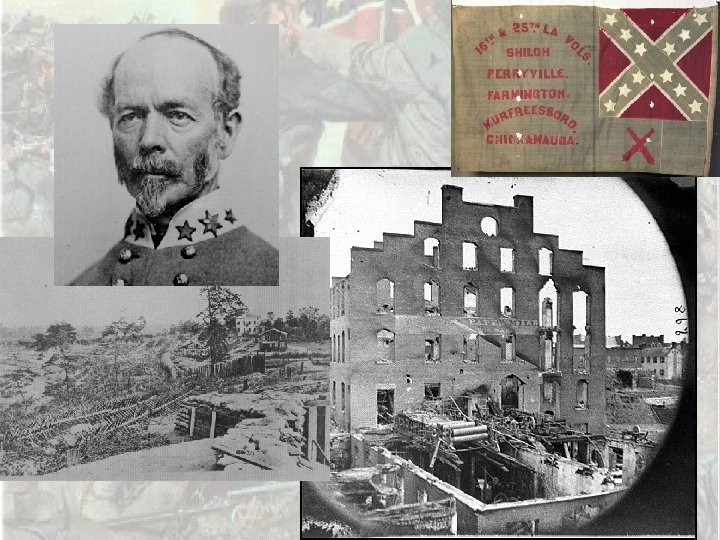
Atlanta (July-December, 1864) • “March to the Sea” campaign • Sherman laid siege to Atlanta • When the Confederates retreated, Sherman burned Atlanta • Sherman continued to Savannah, destroying • Bridges • Factories • Railroads • Livestock • Continued destruction into South Carolina
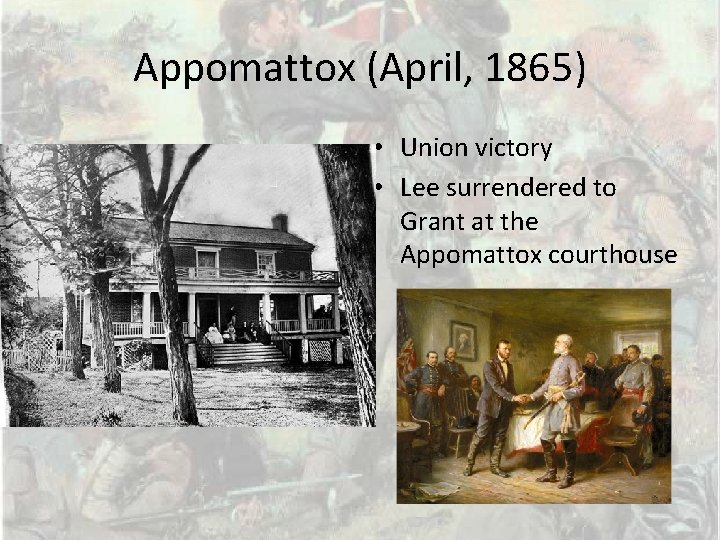
Appomattox (April, 1865) • Union victory • Lee surrendered to Grant at the Appomattox courthouse
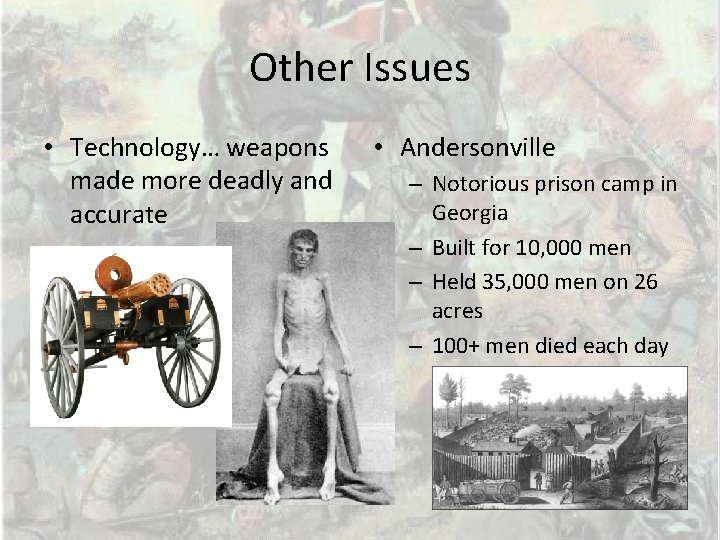
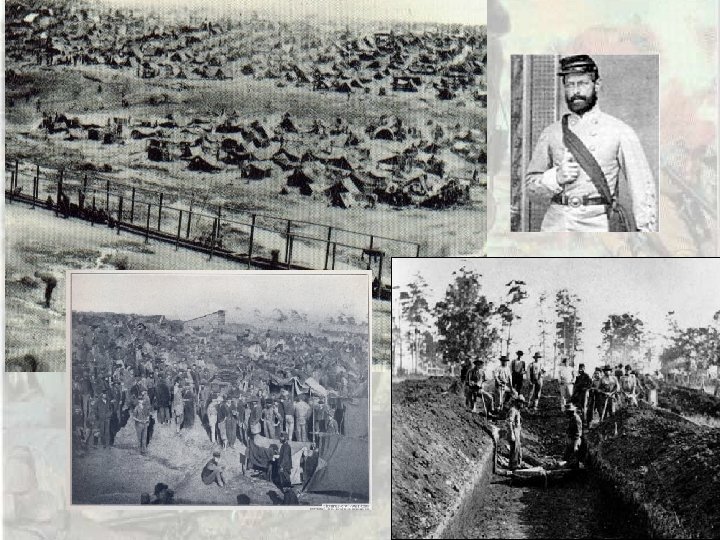
Other Issues • Technology… weapons made more deadly and accurate • Andersonville – Notorious prison camp in Georgia – Built for 10, 000 men – Held 35, 000 men on 26 acres – 100+ men died each day
The Emancipation Proclamation (January, 1863) • Lincoln resisted making the abolition of slaves a Union goal • He opposed slavery, but did not think he had the legal authority to end it • Lincoln issued the Emancipation Proclamation to end slavery and make southerners have to work rather than fight • The Emancipation Proclamation officially made the abolition of slavery a Union goal (No longer interested in just preserving Union)
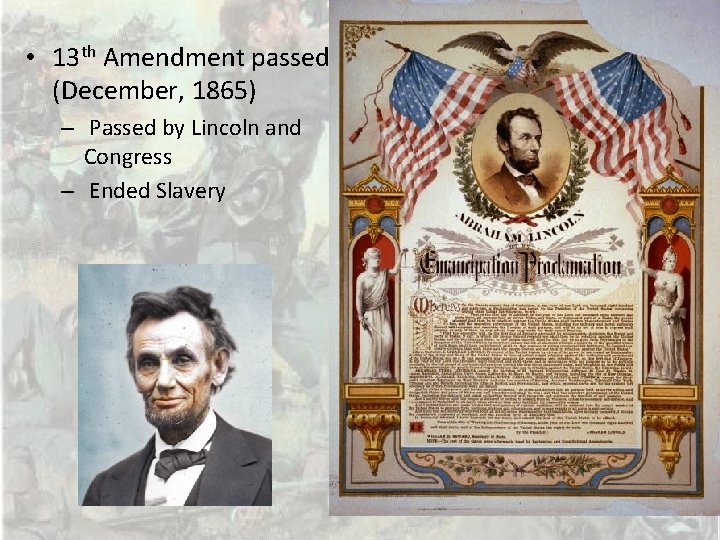
• 13 th Amendment passed (December, 1865) – Passed by Lincoln and Congress – Ended Slavery